
Original photo by © Tetra Images/Winslow Productions/Getty Images
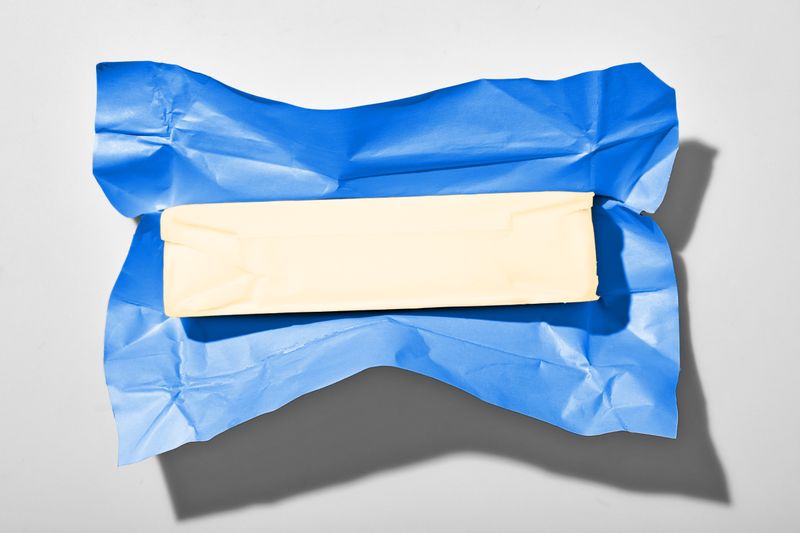
Whether you prefer it drizzled on popcorn, baked in a pie crust, or melted down a stack of pancakes, there’s no shortage of ways to enjoy butter. But beyond its decadent flavor, there’s much to be discussed about this culinary mainstay.
For instance, did you know that butter is often sold in different shapes depending on where it’s sold? Or why it has a yellow hue, despite milk being white? Allow us to butter you up with six facts about this tasty, spreadable treat.
Butter’s Yellow Color Comes From an Animal’s Diet
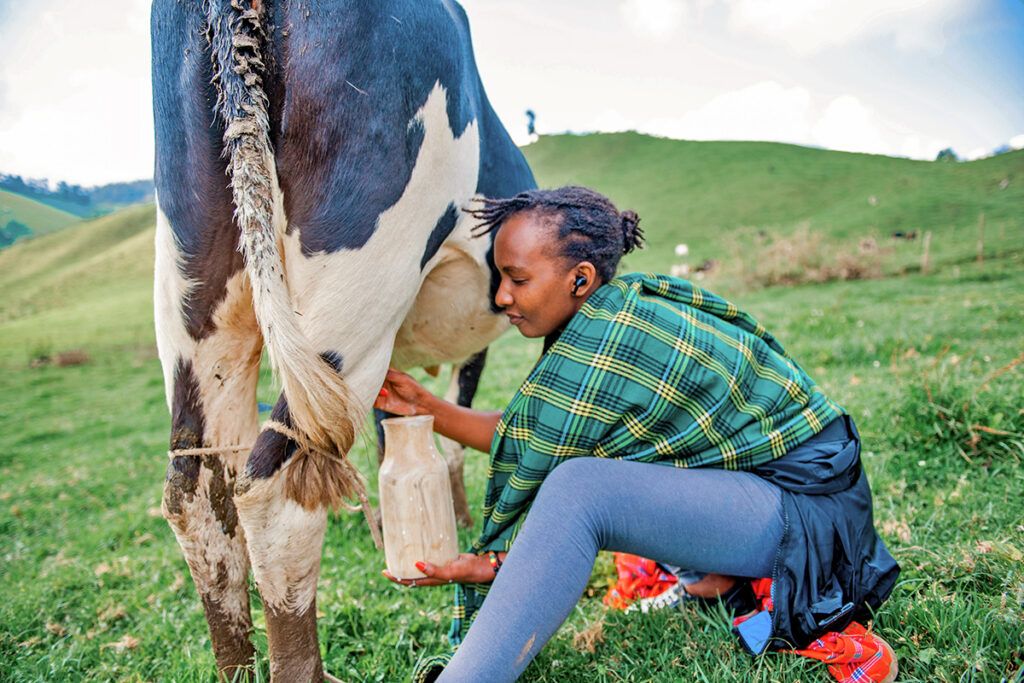
Given that butter is made from milk, it’s natural to wonder why butter typically appears more yellow than white. It has to do with the pigment beta-carotene, which is prevalent in grass and wildflowers. The more of those plants a cow or other milk-producing animal consumes, the more beta-carotene it has in its system. For this reason, butter made from grass-fed animals is typically more yellow than butter from grain-fed ones, as grain contains less of the pigment.
It’s also worth noting that beta-carotene is stored in milk fat, which further explains why butter is yellow and milk is white. Those fats typically make up at least 80% of traditional dairy butter, while a standard glass of whole milk, for instance, contains just 3.25%. The rest of the milk is made of water and proteins, diluting the fat’s yellow hue. When combined, the fats, water, and protein globules reflect light in a way that makes milk appear white.
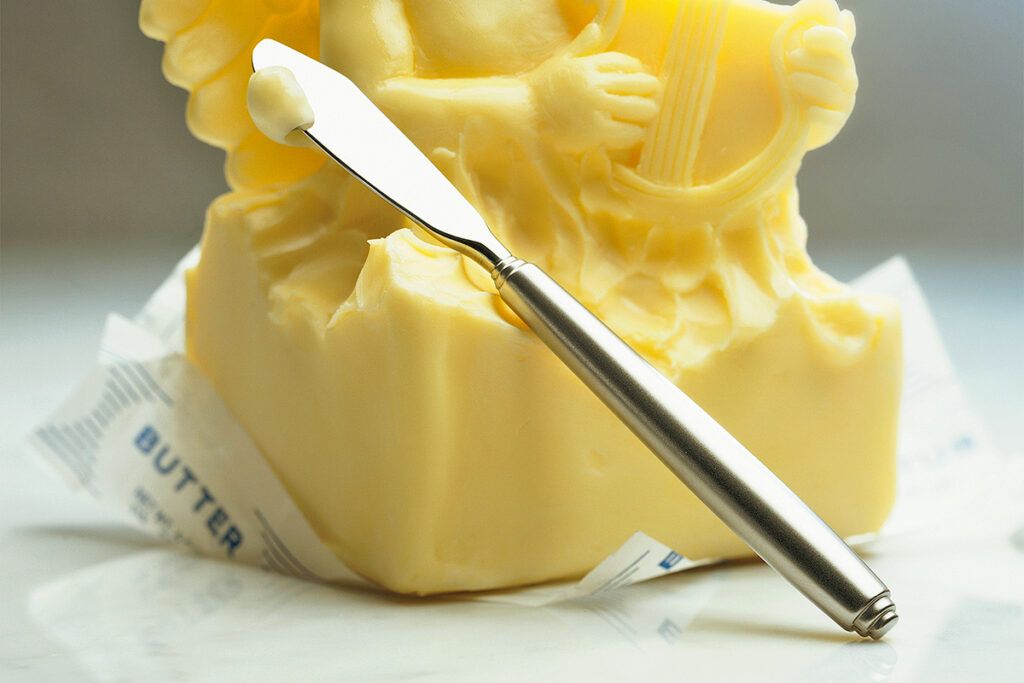
The Largest Butter Sculpture Weighed More Than 2 Tons
The largest butter sculpture ever created weighed a staggering 4,077 pounds and 13.54 ounces. It was made by Sharon BuMann — an artist known, in part, for creating annual butter sculptures for the State Fair of Texas. In September 2013, BuMann’s record sculpture was inspired by Big Tex — a 55-foot tall cowboy statue at Fair Park in Dallas that was destroyed by an electrical fire in 2012 but was resurrected the following year.
Her statue paid homage to Big Tex’s return, depicting the towering Texan seated and being welcomed home by children. As mandated by the Guinness World Records, BuMann’s sculpture had no internal nor external support mechanisms and was completely freestanding.
To build the sculpture, BuMann worked in a refrigerated room set to 37 degrees Fahrenheit, with the sculpting process taking more than three weeks to complete. She was able to compile all that butter in part because many fairs recycle butter sculptures year after year. In the case of the State Fair of Texas, the butter is frozen in 5-gallon buckets to be used for sculptures the following year.
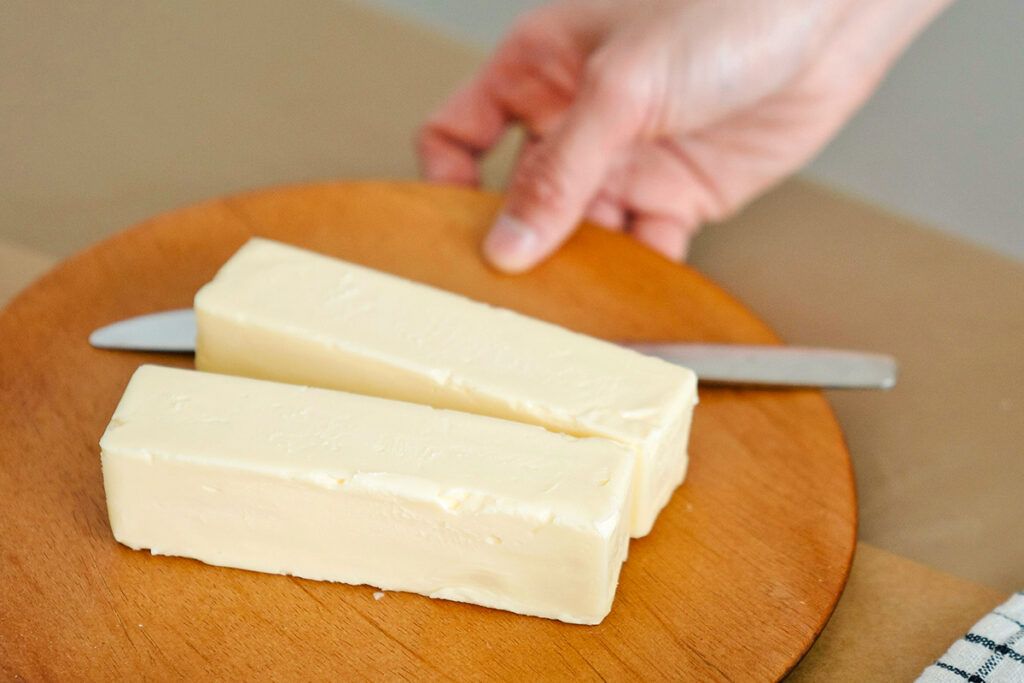
Packaged Butter Is Shaped Differently East and West of the Rockies
If you purchase a standard package of butter in the grocery store, odds are it’ll be shaped differently depending on if you’re located east or west of the Rocky Mountains. Butter sold east of the Rockies is often packaged in the form of an Elgin stick — a long, narrow, 4-ounce rectangular prism named for the town of Elgin, Illinois, which was once known as the “Butter Capitol of the World.” Butter sold west of the Rockies, meanwhile, comes in wider and shorter packages referred to as “western stubbies,” referring to its shortened appearance.
The difference is due to different types of machines used in each region to manufacture butter. For many decades, the Midwest led the U.S. in butter production, and machines in that region sliced the product into the narrower Elgin sticks.
During the 1960s, however, California surpassed the Midwest in butter production, and companies in the West used different machines that molded butter into stubbier packages. Butter manufacturers in the Eastern U.S. stuck to their traditional ways and machines, continuing to sell long sticks of butter to this day.
More Interesting Reads


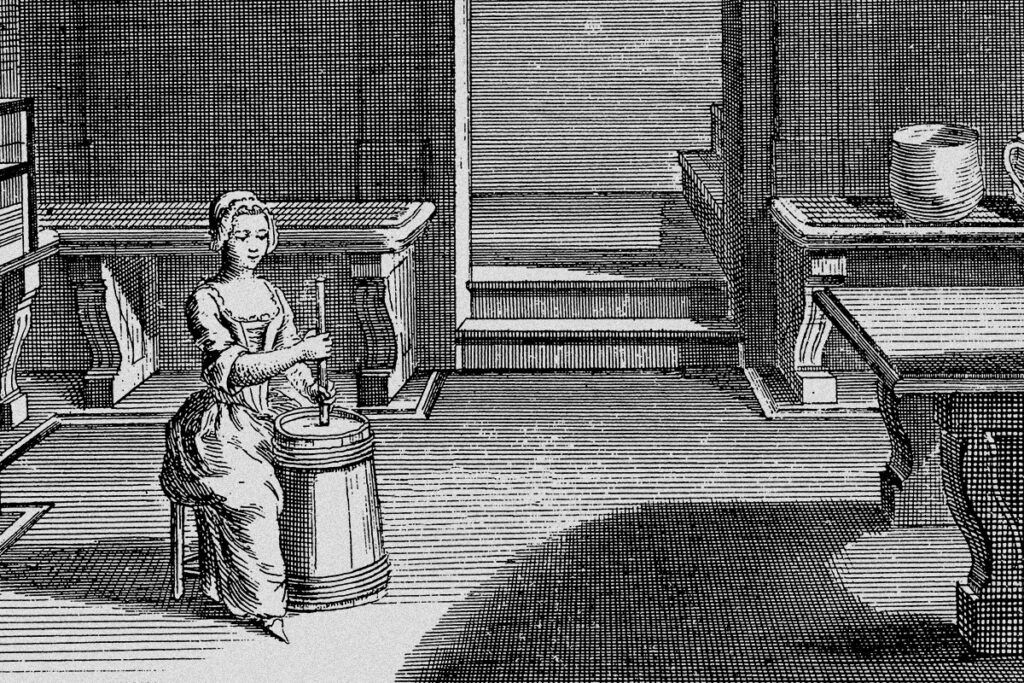
The Oldest Butter Dates Back 4,500 Years
In her 2017 book Butter: A Rich History, author Elaine Khosrova theorizes that butter originated around 8,000 BCE in Africa. But the earliest definitive known evidence of butter comes from an ancient Sumerian tablet dating around 2,500 BCE, which was uncovered at the al-ʿUbayd archaeological site in modern-day Iraq.
The bas-relief depicts a herd of cows and group of people performing various dairy-related activities. One man is shown milking a cow, another churning that milk into butter, and three other men are seen preparing and storing the clarified butter — known in Arabic as samn.
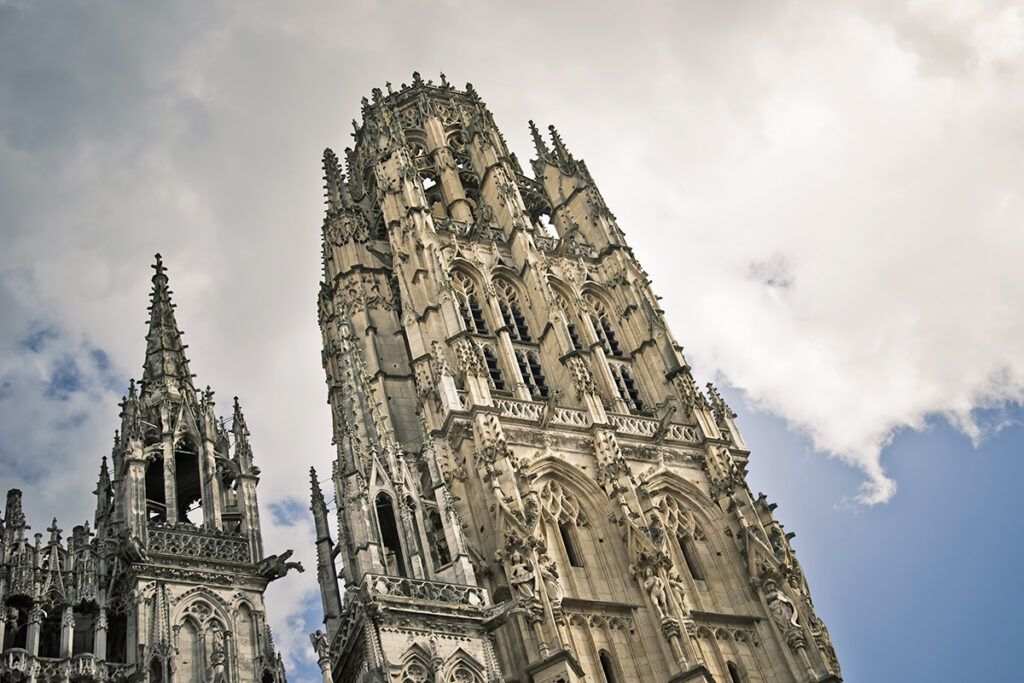
A “Butter Tax” Helped Fund a Catholic Church
One of the most striking features of the Rouen Cathedral, a Catholic church located in Normandy, France, is the Tour de Beurre, which translates to “Butter Tower.” The moniker comes from the fact that the tower’s construction was partially funded by butter-loving French Catholics who paid the church in exchange for the right to eat the fatty treat.
In the 15th century, butter was deemed a sinful indulgence by the Catholic Church, which banned its consumption during Lent, a 40-day Christian period of repentance and fasting that precedes Easter. But there was a way around this prohibition: Pope Innocent VIII permitted Catholics to pay a fee for the right to eat butter at any time of year.
Some cultures were less interested in paying, since their cuisines relied less on butter and more on other fats such as olive oil. But many French people, who relied more heavily on butter in their cooking, jumped at the chance to bypass the ban. The price was six livres tournois — a medieval French coin.
The church generated so much revenue during this time it was able to fund the construction of the Tour de Beurre. The ban on butter was later relaxed per the 1917 Code of Canon Law.
Bog Butter Can Be Thousands of Years Old
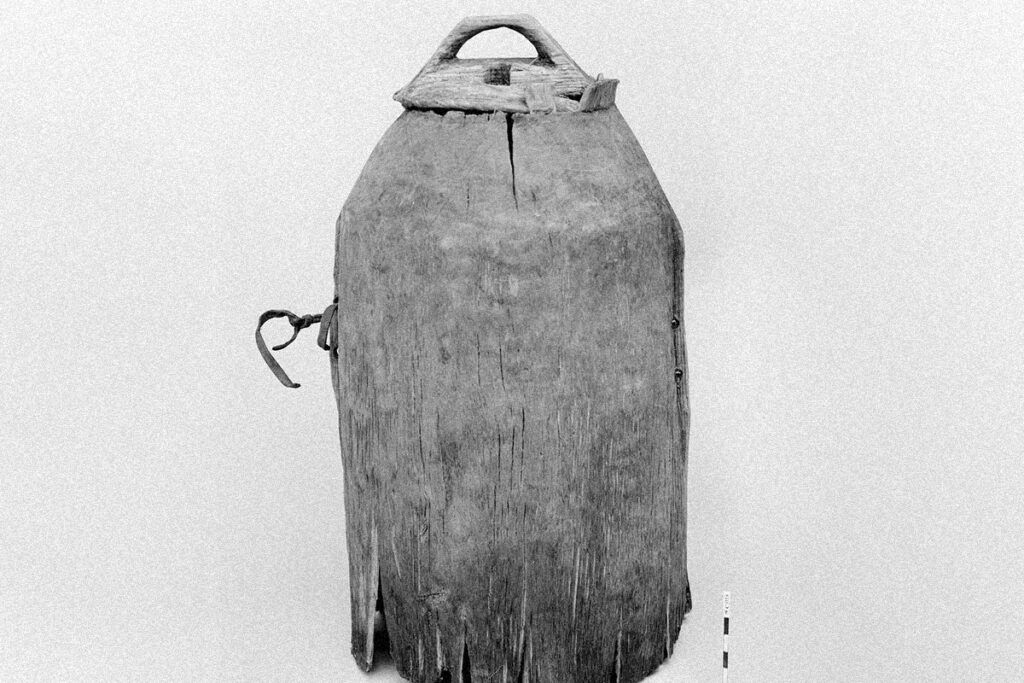
Ireland and Scotland are known for natural formations called peat bogs — highly dense wetlands containing partially decayed vegetation. The low levels of oxygen, coupled with the plentiful acids and cool temperatures, make the bogs natural refrigerators of sorts. As far back as the first century CE, locals have used those peat bogs for making and preserving butter, giving rise to what’s known today as “bog butter.”
Bog butter is a waxy substance often made from dairy (and sometimes tallow) contained within wooden containers, baskets, or animal hides. Many unearthed samples date back hundreds or even thousands of years and have a white, lumpy appearance coupled with a pungent smell akin to strong cheese.
The reason for bog butter’s creation is debated. In a 1997 paper published in The Journal of Irish Archaeology, author Caroline Earwood suggests that bogs were not only a natural means to refrigerate butter, but that they also helped to hide valuable butter from thieves. Others, however, theorize that bog butter was intended as a ceremonial gift to the gods.
In 2014, Irish celebrity chef Kevin Thornton tasted some thousands-year-old bog butter in an effort to replicate the dish for his own restaurants. He described the taste as such: “There’s fermentation, but it’s not fermentation because it’s gone way beyond that. Then you get this taste coming down or right up through your nose.”

Bennett Kleinman is a New York City-based staff writer for Inbox Studio, and previously contributed to television programs such as "Late Show With David Letterman" and "Impractical Jokers." Bennett is also a devoted New York Yankees and New Jersey Devils fan, and thinks plain seltzer is the best drink ever invented.
top picks from the Inbox Studio network
Interesting Facts is part of Inbox Studio, an email-first media company. *Indicates a third-party property.