

Original photo by © Guerrero De la Luz/Pexels.com
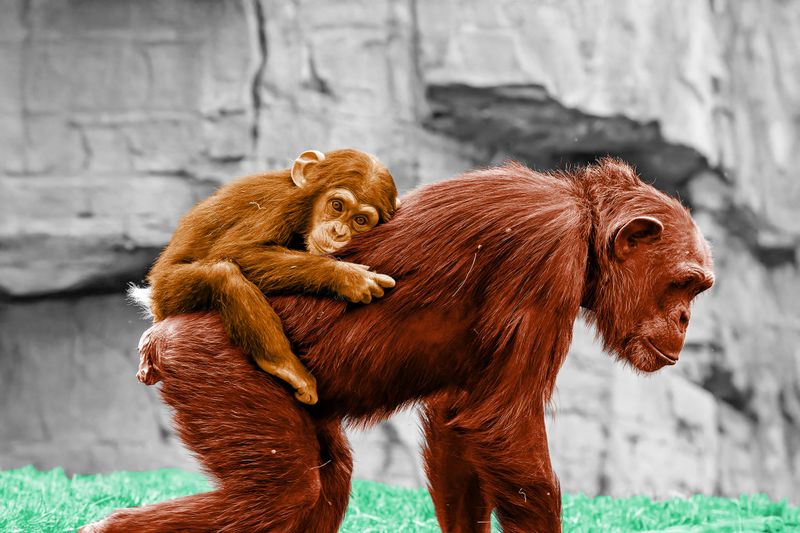
If you’ve ever owned a pet, you’ve probably had moments where you’ve thought your animal seemed almost human in its mannerisms and behavior. And you’re not alone: Researchers have documented behaviors across the animal kingdom that feel surprisingly similar to those of humans, from emotionally driven actions such as holding grudges to passing knowledge and skills down through generations.
While scientists once viewed animal behavior as mostly driven by instinct, it seems we may only be starting to understand their social and emotional complexity. Here are a few examples of surprising humanlike behaviors exhibited by our fellow animals.
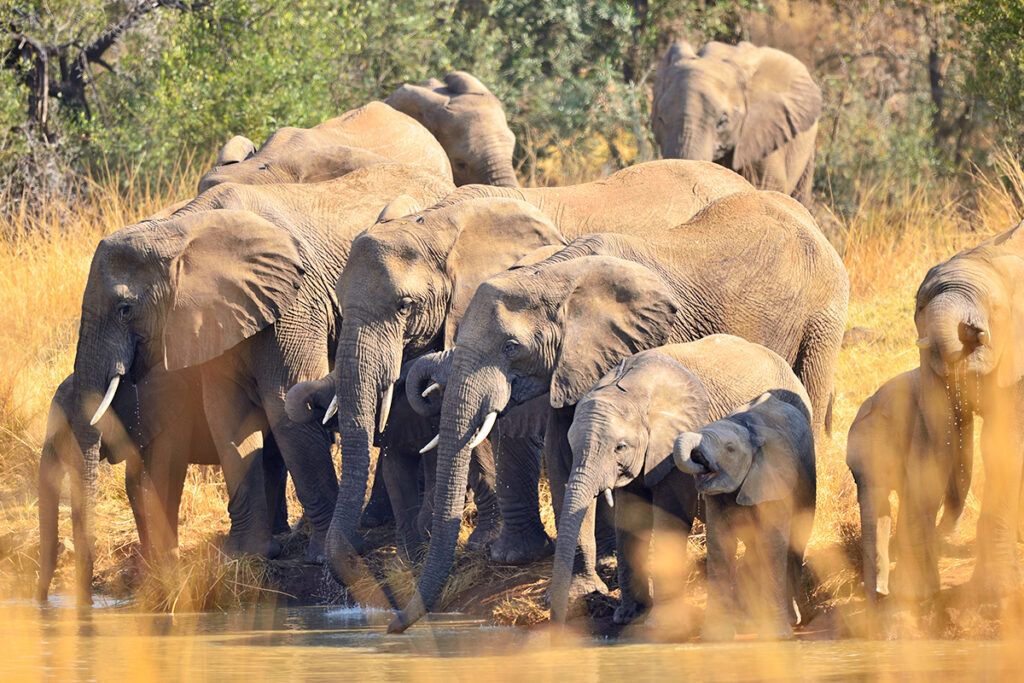
Elephants Call Each Other By Name
Elephants are famous for their intelligence, but their social lives may be even more sophisticated than previously thought. In fact, research suggests that they actually appear to address one another using distinct, name-like calls.
Wild African elephants use specific low-frequency rumbles that seem to refer to particular individuals. In experiments using recorded audio, elephants responded more strongly when they heard the call associated with themselves, suggesting they can recognize when they’re being called.
What sets elephants apart from other vocal animals is how those calls function: Rather than simply imitating the recipient of the sound, the way dolphins or parrots do, the sounds appear to act as separate labels, similar to human names. This kind of communication requires the ability to learn and use new sounds in a flexible way — a rarity in the animal world.
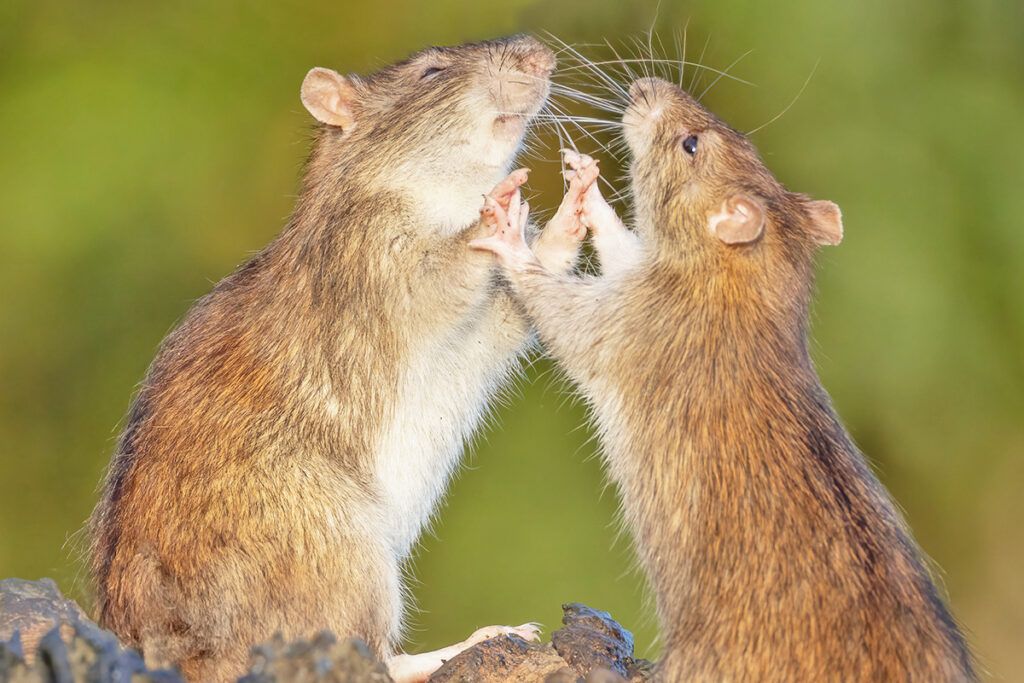
Rats Show Each Other Compassion
Rats are often dismissed as purely instinctual and driven by survival, but they’ve actually displayed behavior that prioritizes helping others. One widely cited study found that they would help rescue a fellow rat who was trapped in a plastic tube before taking food that was simultaneously available to them.
Another study took things a bit further and found much the same: Rats were placed in pairs with one animal forced to swim in a shallow pool while another stayed dry on a platform nearby. The dry rat could choose between opening a door to rescue the other rat or retrieving a piece of chocolate. Results showed they chose to help the other rat in distress first 50% to 80% of the time.
Interestingly, rats that had previously experienced the stressful swimming condition were even quicker to help others. While this was first believed to demonstrate a level of empathy, later research across repeated trials suggests this behavior may strengthen as rats become more familiar with the situation, becoming increasingly eager to help a trapped companion rather than simply avoid the situation. This is a pattern seen across many social species, including humans; our social bonds, as you undoubtedly know, often shape our decision-making.

Orcas Pass Down Generational Knowledge
If you’ve spent any time learning recipes in your family’s kitchen or perfecting fishing techniques on childhood trips, you’ll know those aren’t the kinds of traditions you can learn in textbooks. Not unlike the way that type of knowledge is passed down through generations in humans, orcas’ tight-knit matrilineal communities have a similar culture.
Older whales, for example, guide younger pod members through specific hunting techniques such as coordinated wave-washing, a specific method for capturing prey in which orcas work together to create powerful waves and knock prey off ice floes. Different orca pods even develop their own distinct hunting styles, even when they live in overlapping regions and encounter the same types of food.
And this goes beyond survival techniques: Research suggests cultures among different populations can also shape how groups socialize, play, and even how they choose mates and reproduce. Those cultural behaviors aren’t universal behaviours shared by all orcas, though; it seems that what an orca knows depends heavily on who it grows up with and not necessarily what it’s hardwired to do.
More Interesting Reads


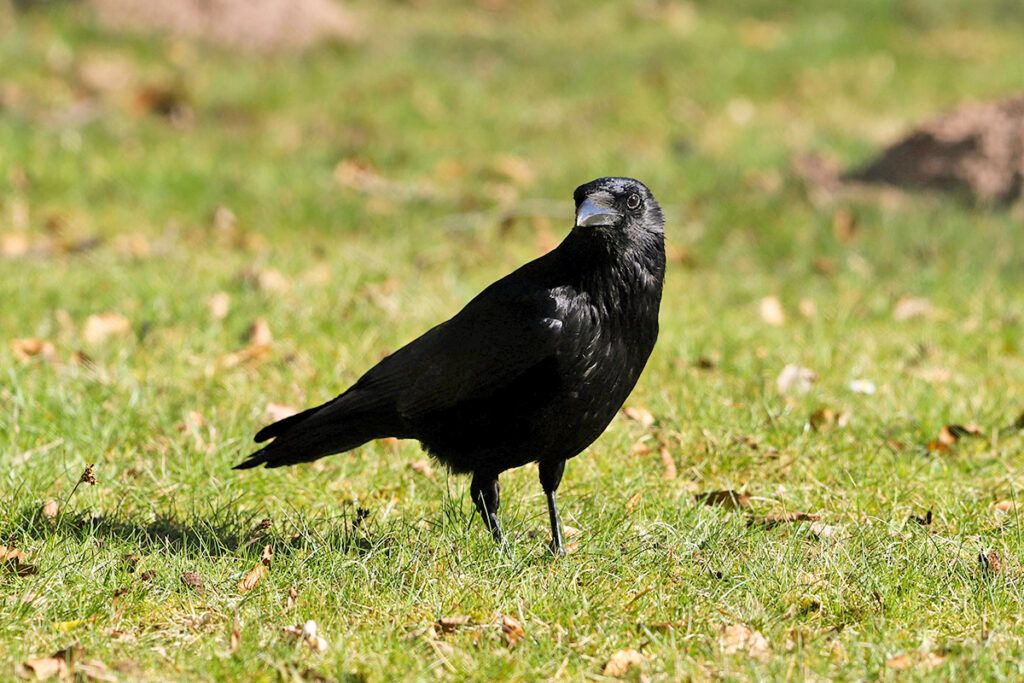
Crows Hold Grudges for Years
Crows can recognize human faces, and while that’s impressive enough on its own, it’s not quite the whole story. They also remember those faces long after a negative encounter.
In one study, researchers wearing masks captured and released wild crows while wearing specific masks so the birds would associate particular faces with the encounter. Later, when researchers wearing those same masks walked through the area, they were scolded with caws and mobbed by dive-bombs from those same birds, sometimes years later.
The sentiment spread, too: Even crows who were absent from the original encounter responded aggressively to the masked faces after witnessing how other crows reacted. Zoologist John Marzluff, the University of Washington professor in charge of the catch-and-release project, conducted years of follow-up observations tracking how long the birds continued reacting to people wearing the masks from the initial encounter and estimated that the angered crows stayed mad for as long as 17 years.
Neuroscientists think this is likely because crows have a region of the brain that works much like the mammalian amygdala, the part involved in processing emotions, particularly fear and threat responses.
Chimpanzees Wage Organized Conflicts
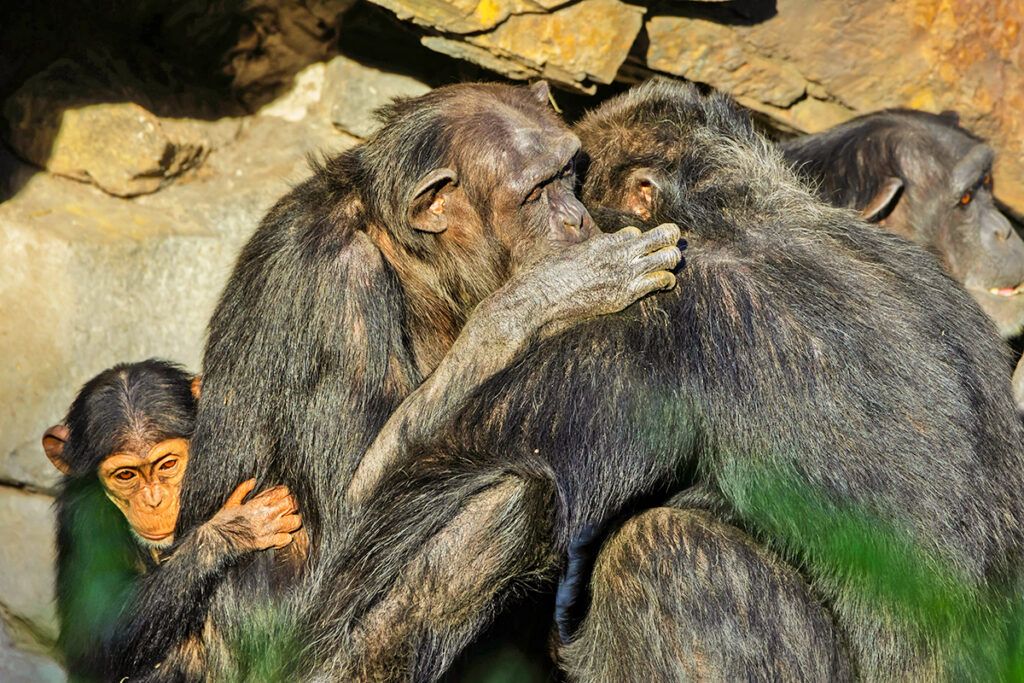
Chimpanzees are known to live in large, humanlike social groups, and they sometimes defend them quite aggressively. Neighboring chimp communities have been known to wage coordinated raids into each other’s territory, most famously in the Gombe Stream population studied by Jane Goodall in the mid-1970s. Over time, those encounters can escalate into sustained territorial conflict, and one group can gradually expand its territory at the expense of another.
This chaos is actually controlled competition with clear alliances, and yes, it feels all too familiar. Humans, of course, similarly draw boundaries and compete with our neighboring communities, even if our conflicts differ in scale and complexity.
But conflict is, of course, just one part of chimpanzee society. Humans’ closest living relatives are also incredibly physically affectionate: They form long-term social and familial bonds, are doting caregivers, and are even known to laugh, reflecting an advanced level of social intelligence.

Nicole is a writer, thrift store lover, and group-chat meme spammer based in Ontario, Canada.
top picks from the Inbox Studio network
Interesting Facts is part of Inbox Studio, an email-first media company. *Indicates a third-party property.