
Original photo by Sandra Seitamaa/ Unsplash+

American paper money is printed in just two places — at the Bureau of Engraving and Printing’s facilities in Washington, D.C., and Fort Worth, Texas — but once it’s entered circulation, it ends up all around the world. The greenback is so well received worldwide that U.S. dollars are commonly accepted in other countries, not just at banks but in everyday interactions. However, most of the U.S. money that leaves the country never returns, and financial experts believe anywhere from half to two-thirds of all U.S. circulating banknotes are actually kept outside of the country’s borders. 

All U.S. banknotes weigh the same amount.

Ready to reveal?

Oops, incorrect!

It's a fact

Regardless of their face value, all seven denominations of U.S. paper money — $1, $2, $5, $10, $20, $50, and $100 — weigh the same amount. When placed on a scale, each bill measures just 1 gram. It would take 454 banknotes to equal 1 pound.

It’s difficult to track down exactly where American currency winds up after it leaves the country. While the U.S. Customs Service requires travelers and others to report incoming and outgoing cash, and banks monitor large shipments of bills as they enter and exit the country, there isn’t any other way to track how U.S. bills are used (or where they end up) after crossing American borders.

Economists believe U.S. money has become popular outside of the country thanks to its stability. Citizens in countries with less reliable currencies often practice “dollarization”: using U.S. dollars alongside (or as) their homeland’s own form of tender. Swapping to a more secure form of money that better retains its value protects from tumultuous ups and downs that can cause financial losses. While greenbacks are commonly accepted all throughout the world, at least 11 countries have adopted U.S. dollars as their official currency, including Ecuador, Zimbabwe, Micronesia, and the British Virgin Islands.

Numbers Don't Lie

Numbers Don't Lie

Average life span (in years) of a $1 bill
5.8
Average time (in years) a U.S. coin will circulate before being retired
30
Year George Washington’s portrait first appeared on the $1 bill
1869
Estimated number of debit cards in use in the U.S.
6 billion+

The ______ is responsible for investigating all counterfeit U.S. money.

Ready to reveal?

Confirm your email to play the next question?

The U.S. Secret Service is responsible for investigating all counterfeit U.S. money.

Placeholder Image

The portrait of George Washington featured on the $1 bill was never finished.

Early American leaders were hesitant to print images of the Founding Fathers on the country’s currency, though that reluctance wouldn’t last forever. In 1869 — 70 years after his death — George Washington’s likeness was printed on the $1 bill for the first time. Engravers based Washington’s vignette on the “Athenaeum Portrait,” a piece by painter Gilbert Stuart that became famous despite never being completed. Washington sat for the painting at his wife Martha Washington’s request in 1796, with the understanding that she would receive the portrait after it was completed. However, Stuart never finished the painting, a move some historians believe was intentional so that the portrait could instead be copied and sold. Stuart may have made as many as 75 reproductions, though the original “Athenaeum Portrait” survives today, housed alternately at the National Portrait Gallery and Boston’s Museum of Fine Arts.

Nicole Garner Meeker
Writer

Nicole Garner Meeker is a writer and editor based in St. Louis. Her history, nature, and food stories have also appeared at Mental Floss and Better Report.

Original photo by eurobanks/ Shutterstock

Celebrity weddings — love them or ignore them, they’ve seemingly always been a topic of fascination for Americans. One famous case: the wedding of Charles Stratton, aka General Tom Thumb, an entertainer known for his particularly small stature. At 40 inches tall, Stratton enjoyed a lucrative career singing, dancing, and acting; part of his success came from employment with famed showman P.T. Barnum, who dubbed him the “smallest man alive.” In February 1863, Stratton married the similarly sized “Queen of Beauty,” Lavinia Warren, in a dazzling New York display that attracted thousands of onlookers trying to get a glimpse of the couple. After the ceremony, a reception — to which Barnum had sold thousands of tickets — allowed guests to meet the pair in a receiving line. Ladies were handed a boxed slice of brandy-soaked wedding fruitcake on their way out.

The world’s oldest full-sized wedding cake was baked during Queen Victoria’s reign.

Ready to reveal?

Oops, incorrect!

It's a fact

Baked in 1898, the British confection has survived World War II air raids and outlived six monarchs as the world’s oldest complete wedding cake. The four-tiered cake was originally kept in a bakery window for more than six decades before being donated to a museum in Basingstoke, England.

After the wedding, Stratton and Lavinia were even welcomed at the White House by President Lincoln and his wife, Mary Todd. But Lavinia’s career dimmed after Stratton’s death in 1883, and she used a slice of her wedding cake at least once to help her career. In 1905, she sent the then-42-year-old slice of cake to actress Minnie Maddern Fiske and her husband, an editor at a theater publication, along with a letter that said, “The public are under the impression that I am not living.” Lavinia would eventually continue performing until her 70s, even starring in a silent film in 1915 with her second husband, “Count” Primo Magri. Today, two pieces of Stratton and Lavinia’s wedding cake have outlived the couple — one donated to the Library of Congress in the 1950s as part of the Fiskes' papers, another at the Barnum Museum in Connecticut.

Numbers Don't Lie

Numbers Don't Lie

Approximate age at which Charles Stratton began performing for audiences
5
Cost of a ticket to attend the Strattons’ New York wedding in 1863
$75
Weight (in pounds) of Queen Victoria’s wedding cake, baked in 1840
300
Price (in dollars) of the most expensive wedding cake slice sold at auction
$29,900

Historians believe wedding cakes originated in ______.

Ready to reveal?

Confirm your email to play the next question?

Historians believe wedding cakes originated in ancient Rome.

Placeholder Image

The Library of Congress is the world’s largest library.

America’s Founding Fathers were avid readers, so it makes sense that Congress would fund a library for its own use, but little did the first legislature know the depository would grow into the world’s largest library. Philadelphia and New York City were homes to some of the earliest American libraries and Congress; both cities served as the country’s first capitals. But when Congress planned its final move to Washington, D.C., legislators worried that access to reference texts would be drastically scaled back. In an effort to keep the country’s leaders well-read, President John Adams established the Library of Congress in 1800 with a budget of $5,000. The library’s core collection held 3,000 books (mostly legal texts), but was destroyed just a few years later, in 1814, when British soldiers burned parts of the city; the collection would eventually be rebuilt with help from Thomas Jefferson. Today, the Library of Congress houses more than 173 million items, and that number is constantly growing, since the curators take in nearly 10,000 new materials every day.

Nicole Garner Meeker
Writer

Nicole Garner Meeker is a writer and editor based in St. Louis. Her history, nature, and food stories have also appeared at Mental Floss and Better Report.

Original photo by flaviano fabrizi/ Shutterstock

Few things are as ubiquitous as the metric system, also known as the International System of Units. Democratic societies, totalitarian regimes, desert nations, and mountainous countries alike all use the decimal system of measurement first devised in the 18th century — all, that is, except Liberia, Myanmar, and the United States. Instead, these countries use imperial (or customary) measurements, such as the foot, yard, and mile, as well as ounces, pounds, and tons. Even among these three nations, Liberia and Myanmar are in the middle of the metrification process, meaning that one day the U.S. will be the lone holdout. 

“Smidgen” is a real measurement.

Ready to reveal?

Oops, incorrect!

It's a fact

“Dash,” “pinch,” and “smidgen” are often used in recipes, roughly translating to “a little.” But these terms actually have real measurements associated with them. A dash is 1/8 teaspoon, a pinch is 1/16 teaspoon, and a smidgen (also known as a shake) is 1/32 teaspoon.

There was a time when the U.S. was also headed in the metric direction. In 1975, Congress passed the Metric Conversion Act, calling for the country’s voluntary conversion to the metric system — the key word there being “voluntary.” President Jimmy Carter tried to implement the transformation, but the effort fell flat during Ronald Reagan’s subsequent administration. Because of the system’s near-ubiquity, however, today some U.S. groups (especially scientists) and businesses choose to use metric measurements anyway. And while many other countries have moved on from their own traditional measurement units, some still retain vestiges of time past. In England, road signs still show miles, while some Asian countries sometimes still use traditional measurements in unofficial capacities. And although the U.S. is unlikely to ditch its customary units any time soon, the country is more metric than meets the eye — after all, we often buy beverages in liters and run 5Ks, even if our recipes call for cups and spoons and our odometers measure in miles.

Numbers Don't Lie

Numbers Don't Lie

Year the US Metric Association first published Metric Today, a newsletter dedicated to U.S. metrification
1966
Percent of Americans who support adopting the metric system (as of 2016)
32
The year the U.S. Congress legally recognized the metric system
1866
The only U.S. interstate, from Tucson to Nogales, Arizona, fully marked in kilometers
19

The metric system was first implemented during the ______.

Ready to reveal?

Confirm your email to play the next question?

The metric system was first implemented during the French Revolution.

Placeholder Image

Scientists redefined the kilogram in 2019.

Although metric measures may seem like immutable facts, their values can change over time. Take, for example, the kilogram. In 1799, scientists forged a cylinder to represent the weight of a kilogram (it was later reforged in 1889 out of a more durable platinum-iridium alloy). For years, this cylinder — kept at the International Bureau of Weights and Measures in Sèvres, France, and known as “Le Grande K” or Big K — represented the international measurement of a kilogram. But on November 16, 2018, representatives from the General Conference on Weights and Measure in Versailles, France, voted to change that definition. Instead of relying on an obscure cylinder kept under lock and key (and one that degraded slightly over time), a kilogram was to be defined in relation to Planck’s constant, which is a fundamental universal constant that relates a photon’s energy to its frequency. In other words, today’s definition of a kilogram is technically 6.626,070,15 × 10-34 kg m2 s–1. Don’t worry — 1,000 grams is also a correct answer.

Darren Orf
Writer

Darren Orf lives in Portland, has a cat, and writes about all things science and climate. You can find his previous work at Popular Mechanics, Inverse, Gizmodo, and Paste, among others.

Original photo by SciePro/ Shutterstock

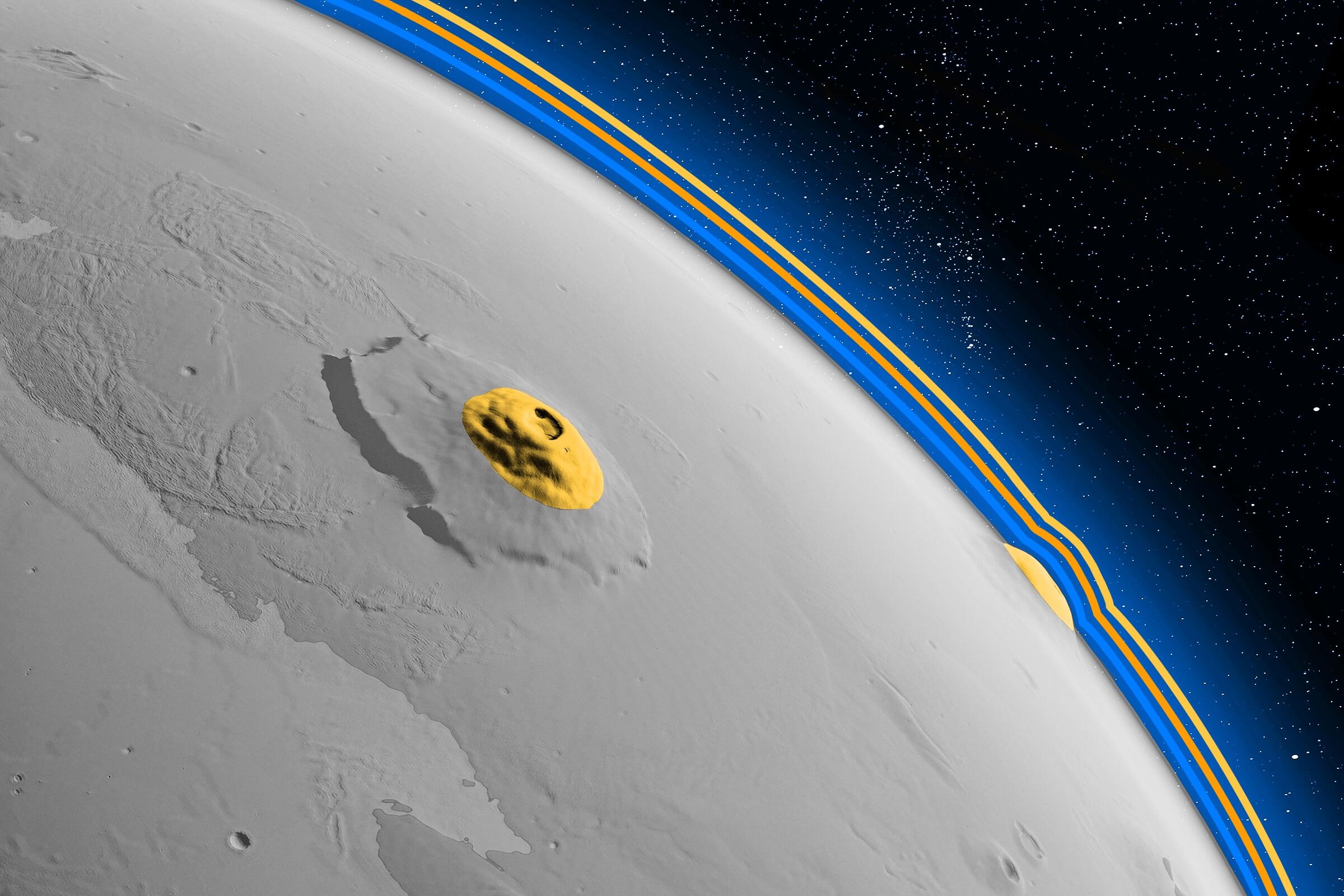
Earth is home to stunning snow-capped mountains that tower over their surrounding landscapes, but none quite compare to Mars’ Olympus Mons. First photographed in detail by NASA’s Mariner 9 probe in 1971, Olympus Mons (Latin for “Mount Olympus”) is nearly 16 miles tall. For comparison, its most famous Earthly competitor — Mount Everest — is only about 5.5 miles above sea level. The width of Olympus Mons is just as impressive as its height: Stretching 374 miles across, it’s as big as the entire state of Arizona. Olympus Mons is what’s known as a shield volcano — a type formed as lava slowly spreads out and cools; they usually have a low profile and are named for their resemblance to a warrior’s shield.

Earth is the most volcanically active place in the solar system.

Ready to reveal?

Oops, incorrect!

It's a fib

Io, a moon of Jupiter, is the solar system’s most volcanically active spot, with hundreds of volcanoes erupting every moment. The tiny moon is influenced by the gravity of Jupiter and sibling moons, which create tides and friction that heat it and cause major volcanic activity.

So how did Olympus Mons get so big? Scientists think a combination of low surface gravity and high volcanic activity allowed Mars’ great shield volcano to grow — over billions of years — beyond anything seen on Earth. And unlike on Earth, where volcanoes form as tectonic plates drift over hot spots of lava, Mars’ plate movement is much more limited, meaning magma can build and build in one spot over a long time. So while summiting peaks like Everest and K2 remains an impressive terrestrial feat, the solar system’s biggest climbing challenge awaits on the red planet.

Numbers Don't Lie

Numbers Don't Lie

Number of major Greek deities thought to occupy Olympus, seat of the gods
12
How many times larger (by volume) Olympus Mons is compared to Mauna Loa, Earth’s largest shield volcano
100
Percentage of the Martian surface mapped by NASA’s Mariner 9
85
Estimated age (in Earth years) of Olympus Mons
3.5 billion

The ______ islands would fit inside Mars’ Olympus Mons volcano.

Ready to reveal?

Confirm your email to play the next question?

The Hawaiian islands would fit inside Mars’ Olympus Mons volcano.

Placeholder Image

In the 19th century, some people thought there were alien-made canals on Mars because of a translation error.

In 1877, astronomer Giovanni Schiaparelli — director of the Brera Observatory in Milan — began mapping the surface features of Mars. Among these features were what Schiaparelli called canali, or what appeared to be channels on the Martian surface. While these “channels” were little more than an illusion created by the alignment of craters and other surface features — all obscured by the poor resolution of 19th-century telescopes — English-speaking publishers translated canali as “canals,” a shift that encouraged interpreting them as something made by an intelligent being. In the 1890s, American astronomer Percival Lowell ran with this idea and argued that these alien-made “canals” were built to transport water from Mars’ ice caps. The theory captured the imagination of the public — H.G. Wells even wrote his famous novel “War of the Worlds” during this “canal craze.” While plenty of scientists were skeptical of Lowell’s theories, the matter wasn’t definitively put to rest until 1965, when NASA’s Mariner 4 space probes took a closer look. No canals were found, but what they discovered — the gargantuan volcano Olympus Mons, for one — was just as incredible.

Darren Orf
Writer

Darren Orf lives in Portland, has a cat, and writes about all things science and climate. You can find his previous work at Popular Mechanics, Inverse, Gizmodo, and Paste, among others.

Original photo by Michele and Tom Grimm/Alamy Stock Photo

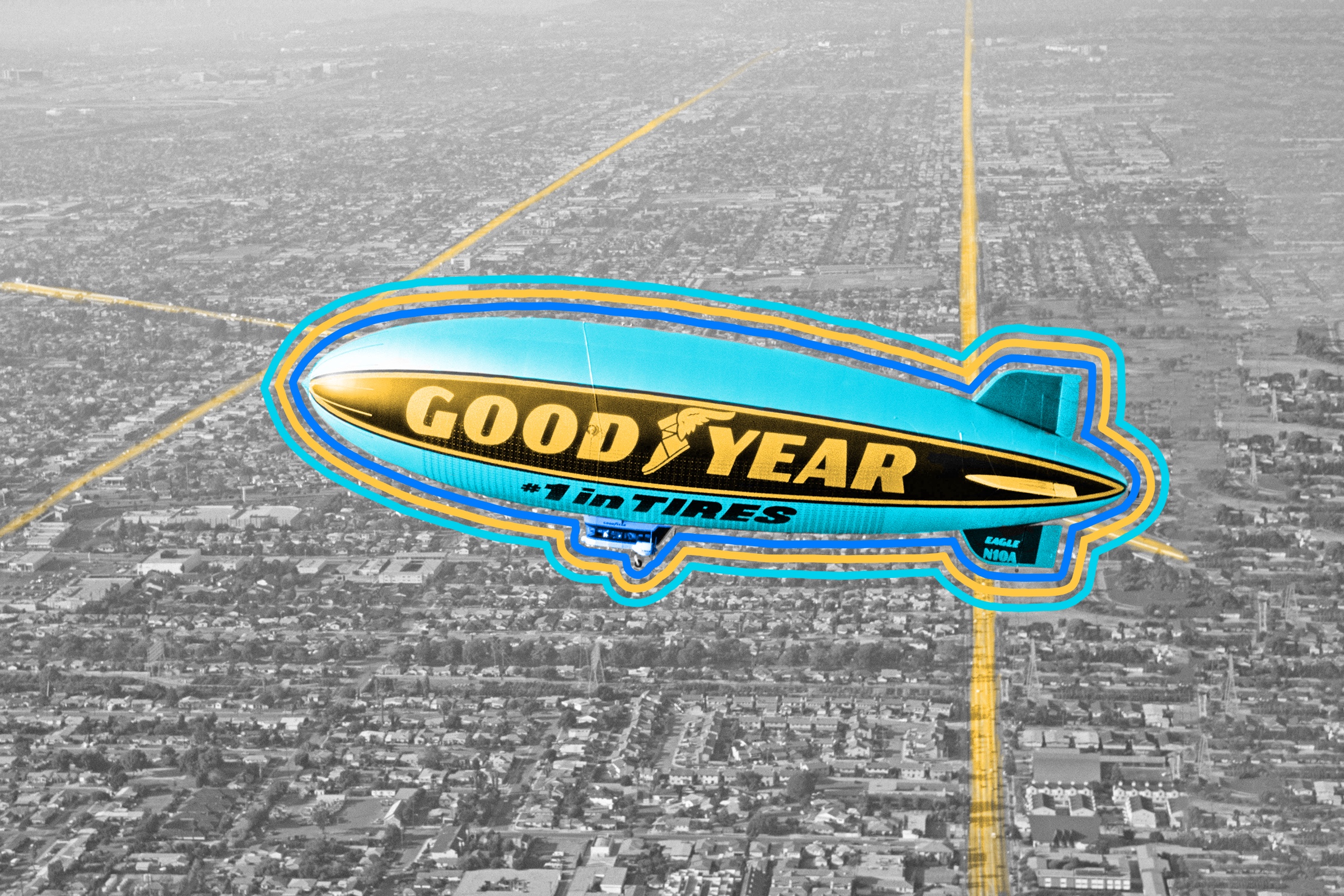
At the start of the 20th century, before the Wright Brothers finally got their famous Flyer off the ground in 1903, airships were seen as the future of human flight. The category includes a variety of dirigibles, such as zeppelins (which have a rigid structure) and blimps (which completely collapse when deflated). German zeppelins performed bombing runs in World War I, but the 1937 Hindenburg disaster — in which the Hindenburg zeppelin caught fire in New Jersey while attempting to moor, killing 36 — spelled the end of airships as commercial vehicles. While blimps found limited use during World War II, after the war, airships mostly transformed into floating advertisements.

The first nonstop transatlantic flight was by airship.

Ready to reveal?

Oops, incorrect!

It's a fib

Airplanes barely beat airships across the Atlantic. In June 1919, English aviators John Alcock and Arthur Whitten Brown flew a twin-engine biplane across the ocean. Weeks later, the British airship R-34 landed in Long Island, New York, after a 108-hour transatlantic flight.

Today, only about 25 blimps exist, and about half of them are used for advertising — including the famous Goodyear Blimp (which is now technically a zeppelin). Airships are expensive to construct and to run, in part because they require as much as $100,000 worth of helium per trip, and helium gas is the subject of frequent worldwide shortages. There’s also a dearth of people trained to fly them. Yet efforts have been made to resurrect the airship, chief among them the U.S. Army’s Long Endurance Multi-Intelligence Vehicle, which was designed to float above the battlefield, providing intelligence, surveillance, and reconnaissance for ground forces (the project was scrapped in 2013). Today, some experts call for a return to airships, but for now they remain part of a lighter-than-air future that never was.

Numbers Don't Lie

Numbers Don't Lie

Year French engineer Henri Giffard built the world’s first successful airship
1852
Reported cost to build a modern Goodyear Blimp
$20 million
Estimated number of years left in the world’s helium supply
100
Number of songs on Led Zeppelin’s self-titled debut album
9

The first airship to travel around the world with passengers was the famous ______.

Ready to reveal?

Confirm your email to play the next question?

The first airship to travel around the world with passengers was the famous Graf Zeppelin (LZ-127).

Placeholder Image

Airships could make a comeback because of climate change.

In terms of speed and safety, airplanes have largely outpaced airships, but there is one metric where airships still reign — efficiency. Scientists have dreamed up many ways to slowly wean ourselves off fossil fuels (think solar panels, wind turbines, and electric cars), but airplanes remain a conundrum. Some estimates project that by 2050, 27% of the world’s carbon budget (under targets developed to keep the global temperature rise below a 1.5 degree Celsius increase from pre-industrial levels) could come from aviation. That’s why some researchers have begun reexamining the airship. Because of its buoyancy and ability to ride the global jetstreams, airships use significantly less fuel. One ambitious airship company says its dirigibles could run at only 8% of the fuel cost of a typical jet airliner. Because of safety issues and long travel times, airships would only be practical for short-distance commercial flights or for hauling cargo, but they could still have a significant place in a greener future.

Darren Orf
Writer

Darren Orf lives in Portland, has a cat, and writes about all things science and climate. You can find his previous work at Popular Mechanics, Inverse, Gizmodo, and Paste, among others.

Original photo by Anton Jankovoy/ Shutterstock

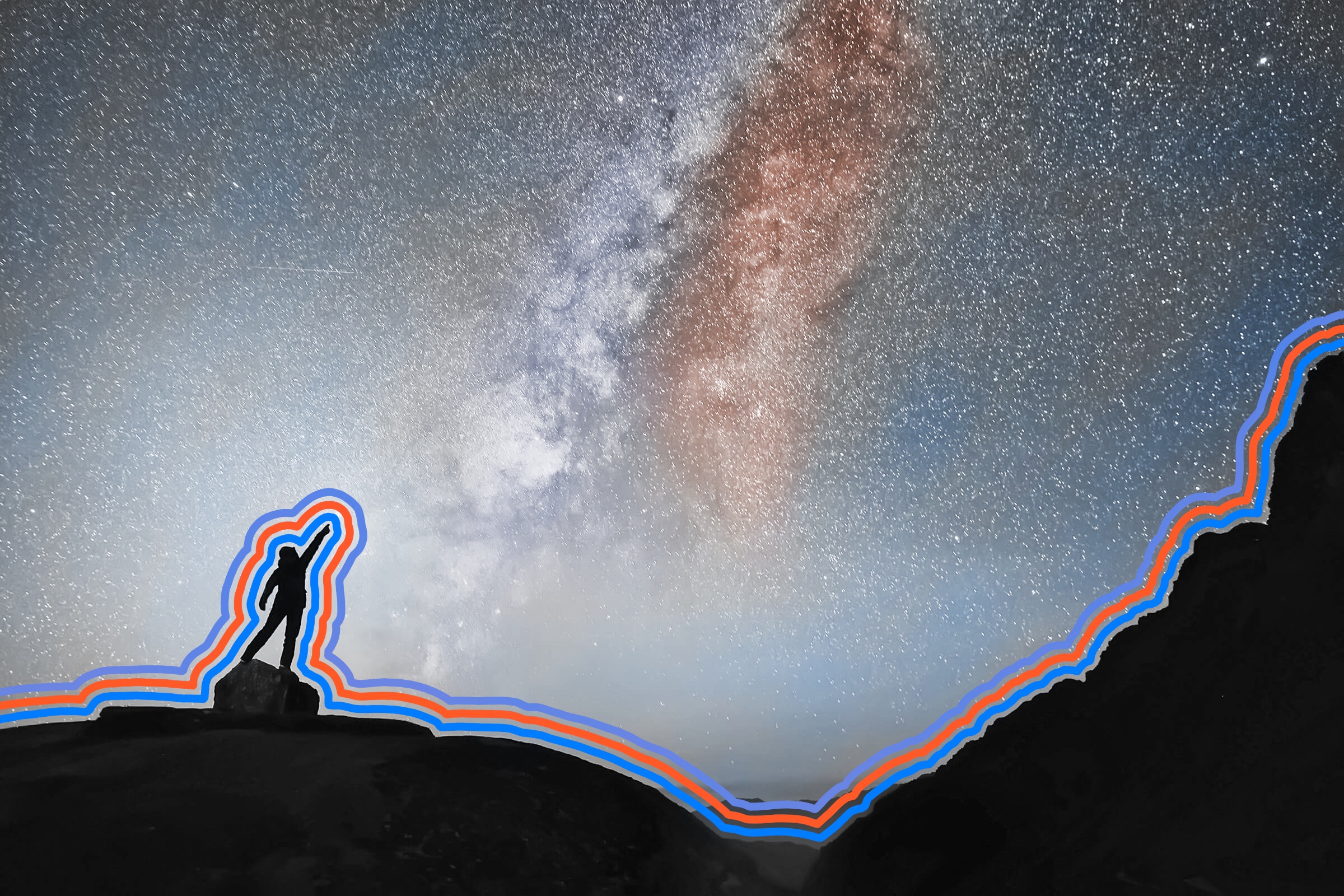
The galaxy we call home is unfathomably enormous. With enough room for an estimated 100 billion planets, the Milky Way stretches about 100,000 light-years across, although estimates of its full size vary. (A light-year is the distance a beam of light travels in one year on Earth, equal to about 6 trillion miles.) Earth is situated approximately two-thirds of the way from our galaxy’s center; we’re essentially in the suburbia of the Milky Way. When we look at celestial bodies, we’re actually looking back in time, because of how far away they are and how long their light takes to reach us. The sun we see, for example, is always about 8.3 minutes old, while the light from the North Star, aka Polaris, is about 320 years old. And while we can’t actually see the center of the Milky Way, light from the area takes nearly 25,000 years to reach our planet. That means it dates back to when humans were still in the Stone Age. 

The inventor of the Milky Way candy bar was inspired by space.

Ready to reveal?

Oops, incorrect!

It's a fib

Mars launched the Milky Way bar in 1923 under the same name as a popular malted milkshake flavor; the galaxy was not involved. Ads claimed the candy was healthier than other treats thanks to its malted milk powder, helping Mars to sell more than 16 million bars in the product’s first year.

What we know about our galaxy is ever-expanding — much like the universe itself. Early astronomy pioneers such as Aristotle believed the Earth was the center of the universe, circled by the sun, moon, and all other cosmic matter. In 1609, Galileo’s first glimpse of the Milky Way through an improvised telescope showed its wispy appearance wasn’t a layer of clouds, as previously thought, but a vast collection of individual stars. His discoveries lent credence to the idea that Earth wasn’t the center of the universe after all. Yet it would take 300 more years for scientists to confirm that we’re not even at the center of our own galaxy — it wasn’t until 1924 that astronomer Edwin Hubble confirmed that the Milky Way is just one of many galaxies in our vast universe. 

Numbers Don't Lie

Numbers Don't Lie

Age (in years) of the Milky Way galaxy
13.6 billion
Year the Hubble Telescope was launched into space
1990
Estimated number of galaxies in the universe
2 trillion
Suspected number of planets within 50 light-years of Earth
1,500

The Milky Way is called a ______ galaxy because of its pinwheel shape.

Ready to reveal?

Confirm your email to play the next question?

The Milky Way is called a spiral galaxy because of its pinwheel shape.

Placeholder Image

The Milky Way goes by different names around the world.

The Milky Way is best known by that name, likely thanks to the Greeks, but stargazers elsewhere have used a variety of monikers for the band of stars and dust we call home. The galaxy is called the “Silver River” in China and Vietnam, “Backbone of the Night” in the Kalahari Desert of Southern Africa, and “Winter Way” in the Faroe Islands and some Nordic countries. Regardless of what name you use, the Milky Way is observable from nearly any place on Earth, so long as you find a spot fairly free of light pollution. Interstellar medium (aka space dust and gas) can make it tricky to observe significant detail without a telescope, but it’s still possible to see a spectacular cosmic show without any magnification.

Nicole Garner Meeker
Writer

Nicole Garner Meeker is a writer and editor based in St. Louis. Her history, nature, and food stories have also appeared at Mental Floss and Better Report.

Original photo by CreativeNature_nl/ iStock

Evolution has devised a mind-boggling number of amazing methods for perpetuating life on Earth. But one of nature’s most impressive tricks is pumping the brakes on pregnancy with a process known as embryonic diapause. This isn’t a rare prenatal feat, either: An estimated 130 mammal species, such as mice and seals, can pause a pregnancy for anywhere from a few days to as many as 11 months, as is the case with the tammar wallaby (Notamacropus eugenii). The pause usually occurs during the blastocyst stage, when an embryo forms in the uterus but doesn’t embed into the uterine wall until conditions are right. 

Some sharks can be pregnant for more than three years.

Ready to reveal?

Oops, incorrect!

It's a fact

The embryos of frilled sharks (Chlamydoselachus anguineus) grow at a glacial pace, adding only about a half-inch per month. In total, these sharks can be pregnant for up to three and a half years — the longest of any vertebrate.

Scientists have identified two reasons why some mammals pause pregnancies. When animals are nursing, a rise in hormones prevents embryos from implanting, which gives the nursing young time to wean off their mother. The second reason is a bit more complicated, but certain animals can pause pregnancies when external conditions — such as a lack of food or harsh temperatures — are not ideal for raising a newborn. Scientists have known about this kind of diapause since at least the 1850s, but are only now beginning to understand its inner workings. In 2020, a study found that a catalytic enzyme known as mTOR — which regulates cell proliferation, growth, and protein synthesis, and also senses a cell’s nutrient and energy levels — instigated a metabolic response related to diapause when it was inhibited. Scientists are still piecing together exactly why humans, who also have mTOR enzymes, can’t pause pregnancies; understanding how this process works could lead to advancements in stem cell research and cancer treatment.

Numbers Don't Lie

Numbers Don't Lie

Size (in centimeters) of a kangaroo at birth (about the size of a grape)
2.5
Gestation period (in months) of an African elephant, the longest pregnancy among land mammals
22
Distance (in feet) that giraffes fall when born, breaking the umbilical cord and natal sac
6
Percentage of its body mass that an egg can take up in a kiwi bird
25

The ______ has 32 babies per brood, the most of any mammal.

Ready to reveal?

Confirm your email to play the next question?

The tailless tenrec (Tenrec ecaudatus) has 32 babies per brood, the most of any mammal.

Placeholder Image

Humans might be born 12 months too early.

Ever wonder why humans are born relatively defenseless compared to other mammals? Some scientists believe a human’s gestation period should be around 21 months — not nine. So what gives? Turns out, a variety of factors might explain why humans are born less developed compared to other mammalian species. The traditional belief is that natural selection favors our big brains and bipedalism at a detriment to longer gestation. These factors, combined with the small pelvises of people who give birth, create a situation where humans are essentially born prematurely. However, some scientists instead suggest that a person’s metabolism, and the energy demands of pregnancy, might be the reason. Simply put, a human can only spend so much energy daily until they max out. A person will almost always give birth right before reaching that “metabolic danger zone.”

Darren Orf
Writer

Darren Orf lives in Portland, has a cat, and writes about all things science and climate. You can find his previous work at Popular Mechanics, Inverse, Gizmodo, and Paste, among others.

Original photo by Photo 12/ Alamy Stock Photo

Not unlike Madonna, Lady Gaga, and other world-famous divas, Miss Piggy has never deigned to use her full name among us mere mortals. If she had, more of us might know that her first name is actually short for “Pigathius,” which comes from a Greek word supposedly meaning “river of passion.” Given her tumultuous love affair with a certain green frog, it’s more than fitting. Her last name, meanwhile, is Lee, which Muppets creator Jim Henson referenced in a 1974 note describing her as “delicate and lovely” (accurate). 

Miss Piggy is a New York Times bestselling author.

Ready to reveal?

Oops, incorrect!

It's a fact

“Miss Piggy’s Guide to Life” spent 29 weeks on the NYT bestseller list after it debuted in 1981. The 113-page book features self-help tips and pearls of wisdom as only the porcine prima donna could offer. (Among her pointers: If troubled by crows’ feet, wear scarecrow earrings.)

Said note also revealed her original love interest: Hamilton Pigg, who, despite belonging to the same species, is also “cigar smoking — the epitome of grossness,” according to Henson. It’s no wonder their romance didn’t last as long as that of Miss Piggy and Kermit the Frog. The two have been the most famous Muppets for decades, appearing in all manner of TV shows, movies, and even theme park attractions together. 

Numbers Don't Lie

Numbers Don't Lie

Episodes of “The Muppet Show”
120
Emmys won by “The Muppet Show” (out of 21 nominations)
4
Offspring Kermit and Miss Piggy have in “The Muppet Christmas Carol”
4
Year the “Pigs in Space” sketch first aired on “The Muppet Show”
1976

Kermit the Frog’s eyes were originally made from ______.

Ready to reveal?

Confirm your email to play the next question?

Kermit the Frog’s eyes were originally made from pingpong balls.

Placeholder Image

Kermit the Frog has appeared on Capitol Hill.

In addition to his fellow Muppets, Kermit also cares about his fellow amphibians — so much so, in fact, that in 2008 he joined a team of conservationists and the Association of Zoos & Aquariums to promote awareness of endangered amphibians by giving a speech on Capitol Hill. A certain red friend of his from Sesame Street, Elmo, had earlier testified before a House Appropriations subcommittee to support federal funding of music education and research. With his puppeteer hunched below the witness table, Elmo sang and danced as he answered questions about how very important music is for his learning and development. That appearance, in 2002, was the first time a Muppet had appeared in an official capacity in front of Congress. Elmo appeared in the written transcript of the hearing in part as “Mr. Monster.”

Michael Nordine
Staff Writer

Michael Nordine is a writer and editor living in Denver. A native Angeleno, he has two cats and wishes he had more.

Original photo by dblight/ iStock

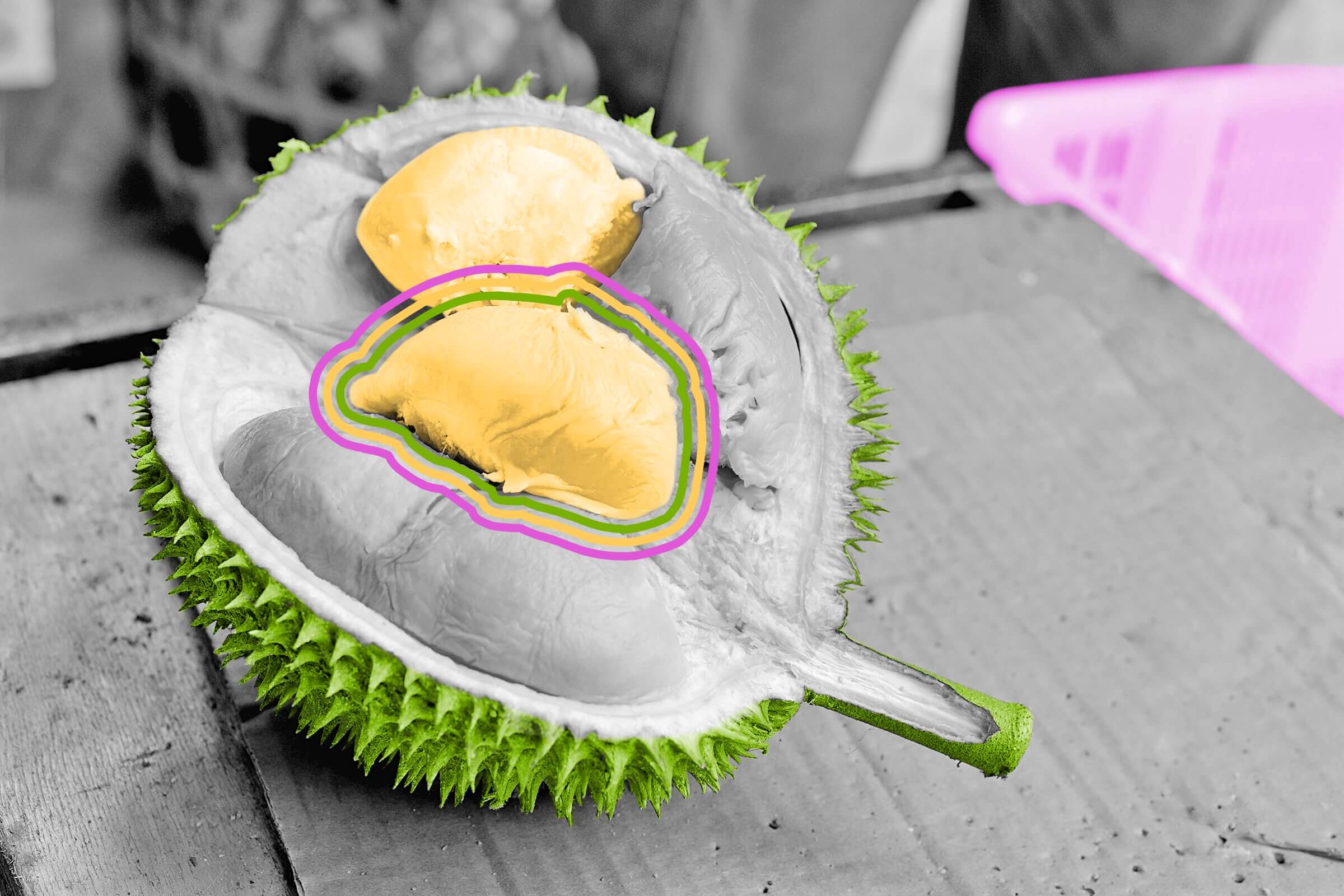
Most fruits tend to have sweet smells that delight our olfactory systems and make our mouths water. One, however, has a reputation for being so noxious that many people can’t make it past the rind to its sweet center — or even stand to be in the same room with it. The durian fruit, sometimes called the “king of fruit” in Southeast Asia (where it’s native), is so unpleasantly fragrant that it is banned from public transportation in Singapore. The spiky fruit is also often prohibited in hotels and outdoor public spaces in the region. 

Pineapples are actually berries.

Ready to reveal?

Oops, incorrect!

It's a fact

Each pineapple is made up of many berries, which develop around a single core and eventually merge. Every scale on a pineapple was once a flower.

Describing the odor associated with durians is no easy feat. Some chefs and adventurous eaters have likened it to rotten eggs, pungent cheese, or sweaty gym socks, though lovers of the fruit say the smell is worth enduring for its creamy flesh, which tastes of caramel and almonds.

Yet that unpleasant aroma can be so overwhelming it causes confusion and complaints. On at least two occasions in Australia, the fruit’s lingering scent was powerful enough to be mistaken for a natural gas leak. In 2018, passengers on an Indonesian flight refused to board a plane loaded with more than 2 tons of durian in the cargo hold because of the intense smell. Scientists believe durian fruit’s nauseating aroma comes from a higher-than-usual number of genes for volatile sulfur compounds, which become “turbocharged” as the fruit ripens. However, the scent has a beneficial purpose for the plants themselves: It’s likely durian fruit trees evolved to use the sour stench as a way to attract animals that dine on the fruit and spread the seeds throughout wild areas.

Numbers Don't Lie

Numbers Don't Lie

Sale price of the world’s most expensive durian, sold in Thailand in 2019
$47,784
Pounds of bananas eaten by the average American in 2021
26.87
Number of U.S. states where apples are commercially grown
32
Approximate weight (in pounds) of the world’s largest fruit salad, constructed in France in 2019
22,795

The world’s largest tree fruit, ______, can weigh up to 100 pounds.

Ready to reveal?

Confirm your email to play the next question?

The world’s largest tree fruit, jackfruit, can weigh up to 100 pounds.

Placeholder Image

The Supreme Court once ruled that tomatoes are vegetables.

It’s a popular fun fact that tomatoes are botanically fruits, but in the U.S. they’ve been considered vegetables — legally — since the late 19th century. The Tariff Act of 1883 required produce importers to pay taxes on foreign-grown produce shipped into the country, specifically vegetables (fruits were exempt). Importers — such as New York’s Nix family — believed they could evade the 10% tax by dealing in tomatoes, since the vine-growing crop is a fruit. A fight with the New York Port Authority led the Nixes to argue their point in court, and after six years, the case made its way to the Supreme Court. Despite the Nixes’ argument being biologically correct, the Port Authority won the case on two points: Tomatoes are related to several nightshade vegetables such as potatoes and peppers, and unlike other fruits are typically served with dinner instead of dessert. Ultimately, the ruling closed the tomato tax controversy for good.

Nicole Garner Meeker
Writer

Nicole Garner Meeker is a writer and editor based in St. Louis. Her history, nature, and food stories have also appeared at Mental Floss and Better Report.

Original photo by incamerastock/ Alamy Stock Photo

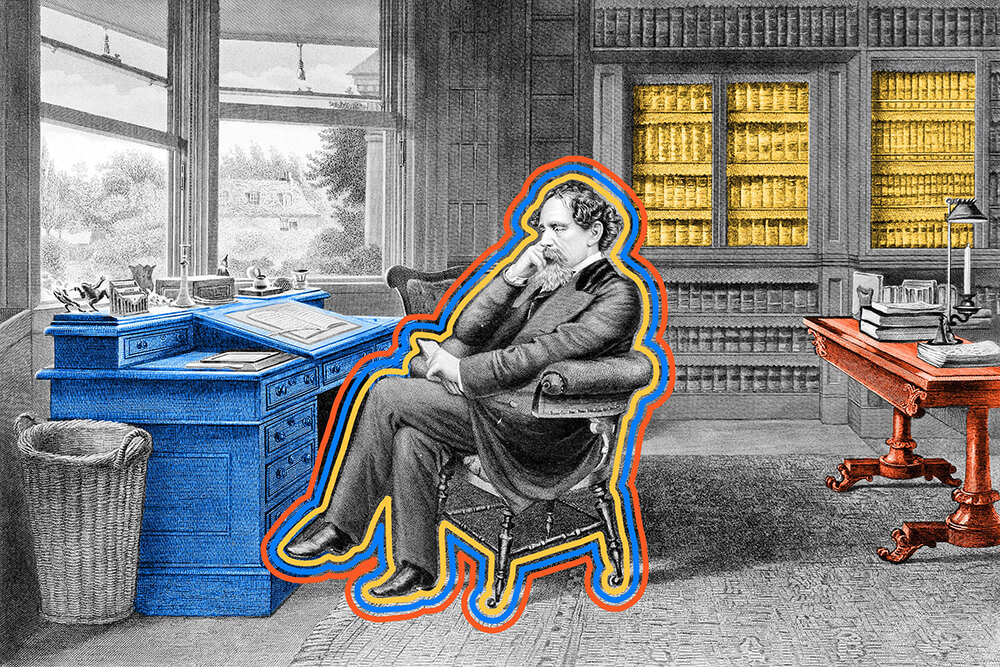
Years before Edgar Allan Poe wrote “The Raven,” Charles Dickens had an actual pet raven. The endlessly influential author of A Christmas Carol and David Copperfield was a bit eccentric, as many great artists are, and in 1841 wrote a letter to a friend in which he revealed that the protagonist of his new novel would be “always in company with a pet raven, who is immeasurably more knowing than himself. To this end I have been studying my bird, and think I could make a very queer character of him.” That novel was Barnaby Rudge: A Tale of the Riots of Eighty, published later the same year, and the bird in question was the beloved Grip. Grip had a habit of eating and drinking paint, alas, and died (probably as a result of doing what he loved) just a few weeks after that letter was sent. Dickens later had two more pet ravens, also named Grip.

Dickens sometimes wrote under a pseudonym.

Ready to reveal?

Oops, incorrect!

It's a fact

Dickens’ 1834 short story “The Boarding-House” was published under the name Boz, as was the 1839 compilation of essays and short stories “Sketches by Boz.” The pen name came from “Moses,” Dickens’ nickname for his brother, which he pronounced closer to “Boses” and eventually shortened.

As for Poe’s famous poem, there’s reason to suggest he drew inspiration from Grip. Dickens sent a manuscript of Barnaby Rudge to Poe, who wrote back that he enjoyed it but felt that the raven should have played a larger role. “The Raven” was published just a few years later, in 1845. Dickens, for his part, was so fond of dear old Grip that he had the bird taxidermied; today it sits atop a log in the Free Library of Philadelphia, where it can be visited by the public.

Numbers Don't Lie

Numbers Don't Lie

Age at which Dickens began working in a warehouse
12
Pages in “Bleak House,” Dickens’ longest novel
928
Year a raven named Grip came to live in the Tower of London
2012
Lines in Poe’s “The Raven,” divided into 18 stanzas
108

A group of ravens is known as a(n) ______.

Ready to reveal?

Confirm your email to play the next question?

A group of ravens is known as a(n) unkindness.

Placeholder Image

Dickens would have hated his funeral.

To say that the author didn’t want a big funeral would be an understatement. Dickens stipulated in his will that “no public announcement be made of the time or place of my burial” and originally wanted his final resting place to be “in the small graveyard under Rochester Castle wall, or in the little churches of Cobham or Shorne,” which were near his country home. His will also dictated that he was to be “buried in an inexpensive, unostentatious, and strictly private manner,” which isn’t what happened. He was instead interred in Westminster Abbey’s Poets’ Corner in part at the behest of Arthur Stanley, then the Dean of Westminster, as well as Dickens’ biographer John Forster. Though only a dozen people attended his private funeral on June 14, 1870, thousands showed up to pay their respects over the next two days.

Michael Nordine
Staff Writer

Michael Nordine is a writer and editor living in Denver. A native Angeleno, he has two cats and wishes he had more.