
During his 82 years in the spotlight, the wildfire prevention mascot has kindled lots of goodwill. So much, in fact, that in 1964, the U.S. Postal Service created a unique ZIP code for Smokey Bear’s mail. Not bad for a mascot that started out as a purely fictional character. In 1944, working on a commission from the War Advertising Council and the U.S. Forest Service, Saturday Evening Post artist Albert Staehle and writer Harold Rosenberg crafted the reassuring, safety-conscious black bear, now the face of the country’s longest-running public service campaign, where he frequently shares his famous slogan: “Only you can prevent wildfires.”
Smokey Bear has always been Smokey Bear. The confusion over his name likely stemmed from the song “Smokey the Bear,” written by Steve Nelson and Jack Rollins. They added “the” to fit the melody of the song, but it has never been an official part of his moniker.
In 1950, a 5-pound black bear cub rescued from a New Mexico wildfire by Taos Pueblo firefighters was christened “Smokey Bear” as a living homage to the popular protective figure. This bear spent the rest of his life at the National Zoo in Washington, D.C. There, he, his successor — Smokey II — and their alter ego received up to 13,000 letters, drawings, Christmas cards, and honey shipments each week. To help sort these deliveries, the bears were given their own Washington, D.C., ZIP code: 20252. Some of the mail was undoubtedly postmarked with Smokey Bear stamps, which were printed with the likenesses of the first two bears and released on the 40th anniversary of the character’s debut. From around 2007 to 2014, the ZIP code was decommissioned, but it was revived for the mascot’s 70th anniversary. The original bear also has his own Instagram account, where he shares fire prevention tips with the hashtag #OnlyYou — now a more vital message than ever.
“ZIP,” a U.S. Postal Service acronym introduced in 1963, stands for Zone Improvement Plan.
Advertisement
At least 40 buildings in Manhattan have their own ZIP codes.
Sometimes, an address receives such a high volume of mail that the best way for the USPS to stay organized is to give the property its own five-digit ZIP code. This phenomenon is particularly common in New York City, which is home to more than 8 million people. In the borough of Manhattan alone, the Empire State Building, the Chrysler Building, and 30 Rockefeller Center are just a few landmarks with their own ZIP codes. Within greater New York state, there are site-specific ZIP codes too, such as 12345 for the General Electric headquarters in Schenectady. Other buildings around the country also have their own ZIP codes — including L.A.’s Dodger Stadium, Chicago’s Willis Tower, and the White House.
Jenna Marotta
Writer
Jenna is a writer whose work has appeared in The New York Times, The Hollywood Reporter, and New York Magazine.
Advertisement
top picks from the Inbox Studio network
Interesting Facts is part of Inbox Studio, an email-first media company. *Indicates a third-party property.
No one likes hiccups. Luckily, these involuntary spasmodic interruptions usually last only a few minutes. On rare occasions, hiccups persist for a few days, and even more rarely still they persist for longer than a month (in which case they can be considered “intractable”). Then there’s the strange case of Charles Osborne, who was afflicted with a continuous case of hiccups for 68 years — recognized by Guinness World Records as the longest case of hiccups in history. Osborne’s story began with an accident on June 13, 1922, in which he accidentally slipped and fell. His doctor later said he popped a blood vessel in his brain the size of a pin, and theorized that Osborne must have damaged the incredibly small area of the brain that controls and inhibits hiccups.
Most (if not all) air-breathing mammals suffer this same periodic annoyance. However, scientists have not observed hiccups in reptiles, amphibians, or birds.
Osborne’s diaphragm spasmed 20 to 40 times a minute, on average, during his waking hours — meaning he hiccuped roughly 430 million times throughout his life. To cope with this never-before-seen disorder, Osborne learned breathing techniques that effectively masked his constant hiccuping. Later in life, he appeared in magazines and on late-night television shows to talk about his ailment. In 1978, Osborne told the Associated Press that he’d “give everything I got in the world if I could get rid of them.” Although he traveled the world in search of a cure — even offering $10,000 to anyone who could find one — the best he could do was cope with the affliction. Finally, in 1990, his diaphragm suddenly ended its 68-year-long spasmodic episode on its own. Sadly, Osborne died less than a year later, but he was at least able to experience the final days of his life sans hiccups.
The medical term for hiccups is “singultus,” from the Latin for “to catch one’s breath when crying.”
Advertisement
Scientists aren’t exactly sure why we hiccup.
For something so ubiquitous, it’s surprising that we still can’t explain why hiccups exist. Scientists note that they do exist for a reason, because a hiccup is not simply a twitch of the muscles, but a complex motor act designed to do … something. Although we still don’t know for sure what that “something” is, experts have a few ideas. One of the most astounding hypotheses is that hiccups are a genetic holdover from way back — like “when we had gills” way back. Some scientists have argued that hiccuping could be an evolutionary leftover from when we had a need for gill ventilation. Other ideas suggest that hiccups are a way that infants learn how to regulate their breathing (which for some reason persists into adulthood). This seems to support other evidence that humans tend to hiccup less as they age. Other theories suggest that hiccups could be a method for clearing food stuck in the esophagus. For now, the humble hiccup remains a perplexing biological mystery.
Darren Orf
Writer
Darren Orf lives in Portland, has a cat, and writes about all things science and climate. You can find his previous work at Popular Mechanics, Inverse, Gizmodo, and Paste, among others.
Advertisement
top picks from the Inbox Studio network
Interesting Facts is part of Inbox Studio, an email-first media company. *Indicates a third-party property.
Original photo by Pavlovska Yevheniia/ Shutterstock
While names like Hershey’s and 3 Musketeers (which originally included three bars) are fairly straightforward, some candy bar monikers are more elusive. Case in point: What, exactly, is a Snickers? Well, it’s actually a “who” — and not a human “who” at that. The candy bar was named after one of the Mars family’s favorite horses. Franklin Mars founded Mars, Incorporated (originally known as Mar-O-Bar Co.) in 1911, introducing Snickers in 1930; when it came time to name his product, he did what any pet lover would do and immortalized his equine friend as only a candy magnate could. (By some accounts, the horse passed away shortly before the product’s launch.)
Snickers is one of the bestselling candy bars in the world.
It isn’t just Americans who love the nougaty, nutty confection — Snickers is popular across the globe. Other bestsellers in the chocolate bar category include Toblerone, Twix, and the classic Hershey Milk Chocolate Bar.
As Mars has grown, it has retained a dual focus on both candy and pets. M&M’s, Twix, and Milky Way are all Mars products, as are Iams, Pedigree, and Royal Canin. If you’ve ever wondered how M&M’s got their name, the story is slightly less interesting — it’s simply the last initials of Forrest Mars (Frank’s son) and partner-in-candy Bruce Murrie. The company is known for secrecy, with the family itself having been described as a “reclusive dynasty,” which means it’s a minor miracle that the identity of Snickers the horse was ever revealed in the first place.
Snickers was originally called Marathon in the U.K.
Advertisement
Baby Ruth bars weren’t named after the baseball player.
Despite how similar their names are, Baby Ruth bears no relation to Babe Ruth. The chocolate bar was actually named after Ruth Cleveland, daughter of President Grover Cleveland — assuming you believe the company’s official story, that is. The treat was introduced in 1921, 17 years after Ruth Cleveland’s untimely passing from diphtheria at age 12 and 24 years after the former president left office. The Great Bambino, meanwhile, had become the first person to hit 50 home runs in a single season the year before. The Sultan of Swat went so far as to end up in a court battle with the Curtiss Candy Company after he licensed his own name to a rival confectioner, but the 1931 ruling wasn’t in his favor. Baby Ruth’s connection to America’s pastime has only grown since then, and in 2006 it was even named the official candy bar of Major League Baseball for three years.
Michael Nordine
Staff Writer
Michael Nordine is a writer and editor living in Denver. A native Angeleno, he has two cats and wishes he had more.
Advertisement
top picks from the Inbox Studio network
Interesting Facts is part of Inbox Studio, an email-first media company. *Indicates a third-party property.
Many of us consider blushing embarrassing, but Charles Darwin called it “the most peculiar and the most human of all expressions.” There’s a good reason for that: We’re one of the only species known to do it, aside from birds (although researchers are still teasing out whether our feathered friends blush for the same reasons we do). Whether the result of committing a social faux pas or just being paid a compliment, the involuntary reaction occurs in humans when the blood vessels in our face dilate and more blood flows to our cheeks. Part of our fight-or-flight response, it also entails an adrenaline rush and an increased heart rate. The reaction may be mostly unique to humans in part because our facial skin is relatively well exposed, and because embarrassment requires knowing (or imagining) what others are thinking about you — pretty complex cognitive stuff, actually.
It isn’t just your cheeks that turn red when you blush. The same thing happens to your stomach lining, a response caused by the sympathetic nervous system increasing blood flow throughout the body.
For all that, we still don’t know exactly what purpose blushing serves. Some theorize that it helps keep us honest (it can’t be faked, after all), while one study suggests that blushing after a social transgression “serves to signal the actor’s genuine regret or remorse over a wrongdoing” — in other words, it acts as physical evidence that we know we’ve made a mistake. This, in turn, makes others more likely to not only forgive our slight but also view us in a more favorable light. This is doubly true when it results from being given a compliment — who doesn’t find that reaction endearing? Maybe it’s not so embarrassing after all.
In the Middle Ages, wealthy women used a combination of strawberries and water as blush.
Advertisement
Blushing has a phobia associated with it.
It’s called erythrophobia, and it’s most common in those who experience such severe blushing that they avoid situations that might cause it — think public speaking or meeting new people. If a person is embarrassed by the fact that they’re blushing, this can often cause them to blush more; for some, reddening of the skin extends to the upper chest, neck, and ears. This often goes hand in hand with social anxiety, with each condition intensifying the other. The good news is that there are ways to mitigate or even move past erythrophobia, including exposure therapy and general mindfulness.
Michael Nordine
Staff Writer
Michael Nordine is a writer and editor living in Denver. A native Angeleno, he has two cats and wishes he had more.
Advertisement
top picks from the Inbox Studio network
Interesting Facts is part of Inbox Studio, an email-first media company. *Indicates a third-party property.

Original photo by Heritage Image Partnership Ltd/ Alamy Stock Photo
For centuries, getting around by horse and cart was the standard mode of transportation. By the 1800s, however, these hay-powered haulers were causing problems on busy city streets. As more people moved into cities, the number of horses dramatically increased, and with so many equines on the roads — New York City had around 150,000 horses in 1890 — public health concerns emerged over disease and mountains of manure. Horse travel, frankly put, was dirty in comparison to making way by horseless carriage, aka the first electric vehicles. Marketed as clean, quiet, and easy to drive, early electric cars, which resembled traditional carriages, became so popular that by 1900 they accounted for around one-third of all automotive vehicles on roadways.
Ferdinand Porsche, inventor of the luxury car brand, created the first hybrid vehicle powered by both gas engine and battery. Dubbed “Semper Vivus” (“Forever Alive” in Latin), the car sported a 926-pound battery and was renamed “Mixte” when it hit the market in 1901.
The earliest known full-sized electric car was designed by Robert Anderson, a Scottish inventor who built his version in the 1830s, though that car (and many of its successors) didn’t go very far; at the time, batteries were rudimentary and couldn’t be recharged. It took about three decades for electric car batteries to improve, and starting in 1881, battery-operated buses began ferrying passengers in Paris, Berlin, London, and New York. A few years later, Iowa chemist William Morrison applied for a patent for his electric carriage, which could travel around 50 miles on one charge at a top speed of 20 miles per hour. By 1897, the top-selling car in the U.S. was powered by battery, though electric vehicles would hold the market for a relatively short time. By 1913, manufacturer Henry Ford had fine-tuned the mass production of gas-powered cars, dropping their price and helping to usher in a new era of private transportation.
The first vehicle Henry Ford built was called the “Quadricycle.”
Advertisement
Henry Ford’s wife, Clara, preferred driving electric cars.
While anyone of means could purchase an electric car at the turn of the 20th century, many models were particularly advertised to women as “ladies’ cars,” tied to a belief (however offensively) that they were easier to drive than steam- and gas-powered alternatives. Early advertisements appealed to social norms of the time, suggesting that women could attend to their errands and social events without dirtying their attire. Ads had an element of truth — electric cars didn’t produce fumes and were quieter than gas-powered vehicles. That’s part of the reason even Henry Ford’s wife, Clara, preferred to drive one. (Clara set about her business in a Detroit Electric car, and purchased a new model every two years.) Despite the gendered advertising, electric vehicles did offer women the freedom to travel without anyone’s help, and many high-profile women carried keys to their own battery-powered vehicles, including five first ladies: Helen Taft, Ellen Wilson, Edith Wilson, Florence Harding, and Grace Coolidge.
Nicole Garner Meeker
Writer
Nicole Garner Meeker is a writer and editor based in St. Louis. Her history, nature, and food stories have also appeared at Mental Floss and Better Report.
Advertisement
top picks from the Inbox Studio network
Interesting Facts is part of Inbox Studio, an email-first media company. *Indicates a third-party property.
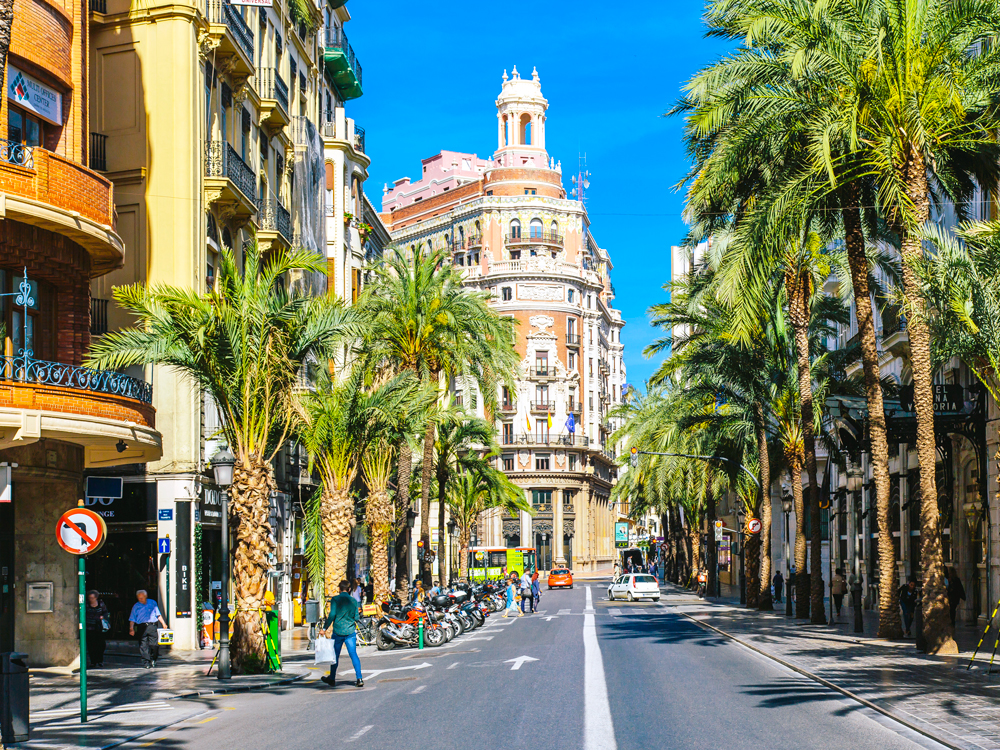
French cuisine is often considered the epitome of fine dining, and that could be because French cooks are said to have launched the modern restaurant — and even to have invented the word “restaurant” itself. Many etymologists and historians attribute the origins of both to A. Boulanger, a Parisian soup vendor who set up shop in 1765. Boulanger peddled bouillons restaurants — so-called restorative meat and vegetable broths, from the French restaurer, meaning “to restore or refresh” — an act that wasn’t entirely revolutionary, since other cooks were selling healing soups from “health houses” around the same time. But Boulanger’s approach was different because he also offered a menu of other meals at a time when most taverns and vendors served just one option, dictated by the chef. Boulanger’s concept of seating guests and allowing them to choose their desired meal exploded in popularity after the French Revolution at the end of the 18th century, as kitchen workers who formerly served aristocratic households set up their own dining rooms or joined new eateries. By 1804, French diners could choose from more than 500 restaurants across the country.
Waffle House doesn’t just sling breakfast; the 24-hour diner has also pressed its own jukebox records since the mid-1980s. Restaurant-themed songs across genres (such as gospel, bluegrass, and R&B) are released under the Waffle Records label and exclusively played at the chain’s diners.
Some historians disagree with this long-told tale of the restaurant’s origin, suggesting there isn’t much evidence by way of historical documentation to prove Boulanger was a real person. And others believe attributing the public dining room to French ingenuity isn’t wholly accurate, since humans have been offering up their cooking talent to the hungry masses for millennia. Take, for example, how Chinese chefs in major cities such as Kaifeng and Hangzhou customized menus to appeal to traveling businessmen looking for familiar meals nearly 700 years before France’s iteration of the restaurant. Or the excavated ruins at Pompeii dating to 79 CE that include ornately decorated food stalls called thermopolia, where hungry Romans could choose from a variety of ready-to-eat dishes. Though the names have differed, smart humans have been selling snacks to each other for a long, long time.
Founded in 1921, White Castle is America’s oldest fast-food burger restaurant.
Advertisement
The first American diners were mobile.
Most of the diners Americans patronize today are stationary spots, but the country’s earliest greasy spoons were more like modern food trucks. First called “night lunch wagons” by Rhode Island inventor Walter Scott in 1872, the horse-drawn diners served hot meals to patrons who were often late-shift workers or partiers looking for meals long after other restaurants had closed. Soon after, ingenious restaurateurs developed rolling eateries complete with seats, some providing both a meal and transportation to hungry diners looking to travel across town. By the 1890s, trains began incorporating the concept (ticket holders were previously responsible for supplying their own meals), debuting dining cars that fed patrons on long journeys across the growing West. The original dining carriages, however, quickly fell out of style; maintenance costs, city bans, and competition from brick-and-mortar restaurants pushed many proprietors out of business by the early 1900s. Those that survived swapped their carts for permanent locations often resembling their original carts or made from modified railroad dining cars — an iconic look that remains today.
Nicole Garner Meeker
Writer
Nicole Garner Meeker is a writer and editor based in St. Louis. Her history, nature, and food stories have also appeared at Mental Floss and Better Report.
Advertisement
top picks from the Inbox Studio network
Interesting Facts is part of Inbox Studio, an email-first media company. *Indicates a third-party property.
Enlisting animals into military service isn’t entirely unusual — dolphins have been used for underwater surveillance and even camels have helped haul supplies. Those successes could be why a Coast Guard program meant to train pigeons for search and rescue missions was able to get off the ground in the late 1970s. Project Sea Hunt’s goal was to more easily (and quickly) find people lost at sea using trained pigeons to act as real-time spotters. Despite their reputation as nuisance fowl, pigeons are easily trainable creatures with outstanding eyesight; they (like many birds) may even have better vision than humans, thanks to their ability to see UV light.
There’s no scientific difference between pigeons and doves.
There’s not much difference between the birds beyond their name; the word “dove” has Nordic origins, while “pigeon” comes from French. Both birds belong to the Columbidae family and are often categorized by size, but the use of the terms is often subjective.
Pigeons selected for the program underwent six months of training to spot yellow, orange, and red objects in the ocean (the most common colors for flotation devices and rafts), and were then placed in special pigeon chambers underneath helicopters that had a view of the water below. When the trained birds spotted a bright color, they could signal to Coast Guard pilots above by pecking a special pedal that flashed a signal in the cockpit. Test runs found that the pigeons were able to spot targets 90% of the time, compared to the human success rate of just 38%. The pigeons were also faster than their human counterparts, spotting potential victims before humans did 84% of the time.
Despite these successes, Project Sea Hunt was shuttered due to federal budget cuts in the early 1980s. In the years since, the Coast Guard has combined flyovers, ocean-tracking software, and other methods to quickly and safely rescue those lost at sea.
The last known passenger pigeon, named Martha, lived to be 29 years old.
Advertisement
A pigeon saved the lives of nearly 200 American soldiers during World War I.
Pigeons are known for their supreme navigation skills (and for being easily trainable), which is why the U.S. Army relied on them to deliver crucial information during World War I when communication lines were down. The best-known winged warrior, Cher Ami, completed 12 message relays, one of which saved 194 American soldiers in October 1918. The famous flight delivered a message from the 77th Division, a battalion of American soldiers isolated in France’s Argonne Forest behind German lines and suffering from a heavy bombardment of friendly fire. Sending Cher Ami into the sky was risky, since the unit’s other pigeons had been shot down; miraculously, Cher Ami sustained injuries to his chest and leg but returned to the sky, traveling 25 miles in under 30 minutes to deliver information about the battalion’s position that stopped the bombardment. Army medics were able to save Cher Ami, who was retired from service and honored with a Croix de Guerre medal from the French government for his efforts. More than 100 years later, the preserved messenger pigeon is kept on display at the Smithsonian’s National Museum of American History.
Nicole Garner Meeker
Writer
Nicole Garner Meeker is a writer and editor based in St. Louis. Her history, nature, and food stories have also appeared at Mental Floss and Better Report.
Advertisement
top picks from the Inbox Studio network
Interesting Facts is part of Inbox Studio, an email-first media company. *Indicates a third-party property.

When it comes to the American flag, it’s not just about 13 stripes and 50 stars — the number 27 also has an important meaning. That’s how many different versions of Old Glory have been officially recognized since the nation began. The inaugural 13-star, 13-stripe flag was approved by the Continental Congress on June 14, 1777, and later underwent an update in May 1795. That redesign — due to Vermont and Kentucky joining the Union — featured 15 stars and 15 stripes. While the number of stripes initially continued to increase as more states were admitted, the government reverted back to 13 stripes in 1818, representing the original 13 colonies, and let the stars represent the number of states instead. The current and 27th official design was adopted on July 4, 1960, after Hawaii’s admission into the United States. It is the only version in U.S. history to remain unchanged for over 50 years.
Most historians think Betsy Ross designed the American flag.
Though many schoolchildren learn about Betsy Ross sewing the first American flag — and making some key design changes — the story surfaced years after her death. Many historians credit Philadelphia-born judge, satirist, and artist Francis Hopkinson with designing the first flag.
Though there have been 27 official versions of the flag, there have also been some well-known yet unofficial variations. These include the Grand Union, the flag of the Revolutionary-era Continental Army, first raised in 1776 at the command of George Washington and featuring a 13-stripe design coupled with the Union Jack in place of where the stars now sit. Just a few years later, in 1789, a 13-stripe, 12-star layout that predated Rhode Island ratifying the Constitution was flown; it’s now considered one of the rarest unofficial flags ever, and only one example is thought to still exist. A 39-star flag was mass-produced around 1875 in anticipation of the Dakotas being admitted as one joint state, but in 1889 — after 14 years of unsanctioned use — the flag became obsolete when Congress decided to split the Dakotas in two.
The first state to observe Flag Day as an official holiday was Pennsylvania.
Advertisement
The current American flag was designed by a high school student.
In 1958, at a time when Alaska and Hawaii seemed likely to join the United States, a class at Lancaster High School in Ohio was tasked with creating a show-and-tell project related to American history. One student, Robert G. Heft, decided to make a new 50-star flag, spending 12 hours cutting out and sewing on stars in a pattern that included five rows of six stars and four rows of five stars. Alas, he received a lowly B-. Despite the negative reception, Heft gave the flag to local congressman Walter Moeller, who lived nearby and promised to take Heft’s design to Washington, D.C. That promise paid off in a big way, as two years later Heft received a phone call from President Eisenhower himself. The president informed Heft that his design had been chosen for the new national flag. Heft’s creation was among an estimated 1,500 considered, and though many others featured a near-identical pattern, he ultimately received credit upon the flag’s adoption on July 4, 1960. In the wake of Eisenhower’s decision, Heft’s teacher retroactively raised his grade to an A.
Bennett Kleinman
Staff Writer
Bennett Kleinman is a New York City-based staff writer for Inbox Studio, and previously contributed to television programs such as "Late Show With David Letterman" and "Impractical Jokers." Bennett is also a devoted New York Yankees and New Jersey Devils fan, and thinks plain seltzer is the best drink ever invented.
Advertisement
top picks from the Inbox Studio network
Interesting Facts is part of Inbox Studio, an email-first media company. *Indicates a third-party property.
Some states have no official languages. Hawaii has two. The Aloha State has officially recognized two state languages — English and Hawaiian — since 1978. Hawaiian is a Polynesian language with just 13 letters and was the main language spoken in the Pacific island chain long before it became a U.S. state. However, as in many Indigenous communities that experienced forced assimilation, by the late 19th century Hawaiians were often prohibited from using their own language. The first ban on speaking Hawaiian in schools appeared in 1896, three years after the U.S. became involved in overthrowing the Hawaiian monarchy; two years later, English became Hawaii’s official language when the islands became a U.S. territory.
Pineapples are synonymous with Hawaii, and at one time, 75% of the world’s pineapples were grown on the island. However, pineapple farming began to decline around the mid-1960s. Today, Indonesia, the Philippines, and Costa Rica are the biggest pineapple producers.
By the 1960s, activists began fighting to preserve parts of Hawaiian culture they feared were slipping away, including music and dance, but most importantly the Hawaiian language. Their efforts were rewarded in 1978 when the state constitution was amended to make Hawaiian an official language; the move also gave weight to many legal documents that were originally drafted in Hawaiian before it was banned. Then, in 1990, nearly 100 years after Hawaiian was first banned in schools, the U.S. government passed legislation to help support language learning and the preservation of Hawaiian and other native tongues. Today, many Hawaiians attend immersion schools to study the language, and a survey in 2016 found that about 18,000 people speak the language, along with English, on a daily basis.
Hawaii’s smallest major island, Kahoolawe, is uninhabited.
Advertisement
Alaska has 21 official languages.
Today, three states — Hawaii, South Dakota, and Alaska — have more than one official language, though Alaska has the most. In 2014, the northernmost state passed a law recognizing 20 Indigenous languages as official tongues, including Tlingit, Koyukon, and Central Yup’ik, along with English. However, Alaska has far more Native languages than have been made “official,” with nearly 100 dialects found throughout the state. Generally, languages are broken into two main language groups — the Inuit-Yupik-Unangan and the Na-Dene. Both language families have been researched and documented since the 1970s by language preservation groups. However, few of these tongues were written down or recorded, and many have since become rarely spoken or lost, which is why Alaska’s governor issued a state emergency in 2018 to promote Indigenous language learning in public schools.
Nicole Garner Meeker
Writer
Nicole Garner Meeker is a writer and editor based in St. Louis. Her history, nature, and food stories have also appeared at Mental Floss and Better Report.
Advertisement
top picks from the Inbox Studio network
Interesting Facts is part of Inbox Studio, an email-first media company. *Indicates a third-party property.

On July 3, 1776, John Adams wrote to his wife Abigail of how “[t]he Second Day of July 1776, will be the most memorable Epocha, in the History of America. … It ought to be solemnized with Pomp and Parade, with Shews, Games, Sports, Guns, Bells, Bonfires and Illuminations from one End of this Continent to the other from this Time forward forever more.” It seems the founding father felt pretty strongly that July 2 would be recognized as the landmark date of this young nation’s founding. So why do Americans celebrate independence two days later?
The Committee of Five’s Robert Livingston never signed the Declaration of Independence.
Livingston was in New York when the signing happened, and never got the chance to add his signature to the document.
Let’s back up to June of 1776, when the Second Continental Congress selected a Committee of Five — Adams, Roger Sherman, Robert Livingston, Benjamin Franklin, and Thomas Jefferson — to draft a statement of independence that severed the colonies from British rule. When the Jefferson-penned draft was presented to Congress, only nine of the 13 colonies favored independence. However, the delegates largely fell into line from that point, and on July 2, Congress formally approved the resolution that proclaimed the United States of America as an independent country. Following additional edits, the Declaration of Independence was completed, adopted, and sent for printing on July 4, and on August 2, the rank-and-file delegates began adding their signatures to an engrossed version of the document.
According to historian Pauline Maier, the idea of commemorating the anniversary of independence didn’t gain any traction in 1777 until it was too late to recognize the date of July 2. However, a pair of notable celebrations popped up on July 4 — fireworks in Boston, a military demonstration and more pyrotechnics in Philadelphia — setting forth an annual tradition that, as Adams otherwise correctly predicted, came to mark “the most memorable Epocha, in the History of America.”
The final delegate to sign the Declaration of Independence is believed to have been Thomas McKean.
Advertisement
Thomas Jefferson drew from similar sources to draft the Declaration of Independence.
Faced with a limited time frame to pen the first draft of the Declaration of Independence in June 1776, Jefferson culled ideas from the nearly 100 such documents that had recently been issued throughout the colonies. Among them was the Virginia Declaration of Rights by George Mason, which featured language strikingly similar to the Jeffersonian assertion that “all men are created equal” and possessed the right to “Life, Liberty and the pursuit of Happiness.” Unhappy with the subsequent congressional edits to his writing, which included the excision of a passage that blamed King George III for the proliferation of slavery in the colonies, Jefferson nevertheless took pride in his hastily crafted yet resonant words at a tipping point of American history. As he later wrote in a letter: “This was the object of the Declaration of Independence. Not to find out new principles, or new arguments, never before thought of, not merely to say things which had never been said before; but to place before mankind the common sense of the subject; in terms so plain and firm, as to command their assent, and to justify ourselves in the independent stand we are compelled to take.”
Tim Ott
Writer
Tim Ott has written for sites including Biography.com, History.com, and MLB.com, and is known to delude himself into thinking he can craft a marketable screenplay.
Advertisement
top picks from the Inbox Studio network
Interesting Facts is part of Inbox Studio, an email-first media company. *Indicates a third-party property.