
Original photo by Nailya Yakubova/ Shutterstock

Brunch has an understandable hold on Americans — after all, who can pass up the opportunity to enjoy a delicious smattering of sweet and savory plates (alongside good company, of course)? Apparently, Americans of the past couldn’t say no either, gathering to share food and fun at so-called “waffle frolics.” These waffle-eating get-togethers were most popular during the colonial era, eventually petering out by the mid-20th century. At their peak, they were elaborate, multicourse meals that showcased freshly ironed waffles as the main course. 

Eggo waffles were originally called “froffles.”

Ready to reveal?

Oops, incorrect!

It's a fact

California inventors and brothers Frank, Anthony, and Sam Dorsa debuted frozen cooked waffles, dubbed “Froffles” (“frozen” + “waffles”), in 1953. They changed the name to Eggos after the name of their company, which originally sold an egg-rich mayonnaise.

Little is recorded about the particulars of early waffle frolics, but one description, by William Livingstone, a 21-year-old Yale student who recounted his party experience in a 1744 letter, describes the soiree as a lavish affair. “After a few games, a magnificent supper appeared in grand order and decorum,” he wrote. “[B]ut for my own part I was not a little grieved that so luxurious a feast should come under the name of a wafel-frolic, because if this be the case I must expect but a few wafel-frolics for the future.”

Waffles have been widely eaten throughout Europe since the Middle Ages, sold by street vendors and often consumed on religious holidays. Eventually, they made their way to the American colonies alongside the Pilgrims, and it was in the New World where they were paired with maple syrup for the first time. Culinary lore sometimes suggests it was founding father Thomas Jefferson who ignited the waffle frolic craze in the 1790s upon his return from France, after he arrived with four waffle irons in his luggage. As president, Jefferson reportedly served the treat to Meriwether Lewis at the White House prior to the Lewis and Clark expedition. However, historians at Jefferson’s Monticello estate say there’s little evidence that the third president heavily influenced colonial waffle culture. It’s possible the crispy, grid-marked cakes were destined to become an American favorite all on their own. 

Numbers Don't Lie

Numbers Don't Lie

Year the first waffle iron was patented in the U.S.
1869
Waffles cooked and served every minute at Waffle House restaurants
145
Year waffle cones (for ice cream) debuted at the world’s fair in St. Louis
1904
Weight (in pounds) of the world’s largest waffle, created in the Netherlands in 2013
110

______ produces 71% of the world’s pure maple syrup.

Ready to reveal?

Confirm your email to play the next question?

Canada produces 71% of the world’s pure maple syrup.

Placeholder Image

John F. Kennedy’s waffle recipe is stored in the National Archives.

Presidential favorite foods are often a topic of interest on the campaign trail; after all, it’s interesting to think the nation’s chief executive might like the same foods we do. While President John F. Kennedy was known for his fondness for soup (particularly New England fish chowder), it’s likely he was also a fan of waffles. Historians at the John F. Kennedy Presidential Library and Museum report they have been unable to verify the 35th President’s favorite breakfast food, but during his time as a senator, Kennedy frequently mailed out copies of his preferred waffle recipe, possibly drafted by First Lady Jackie Kennedy. It’s likely the formula — which swaps regular flour for lighter cake flour and uses whipped egg whites — was dispatched from the legislator’s office upon request from constituents, or submitted to cookbook compilations sold as fundraisers. Today, Kennedy’s recipe remains available to the public, preserved by the National Archives for endless future breakfasts.

Nicole Garner Meeker
Writer

Nicole Garner Meeker is a writer and editor based in St. Louis. Her history, nature, and food stories have also appeared at Mental Floss and Better Report.

Original photo by LWH/ Alamy Stock Photo

Today Captain Morgan is one of the world’s most well-known buccaneers — not for the Welshman’s very real 17th-century exploits (of which there were many), but because of the spiced rum bottles that bear his name. History knows him as Sir Henry Morgan, lieutenant governor of Jamaica and arguably the most infamous buccaneer who ever lived. In the 17th and 18th centuries, buccaneers were a distinct flavor of privateer (sort of a legal pirate), usually bankrolled by the English, who harassed the Spanish Empire in the Caribbean. 

Disney invented “pirate speak.”

Ready to reveal?

Oops, incorrect!

It's a fact

Historians don’t know how pirates spoke when sailing the high seas, but the pirate-speak of today (“arrg,” “ye matey,” etc.) can be traced to the 1950 Disney film “Treasure Island,” with Robert Newton as Long John Silver. Newton created the accent based on his West Country dialect.

Morgan first arrived in the Caribbean around 1654, and became captain of a privateer vessel eight years later. Soon, he was plundering Spanish colonies in the Caribbean with support from the English crown. Morgan proved so adept at the trade that he amassed a great fortune, established sugar plantations in Jamaica, and by the decade’s end, had 36 ships and around 1,800 men under his command. Then, in 1671, Morgan attacked Spanish-held Panama City, not knowing that England had signed a treaty with Spain a year earlier. To appease the enraged Spanish, England arrested Morgan and sent him to London, but he received a hero’s welcome there, with King Charles II knighting him in 1674. Morgan soon returned to Jamaica, where he lived out the rest of his days. Even before his death in 1688, published stories detailed Morgan’s buccaneering career. Around 250 years later, in 1944, a distiller named Seagram’s bought a spiced rum recipe from a Jamaican pharmacy. The infamous Captain Morgan seemed a fitting namesake for the Caribbean-born liquor.

Numbers Don't Lie

Numbers Don't Lie

Year archaeologists discovered one of Henry Morgan’s sunken ships near Panama’s Lajas Reef
2011
Amount of rum (in liters) produced every day at the Cathedral of Rum in Puerto Rico, the world’s largest rum distillery
100,000
Number of Super Bowls won by the Tampa Bay Buccaneers (2003 and 2021)
2
Year rum producer Captain Morgan was established
1944

The island of ______ in the West Indies is home to the world’s oldest rum distillery.

Ready to reveal?

Confirm your email to play the next question?

The island of Barbados in the West Indies is home to the world’s oldest rum distillery.

Placeholder Image

Rum was the most popular liquor in colonial America.

Today the U.S. is known for its world-class whiskey and craft beers, among other beverages, but in colonial America, rum was king. By the 1630s, distilleries in the West Indies began transforming molasses into rum, a liquor perfectly suited for colonial society. Rum kept better than beer and cider, and with easily available raw materials (due to the grossly exploitative Atlantic slave trade) and a higher alcohol by volume than its competition, the liquor quickly became popular with colonists as both a libation and a medicine. The first colonial rum distillery opened on Staten Island in 1664, and another opened in Boston three years later. By one account, colonists drank 3.7 gallons of the stuff annually per person by the time of the American Revolution, and the sweet liquor was so valuable that it was sometimes even traded as currency. As the colonies’ relationship with Britain soured — most directly in the forms of the Molasses Act (1733), the Sugar Act (1764), and eventually a wartime blockade — distillers moved away from increasingly costly rum. Instead, they began producing more of a corn-based alcohol known as whiskey, a liquor that soon became synonymous with American patriotism. With that, the reign of rum was more or less over.

Darren Orf
Writer

Darren Orf lives in Portland, has a cat, and writes about all things science and climate. You can find his previous work at Popular Mechanics, Inverse, Gizmodo, and Paste, among others.

Original photo by Tania Melnyczuk/ Unsplash

You wouldn’t think of the filmmaker responsible for Psycho, The Birds, and Vertigo as having any phobias, let alone one as rare as ovaphobia. And yet the Master of Suspense once admitted on the record that he was “worse than frightened” of eggs, which he said revolted him — so much so, in fact, he refused to ever taste egg yolk, which he found particularly repulsive. “Have you ever seen anything more revolting than an egg yolk breaking and spilling its yellow liquid?” he asked in one interview. (Anyone who’s seen such lesser-known Hitchcock works as Frenzy and Family Plot might say yes, but the point stands.)

Hitchcock never won a competitive Academy Award.

Ready to reveal?

Oops, incorrect!

It's a fact

Despite receiving five Best Director nominations — for “Rebecca,” “Lifeboat,” “Spellbound,” “Rear Window,” and “Psycho” — Hitchcock left each ceremony empty-handed. To make up for it, the Academy presented him with the honorary Irving G. Thalberg Memorial Award in 1968.

The breakfast staple wasn’t the filmmaker’s only fear. As fate would have it, Hitchcock was as afraid of his own films as most of his viewers were. “I’m frightened of my own movies,” he said in a 1963 interview. “I never go to see them. I don’t know how people can bear to watch my movies.” So if you’ve yet to muster the courage to watch Psycho, take solace in the fact that Hitchcock himself would understand your reluctance.

Numbers Don't Lie

Numbers Don't Lie

Feature films Hitchcock is traditionally credited with directing
53
Cameos made by the director in his own movies
39
Dozens of eggs produced in America in 2020
9.3 billion
Words in Hitchcock’s acceptance speech for his honorary Oscar (“Thank you … very much indeed.”)
5

Hitchcock made four films each with lead actors ______.

Ready to reveal?

Confirm your email to play the next question?

Hitchcock made four films each with lead actors Cary Grant and Jimmy Stewart.

Placeholder Image

Alfred Hitchcock popularized the MacGuffin.

You might not know them by name, but you’re almost certainly familiar with MacGuffins, a term likely coined by British screenwriter Angus MacPhail. Think of the glowing suitcase in Pulp Fiction, the eponymous statue in The Maltese Falcon, or even the Dude’s rug in The Big Lebowski — if a physical object kick-starts a movie’s narrative but doesn’t serve any true purpose in and of itself, it’s a MacGuffin. Hitchcock made frequent use of MacGuffins, in everything from The 39 Steps to North by Northwest, and held a unique view of them; namely, that the best MacGuffins are those that end up being utterly useless. “The main thing I’ve learned over the years is that the MacGuffin is nothing,” he said to fellow auteur François Truffaut in 1962. “I’m convinced of this, but I find it very difficult to prove it to others.”

Michael Nordine
Staff Writer

Michael Nordine is a writer and editor living in Denver. A native Angeleno, he has two cats and wishes he had more.

Original photo by DROPERDER/ Shutterstock

One of the most complex parts of human anatomy is also one (or rather two) that we use hundreds of times per day yet often take for granted. Human hands are the body’s multipurpose tools, equipped with 27 individual bones. About half of those are found in our fingers, the tactile appendages that will bend and flex roughly 25 million times over the course of our lifespan. Our fingers are able to perform the everyday tasks we need thanks to thousands of nerve endings and touch receptors that can sense pressure, texture, temperature, movement, and more. But there’s one thing our hardworking digits don’t have: muscles.

Fingernails grow faster than toenails.

Ready to reveal?

Oops, incorrect!

It's a fact

Fingers and toes are topped with nails for good reason: Both help protect our delicate digits by preventing injuries and infections. However, these nails don’t grow at the same speed. A 2010 study found fingernails grow twice as fast as toenails, on average.

Muscles make it possible for our bodies to move, and the human frame relies on more than 600, which are tasked with helping us in nearly every motion. So how do fingers perform the intricate tasks we require without them? Turns out, human fingers are controlled by the muscles in our forearms and the tops and palms of our hands. Small intrinsic muscles in the hand allow the fingers to perform fine motor movements, while extrinsic muscles in the forearm and elbow control how the wrist and hand move. Finger bones (aka phalanges) are connected to these muscles by tendons — fibrous, cordlike connective tissues — and when the attached muscles contract, fingers are able to perform their range of motion. Flexor tendons in the palm help fingers to bend, while extensor tendons on the top of the hand are responsible for straightening the fingers back out — essential movements that allow our hands to touch, grasp, and hold objects.

Numbers Don't Lie

Numbers Don't Lie

Number of bones in each finger, excluding thumbs (which have only two bones)
3
Time (in milliseconds) it takes to snap our fingers, about 20 times faster than blinking
7
Muscles in the human hand, which control how the fingers bend, spread, and flex
30+
Number of puppets in the world’s largest finger puppet collection (as of 2023)
1,517

The ______ has copper fingers that measure 8 feet long.

Ready to reveal?

Confirm your email to play the next question?

The Statue of Liberty has copper fingers that measure 8 feet long.

Placeholder Image

Some primates have six fingers.

Primates and humans tend to share some similarities, like having five fingers on each hand (along with five toes on each foot). But just like in the human world, there are anomalies among primates — like the aye-aye, a six-fingered lemur. Native to Madagascar, aye-ayes are the world’s largest nocturnal primate, utilizing batlike ears that echolocate their prey. As researchers recently discovered, aye-ayes also differ from their primate relatives by relying on an extra thumblike digit found near their wrist, though it’s unclear just how the finger is used. Aye-aye finger-related differences don’t end there; the lemurs tap their exceptionally long middle fingers against logs and limbs, using the reverberations to eke out an insect’s hiding spot before digging them out.

Nicole Garner Meeker
Writer

Nicole Garner Meeker is a writer and editor based in St. Louis. Her history, nature, and food stories have also appeared at Mental Floss and Better Report.

Original photo by Food Tree Images/ Alamy Stock Photo

Some snacks are known for their distinctive shapes: Think of Pringles’ classic curve or Ruffles’ ridges. The same goes for Goldfish crackers, which were originally designed as a birthday gift for the creator’s wife, whose astrological sign, Pisces, is symbolically represented by two swimming fish. The idea came about in 1958, when Oscar J. Kambly — head of the Kambly commercial bakery in Switzerland — was looking to surprise his wife on her birthday. He instructed a technician to create a new cracker mold in the shape of a fish, then baked the first-ever Goldfish cracker that afternoon before presenting it to his beloved later that evening.

A 14-year-old boy won a $5 prize for creating Mr. Peanut.

Ready to reveal?

Oops, incorrect!

It's a fact

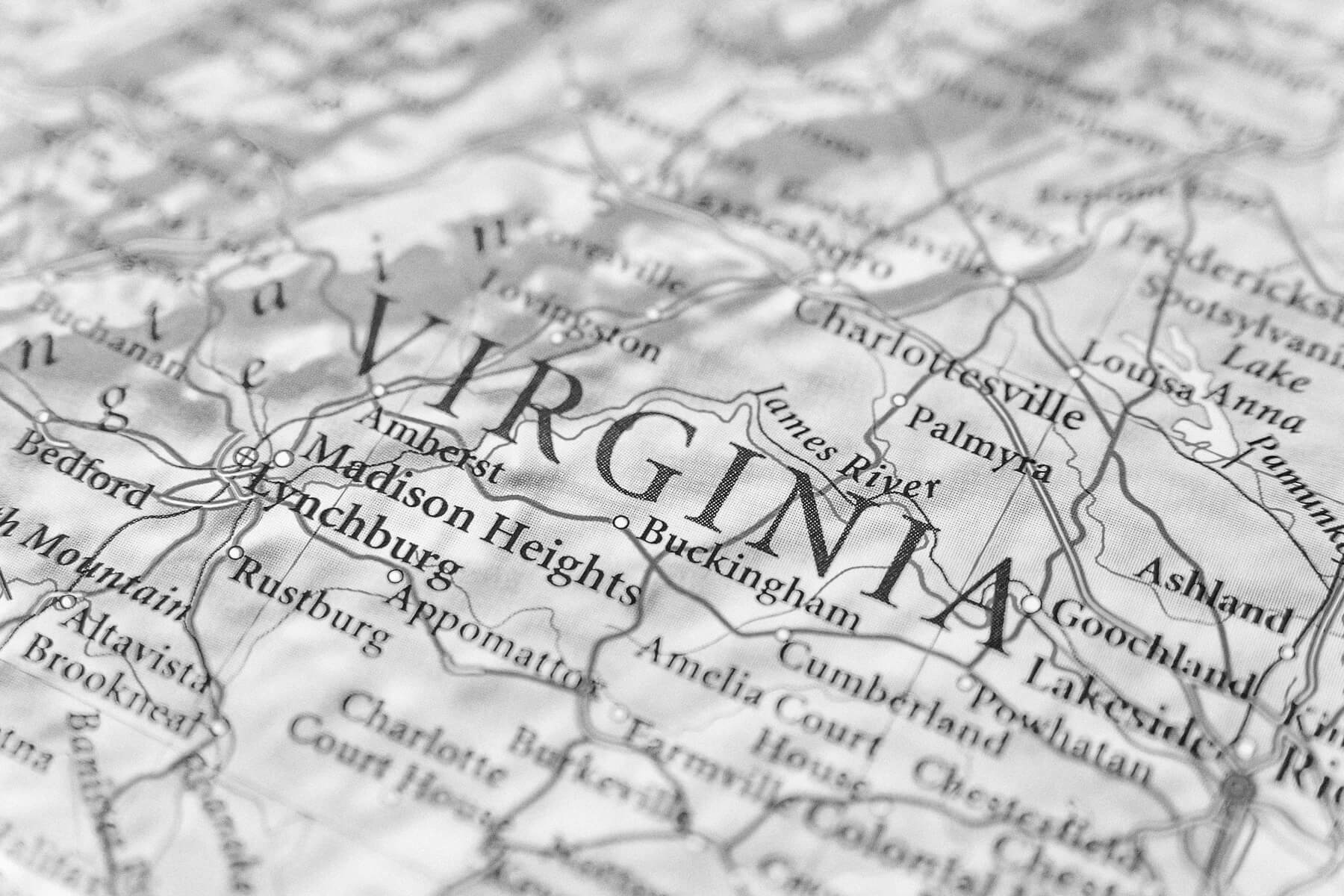
In 1916, the Planters Nut & Chocolate Company held a contest to design a new mascot. The winning drawing came from 14-year-old Antonio Gentile of Suffolk, Virginia, who was awarded a $5 prize (roughly $144 today) for his sketch of a walking peanut holding a suitcase and cane.

Kambly quickly realized how popular the innovative crackers could be as a mass-produced snack food. He took the product to market under the name Goldfischli, German for “Goldfish.” Within a year, the fish-shaped crackers were being sold in 17 countries. In 1962, American businesswoman Margaret Rudkin — founder of Pepperidge Farm — was on vacation in Switzerland when she came upon Goldfish crackers for the first time. Intrigued by the product, Rudkin struck a deal to acquire the licensing rights and began producing the crackers in the United States. The snack continued to blossom into a global sensation, and Kambly introduced alternate flavors for the first time in 1983. In 1995, the name of the original product was officially changed from Goldfischli to Goldfish.

Numbers Don't Lie

Numbers Don't Lie

Length (in inches) of the world’s longest live goldfish
18.7
Milk chocolate Hershey’s Kisses produced daily
70 million+
Percentage of orange candies in each bag of Reese’s Pieces
50%
Year ballpark nachos were first sold
1976

Pop-Tarts were originally called ______.

Ready to reveal?

Confirm your email to play the next question?

Pop-Tarts were originally called Fruit Scones.

Placeholder Image

Chocolate chip cookies were invented by accident.

Ruth Graves Wakefield may not be a household name, but she managed to create one of the most popular snacks of all time, and largely by accident. Wakefield was the proprietor of the Toll House Inn in Whitman, Massachusetts. One night in the late 1930s, while baking a popular Colonial-era cookie recipe for guests, she decided to experiment by adding in pieces from a block of Nestlé chocolate she had broken up with an icepick. But rather than disseminating through the dough as she’d anticipated, the chocolate remained in individual gooey chunks, much to the delight of Wakefield’s guests. She dubbed this recipe the “Chocolate Crunch Cookie,” and it became a smash hit after being advertised on an episode of the popular radio show Betty Crocker Cooking School of the Air. Wakefield later struck a deal with Nestlé to provide them with the recipe rights in exchange for a lifetime of free chocolate.

Bennett Kleinman
Staff Writer

Bennett Kleinman is a New York City-based staff writer for Inbox Studio, and previously contributed to television programs such as "Late Show With David Letterman" and "Impractical Jokers." Bennett is also a devoted New York Yankees and New Jersey Devils fan, and thinks plain seltzer is the best drink ever invented.

Original photo by Ara Barradas/ iStock

The human body is an amazing powerhouse fueled by important organs like the heart, lungs, and brain. However, some of its most vital work is done by a body part you might not expect — our taste buds, a set of microscopic organs that do more than help us savor our food. Scientists believe human taste buds also have a bigger purpose: protecting us from poisoning. These microscopic sensors tell our brains that food is safe to eat based on flavor, encouraging us to consume sweets (potential sources of calories and energy) and alerting us to spit out bitter or unpalatable substances that could make us sick. 

You might like (or dislike) foods based on your genes.

Ready to reveal?

Oops, incorrect!

It's a fact

Food preferences are tied to culture and exposure, but scientists believe genetics may also play a role. Mutations in the DNA that power taste receptors can impact how taste buds perceive sweetness, bitterness, and even the flavor of coffee, cilantro, and other foods.

Taste buds are such hardworking organs that their cells die off quickly. As they work, they age and lose sensitivity, which is why the body regenerates them about every two weeks. However, taste buds aren’t all replaced at once; on any given day, about 10% of the sensors expire, while 20% to 30% are in the process of developing, leaving us with 60% of the buds active to analyze the food we consume. 

Want to examine your taste buds? Contrary to popular belief, it’s not as easy as sticking out your tongue. That’s because the visible bumps aren’t sensors themselves; instead what you see are the papillae, which cover the taste buds. Each papillae can house hundreds of taste sensors, with the average adult having between 2,000 and 10,000 — a number that generally decreases with age. However, there’s one upside to losing some taste sensitivity as we get older: Foods we once avoided in childhood, like Brussels sprouts, become a bit more palatable.

Numbers Don't Lie

Numbers Don't Lie

Percentage of Americans who are supertasters, aka people with elevated taste bud sensitivity
25%
Year umami flavor was “discovered” by Japanese chemist Kikunae Ikeda
1908
Reduction in taste bud sensitivity to sweet and salty foods when on a flight
30%
Average age when taste buds become less sensitive, causing some taste loss
60

Catfish have taste buds on their ______.

Ready to reveal?

Confirm your email to play the next question?

Catfish have taste buds on their whiskers.

Placeholder Image

Taste buds aren’t just on your tongue.

It makes sense that taste buds are generally found in our mouths; after all, they help encourage us to eat and can sense potential poisons. However, researchers have found that taste buds don’t just exist on our tongues — they can be found all over the body in unexpected places. Taste buds can be found in our stomachs, and in 2007, researchers at Mount Sinai School of Medicine discovered sweet-sensing taste buds inside the intestines. It’s believed that those sensors monitor glucose and help the body control blood sugar. Taste buds also exist in the muscled walls of our lungs, where they work to protect breathing; upon sensing a bitter substance, the taste buds tell the body’s airway to open, a breakthrough some researchers say could be used to develop more effective asthma medications.

Nicole Garner Meeker
Writer

Nicole Garner Meeker is a writer and editor based in St. Louis. Her history, nature, and food stories have also appeared at Mental Floss and Better Report.

Original photo by Viktollio/ Shutterstock

Fire seems intrinsically linked to life on Earth. The fires of the Earth’s molten core formed the land we live on, forests are at their healthiest when they burn in a controlled manner to make way for new life, and even the legendary R&B group Earth, Wind & Fire paid homage to the stuff. In fact, Earth is the only place we know of where fire occurs. That’s because fire requires three things to exist: heat, oxygen, and combustible material. This “fire triangle” is only possible on Earth, as far as we know, because of the planet’s high levels of free oxygen. Travel to other planets and moons in the solar system, and there isn’t enough (or any) oxygen for fire to exist. As for the sun, which some people imagine as a giant ball of fire, it’s actually a giant collection of gas that glows thanks to the complex nuclear fusion occurring in its core. 

Humans discovered fire 20,000 years ago.

Ready to reveal?

Oops, incorrect!

It's a fib

Fire has been a constant companion for Homo sapiens. Scientists estimate that widespread fire use is generally found in the fossil record some 200,000 years ago, but evidence from a few archaeological sites pushes that back to 500,000 years or more.

While fire may not exist in any other place in the solar system (as far as we’re aware), that doesn’t mean humans can’t export the stuff. NASA has experimented with fire in microgravity for more than a decade — both to discover its behavior and also design fire-resistant space material. Turns out fire in microgravity behaves much differently, appearing more sluggish (likely due to low oxygen) and forming strange, orb-like flames. So while it’s not impossible for fire to exist beyond the confines of Earth, it’ll need a lot of help from future astronauts to export it to the moon, Mars, and beyond.

Numbers Don't Lie

Numbers Don't Lie

Year the U.S. Forest Service introduced Smokey Bear to promote fire prevention
1944
Degrees (Fahrenheit) the hottest part of a candle flame can reach
2,552
Maximum loudness (in decibels) of a typical fire alarm; about as loud as a chainsaw
120
Number of books lost when the Library of Alexandria caught fire, according to Roman philosopher Seneca
40,000

The U.S.’s first volunteer firefighting service was created by founding father ______.

Ready to reveal?

Confirm your email to play the next question?

The U.S.’s first volunteer firefighting service was created by founding father Benjamin Franklin.

Placeholder Image

The hottest place ever recorded on Earth was seven times hotter than the sun.

Human control of fire has come a long way since its ancient origins, and today scientists are hard at work trying to recreate the very plasma that fuses at the center of the sun. Known as nuclear fusion reactors, these incredibly complex machines could help humanity kick its diet of fossil fuels while simultaneously providing nearly limitless, clean energy. Fusion reactors do this by recreating the physics at the center of stars, but because Earth isn’t nearly as dense as a star, scientists must make machines that can get really, really hot. This heat helps particles overcome their natural resistances and fuse, forming a new element while releasing lots of energy. In 2022, a fusion reactor in South Korea recorded a scorching temperature of 100 million degrees Celsius, seven times hotter than the core of the sun. This reaction lasted for only 30 seconds, but within that half-minute, that terrestrially bound mini star was the hottest place ever recorded on Earth. This is only the beginning of how hot things will get — scientists estimate that when the International Thermonuclear Experimental Reactor, the world’s largest fusion reactor, goes online in 2025, it’ll eventually reach temperatures of 150 million degrees Celsius.

Darren Orf
Writer

Darren Orf lives in Portland, has a cat, and writes about all things science and climate. You can find his previous work at Popular Mechanics, Inverse, Gizmodo, and Paste, among others.

Original photo by LHBLLC/ Shutterstock

It’s not easy to be a cactus — surviving in a scorching environment with little water is a pretty tough task for most plants. Some cacti, like the saguaro, have adapted by taking their sweet time to grow. In fact, saguaro cacti often reach just 1.5 inches in the first 10 years of their lives. Growing their iconic arms — often featured in old Western films and desert art landscapes — can take 50 years, or even up to 100 years in drought-like conditions.

Many saguaros do not flower until they reach 35 years old. And although they produce some 40 million seeds over their lifetime, odds are that just one of their cacti descendants will survive to adulthood after battling arid conditions, trampling, human interference, and invasive species that threaten their environments. Reaching their maximum size — upwards of 45 feet tall and more than 2 tons in weight — can take 175 to 200 years, close to the end of a saguaro’s lengthy lifespan. But there is perhaps one consolation involved in that long journey: Saguaros are the largest cactus species in the U.S.

All cacti have prickly spines.

Ready to reveal?

Oops, incorrect!

It's a fib

As a whole, cacti are known for their signature spines, but not all species have them. Some — like peyote or the Christmas cactus (often grown as a houseplant) — are entirely spineless.

These slow-growing giants are found wild only in the Sonoran Desert, which stretches from southeastern California across southwestern Arizona and into Mexico. Despite their vulnerabilities, saguaro are important plants in the Sonoran ecosystem, providing fruit for birds, nectar for bats and other pollinators, and superb nesting spots for wildlife — which is why these colossal cacti are legally protected native plants in Arizona.

Numbers Don't Lie

Numbers Don't Lie

Height (in feet) of the largest recorded saguaro cactus
78
Estimated species of cacti globally
2,000
Species of cacti found wild outside the Americas
1
Diameter (in centimeters) of Blossfeldia liliputana, the world’s smallest cactus
2.5

The scientific name for the saguaro — Carnegiea gigantea — is named for philanthropist ______.

Ready to reveal?

Confirm your email to play the next question?

The scientific name for the saguaro — Carnegiea gigantea — is named for philanthropist Andrew Carnegie.

Placeholder Image

There’s a special census for saguaro cacti every 10 years.

How do scientists know how many saguaros exist in the U.S.? Turns out, they count and record them, in a fashion similar to how the federal census estimates the nation’s population of humans. Scientists at Saguaro National Park in Arizona first began the cactus count in 1990 as a way to track species health and numbers, syncing the enumeration with the federal census. Every 10 years, scientists and volunteers count the number of cacti in randomly selected areas of the park to calculate how many saguaro likely exist in the preserve as a whole. The work is labor-intensive, requiring census-takers to hike to desolate areas of the park and record each cactus’ GPS coordinates, height, number of arms, and other information. In 2020, that work totaled more than 3,500 hours from staff and a group of more than 500 volunteers. The most recent report shows the saguaro population nearly doubled from the 1990 count, totaling around 2 million in 2020, though it’s possible up to 20% of baby saguaro could be missed, since they’re so small and difficult to spot.

Nicole Garner Meeker
Writer

Nicole Garner Meeker is a writer and editor based in St. Louis. Her history, nature, and food stories have also appeared at Mental Floss and Better Report.

Original photo by Zoonar GmbH/ Alamy Stock Photo

Baseball, apple pie, and shopping — all three are American favorites. So it may be a bit surprising that one of the country’s largest shopping destinations is overseen by our neighbors to the north. That’s right: The Mall of America is owned by Canadians. Despite its name, the supersized shopping complex — found just outside Minneapolis in Bloomington, Minnesota — was developed by the Triple Five Group, a Canadian retail and entertainment conglomerate. Notably, while the Mall of America is truly humongous, it was once surpassed in sheer size by the West Edmonton Mall, a Canadian shopping center built by the same company in the 1980s, which reigned for decades as the largest mall in North America.

There’s no heat in the Mall of America.

Ready to reveal?

Oops, incorrect!

It's a fact

Imagine heating a building the size of nine Yankee Stadiums. The astronomical cost is one reason the Mall of America doesn’t have central heating. Instead, the shopping complex remains a balmy 70 degrees thanks to 1.2 miles of skylights, warmth from store lights, and human body heat.

Managing a shopping center of such gargantuan size is no small feat. Initial construction on the 4.2 million-square-foot Mall of America, located on the site of the former Minnesota Twins and Vikings stadium, took three years. When the doors opened in 1992, the space contained 330 stores and was staffed by an estimated 10,000 employees. In the decades since, the entertainment destination has grown, increasing to 5.6 million square feet and stuffed with 520 stores and 60 restaurants. For those who aren’t into shopping, there’s more to do than just wait around in the food court — today, the Mall of America is home to a 13-screen movie theater, an indoor theme park, a mini-golf course, and the largest aquarium in the state of Minnesota.

Numbers Don't Lie

Numbers Don't Lie

Live plants inside the Mall of America, along with 300 real trees, used for air purification
30,000
Number of shoppers who entered the mall on its opening day in 1992
150,000
Visitors to the mall each year, generating around $2 billion in sales
40 million
Number of parking spaces at the Mall of America
12,750

The world’s largest mall by total area, featuring more than 1,200 shops, is in ______.

Ready to reveal?

Confirm your email to play the next question?

The world’s largest mall by total area, featuring more than 1,200 shops, is in Dubai.

Placeholder Image

You can shop at a mall in Turkey that’s more than 500 years old.

While it may not have an Auntie Anne’s, the Grand Bazaar in Istanbul offers an eclectic mix of goods and snacks — after all, it’s known for being one of the world’s largest covered markets. It’s also considered one of the earliest shopping malls, with more than 4,000 stores, its own post office, and its own police station, making it essentially a miniature city. Construction on the mall, which stretches across Istanbul’s historic center, began in the 1450s. The dedication across the centuries to completing the trading space was for good reason — it became a major hub for Ottoman Empire merchants, in part because Istanbul geographically links the Asian and European continents. In its 500-plus years, the Grand Bazaar has survived calamities such as fires and earthquakes, and it remains a destination for modern shoppers from around the globe.

Nicole Garner Meeker
Writer

Nicole Garner Meeker is a writer and editor based in St. Louis. Her history, nature, and food stories have also appeared at Mental Floss and Better Report.

Original photo by Savvapanf Photo/ Shutterstock

"Thirty Days Hath September" may be a useful mnemonic device, but there are times when that poem might have led you astray. In 1752, September was only 19 days long in the U.K., due to the Calendar (New Style) Act of 1750. That parliamentary move transferred the country from the Julian calendar to the Gregorian calendar — the former having overestimated each year's length by about 11 minutes.

Back in 1582, Pope Gregory XIII had declared that all countries under the dominion of the Catholic Church needed to adopt the Gregorian calendar, but many Protestant nations — such as England — resisted the pope's demands. During the 18th century, as international trade and diplomacy increased, Britain and its colonies began to view the adherence to a now-antiquated Julian calendar — first implemented in Rome by Julius Caesar in the first century BCE — as more spiteful than practical. When the U.K. finally converted to the Gregorian calendar in 1752, they jumped straight from September 2 to September 14, skipping the 11 days in between to make up for the errors of the Julian calendar. Though protests against the law arose among some anti-reformers — who purportedly rallied behind the slogan "Give us back our 11 days!" — the calendar was adopted without any further delay. 

New Year's Day used to occur in March.

Ready to reveal?

Oops, incorrect!

It's a fact

The Babylonians of ancient Mesopotamia celebrated the new year in March, because the holiday was tied to the vernal equinox. The concept of a January 1 new year was introduced by the Romans in 153 BCE, though that date wasn't adopted globally until Pope Gregory's reforms in 1582.

Eastern Orthodox nations, such as Russia and Greece, also initially resisted the papal decree, waiting to transition to the Gregorian calendar until 1918 and 1923, respectively. By then, so much time had passed that those two countries skipped 13 days to bring their calendars up to speed. Russia's stubbornness also affected Alaska — upon being sold to the U.S. in 1867, the former Russian territory leapt straight from October 6 to October 18.

Numbers Don't Lie

Numbers Don't Lie

Days in the longest recorded year in history (46 BCE)
445
Fastest time (in minutes) to eat all the chocolates from an advent calendar
1:27:84
Times the Earth, Wind & Fire song “September” went platinum
6
Year Batman’s nemesis Calendar Man first appeared in the comics
1958

Prior to being named for Julius Caesar, July was once known as ______.

Ready to reveal?

Confirm your email to play the next question?

Prior to being named for Julius Caesar, July was once known as Quintilis.

Placeholder Image

Kodak used to operate on a 13-month calendar.

The concept of a 13-month, 28-day-per-month calendar is known as the International Fixed Calendar. The idea was proposed by statistician and railway adviser Moses B. Cotsworth in 1902, and was seriously considered for adoption by the League of Nations in the 1920s. This 13-month calendar introduced a new month named Sol, which fell between June and July, and also featured an extra holiday falling on the final day of the year, known as “Year Day.” Though never officially used by any country, it was highly popular with Kodak founder George Eastman — so much so that his company utilized it beginning in 1928. Eastman went on to open an office for the International Fixed Calendar League in Kodak’s Rochester headquarters. Unfortunately for Kodak, the calendar failed to catch on, and the company ultimately gave up the concept in 1989.

Bennett Kleinman
Staff Writer

Bennett Kleinman is a New York City-based staff writer for Inbox Studio, and previously contributed to television programs such as "Late Show With David Letterman" and "Impractical Jokers." Bennett is also a devoted New York Yankees and New Jersey Devils fan, and thinks plain seltzer is the best drink ever invented.