
The Gerber baby food company has long operated under the slogan “Babies are our business… our only business.” But for a brief period in 1974, that promise wasn’t exactly true. That year, the company unveiled Gerber Singles, a line of glass jars containing ready-to-eat meals that were advertised to young adults and college students. This new product was part of a larger effort by Gerber to expand its customer base in response to a 25% drop in the U.S. birth rate from 1960 to 1972, which heavily impacted the baby food market.
The Gerber baby was modeled after a young Humphrey Bogart.
The Gerber baby illustration by artist Dorothy Hope Smith began appearing in ads in the 1920s. Rumors claimed Smith designed the baby after a number of celebs, including a young Humphrey Bogart. In reality, the logo was modeled after Smith’s neighbor, a young girl named Ann Turner Cook.
With the tagline “We were good for you then, we’re good for you now,” Gerber Singles were essentially advertised as whole meals for single people on the go or those who chose not to cook. Flavors included Beef Burgundy, Mediterranean Vegetables, and Blueberry Delight, and all you needed to do was heat up the jar and eat it right out of the container. However, Gerber Singles proved deeply unpopular, as the idea of eating pureed food out of a glass jar failed to catch on. People were also turned off by depressing ad campaigns that promoted Gerber Singles as food for “whenever you eat alone.” The product rollout was a flop, and the jars were pulled from shelves after just three months.
The Gerber company is based in the state of Michigan.
Advertisement
"Cosmopolitan" magazine produced a failed line of yogurt.
Cosmopolitan magazine has long focused on healthy eating and diet culture, but its own foray into the retail food space left something to be desired. In 1999, Cosmo unveiled a short-lived line of low-fat yogurts and soft cheeses, which were discontinued after just 18 months. The product failed to catch on with a larger audience, as Cosmo chose not to advertise to the general public. Instead, it marketed the yogurt exclusively to readers of the magazine, which limited the potential customer base. The yogurt was also more expensive than its competitors, so despite offering tasty flavors such as cherry and peach, it failed to fly off the shelves.
Bennett Kleinman
Staff Writer
Bennett Kleinman is a New York City-based staff writer for Inbox Studio, and previously contributed to television programs such as "Late Show With David Letterman" and "Impractical Jokers." Bennett is also a devoted New York Yankees and New Jersey Devils fan, and thinks plain seltzer is the best drink ever invented.
Advertisement
top picks from the Inbox Studio network
Interesting Facts is part of Inbox Studio, an email-first media company. *Indicates a third-party property.
As human space exploration has evolved, trips offworld have grown longer and longer. In 1961, Yuri Gagarin spent less than two hours in orbit; today, it’s common for astronauts to stay in space for six months to a year. Because astronauts are spending larger portions of their lives hundreds of miles above us, the voting process has had to adapt. A pivotal moment occurred in September 1996, when NASA astronaut John Blaha went to the Russian space station Mir for a 118-day stay and completely missed voting in the 1996 presidential election. In response, Texas state Senator Mike Jackson proposed legislation to allow astronauts to vote in space. (Notably, many astronauts live in Texas because they train at the Johnson Space Center in Houston.) In 1997, NASA astronaut David Wolf, who was also aboard the Mir, became the first astronaut to successfully vote in space. Wolf told The Atlantic in 2016 that he was particularly moved by the experience, saying that voting “mak[es] a person feel like part of a civilization somewhere.”
World War II was the first time absentee voting occurred on a large scale.
Historical evidence of absentee voting in the U.S. dates back to the 17th century, when some landowners could vote in absentia under certain circumstances. But the nation’s first large-scale absentee voting happened during the Civil War, for members of the military.
Although the idea of voting from a tin can some 254 miles above the planet may sound complex, the actual process is relatively straightforward. The county clerk from the astronaut’s home state (usually Texas) sends an electronic ballot to NASA; at the same time, an encrypted electronic ballot is sent to the orbiting astronaut via NASA’s Space Network, which manages all data and communication from the ISS to ground crews. The astronaut fills out the ballot (even putting “low-Earth orbit” on the address line) and sends it back using NASA’s Tracking and Data Relay Satellite to a ground antenna in New Mexico. NASA sends the ballot to Johnson Space Center, and then on to the appropriate county clerk. Throughout, only the clerk and the astronaut have access to the encrypted ballot to preserve its security. This entire process unfolded during the 2020 election, when NASA astronaut Kate Rubins submitted her ballot, calling it “an honor to be able to vote from space.”
In the 1980s, President Ronald Reagan announced plans for a proposed space station called Freedom.
Advertisement
An Apollo 13 astronaut forgot to pay his taxes while he was in space.
On April 11, 1970, Apollo 13 astronauts Jim Lovell, Fred Haise, and Jack Swigert lifted off from Cape Canaveral, Florida, headed toward the moon. Swigert, originally on the backup team for the Apollo 13 mission, joined the main roster as the command module pilot after another astronaut was exposed to German measles. However, some 24 hours into the launch, Swigert had a stunning realization. He then asked his fellow crewmates, “Uh oh; have you guys completed your income tax?” Because Apollo 13 wasn’t scheduled to splash down until April 17, Swigert would miss the Internal Revenue Service’s usual mid-April deadline. Although Mission Control (as well as his fellow astronauts) got in a few chuckles at Swigert’s expense, NASA did get Swigert an extension. That’s good news, because the mission’s jovial atmosphere turned deadly serious when, almost 56 hoursafter takeoff, an oxygen tank explosion doomed the mission’s lunar landing and put the astronauts’ lives in danger. Thankfully, due to the heroic efforts of Mission Control and the crew, Apollo 13 splashed down in the Pacific and all three astronauts survived the harrowing experience. Swigert, now a national hero, dutifully filed his income taxes penalty-free.
Darren Orf
Writer
Darren Orf lives in Portland, has a cat, and writes about all things science and climate. You can find his previous work at Popular Mechanics, Inverse, Gizmodo, and Paste, among others.
Advertisement
top picks from the Inbox Studio network
Interesting Facts is part of Inbox Studio, an email-first media company. *Indicates a third-party property.
Snakes are often pictured curled around a tree in a dense jungle or hiding in a desert waiting to strike some unsuspecting prey. But they’re just as capable in the water as they are on land — in fact, all species of snakes can swim. In North America, a famous example is the cottonmouth (Agkistrodon piscivorus), named for the white color on its mouth that goes on full display when the creature is angry. This snake, native to the southeastern U.S., also goes by the name “water moccasin” because of its predilection for estuaries, bays, and rivers.
Only about 70% of snakes are oviparous, meaning they lay eggs to produce young. The other 30% give birth, known as ovoviviparity, to snakes encased in an amniotic sac. This is especially true for snakes in cold climates, where eggs wouldn’t survive.
But even going a step beyond the familiar cottonmouth, some 60 species of marine snakes derived from the cobra family call the ocean their home, and monstrously large snakes such as anacondas also spend most of their life in the water. Even snakes that generally have no business in water, such as the desert-loving rattlesnake, can swim in a pinch. Members of the suborder Serpentes (to which all snakes belong) are such good swimmers because their elongated bodies can easily propel them through the water, and some have even evolved tails that look like paddles. But don’t worry, ophidiophobes: It’s not like the Earth’s waters are teeming with snakes. Snakes can’t live in areas that are too cold, and many spots — Alaska, New Zealand, and Ireland, to name a few — are entirely free of them.
The country with the most snake species in the world is Mexico, followed closely by Brazil.
Advertisement
A small Brazilian island is so jam-packed with serpents, it’s called “Snake Island.”
Located 21 miles off the coast of the Brazilian state of São Paulo is Ilha da Queimada Grande, better known by its nickname, “Snake Island.” Although the island is only 106 acres, it’s absolutely swarming with snakes — specifically, the very venomous golden lancehead (Bothrops insularis). This particular snake is up to five times more venomous than other lancehead species, and its bite is known to “melt” flesh around the impact site. In fact, this golden-hued serpent is so dangerous that the Brazilian government forbids travel to the island except for the occasional scientific excursion. Migratory birds who use the island as a resting spot help sustain this large snake colony, and conservative estimates place the snake population of the place at around 2,000 to 4,000.
Darren Orf
Writer
Darren Orf lives in Portland, has a cat, and writes about all things science and climate. You can find his previous work at Popular Mechanics, Inverse, Gizmodo, and Paste, among others.
Advertisement
top picks from the Inbox Studio network
Interesting Facts is part of Inbox Studio, an email-first media company. *Indicates a third-party property.
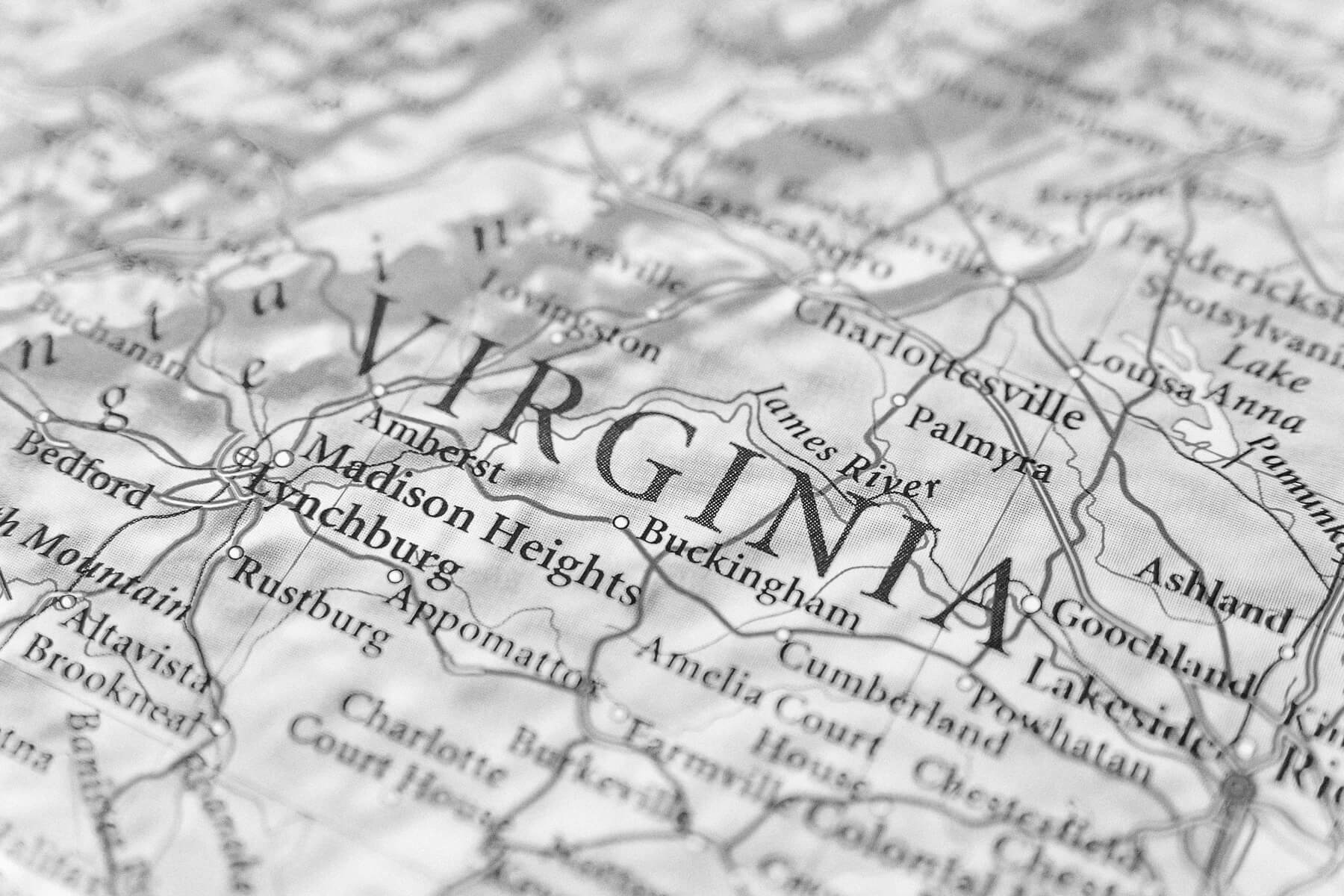
If you’re one of the 61% of Americans who’d like to stop resetting the clock twice a year, it might be time to move to Arizona or Hawaii. The Grand Canyon and Aloha states don’t observe daylight saving time (except for the Navajo Nation in Arizona), meaning they don’t fall back in November or spring forward in March. Rather, they live in what’s surely a permanent state of bliss, never having to remember whether the latest clock change means they’re getting an hour less of sleep the next night or an hour more; nor are they subject to drastic, overnight differences in what time the sun rises and sets.
This common misconception gets it completely wrong, as farmers and agricultural workers have largely been opposed to DST since its conception. The practice was originally implemented during World War I to save energy.
Though polls like the one cited above consistently show that Americans are tired of changing their clocks, making daylight saving time permanent is just as popular as ignoring it altogether — one poll showed 59% of respondents were in favor of the idea. The Senate unanimously passed a bill to do just that in March 2022, though the Sunshine Protection Act, as it’s called, has yet to move forward in the House. Long after Benjamin Franklin half-seriously proposed a form of it in 1784, DST was formally adopted in America via the Standard Time Act of 1918 as a wartime measure. It was abolished in 1919, with Congress overriding a veto from Woodrow Wilson, but then became the law of the land on a federal level when Lyndon Johnson signed the Uniform Time Act on April 14, 1966. States retained the option of remaining on standard time — but only two were bold enough to do so.
U.S. time zones are overseen by the Department of Transportation.
Advertisement
Phoenix, Arizona, is the most populous state capital.
Though it’s not always thought of as one of our major cities, Phoenix is the most populous state capital in the U.S. In fact, it’s the only one with more than a million residents. With a population of about 1.7 million, Phoenix is approaching becoming twice as large as Austin, which ranks second for most populous state capitals and is rapidly closing in on the million mark. Phoenix also ranks fifth overall in the country when it comes to largest cities, with the other four most populous cities — New York, Los Angeles, Chicago, and Houston — not being the seat of their respective state governments. Rounding out the top five capitals are Columbus, Ohio; Indianapolis, Indiana; and Denver, Colorado. On the opposite end of the spectrum is humble Montpelier, which is home to fewer than 8,000 Vermonters.
Michael Nordine
Staff Writer
Michael Nordine is a writer and editor living in Denver. A native Angeleno, he has two cats and wishes he had more.
Advertisement
top picks from the Inbox Studio network
Interesting Facts is part of Inbox Studio, an email-first media company. *Indicates a third-party property.

Not entirely, anyway. The subject of this early 16th-century portrait by Leonardo da Vinci, so famous that it resides in its own bulletproof glass case at the Louvre Museum in Paris, is believed to have been Lisa del Giocondo (née Gherardini), the wife of Florentine merchant Francesco del Giocondo.
According to Article 451-5 of the French Heritage Code law, artworks held in museums like the Louvre are public property, and thereby cannot be considered for transactional purposes.
As was common with other Renaissance works, the "Mona Lisa" didn't have a formal title for many years, instead going by names like "A Certain Florentine Lady" or "A Courtesan in a Gauze Veil." The identity of the subject also became something of a mystery, as Leonardo failed to provide any confirmation in his papers or in the painting itself. It was a later Renaissance artist, Giorgio Vasari, who provided the first inkling that the sitter was the wife of Francesco del Giocondo, in his 1550 book The Lives of the Most Excellent Painters, Sculptors and Architects. From there, the now-famous name took root: Mona, short for Madonna, means "my lady," or something akin to "Mrs." in 16th-century Italian. The painting's common Italian ("La Gioconda") and French ("La Joconde") names also seemingly derive from the subject, although those monikers carry a double meaning as adjectives describing a smiling person.
For a long time, the question persisted as to whether Vasari correctly identified the woman who inspired the iconic painting’s name. However, the 2005 discovery of the "Heidelberg document" (in which a secretary noted that Leonardo was painting "the head of Lisa del Giocondo" in 1503) seemingly provided contemporary proof of the Leonardo-del Giocondo partnership, confirming for many that the sitter was indeed Mona Lisa and not Mona Somebody Else.
Leonardo da Vinci created the smoky appearance of the "Mona Lisa" using a technique known as sfumato.
Advertisement
Leonardo da Vinci may have painted two versions of the "Mona Lisa."
While there are many “Mona Lisa” replicas in existence, some experts believe that one particular painting, known as the “Earlier Mona Lisa” or “Isleworth Mona Lisa,” was rendered by the same Renaissance master prior to the more famous version hanging in the Louvre. Proponents of this belief include the nonprofit Mona Lisa Foundation (endowed by the owners of the older painting), which points to documented evidence of Leonardo da Vinci working on separate iterations of the same subject. On the flip side are critics such as art historian Martin Kemp, who notes that Leonardo typically painted on wood — the “Earlier Mona Lisa” is on canvas — and who dismisses the background of the work in question as the efforts of an obviously inferior artist. Of course, beauty is in the eye of the beholder, and while we may never know with certainty whether the “Earlier Mona Lisa” is indeed just that, the controversy adds to the intrigue of a treasured painting that has long captivated viewers.
Tim Ott
Writer
Tim Ott has written for sites including Biography.com, History.com, and MLB.com, and is known to delude himself into thinking he can craft a marketable screenplay.
Advertisement
top picks from the Inbox Studio network
Interesting Facts is part of Inbox Studio, an email-first media company. *Indicates a third-party property.
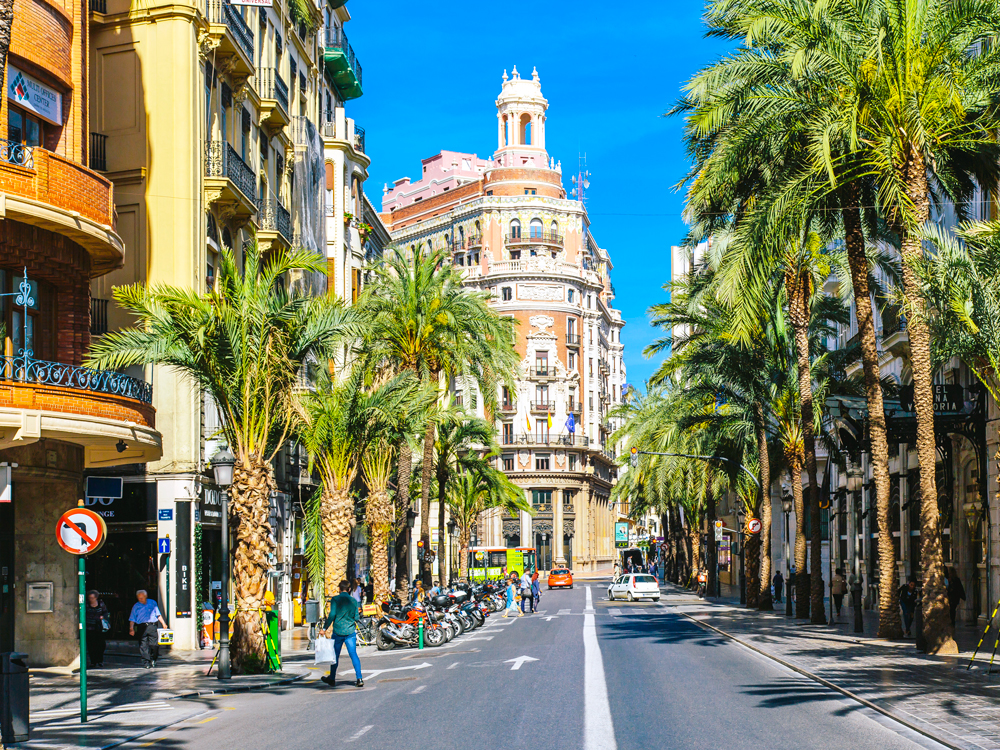
No matter what face you carve into your Halloween pumpkin, it will probably be called the same thing: a jack-o’-lantern. But how did spooky illuminated squash get that name? Turns out, the term we use to describe glowing pumpkins comes from Stingy Jack, the main character in a centuries-old Irish myth.
Despite often being considered a vegetable thanks to its savory flavor, the pumpkin is actually botanically a fruit. It’s all about how they grow; because pumpkins grow from a pollinated flower, just like sweeter fruits, they’re classified that way regardless of how we cook them.
Americans haven’t always carved pumpkins; it wasn’t until the mid-1800s that squash was used for holiday fun. About 200 years before, those celebrating the harvest season in Ireland were making their own lanterns from turnips, beets, and other root vegetables as a way to ward off Stingy Jack, a phantom who roamed the countryside around the harvest. According to Irish lore, Stingy Jack (sometimes called Flakey Jack) was a swindler who took up drinking with the devil, though when the tab came due, he didn’t want to pay his share. After convincing the devil to turn into a coin, Jack trapped his drinking partner in his pocket, releasing him only with the agreement that Jack’s soul would stay free of the underworld. However, as in all folktales, there was a catch (and a warning about immoral behavior): At the end of his life, Jack’s trickster soul wasn’t accepted into heaven or hell, leaving him to wander the earth with naught but a coal (provided by the devil himself) inside a turnip-turned-lantern. By the story’s end, Stingy Jack became “Jack of the Lantern,” which eventually morphed into “Jack O’Lantern.”
Irish immigrants brought the Stingy Jack story to America, though the name and practice of jack-o’-lantern carving took some time to catch on. It particularly picked up following the Civil War, when a grief-struck nation became fascinated by spirits and ghost stories, and it’s a tradition that’s been a fixture of autumn in America ever since.
More pumpkins are grown in Illinois than any other U.S. state.
Advertisement
There’s a species of orange mushrooms that glow in the dark.
Not every jack-o’-lantern requires a candle for illumination. Enter the jack-o’-lantern mushroom, a common fungi known for its ability to glow in the dark. The bright orange and yellow mushrooms often appear in summer and fall, popping up in clusters at the bases of trees, along stumps, or at the site of buried and decaying wood. After dark, the funnel-shaped fungi show off their bioluminescence, which appears as a faint green glow. There are two related species with the same common name, coloring, and ability to glow: Omphalotus olivascens grows in Mexico and California, while Omphalotus illudens grows throughout eastern North America. Mycologists (aka fungi scientists) are unsure why jack-o’-lantern mushrooms are equipped with the ability to light up, though some believe their ability to do so attracts animals that help spread their spores. The glowing tends to stop after the mushrooms are picked, though there’s another reason jack-o’-lantern mushrooms are best left alone: They’re packed with a toxin that can cause severe stomachaches.
Nicole Garner Meeker
Writer
Nicole Garner Meeker is a writer and editor based in St. Louis. Her history, nature, and food stories have also appeared at Mental Floss and Better Report.
Advertisement
top picks from the Inbox Studio network
Interesting Facts is part of Inbox Studio, an email-first media company. *Indicates a third-party property.

While cats give off a solitary vibe — often appearing much more aloof than their canine counterparts — felines are actually very social creatures. They form bonds with littermates, establish colonies, and may develop just as strong a connection with their pet parents as dogs do. Maybe the lesser-known social nature of cats can begin to explain another fascinating finding: Cats are capable of up to 276 unique facial expressions. In 2021, researchers at UCLA recorded 194 minutes of cat-to-cat facial expressions at a nearby CatCafé Lounge. Then they coded all those facial muscle movements, excluding things like chewing and yawning, and discerned 276 unique expressions.
While cat purring can mean your favorite feline is feeling content, there’s a variety of other reasons for cats to rev their little engines, including when they’re hungry, injured, or frightened. A purr’s frequency has also been known to spur bone regeneration.
Each of these feline expressions included four of 26 unique facial movements — things like parted lips, jaw moves, and even pupil dilation. Humans, by comparison, have about 44 facial movements, which some estimates say translates into about 10,000 facial expressions. Although limited compared to humans, cats still have far more expressions than experts realized. As one veterinary behaviorist put it, “there is clearly a lot going on that we are not aware of.” Even after 10,000 years of domestication (and an even greaternumber of cat videos), the little lions in our living room still have the capacity to surprise.
The smiling and frowning masks typically associated with the theater are based on Greek muses.
Advertisement
Cats were actually domesticated twice.
Today’s house cat (Felis catus) is a direct descendant of Felis silvestris lybica, otherwise known as the African wildcat. Still spread across Africa but also west and central Asia, the African wildcat is slightly larger than its tamed descendants, and the process of domestication likely began around 10,800 years ago in the Middle East/North Africa region. However, evidence suggests that a second cat species, the leopard cat (Prionailurus bengalensis), was separately domesticated in neolithic China around 5,000 years ago. (Today, the modern Bengal cat is a mix between this wildcat and Felis catus.) In both instances, cats were domesticated far later than dogs, which some estimates say occurred as far back as 32,100 years ago. This explains why house cats retain more genetic, behavioral, and even physical traits of their wild ancestors compared to most dog breeds.
Darren Orf
Writer
Darren Orf lives in Portland, has a cat, and writes about all things science and climate. You can find his previous work at Popular Mechanics, Inverse, Gizmodo, and Paste, among others.
Advertisement
top picks from the Inbox Studio network
Interesting Facts is part of Inbox Studio, an email-first media company. *Indicates a third-party property.

Kangaroos are one of several biologically unique creatures endemic to Australia. One of their most unusual traits is that their long hind feet and muscular tails prevent them from being able to walk backward except with great difficulty. In fact, kangaroos can’t even really walk forward like other animals. Instead, they ambulate using a hopping motion called saltation in which their hind feet touch the ground synchronously instead of alternating one at a time. They also use their long tails to balance and propel themselves forward, almost like a third hind leg. This physiological composition makes it effectively impossible for kangaroos to walk or hop backward, as their tails are far too heavy and cumbersome to allow for easy reverse navigation. When they do want to move “backward,” they do so by turning around and facing that direction.
Baby kangaroos (joeys) are roughly an inch long when born. Immediately after birth, the baby crawls unassisted into the mother’s pouch, where it spends its first four months. After that the joey emerges for short periods of time to graze before leaving the pouch for good after about 10 months.
Much like their marsupial mates, emus, another endemic Australian creature, also struggle to walk backward. While these large, flightless birds are capable of sprinting at speeds of up to 31 mph, they can only do so facing forward. When they do move backward, they’re forced to do so very slowly. It’s believed that their knee joints, in addition to their long legs and unusual body shape, prevent them from moving quickly in reverse. Given this shared difficulty in backing up, it’s worth noting that both the kangaroo and the emu also share the distinction of appearing on Australia’s Commonwealth Coat of Arms. According to the country’s Department of the Prime Minister and Cabinet, the animals were chosen to symbolize a country that’s always moving forward rather than backward.
Tony Hawk made his television debut on “Captain Kangaroo.”
Advertisement
More than half the residents of Coober Pedy, Australia, live underground.
Coober Pedy is a South Australian mining town known for producing 70% of the world’s opals, and for serving as the filming location for the 1985 dystopian action movie Mad Max Beyond Thunderdome. Today, however, it’s arguably most famous for the fact that more than half its residents live underground. When opal was first discovered in the area in 1915, miners flocked to the region en masse, only to find that summer temperatures could reach a scorching 113 degrees Fahrenheit (45 degrees Celsius) in summer. Rather than bail on this gold mine (so to speak), prospectors dug houses into the hillsides, where the average temperature remained a balmy 75 degrees Fahrenheit (24 degrees Celsius) year-round. The network of underground buildings continued to expand over time, with additions including the Desert Cave Hotel and several churches. Nowadays, about 60% of Coober Pedy’s 2,500 residents live underground, where the temperature remains consistent year after year while outside temps continue to climb.
Bennett Kleinman
Staff Writer
Bennett Kleinman is a New York City-based staff writer for Inbox Studio, and previously contributed to television programs such as "Late Show With David Letterman" and "Impractical Jokers." Bennett is also a devoted New York Yankees and New Jersey Devils fan, and thinks plain seltzer is the best drink ever invented.
Advertisement
top picks from the Inbox Studio network
Interesting Facts is part of Inbox Studio, an email-first media company. *Indicates a third-party property.
It’s a commonly perpetuated myth that soft pompoms were originally sewn onto the top of sailors’ caps to protect crew members from bumping their heads below deck. But there’s actually an even simpler reason. According to France’s National Maritime Museum, pompoms were added as a way to stylishly conceal an unsightly loose thread left behind at the end of the beret-weaving process. In the mid-19th century, French naval authorities found the dangling wool thread to be rather ugly, so they instructed sailors to create and graft a red pompom to the top of their bachi (which is maritime slang for a flat sailor’s cap akin to a beret or bonnet).
Hard hats are color-coded with different meanings.
Color-coded hard hats identify types of workers on a construction site. Generally, white hats are for supervisors, yellow for general workers, blue for technicians, brown for welders, green for safety inspectors, red for fire marshals, orange for those who require high visibility, and gray for visitors.
The typical color of French naval pompoms is red, though the exact reason for that choice is difficult to pin down. One commonly repeated — though possibly apocryphal — theory relates to a purported incident in the late 1800s, in which a sailor violently hit his head when coming to attention during an inauguration ceremony for a bridge in Brest. As the story goes, French Empress Eugénie de Montijo, the wife of Napoleon III, offered her assistance by handing the sailor her handkerchief, which turned red with blood. Today, the traditional red-colored pompom remains a standard component of official French naval dress, perhaps serving as a salute to this fabled event.
Pompoms have also served an important decorative purpose for many military groups in Europe. Hungarian hussars (cavalry regiments) wore pompoms, or sometimes feathers, atop a hat called a shako: a tall, tapered, cylindrical cap that often includes a visor. These puffy embellishments also adorned the caps of soldiers in both the Napoleonic and Russian infantries of the early 19th century, with different colors signifying various roles. But according to archaeological evidence, the earliest example of people wearing a small ball on their hat dates way back to the Viking Age around 800 to 1050 CE. In 1904, a bronze statue was uncovered depicting a figure — possibly the Norse god Freyr — donning a pointed hat with a round orb at the very top.
Two of Napoleon’s hats sold for more than $2 million.
Napoleon Bonaparte is known for wearing a bicorne hat, and he’s said to have owned around 120 throughout his life. The French emperor typically kept a set of 12 of the hats with him at all times, and one was even placed in his coffin before his entombment. Today, it’s believed that 16 to 20 of those hats are still in existence, all of which boast an incredibly high value for collectors. In 2014, one of Napoleon’s bicorne hats sold to an anonymous buyer for a staggering €1,884,000 ($2,348,594 USD). Then in 2023, a black beaver felt hat worn by the emperor sometime between 1806 and 1815 sold at auction for €1,932,000 ($2,114,284 USD), shattering the estimated hammer price of €600,000 to €800,000. Four or five of Napoleon’s hats now reside in private collections, while the rest are in the possession of the French government and various museums.
Bennett Kleinman
Staff Writer
Bennett Kleinman is a New York City-based staff writer for Inbox Studio, and previously contributed to television programs such as "Late Show With David Letterman" and "Impractical Jokers." Bennett is also a devoted New York Yankees and New Jersey Devils fan, and thinks plain seltzer is the best drink ever invented.
Advertisement
top picks from the Inbox Studio network
Interesting Facts is part of Inbox Studio, an email-first media company. *Indicates a third-party property.

Although not the most glamorous of methods, sweating is a biologically ingenious way to keep cool. Our sweat glands employ energy — in this case, heat — to evaporate water off our skin, which in turn cools us down. Humans, along with some monkeys and all of the great apes, use a similar cooling technique, but sweating isn’t as ubiquitous throughout the animal kingdom as you might expect. For example, pigs don’t sweat — not really, anyway.
Sweat itself doesn’t smell — the liquid is made up of lots of water and a little salt. However, sweat glands in our armpits and groin release a type of sweat that is protein-rich, which bacteria then feeds on. The byproduct of this microscopic meal is what actually causes body odor.
Pigs dohave some sweat glands, but they’re insufficient to play a significant role in regulating the creatures’ body temperatures. Instead, some of a pig’s internal body temperature is regulated by a thyroid-produced hormone, but the most fast-acting method for keeping cool is simply wallowing in mud. When the mud evaporates, it takes some heat with it, just as when human sweat evaporates. Pigs will also seek shaded areas, lie flat on cool ground, or even pant similarly to dogs. The fact that pigs don’t sweat (a lot) has created an inaccurate idea that eating a pig is unhealthy because they can’t release toxins through sweat — but that’s just a myth.
Hibernating during the summer to keep cool is called estivation.
Advertisement
The phrase “sweating like a pig” comes from iron — not the animal.
During the traditional iron smelting process, hot iron was poured into molds lined with sand and arranged with one runner feeding into many rows. The molds were said to resemble a row of piglets suckling a sow, which is how crude iron became known by its common name, “pig iron.” The phrase “sweating like a pig” comes from the fact that as the iron cools, water vapor condenses on its surface — a signal that it’s now safe to handle. Although this phrase is likely a 19th-century European invention, the Chinese first used pig iron thousands of years ago, and it’s still used today as a raw material for iron steelmaking.
Darren Orf
Writer
Darren Orf lives in Portland, has a cat, and writes about all things science and climate. You can find his previous work at Popular Mechanics, Inverse, Gizmodo, and Paste, among others.
Advertisement
top picks from the Inbox Studio network
Interesting Facts is part of Inbox Studio, an email-first media company. *Indicates a third-party property.