
Original photo by Yuganov Konstantin/ Shutterstock

Rudolph the Red-Nosed Reindeer is famous for his eponymous Christmas tune and for using his luminous nose to heroically guide Santa Claus through the dense snow and fog on Christmas Eve. But originally, Rudolph was created as part of an ad campaign to guide Chicago area customers into department stores. Montgomery Ward was a retailer known for releasing Christmas-themed promotional coloring books in the 1930s to attract shoppers. After years of buying and distributing books made elsewhere, it opted to cut costs by designing a book of its own in 1939. The retailer enlisted the help of copywriter Robert L. May to conceive a new story, and thus, Rudolph was born.
In winter, a reindeer’s eyes change from gold to more of a deep blue. It’s believed that the pressure in their eyes builds until fluid squeezes out from a layer behind the retina, which causes the color change. This release of fluid makes reindeers’ eyes more sensitive to light during the winter.
According to the fact-checking site Snopes, May was inspired by the story of the “Ugly Duckling” and decided to create a character that was similarly ostracized for his physical appearance. He was also influenced by the fact that reindeer had been associated with Christmas as far back as the early 19th century. May settled on a reindeer with a glowing red nose, and at first considered names such as Rollo (which he later said in a 1963 interview was “too happy”) and Reginald (“too sophisticated”); Rudolph, however, “rolled off the tongue nicely.”
May’s story was a hit with both his young daughter and his employer, which distributed 2.4 million copies of the book in 1939 and another 3.6 million in 1946. Rudolph became a national sensation in 1949, when May’s brother-in-law, Johnny Marks, composed a song about the character. That tune was recorded by Gene Autry and went on to sell 1.75 million copies in its first year, becoming the first No. 1 song of the 1950s.
Frosty the Snowman’s “official” hometown is Armonk, New York.
Advertisement
Eating KFC is a Japanese Christmastime tradition.
Christmas has always been celebrated as a secular holiday in Japan, where only 1% of the country’s approximately 125 million residents identify as Christian. Instead of attending mass or singing carols, Japanese people prefer to celebrate by eating KFC every year around Christmas. The very first Japanese KFC opened in Nagoya in 1970, and the chain quickly expanded across the nation.
In 1974, KFC launched a “Kentucky for Christmas” ad campaign to target expats overseas. But the campaign inadvertently became popular among Japanese folks, who lacked any sort of long-standing Christmas traditions of their own. Today, many Japanese people reserve their buckets of chicken far in advance, and those who don’t plan ahead end up waiting in line for hours. KFCs in Japan say their busiest day is December 24, when they sell five to 10 times as much chicken compared to a normal day.

Bennett Kleinman
Staff Writer
Bennett Kleinman is a New York City-based staff writer for Inbox Studio, and previously contributed to television programs such as "Late Show With David Letterman" and "Impractical Jokers." Bennett is also a devoted New York Yankees and New Jersey Devils fan, and thinks plain seltzer is the best drink ever invented.
Advertisement
top picks from the Inbox Studio network
Interesting Facts is part of Inbox Studio, an email-first media company. *Indicates a third-party property.
The next time you take a sip of eggnog, you should know you’re indulging in a centuries-old tradition that traces back to medieval Britain. This sweet concoction — made from milk, cream, sugar, spices, and eggs — is the modern descendent of posset, a fixture of festive gatherings in the Middle Ages. Posset recipes vary, but most combine wine or beer with cream, sugar, and eggs, and are topped with a thick gruel made from bread, biscuits, oatmeal, or almond paste. To separate the drink from its rich topping, it was served in specialized “posset pots,” teapot-like vessels with two handles and a spout. These unique pots were passed around at English celebrations, particularly weddings, to toast prosperity and good health.
George Washington banned eggnog from his Mount Vernon estate.
On the contrary, Washington seemed to embrace this tradition. Several eggnog recipes have been discovered at the estate, including one believed to be from Washington himself, which he reportedly served to guests. It includes eggs, sugar, salt, whipping cream, nutmeg, and bourbon.
Several centuries later, the drink made its way to the American colonies, where it became a hallmark of holiday festivities. Colonists added rum, making it more potent, which paved the way for the modern recipe as we know it. By1775, the term “eggnog” was part of the American English vernacular. Etymologists pose two theories about its origin. The first suggests that “nog” comes from “noggin,” meaning a wooden cup, while others speculate it comes from “grog,” a strong beer. The origin of the word “posset” is more mysterious, possibly from the Latin word posca for a drink made of vinegar and water. The term endures to this day in the world of British baking, although it now refers to a cold cream-based dessert.
Often called “Puerto Rican eggnog,” coquito is a festive coconut milk-based drink.
Advertisement
Spiked eggnog caused a “grog mutiny” at West Point.
The infamous “grog mutiny” at the United States Military Academy in West Point, New York, is an uncharacteristically unruly chapter in the highly esteemed institution’s history — and it all started with spiked eggnog. In 1826, West Point’s annual Christmas party erupted into chaos after Colonel Sylvanus Thayer, the superintendent, banned alcohol — including eggnog — from campus.
A group of defiant cadets boated up the Hudson River to gather whiskey from a nearby town, smuggling a few gallons onto campus by bribing a guard 35 cents for reentry. Mayhem ensued as eggnog-fueled cadets sought retribution by assaulting Captain Ethan Allen Hitchcock, the officer on duty during the party. As the revelers smashed windows, broke furniture, and even drew swords, Hitchcock barricaded himself in his room, calling upon the commandant for reinforcements. The mutiny eventually dispersed, but 19 cadets and one soldier were court-martialed for their involvement in the “eggnog riot” — a holiday rebellion that’s since been cemented into West Point lore.
Rachel Gresh
Writer
Rachel is a writer and period drama devotee who's probably hanging out at a local coffee shop somewhere in Washington, D.C.
Advertisement
top picks from the Inbox Studio network
Interesting Facts is part of Inbox Studio, an email-first media company. *Indicates a third-party property.
The English language is vast — so vast, in fact, that the average native speaker only knows about 6% of all English words, which equates to roughly 35,000 of the 600,000 words in the Oxford English Dictionary. That percentage may seem small, but the fact that most of us get by just fine on a daily basis suggests the other 94% of words are fairly obscure or redundant. English has one of the largest vocabularies of any language due to its history of freely incorporating words from other languages, particularly French (the origin of at least 30% of English words). Most adults learn an average of one new word per day until middle age, when vocabulary growth tends to slow or even stop — all the more reason to keep the mind sharp with crossword puzzles and word games.
English is the most widely spoken language in the world.
Though Mandarin Chinese and Spanish have more native speakers, English takes the top spot when factoring in those who speak it as a second language.
Different studies have shown slightly different stats, of course. While one estimates the average English-speaking adult’s vocabulary somewhere between 20,000 and 35,000 words, another estimates it closer to 42,000. The latter study featured 70 real words alongside 30 made-up words and asked subjects to identify which was which; however, they weren’t required to define the words. This could account for the higher estimate of known words, as participants may have recognized some words without actually knowing their meanings.
You’ve probably never spoken the longest English word out loud, which is good for two reasons. The first is that pneumonoultramicroscopicsilicovolcanoconiosis clocks in at 45 letters and is exceedingly difficult to pronounce. The second is that it’s defined as “a lung disease caused by inhalation of very fine silicate or quartz dust,” which is to say that if you ever have occasion to speak it, it may not be a happy one.
To get even more technical, Merriam-Webster notes that the longest “string of letters used to describe something,” which isn’t a word but rather the chemical name of a protein, contains a staggering 189,819 letters and takes 50 pages to write in its entirety. (So you’ll excuse us not including it here.) It also takes more than three hours to pronounce, a feat that at least one person has actually accomplished.
Michael Nordine
Staff Writer
Michael Nordine is a writer and editor living in Denver. A native Angeleno, he has two cats and wishes he had more.
Advertisement
top picks from the Inbox Studio network
Interesting Facts is part of Inbox Studio, an email-first media company. *Indicates a third-party property.

The unicorn is a fanciful being of purity usually depicted in medieval art and literature (and modern fantasy and pop culture) as a dainty white horse or goatlike creature with a majestic horn. So when the famed Venetian explorer Marco Polo, who traveled throughout Asia from around 1271 to 1295, saw a “unicorn” up close during his travels in what is now Indonesia, he was disappointed — to say the least. “Their hair is like that of a buffalo … It is a hideous beast to look at, and in no way like what we think and say in our countries,” Polo wrote in his diary. “Indeed, I assure you that it is quite the opposite of what we say it is.”
Marco Polo was the first European to meet the Mongol Khan.
In 1245, on Pope Innocent IV’s order, Italian monk Giovanni da Pian del Carpini went to find the Mongol leader, in part to protest their recent invasion. After arriving in Mongolia, the monk met the supreme khan in August 1246. Polo didn’t meet Kublai Khan for at least another 25 years.
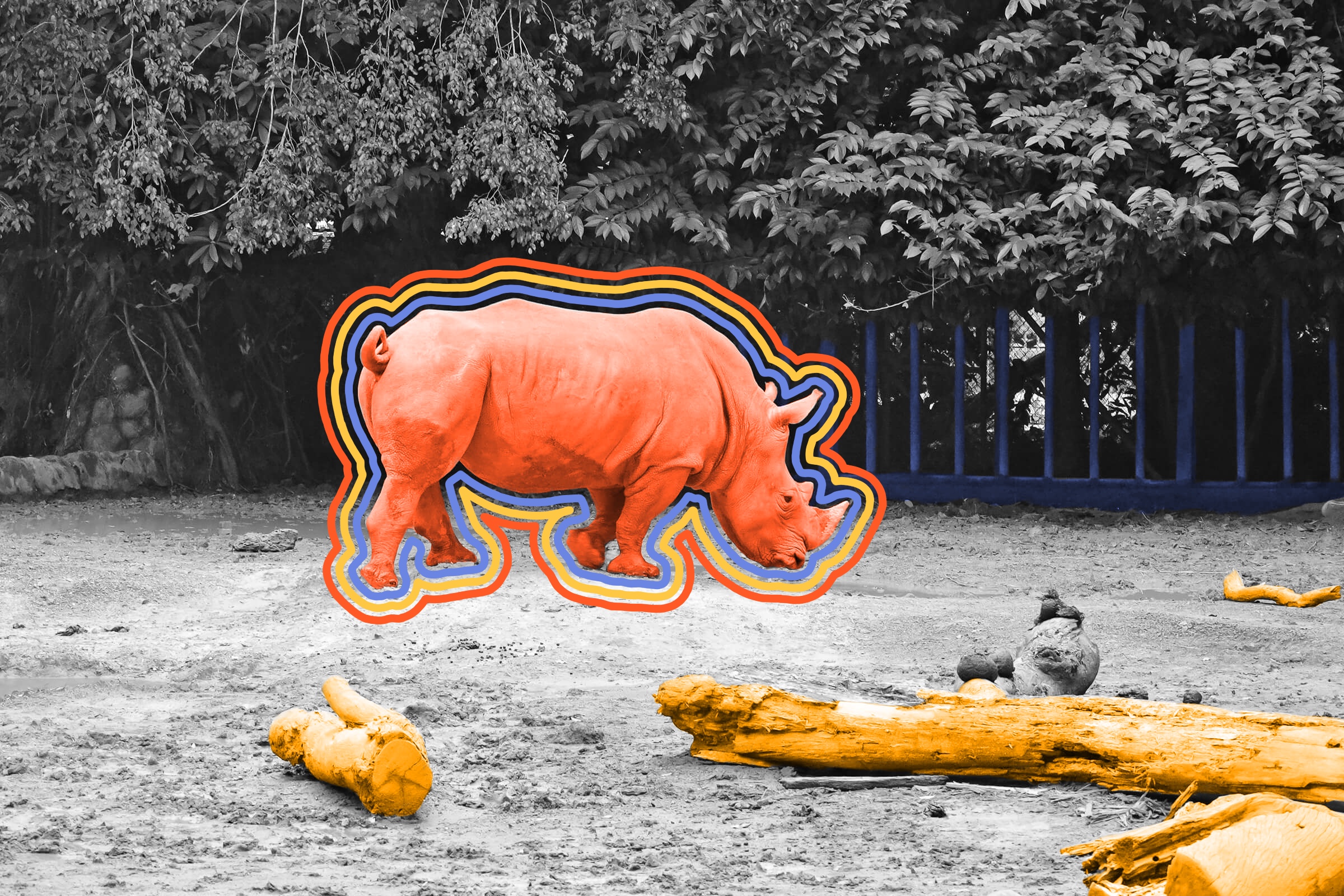
What Polo had actually spotted was likely the Sumatran rhinoceros (Dicerorhinus sumatrensis), the smallest rhino species in the world, and the only rhino with “hair like that of a buffalo.” That’s because the Sumatran rhino is the closest living relative of the now-extinct woolly rhinoceros, which lived during the Pliocene and Pleistocene epochs. Unicorns and rhinos had long had a garbled association in the European mind — the earliest account of a unicorn, from the Greek physician and historian Ctesias, seems based on a rhinoceros, and the word “unicorn” itself evolved out of an ancient game of telephone involving an animal described in the Bible by the Hebrew re'em and confused accounts of the rhinoceros.
Despite its name, the Sumatran rhino used to have a native range that stretched across central and southeast Asia. Today, scientists estimate that there are fewer than 80 Sumatran rhinos left in the world, and most — if not all — live on protected lands. Organizations such as the World Wildlife Fund are working with governments to protect the rhinos and fight the poaching and other crimes that contribute to their dwindling numbers. After all, the world has marveled at the creature for hundreds of years — and it deserves a chance at survival, even if some people have said it’s a “hideous beast to look at.”
A rhino horn is made of keratin, the same protein found in our hair and nails.
Advertisement
Scientists are trying to bring the Northern White Rhino back from extinction.
InMarch 2018, the last male northern white rhinoceros died, leaving behind only two of his subspecies, both aging females who weren’t healthy enough to bear new calves. The subspecies of rhino is now effectively extinct — but scientists have other plans. Researchers are working around the world to bring the northern white rhino back from the brink. The plan is to create new embryos of the subspecies (perhaps using previously collected sperm and eggs, or manipulating pluripotent stem cells) and implant them in a female of its closest cousin, the southern white rhinoceros. If successful, the birth of new, healthy calves could resurrect the near-extinct species. In 2019,Italian scientists announced they’d successfully created two northern white rhino embryos, offering a ray of hope for a species facing annihilation.
Darren Orf
Writer
Darren Orf lives in Portland, has a cat, and writes about all things science and climate. You can find his previous work at Popular Mechanics, Inverse, Gizmodo, and Paste, among others.
Advertisement
top picks from the Inbox Studio network
Interesting Facts is part of Inbox Studio, an email-first media company. *Indicates a third-party property.

Original photo by Alexandre ROUSSEL/ Alamy Stock Photo
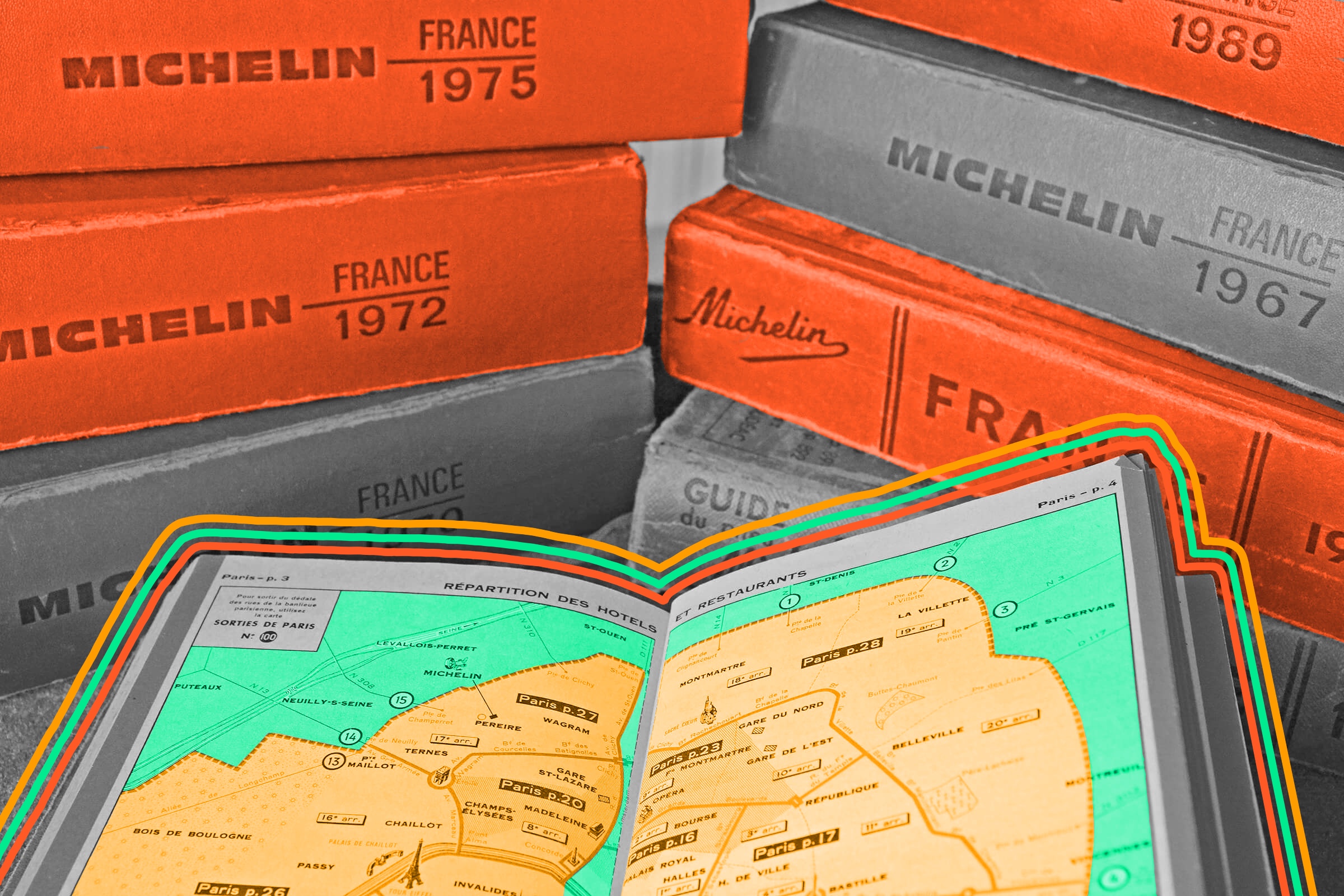
In the restaurant business, there is no greater honor than the Michelin star. Awarded on a ranking from one to three, Michelin stars are the standard of greatness when it comes to fine dining. Chefs pin their reputations on them, and having (or not having) them can make or break a business. So it might seem strange to discover that this culinary accolade is intimately entwined with… car tires. The story starts back in 1900, when brothers Andre and Edouard Michelin, founders of the Michelin tire company, created the Michelin Guide — a booklet full of useful information for French motorists. The free Michelin Guide included maps, lists of nearby gas stations and amenities, basic tire maintenance information, and various road-ready adventures. The hope was that these guides would inspire longer journeys at a time when the automotive age was just beginning, which in turn would mean selling more tires.
In the early days of automobiles, tires were considered the dressing of a car’s wheel, so the name derives from the word “attire.” Originally, tires were made from solid rubber attached to a metal rim, but the result was a bumpy ride. The first air-filled tires were patented in 1845.
But the Michelin Guide might be a forgotten relic if not for two events — one big, one small. The first event was World War I, which ravaged France and forced the Michelin brothers to stop publishing for a few years. The other was when Andre Michelin visited a tire shop around the same time and saw his free Michelin Guides doing the undignified work of propping up a bench. To help raise the guide’s prestige (and also help motorists explore Europe again following the war), the brothers reintroduced the handbooks in 1920, featuring more in-depth hotel and restaurant information — and instead of being free, they now cost seven francs. Within a few years, Michelin also recruited “mystery diners” to improve its restaurant reviews (they still work undercover), and in 1926, they began handing out single Michelin stars to the very best restaurants. Five years later, Michelin upped the amount of possible stars to three, and they have continued searching for the world’s best food in the nearly a century since. Today, the guides — and stars — cover more than 30 territories across three continents.
Tires haven’t changed much over the course of a century. Recommended PSI (pounds per square inch) and types of rubber have come and gone, but the basic equation has remained the same: air + rubber. Yet contrary to popular wisdom, Michelin and other tire brands are reinventing the wheel by making a tire that never goes flat. The idea, borrowed from designs used on smaller machines like riding lawn mowers, is an airless tire that uses flexible spokes rather than air to carry the load. Because these tires operate sans inflation, they’re impervious to punctures, uneven wear, and many other air-centric failures. Michelin estimates that these futuristic tires could save 20% (or about 200 million) tires from ending up in landfills each year. The biggest hurdle? They’re expensive — so it might be a while before everyone’s zipping around on these futuristic wheels.
Darren Orf
Writer
Darren Orf lives in Portland, has a cat, and writes about all things science and climate. You can find his previous work at Popular Mechanics, Inverse, Gizmodo, and Paste, among others.
Advertisement
top picks from the Inbox Studio network
Interesting Facts is part of Inbox Studio, an email-first media company. *Indicates a third-party property.

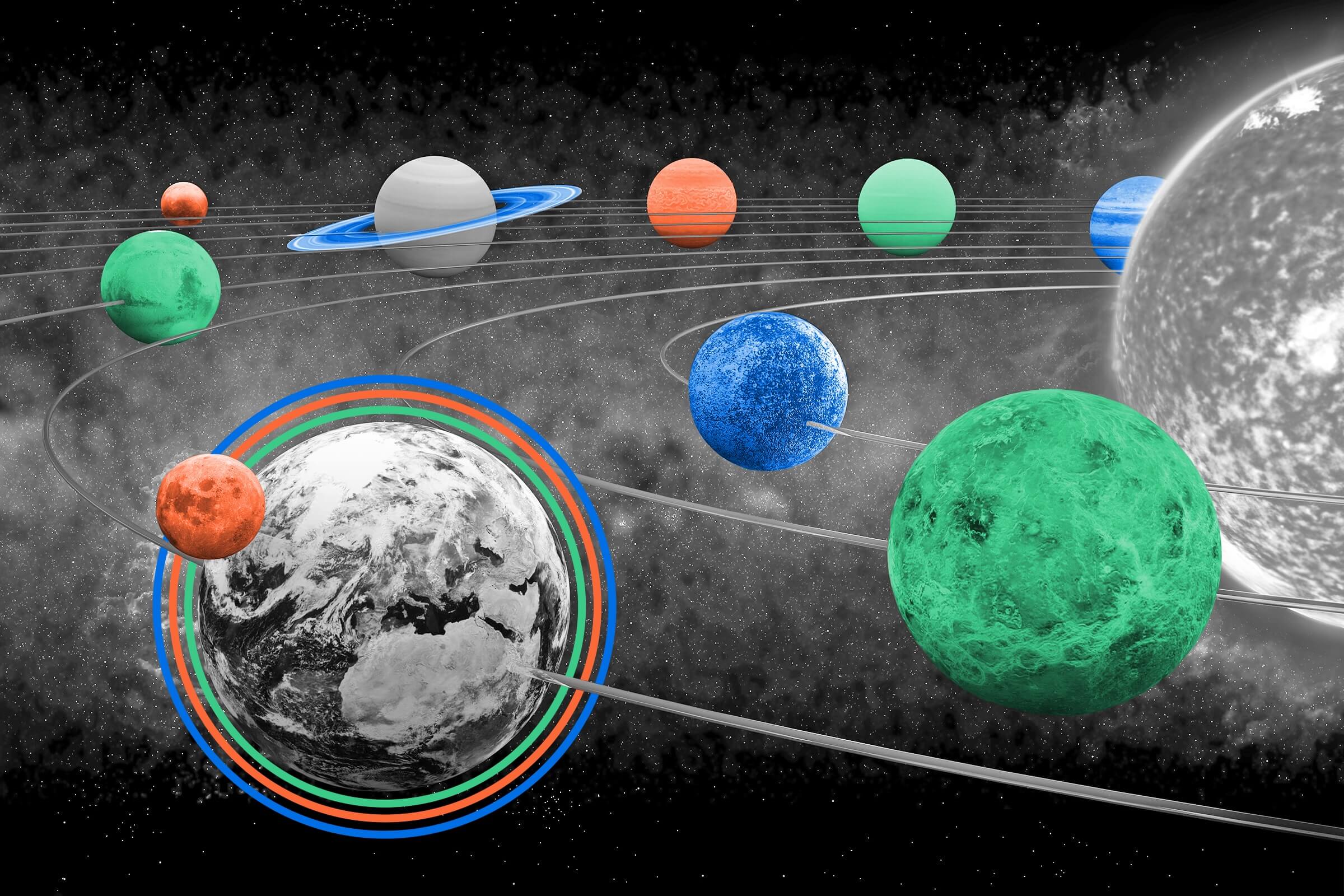
Earth is unique among planets in our solar system in a number of ways — a habitable atmosphere being chief among them. But when it comes to solstices, Earth is just one in a crowd. The winter and summer solstices represent the shortest and longest days of the year, respectively. Because of the Earth’s 23.5-degree axial tilt, certain parts of the planet lean toward or away from the sun, which creates the seasons. It’s during the solstices (December 21 to 22 and June 20 to 22) that the planet reaches its maximum tilt away (or toward) the sun, depending on the hemisphere you call home.
Humanity’s perception of the universe has a strong Earth bias. For example, it’s hard to fathom a day lasting longer than a year. But our planetary neighbor Venus rotates once every 243 days — the longest rotational period of any planet — while its solar orbit (a year) is only 225 days.
Solstices also take place on other planets, but not quite in the same way. Both Mercury and Venus have little axial tilt, so they don’t experience seasons as Earth does. Mars, however, has a very similar tilt to Earth at 25 degrees, and the planet’s ice cap will grow and recede according to the seasons. Although Jupiter has a minuscule axial tilt, Saturn’s axial tilt at 26.7 degrees means solstices there are truly something to behold — during the planet’s summer solstices, its rings become intensely illuminated as they reflect the sun’s light.
However, Uranus is the true oddity. With an axial tilt of a whopping 98 degrees, the planet’s poles point directly toward the sun during its solstices. When Voyager 2 took images of the planet in 1986, Uranus was experiencing its southern hemisphere’s summer solstice, with that hemisphere bathed in continuous light while its northern hemisphere was trapped in frozen darkness. So although all planets have solstices, no two are exactly alike — and Earth’s remain something special.
The word “solstice” is derived from Latin and means “sun standing still.”
Advertisement
Earth likely has an axial tilt because it smashed into an ancient planet.
When planets were forming in the early solar system some 4.6 billion years ago, things were a bit chaotic. Constant collisions with asteroids and protoplanets kept the rocky worlds in the inner solar system in a constant molten state. One theory suggests that during this period, a protoplanet the size of Mars (named Theia) smashed into Earth. This cataclysmic event likely formed the moon and also knocked the Earth into its current axial tilt. Despite this happening so long ago, possible evidence of the collision may lie in Earth’s geology. In 2021, scientists documented two continent-sized layers of rock in the Earth’s mantle that looked unlike surrounding rock layers; the researchers suggested this rock could be the ancient remains of the protoplanet Theia. So next time you’re enjoying a beautiful summer day or a dazzling moonlit night, give thanks to the 4.6 billion-year-old protoplanet that met its molten fate and created the Earth we know and love today.
Darren Orf
Writer
Darren Orf lives in Portland, has a cat, and writes about all things science and climate. You can find his previous work at Popular Mechanics, Inverse, Gizmodo, and Paste, among others.
Advertisement
top picks from the Inbox Studio network
Interesting Facts is part of Inbox Studio, an email-first media company. *Indicates a third-party property.

In most cities, Christmas comes once a year… unless you live in Santa Claus, Indiana, the self-proclaimed home of the holiday season and America’s first theme park: Santa Claus Land. While amusement parks have existed in the U.S. since the 1840s, at the beginning the general idea was just having fun. It wasn’t until 1946, with Santa Claus Land’s opening, that amusement parks began developing specific themes. The attraction took advantage of the town’s unique name, hoping to draw in visitors who wanted to experience a bit of holiday spirit any time of year, and especially youngsters keen to meet St. Nick himself. Owner Louis Koch, who built the theme park as a retirement project, planned the destination with children in mind; his original park featured a toy shop, doll displays, children’s rides, and a restaurant. Over time, Koch also added a mini circus, deer farm, wax museum, and live entertainment.
The world’s oldest operating roller coaster is on Coney Island.
Altoona, Pennsylvania, is home to Leap-the-Dips, a wooden coaster constructed in 1902 that you can still ride today. The coaster ran for eight decades before it closed for restoration; it reopened in 1999 and continues to thrill visitors with downhill speeds of 10 miles per hour.
But Santa Claus Land’s biggest attraction was, of course, its namesake: Santa. Its Kris Kringle impersonators took the job seriously; the park’s longest-working Santa, Jim Yellig, wore the red-and-white suit for 38 years. During his tenure, Yellig reportedly heard more than 1 million holiday wishes from park visitors, an achievement that earned him induction into the International Santa Claus Hall of Fame in 2010. Santa Claus Land went through some upgrades around the time of Yellig’s retirement in 1984, adding on zones for Halloween, Thanksgiving, and the Fourth of July. Today, the park goes by the name Holiday World, and continues to welcome more than 1 million visitors each season.
Both Alaska and New York have cities named North Pole.
Advertisement
The U.S. Postal Service once considered renaming Santa Claus, Indiana.
The city of Santa Claus chose its holiday-inspired name in a bid to get its own post office, though at one point Congress considered renaming the town because it received too much mail. State lore says residents originally named the region Santa Fe, but another Indiana town had already claimed the title. To get a post office, the town had to choose a new name, leaving residents to somehow settle upon Santa Claus in the 1850s. As word got out about the unusual name, a deluge of Santa letters, holiday mail, and packages came to the city’s post office to be stamped with the Christmas-inspired postmark (especially after one kind postmaster began writing back to children who had sent letters to Santa, at his own expense). By 1931, the influx of mail overwhelmed the Postal Service, pushing Congress to consider renaming the town altogether — though legislators dropped the idea after residents argued in favor of the name. Today, the Santa Claus, Indiana, post office receives more than 400,000 pieces of mail in just December (compared to the normal 13,000 per month), all of which are processed with help from volunteers.
Nicole Garner Meeker
Writer
Nicole Garner Meeker is a writer and editor based in St. Louis. Her history, nature, and food stories have also appeared at Mental Floss and Better Report.
Advertisement
top picks from the Inbox Studio network
Interesting Facts is part of Inbox Studio, an email-first media company. *Indicates a third-party property.

The adult human body contains 206 bones, but that’s just a rough estimate. Biology doesn’t always follow the rules when humans — and other animals — grow from a clump of cells to full-fledged creatures. Even in generally healthy humans, this growing process can create a series of extra, or “supernumerary,” features. This can mean an extra rib, additional teeth, and yes, even an additional vertebra. This last one is particularly notable considering how central the spine is to a healthy, well-functioning body. According to scientists, about 10% of the population has an extra lumbar vertebra (known as L6).
Although mammals, lizards, amphibians, birds, and nearly all fish have a spine, vertebrate animals make up only 5% of all species. A large percentage of invertebrate species are insects, which use exoskeletons instead of spines.
Lumbar vertebrae, the largest bones in the spinal column, protect the spinal cord — filled with tissues, cells, and nerves — while supporting the body’s weight and allowing for a wide range of motions. One might think that adding a sixth vertebra to the mix would mess with this delicate biological balancing act, but it turns out that our bodies are smarter than that. According to experts, the L6 vertebra has little to no impact on a person’s health — in fact, most people don’t even know they have one. Sometimes, an extra lumbar vertebra will fuse with the wrong bone, but an arguably greater concern is a doctor or surgeon identifying this extra L6 vertebra as the L5 vertebra, which can lead to medical mistakes known as “wrong-level” surgeries. So while it’s best to know if you’re the rare 1-in-10 case, it’s much more likely than not that your extra spinal bone won’t impact your life at all.
The smallest vertebrae in the spine are known as the cervical vertebrae.
Advertisement
It’s technically impossible to be “double-jointed.”
Growing up, many people encounter that one friend who seems to be especially flexible — thumbs curve back, limbs jut out at awkward angles, and legs bend with unparalleled pliability. While this contortionist act is often said to be the result of being “double-jointed,” such a medical diagnosis doesn’t actually exist. Instead, a large portion of humanity is best described as having “hypermobility” or “joint laxity.” This means that some people are born with loose ligaments or other bone oddities that make them more flexible than most. For the majority, hyperflexibility isn’t harmful, but a small percentage — those with joint hypermobility syndrome — can experience pain. So in the end, all humans have the same number of joints, but as for the tautness of our ligaments? Well, that’s a different story.
Darren Orf
Writer
Darren Orf lives in Portland, has a cat, and writes about all things science and climate. You can find his previous work at Popular Mechanics, Inverse, Gizmodo, and Paste, among others.
Advertisement
top picks from the Inbox Studio network
Interesting Facts is part of Inbox Studio, an email-first media company. *Indicates a third-party property.

The human body is a story of resilience. Wounds heal, bones regenerate, and our immune system fights diseases and infections, yet few parts of the body experience as many challenges as our teeth. Capable of biting, tearing, and grinding, teeth are designed to withstand (almost) anything humans consume, and evolution has provided Homo sapiens some help in the form of tooth enamel. Formed from a mineral known as calcium phosphate and arranged in a crystal lattice “woven” with threads 50 nanometers across (1,000 times smaller than a human hair), enamel is the hardest substance in the human body. Its lifelong mission is to protect the innermost layers of the tooth, including the dentin and tooth pulp (which contains all those nerves that give you a toothache).
Between 5% and 37% of people are born missing one or more wisdom teeth. A study in 2020 concluded that more babies are being born without these third molars, which could be an example of microevolution as humans lose the need for them.
A human’s extra-strength set of chompers is useful for eating everything from warm soup to rock candy, but teeth aren’t invincible. Modern diets (“modern” meaning after the agricultural revolution 10,000 years ago) are rich in carbohydrates, sucrose, and other sugars — much richer than what our hunter-gatherer ancestors experienced for hundreds of thousands of years. This new diet upset the well-balanced microbiome in our mouths, which are filled with around 700 kinds of bacteria. Some of these bacteria thrive on sugars, and left unchecked (i.e., without brushing, flossing, and regular dental visits), they attack enamel with lactic acid, a byproduct of the bacteria’s metabolism. So while enamel is the hardest stuff found throughout the human body, it needs extra special attention to keep all 32 teeth covered in it healthy and strong.
The first known dentist is Hesy-Re, a scribe from ancient Egypt’s third dynasty (2670-2613 BCE).
Advertisement
Snails have thousands of teeth.
Picture an animal sporting an impressive array of pearly whites, and something like a shark, whale, or lion might come to mind — but the humble snail outdoes them all. Depending on the species, snails have anywhere from 2,000 to 15,000 teeth in their pint-sized mouths. However, these teeth aren’t the same as the hardened enamel in our own jaws. Instead, a snail’s tongue (called a “radula”) is essentially covered in rows and rows of tiny teeth that act like a file when the gastropod is munching on a meal. Because this wears down the teeth over time, they’re regularly replaced. Yet some snail species also have incredibly tough teeth: The common limpet (Patella vulgata), for example, has teeth that are even stronger than spider silk, making them potentially the toughest biological material on the planet.
Darren Orf
Writer
Darren Orf lives in Portland, has a cat, and writes about all things science and climate. You can find his previous work at Popular Mechanics, Inverse, Gizmodo, and Paste, among others.
Advertisement
top picks from the Inbox Studio network
Interesting Facts is part of Inbox Studio, an email-first media company. *Indicates a third-party property.

The length of an average adult human neck ranges from about 4.5 inches to a bit more than 5 inches, while the longest human necks measure about 7.75 inches. In comparison, the average giraffe neck can reach up to 8 feet long. Despite this stark difference, humans and giraffes have an identical number of neck bones, with seven vertebrae apiece; in fact, most mammals have seven cervical vertebrae. These bones are located in the upper portion of the spine, and in humans, each measures around half an inch long. But in giraffes, those same bones can grow up to 12 inches long, resulting in their striking signature feature.
Wild giraffes sleep for as little as 30 minutes per day.
Giraffes can get by on 30 minutes of daily sleep — among the shortest average sleep times in the animal kingdom. They also rarely lie down while sleeping, as that would make them vulnerable to predators. But giraffes in captivity act differently; they often sleep lying down for up to six hours.
Some research suggests giraffes may have an unofficial eighth neck vertebrae in the form of their first thoracic (chest) vertebra. In humans, this bone is considered a fixed part of the spine and has no impact on neck mobility. But for giraffes, the first thoracic vertebra is believed to act as a fulcrum, which allows their necks to have greater range of motion. If true, it could be argued that giraffes have eight neck bones in practice, even if their musculoskeletal structure only technically contains seven.
Nonmammalian species, meanwhile, have far more neck bones than humans and giraffes. In the avian world, ostriches have the longest neck of any living bird at around 3 feet. Their necks contain 17 cervical vertebrae, measuring a little more than 2 inches each. But in all of recorded history, the record for most neck bones belongs to the plesiosaur Albertonectes vanderveldei, which is thought to have had around 76 cervical vertebrae.
Among other terms including “tower” and “journey,” a group of giraffes is known as a “kaleidoscope.”
Advertisement
No two giraffes have the same spot pattern.
Much like human fingerprints, a giraffe’s spotted coat is unique to each creature, which allows researchers to easily identify individual giraffes. The different species of giraffe also have distinct spot styles. For example, reticulated giraffes have distinct brown spots separated by clear white lines. Masai giraffes, on the other hand, have a spot pattern that’s more oblong and jagged. But spots are used for more than just identification purposes. The brown and tan colors provide giraffes with natural camouflage in the savannah, and the spots are also used for thermoregulation, which is helpful given that giraffes don’t sweat. Each spot covers up a complex array of blood vessels that expand or contract depending on the surrounding temperature, allowing each giraffe to release and manage their body heat accordingly. In rare cases, giraffes can be born spotless, though this has only been recorded once in the wild and twice in zoos.
Bennett Kleinman
Staff Writer
Bennett Kleinman is a New York City-based staff writer for Inbox Studio, and previously contributed to television programs such as "Late Show With David Letterman" and "Impractical Jokers." Bennett is also a devoted New York Yankees and New Jersey Devils fan, and thinks plain seltzer is the best drink ever invented.
Advertisement
top picks from the Inbox Studio network
Interesting Facts is part of Inbox Studio, an email-first media company. *Indicates a third-party property.