
Original photo by Fer Gregory/ Shutterstock

Throughout more than a century of publication, the Sears catalog was a go-to source for American shoppers seeking out standard home goods. But in addition to those traditional products, the catalog also offered some curious items for sale, including live chickens, 14-room mail-order houses, and even highly explosive dynamite. A 1902 edition of the catalog advertised dynamite as a tool for removing tree stumps, claiming it to be “far superior to any other agent.” The company also offered more powerful varieties that could be used for blasting into hard rock and even underwater. Sears sold dynamite for as little as 13 cents a pound — less than $5 today — along with all of the electric fuses, connecting wires, and blasting machines required for operation.

The former Sears Tower in Chicago used to be the world’s tallest building.

Ready to reveal?

Oops, incorrect!

It's a fact

The Sears Tower (now the Willis Tower) stands 1,450 feet tall, making it the world’s tallest building from its completion in 1973 until 1996. It took the record from the North Tower of the World Trade Center (1,368 feet), and was surpassed by the Petronas Towers of Kuala Lumpur, Malaysia (1,483 feet).

There were no prerequisites for purchasing this dynamite, despite the obvious safety risks associated with amateur use. Instead, Sears promised to “mail a booklet giving full information” to “those who are not familiar with handling dynamite,” hoping buyers would carefully follow the instructions. The dynamite could be found in the catalog’s “sporting goods” section, just a few pages away from comparatively mundane products such as baseball uniforms and hammocks. Dynamite and other more unusual items were phased out as Sears largely trended toward selling housewares. In future editions of the catalog, Sears noted that “to conform with the insurance laws,” it had been “forced to omit carbide from [its] stock,” which prevented it from selling explosives and combustibles. The traditional Sears catalog was discontinued in 1993.

Numbers Don't Lie

Numbers Don't Lie

Year Sears opened its first retail store
1925
Sears share price after it went public in 1906 (~$3,400 today)
$97.50
Physical retail stores operated by Sears at its peak (including Kmart stores)
~3,500
Product varieties sold by the Sears catalog over the course of its history
100,000+

In 1990, ______ surpassed Sears as the largest U.S. retailer.

Ready to reveal?

Confirm your email to play the next question?

In 1990, Walmart surpassed Sears as the largest U.S. retailer.

Placeholder Image

Dynamite was invented by the namesake of the Nobel Prize.

Alfred Nobel was a Swedish chemist whose legacy consists of two major achievements: inventing dynamite and establishing the Nobel Prize. In 1862, Nobel opened a factory to produce nitroglycerin — an explosive liquid compound used in blasting mines. But the product was infamously unstable, and Nobel’s factory exploded in 1864. He spent the following years researching safer alternatives, and in 1867, he invented a more stable product by mixing nitroglycerin with kieselguhr (a porous rock). Nobel named this new compound dynamite — taken from the Greek dynamis, meaning “power” — and it earned him both global recognition as well as a staggering fortune. 

After Nobel’s death in 1896, many wondered what would happen to his vast wealth. To the surprise of many, including his family, Nobel’s will mandated the money be used to establish a series of new international awards honoring annual achievement in topics including science, literature, and peace. After years of debated legal claims, the inaugural Nobel Prizes were awarded in 1901.

Bennett Kleinman
Staff Writer

Bennett Kleinman is a New York City-based staff writer for Inbox Studio, and previously contributed to television programs such as "Late Show With David Letterman" and "Impractical Jokers." Bennett is also a devoted New York Yankees and New Jersey Devils fan, and thinks plain seltzer is the best drink ever invented.

Original photo by Gannet77/ iStock

The average person can probably name a couple of the more famous shipwrecks — maybe the Titanic or Queen Anne's Revenge — but there are many, many more that have sunk from sight and public recollection. Altogether, it's believed that at least 3 million such wrecks dot the ocean floors.

Bermuda has the most shipwrecks per square mile of any location on the planet.

Ready to reveal?

Oops, incorrect!

It's a fact

Although Bermuda measures less than 21 square miles, the combination of its location within trade routes and hazardous coral reefs has produced more than 300 shipwrecks off its coast.

If that number doesn't seem particularly remarkable (humans have been building boats for at least 10,000 years, after all), then perhaps it's more surprising to learn that less than 1% of these submerged crafts have been explored. Why such a small percentage? Well, the world's oceans are enormous, reaching an average depth of more than 12,000 feet, and only 19% of the ocean floor has been charted in detail. There's also the matter of the money needed to launch expeditions to find these vessels. But times are changing in the realm of wreckage discovery: The digitization of archives has made records more accessible, and the development of technologies such as remotely operated vehicles (ROVs) has rendered the searching process less treacherous for explorers.

So what becomes of most shipwrecks? Some of them are looted for profit, despite legal efforts to preserve the historical value of their artifacts. Some are turned into underwater museums. But most others become reefs — playgrounds for fish and other varieties of marine life. They may not receive the fanfare showered on the wreck of Titanic, but they nevertheless take on new and important functions far below the waves.

Numbers Don't Lie

Numbers Don't Lie

Estimated value (in U.S. dollars) of treasure on sunken ships
60 billion
Age (in years) of the oldest intact shipwreck discovered, in the Black Sea
2,400
Shipwrecks found over 22 days in the Fourni archipelago in 2015
23
Estimated number of shipwrecks across the Great Lakes
6,000

A 2022 Antarctic expedition found the wreck of explorer Ernest Shackleton's ship, named ______.

Ready to reveal?

Confirm your email to play the next question?

A 2022 Antarctic expedition found the wreck of explorer Ernest Shackleton's ship, named Endurance.

Placeholder Image

The deepest shipwreck was discovered more than 22,500 feet below the ocean's surface.

Combine cutting-edge technology with the nerve needed to explore the most extreme corners of the Earth, and you wind up finding treasures once thought inaccessible. Such was the case with a former U.S. Navy intelligence officer named Victor Vescovo, who turned his attention from scaling the world’s highest peaks to scouring its deepest depths by way of a first-of-its-kind submersible dubbed the Limiting Factor. In 2021, Vescovo came upon the largely intact WWII destroyer USS Johnston resting some 21,180 feet below the surface of the Philippine Sea. A little more than a year later, Vescovo followed the trail of the Johnston and the Limiting Factor’s sonar capabilities to locate another WWII craft, the destroyer escort USS Samuel B. Roberts, elsewhere in the Philippine Trench, at a depth of 22,523 feet. Although that latter mark currently stands as the world record for the deepest shipwreck, it probably won’t be long before Vescovo or another intrepid soul ventures even further into the unknown to see what can be uncovered.

Tim Ott
Writer

Tim Ott has written for sites including Biography.com, History.com, and MLB.com, and is known to delude himself into thinking he can craft a marketable screenplay.

Original photo by craige bevil/ Alamy Stock Photo

Compared to other planets in our solar system, Earth is filled with impressive landscapes, including snow-capped peaks, lush rainforests, and vast oceans. But some places on our planet are so extreme, they’re otherworldly — like Venus otherworldly. The Atacama Desert in Chile is one of the driest places in the world, so it makes sense that such a parched ecosystem would get its fair share of sun. But in the summer of 2023, scientists discovered that some parts of this immense plateau in fact get far more sunlight than any other place on Earth. While taking measurements of solar irradiance (light energy from the sun) on the Chajnantor plateau, researchers discovered — via a complex meteorological process known as “forward scattering” — that this area was nearly as sunny in summer as the surface of Venus.

Venus is the only planet that spins clockwise.

Ready to reveal?

Oops, incorrect!

It's a fact

While most planets spin counter-clockwise, Venus flouts the trend and spins clockwise. Astronomers theorize that a huge celestial collision involving Venus in the early solar system flipped the planet upside down. A similar process may have happened to Uranus, which spins on its side.

Despite some key differences between the two planets, scientists often call Venus Earth’s twin. Venus is roughly the same size as Earth, formed in the same area of the inner solar system, and is composed of much the same material — scientists even theorize that Venus was just like Earth some 3 billion years ago. But it is definitely not Earthlike now; it’s a sweltering hell planet thanks to an atmosphere of thick carbon dioxide that traps all greenhouse gases. If you somehow found yourself on Venus, high levels of solar irradiance would be the least of your immediate worries, considering its surface temperatures of 900 degrees Fahrenheit and sulfuric acid-filled clouds. 

Numbers Don't Lie

Numbers Don't Lie

Distance (in miles) of Earth from Venus at its closest approach
23.6 million
Amount of rain (in millimeters) some areas of the Atacama Desert receive annually
5
Height (in feet) of the Atacama plateau’s Nevado Ojos del Salado, the highest volcano in the world
22,608
Average width (in miles) of Chile, the world’s narrowest country
108

The brightest objects in the universe are called ______.

Ready to reveal?

Confirm your email to play the next question?

The brightest objects in the universe are called quasars.

Placeholder Image

The world’s largest telescope is being built in the Atacama Desert.

Low humidity, high altitudes, and zero light pollution make the Atacama Desert arguably the best place on Earth for stargazing, and astronomers around the world have used its unparalleled nighttime views to their advantage. The region is home to a variety of telescopes and surveys, including the Atacama Large Millimeter/submillimeter Array, the Cosmology Large Angular Scale Surveyor, and the Vera C. Rubin Observatory (previously the Large Synoptic Survey Telescope). The European Southern Observatory is also currently at work in the area building the largest telescope in the world, known (rather unimaginatively) as the Extremely Large Telescope (ELT). Just the main mirror of the telescope stretches 128 feet in diameter, which is three times larger than the current record holder, and that immense size will aid astronomers studying black holes and dark matter when ELT is ready to point its impressively huge eye skyward by the end of the decade.

Darren Orf
Writer

Darren Orf lives in Portland, has a cat, and writes about all things science and climate. You can find his previous work at Popular Mechanics, Inverse, Gizmodo, and Paste, among others.

Original photo by Gogosvm/ iStock

Most of our pet cats and dogs know their names, but they (probably) didn’t come up with those names on their own. In fact, only one nonhuman primate is known to use names: the humble marmoset. The small, chatty monkeys have joined a highly exclusive club that also includes parrots and dolphins, as research from 2024 notes that marmosets use unique vocalizations to label one another. 

Marmosets frequently give birth to twins.

Ready to reveal?

Oops, incorrect!

It's a fact

Unlike just about every other primate species, marmosets don’t always give birth to just one infant at a time. Twins are common, and triplets, though rare, have been known to occur as well.

Marmosets are highly social creatures, and their whistle-like “phee calls” are meant to inform fellow group members of their location. The study found that when marmosets who knew each other were placed in the same room with a barrier that blocked them from seeing one another, they not only engaged in chitchat but used unique vocalizations for one another — essentially, names. Conservation biologist George Wittemyer of Colorado State University, who led a similar study that found African elephants “name” each other as well, believes the list of animals who engage in this practice could continue growing. He told The New York Times, “It’s likely that animals actually have names for each other a lot more than maybe we ever conceived.”

Numbers Don't Lie

Numbers Don't Lie

Length (in inches) of the average Goeldi’s marmoset, not including the tail
8-9
Average number of marmosets in a troop
4-15
Marmoset species
20+
Average length (in days) 0f the common marmoset’s gestation period
148

Marmosets are native to ______.

Ready to reveal?

Confirm your email to play the next question?

Marmosets are native to South America.

Placeholder Image

A parrot named Puck knew 1,728 words.

There are talkative parrots, and then there’s Puck. The budgerigar (also known as a budgie or common parakeet) was entered into the 1995 Guinness World Records for his astonishing vocabulary, which was estimated at 1,728 words. He was observed by 21 volunteers over a six-month period to verify his abilities. In addition to mimicking, Puck also formed sentences of his own —  on December 25, 1993, for instance, his owners overheard him say, “It’s Christmas. That’s what’s happening. That’s what it’s all about. I love Pucky. I love everyone.”

Michael Nordine
Staff Writer

Michael Nordine is a writer and editor living in Denver. A native Angeleno, he has two cats and wishes he had more.

Original photo by Laura adai/ Unsplash+

It’s a common misconception that potatoes hail from Ireland, or elsewhere in Europe, but they were actually first cultivated in the New World — specifically, South America’s Andean region. Archaeologists uncovered fossilized sweet potatoes in Peru’s Chilca Canyon dating back to around 8080 BCE, making them the oldest known remains of domesticated tubers. There’s also evidence of potatoes having grown along Peru’s coast some 4,000 years ago, as well as along the shores of Lake Titicaca (an area shared by modern-day Bolivia and Peru) roughly 2,500 years ago.

The earliest spuds were cultivated by ancient civilizations that inhabited the Andes, including the Aymara, who settled on the Titicaca Plateau no later than 1500 BCE. The Aymara managed to grow more than 200 potato varieties, despite extreme heights and adverse climatic conditions. Potatoes were also a popular crop among the Inca, who used them for pottery, medicine, and even to predict the weather.

Thomas Jefferson helped popularize french fries in the United States.

Ready to reveal?

Oops, incorrect!

It's a fact

According to the Monticello estate, Jefferson once returned from a trip to France with a recipe roughly translating to “deep-fried potatoes in small cuttings,” an early incarnation of the modern french fry. He also helped popularize other foods in the U.S., including ice cream.

Potatoes were only introduced to Europe in the 16th century, when they were brought back to the continent by Spanish conquistadors. According to the Irish Potato Federation, the spuds arrived in Ireland between 1586 and 1600 CE, though there’s no written evidence of their early cultivation there. Potatoes, which could be grown in cheap soil, quickly became a staple crop among poorer Irish communities. When the Irish Potato Famine struck in 1845, an estimated 1.5 million Irish fled to the United States to avoid hunger. This largely accounts for why many of us draw a connection between Ireland and potatoes, despite the spud’s South American origins.

Numbers Don't Lie

Numbers Don't Lie

Weight (in pounds) of the heaviest recorded potato
10.875
Water content in an uncooked potato
79%
Year potatoes became the first vegetable grown in space
1995
Most recorded wins in the Mashed Potato Wrestling championships
4

In Britain, fries are called "chips," while chips are called "______."

Ready to reveal?

Confirm your email to play the next question?

In Britain, fries are called "chips," while chips are called "crisps."

Placeholder Image

Mr. Potato Head was the first toy advertised on TV.

On April 30, 1952, a television ad aired to promote the new Mr. Potato Head toy. This marked the first televised toy advertisement and also the first ad to speak directly to children rather than their parents. Mr. Potato Head was originally much different than its modern incarnation. The packaging contained 30 plastic accessories (facial features, hands, feet, etc.) that could be affixed to real potatoes instead of a plastic body.

That inaugural advertisement featured a cartoon mascot informing kids about all the fun they could have playing with Mr. Potato Head, and the campaign proved so successful that more than a million kits sold in the first year alone. But in the 1960s, new government safety regulations prohibited the sale of sharp accessories that could, for instance, be stuck into spuds as toys. In response, the Hasbro toy company pivoted and began selling a plastic potato body with premade holes and more kid-friendly accessories.

Bennett Kleinman
Staff Writer

Bennett Kleinman is a New York City-based staff writer for Inbox Studio, and previously contributed to television programs such as "Late Show With David Letterman" and "Impractical Jokers." Bennett is also a devoted New York Yankees and New Jersey Devils fan, and thinks plain seltzer is the best drink ever invented.

Original photo by Galyna Andrushko/ Shutterstock

The Grand Canyon attracts millions of visitors to northern Arizona each year, all hoping to snap an amazing photo of the canyon’s vast landscape. The mile-deep gorge is the centerpiece of such an expansive view that it can’t all be seen at once; at 277 miles long and up to 18 miles wide, the Grand Canyon is so large, it creates its own weather. In fact, getting a view from its two most popular rims (aka tops) requires nearly five hours of travel time. 

The Grand Canyon is under the care of the National Park Service, yet the park boundaries don’t contain it entirely; the portion protected by Grand Canyon National Park totals 1,904 square miles, a span larger than the smallest U.S. state. In comparison, the tiny East Coast state of Rhode Island contains just 1,214 square miles.

Dinosaur bones have been discovered in the Grand Canyon.

Ready to reveal?

Oops, incorrect!

It's a fib

Despite the fact that the Grand Canyon formed millions of years ago, evidence of dinosaurs has never been found there. While the canyon’s rock walls are about a billion years older than dinosaurs, scientists believe its depths had yet to form when dinosaurs were walking the Earth.

Today, the Grand Canyon is the second-most-visited national park (bested only by the Great Smoky Mountains in 2022). Until the mid-1800s, however, little was known about the area, thanks to its remoteness. Spanish conquistadors who explored the region in 1540 had little to note of its magnificence, and an 1857 report from an American expedition through the canyon described the 6 million-year-old area as “altogether valueless,” with “nothing to do but leave.” Such declarations impeded progress in turning the natural wonder into a national park when President Benjamin Harrison first moved to protect the area in 1893 as a forest reserve; President Theodore Roosevelt designated it a national monument in 1908. It would take a third president — Woodrow Wilson — and 11 more years for the Grand Canyon to become the awe-inspiring national park it is today.

Numbers Don't Lie

Numbers Don't Lie

Estimated number of caves within the Grand Canyon
1,000
Miles of the Colorado River that run through the Grand Canyon
278
Species of rattlesnakes found in Grand Canyon National Park (including the pink Grand Canyon rattlesnake, only found there)
5
Visitors to Grand Canyon National Park in 2022
4.7 million

The Yarlung Zangbo Grand Canyon, found in ______, is the world’s deepest canyon.

Ready to reveal?

Confirm your email to play the next question?

The Yarlung Zangbo Grand Canyon, found in Tibet, is the world’s deepest canyon.

Placeholder Image

Mail is delivered to the bottom of the Grand Canyon.

Most visitors to the Grand Canyon admire the landscape from overlooks, never venturing to the gorge’s bottom. Yet mail-carrying mules trek down into the canyon five days a week, delivering packages, food, and supplies to the Supai village, where the Indigenous Havasupai people have lived for nearly 1,000 years. (It’s unclear how long mail has been delivered this way, but mule postal deliveries were first documented in 1938.) Up to 22 mules are part of the daily, all-weather mail train, carrying up to 200 pounds of goods each, and traveling 9 miles down into the canyon outside the national park’s boundaries. The trip takes three hours down and five hours on the return, and according to the Smithsonian’s National Postal Museum, is the last official mail-by-mule route in the country (and possibly, the world).

Nicole Garner Meeker
Writer

Nicole Garner Meeker is a writer and editor based in St. Louis. Her history, nature, and food stories have also appeared at Mental Floss and Better Report.

Original photo by Andy Feliciotti/ Unsplash

While Washington, D.C., is the U.S. capital we’re most familiar with today, it’s far from the country’s first. In fact, it came at the end of a long road. When the Second Continental Congress declared the independence of the United States of America in 1776, its home base at the Pennsylvania State House (now Independence Hall) made Philadelphia the first capital of the brand-new nation. But arriving waves of British soldiers made life dangerous in the major coastal cities of the former colonies, and congressional delegates often found themselves on the move during the Revolutionary War years. Following a two-month stay in Baltimore, the Continental Congress returned to Philadelphia for six months before reconvening for one September 1777 day in Lancaster, Pennsylvania. Next, they moved the capital a little farther west to York for nine months, before going back to Philadelphia again.

Congressional representatives from Washington, D.C., cannot vote on bills.

Ready to reveal?

Oops, incorrect!

It's a fact

The district’s lone member of the House of Representatives can sit on committees and introduce legislation, but cannot vote on final bills. The district also has a “shadow delegation” of two senators and one representative, who primarily advocate for D.C.’s statehood.

While the American Revolution was effectively over by summer 1783, a domestic threat from Continental Army soldiers seeking overdue wages again sent congressional delegates scurrying, this time to the campus of the College of New Jersey (now Princeton University). From there, it was on to Annapolis, Maryland, and then to the future New Jersey capital of Trenton through late 1784, before the government began to stabilize with the drafting of the U.S. Constitution and the election of President George Washington during its nearly six-year tenure in New York City.

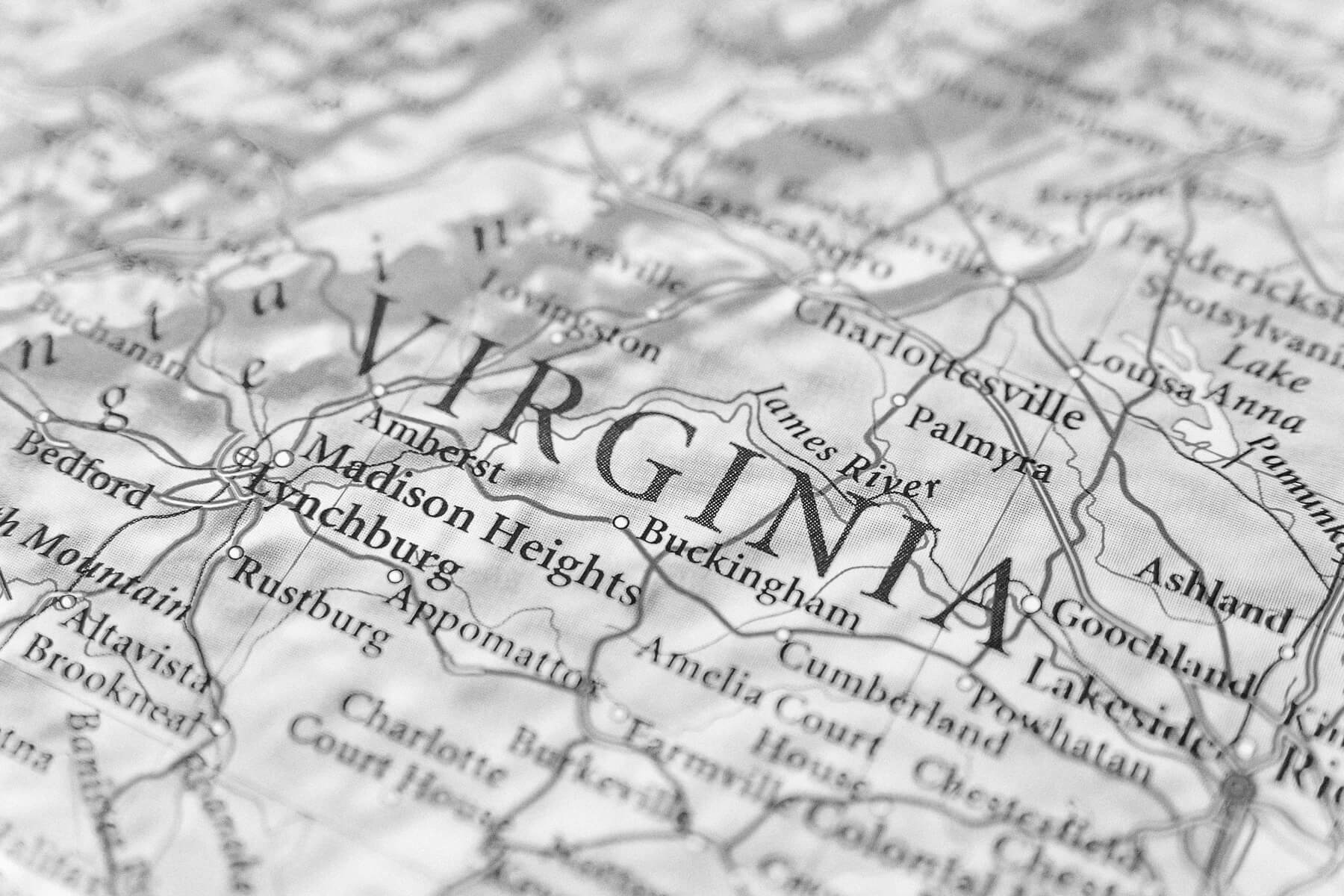
Following the passage of the Residence Act in 1790, the seat of government again temporarily returned to Philadelphia, as a new federal city was built on land appropriated from Maryland and Virginia around the Potomac River. Although Philadelphians attempted to convince President Washington to stay with the offer of a lavish mansion, political horse trading had already ensured that the capital would be set in a more southern location. When Congress met for the first time in the brand-new U.S. Capitol in Washington, D.C., in November 1800, shortly after President John Adams moved into what eventually became known as the White House, the government’s days as a peripatetic entity were officially over.

Numbers Don't Lie

Numbers Don't Lie

Area (in square miles) covered by Washington, D.C.
68.3
Population of Washington, D.C., in 1800
14,093
Capital cities in South Africa
3
Stanley Cups won by the NHL’s Washington Capitals
1

The Virginia city that was initially part of the land apportioned to Washington, D.C., is ______.

Ready to reveal?

Confirm your email to play the next question?

The Virginia city that was initially part of the land apportioned to Washington, D.C., is Alexandria.

Placeholder Image

A movement to relocate the U.S. capital gathered steam following the Civil War.

The U.S. capital hasn’t budged from its current location for more than 200 years, but that doesn’t mean there haven’t been attempts to make it happen. Perhaps the strongest movement to relocate the capital emerged in the years after the Civil War, when advocates pointed to the ever-expanding nation as justification for reestablishing government operations in a centralized location such as St. Louis, Missouri. Following a few failed attempts to resolve the matter through legislation, some 80 representatives from 17 states and territories convened in St. Louis in October 1869 to debate proposals at the National Capital Removal Convention. A second convention was held the following year in Cincinnati, Ohio, but President Ulysses S. Grant got involved by pressing Congress to devote more resources to the existing capital. With the infusion of new sidewalks, office buildings, sewers, and other hallmarks of modern life spread across Washington, D.C., the city was transformed into a capital that better reflected the ideals of a world power, and the movement to uproot the government from its East Coast moorings largely ground to a halt.

Tim Ott
Writer

Tim Ott has written for sites including Biography.com, History.com, and MLB.com, and is known to delude himself into thinking he can craft a marketable screenplay.

Original photo by Dino Reichmuth/ Unsplash

On May 23, 1903, Vermont doctor Horatio Nelson Jackson, along with his mechanic Sewall Crocker, drove down San Francisco’s Market Street, hopped on the Oakland ferry, and traveled east into the history books — the first U.S. cross-country road trip was officially underway. This historical moment was born from a $50 wager to see if Jackson could travel from San Francisco to New York in under 90 days. It’s a wager easily won on today’s 164,000 miles of paved highway, but in the early 20th century, most byways west of Nebraska were little more than dirt roads.

Pit bull isn’t a dog breed.

Ready to reveal?

Oops, incorrect!

It's a fact

The American Kennel Club doesn’t recognize “pit bull” as an official breed. Instead, “pit bull” generally refers to a variety of breeds, including American Staffordshire terriers and American pit bull terriers — all descendants of the English bull-baiting dog.

The challenge was daunting, but Jackson accepted. He didn’t head due east, which would have sent him straight into California’s unforgiving desert, but instead traveled north into Oregon before making a sharp right turn into Idaho, where he picked up his second passenger — a pit bull named “Bud.” Averaging only 71 miles per day in his Winton touring car on the rough western roads, Jackson also had few reliable maps to navigate his way across Idaho and Wyoming. However, once Jackson, Crocker, and Bud entered Nebraska, paved roads appeared with increasing regularity, and the trio could cover 250 miles in a single day. Yet there were plenty of breakdowns, wrong turns, and other misadventures, and the whole trip took 63 days, 12 hours, and 30 minutes to complete — still well under the original 90-day bet. Jackson was greeted by cheering crowds as the group traveled down the Hudson River in New York toward their final destination. Finally, at 4:30 a.m. on July 26, 1903, the well-worn Winton parked in front of the Holland House hotel in midtown Manhattan. Jackson joyously honked his horn to announce their long-awaited arrival.

Numbers Don't Lie

Numbers Don't Lie

Year Cleveland bicycle manufacturer Alexander Winton founded his eponymous motor car company
1897
Estimated total cost of the famous 1903 road trip, according to Horatio Nelson Jackson
$8,000
Estimated distance (in miles) of the road trip in Jack Kerouac’s “On the Road”
17,527
Number of the longest interstate in the U.S., at 3,020.44 miles
90

The first hybrid car was invented by ______ in 1898, nearly a century before the Toyota Prius.

Ready to reveal?

Confirm your email to play the next question?

The first hybrid car was invented by Ferdinand Porsche in 1898, nearly a century before the Toyota Prius.

Placeholder Image

The first person to drive a car long distance was a woman named Bertha Benz.

Karl Benz is often credited as the inventor of the automobile, but few know about his pioneering wife, who made major auto innovations of her own. Her greatest contribution came in August 1888, when — in an effort to prove the importance of her husband’s invention — she set off on a 65-mile journey from Mannheim to Pforzheim, Germany, with her two teenage sons in Benz’s Model III Patent Model Car. Without telling her husband of her plan, Bertha and the boys quietly rolled the car out of the workshop and were soon undertaking the world’s first road trip — traveling at a max speed of 14 miles per hour. The biggest concern was getting enough gas to complete the journey (gas tanks didn’t exist yet), but luckily a pharmacist in Wiesloch, Germany, sold ligroin, a petroleum spirit used as an early motor fuel as well as a chemical solvent for laboratories. Bertha stopped by to top off the carburetor, and today the pharmacy is considered by some to be the world’s first gas station. During this laborious test drive, Bertha also cleaned fuel lines with a hat pin and even insulated an ignition wire with a garter. But most importantly, Bertha’s successful trip proved that Benz’s invention could survive rough roads and still deliver its passengers safely.

Darren Orf
Writer

Darren Orf lives in Portland, has a cat, and writes about all things science and climate. You can find his previous work at Popular Mechanics, Inverse, Gizmodo, and Paste, among others.

French flag with a clock on top of a building

Seeing as Russia is the largest country in the world by land area, you may suppose it also contains the most time zones. And while it does have a lot (11, to be precise), it actually has fewer than France, which contains 12 time zones. France’s main landmass, France métropolitaine, keeps Central European Time, while its many dependencies observe 11 others. Those other regions include French Polynesia (Tahiti Time), Martinique (Atlantic Standard Time), and Mayotte (Eastern Africa Time), to name just a few, and when Saint-Pierre and Miquelon observes daylight saving time, the total number of time zones goes up to 13.

North America used to have more than 144 local times.

Ready to reveal?

Oops, incorrect!

It's a fact

Before official time zones were established by the railroads, keeping track of time was a ramshackle, decentralized affair that occasionally resulted in trains arriving in their destination earlier than they’d departed.

Russia might technically be more impressive in this regard, however, as 10 of its 11 time zones are contiguous; the only exception is Kaliningrad, which is situated between Poland and Lithuania. The United States has nine official time zones, four of which are contiguous — the rest are kept by the likes of Alaska, Hawaii, Puerto Rico, Guam, and the U.S. Virgin Islands.

Numbers Don't Lie

Numbers Don't Lie

Time zones in Australia
9
Different local times in use around the world
38
Countries that observe daylight saving time
~70
Administrative regions of France (13 metropolitan, five overseas)
18

The two U.S. states that don’t observe daylight saving time are ______.

Ready to reveal?

Confirm your email to play the next question?

The two U.S. states that don’t observe daylight saving time are Arizona and Hawaii.

Placeholder Image

China has only one time zone.

As the world’s third-largest country by area and second-largest by population (having recently been surpassed in the latter category by India), China could reasonably be expected to have many time zones. So you may be surprised to learn it observes only one, Beijing Time, which was implemented by the Communist Party in 1949 in the name of national unity. Reducing the number of time zones from five to one means that residents of the western city Ürümqi now keep the same time as those in Shanghai, despite being more than 2,000 miles apart. This has resulted in any number of oddities and logistical issues, including midnight sunsets and confusing business hours.

Michael Nordine
Staff Writer

Michael Nordine is a writer and editor living in Denver. A native Angeleno, he has two cats and wishes he had more.

Original photo by Cosmin-Constantin Sava/ Alamy Stock Photo

Michelangelo is one of the few people in history whose work has spanned the centuries with no need for a last name. Hundreds of his surviving works of art — including sculptures, paintings, and drawings — don’t even bear an artist’s mark. That’s because the artist only ever signed one piece, the Madonna della Pietà, and his doing so likely stemmed from misplaced credit. 

Michelangelo’s David sculpture was carved from scrap stone.

Ready to reveal?

Oops, incorrect!

It's a fact

Michelangelo was known for being selective about the marble used to chisel his sculptures. However, David was produced from a partially carved slab discarded by other artists due to its poor quality. Repurposing the stone into the famous statue took Michelangelo nearly three years.

Michelangelo was commissioned to sculpt the Pietà in the late 1490s. As he was just 24 years old at the time, it was one of his earliest projects, and a piece that helped launch him into the spotlight. The sculpture, which was created as a funeral monument for French Cardinal Jean de Bilhères, depicts the Virgin Mary holding the body of Jesus following the Crucifixion. The young artist sculpted the piece from one cut of marble and finished the job in under two years. According to fellow Renaissance artist and friend Giorgio Vasari, Michelangelo’s statue initially bore no indication of its creator, but the artist supposedly changed his mind after overhearing his work credited to a rival; he snuck back to chisel his name prominently onto the sash across Mary’s chest. 

Shame at the rash decision likely kept Michelangelo from signing his future works of art, though the artist did find other ways of inserting his likeness into his work. In the Sistine Chapel, Michelangelo imposed his own features onto St. Bartholomew — who was skinned alive — possibly as a joke meant to share his disdain for the physically grueling project.

Numbers Don't Lie

Numbers Don't Lie

Years Michelangelo spent painting the Sistine Chapel
4
Number of people who visit the Sistine Chapel daily
25,000
Months of repair work needed after the Pietà was vandalized in 1972
10
Weight (in pounds) of Michelangelo’s David sculpture
12,000

Michelangelo wrote more than 300 ______ during his lifetime.

Ready to reveal?

Confirm your email to play the next question?

Michelangelo wrote more than 300 poems during his lifetime.

Placeholder Image

Michelangelo’s David sculpture was once censored thanks to Queen Victoria.

A replica of Michelangelo’s David has been housed at the Victoria & Albert Museum in London since 1857, but there was a time when it underwent some adjustments thanks to the queen of England. Several plaster replicas of David have been made, and in the mid-1800s, one was shipped to Great Britain as a gift from Leopold II, the Grand Duke of Tuscany, to Queen Victoria. Victoria had two main issues with the sculpture — its staggering 20-foot height and its nudity — and sent the statue to the museum, where, based on the queen’s initial horrified response, curators created a 2-foot plaster fig leaf to cover the offending organ. According to the Victoria & Albert Museum, the leaf was attached with the help of “strategically placed hooks” any time museum staff believed royal ladies might visit. However, today the David replica stands frondless, as the artist originally intended.

Nicole Garner Meeker
Writer

Nicole Garner Meeker is a writer and editor based in St. Louis. Her history, nature, and food stories have also appeared at Mental Floss and Better Report.