
We humans have somewhere between 20,000 and 25,000 genes — a sizable number to be sure, but still considerably fewer than the 31,760 in everyone’s favorite nightshade. Though scientists still aren’t sure why tomatoes have such a complex genome, an emerging theory relates to the extinction of the dinosaurs. Around the time those giant creatures disappeared from Earth, the nightshade family (solanaceae) tripled its number of genes. Eventually the superfluous copies of genes that served no biological purpose disappeared, but that still left a lot of functional ones; some believe the extra DNA helped tomatoes survive during an especially perilous time on the planet, when it was likely still recovering from the aftereffects of a devastating asteroid.
Despite being less sweet than the likes of apples and peaches and sometimes being used as vegetables in cooking, tomatoes are botanically considered fruits because they form from a flower and contain seeds.
Humans, meanwhile, have two copies of every gene: one from their mother and one from their father. The number of genes doesn’t necessarily imply biological sophistication, but rather how an organism “manages its cells’ affairs” — simply put, humans make more efficient use of the genes they have. The Human Genome Project, which launched in 1990 and took 13 years to complete, successfully mapped and sequenced every single gene found in Homo sapiens. With thousands of scientists involved, it remains the largest international collaboration ever undertaken in the field of biology — until the Tomato Genome Project is launched, that is.
Lycopersicon lycopersicum, one scientific name for the tomato, means “wolf peach.”
Advertisement
People used to think tomatoes were poisonous.
The humble tomato used to have a far more sinister moniker: “poison apple.” In the 18th century, many believed that European aristocrats were falling ill and even dying after eating tomatoes — a misconception stemming from the use of pewter plates, which contained high lead content. Tomatoes, which are highly acidic, would leach that lead and then poison the unlucky eater. The fear of tomatoes was just as prevalent across the pond, where some American farmers believed that the green tomato worm was “poisonous as a rattlesnake.” An entomologist eventually set the record straight, and by the late 1800s more people began to appreciate tomatoes for the nutritious treat they are.
Michael Nordine
Staff Writer
Michael Nordine is a writer and editor living in Denver. A native Angeleno, he has two cats and wishes he had more.
Advertisement
top picks from the Inbox Studio network
Interesting Facts is part of Inbox Studio, an email-first media company. *Indicates a third-party property.
Original photo by Everett Collection/ Shutterstock
Not many Americans know the name Charles G. Dawes today, but they should. As one of only three U.S. vice presidents to receive the Nobel Peace Prize during their lifetimes (for his work to preserve peace in Europe), he has reserved a place in the history books alongside Theodore Roosevelt and Al Gore. But perhaps even more notably, he’s also the only veep with a No. 1 hit pop song. Dawes was a self-trained pianist and flautist as well as a banker, and in 1911, 14 years before he would become Calvin Coolidge’s vice president, he wrote a short instrumental piece titled “Melody in A Major.” The song received some attention during Dawes’ lifetime, but it wasn't until 1951 — the year he died — that American songwriter Carl Sigman put lyrics to Dawes’ creation and called it “It’s All in the Game.” Seven years later, Tommy Edwards became the first Black artist to reach No. 1 in the U.S. with his doo-wop-influenced rendition of Sigman’s song.
Bob Dylan, the only U.S. songwriter to win the Nobel Prize, has no No. 1 hits.
Not true, but just barely. Surprisingly, folk legend Bob Dylan has only one No. 1 hit under his own name, and it arrived in 2020 with the 17-minute-long song “Murder Most Foul,” which debuted atop Billboard’s Rock Digital Song Sales chart (his first time topping any Billboard chart).
But that wasn’t the end of Dawes’ posthumous music stardom. The song soon transformed into a pop standard, and was covered by a variety of artists across several genres. There’s Nat King Cole’s big band affair (1957), Elton John's upbeat cover (1970), Van Morrison’s sorrowful take (1979), Issac Hayes’ soulful remix (1980), and Merle Haggard’s country creation (1984), just to name a few. To this day (and for likely many days to come), Dawes remains the only chief executive — president or vice president — to score a hit on the Billboard Hot 100.
The song “Hail, Columbia” now honors the vice president, though it was once an unofficial national anthem.
Advertisement
President Calvin Coolidge had a lot of pets, including a pygmy hippopotamus.
While Charles Dawes had a No. 1 pop single, his boss also had a few quirks. Calvin Coolidge, the 30th U.S. president, had arguably the most exotic collection of pets of any American chief executive (though Theodore Roosevelt gave him a run for his money). During his presidency, Coolidge had six dogs, a bobcat, two raccoons, a goose, a donkey, a cat, a bear, two lion cubs, an antelope, a wallaby, and more. But the strangest of Coolidge’s pets was probably Billy, a pygmy hippopotamus, who was given to Coolidge as a gift from businessman Harvey Firestone (as in Firestone tires). Perhaps because of his size (even a pygmy hippo can weigh up to 600 pounds), or because he was one of only a few pygmy hippos in the U.S., Billy was donated to the Smithsonian National Zoological Park, where he became the proud father of many hippo calves. In fact, most of the pygmy hippos in the U.S. today can be traced back to his lineage.
Darren Orf
Writer
Darren Orf lives in Portland, has a cat, and writes about all things science and climate. You can find his previous work at Popular Mechanics, Inverse, Gizmodo, and Paste, among others.
Advertisement
top picks from the Inbox Studio network
Interesting Facts is part of Inbox Studio, an email-first media company. *Indicates a third-party property.
Original photo by Niebrugge Images/ Alamy Stock Photo
Although many of the Grand Canyon's visitors make a point of packing into the tourist stop known as Grand Canyon Village, far fewer realize there's a bona fide village nestled into Havasu Canyon some 3,000 feet below. There, amid the towering limestone cliffs that surround the Havasupai Indian Reservation, live the 200 or so Native Americans who populate the remote hamlet of Supai.
The Havasupai are the only Native American tribe with territorial ties to the Grand Canyon.
The Hualapai Tribe, who live on land that borders the Havasupai Reservation, oversee tourist operations at Grand Canyon West. Altogether, 11 federally recognized tribes have historically used the land that comprises Grand Canyon National Park.
For those who don't feel like splurging on a helicopter ride, simply reaching Supai is a feat unto itself. From the nearest town of Peach Springs, travelers embark on a 67-mile drive to Hualapai Hilltop, at which point they can descend the 8-mile trail by foot or mule ride. That's the route taken daily by the USPS, which brings in vital supplies like food while also carrying mail stamped with a unique "Mule Train" postmark. Those who complete the journey can refresh themselves at the general store and tribal cafe, or rest up for the return trip with an overnight stay at the local lodge. Many others continue along the trail to the reservation's campgrounds and famous waterfalls.
Although the isolation brings unparalleled views of ancient landscapes and turquoise pools, it also involves an element of danger. Severe rains damaged buildings, bridges, and even parts of the lone path in and out of the village in 2010. The pandemic also forced the Havasupai to close off tourist access to their grounds from 2020 to 2022, but they reopened for business in 2023.
The Grand Canyon was established as a national park by President Woodrow Wilson.
Advertisement
The turquoise waters of Supai are caused by a combination of geology and chemistry.
A life force sacred to the Havasupai, whose traditional name means “people of the blue-green waters,” the water that flows through Supai via Havasu Creek gets its start from the rain and snowmelt that accumulate in the porous limestone above. Saturated with calcium carbonate from dissolved limestone, this groundwater is eventually funneled through rock layers to a spring. When the gushing spring emerges from underground, a chemical reaction causes the calcium carbonate to appear turquoise in the sunlight, a breathtaking sight for both first-time observers and longtime residents.
Tim Ott
Writer
Tim Ott has written for sites including Biography.com, History.com, and MLB.com, and is known to delude himself into thinking he can craft a marketable screenplay.
Advertisement
top picks from the Inbox Studio network
Interesting Facts is part of Inbox Studio, an email-first media company. *Indicates a third-party property.
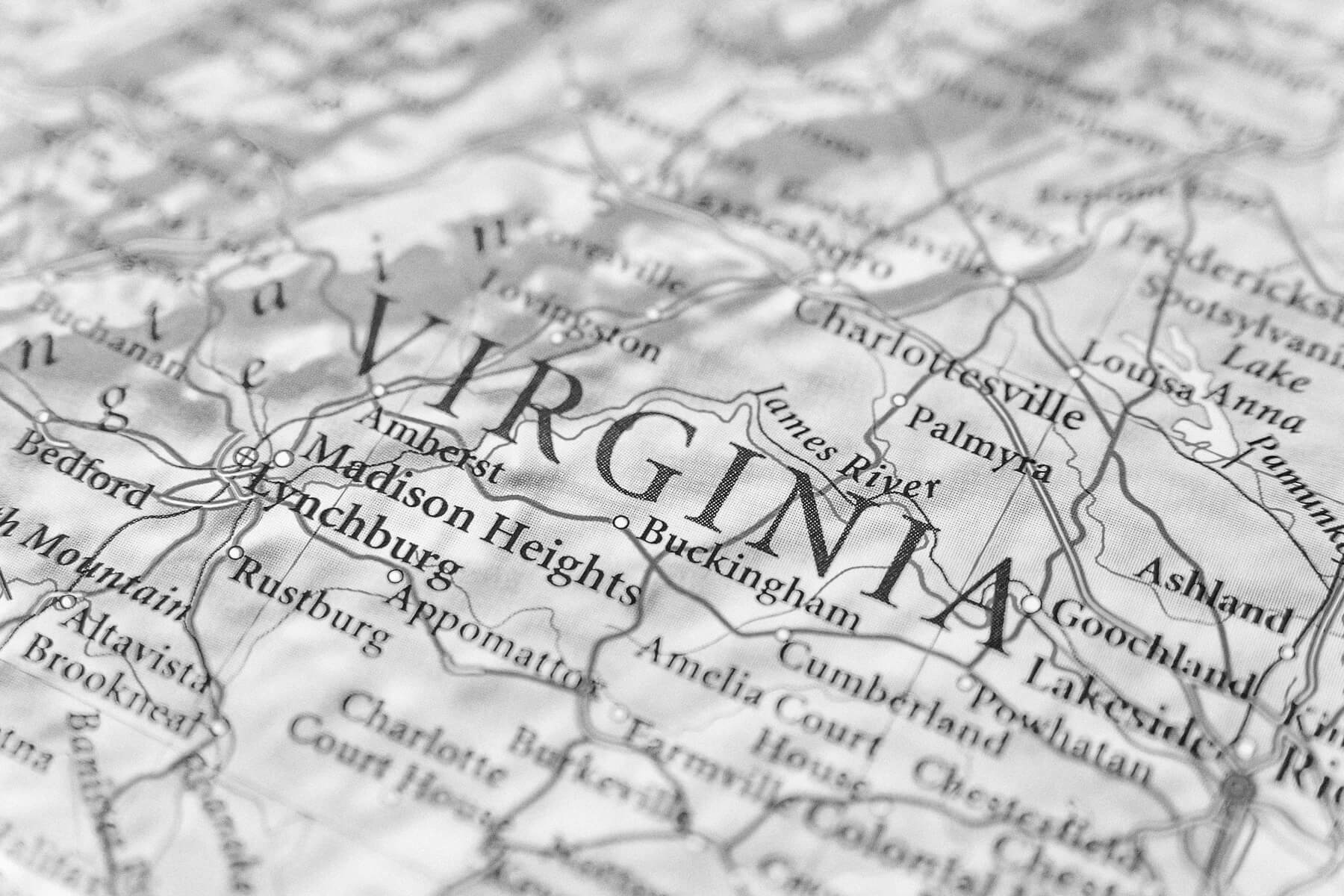
Much human innovation is a collective effort — scientists, innovators, and artisans building off the work of predecessors to develop some groundbreaking technology over the course of decades, or even centuries. But in the case of writing systems, scholars believe humans may have independently invented them four separate times. That’s because none of these writing systems shows significant influence from previously existing systems, or similarities to another. Experts generally agree that the first writing system appeared in the Mesopotamian society of Sumer in what is now Iraq. Early pictorial signs appeared some 5,500 years ago, and slowly evolved into complex characters representing the sounds of the Sumerian language. Today, this ancient writing system is known as cuneiform.
Experts estimate that at least half of the human population can speak two languages or more. However, the U.S. is drastically behind compared to other countries. According to the U.S. Census Bureau, only 20% of Americans speak another language, whereas that number is 56% in Europe.
However, cuneiform wasn’t a one-off innovation. Writing systems then evolved in ancient Egypt, in the form of hieroglyphs, around 3200 BCE — only an estimated 250 years after the first examples of cuneiform. The next place that writing developed was China, where the Shang dynasty set up shop along the Yellow River and wrote early Chinese characters on animal bones during divination rituals around 1300 BCE. Finally, in Mesoamerica, writing began to take shape around 900 BCE, and influenced ancient civilizations like the Zapotecs, Olmecs, Aztecs, and Maya. Sadly, little is known about the history of many Mesoamerican languages, as Catholic priests and Spanish conquistadors destroyed a lot of the surviving documentation.
“Hieroglyph” comes from ancient Greek words meaning “sacred carvings.”
Advertisement
There are many ancient languages that have yet to be deciphered.
Discovered in July 1799, the Rosetta Stone is perhaps the most famous linguistics discovery in human history; it turned out to be a 1,600-pound key that unlocked the ancient mysteries of the Egyptian language. However, many other lost languages haven’t been so lucky, including tongues such as Meroitic from Sudan, Linear A from Crete, and Proto-Elamite from Iran. But the most famous undeciphered written language is the Indus script, which is the oldest written language on the Indian subcontinent and dates back to around 2600 BCE. Because this script has no bilingual text like the Rosetta Stone (at least not so far), the language has remained incomprehensible — a major reason why the Indus Valley Civilization is one of the least-known major civilizations in ancient history. It’s even possible that the Indus script is a fifth example of independently evolved language, though it’s impossible to know for sure without deciphering it.
Darren Orf
Writer
Darren Orf lives in Portland, has a cat, and writes about all things science and climate. You can find his previous work at Popular Mechanics, Inverse, Gizmodo, and Paste, among others.
Advertisement
top picks from the Inbox Studio network
Interesting Facts is part of Inbox Studio, an email-first media company. *Indicates a third-party property.

Horsepower, a common unit of power typically referring to the sustained output of an engine, was developed in the late 18th century by Scottish engineer James Watt (after whom the watt is named) as a way to demonstrate the power of steam engines. Watt calculated that in an average day’s work, a horse could turn a 24-foot mill wheel roughly 2.5 times per minute. This amount of energy worked out to 33,000 foot-pounds (approximately 746 watts) per minute, which Watt deemed a new unit of measurement called horsepower.
Logic would suggest the power of a solitary horse should equal one horsepower, but the measurement is meant to represent a horse’s continuous output over a full workday, not what horses are capable of in short bursts of extreme effort. In 1993, biologists R.D. Stevenson and R.J. Wassersug used data from the 1925 Iowa State Fair horse-pulling contest to calculate the maximum output of a horse over a short period of time, ultimately finding that one horse can exert up to 14.9 horsepower. Humans, by comparison, have a maximum output of slightly more than a single horsepower.
Due to the anatomy of their respiratory systems, horses are only able to breathe through their noses.
It's sometimes suggested that Watt deliberately underestimated the power output of a horse to help promote his new steam engine. But Watt’s calculations weren’t technically incorrect; he just presented them in such a way to make his engines seem more attractive. He emphasized sustainable rather than peak performance, underlining the fact that, unlike horses, his engines could work all day long without tiring. It’s because of this that a single horse can actually be capable of nearly 15 horsepower — at least over short periods of time.
The offspring of a male horse and a female donkey is called a hinny.
Advertisement
The earliest ancestor of the horse is estimated to have lived 55 million years ago.
Around 55 million years ago, the first members of the horse family were scurrying through the forests that covered much of North America. These hoofed mammals were called Hyracotherium, one of which was about as big as a medium-sized dog.
With its arched back, raised hindquarters, four functional hooves on each front foot, and three on each hind foot — unlike the unpadded, single-hoofed feet of modern equines — this early ancestor was quite unlike modern horses as we know them. Paleontologists initially thought the species entirely unrelated to equines, until fossils were found that showed a link between Hyracotherium and later extinct horses.
For more than half their history, the majority of horse species were small, forest browsers, eating leaves and twigs from trees and shrubs. Then, about 20 million years ago, new horse species began rapidly evolving when changing climate conditions allowed grasslands to expand. Some of these new grazers grew to much larger sizes, becoming more like the horses we’re familiar with today.
Tony Dunnell
Writer
Tony is an English writer of nonfiction and fiction living on the edge of the Amazon jungle.
Advertisement
top picks from the Inbox Studio network
Interesting Facts is part of Inbox Studio, an email-first media company. *Indicates a third-party property.

There’s epic, and then there’s volcanic lightning, a phenomenon that sounds like something out of a sci-fi movie but is, in fact, real. Volcanic lightning is just what it sounds like: lightning that happens during a volcanic eruption, rather than a thunderstorm. It’s thought to occur in two contexts: either in dense clouds of ash near the ground or close to the stratosphere.
The first happens when individual ash particles rub together to form enough static electricity to generate a lightning bolt. The second is caused when plumes of water vapor and ash erupt with such force that they rise high enough to form ice crystals in colder air. Those ice crystals then generate static electricity as they collide with one another, leading to what’s also known as a “dirty thunderstorm.”
An erupting volcano can cause another volcano to erupt.
Though there have been a few historic cases of simultaneous eruptions within 10 miles of one another, there’s no evidence that one caused the other.
The first known description of volcanic lightning is owed to Pliny the Younger, who wrote of the 79 CE Mount Vesuvius eruption that “there was a most intense darkness rendered more appalling by the fitful gleam of torches at intervals obscured by the transient blaze of lightning.” Vesuvius also happens to be where the first studies of volcanic lightning took place in 1858.
The country with the most volcanoes is the United States.
Advertisement
More than 80% of the Earth’s surface is volcanic in origin.
There’s a high chance the spot you’re standing or sitting in right now is of volcanic origin. More than 80% of the planet’s surface is, whether above or below sea level. Though volcanos themselves aren’t exactly known for being hospitable, their countless eruptions over hundreds of millions of years have helped form the sea floors, mountains, and atmosphere that made Earth a life-supporting planet.
Michael Nordine
Staff Writer
Michael Nordine is a writer and editor living in Denver. A native Angeleno, he has two cats and wishes he had more.
Advertisement
top picks from the Inbox Studio network
Interesting Facts is part of Inbox Studio, an email-first media company. *Indicates a third-party property.

There’s off the map, and then there’s Argleton. The English town was visible on Google Maps until 2009, which is notable for one major reason: No such place exists. So how did it get listed? Though never confirmed by Google, it’s been speculated that Argleton may have been akin to a trap street — a fictitious road used by cartographers to catch anyone copying their work. The reasoning is as simple as it is clever: If a street (or, in this case, town) that you made up ends up on another map, you’ll have caught its creator red-handed in copyright infringement.
The fictional city of El Dorado used to appear on real maps.
Today we know that the mythical city of gold, once thought to be in South America, doesn’t exist, but for centuries it was believed to be real — so much so that it appeared on maps as recently as 1808. (No word on whether Atlantis was on those same maps.)
Though little more than an empty field in West Lancashire, Argleton once had its own (presumably auto-generated) job listings and weather forecasts. Once its (non-)existence became known on the internet, humorous T-shirts with slogans such as “New York, London, Paris, Argleton” and “I visited Argleton and all I got was this T-shirt” appeared online, too. Google itself was tight-lipped on the subject, releasing a brief statement noting that “Google Maps data comes from a variety of data sources. While the vast majority of this information is correct there are occasional errors.” The good people of Argleton likely would have been highly offended by that characterization — if they actually existed.
America is named after the explorer and navigator Amerigo Vespucci.
Advertisement
Most maps are highly misleading.
If you ever had a map of the world on one of your classroom walls, there’s a good chance it used the Mercator projection. Created by Flemish cartographer Gerardus Mercator in 1569, it has proved popular for centuries — but it also distorts sizes and distances near the North and South poles, resulting in major discrepancies. Perhaps the most notable of these is how small Africa appears: Greenland looks larger than the continent, for instance, despite being about 14.5 times smaller. To demonstrate this, a graphic artist created a map of his own showing that the United States, China, India, Japan, and most of Europe could all fit inside Africa.
Michael Nordine
Staff Writer
Michael Nordine is a writer and editor living in Denver. A native Angeleno, he has two cats and wishes he had more.
Advertisement
top picks from the Inbox Studio network
Interesting Facts is part of Inbox Studio, an email-first media company. *Indicates a third-party property.
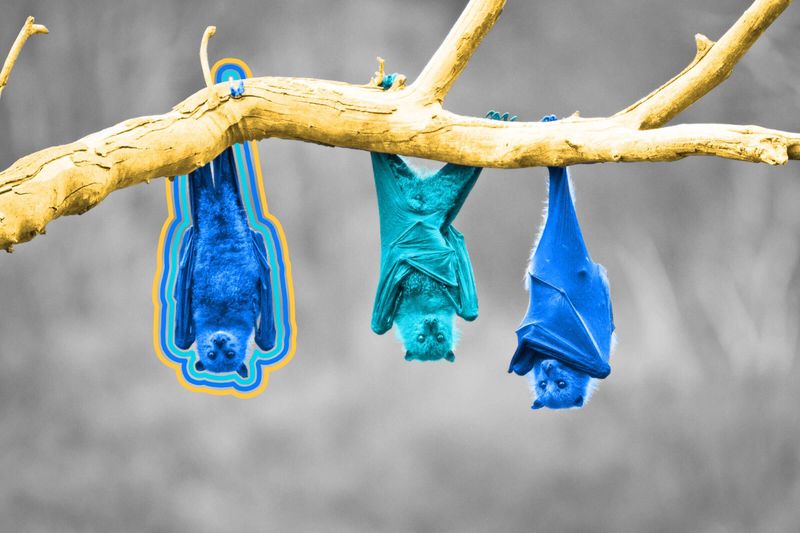
If you know anything about calico cats, it’s that they’re especially cute. If you know two things about them, the second might be that only about 1 in every 3,000 of them is male. The tricolor kitties — which are most often but not always white, orange, and black — get their distinct coat from their chromosomal makeup. Female cats have two X chromosomes, which carry the coding gene for black and orange coloration, and the only way for calico coloring to occur is for a kitten to get one black-coded X and one orange-coded X. The same is also true of tortoiseshell (tortie) cats, which are predominantly black and orange — and known for their “tortitude.” (The white patches in calicos, meanwhile, happen through a separate genetic process called piebalding, which produces areas of skin and fur without any pigment.)
Quite the opposite, in fact — about 81% of orange cats are male. Whereas females will be orange only if they carry that gene in both X chromosomes, males will be orange if they carry it in either the X or Y chromosome.
Though extremely rare, male calicos and torties do exist. This is usually the result of one of two conditions: chimerism or Klinefelter’s syndrome. The former occurs when two embryos fuse early in pregnancy, resulting in two different sets of DNA, while Klinefelter’s is the result of a male inheriting an extra X chromosome and therefore having XXY chromosomes. Making them even rarer is the fact that male calicos are almost always sterile, meaning it’s all but impossible to breed calicos — every one you see is an anomaly, and all the more special for it.
There’s a reason that maneki-neko are so often depicted as calicos: They’re considered good luck. The “beckoning cat” figurines found throughout Japan and at Japanese and Chinese establishments around the world are intended as tokens of good fortune, with one of their paws raised high in a waving motion. This dates back to the tradition of Japanese sailors traveling with calicos to bring about safe passage — the multicolored cats were believed to be able to chase away storms and ancestral ghosts. In the United States and England, meanwhile, male calicos are considered especially lucky because of their rarity.
Michael Nordine
Staff Writer
Michael Nordine is a writer and editor living in Denver. A native Angeleno, he has two cats and wishes he had more.
Advertisement
top picks from the Inbox Studio network
Interesting Facts is part of Inbox Studio, an email-first media company. *Indicates a third-party property.

Ernest wasn’t the only eccentric Hemingway. Leicester, the younger brother of the author of For Whom the Bell Tolls and The Sun Also Rises, was also a writer and used the proceeds from his biography, My Brother, Ernest Hemingway, to establish his own micronation. He did so on July 4, 1964, citing the obscure U.S. Guano Islands Act of 1856 to claim an 8-by-30-foot bamboo raft floating 8 miles off the coast of Jamaica, in international waters, as his own sovereign land. The Guano Islands Act grants U.S. citizens the right to claim, on behalf of the U.S., any unoccupied “island, rock, or key” where valuable guano (read: bird droppings used as fertilizer) can be found. Patriot that he was, Leicester ceded half of his humble territory to the U.S. and declared the other half the Republic of New Atlantis.
Though they were the only boys in the family, Leicester and Ernest Hemingway had four sisters: Mercelline, Ursula, Madelaine, and Carol. Ernest, who was born in 1899, was the second-oldest after Marcelline, while Leicester (born in 1915) was the youngest.
As is often the case with micronations, the founder of New Atlantis took it more seriously than anyone else. He drafted a constitution that was actually just the United States Constitution with “New Atlantis” replacing every instance of “United States,” created stamps, enlisted his wife to design a nice flag, and declared shark teeth and carob beans to be the country’s official currency, called “scruples.” Not long after Leicester Hemingway was voted the first president of New Atlantis in what we can only assume was a landslide, however, the country’s coffers ran empty (perhaps due to a lack of taxpayer revenue). The country’s primary activity seems to have been issuing stamps — meant to finance marine protections in the area — but the Universal Postal Union never recognized the stamps, or the country. Within a few years of its founding, the raft became untethered during a storm, drifted out to sea, and was destroyed, consigning New Atlantis to the dustbin of history.
Gertrude Stein was the godmother of Ernest Hemingway’s first son, Jack.
Advertisement
Ernest Hemingway preferred to write standing up.
Every writer has their own routine, and it’s little surprise that the A Farewell to Arms scribe’s was as idiosyncratic as he was. Ernest Hemingway preferred to write in the morning, and did so standing up. This was “a working habit he has had from the beginning,” according to TheParis Review, and he might have picked up the habit from his editor, Maxwell Perkins. And though he preferred the pencil, Hemingway turned to the typewriter when he needed to get something down especially quickly, such as dialogue: “When the people are talking, I can hardly write it fast enough or keep up with it,” he toldThe New Yorker in 1950.
Michael Nordine
Staff Writer
Michael Nordine is a writer and editor living in Denver. A native Angeleno, he has two cats and wishes he had more.
Advertisement
top picks from the Inbox Studio network
Interesting Facts is part of Inbox Studio, an email-first media company. *Indicates a third-party property.

In the early 1970s, a young Steve Wozniak — the future co-founder of Apple — was doing some casual “phreaking” in his college dorm room at Berkeley University. A portmanteau of the word “phone” and “freaking,” phreaking was a method through which technologically savvy ne’er-do-wells could hack into early telecommunication systems using a gadget called a “blue box.” The result? Free phone calls anywhere in the world. To test his newly acquired phreaking abilities, Wozniak placed a call to the Vatican, asking to speak with the pope. Putting on his best impersonation of Henry Kissinger (then-President Richard Nixon’s secretary of state), Wozniak nearly got the pope on the line until a high-ranking bishop caught him in the lie. The jig was up.
Segway polo’s championship cup is named after Steve Wozniak.
In 2006, the sport of Segway polo (it’s exactly what it sounds like) named its championship cup, the Woz Challenge Cup, after its most famous player — Steve “Woz” Wozniak.
This wasn’t a one-off incident — pranks played a vital role in the history of Apple, which was founded in 1976. Steve Jobs, like Wozniak, also had a love for practical jokes. During his early school years, Jobs placed firecrackers under his teacher’s chair (no major injuries were reported), and switched all the combination locks on his classmates’ bikes. After Jobs and Wozniak understood the power of the blue box, the duo sold a homemade version of the gadget for $150 to fellow Berkeley students. Nearly 40 years later, Jobs’ love for pranks hadn’t faded. When he introduced the world to the iPhone in 2007, Jobs called a local Starbucks and ordered 4,000 lattes while on stage. Thankfully, he quickly let the unlucky barista off the hook with a lighthearted “just kidding.”
Steve Jobs sold his Volkswagen minibus to raise capital for manufacturing the first Apple computers.
Advertisement
Steve Wozniak is still an Apple employee.
Although Apple wouldn’t exist without Steve Wozniak, the famous computer engineer hasn’t been actively involved with the company for some 40 years. Wozniak was vital in the company’s early days as the mastermind behind its first big commercial success, the Apple II. But after suffering a head injury in a plane crash in 1981, he began pulling away from the company, and eventually sold much of his stock in 1985 amid growing friction with his fellow co-founder Steve Jobs. However, Apple kept Wozniak on the payroll as an “honorary employee” with a $50-a-month salary. Although that’s a pittance for such an important figure in Apple history, Wozniak made out just fine when Apple went public in 1980, and is worth at least $100 million today.
Darren Orf
Writer
Darren Orf lives in Portland, has a cat, and writes about all things science and climate. You can find his previous work at Popular Mechanics, Inverse, Gizmodo, and Paste, among others.
Advertisement
top picks from the Inbox Studio network
Interesting Facts is part of Inbox Studio, an email-first media company. *Indicates a third-party property.