
Despite the stereotype we’ve seen perpetuated in cartoons, the idea that mice go wild for cheese isn’t quite accurate. While mice may nibble on cheese if it’s the only available food source, they strongly prefer sugary and carbohydrate-rich options such as seeds, grains, fruits, chocolate, and especially peanut butter. In fact, a mouse’s strong sense of smell actually causes them to be repelled by some stinky cheeses. Soft cheeses also pose a choking hazard for mice due to the critter’s lack of a natural gag reflex.
The reason behind this myth is hard to pinpoint, but one theory relates to how cheese was stored prior to refrigeration. Cheese was usually kept out of the sun in a cool, dark, well-ventilated place (such as a cave or pantry) and generally wasn’t tightly sealed. In an interview with Scientific American, psychologist David Holmes suggested mice may have nibbled on the exposed cheese while searching for other food, leading to their reputation as cheese-fiends.
While Cheez Whiz is associated with American cuisine, it actually debuted in Britain in 1952. Kraft unveiled canned Cheez Whiz as a shortcut for preparing the English dish of Welsh rarebit. The product proved so successful that it was introduced to the U.S. market in July 1953.
The belief that mice prefer cheese isn’t a recent stereotype, but rather one that dates back millennia. The Roman philosopher Seneca, who lived in the first century CE, once wrote, “‘Mouse’ is a syllable. Now a mouse eats its cheese; therefore, a syllable eats cheese,” suggesting mice were associated with cheese as far back as ancient Rome. Shakespeare later connected mice with cheese in plays such as King Lear and Troilus and Cressida, long before Hanna-Barbera drilled it home with Tom and Jerry in the 20th century.
Mickey Mouse was almost originally named Mortimer Mouse.
Advertisement
Cheese is one of the world’s most frequently stolen food items.
According to a 2011 study conducted by the Center for Retail Research, 4% of the world’s cheese ends up stolen, making it the most frequently pillaged food item. But these aren’t just single packages of cheese taken from supermarkets; there have been multiple large-scale criminal operations responsible for tens of thousands of dollars in cheese thefts, as higher-end cheeses can often fetch a pretty penny on the black market.
One notable heist took place in 1998, when £30,000 (around $90,000 today) of award-winning cheddar was lifted from a British farm. In 2022, a Dutch cheese farm lost 161 wheels of cheese valued at $23,000. Perhaps the costliest cheese robbery of all time took place in October 2024, when a U.K.-based cheese purveyor was robbed of £300,000 (roughly $397,000 today) of award-winning cheddar by a still-unknown individual posing as a wholesale buyer.
Bennett Kleinman
Staff Writer
Bennett Kleinman is a New York City-based staff writer for Inbox Studio, and previously contributed to television programs such as "Late Show With David Letterman" and "Impractical Jokers." Bennett is also a devoted New York Yankees and New Jersey Devils fan, and thinks plain seltzer is the best drink ever invented.
Advertisement
top picks from the Inbox Studio network
Interesting Facts is part of Inbox Studio, an email-first media company. *Indicates a third-party property.
Original photo by Clovis Wood Photography/ Unsplash
Not unlike human fingerprints, the pattern of every tiger’s stripes is one of a kind. And though those markings are invariably beautiful, they aren’t just for decoration. Biologists refer to tiger stripes as an example of disruptive coloration, as their vertical slashes help them hide in plain sight by breaking up their shape and size so they blend in with tall grass, trees, and other camouflage-friendly environments. Tigers are solitary hunters who ambush their prey, so the ability to remain undetected while on the hunt is key to their survival.
Lions may be the king of the jungle, but they aren’t the biggest cat. That title belongs to Panthera tigris, which can reach a length of 10 feet and weigh as much as 660 pounds — 100 pounds more than lions and several times as many as the average jaguar.
They’re also helped by the fact that their prey don’t see colors the way we do. Deer, for instance, can process short and mid-wavelength colors such as green and blue but not long wavelength hues such as red and orange. That means a tiger lurking in the grass won’t look bright orange — it will actually appear green to its prey, making it difficult to differentiate from its surroundings. Markings also differ among subspecies, with Sumatran tigers having the narrowest stripes and Siberian tigers having fewer than the rest of their big cat brethren.
India is home to more wild tigers than any other country.
Advertisement
Tigers have stripes on their skin as well as their fur.
It isn’t just a tiger’s fur that’s striped. Their skin is similarly marked, and the pattern mirrors that of their fur. Scientists have compared this to a beard’s five-o’clock shadow, as a tiger’s colored hair follicles are embedded in their skin and therefore visible to the naked eye. Here, too, we have something in common with these majestic creatures: Our skin is covered in a kind of stripes as well, called Blaschko’s lines, but ours are usually invisible except in the case of certain skin conditions.
Michael Nordine
Staff Writer
Michael Nordine is a writer and editor living in Denver. A native Angeleno, he has two cats and wishes he had more.
Advertisement
top picks from the Inbox Studio network
Interesting Facts is part of Inbox Studio, an email-first media company. *Indicates a third-party property.
Samurai seem pretty old-school, a remnant of a feudal past, whereas sound recording feels like a hallmark invention of the modern era. So it’s strange to think that these things actually overlapped — and that sound recording started before the samurai disappeared. When U.S. Navy Commodore Matthew C. Perry’s “black ships” arrived in Edo Bay (now Tokyo Bay) in 1853, the end of the samurai — Japan’s hereditary warrior caste — was close at hand. Perry’s maneuvers opened Japan to the West after centuries of isolation. It would take several more years, but the Meiji Restoration (1868–1889) saw the end of the samurai when feudalism was officially abolished in 1871.
“Mary Had a Little Lamb” is based on a true story.
Heard at piano recitals everywhere, “Mary Had a Little Lamb” is thought to be based on Mary Elizabeth Sawyer, who in 1815 nursed an injured lamb to health. The lamb then followed Mary everywhere, prompting a fellow student to write the familiar poem.
Thomas Edison’s recording of “Mary Had a Little Lamb” in 1877 is sometimes regarded as the world’s first true sound recording — but that isn’t technically true. In the late 1850s, French inventor Édouard-Léon Scott de Martinville started capturing a series of sounds, including the French folk song “Au clair de la lune” in 1860, using a phonautograph (a machine that captured the image of a sound wave using soot). Scott never designed the phonautograph to play sound back, unlike Edison’s phonograph. But in 2008, scientists from the Lawrence Berkeley National Laboratory in California successfully recreated some of Scott’s recordings, including the folk song, making the Frenchman’s experiments the first recorded sound in history — and preserved from a time when samurai still roamed the streets of Edo.
The world’s oldest continuously performed orchestral music, Gagaku, comes from Japan.
Advertisement
Women were also samurai warriors.
Women samurai warriors, known as onna-bugeisha or onna-musha, were a part of Japanese history for centuries. Unlike the men they fought alongside, who preferred blades such as the katana and wakizashi, women often used the more nimble naginata, which resembled a staff with a blade at one end. Their story goes back to the semi-legendary Empress Jingū (approximately 169–269 CE), who is said to have led an invasion of present-day Korea. But the most famous of these fatal females was the (perhaps also legendary) 12th-century warrior Tomoe Gozen, who was feared for her fierce fighting ability and reportedly led more than 1,000 men in battle. Today, Tomoe Gozen is the subject of legends and modern adaptations of her story, including Jessica Amanda Salmonson’s The Tomoe Gozen Saga. Other samurai women dot Japanese history until the Battle of Aizu in 1868, when Nakano Takeko led female fighters in fighting against the emperor. However, the emperor prevailed, and Nakano, along with the rest of the samurai, were consigned to history.
Darren Orf
Writer
Darren Orf lives in Portland, has a cat, and writes about all things science and climate. You can find his previous work at Popular Mechanics, Inverse, Gizmodo, and Paste, among others.
Advertisement
top picks from the Inbox Studio network
Interesting Facts is part of Inbox Studio, an email-first media company. *Indicates a third-party property.
Apple has always been known for its design. Before its iconic logo resembled an actual apple, however, it featured Sir Isaac Newton sitting under an apple tree. This is, of course, a reference to the legend of Newton formulating his law of universal gravitation after getting bonked on the head by a falling apple — which ranks among history’s best-known “aha!” moments. The more widely accepted version of events is that Newton merely observed a falling apple, but that doesn’t make the event any less fun to ponder. In addition to the drawing, the logo featured a line from poet William Wordsworth: “Newton … a mind forever voyaging through strange seas of thought … alone.”
“An apple a day keeps the doctor away” is an ancient proverb.
The phrase was first coined in 1913, and it’s based on a British saying that dates to 1886. Originally, the quote went: “Eat an apple on going to bed, and you’ll keep the doctor from earning his bread.”
The logo — which debuted when the company was founded in 1976 — was short-lived, however, in part because co-founder Steve Jobs felt the design couldn’t be effectively rendered in smaller versions. Soon, he hired graphic designer Rob Janoff, who came up with the logo now recognized worldwide. The original design isn’t the company’s only connection to literal apples, however. The reason Macs (short for Macintosh) are so named is because of the apple of (almost) the same name: McIntosh, project creator Jef Raskin’s favorite variety.
Devices are almost always set to 9:41 in Apple ads.
You might not have noticed it before, but ads for iPhones, iPads, and other Apple devices almost always show the clock displayed at the same time: 9:41. As with just about everything else related to the company, this isn’t a coincidence. It all goes back to Apple’s keynote events, where new products are revealed, which begin at 9 a.m. and are scheduled so that the gadget in question is first unveiled 40 minutes in. Because this timing isn’t an exact science, the extra minute is added for good measure.
Michael Nordine
Staff Writer
Michael Nordine is a writer and editor living in Denver. A native Angeleno, he has two cats and wishes he had more.
Advertisement
top picks from the Inbox Studio network
Interesting Facts is part of Inbox Studio, an email-first media company. *Indicates a third-party property.

The Eiffel Tower stands 1,083 feet tall, but it gets a bit of a boost in the summer — as many as 6 inches, to be precise. The seasonal phenomenon is the result of warmer temperatures heating up the metal and causing it to expand, making the landmark just a little more imposing. Originally built as the entrance to the 1889 world’s fair, la Dame de Fer (“The Iron Lady”) wasn't initially as beloved as she is today. Some 40 artists went so far as to sign an open letter published on the front page of Le Temps protesting the “useless and monstrous” structure that “will without a doubt dishonor Paris.”
The Eiffel Tower is the tallest structure in France.
Though it spent four decades as the world’s tallest building, “la tour Eiffel” is no longer the tallest structure in France. That title now belongs to the Millau viaduct, which was completed in 2004 and reaches a peak of 1,125 feet — enough to make it the world's tallest bridge.
Suffice to say that the critics were ultimately in the minority, and both the tower and the world’s fair were massive hits. Even so, the structure wasn’t meant to be permanent: Gustave Eiffel, who designed the tower and lent it his name, was granted a 20-year permit before Paris took over the lease, at which point the monument was supposed to be dismantled. Due to its popularity and usefulness as a radio tower, however, it was allowed to remain a vital part of the City of Light.
The Eiffel Tower used to be the world’s largest advertisement.
From 1925 to 1936, the Eiffel Tower doubled as a billboard. French automobile manufacturer Citroën rented the monument and used 250,000 light bulbs along with 372 miles of electric cable to illuminate the company’s name in 100-foot letters, making it the world’s largest advertisement at the time. The lights were so bright that they were visible from a distance of nearly 20 miles, which was enough for Charles Lindbergh to use the tower as a beacon when he completed the world’s first nonstop solo transatlantic flight in 1927.
Michael Nordine
Staff Writer
Michael Nordine is a writer and editor living in Denver. A native Angeleno, he has two cats and wishes he had more.
Advertisement
top picks from the Inbox Studio network
Interesting Facts is part of Inbox Studio, an email-first media company. *Indicates a third-party property.
Original photo by Miyuki Satake/ Alamy Stock Photo
Nintendo has been synonymous with video games since the 1980s, but its first century of operation was rather different. Originally known as Nintendo Koppai by founder Fusajiro Yamauchi, the company was actually founded, on September 23, 1889, to sell playing cards, long before a certain Italian plumber was born. The hand-painted hanafuda (“flower cards” in Japanese) that it manufactured became Japan’s most popular playing cards by the early 1900s. This largely remained the case into the mid-20th century, by which time the company had tried expanding into different markets — instant rice, a taxi service, even ballpoint pens. Most of these ventures didn’t last, and it wasn’t until the video game crash of 1983 that Nintendo truly became the company it is today.
Though it’s sometimes translated as “leave luck to heaven,” the true meaning of the word “Nintendo” remains a matter of debate more than a century later. Even the company's former president, Hiroshi Yamauchi, is on the record as not knowing what it means.
With market saturation reaching its highest point and a quantity-over-quality philosophy leading to declining industry revenues, Nintendo released its landmark Nintendo Entertainment System (NES) at a time when the world of video games seemed doomed. The opposite turned out to be the case: More than 60 million consoles have been sold worldwide, alongside such influential games as Super Mario Bros, The Legend of Zelda, and Duck Hunt, to name just a few.
The bestselling video game of all time is often said to be Tetris.
Advertisement
Mario was named after Nintendo’s landlord.
Though he was originally known as Jumpman when he debuted in 1981’s Donkey Kong, Mario was renamed by the time he got his own game two years later. The name was a tribute to Mario Segale, who served as Nintendo of America’s landlord in an office park near Seattle at a time when the company owed him back rent. According to one story, at the conclusion of a particularly heated argument over said rent, then-president Minoru Arakawa promised that he would name the lovable plumber after Segale.
Michael Nordine
Staff Writer
Michael Nordine is a writer and editor living in Denver. A native Angeleno, he has two cats and wishes he had more.
Advertisement
top picks from the Inbox Studio network
Interesting Facts is part of Inbox Studio, an email-first media company. *Indicates a third-party property.
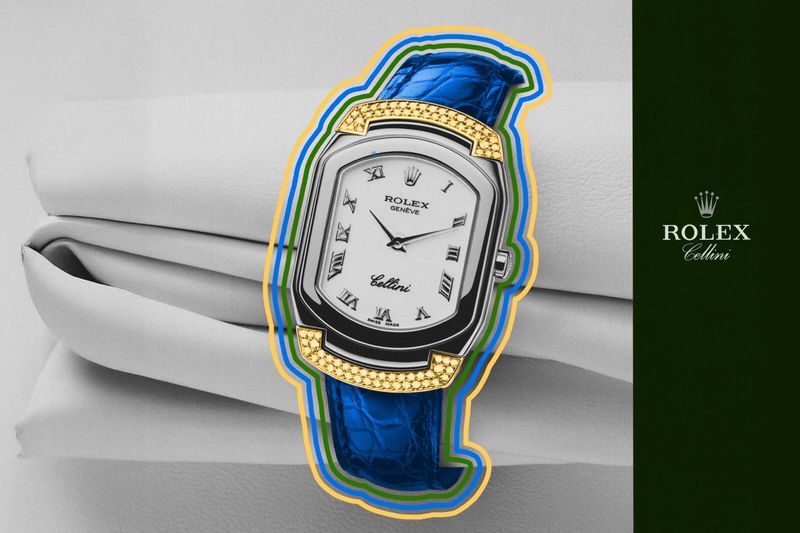
If you’ve never heard of olo, there’s a good reason for that: You’ve almost certainly never seen it either. The new color, described as a “blue-green of unprecedented saturation,” has been seen by only five people in a laboratory setting, as it’s beyond the range of normal human visibility. Researchers discovered the teal-like hue by stimulating the M cone in subjects’ retinas with a laser device called an Oz, which allowed them to see a color said to be more saturated than any found in the natural world.
The retina has three cones — L detects long wavelengths, M detects medium wavelengths, and S detects short wavelengths — that typically overlap to a certain degree. By using the Oz, scientists were able to activate the M cone in isolation, making it possible to see a color never perceived by humans before.
It was known as geoluread, which means “yellow-red.” The color as we know it today was named after the fruit.
“It was jaw-dropping. It’s incredibly saturated,” said Ren Ng, an electrical engineer at the University of California, Berkeley, who both co-authored and participated in the study, in an interview with The Guardian. “We predicted from the beginning that it would look like an unprecedented color signal, but we didn’t know what the brain would do with it.”
Researchers believe, or at least hope, that the science that enabled the participants to see olo could one day help people with red-green colorblindness experience the full spectrum of color.
The most popular color in a 2015 survey of 10 countries was blue.
Advertisement
Hummingbirds can see colors humans can’t.
Only five people have seen olo, but it’s possible quite a few hummingbirds have seen it. They can perceive colors we can’t, thanks once again to cones. Whereas our three color-sensitive cone cells enable us to see red, green, and blue light, hummingbirds (and most other birds) have a fourth type of cone attuned to ultraviolet light.
In addition to UV light, birds may even be able to see combination colors such as ultraviolet+green and ultraviolet+red — something we humans can only imagine. Having four types of cone cells, known as tetrachromacy, is also common in fish and reptiles, and researchers believe dinosaurs possessed it as well. It’s also present in some people, though the condition isn’t well understood and scientists disagree over how common it is.
Michael Nordine
Staff Writer
Michael Nordine is a writer and editor living in Denver. A native Angeleno, he has two cats and wishes he had more.
Advertisement
top picks from the Inbox Studio network
Interesting Facts is part of Inbox Studio, an email-first media company. *Indicates a third-party property.
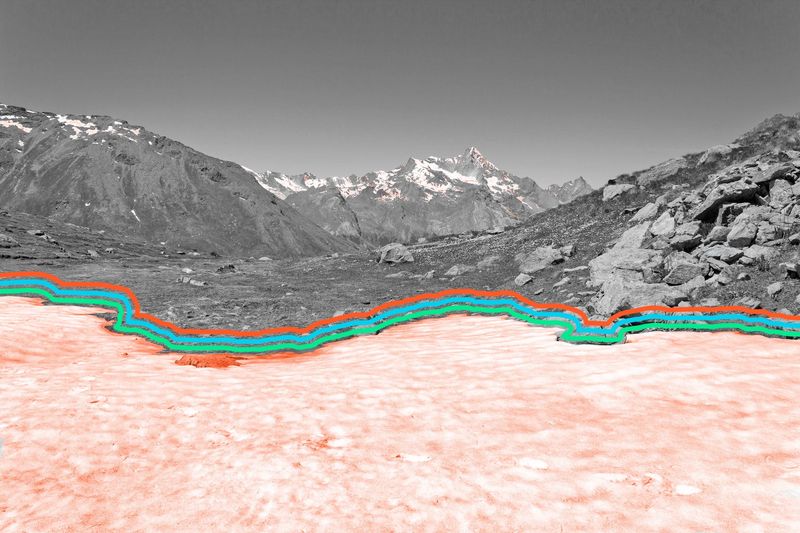
Between the 13th and 20th centuries, the Leaning Tower of Pisa’s tilt increased from around 0.2 degrees north to 5.5 degrees degrees south — 5.7 degrees of movement in total. But since the 1990s, that incline has reverted roughly 1.5 degrees back toward center, thanks to a project meant to stabilize the landmark and prevent its potential collapse. The engineering operation was launched in 1990, marking the third attempt at straightening the tower. Two prior efforts were made in 1838 and 1934, but the failure of those attempts actually added to the precarious incline. But the third time, not only did engineers succeed, but the tower also continued to straighten afterward.
The stabilization process involved installing counterweights on the tower’s north side so the structure would tilt back toward an upright position. Engineers also extracted soil from the higher side of the foundation and used steel cables to pull the building upright. By 2001, the incline was reduced by 15 inches and measured around 4 degrees — less than the first recorded measurement from 1817 of 4.9 degrees. Engineers considered the project a success, and a 2005 assessment declared the tower safe for the next 300 years.
Italy has the most UNESCO World Heritage Sites of any country.
With 60 sites in total — one more than China — Italy has more entries on the UNESCO World Heritage List than any other nation. This includes Rome’s historic city center, Mount Etna, and prehistoric rock drawings in Valcamonica, just to name a few.
But even though the stabilization project itself ended in 2001, the tower continued to lean toward a more upright position due to the unstable soil underneath. By 2018, the landmark had straightened an additional 1.6 inches, according to a study conducted by an Italian preservation organization. Researchers at Stuttgart University believe the tower will continue to straighten, though the landmark will likely start to lean back toward the south over time due to its weak foundation. While a precise timeline is hard to pinpoint, some engineers estimate the tower will remain stable for at least 200 years, but additional stabilization work may be required thereafter.
The world’s oldest film festival takes place in Venice, Italy.
Advertisement
Napoleon once crowned himself king of Italy.
In 1802, Napoleon Bonaparte — then serving as first consul of the French Republic — was persuaded to serve as president of the newly formed Italian Republic. But on May 17, 1805, Napoleon proclaimed the republic to be a new kingdom under the dominion of his Napoleonic empire.
Subsequently, fewer than six months after being crowned French emperor, Napoleon declared himself king of Italy at a coronation ceremony in Milan on May 26, 1805. After nearly nine years, Napoleon’s reign came to an end with the signing of the Treaty of Fontainebleau on April 11, 1814. As per the conditions, he abdicated the Italian and French thrones and was banished to Elba.
Bennett Kleinman
Staff Writer
Bennett Kleinman is a New York City-based staff writer for Inbox Studio, and previously contributed to television programs such as "Late Show With David Letterman" and "Impractical Jokers." Bennett is also a devoted New York Yankees and New Jersey Devils fan, and thinks plain seltzer is the best drink ever invented.
Advertisement
top picks from the Inbox Studio network
Interesting Facts is part of Inbox Studio, an email-first media company. *Indicates a third-party property.

While almost all other objects are required to be boxed up before being mailed, the U.S. Postal Service makes a specific exception for potatoes and coconuts. Both foods can be mailed unwrapped, so long as you write the destination and return address either directly on the product or on a label affixed to the skin or husk. Simply take the item to the post office, where it’ll be weighed to determine appropriate postage, stamped, and sent off to be delivered just like any other package.
The U.S. Postal Service doesn’t explicitly say why this is permitted, but there is some precedent for sending strange items through the mail, so long as they’re paid for and don’t endanger the carrier. In an experiment conducted for a 2000 edition of Annals of Improbable Research, researchers successfully mailed a ski, a deer tibia, a rose with a card tied to the stem, and other unusual objects.
The first U.S. city to offer free mail delivery was Cleveland, Ohio.
Cleveland was the first U.S. city to offer free mail delivery to its residents. The Free City Delivery Service was the brainchild of postal employee Joseph Briggs. The service began in 1862, and by the end of the 19th century had grown to more than 400 cities, employing 10,000+ mail carriers.
Mailing coconuts is especially popular on the Hawaiian island of Molokaʻi, where the Hoʻolehua post office established the Post-a-Nut service in 1991, allowing people to mail coconuts to the mainland U.S. and around the world — no box required. Post-a-Nut ships roughly 3,000 coconuts annually (around 700 of which are sent to international locations), generating 40% of that post office’s total revenue. Dedicated businesses for mailing potatoes also exist, including Mail a Spud — a service that ships out russet potatoes adorned with personalized messages.
George Washington has appeared on more U.S. postage stamps than any other person.
Advertisement
A coconut was investigated for its role in rigging a Maldivian presidential election.
In 2013, Maldivian police detained a suspicious coconut discovered near a polling place on Guraidhoo Island. The coconut was initially thought to be evidence of black magic — a practice that had purportedly been used to influence the outcome of local elections in the past. In this case, the kurumba (young coconut) featured a Quranic verse written on its husk, which was believed to possibly be an instance of fanditha (black magic).
Police enlisted the help of a ruqyah (white magic practitioner) to deduce whether the coconut actually possessed black magic. It was determined to be fake, and as one source told a Maldivian news outlet, “It seems like it was a joke, just a prank, so that people will become aware, learn the moral, and not do it again.” In the wake of this event, police ramped up surveillance of the polling place in question to be sure no black magic was used on election day.
Bennett Kleinman
Staff Writer
Bennett Kleinman is a New York City-based staff writer for Inbox Studio, and previously contributed to television programs such as "Late Show With David Letterman" and "Impractical Jokers." Bennett is also a devoted New York Yankees and New Jersey Devils fan, and thinks plain seltzer is the best drink ever invented.
Advertisement
top picks from the Inbox Studio network
Interesting Facts is part of Inbox Studio, an email-first media company. *Indicates a third-party property.
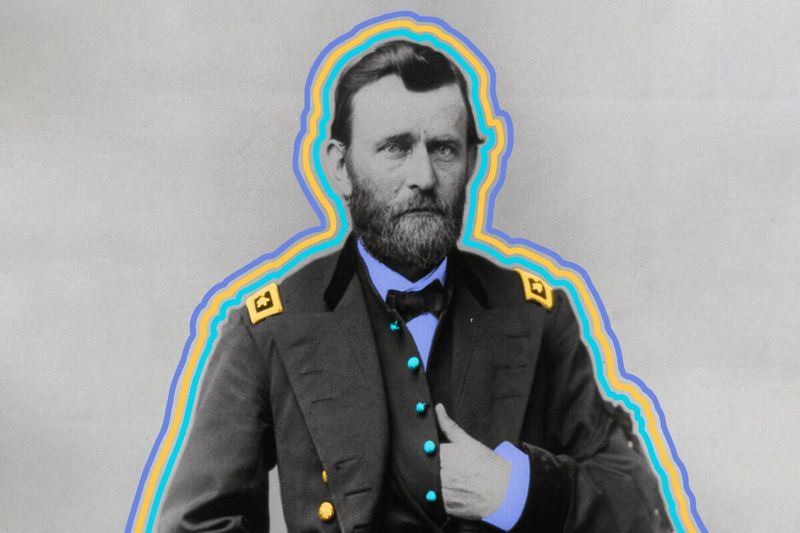
Humans are often thought of as the smartest animals, and one of the perks of our top-notch brains (with a little help from our opposable thumbs) is supposedly that we’re the only species that can use tools. That’s what we used to think, anyway. More recently, research has shown that our tool-use ability is not as unique as we once believed. Take, for instance, the capuchin monkey. Research published in 2019 showed that these pint-sized creatures, native to Central and South America — and sometimes known as “organ grinder” monkeys — have been using stone tools to process food for more than 3,000 years.
Cappuccinos and capuchin monkeys were both named for the same thing.
The words “cappuccino” and “capuchin” both come from Capuchin friars, a Christian order established in 1528. The friars were known for their hoods, or “cappucio” in Latin, and brown robes — whose color was similar to the monkeys and the coffee beverage.
Archaeologists analyzing a site in Brazil’s Serra da Capivara National Park discovered that the monkeys had used rounded quartzite stones to smash open cashew husks against tree roots or stone “anvils.” After digging through layers of sediment in four phases of excavation, the scientists found stone tools that had been used by the capuchins dating back around 3,000 years. The researchers also found signs that the monkeys’ tool use had changed over time — the creatures first used smaller stone tools, and then around 560 years ago, switched to larger ones, which may have meant they were eating harder foods,according to National Geographic. This evolution could have occurred due to different groups of capuchins moving into the area, or a change in the local plants. Either way, the study marked thefirst time such an evolution in tool use had been seen in a nonhuman species. Scientists suspect that further exploration of this site, and others like it, could give an unprecedented look at humanity’s own tool-use evolution, which beganmillions of years ago. Furthermore, primates — the taxonomic order to which humans also belong —aren’t the only ones gifted with brains capable of using tools. Elephants, dolphins, and a variety of birds are only a few of the other species that use tools — whether sticks, rocks, or tree limbs — to survive and thrive on planet Earth.
Famous primatologist Jane Goodall first discovered tool use among chimpanzees in October 1960.
Advertisement
Orangutans know how to make instruments.
When it comes to primitive tools, instruments don’t usually count — that is, unless you’re an orangutan. In 2009, scientists revealed that orangutans use folded leaves to make sounds that may trick predators into thinking they’re bigger than they actually are. These musical noises, called “kiss squeaks,” were even used by wild orangutans who sensed the human researchers as a threat. This discovery is the first known nonhuman instrument and nonhuman tool used for communication. It’s also not even the extent of the orangutans’ impressive, tool-making abilities. A 2018 study revealed that orangutans were better at making tools than human children up to age 8. This growing body of scholarship only shows that complex intelligence is not a trait exclusively enjoyed by Homo sapiens.
Darren Orf
Writer
Darren Orf lives in Portland, has a cat, and writes about all things science and climate. You can find his previous work at Popular Mechanics, Inverse, Gizmodo, and Paste, among others.
Advertisement
top picks from the Inbox Studio network
Interesting Facts is part of Inbox Studio, an email-first media company. *Indicates a third-party property.