
Original photo by Frank Nagel/ iStock
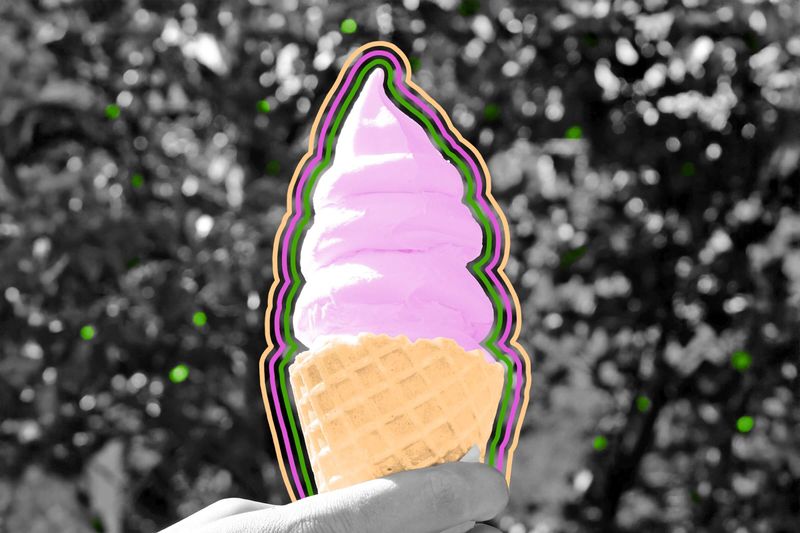
Dairy Queen makes a lot of popular frozen treats — Blizzards, sundaes, and cones, to name a few — but none of them are technically ice cream. The company’s soft serve products, though delicious, don’t meet the Food and Drug Administration guideline mandating that “ice cream contains not less than 10% milk fat.”
Because Dairy Queen’s products are made with only 5% milk fat, they’re required to be called something else. That’s why you won’t actually see the words “ice cream” at your local DQ or on the website, which is careful to use specific wording.




Oops, incorrect!
It's a factEveryone’s favorite little menace served as DQ’s “spokestoon” from 1971 to 2002, when the company chose not to renew the license — presumably because Dennis was no longer as recognizable among children.
Soft serve and similar confections made with lower milk fat used to be classified as “ice milk” by the FDA, but new regulations in 1995 resulted in three other categories instead: reduced-fat, light, and low-fat ice cream. Dairy Queen products fall under the banner of “reduced-fat ice cream,” which is legally distinct from “ice cream” proper — and isn’t the catchiest term when trying to sell frozen desserts. Frozen yogurt, meanwhile, is made of yogurt rather than cream and hasn’t been sold at Dairy Queen since the chain discontinued the frozen yogurt-based Breeze in 2000.

Numbers Don't Lie
More Interesting Reads






The first Dairy Queen was in ______.
Ready to reveal?
Confirm your email to play the next question?
The first Dairy Queen was in Joliet, Illinois.

Thomas Jefferson was the first known American to record an ice cream recipe.
When he wasn’t busy writing the Declaration of Independence or acting as third president of the United States, Thomas Jefferson was otherwise occupied eating ice cream. After first being exposed to the treat in France (and apparently enjoying it), he helped popularize ice cream in America.
Jefferson not only served the dessert at parties throughout his life, including during his eight years as president, but also was the first known American to write down a recipe for it. In addition to a simple list of ingredients (“2 bottles of good cream, 6 yolks of eggs, 1/2 lb. sugar”), he included such instructions as “put the cream on a fire in a casserole, first putting in a stick of Vanilla” and “open it to loosen with a spatula the ice from the inner sides of the Sabotiere.” According to those who’ve made it, Jefferson’s recipe is quite tasty — and incredibly rich.

Michael Nordine is a writer and editor living in Denver. A native Angeleno, he has two cats and wishes he had more.
top picks from the Inbox Studio network
Interesting Facts is part of Inbox Studio, an email-first media company. *Indicates a third-party property.