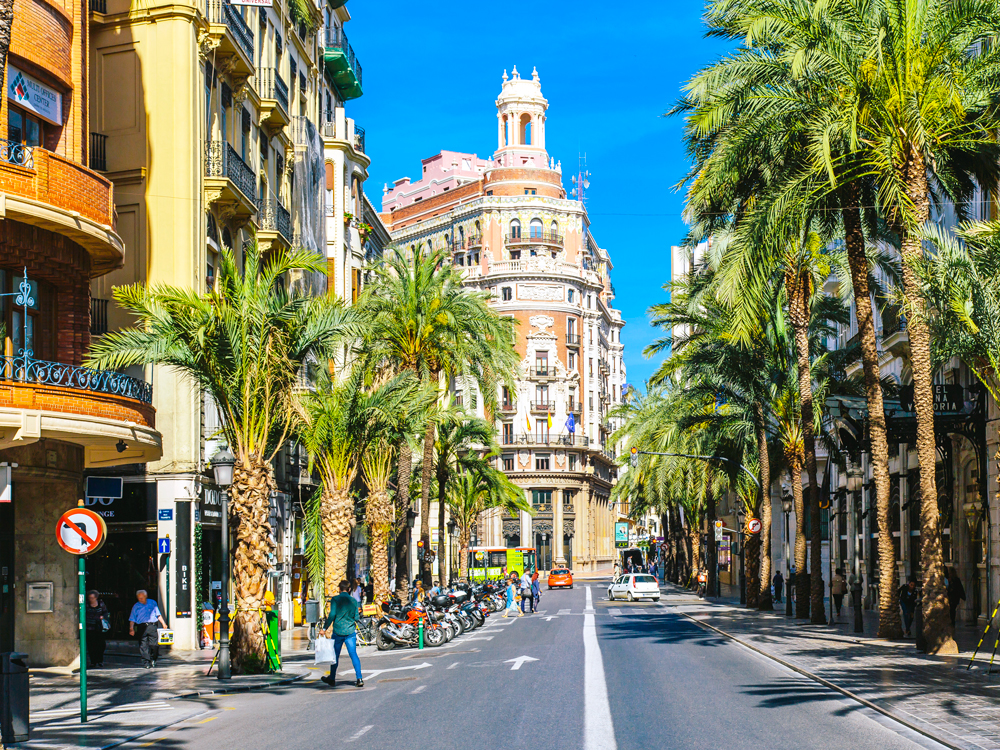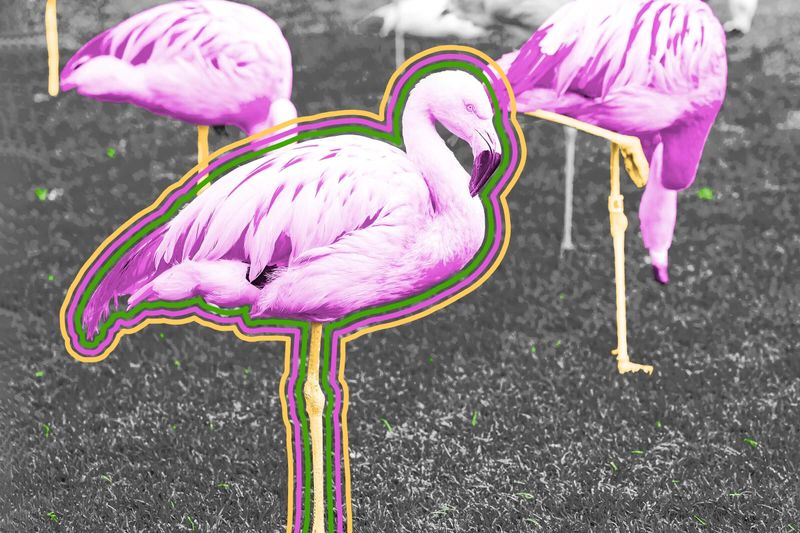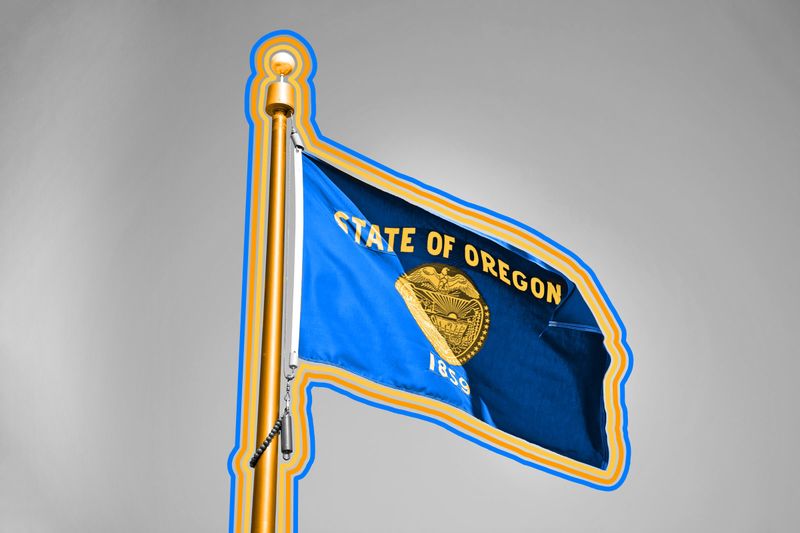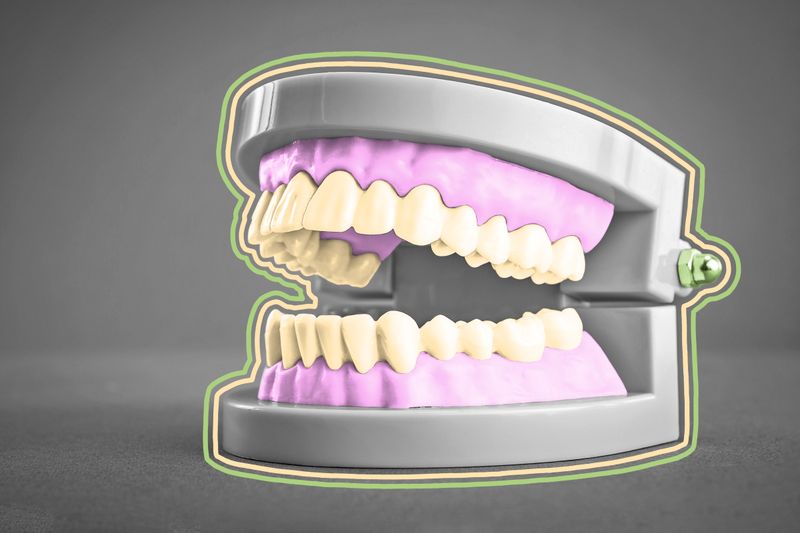

Original photo by Grzegorz Czapski/ Alamy Stock Photo

It probably isn’t 10:10 as you’re reading this, but you’d be forgiven for thinking it is if you just watched an ad for a clock or watch. Timepieces are almost always set to that exact time in advertisements, and as with most aspects of advertising, this choice isn’t arbitrary. 

The time 10:10 is considered aesthetically pleasing because it looks symmetrical on the face of analog watches and clocks, something anyone who prefers things to be neat and tidy will appreciate. It also helps that this position allows the company’s logo to not only be visible but perfectly framed by the hands pointing to 10 and 2. And this isn’t done just some of the time: In 2008, for example, The New York Times found that 97 of the 100 bestselling watches on Amazon were set to 10:10 in their pictures.

Atomic clocks are the most accurate kind.

Ready to reveal?

Oops, incorrect!

It's a fact

They’re so accurate, in fact, that some will gain or lose only a second of time over the course of tens of millions of years.

This ubiquitous hand placement has another, more subtle advantage: It looks like a smiley face. A 2017 study on the subject published in Frontiers in Psychology found watches set to 10:10 “showed a significant positive effect on the emotion of the observer and the intention to buy.” Those set to 8:20, which looks more like a frown and was the standard setting in the 1920s and ’30s, had no such effect. Like a lot of advertising tricks, it’s not evident to most consumers  — but that doesn’t mean it isn’t working.

Numbers Don't Lie

Numbers Don't Lie

Rolex sales revenue in 2024
$11.43 billion
Employees of the Swatch Group
36,000
Approximate year the world’s oldest clock was built
1386
Percentage of consumers who wore a watch daily as of 2017
32%

“O’clock” is a contraction of “______.”

Ready to reveal?

Confirm your email to play the next question?

“O’clock” is a contraction of “of the clock.”

Placeholder Image

France experimented with 10-hour days during the French Revolution.

Humans have been keeping time according to the sexagesimal (based on 60) system for at least 4,000 years, starting when the ancient Egyptians and Babylonians introduced the concept. The system is based around the number 12 — hence, there are 12 months in a year, 60 seconds in a minute, 60 minutes in an hour, and 24 hours in a day.

Not everyone was a fan of this system, however. As part of the sweeping changes introduced during the French Revolution, the country experimented with decimal time, which is based around the number 10. In the system, a minute is 100 seconds, an hour is 100 minutes, a day is 10 hours, and a week is 10 days.

Decimal time was formally adopted in 1793 but never truly caught on. Everyone already had working duodecimal clocks, the new 10-day week interrupted religious ceremonies due to there no longer being Sundays, and tracking leap years wouldn’t have worked properly. France said au revoir to decimal time when it was officially suspended on April 7, 1795.

Michael Nordine
Staff Writer

Michael Nordine is a writer and editor living in Denver. A native Angeleno, he has two cats and wishes he had more.

Original photo by Enrico Morando/ Alamy Stock Photo

Watermelon snow may sound like something from the Candy Land board game, but the phenomenon is very real — Aristotle even wrote about a “reddish” snowbank he found on Mount Parnassus in the fourth century BCE. Visitors to Antarctica, the Himalayas, the Rockies, the French Alps, and Yosemite National Park have also glimpsed this colorful occurrence. In the 1800s, Scottish botanist Robert Brown finally determined the culprit: a species of algae called Chlamydomonas nivalis. Under a microscope, single-celled C. nivalis appear green, but they also feature a secondary red pigment, astaxanthin, which is a carotenoid, part of the chemical family that can make carrots orange. This astaxanthin is dormant for much of the year, but when winter ice and snow start to thaw and the algae surface to divide and photosynthesize, they trigger their astaxanthin as a barrier against the sun’s harsh UV rays, turning red in the process. Some say this rosy snow smells sweet and fruity, although experts warn that eating large amounts can cause digestive problems. 

The visiting locker room at the University of Iowa's Kinnick Stadium is painted pink.

Ready to reveal?

Oops, incorrect!

It's a fact

Former Iowa football coach Hayden Fry requested the paint job upon joining the staff in 1979. Fry, who had a master's degree in psychology, felt the color calmed opponents. After Fry's 20-year tenure, pink toilets, showers, and lockers were added to complement the walls.

Algae is responsible for creating much of the world’s oxygen and forming the basis for most food webs; thousands of species exist. Algae is also often a factor associated with major color changes: Dunaliella algae are believed to be one origin for the pink lakes that draw shutterbugs to places such as Australia, Senegal, and Spain, and many experts hypothesize that Trentepohlia algae led to the red rains that fell in Kerala, India, between July and September 2001. Recently, cold climates on different continents have witnessed an increase in clusters (or blooms) of C. nivalis algae, and scientists are working to understand why. Besides red, the blooms can appear green, gray, or yellow. 

Numbers Don't Lie

Numbers Don't Lie

Coldest temperature (in degrees Fahrenheit) ever recorded, in Vostok, Antarctica, in 1983
-128.6
Films in the “Pink Panther” series starring Peter Sellers as Inspector Jacques Clouseau
5
Minimum varieties of watermelon grown around the world, in a total of 96 countries
1,200
Weight (in pounds) of the largest snow cone ever created, courtesy of a Lubbock, Texas, company
25,080

Elvis Presley had a pink ______.

Ready to reveal?

Confirm your email to play the next question?

Elvis Presley had a pink Cadillac.

Placeholder Image

Watermelon seeds were found in King Tutankhamun’s tomb.

King Tut was just 19 years old when he died in approximately 1324 BCE. When British archaeologist Howard Carter unsealed his tomb in 1922, he found 116 baskets and 12 additional containers full of goods and treasures that were meant to help the late pharaoh transition to the afterlife. In 1988, a graduate student in London named Christian Tutundjian de Vartavan came across 30 small cardboard boxes that had been languishing in a Royal Botanic Gardens storage room since their contents were discovered by Carter. Within the boxes, de Vartavan found around 25 plant food species that had once been inside the tomb, including sesame seeds, millet, barley, black cumin seeds, coriander, and watermelon seeds. However, more than 3,300 years ago, wild watermelons were the opposite of the juicy, sweet produce we think of today, and were likely included less for their deliciousness than for their hydrating properties.

Jenna Marotta
Writer

Jenna is a writer whose work has appeared in The New York Times, The Hollywood Reporter, and New York Magazine.

Original photo by Library of Congress/ Unsplash

Ulysses S. Grant is one of the most important figures in U.S. history. A brilliant tactician and military strategist, he served as the commanding general of the Union armies toward the end of the Civil War, bringing them to victory, then served for two terms as the United States’ 18th president (1869–1877). So it’s strange that many Americans don’t know his real name. Born Hiram Ulysses Grant on April 27, 1822, Grant went by the name Ulysses from a young age (even when boys teased him with names like “Useless Grant”). So where does the “S” come from? 

Walt Whitman published Ulysses S. Grant’s memoirs after his death.

Ready to reveal?

Oops, incorrect!

It's a fib

By 1885, several business failures had left Grant in financial ruin. Dying from cancer and afraid for his wife’s future, Grant finished his memoir days before his death. The book, published later that year by his friend Mark Twain, earned Julia Grant $11 million in today’s dollars.

In mid-June of 1864, during the height of the Civil War, Congressman Elihu B. Washburne had the same question and wrote to Grant in search of an answer. “In answer to your letter of a few days ago asking what ’S’ stands for in my name,” Grant wrote in response, “I can only state nothing.” Twenty-five years earlier, when U.S. Congressman Thomas Hamer nominated Grant to the prestigious military academy West Point, he wrote the then-17-year-old’s name as “Ulysses S. Grant,” thinking his middle initial was “S” for his mother’s maiden name, “Simpson.” Grant tried to remedy the error but to no avail — the “S” even appeared on his diploma. The mistake proved prophetic as the object of his lifelong devotion became embedded within his very name: U.S. Grant.

Numbers Don't Lie

Numbers Don't Lie

Lines in Homer’s epic poem “The Odyssey” (the hero’s name, Odysseus, was eventually Romanized as “Ulysses”)
12,109
Length (in feet) of the General Ulysses S. Grant Memorial, the largest equestrian monument in the U.S.
252
Approximate year (CE) the letter “S” entered Old English, according to the OED
1000
Number of Union soldiers under Grant’s command at the end of the Civil War
1,052,038

After the capture of Fort Donelson in 1862, Northern newspapers nicknamed the Union general ______.

Ready to reveal?

Confirm your email to play the next question?

After the capture of Fort Donelson in 1862, Northern newspapers nicknamed the Union general Unconditional Surrender Grant.

Placeholder Image

Ulysses S. Grant wasn’t the only president with an unusual “S” middle initial.

As Grant approached the end of his life, another future president’s life was just getting started. Born in Lamar, Missouri, on May 8, 1884, Harry S Truman had a middle initial that wasn’t a mistake like Grant’s, but instead honored both of Truman’s grandfathers — Anderson Shipp Truman and Solomon Young. Unable to decide which of them to honor, Truman’s parents just put “S” with no period. From the very beginning of his presidency, this middle initial was a controversy. Chief Justice Harlan F. Stone tried to give Truman a middle name during his oath of office in 1945, stating, “I, Harry Shipp Truman,” only for Truman to reply, “I, Harry S Truman.” Other erroneous middle names adorned correspondence to Truman throughout his life, but in the end, the 33rd president’s middle name was simply “S.”

Darren Orf
Writer

Darren Orf lives in Portland, has a cat, and writes about all things science and climate. You can find his previous work at Popular Mechanics, Inverse, Gizmodo, and Paste, among others.

Original photo by twinsterphoto/iStock

As implied by its name, Election Day is, well, a single day. That wasn't always the case, however: States used to hold elections whenever they wanted within a 34-day period leading up to the first Wednesday in December. This ultimately created some issues, as you might imagine — early voting results ended up holding too much sway over late-deciding voters, for one thing. The current date was implemented by the Presidential Election Day Act of 1845, and federal elections now occur every two years on the first Tuesday after the first Monday in November.

The first presidential election spanned two calendar years.

Ready to reveal?

Oops, incorrect!

It's a fact

George Washington was unanimously elected the first president of the U.S., but it took a while — from December 15, 1788, to January 10, 1789, to be precise. Washington wasn’t thrilled at the prospect of being president but answered the call “in obedience to the public summons.”

That may sound arbitrary at first, but the date was chosen quite deliberately. American society was rooted even more deeply in agriculture in the mid-19th century than it is today, so November was chosen for its timing after the harvest. Additionally, it took a full day of traveling for many to reach their polling place, which limited options: Church made weekends impractical, and Wednesday was market day for farmers, so Tuesday proved ideal.

The current process isn’t perfect, of course. U.S. elections tend to have lower turnout than those of most other developed nations, and there have been calls for decades to make Election Day a national holiday. A 2018 poll found that 65% of Americans favored the idea, though there’s been little legislative movement on the proposal. Should it ever be put to a vote, you know when it will be held.

Numbers Don't Lie

Numbers Don't Lie

Members of the Electoral College in the first presidential election
69
Candidates who received electoral votes in the first presidential election
12
Electoral votes won by Franklin Roosevelt in 1936 (out of 531), the most in history
523
Presidential elections held as of 2025
60

President ______ never voted prior to his own election.

Ready to reveal?

Confirm your email to play the next question?

President Zachary Taylor never voted prior to his own election.

Placeholder Image

George Washington spent an entire campaign budget on booze.

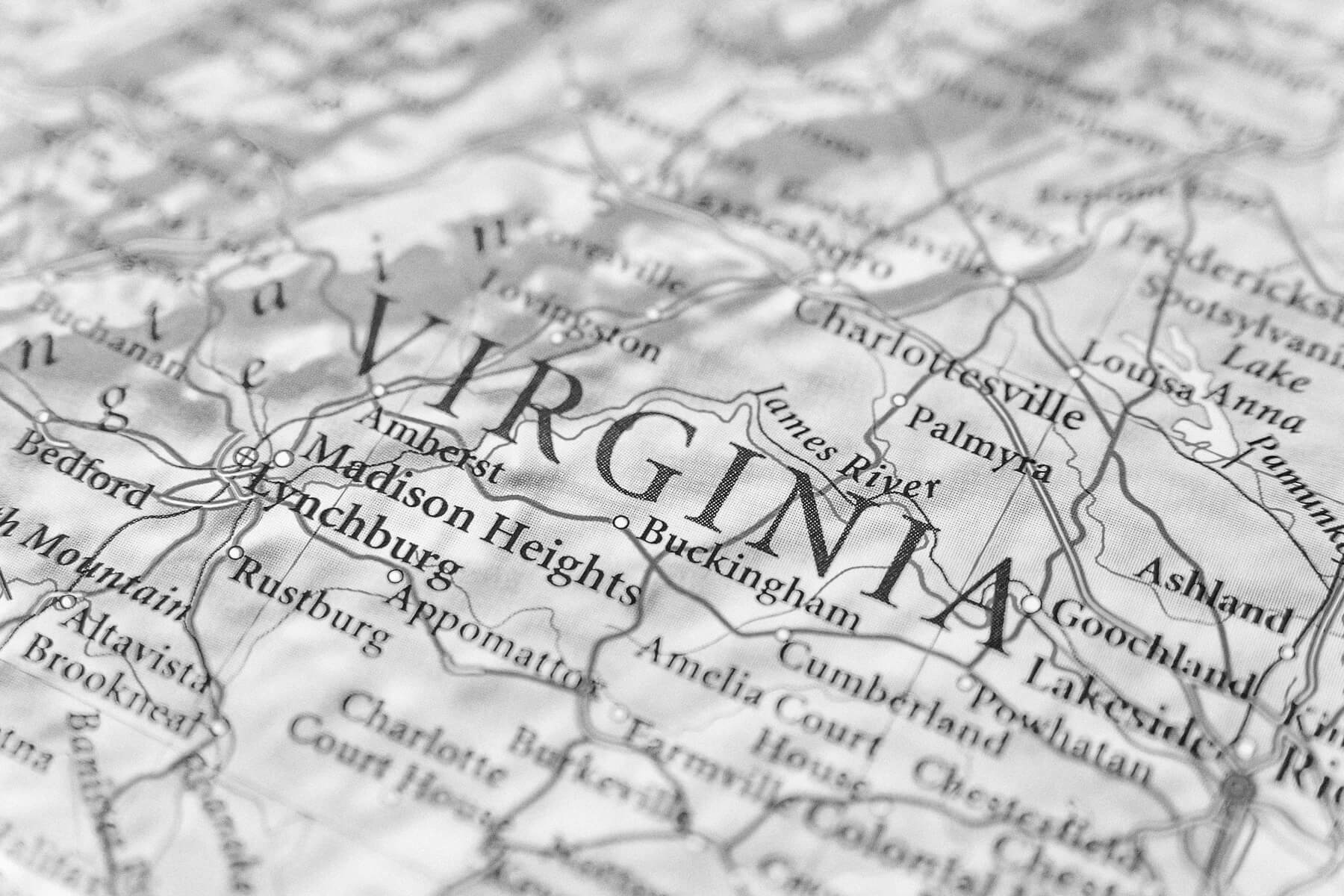
Before he was the first president, George Washington was a member of the Virginia House of Burgesses from 1758 until 1775. He actually lost his first election and “attributed his defeat to his failure to provide enough alcohol for the voters,” according to author Daniel Okrent. At the time, it was common for candidates to woo voters by plying them with food and liquor. Washington avoided the same mistake during his second run, spending his entire campaign budget on 28 gallons of rum, 50 gallons of rum punch, 34 gallons of wine, 46 gallons of beer, and 2 gallons of cider royal served to 391 voters — nearly a half-gallon per voter. (He even rolled barrels of liquor to polling places on Election Day, a custom in Virginia at the time.) The practice was widespread despite being technically illegal, and was known as “swilling the planters with bumbo.”

Michael Nordine
Staff Writer

Michael Nordine is a writer and editor living in Denver. A native Angeleno, he has two cats and wishes he had more.

Original photo by Julia Koblitz/ Unsplash

For most of human history, scientists haven’t been called “scientists.” From the ancient Greeks to 18th-century Enlightenment thinkers, terms such as “natural philosopher” or the (unfortunately gendered) “man of science” described those who devoted themselves to understanding the laws of the natural world. But by 1834, that pursuit had become so wide and varied that English academic William Whewell feared that science itself would become like “a great empire falling to pieces.” He decided that the field needed a simple word that could unify its disparate branches toward one goal — and the inspiration for this word came from someone who wasn’t a “man” of science at all.

Scientist Mary Somerville was instrumental in the discovery of Neptune.

Ready to reveal?

Oops, incorrect!

It's a fact

In “On the Connexion of the Physical Sciences,” Somerville wrote that an unexplained wobble in Uranus’ orbit likely meant that an eighth unknown planet still lay undiscovered in the solar system. This hint led astronomers to finally discover Neptune in 1846.

Scottish mathematician and science writer Mary Somerville’s book On the Connexion of the Physical Sciences is a masterwork of science communication. Published in 1834, it’s often considered the very first piece of popular science, a work that successfully described the complex scientific world for a general audience. Crucially, it also framed the pursuit of science as a connected, global effort and not as fractured professions siloed in separate “societies.” While writing a review of Somerville’s book, Whewell used his new word to describe the men and women striving for this previously unknown knowledge. Much like an “artist” can create using a variety of media, so too can a “scientist” seek to understand the world in a variety of ways.

Numbers Don't Lie

Numbers Don't Lie

Number of scientists in the world, according to a 2021 UNESCO report
8.8 million
Year the journal “Nature” allowed the word “scientist” (90 years after its introduction)
1924
Banknote that the Royal Bank of Scotland redesigned to feature Mary Somerville in 2017
£10
Year Galileo Galilei sketched Neptune possibly without knowing it (the planet was discovered 233 years later)
1613

Some consider the first known scientist to be Greek thinker ______.

Ready to reveal?

Confirm your email to play the next question?

Some consider the first known scientist to be Greek thinker Thales of Miletus.

Placeholder Image

Some argue that the scientific method was first used by a Muslim natural philosopher in the 11th century CE.

During the Islamic Golden Age (mid-seventh to mid-13th centuries, often concentrated in Baghdad), Muslim thinkers expanded human knowledge with advancements in astronomy, engineering, music, optics, manufacturing, and (some argue) by creating the very bedrock of modern science itself, the scientific method. At its most basic, the scientific method is a framework that guides scientists toward facts by using hypotheses tested with controlled experiments. Working mostly in Cairo in the early 11th century, polymath Ibn al-Haytham used this method to produce some of his greatest breakthroughs in optics, one of which included the camera obscura (an optical device that was a forerunner of the modern camera). By the 13th century, al-Haytham’s work had been anonymously translated and found its way into the hands of Roger Bacon, an English philosopher who embraced al-Haytham’s empirical approach and formed the foundations of modern European science.

Darren Orf
Writer

Darren Orf lives in Portland, has a cat, and writes about all things science and climate. You can find his previous work at Popular Mechanics, Inverse, Gizmodo, and Paste, among others.

Original photo by Jamie Lorriman/ Alamy Stock Photo

In the last 15 years or so, 10 Downing Street in London has welcomed six different British prime ministers — and one tenant has lived and served alongside all of them. Larry the Cat is the latest in a long line of pets at the U.K. prime minister’s residence, but the first to be awarded the official title of chief mouser to the Cabinet Office (though others have performed similar functions).

Mice love to eat cheese.

Ready to reveal?

Oops, incorrect!

It's a fib

While a hungry mouse may sink its teeth into an available hunk of cheese, it’s far more likely to enjoy fruits and grains.

Like his predecessors, Larry has been treated with largely playful coverage by the U.K. tabloids. Adopted from the Battersea Dogs & Cats Home for his alleged hunting abilities, the domestic shorthair was “roasted” by the press when a rodent surfaced at a Cabinet dinner early in his tenure, and he later drew attention for his tussles with fellow mouser Palmerston from the Foreign Office. The government’s media arm has even gotten in on the fun with an official profile that lists such feline responsibilities as “testing antique furniture for napping quality” and “contemplating a solution to the mouse occupancy of the house.” Meanwhile, Larry’s unofficial X account has racked up more than 800,000 followers thanks to a steady stream of reliably cheeky quips.

Reportedly tolerant of the family dog that accompanied the previous PM Rishi Sunak into office, Larry showed his predatory instincts remained sharp by chasing away a fox that wandered too close to 10 Downing in October 2022. While U.K. residents may have their hands full with the usual complement of domestic and international issues, they can feel comfortable knowing that Larry is doing his part to keep government operations running smoothly.

Numbers Don't Lie

Numbers Don't Lie

Number of U.K. prime ministers to hold office during Larry’s tenure
6
Estimated population of pet cats in the United Kingdom
11,000,000
Total performances of “Cats” during its original West End run
8,949
Birth year of “Cobra Kai” actress Mary Mouser
1996

A group of cats is called a ______.

Ready to reveal?

Confirm your email to play the next question?

A group of cats is called a clowder.

Placeholder Image

A pet raccoon lived at the White House during the Calvin Coolidge administration.

The White House has also hosted its share of nonhuman residents, including dogs, cats, and even ponies, but the most noteworthy pet to inhabit the U.S. presidential home may well have been Calvin Coolidge’s raccoon Rebecca. When she was gifted to the first family for its 1926 Thanksgiving dinner, the Coolidges took pity on the ring-tailed critter and incorporated her into their menagerie of animal companions. Rebecca Raccoon appeared at the White House Easter Egg Roll, joined the president on vacations, and was given her own treehouse, although she reportedly preferred frolicking in the hallways and bathtubs of the Executive Mansion. The family also welcomed a second raccoon, named Reuben, but Rebecca regained the spotlight for herself after Reuben fled the coop. At the end of the Coolidge administration, she was sent off to retirement at a local zoo.

Tim Ott
Writer

Tim Ott has written for sites including Biography.com, History.com, and MLB.com, and is known to delude himself into thinking he can craft a marketable screenplay.

Original photo by AegeanBlue/ iStock

Turnips aren’t usually considered fancy fare — over the years, they’ve served as livestock fodder and occasionally been used to pelt unpopular figures in public. In the 19th and early 20th centuries, however, they were not just begrudgingly served for dinner, but also used as small lanterns. The durable root crop is often harvested as the weather cools, and in Ireland, that was just in time for Samhain, the Celtic celebration of summer’s end. Ancient Celts believed that the separation between the living world and spirit realm was at its weakest during autumn, making it possible for ghosts and demons to cause mischief. To protect themselves and their homes, superstitious folk across the British Isles would carve frightening faces into produce — sometimes potatoes or beets, but most commonly turnips — as a way to ward off harm. With a lit candle placed inside, the illuminated faces acted as old-world lanterns that banished the unwanted and guided the way along dark paths. 

The world’s smallest book is about turnips.

Ready to reveal?

Oops, incorrect!

It's a fact

“Teeny Ted From Turnip Town” has its own ISBN number, but you can’t check it out from a library. That’s because the world’s smallest book — a story about a country fair turnip contest — is 0.07 mm by 0.10 mm (smaller than a pinhead) and can be read only with an electron microscope.

Turnip carving slowly faded in popularity, especially after the advent of electricity. Still, the tradition made its way to the U.S., albeit with a twist, thanks to an influx of Irish immigrants fleeing famine around the 1840s: Harvest-time celebrants found that pumpkins, abundant and native to North America, were much easier to carve than turnips. The modified tradition caught on during the later part of the 20th century and gave root to the bewitching American custom of carving jack-o’-lanterns around Halloween.

Numbers Don't Lie

Numbers Don't Lie

Approximate weight (in pounds) of the world’s heaviest turnip, harvested in 2004
39
Most lit jack-o’-lanterns ever on display, in Keene, New Hampshire, in 2013
30,581
Year NASA revealed a mission to grow experimental turnips on the moon
2013
Year of the first official Halloween celebration in the U.S., held in Anoka, Minnesota
1920

______, an Irish potato dish, is traditionally served on Halloween.

Ready to reveal?

Confirm your email to play the next question?

Colcannon, an Irish potato dish, is traditionally served on Halloween.

Placeholder Image

The name “jack-o’-lantern” comes from an Irish legend.

Considering that the tradition of carving pumpkins came to America from Ireland, it’s no surprise that the name for carved-produce lanterns comes from Irish lore too. According to an Irish folktale, a thief known by the name of Stingy Jack outsmarted and trapped the devil, agreeing to release him only if the thief’s soul would be guaranteed safe from a fiery afterlife. When Stingy Jack’s final day arrived, his bad behavior kept him out of heaven — and his deal barred him from the underworld. Instead, his apparition was left to wander the Earth, carrying only a burning coal to light his travels, and with a new moniker: “Jack of the Lantern,” which eventually became the “jack-o’-lantern” we use today. Like many tall tales, the story of Stingy Jack was used to explain the unexplainable; in this case, ignis fatuus, aka false fire or marsh gas. We now know that methane created by decaying plants in swamps and marshes can spontaneously ignite, but in centuries past, sudden bursts of ignis fatuus throughout the British Isles would have been considered supernatural events — and used to warn of the perils of bad behavior.

Nicole Garner Meeker
Writer

Nicole Garner Meeker is a writer and editor based in St. Louis. Her history, nature, and food stories have also appeared at Mental Floss and Better Report.

Original photo by TCD/Prod.DB/ Alamy Stock Photo

You’d be forgiven for failing to notice some of The Shining’s more intricate details, since there’s a good chance you were covering your eyes with your hands the first time you watched it. Those details really do add to the experience of Stanley Kubrick’s 1980 horror classic, however, including the fact that the color red appears in nearly every shot. Some of these appearances are obvious — that famous scene of blood pouring out of the elevator, the red-walled men’s room where Jack Torrance (Jack Nicholson) freshens up — but many are quite subtle. Did you ever notice, for example, that the darts young Danny (Danny Lloyd) plays with are red, or that a book placed on a table in the opening scene and the dress Wendy (Shelley Duvall) wears are red as well?

Stephen King loved Kubrick’s adaptation.

Ready to reveal?

Oops, incorrect!

It's a fib

King was actually “deeply disappointed” with the take on his 1977 novel, despite admiring Kubrick. He told “Playboy” in a 1983 interview that “parts of the film are chilling, charged with a relentlessly claustrophobic terror, but others fell flat.”

According to one analysis, the inclusion of the scarlet hue is meant to be a visual nod to Jack’s deteriorating mental condition as the Overlook Hotel takes hold of him. It’s just one reason The Shining has been the target of so much theorizing on the part of academics and fans alike; there’s even a documentary devoted to unpacking ideas about the film, called Room 237. Some of the theories are more outlandish than others — the idea that Kubrick used The Shining to confess to helping NASA fake the moon landing is pretty out-there — while others are just strange enough to feel at home in the Overlook.

Numbers Don't Lie

Numbers Don't Lie

Tons of salt and styrofoam used for the “snow” in the final scene of “The Shining”
900
Years it took to make “The Shining”
5
Retakes of the “shine” scene between Dick Hallorann and Danny Torrance
148
The film’s place on the British Film Institute’s list of the greatest films of all time
88

The famous line “______” from “The Shining” was improvised.

Ready to reveal?

Confirm your email to play the next question?

The famous line “Heeere’s Johnny!” from “The Shining” was improvised.

Placeholder Image

The interior of the Overlook Hotel doesn’t make any sense.

Stanley Kubrick was perhaps the most meticulous filmmaker of all time, with every detail carefully planned and many scenes requiring dozens of takes to get perfect. So while it might seem like a mistake that the Overlook Hotel’s interior is deeply odd — not everything lines up and aspects of it are spatially impossible — that was as deliberate as everything else about the film. “The interiors don’t make sense,” Jan Harlan, one of the film’s executive producers, said in 2012. “Those huge corridors and ballrooms couldn’t fit inside. In fact, nothing makes sense.” The Overlook Hotel was inspired by the Stanley Hotel in Estes Park, Colorado, where Stephen King was staying when the idea came to him. Oregon’s Timberline Lodge was used for the exteriors, and interior scenes were filmed just outside of London at Elstree Studios. Yet the hotel in the film is something else entirely — and exists only as a product of Kubrick’s imagination.

Michael Nordine
Staff Writer

Michael Nordine is a writer and editor living in Denver. A native Angeleno, he has two cats and wishes he had more.

Original photo by one AND only/ Shutterstock

The cultural impact of the Brothers Grimm fairy tales, originally published in 1812 as Kinder- und Hausmärchen, or Nursery and Household Tales, is hard to overstate. Two centuries after its publication, the tales have been the creative backbone for hundreds (or even thousands) of films, TV shows, plays, and works of art — whether as direct adaptations or loose inspirations. But while you’re probably familiar with stories such as “Little Red Riding Hood,” “Rumplestiltskin,” and “Sleeping Beauty,” you may not know that German linguists Jacob and Wilhelm Grimm didn’t actually create the narratives themselves. Instead, they compiled tales that had been passed down through the oral tradition, some for perhaps millennia. The two brothers began interviewing family and friends to collect the tales while they were still teenagers studying at the University of Marburg. After publishing their first collection of 86 tales, the brothers delivered a second edition three years later with an additional 70 tales. The seventh and final edition in 1857 featured 211 tales.

In the Brothers Grimm’s “Cinderella,” the fairy godmother character is a tree.

Ready to reveal?

Oops, incorrect!

It's a fact

While almost everyone is familiar with the fairy godmother in Disney’s “Cinderella,” she never appears in the Grimms’ version. Instead, she is replaced by a tree that’s been planted on Cinderella’s mother’s grave. Many cultures around the world have some version of the Cinderella story.

Originally, the stories weren’t meant for children — many were violent, sexual, or otherwise R-rated. Instead, the Grimms intended for the tales to be an excavation of cultural heritage, and they first introduced them as scholarly work. But as literacy rates climbed in the 19th century, subsequent editions edited out a lot of the original tales’ brutality in order to appeal to wider audiences, especially children. Today, many kids become acquainted with the Grimms’ fairy tales through Walt Disney, who used the stories as far back as 1922 for some of his earliest animations. But Disney is far from the only one inspired by the Grimms — more recently, their work has provided the narrative fuel for Stephen Sondheim’s musical Into the Woods, Shelley Duvall’s Faerie Tale Theatre TV series, 2020’s fantasy-horror film Gretel & Hansel, and NBC’s aptly named television show Grimm, to name just a few folklore-filled examples.

Numbers Don't Lie

Numbers Don't Lie

Approximate number of language and dialect translations of Grimm’s fairy tales
160
Number of 1988 Tony Awards won by Stephen Sondheim’s “Into the Woods”
3
Year Disney released “Tangled,” based on the Brothers Grimm’s Rapunzel
2010
Number of episodes of the TV show “Grimm,” a fantasy police procedural based on Grimm fairy tales
123

Disney’s first full-length animated film, “______,” is based on a Grimm tale.

Ready to reveal?

Confirm your email to play the next question?

Disney’s first full-length animated film, “Snow White and the Seven Dwarfs,” is based on a Grimm tale.

Placeholder Image

The Brothers Grimm’s other great work was a German dictionary.

While history remembers them as saviors of the folktale, in their own time the Brothers Grimm were widely respected medievalist scholars and German linguists. In fact, they were so respected that the predictable patterns of phonetic changes from Proto-Indo-European language (the theorized common ancestor of all modern languages) to Germanic tongues are now known as “Grimm’s Law.” But their most ambitious work was creating Deutsches Wörterbuch (“The German Dictionary”), which they began working on in 1838. Originally estimating that it would be only four volumes long, Jacob eventually revised that number to seven and thought they’d need about 10 years to complete it. Instead, it took more than a century for all 32 volumes to finally appear in print — the last in 1961. Of course, the Brothers Grimm didn’t live to see the end of their ambitious project. When Jacob Grimm died in 1863, four years after his brother Wilhelm, he had only finished up to the letter “F.” His final word was frucht, meaning “fruit.”

Darren Orf
Writer

Darren Orf lives in Portland, has a cat, and writes about all things science and climate. You can find his previous work at Popular Mechanics, Inverse, Gizmodo, and Paste, among others.

Original photo by Aaron Burden/ Unsplash

English words today come from a variety of languages, originating from Greek, French, Latin, and many others. But perhaps the most important of them all is German, whose words form the backbone of English. That’s why English is considered a Germanic language, as opposed to a Romance language like French (although English also shares a considerable number of similarities with French, thanks to the Normans). Taking a look at the most commonly written words in English around the world, as compiled by the Oxford English Dictionary, illustrates German’s indelible influence.

The U.N. has three official languages.

Ready to reveal?

Oops, incorrect!

It's a fib

The U.N. has six official languages: Arabic, Chinese, English, French, Russian, and Spanish. Document are typically issued in all six languages, and each has its own “Language Day” at the United Nations to promote multilingualism.

At the top of the list of the most common written words is, unsurprisingly, “the,” related to German’s gendered der, die, and das. Germanic function words, such as “and,” “but,” and “that,” pepper the rest of the list. English’s most-written noun (“time”), verb (“be”), and adjective (“good”) are also Germanic in origin. Today, English borrows liberally for its vocabulary — scholars estimate that words from more than 350 languages have entered English — but the roots of its linguistic tree are considered Western Germanic. English speakers are far from alone: Dutch, Afrikaans, Frisian (spoken in parts of the Netherlands and Germany), Yiddish, and of course German also developed from the same West Germanic roots. In total, these tongues are spoken as primary languages by about 450 million people throughout the world.

Numbers Don't Lie

Numbers Don't Lie

Rough estimate of the number of words in English
1 million
Estimated number of words William Shakespeare added to English
1,700
Approximate number of Indo-European languages, including German and English
440
Number of words in current use in the 2nd Edition of the Oxford English Dictionary (1989)
171,476

The last word in the Oxford English Dictionary is ______, a genus of South American weevil.

Ready to reveal?

Confirm your email to play the next question?

The last word in the Oxford English Dictionary is zyzzyva, a genus of South American weevil.

Placeholder Image

English has more than twice as many non-native speakers as native ones.

English is one of the most universal languages in human history, thanks to the former expanse of the British empire, the dominance of the U.S. post-World War II, and other factors. It’s because of this ubiquity that it has the strange distinction of having more than twice as many non-native speakers (1.1 billion) as native ones (380 million). When factoring in both of these numbers, English has (just barely) more speakers than Mandarin, which has 929 million native speakers — by far the most in the world — but only 198 million non-native speakers. In total, English is spoken by 1.5 billion speakers around the world, compared to Mandarin’s 1.1 billion.

Darren Orf
Writer

Darren Orf lives in Portland, has a cat, and writes about all things science and climate. You can find his previous work at Popular Mechanics, Inverse, Gizmodo, and Paste, among others.