

Original photo by © Point Normal/Unsplash.com
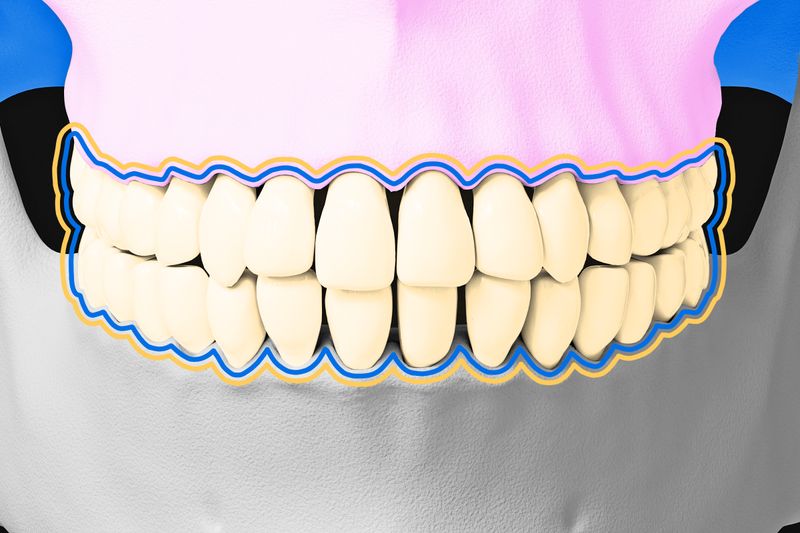
Most mammals, including humans, have two sets of teeth: deciduous teeth (also called baby teeth or milk teeth), which fall out as the jaw grows to an adult size, and permanent teeth that replace the deciduous teeth and are capable of grown-up biting and chewing. But it’s possible we could even grow a third set.
Some animals, such as sharks, have many rows of teeth that act as a kind of conveyor belt that replaces those that are lost. While humans are far from sharklike tooth factories, we do have something in common with our fishy friends: All of our teeth start out as buds, which are clusters of cells inside the jaw. And research has shown that humans have a third set of tooth buds, which scientists are hoping may lead to the potential for replacing lost teeth or teeth that never developed.




Oops, incorrect!
It's a fibTooth buds begin to form very early in embryonic development, around eight weeks gestation, and buds for all of a baby’s deciduous teeth are present before it is born. Some permanent teeth even start to form before birth.
Researchers at Japan’s University of Kyoto are hard at work developing a medication that could stimulate the growth of new teeth in humans. Their first study, conducted in mice, found that the presence of a certain protein could limit tooth growth. Preventing that protein from forming produced the opposite effect in rodents, allowing them to grow new teeth.
The researchers are hopeful that human dental treatments using this method could be available by 2030. That means in the near future, tooth regrowth could become an option for dental care alongside dentures and dental implants.

Numbers Don't Lie
More Interesting Reads




The outer layer of your teeth, called ______, is the hardest substance in your body.
Ready to reveal?
Confirm your email to play the next question?
The outer layer of your teeth, called enamel, is the hardest substance in your body.

About 1% of humans have a condition that allows them to grow extra teeth.
Some people are able to grow more than the standard set of teeth — a condition known as hyperdontia. The current Guinness World Record holder for the most erupted teeth in a human mouth is Prathab Muniandy of Malaysia, who has 42 — 10 more than the average adult.
And in 2011, doctors documented a case of an 11-year-old girl whose dental X-ray showed 18 deciduous (baby) teeth, 32 permanent teeth, and 31 supernumerary (extra) teeth, for a grand total of 81. That makes for a lot of extra flossing!

Ali Eldridge is a writer and editor based in Chicago. Currently the editor of "What on Earth! Magazine," she has also contributed extensively to Encyclopaedia Britannica and published several books for children. She spends much of her free time learning new languages and trading puns with her clever kid.
top picks from the Inbox Studio network
Interesting Facts is part of Inbox Studio, an email-first media company. *Indicates a third-party property.