
Iceland is often called “the land of fire and ice,” a nickname describing two of the nation’s most prominent geological features — volcanoes and glaciers. But in recent years, the world’s 18th-largest island has gotten a new reputation as a destination for readers and book lovers, and it’s because Iceland has more authors per capita than any other country in the world. It’s estimated that on an island with a population around 372,500 people, one in 10 will publish a book. There’s even a phrase in Icelandic that relates to the popularity of writing — “ad ganga med bok I maganum,” which roughly translates to “everyone gives birth to a book.” Many writers reside in the island’s capital city of Reykjavik, a major publishing hub that in 2011 was named a UNESCO City of Literature.
Iceland banned most beers for most of the 20th century.
Like many places, Iceland experimented with prohibition, banning wine, liquor, and beer in 1915. The law was mostly repealed in 1933, but kept beer limited to 2.25% alcohol; full-strength brews weren’t allowed until March 1, 1989 — a day Icelanders celebrate as “Bjordagur” (Beer Day).
Icelanders’ love of reading is culturally ingrained in a country that has a nearly 100% literacy rate. It’s likely that storytelling became a tradition thanks to the family sagas passed from generation to generation; these stories described how the first Icelanders found and adapted to the land from around 930 to 1030 CE. Poetry and story recitation became a popular way for Icelanders to keep the stories alive, and provided an important form of socializing on long, winter nights. Today, sharing stories has spawned a more modern tradition, in which Icelanders give books to friends and family on Christmas Eve. The holiday season strain on publishers is so great, and so many books are gifted, that the tradition has its own name: Jolabokaflod, aka the Christmas Book Flood.
The world’s oldest known, still-erupting geyser is found in Iceland.
Advertisement
Some Icelandic towns have curfews for cats.
It’s 10 p.m. — do you know where your cat is? In some Icelandic cities, not knowing could land you a fine. Cats are the preferred pet of many Icelanders, especially those living in the capital city of Reykjavik, a trend that lingered after dogs were banned from the city for six decades to prevent the spread of echinococcosis, a tapeworm that can infect and blind humans. These days, Reykjavik is said to have one cat for every 10 people. Historically, cats have had free reign of the city, but some spots are squashing that tradition, imposing laws that keep cats indoors entirely or creating evening curfews for felines (the creatures are often considered a nuisance). Some ecologists think these restrictions could have a positive impact on the environment: Among other benefits, keeping Iceland’s feline hunters partially indoors would help protect nests and chicks of struggling seabird species.
Nicole Garner Meeker
Writer
Nicole Garner Meeker is a writer and editor based in St. Louis. Her history, nature, and food stories have also appeared at Mental Floss and Better Report.
Advertisement
top picks from the Inbox Studio network
Interesting Facts is part of Inbox Studio, an email-first media company. *Indicates a third-party property.
Just because horses are fast doesn’t mean they’re easy to transport. Often weighing more than 1,000 pounds and not exactly quick to do things they aren’t inclined to, our equine friends nevertheless often need to be brought from point A to point B. Lucky, then, that there’s a plane dedicated to ferrying horses known as (what else?) Air Horse One. Owned and operated by Tex Sutton Equine Air Transportation, it’s a Boeing 727-200 cargo aircraft used for race horses, show horses, and other VIP clients. As such, tickets don't run cheap — one-way trips can set you back $5,000.
Air Force One isn’t the name of one specific plane.
Though it most often refers to one of two highly customized Boeing 747-200B series aircraft carrying the Air Force designation VC-25, the name “Air Force One” is technically used to designate any Air Force plane transporting the president.
It would appear to be worth it, however. Everything about the trip in general and the plane in particular is tailored to its passengers’ needs, from custom-built ramps and padded stalls to smooth rides that avoid steep ascents, descents, and adverse weather conditions. Air Horse One also focuses on direct flights to shorten travel times, since Appaloosas and Clydesdales dislike layovers as much as the rest of us. (No word on whether they’re served peanuts and drinks, however.) In lieu of carry-on bags, some horses even get to bring along “pets,” such as goats, to keep them company. We should all be so lucky.
Though an idiosyncratic, strangely adorable breed called Przewalski’s horse was long thought to be the last remaining wild horse, DNA tests recently proved that, like other “wild” equines, they’re actually feral. The difference? A wild breed is one that has never been domesticated, whereas feral horses are descendants of domesticated breeds that later returned to the wild. According to Sandra Olsen, a University of Kansas zooarchaeologist who worked on the study, there haven’t been wild horses for quite some time: “The world lost truly wild horses perhaps hundreds, if not thousands of years ago,” she said, “but we are only just now learning this fact, with the results of this research.”
Michael Nordine
Staff Writer
Michael Nordine is a writer and editor living in Denver. A native Angeleno, he has two cats and wishes he had more.
Advertisement
top picks from the Inbox Studio network
Interesting Facts is part of Inbox Studio, an email-first media company. *Indicates a third-party property.
Every single- and double-digit number has something in common that has nothing to do with their mathematical values: When spelled out, none contains the letter “A.” The first number spelled with the first letter of the alphabet is 1,000. Every other vowel appears at least once before “A” makes its long-awaited debut.
It formerly contained six alternative letters: eth (ð), thorn (þ), wynn (ƿ), yogh (ȝ), ash (æ), and ethel (œ), all of which predated J, U, and W.
The letter “B,” meanwhile, doesn’t show up until 1 billion, and “C” isn’t used until much later, in 1 octillion (a little-used number featuring a whopping 27 zeros). Funnily enough, less commonly used letters such as “Z” and “X” show up extremely early — in zero and six, respectively — with “X” showing up more than 200 times before “A” shows up once.
Other rarer letters are also seldom used: “J” doesn’t appear in any number, and “Q” doesn’t show up until 1 quadrillion (1 followed by 15 zeros). “E” is the most common letter, showing up in approximately 11% of spelled-out numbers.
The longest word in the English language is “pneumonoultramicroscopicsilicovolcanoconiosis.”
Advertisement
The most complex word in the English language has three letters.
With a mere three letters but at least 645 different meanings, “run” has been hailed as the most complex word in the English language. Among its many definitions are the obvious — “to go faster than a walk” and “to enter into an election contest” — as well as the comparatively obscure — “to make oneself liable to” and “to produce by or as if by printing (usually used with off).”
Running a fever is very different from running a race, yet both are perfectly cromulent uses of the word. Likewise, some movies enjoy long theatrical runs and favored children have the run of the house. The word has been in use since before the 12th century and can be a verb, noun, or adjective — quite an impressive run for such a simple word.
Michael Nordine
Staff Writer
Michael Nordine is a writer and editor living in Denver. A native Angeleno, he has two cats and wishes he had more.
Advertisement
top picks from the Inbox Studio network
Interesting Facts is part of Inbox Studio, an email-first media company. *Indicates a third-party property.
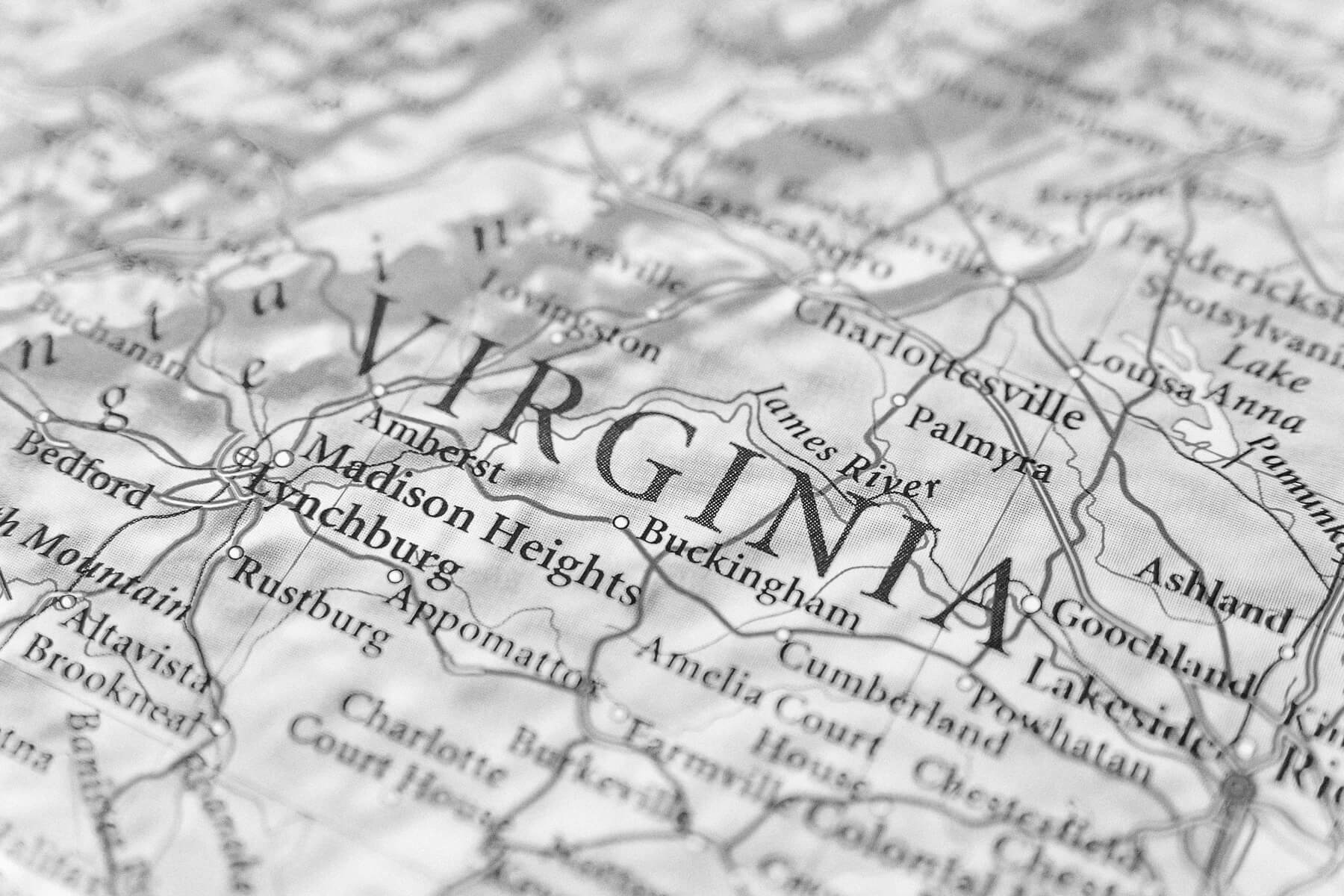
Tucked away in the Western Caucasus mountains where Europe meets Asia is a hidden geological wonder. Thousands of feet below the limestone surface, enormous caves stretch downward like the hollow roots of some gigantic tree. Called the Arabika Massif, this area is home to the four deepest caves in the world, including the very deepest, Veryovkina. Would-be spelunkers may have to use their imaginations, though: The mountainous terrain is less than hospitable, and the caves themselves are located in fraught political territory. All are within the borders of Abkhazia, a breakaway state recognized by much of the world as part of Georgia but with increasing ties to Russia.
Prehistoric humans are often pictured hunched over fires in caves, but caves were only one of many places they called home. The stereotype comes from the fact that caves do a great job of preserving artifacts — but that doesn’t mean they’re the top spot our ancestors lived.
The location of Arabika Massif’s limestone, its thickness, and its gentle slope toward the Black Sea create the perfect conditions for these huge caves, and the world record holder isn’t set in stone — pun intended. It was only in 2018 that speleologists (cave scientists) discovered that Veryovkina was actually deeper, at 7,257 feet, than its rival Krubera’s roughly 7,215 feet. Veryovkina may not hold onto its record forever, though, as speleologists plunge ever deeper into the world’s caves in search of unknown species and the secrets of Earth’s geological past. Yet based on the current rankings, it seems like a fair bet that the deepest-cave crown won’t leave the mountains of Abkhazia any time soon.
Animals that have adapted to live in caves are known as troglofauna.
Advertisement
Many animals that live in caves don’t have eyes.
Vision is useless in most cave environments because sunlight can’t penetrate into the depths of these natural rocky fortresses. Evolution has thus slowly eliminated vision from many animals living in caves, sometimes by completely removing their eyes. For example, a variety of the blind cave fish (Astyanax mexicanus), native to Mexico, evolved to lose its eyeballs after leaving open waters for the comfort of limestone caves. Instead, these fish “see” by sucking in water and sensing the magnitude of the pressure changes as the water flows around them and surrounding objects. Other animals, like some amphibians, spiders, and scorpions, have similarly lost their vision as they’ve adapted to the gloomy interiors of their lightless world.
Darren Orf
Writer
Darren Orf lives in Portland, has a cat, and writes about all things science and climate. You can find his previous work at Popular Mechanics, Inverse, Gizmodo, and Paste, among others.
Advertisement
top picks from the Inbox Studio network
Interesting Facts is part of Inbox Studio, an email-first media company. *Indicates a third-party property.

The world’s most important pieces of infrastructure are overbuilt with safety in mind. New bridges can handle stresses far beyond what they’d ever experience, and airplanes are similarly designed with redundancies. But it turns out that this engineering principle is ripped straight from the biology playbook: The human body also has a few overengineered parts just to be safe. Nowhere is this more obvious than the femur, the body’s largest bone, located between the hip and knee. The femur is more than up for its job, as it’s capable of holding up to 30 times your body weight, or roughly 6,000 pounds (though the exact weight depends on the person and age).
Although the tip of your pinky is small, it doesn’t compare to the stapes, which measures only 2 mm in length. The stapes, meaning “stirrup” in Latin, is one of the ossicles, three bones that transfer and amplify air vibrations to the inner ear — a big job for tiny structures.
Named from the Latin for “thigh,” the femur has many important functions beyond just holding your weight. The femur stabilizes you as you walk, connects muscles and tendons from your hips and knees to the rest of your body, and also plays a vital role in blood circulation via the femoral vein (named after the femur). Because the femur can withstand so much weight, fracturing the bone is usually only possible during extreme trauma events, such as a car crash. Breaking a femur can be particularly life-threatening because it can lead to blood clots, but luckily, most injuries can be repaired with surgery and physical therapy. So the next time you’re struggling to backpack up a mountain or just carrying a heavy box up some stairs, don’t worry — you’re (over)built for this.
Pythons have more vertebrae than any other animal on Earth.
Advertisement
Your funny bone is not a bone.
The term “funny bone” is quite an impressive misnomer. For one thing, the shooting pain that results from hitting it is not particularly funny, but also, this body part is not a bone. Whenever you smack your elbow against something, you’re actually hitting the ulnar nerve and not the knobby end of the humerus bone (which is where the “funny” bone derives its name — get it?). Although nerves are usually protected by muscle, fat, and bone, the ulnar nerve in the elbow is a rare exception. When you hit your funny bone, you’re actually pressing the ulnar nerve against the medial epicondyle bone at the end of the humerus, which sends a shooting pain along the nerve. Because the nerve runs up the arm and terminates in the pinky and ring finger, that’s the area particularly affected by that familiar tingly, not-so-funny sensation.
Darren Orf
Writer
Darren Orf lives in Portland, has a cat, and writes about all things science and climate. You can find his previous work at Popular Mechanics, Inverse, Gizmodo, and Paste, among others.
Advertisement
top picks from the Inbox Studio network
Interesting Facts is part of Inbox Studio, an email-first media company. *Indicates a third-party property.
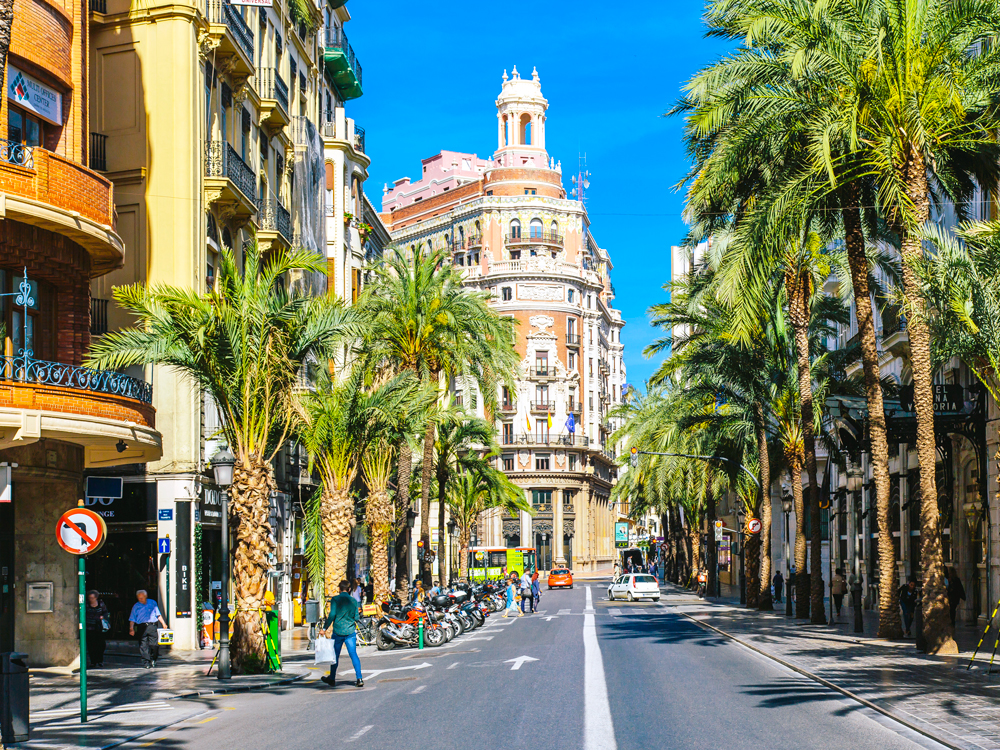
Tug-of-war pulled through for five editions of the Olympic Games, from the Paris 1900 festivities until Antwerp 1920. (The 1916 ceremony was canceled due to World War I.) Only men were permitted to partake, and individual countries were allowed to enter multiple teams. Contests lasted five minutes apiece, with teams attempting to drag their opponents 6 feet from their starting point. If neither team reached the threshold, whichever one came closer emerged victorious.
Paris is the only city that has hosted the Olympics three times.
It shares that honor with London, which held the Summer Games in 1908, 1948, and 2012. Eight cities have hosted twice: Tokyo; Los Angeles; Athens; Beijing; St. Moritz, Switzerland; Innsbruck, Austria; Lake Placid, New York; and Cortina d'Ampezzo.
The first tug-of-war gold medal went to a coalition of athletes from Sweden and Denmark. But Great Britain enjoyed the best tally overall, winning five medals in tug-of-war, including two golds — edging out the United States and its three pieces of hardware. Ultimately, the International Olympic Committee (IOC) eliminated tug-of-war after the 1920 Olympics when they decided to be more selective with their sports. Today, while campaigning for matches to be reclassified as Olympic-worthy, the Tug of War International Federation admits men, women, and juniors at various weight classes from more than 70 nations. Tug-of-war is also part of the World Games, a quadrennial showcase for sports that are not featured in the Olympics, such as bowling, kickboxing, and trampoline gymnastics.
Former Beatle Paul McCartney released a 1982 solo album called “Tug of War.”
Advertisement
Olympic medals were once awarded for art.
Not all Olympic medals have gone to athletes. Between 1912 and 1948, juries also declared winners in five artistic categories: painting, sculpture, architecture, literature, and music. Igor Stravinsky even served as a judge at the Paris 1924 Games (in music, naturally). In total, 151 medals were bestowed on artists, architects, or writers. Participants did have to abide by one major rule, however — their work had to be inspired by sports somehow. The art competitions were ultimately retired because it was too difficult for the IOC to distinguish between amateurs and professionals.
Jenna Marotta
Writer
Jenna is a writer whose work has appeared in The New York Times, The Hollywood Reporter, and New York Magazine.
Advertisement
top picks from the Inbox Studio network
Interesting Facts is part of Inbox Studio, an email-first media company. *Indicates a third-party property.
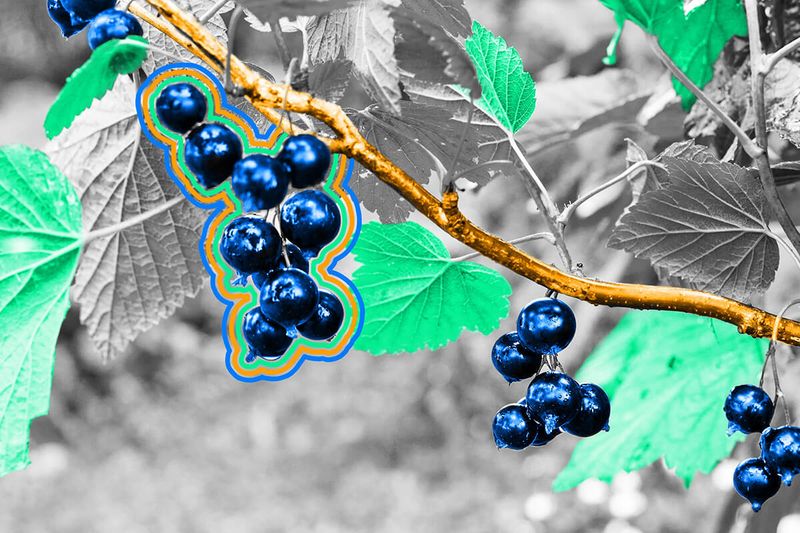
Frogs are found all across the world, but only one species lives as far north as the Arctic Circle: the wood frog. That might surprise anyone who’s seen the small, brownish amphibians in Alabama or Georgia, but these tiny creatures are as widespread as they are resilient. They’ve adapted to cold climates (including Alaska and the Northeast) by literally freezing during the winter, with their hearts no longer beating and their lungs no longer breathing air as they enter a kind of suspended animation. How, then, do they not die? By producing a sugary sort of antifreeze that keeps their actual cells from freezing — which would be lethal — even as the space between their cells does. They thaw out when temperatures rise in the spring, ready to live their best frog lives (read: mate) once again.
True toads are frogs, meaning they belong to the order Anura. Yet neither “toad” nor “frog” is a strict category with a solid taxonomic basis. People often use “frog” to refer to creatures with smooth, moist skin, while “toads” are more warty — but there are exceptions.
Most other animals in the Arctic are a little less surprising: polar bears, walruses, musk oxen, and other hardy creatures are well suited to harsh conditions. None of them need to freeze in order to survive the winter, which only makes wood frogs more impressive. Their ability to make it through the season unscathed — which has been described as a biological miracle — also has to do with location. Wood frogs nestle on the leafy litter of the forest floor, hiding from potential predators and partially insulating themselves from the cold to come.
The wood frog’s scientific name is Lithobates sylvaticus.
Advertisement
The South Pole is much colder than the North Pole.
Though it may sound counterintuitive (since we often think of southern climes as warmer), the South Pole is actually much colder than the North Pole. While the North Pole has an average summer temperature of a comparatively balmy 32 degrees Fahrenheit, at the South Pole it’s -18 degrees Fahrenheit. The difference is largely because much of the South Pole is 9,000 feet — about a mile and a half — above sea level, making Antarctica the world’s highest continent by a considerable margin and resulting in much colder temperatures due to the thinner atmosphere. The North Pole is smack dab in the middle of the Arctic Ocean (the world’s smallest), with its surface ice a mere foot or so above sea level.
Michael Nordine
Staff Writer
Michael Nordine is a writer and editor living in Denver. A native Angeleno, he has two cats and wishes he had more.
Advertisement
top picks from the Inbox Studio network
Interesting Facts is part of Inbox Studio, an email-first media company. *Indicates a third-party property.

A spoonful of sugar may make the medicine go down, but a spoonful of water contains an almost unfathomable number of atoms. There are more atoms in just a teaspoon of water than there are spoonfuls of water in the entire ocean — almost twice as many, in fact, according to math involving numbers so high most of us have never heard of them. All in all, there are about 501,900,000,000,000,000,000,000 atoms in a teaspoon of water compared to just 270,850,560,000,000,000,000,000 teaspoons of water in all of the oceans combined.
If an atom were the size of a sports arena, the nucleus would be as big as a pea. The other 99.9% would be empty.
Though there’s really only one global ocean, which covers 70% of the planet and contains 97% of the Earth’s water (pick up some slack, lakes and rivers!), it’s geographically divided into five oceans: the Atlantic, Pacific, Indian, Arctic, and Southern, also known as the Antarctic. Atoms, meanwhile, are in everything — they’re the fundamental building blocks of all matter, from air and water to people and planets and everything in between.
“Atom” comes from a Greek word meaning “indivisible.”
Advertisement
There are more stars in the observable universe than grains of sand on earth.
If you live in an area with heavy light pollution, you’d be forgiven for underestimating just how many stars there are. The number is unfathomably large, even when compared to every grain of sand on every beach on the planet — and it isn’t even close.
When attempting to calculate just how many grains of sand there are on Earth, researchers at the University of Hawaii came up with a very rough estimate of 7.5 x 10¹⁸ — which is to say, 7 quintillion, 500 quadrillion. As for stars, the estimated number is even more unfathomably enormous: 70 thousand million million million. Molecules remain undefeated on that front, however; you’d find just as many of them in a mere 10 drops of water as there are stars in the universe.
Michael Nordine
Staff Writer
Michael Nordine is a writer and editor living in Denver. A native Angeleno, he has two cats and wishes he had more.
Advertisement
top picks from the Inbox Studio network
Interesting Facts is part of Inbox Studio, an email-first media company. *Indicates a third-party property.
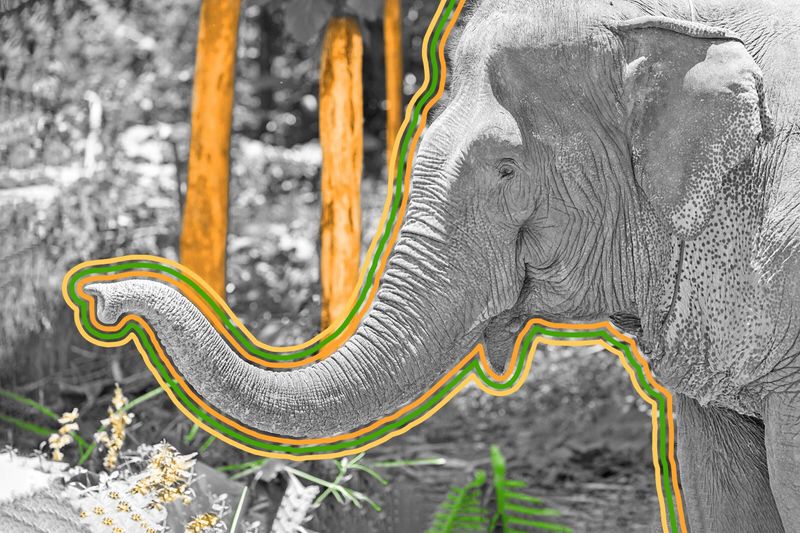
Taste is about so much more than what you eat: Your brain combines smell, temperature, and even expectations to decide how something tastes. Your utensils play a role too, with their weight, shape, and material affecting the eating experience in surprising ways. A 2013 study published in the scientific journal Flavour found that yogurt served on lighter plastic spoons was perceived as denser and more expensive than the same yogurt served on heavier plastic spoons.
Other research found that spoons made of metal, such as silver, can make foods taste better than they do with plastic spoons. And in 2023, one study found that people enjoyed ramen more when using their own bowls and forks, largely made from ceramic and metal, respectively, rather than the uniform plastic utensils and bowls provided. The researchers suggest this is due to familiarity and comfort: Even before you take a bite, your brain takes cues from what you see and touch, forming expectations and helping shape flavor.
Many of the cells contained in taste buds regenerate constantly, renewing every 10 to 14 days on average.
The material of the utensils can also influence the flavor of the food itself. Metal utensils add their own twist: Copper and zinc cutlery, for instance, is more chemically reactive, and the mild metallic taste can boost a food’s dominant flavor, with sweet substances tasting sweeter, bitter ones tasting more bitter, etc.
Utensils made of more chemically inert metals, such as gold and stainless steel, leave flavors largely unchanged. Even blindfolded, participants in the aforementioned study about plastic versus metal spoons could taste the differences, proving that the material itself, not just its look or perceived value, can shape how you experience the flavors of your food.
In the early 20th century, chewing gum wasn’t just for fresh breath. Wrigley’s marketed its Juicy Fruit and Spearmint gums as a fix for heartburn, a digestive aid, and even a way to calm the nerves. And they may have been onto something: Modern studies have found the act of chewing gum can indeed improve alertness and sustained attention in addition to lowering stress levels in certain situations, such as taking a test or giving a presentation.
Scientists aren’t exactly sure why that is, however. Leading theories credit increased blood flow, muscle activation in the jaw and face, or the simple calming effect of repetitive motions. A 2025 brain imaging study found the act of chewing activates regions involved in mental focus and emotional regulation. The effects are limited — chewing gum isn’t going to improve your memory or make you smarter — but it could just give you that little extra boost when you need to stay alert or calm under pressure.
Nicole Villeneuve
Writer
Nicole is a writer, thrift store lover, and group-chat meme spammer based in Ontario, Canada.
Advertisement
top picks from the Inbox Studio network
Interesting Facts is part of Inbox Studio, an email-first media company. *Indicates a third-party property.

If you were wowed by those glow-in-the-dark stars on your bedroom ceiling as a kid, you may need to book a trip to the Maldives. The small nation of more than 1,000 islands in the Indian Ocean is home to at least one beach, on Mudhdhoo Island, that often glows in the dark — and it’s a completely natural phenomenon. We have ostracod crustaceans (aka seed shrimp) to thank for the effect, as the millimeter-long creatures have the ability to emit a blue light for as long as a minute or more. Though scientists are unsure why they do so, some believe it happens when a “mass mortality” event occurs.
There isn’t a single spot in the Maldives with an elevation of more than 10 feet above sea level, and 80% of its land area is below 3.3 feet.
That gorgeous seed shrimp glow is an example of bioluminescence — light produced by a chemical reaction within a living being. Seed shrimp are far from the only creatures who shine this way: The chemical reactions that create bioluminescence occur in other organisms whose bodies contain luciferin (light-emitting organic compounds; the name comes from the Latin “lucifer,” meaning “light-bearing”). That list also includes fellow ocean-dwellers such as firefly squid and sea sparkles, as well as fireflies, glow-worms, and certain bacteria and fungi on land. Some animals do it to lure their next meal, others as a kind of mating ritual, and still others use it to frighten, distract, or hide from predators. Good thing sharks and bats don’t find the sight as wonderful as we do.
Weekends in the Maldives take place on Friday and Saturday.
Advertisement
The Maldivian government held an underwater cabinet meeting.
As a result of its low elevation, the Maldives is more threatened by climate change than perhaps any other country in the world. To draw attention to this, then-President Mohamed Nasheed and 13 other government officials held an underwater cabinet meeting in 2009. With the assistance of waterproof pencils and a plastic slate, they signed an “SOS” message — an extreme measure, to be sure, but also an understandable one when considering that most of the country is projected to be fully submerged by 2100. Led by its minister of environment, the Maldivian government has taken proactive steps (including potentially moving the whole country) to ensure that the country’s natural beauty — and its way of life — doesn’t disappear entirely.
Michael Nordine
Staff Writer
Michael Nordine is a writer and editor living in Denver. A native Angeleno, he has two cats and wishes he had more.
Advertisement
top picks from the Inbox Studio network
Interesting Facts is part of Inbox Studio, an email-first media company. *Indicates a third-party property.