
Original photo by tonaquatic/ Adobe Stock
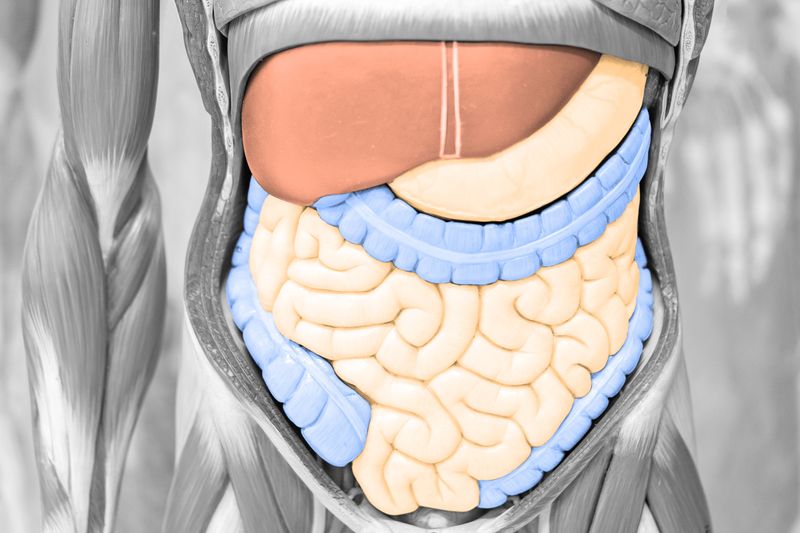
The digestive system is more than a collection of organs that turn food into fuel: It’s an elaborate, highly coordinated process that starts the moment you chew something and doesn’t finish until nutrients are absorbed and waste is cleared. 

From a rumbling stomach to the trillions of microbes living in your intestines, digestion affects everything from your mood to your concentration and overall health. Most of us likely only notice it when we’re hungry (or overstuffed), but there’s a lot going on under the surface. Here are seven surprising facts about the digestive system.
Credit: TopMicrobialStock/ iStock

The Brain and Belly Are in Constant Conversation

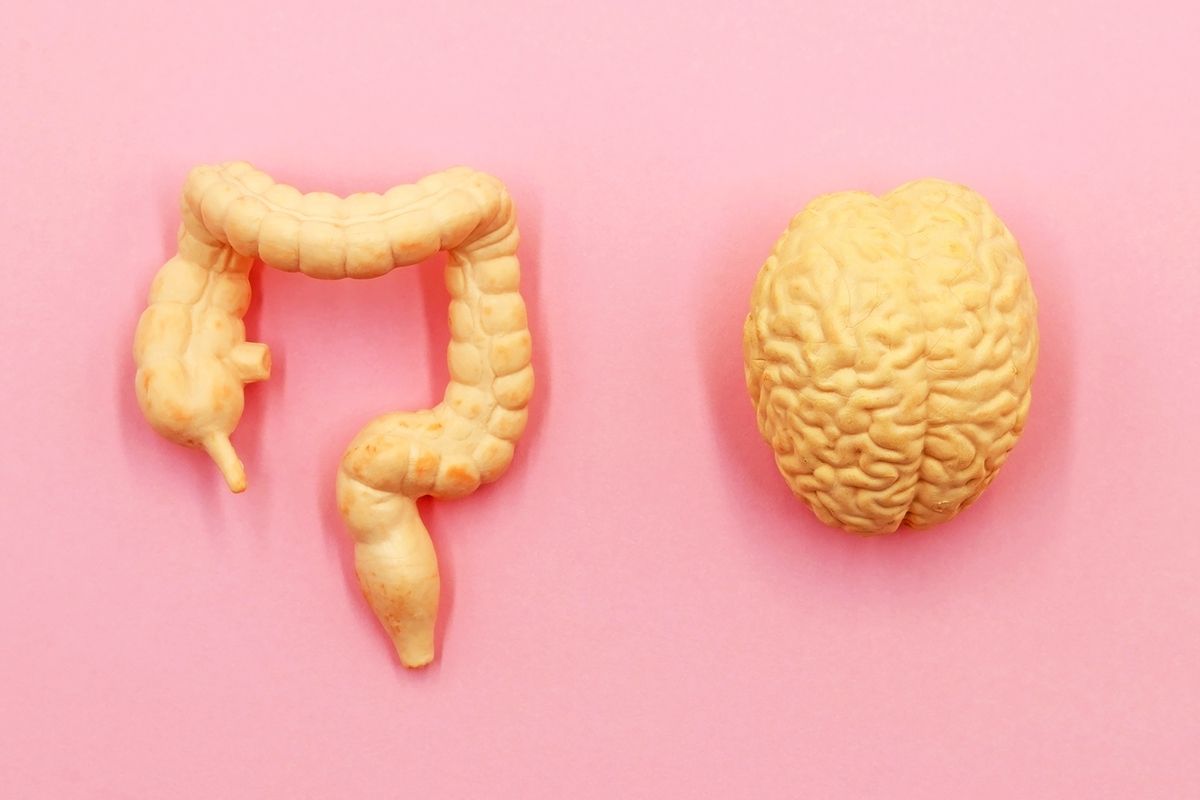
The gut isn’t called the “second brain” for nothing. Trillions of microbes live in the digestive tract, breaking down food, producing vitamins K and B, and supporting nutrient absorption. They communicate with the brain through the gut-brain axis, a network of nerves (such as the vagus nerve) and chemical messengers, including serotonin and its receptors in the gut. 

This bidirectional communication helps coordinate digestive activity, appetite, and even certain aspects of mood and behavior, which explains why your stomach may “flutter” when you’re nervous or why certain foods can affect how you feel. While the brain doesn’t control every gut movement, this system helps the digestive tract respond dynamically to both internal and external cues.

Credit: PeopleImages/ iStock

Stomachs Don’t Just Growl When You’re Hungry

Everyone has occasional hunger pangs, but to actually hear and feel your stomach growl is a whole other sensation. The same muscle contractions that move food through your gut while you’re digesting are also what cause that gurgling sound and feeling.

When your stomach is empty, your brain releases the appetite-stimulating hormone ghrelin. This tells the digestive muscles in the stomach and intestines to contract in waves, a process called peristalsis. Those contractions create the vibrations and rumblings you hear, made louder by the fact that the empty stomach means there’s nothing to muffle the sounds.

Contrary to popular belief, the noise doesn’t always signal feeding time; even a full stomach can growl as it churns and clears leftovers for the next meal. The rumbling sound — technically called borborygmi — comes from the Greek “borboryzein,” meaning “to rumble.” Unless it’s accompanied by unusual pain or bloating, borborygmi is a normal, healthy sign your digestion is working as it should.

Credit: seb_ra/ iStock

Stomachs Can Hold as Much as a 2-Liter Soda Bottle

This probably won’t come as a surprise if you’ve ever felt your pants get a bit more snug after a big meal, but the stomach is remarkably elastic and can expand to hold a lot of food. This is because its inner surface, the mucosa, is lined with folds called rugae that unfold and stretch out to accommodate food as it arrives. 

Adult stomachs start out folded up and roughly the size of a 16-ounce soda can. From there, the stomach can comfortably enlarge to hold about 1 to 2 liters of food and drink. If you picture that amount of sustenance as a 2-liter soda bottle, it sure doesn’t sound comfortable, but thankfully the stomach is able to slowly retract after digestion.

Credit: pocketlight/ iStock

We Swallow a Lot of Air 

There isn’t much you can do to avoid swallowing air — every bite or sip brings tiny pockets of it into your digestive system as you eat. Overall, the average person swallows up to 2 quarts of air every day. Some small amounts can actually aid digestion, but habits such as eating quickly, chewing gum, or drinking carbonated beverages make for a greater volume of swallowed air. So where does it all go? 

Most of the air makes its way to your stomach and leaves the body naturally through burping or flatulence. While most rumbles and bubbles are proof your gut’s digestive train is on track, too much air in the digestive system — called aerophagia — can cause bloating, discomfort, and excess gas. 
Credit: SewcreamStudio/ Adobe Stock

Intestines Are Impressively Long

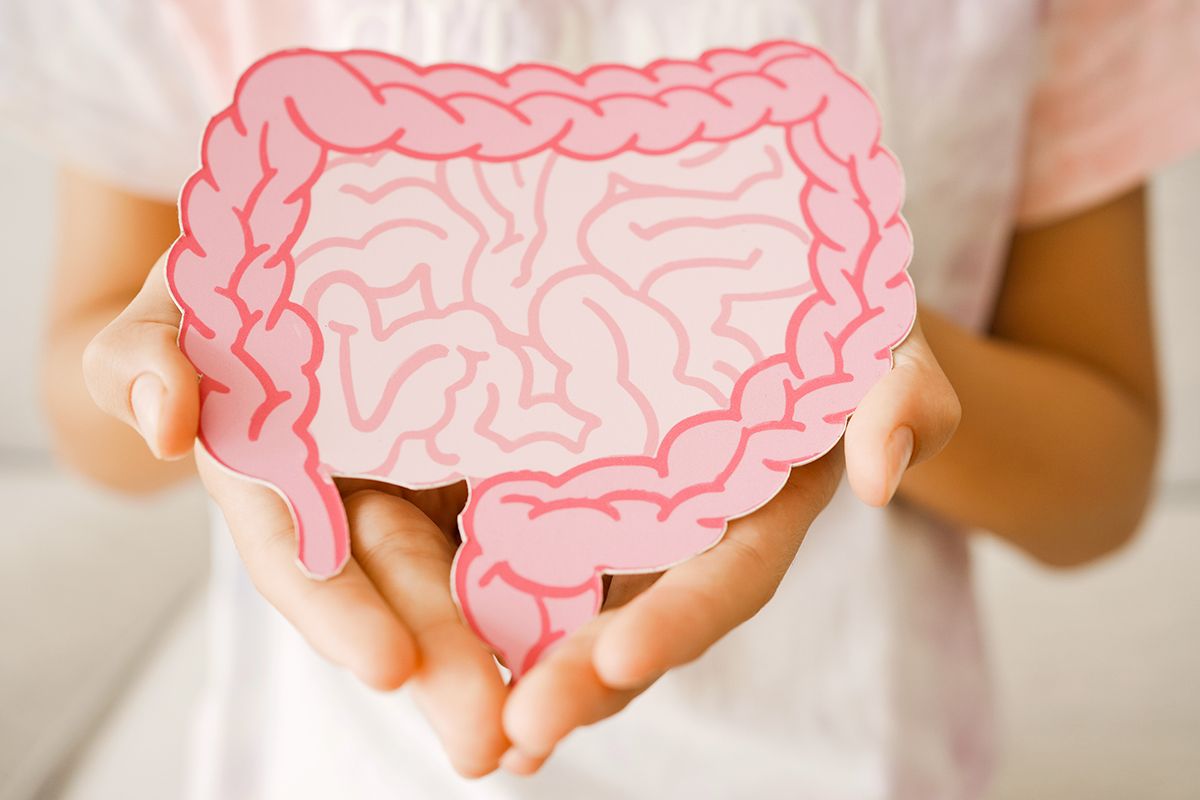
The digestive system starts at the mouth and ends where waste exits the body, but the vast majority of it is made up of the intestines. The small intestine alone can be as long as 25 feet, and the large intestine adds approximately another 5 feet. Stretched out straight, that’s around the same length as an average school bus — just all coiled up and tucked out of sight inside your abdomen. 

The small intestine does most of the work when it comes to breaking down food and absorbing nutrients, using its folds and tiny finger-like projections, called villi, to capture as much fuel for your body as possible.The large intestine then absorbs water and minerals while converting what’s left into solid waste. The intestines, particularly the small one, are workhorses, constantly moving food along, mixing it with digestive juices, and making sure your body gets everything it needs from what you’ve consumed.

Credit: Science Photo Library/ iStock

The Stomach Lining Is Always Renewing Itself

Digestive acids are powerful — so powerful that if your stomach didn’t protect itself, it could start dissolving its own tissue. To prevent this, the stomach lining, called the epithelium, is in a continuous state of renewal. And the turnover is pretty rapid: Cells regenerate every three to four days, ensuring the stomach can withstand the corrosive effects of the 3 to 4 liters of hydrochloric acid and digestive enzymes it produces every day. 

Even with the constant regeneration, the acids that break down proteins and aid nutrient absorption can be strong enough to start eroding the stomach tissue. Some factors can exacerbate this, such as excessive alcohol or pain reliever use, certain bacterial infections, and chronic stress.

Credit: Ratchat/ iStock

We’re Not Born With the Healthy Bacteria Needed for Digestion

Babies enter the world free of worry and responsibility — and also free of a fully formed digestive system. Newborns are largely devoid of bacteria and other microbes essential for digestion and health. Their gut microbiomes first begin forming as they pick up bacteria in the birth canal, then continue to grow and diversify through exposure to breast milk, formula, and their environment. (Babies born by caesarean section get their first dose of bacteria in other ways, primarily from skin-to-skin contact and feeding.)

By the time a child is about 3 years old, the microbiome has become more diverse and stable, playing a key role in lifelong digestive health. This process highlights just how dependent humans are on our microbial communities: Digestion isn’t purely mechanical, but rather a cooperative effort between your body and the trillions of tiny organisms that call your gut home.

Nicole Villeneuve
Writer

Nicole is a writer, thrift store lover, and group-chat meme spammer based in Ontario, Canada.

Original photo by vgabusi/ iStock

Most of us grow up knowing the basics of our genealogy: our parents, grandparents, and siblings, plus aunts, uncles, and cousins. But once the conversation turns to “second cousins” or “first cousins once removed,” it’s easy to get lost.

Despite how confusing it may sound, cousin designations follow a logical pattern. Each label, whether it’s first cousin or third cousin twice removed, marks your place on a family tree and shows how you and another person can trace your lineage back to a shared ancestor. Let’s break it down.

Credit: RossHelen/ iStock

Second Cousins

Many of us have one or more first cousins, though you may rarely use the term “first” when referring to them. These are the children of your parents’ siblings, aka your aunts and uncles. You share a set of grandparents with these cousins, and because you’re generally in the same generation, they’re usually also the cousins you know best. First cousins often grow up alongside us, close in age and in experience, and can even sometimes feel almost like brothers and sisters.

Second cousins can also be in the same generation as first cousins, but they’re separated by one step. Rather than being the children of your parents’ siblings, they’re the children of your parents’ first cousins. So you and your second cousins share the same great-grandparents, but not the same grandparents. For example, if your grandmother’s sister has grandchildren, those grandchildren are your second cousins.

A handy way to keep this straight is to think of the number preceding “cousin” as pointing to the generation of grandparents the cousins share. First cousins connect at grandparents and second cousins connect at great-grandparents. From there, the pattern continues upward.

Credit: B-C-Designs/ iStock

Third, Fourth, and Fifth Cousins

Once you understand second cousins, the rest is relatively easy to follow. Third cousins share great-great-grandparents and are the great-grandchildren of siblings. Fourth cousins share great-great-great-grandparents, and fifth cousins share great-great-great-great-grandparents. With each generation back, you add one more “great” to the ancestor you share.

As the generations multiply, the number of possible cousins expands dramatically. By the time you reach fourth and fifth cousins, you may have hundreds — even thousands — spread across regions or countries. That’s because your family tree grows exponentially: Each generation back doubles your number of ancestors, so you have 16 great-great-grandparents, 32 great-great-great-grandparents and 64 great-great-great-great grandparents, each potentially linking you to many different family branches. 

Credit: monkeybusinessimages/ iStock

What “Once Removed” Means

The other piece of cousin terminology that causes confusion is the word “removed,” a term that signifies the number of generations that separate cousins. If someone is your cousin “once removed,” that means they’re one generation above or below you. 

For example, your mother’s cousin is your first cousin once removed, but your cousin’s child is also your first cousin once removed. In one case the person is a generation older, in the other a generation younger, but in both cases “removed” marks that generational gap.

If the gap in question spans two generations, that cousin is “twice removed.” For example, your grandmother’s cousin is your cousin twice removed. In theory, the “removed” label can continue indefinitely — three times removed, four times removed, and so on.

Credit: mihailomilovanovic/ iStock

Cousins Can Have Very Little Shared DNA

There’s no limit to how distantly related two people can be and still count as cousins. As long as they both share a common ancestor, however far back, they’re cousins to some degree. Genealogists and ancestry software can identify cousin relationships into the teens — so you may be able to trace links to 10th cousins, 12th cousins, and even 19th cousins.

What changes when we get higher up into our family trees is the closeness of the genetic connection. While full siblings share 50% of their DNA, first cousins share only about 14.4%, second cousins share just 3.4%, and third cousins share less than 1%. By the time you reach fifth cousins, the overlap is tiny and may not even appear in a DNA test, making genealogical records important for tracing connections.

Credit: Alexey Avdeev/ iStock

Cousin terminology can seem complicated — especially as these relationships become increasingly separated from us by numerous sets of grandparents and multiple generations. But these distinctions have long clarified inheritance and marriage rules, and today they help genealogists trace family networks across large swaths of history.

For most of us, though, it’s about connection: Second cousins and first cousins once removed can still be close enough to share family stories and give us insight into relatives we may have never met. And even those distant cousins, the ones we only know by the names inked in family records or online genealogy resources, are reminders of how families endure and how, in many ways, we are all connected.

Kristina Wright
Writer

Kristina is a coffee-fueled writer living happily ever after with her family in the suburbs of Richmond, Virginia.

Original photo by Emre Akkoyun/ Adobe Stock

When it comes to superstitions, few things are more potent than numerology. Numbers possess extraordinary power across human cultures, going beyond their mathematical functions to become symbols of fortune, misfortune, and divine meaning. These beliefs may have no basis in science or even logic, but they nonetheless shape daily decisions around the world, whether it’s selecting wedding dates, pricing products, choosing lottery numbers, or skipping entire floors when constructing a building.

Here are some lucky and unlucky numbers from cultures across the globe, along with the reasons behind their supposed numerical powers. 

Credit: eugen/ Adobe Stock

The Number 3

The number three holds special significance across many cultures around the world, typically representing positive outcomes such as luck, balance, or divine perfection. But why three? There are several different explanations, from the ancient belief in the geometrical balance of triangles to the religious concept of the Holy Trinity. 

In Christian doctrine, the trinity is the unity of Father, Son, and Holy Spirit as three divine persons. The number is also found in other world religions. In Hinduism, for example, the Trimurti refers to the triad of deities Brahma, Vishnu, and Shiva. In Kabbalah, the Supernal Triad refers to the top three sefirot, or spheres of emanation, on the Tree of Life. 

Apart from geometry and religion, it seems humans have a psychological affinity for the number three — possibly because it’s the smallest number required to create a pattern. For all these reasons, things often seem to come in trios in popular culture: three wishes, three little pigs, three bears, and “third time’s a charm.” 

Credit: Savvapanf Photo/ Adobe Stock

The Number 4

In Western cultures, the number four has a reputation for practicality and order. There are the four elements (earth, air, fire, and water), four seasons, four points of the compass, and four phases of the moon. It’s a solid number but not generally considered either lucky or unlucky. 

In parts of Asia, however, the story is very different. Tetraphobia — the fear or avoidance of the number four — is a superstition prevalent in East Asian countries including China, Vietnam, Japan, Korea, and Taiwan. In those countries, the number four has a phonetic similarity — and is sometimes identical to — the word for “death.” 

That linguistic coincidence has created such strong superstitions that many East Asian buildings omit fourth floors, hospitals avoid rooms numbered four, and gift-giving involving four items is considered inappropriate. The fear of four is taken even more seriously than the unlucky number 13 in Western cultures; for anyone doing business in Asia, tetraphobia is a genuine concern that needs to be considered and respected. 

Credit: KanawatTH/ iStock

The Number 8

In China, the antidote to the noxious number four is the lucky number eight. In Mandarin Chinese, the pronunciation of number eight () sounds very similar to a word meaning “wealth” or “prosperity” (). 

That phonetic connection has made eight the luckiest and most coveted number in Chinese society, influencing everything from business decisions to architecture and major life events. It’s no coincidence that the opening ceremony for the 2008 Beijing Olympics began at precisely 8:08:08 p.m. on 8/8/08. 

Credit: baona/ iStock

The Number 13

You’re probably aware that 13 is the most famous unlucky number in Western culture. Fear of the number — known as triskaidekaphobia — is commonplace across Europe and the Americas, where some office buildings skip the 13th floor, airlines often omit row 13, and some people even avoid scheduling activities on the 13th day of the month (particularly Friday the 13th). 

The origin of 13’s unlucky reputation is still debated, but two theories tend to prevail. Christian tradition points to the Last Supper, where 13 people were present before Jesus’ crucifixion — with the traitorous Judas Iscariot the 13th to be seated. Norse mythology, meanwhile, tells of a dinner party of 12 gods disrupted by the trickster Loki —the 13th guest — leading to the death of Balder, the god of light, beauty, and goodness. 

Interestingly, 13 is sometimes considered lucky in Italy, contrary to most Western cultures. This is due to the number’s association with the once-popular Italian soccer betting game, Totocalcio, in which players tried to predict the outcomes of 13 soccer matches to win big prizes. 

From this game came the Italian phrase fare tredici, meaning “to make thirteen,” the equivalent of the English phrase “hitting the jackpot.” Because of this, some Italians, especially older generations, still consider 13 a lucky number. The number 13 also has a positive connotation in Italian Catholic tradition due to its association with the Virgin Mary, who’s sometimes referred to as Maria tredicenne, or “Mary the 13-year-old.”

Credit: oyaboya/ iStock

The Number 17

For Italians, the big number to avoid is 17. This superstition likely dates back to ancient Rome and, more specifically, Roman numerals. The Roman numeral XVII can be rearranged to spell “VIXI,” which is Latin for “I have lived.” The phrase implies that one is now dead, hence the connotation with bad luck and the fear of the number 17, known as heptadecaphobia

As with the number 13 in other countries, some Italian buildings skip the 17th floor, while superstitious Italians avoid making important plans on the 17th day of the month. And Friday the 17th holds the same dread in Italy that Friday the 13th holds elsewhere in the Western world.

Credit: Yehoshua Halevi/ iStock

The Number 18

In Jewish tradition, 18 represents chai, the Hebrew word for “life,” making it one of the most auspicious numbers in Jewish culture. This significance comes from Hebrew gematria, in which letters have numerical values assigned to them, and the letters forming chaichet (8) and yud (10) — total 18. Because of its status as a lucky number, amounts in multiples of 18 are often given as charitable donations and as gifts at weddings and bar mitzvahs. 

Tony Dunnell
Writer

Tony is an English writer of nonfiction and fiction living on the edge of the Amazon jungle.

Original photo by Sipa USA/ Alamy Stock Photo

No matter how old you are, it’s never too late to make it big. While success and fame are commonly associated with youth, some people are proof you should never be discouraged from following your dreams — at any age. Making bold choices and taking on new adventures later in life can pay off in a major way, as these success stories show us.

Plenty of actors, artists, authors, and other celebrities spent decades trying to break through before finally earning a spot in the limelight, while others achieved fame by taking a leap of faith and making career or lifestyle changes later in life. Here are eight such inspiring stories.

Credit: Bonnie Schiffman Photography/ Archive Photos via Getty Images

Julia Child

When you think of celebrity chefs, Julia Child is likely at the top of the list. Yet her path to culinary stardom wasn’t always obvious. She was born Julia McWilliams in 1912 and worked in advertising and journalism earlier in her career; she even worked as an intelligence officer in World War II. 

After the war, she married diplomat Paul Cushing Child, whose work took the couple to France in 1948. Not much of a cook when she arrived, Child was enamored by the art of French cuisine and began to cook more frequently. She opened a cooking school in 1951 and published her seminal cookbook Mastering the Art of French Cooking in 1961 — the year she turned 49 years old.

While this cookbook definitely grabbed the attention of the public, it was Child’s TV show that propelled her to true fame. The Childs returned to the U.S. in the early 1960s, and a pilot of a program called The French Chef aired on July 26, 1962. The TV series became a regular program on February 11, 1963, with a 50-year-old Julia Child as the full-time host. 

The French Chef was broadcast into U.S. living rooms from 1963 to 1973, earning a 1965 Peabody Award and a 1966 Primetime Emmy. Child continued to have an indelible impact on the American culinary scene throughout her 60s, 70s, and 80s before passing away in 2004 at the age of 91.

Credit: Jeff Kravitz/ FilmMagic via Getty Images

Christoph Waltz

With multiple Oscars, Golden Globes, and BAFTAs to his name, Christoph Waltz has become one of the most accomplished actors of the 21st century. But Waltz’s fame wasn’t always a sure thing. His first screen acting credit was the 1976 German TV movie Der Vetter im 7. Bezirk, and he spent decades as a little-known actor in Germany before his big break. 

Then in 2009, a 52-year-old Waltz appeared as Colonel Hans Landa in the Quentin Tarantino film Inglourious Basterds. His happenstance audition arguably saved the production, as Tarantino had been ready to table the film if he didn’t find someone suitable to play this pivotal character. 

The role changed the trajectory of Waltz’s career. His sadistic performance garnered international acclaim, earned him his first Academy Award, and transformed him into one of Hollywood’s most desirable talents. He has since starred in several major blockbusters, including 2012’s Django Unchained as well as two movies in the James Bond franchise — 2015’s Spectre and 2021’s No Time To Die.

Credit: PhotoQuest/ Archive Photos via Getty Images

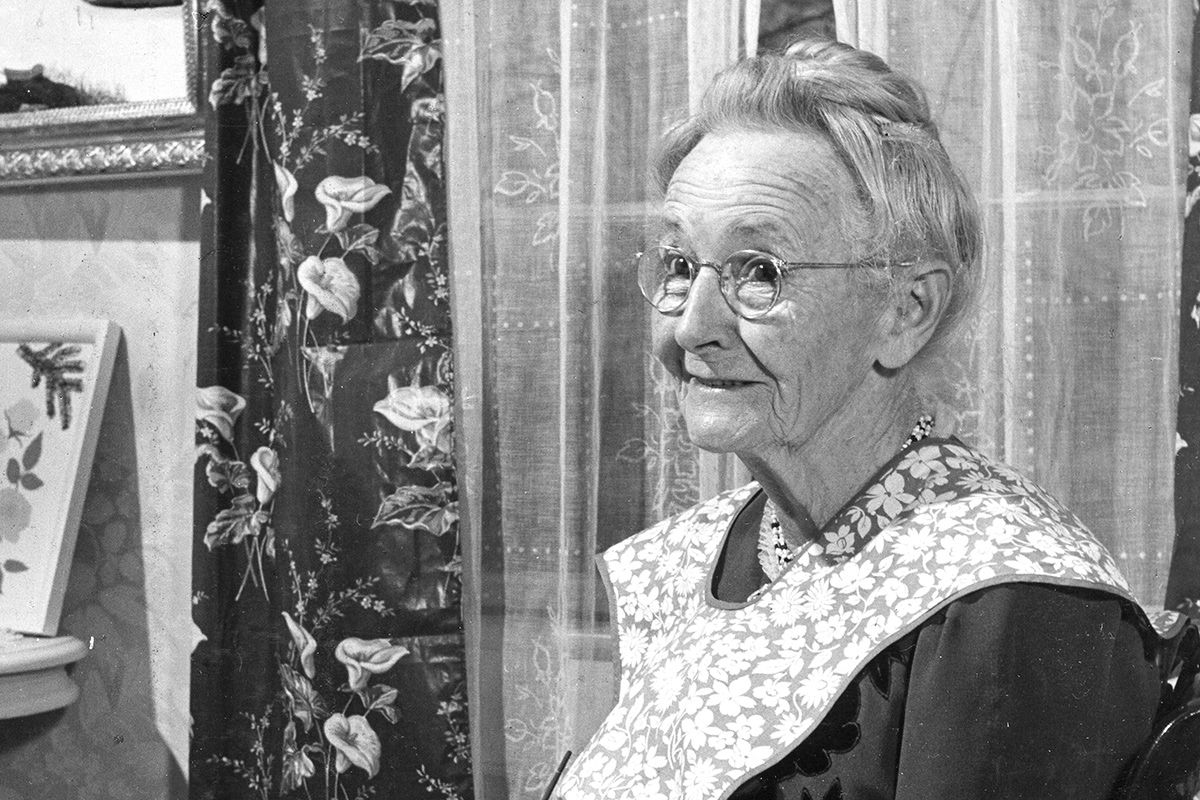
Grandma Moses

Born Anna Mary Robertson in 1860, the artist later known as Grandma Moses spent much of her life as an undiscovered talent. Robertson always had a penchant for art, though her only drawing supplies as a young child were objects such as twigs and grass. At the age of 12, she left home to work for a wealthy family, who provided her with wax crayons and chalk to draw. 

In her 20s, she married Thomas Salmon Moses, and the couple eventually moved to New York where they purchased a farm of their own. In her downtime, she kept herself entertained by making needlework pictures and quilts. But in her 70s, a painful bout of arthritis left her unable to embroider.

At the suggestion of some friends, Moses pivoted to painting, which she could still do with arthritic hands. The septuagenarian began painting colorful depictions of rural farm life that caught the eye of New York-based art collector Louis J. Caldor, who helped her showcase her works in a 1939 exhibition at the Museum of Modern Art titled “Contemporary Unknown American Painters.” 

Before long, Moses found herself at the top of the contemporary American art scene, and the press helped popularize the nickname “Grandma Moses,” based on a sobriquet she went by among friends. Moses exhibited her paintings into her 90s and painted into her 100s before passing away at the age of 101.

Credit: Bettmann via Getty Images

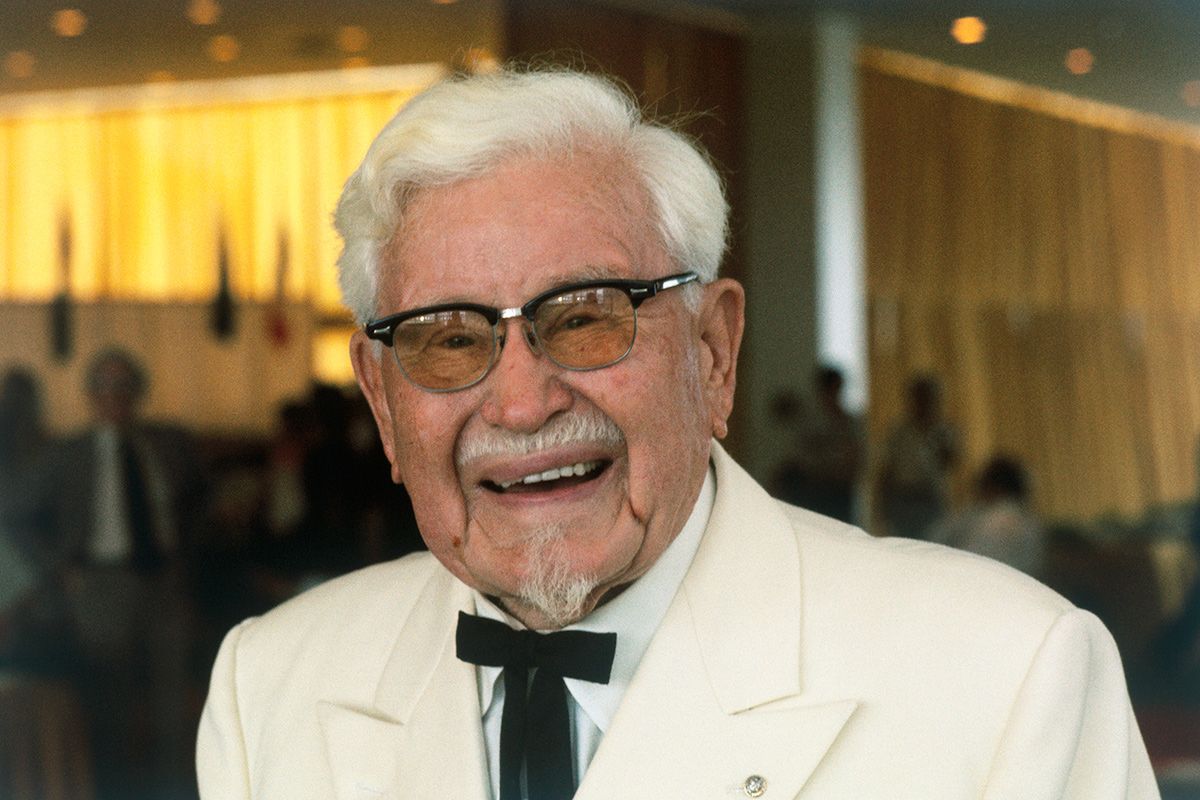
Colonel Harland Sanders

Few people in the fast-food world are more recognizable than Colonel Sanders — the face of Kentucky Fried Chicken clad in an all-white suit and a white goatee to boot. But before KFC’s success, “the Colonel” was merely Harland Sanders: a struggling yet determined businessman looking to make a living. 

Born in 1890, Sanders left home at age 13 to paint horse carriages and later worked as a train conductor, practiced law, sold life insurance, ran a ferryboat company, and manufactured lamps — none of which panned out in the long run. Then in 1930, at age 40, Sanders took over a service station in Corbin, Kentucky. He renamed it “Sanders’ Servistation and Cafe” and began selling the type of fried chicken he’d grown up eating. 

Travelers loved this, and Sanders realized fried chicken may be his ticket to success. He perfected his recipe in 1939, though as the story goes, he was rejected by 1,009 restaurants while trying to sell that recipe door-to-door. 

But in 1952, a man named Pete Harman opened the very first KFC franchise in South Salt Lake, Utah, after agreeing to buy the secret recipe. Sanders was 62 years old — and the Kentucky Fried Chicken brand only grew from there. 

In 1974, Sanders sold KFC to a management company, though he remained the public-facing spokesperson until his death in 1980. His name and visage, which still appears on the restaurant’s branding, soon became known in households across the country.

Credit: Stephane Cardinale/ Corbis Entertainment via Getty Images

June Squibb

Though she’s now considered a leading lady in Hollywood, June Squibb wasn’t a household name until her 80s — roughly six decades into her career as a performer. Squibb moved to Cleveland in her early 20s to pursue a career in theater, and decades later, in her 60s, she broke into screen acting with her first movie credit in the 1990 comedy Alice. In one of her most notable roles, she appeared as Jack Nicholson’s wife in 2002’s About Schmidt

But Squibb’s big break didn’t come until 23 years after her film acting career began. At age 84, she played the role of Kate Grant in Nebraska, which earned her an Oscar nomination for Best Supporting Actress — and put her on the radar of casting agents across Hollywood.

Squibb has since appeared in several major TV series such as The Big Bang Theory and Grey’s Anatomy, and she lent her voice to characters in Toy Story 4, Soul, and Inside Out 2. In 2024, at the age of 94, she received her first-ever cinematic top billing as star of the action comedy Thelma.

Credit: Walter McBride/ WireImage via Getty Images

Joy Behar

Joy Behar is a comedian and actress best known for her role as a co-host of The View. But despite entering into comedy in her late 30s, it wasn’t until her mid-50s that Behar became a household name. 

In a 2010 interview with Parade, Behar explained that she decided to start a stand-up comedy career at age 39, saying, “I was broke after my divorce, and … I got fired from my day job.” She also spent the 1980s working as a receptionist and later a producer on Good Morning America.

Behar pivoted into screen acting in the late ’80s, appearing in the short-lived sitcom Baby Boom and the 1993 comedy Manhattan Murder Mystery. She also began taking on sporadic hosting gigs, which earned her a spot on The View during its debut season in 1997, when she was 54. 

At first she was hired as a fill-in for Barbara Walters, but she soon became a permanent panelist and fan favorite. Today, Behar is the only original panel member still on The View, which has earned 31 Emmys during that time, including the 2003 Emmy for Outstanding Talk Show.

Credit: Bettmann via Getty Images

Ray Kroc

Colonel Harland Sanders isn’t the only late bloomer in the fast-food industry — there’s also Ray Kroc, the man behind the success of McDonald’s. Kroc was born in 1902 and explored several potential careers in early adulthood, none of which stuck. He worked as a pianist, musical director, and real estate salesman before going into business with a man named Earl Prince in 1939. Prince had invented a machine he called a “Multimixer” to speed up milkshake production by making five of the frozen dairy desserts at once, and Kroc became his exclusive distributor.

In 1954, at the age of 52, Kroc visited a restaurant in San Bernardino, California, in the hopes of selling a few Multimixers. The restaurant was run by brothers Richard and Maurice McDonald. Impressed by the eatery’s efficiency, Kroc worked out a deal to become the business’ franchising agent. In April 1955,  Kroc opened the very first McDonald’s restaurant east of the Mississippi River in Des Plaines, Illinois. He was 52 years old.

In 1961, at the tail end of his 50s, Kroc became sole owner of McDonald’s. The business mogul then quickly expanded the brand across the country, and both McDonald’s and Kroc himself became household names. Kroc served as McDonald’s CEO from his mid 60s until age 70, before retiring and purchasing baseball’s San Diego Padres. He spent his 70s serving as their owner until his death in 1984 at the age of 81.

Credit: Bettmann via Getty Images

Laura Ingalls Wilder

Today, Laura Ingalls Wilder is celebrated for her Little House on the Prairie series — a classic work of children’s fiction. However, those books weren’t published until late in the author’s life. 

Wilder was born in 1867 and spent her childhood years moving about the American frontier, living in areas such as Iowa, Kansas, Minnesota, Missouri, the Dakota Territory, and the Indian Territory located in modern Oklahoma. After working as a teacher starting in 1882, she pivoted to writing around the age of 44, penning several agricultural articles for the Missouri Ruralist, McCall’s Magazine, and The Country Gentleman — though none thrust her into the national limelight.

In 1931, Wilder completed a draft of a memoir about her early childhood experiences titled Pioneer Girl. While it wasn’t published until 2014, publishers at the time advised Wilder to adapt the story into a work of fiction — thus the Little House series was born. 

The first book, 1932’s Little House in the Big Woods, came out the same year Wilder turned 65. In total, eight novels in the series were published throughout Wilder’s late 60s and early 70s.

Bennett Kleinman
Staff Writer

Bennett Kleinman is a New York City-based staff writer for Inbox Studio, and previously contributed to television programs such as "Late Show With David Letterman" and "Impractical Jokers." Bennett is also a devoted New York Yankees and New Jersey Devils fan, and thinks plain seltzer is the best drink ever invented.

Original photo by: Artem Ermilov/ iStock

Perfect pitch (or absolute pitch, as it’s formally known) is the rare ability to identify or reproduce a musical note without any external reference. Imagine hearing a single note on a piano and instantly knowing it’s a C-sharp, or whistling “Happy Birthday” in the exact intended key without a musical instrument or pitch pipe nearby. It’s a skill that fascinates musicians and nonmusicians alike, partly because it seems almost magical, and partly because fewer than one in 10,000 people possess this rare gift. 

For centuries, musicians and theorists have debated whether perfect pitch is a natural gift, a learned skill, or a mix of both. Historical accounts, including letters from classical composers, suggest some musicians were identified as child prodigies precisely because of their uncanny ability to instantly recognize notes. 

Mozart, Beethoven, Chopin, and Bach are often cited as having had perfect pitch, although documentation about their pitch abilities is mostly anecdotal. And perfect pitch does appear to have a genetic component: Studies show identical twins are more likely to share absolute pitch abilities than fraternal twins.

So what exactly causes perfect pitch? And just how prevalent is it? Let’s take a closer look at this unusual and fascinating ability. 

Credit: AnnaStills/ iStock

It’s a Combination of Nature and Nurture

Despite the genetic link, perfect pitch isn’t just a naturally inherited trait. Early musical training plays an important role in honing the skill, especially for children exposed to musical instruction before age 6. Research suggests the brain is particularly receptive to auditory patterns during this period, allowing young learners to encode pitch information in a way that sticks for life. 

Children who start music lessons after 6 rarely develop perfect pitch, even if they’re highly talented. This is one reason why perfect pitch is so uncommon — most people don’t receive the necessary musical training at such an early age.

Interestingly, perfect pitch is not evenly distributed across cultures or languages. Studies have found higher prevalence in speakers of tonal languages, such as Mandarin or Vietnamese, compared to speakers of nontonal languages such as English. 

In tonal languages, subtle pitch differences can change the meaning of a word, which means the brain may become more attuned to auditory distinctions early in life. This suggests perfect pitch may not be entirely about music — it may also reflect a heightened sensitivity to sound that’s supported by both language and environment.

Credit: eli_asenova/ iStock

It Starts in the Brain

Neurologically, perfect pitch is associated with distinct brain structures. Imaging studies have found differences in the auditory cortex of people with absolute pitch, particularly in areas responsible for processing tone and pitch memory. The brains of people with absolute pitch often show stronger connections between the auditory and memory regions, which may help people better retain and recall precise pitch information. 

However, perfect pitch doesn’t necessarily mean better musicianship overall. Many skilled musicians have relative pitch — a similar but more flexible ability to recognize intervals and harmonies — but not absolute pitch. In fact, some experts argue relative pitch is more valuable for composition, improvisation, and ensemble performance because it relies on context rather than memorization of individual notes.

Perfect pitch also has its quirks. Some musicians with absolute pitch report challenges in certain situations, such as transposing music or adapting to instruments tuned differently from the standard pitch. Their brains are so finely attuned to exact frequencies that even minor deviations can throw them off.

Credit: IPGGutenbergUKLtd/ iStock

It Requires the Perfect Combination of Factors

So why do only some people have perfect pitch? Genetics, early musical exposure, language environment, and brain wiring all play roles, but the interaction between those factors is complex. Some researchers believe a person must inherit a predisposition for heightened pitch sensitivity and then receive early, structured musical training to fully develop absolute pitch. Without either component, perfect pitch may never emerge.

Because it’s so rare, people often imagine perfect pitch as a sign of genius that sets certain musicians apart. While it can certainly enhance some aspects of musical performance, it’s not a prerequisite for musical success. In fact, some of the greatest composers in history — including Leonard Bernstein, Tchaikovsky, and Wagner — didn’t have it.

There’s also debate about whether perfect pitch can be learned later in life. Some adult learners claim to have developed absolute pitch through intensive practice or software-based training. 

And while there’s some evidence that adults can improve their pitch identification skills, most studies indicate that accurate, effortless perfect pitch is extremely difficult to acquire after childhood. The brain’s auditory pathways become less malleable over time, meaning later attempts to train the brain through concerted effort rarely reach the level of natural absolute pitch.

So yes, perfect pitch is a rare but very real trait. Beyond the fascination it inspires as a musical curiosity, it offers an intriguing look at the intersection of biology, culture, and human potential, reminding us that the way we hear the world can be as unique as the music we create within it.

Kristina Wright
Writer

Kristina is a coffee-fueled writer living happily ever after with her family in the suburbs of Richmond, Virginia.

Original photo by PeopleImages/ iStock

Certain aspects of aging are inevitable, such as the silvery hairs we sprout and the crinkly lines that appear when we smile. While these surface-level indicators tend to get all the attention, they aren’t nearly as important as how well our minds and bodies function as we grow older. 

From slowing down on your daily walk to forgetting where you left your keys (again), small changes can indicate bigger shifts in your physical or cognitive health. The good news is that there are simple, science-backed tests you can take at home right now to measure several key components of aging: balance, memory, muscle mass, cognitive flexibility, and mental well-being.

Credit: microgen/ iStock

One-Leg Stand for Balance

According to UCLA Health, your balance begins to decrease as early as age 50. For example, one study revealed the average adult in their 30s and 40s could stand on one foot for at least a minute, but by age 50, that time decreased to around 45 seconds. By 70, that dropped to around 28 seconds, and participants age 80 and older held the pose for just 12 seconds. This decrease in balance leads to an increased risk of falls and injuries, which can ultimately result in a decline in independence.

Moreover, in a Mayo Clinic study to determine which physical abilities are most affected by aging, participants underwent a series of tests, including walking, grip strength, knee strength, and balance, the last of which was measured by the one-leg stand. The results indicated the ability to stand on one leg declined most rapidly with age, reinforcing the idea that this test is a valuable indicator of how well a patient is aging physically. 

To perform the test, stand up straight and lift one foot off the floor, then time how long you can hold that pose. (It’s fine to hold onto the leg you aren’t standing on.) Are you under par for your age group, based on the aforementioned numbers? It may be time to start incorporating balance exercises into your daily routine.

Credit: fizkes/ iStock

Recall Test for Short-Term Memory

One common sign of aging is memory decline, which typically begins in your 50s or 60s. Short-term memory tends to deteriorate faster than long-term memory because short-term memory is primarily stored in the hippocampus, a complex region of the brain that’s particularly vulnerable to aging.

As we age, the brain begins to shrink. This process can start as early as our 30s, but it tends to accelerate after age 60. The hippocampus shrinks more than other areas of the brain, putting short-term memories at greater risk. 

Additionally, certain types of long-term memories, such as episodic and declarative memories, are also at risk because they too are stored in the hippocampus. While increasing difficulty with memory is a normal part of aging, you may wonder how well your recall abilities are holding up.

To test your short-term memory, enlist a friend or family member to try this quick exercise recommended by the Institute on Aging. The task is straightforward: Ask someone to say three unrelated words (such as “apple,” “blue,” and “chair”) and then repeat those words back. Then complete a simple task, such as conversing about your weekend plans or drawing a picture of a tree, before reciting the three words again. 

Running into trouble? It may just be a fluke (in which case you should repeat the exercise multiple times to confirm the results), or it could be a cue that your brain needs a little more TLC. Try puzzles, reading, and other mental exercises to stimulate the mind.

Credit: courtneyk/ iStock

Sit-to-Stand Test for Muscle Mass

Muscle mass decreases approximately 3% to 8% per decade after the age of 30, and this rate of decline can become even more dramatic after age 60. This decrease in muscle mass, known as sarcopenia, results in a loss of strength and function as well as an increased incidence of falls and injuries, all of which are significant factors in the aging process. 

While slowing down physically is a natural part of growing older, you may wonder how your rate of muscle mass loss compares to the average. Fortunately, there are ways to test yourself at home.

The sit-to-stand test is a reliable physical test used to assess endurance, lower body strength, and mobility. The test takes various forms, but one of the simplest at-home versions is the five-time sit-to-stand test, which is commonly used to test for sarcopenia. 

To perform the test, sit in a chair with your arms crossed over your chest and start a timer, then stand up and sit back down, stopping the timer when you’ve completed five up-and-down cycles. The recommended “cut-off” time is between 10 and 11 seconds. If it takes you longer than 11 seconds to complete five cycles, it’s a good indication to start working on your lower body strength and building muscle.

Credit: DMP/ iStock

Dual-Task Exercises for Cognitive Flexibility

Dual-task exercises assess both your physical and cognitive abilities through short, two-in-one tests. Doing cognitive tests while performing physical exercises measures something called cognitive flexibility, aka your ability to adapt and switch between different mental tasks or sets of information in response to changing environments —an ability that naturally decreases during the aging process.

While researchers have come up with plenty of intricate methods to test your cognitive flexibility, there are easier ways to test yourself with at-home dual-task exercises. One of the simplest tests is to walk while performing a brain exercise, such as solving mathematical equations, counting backward from 100, or repeating word sequences. Compare your completion speed of these brain exercises to your speed while you’re sitting or standing still. If you’re significantly slower during the dual-task exercise, it’s time to start working out your brain.

Credit: O2O Creative/ iStock

Social Circle Check-In for Loneliness

The data is in: Loneliness can make you age faster. Scientific research supports the notion that loneliness (and poor mental health in general) can be just as detrimental to your physical health as some diseases or illnesses. As Mayo Clinic cardiologist Amir Lerman explained to AARP, “The focus tends to be on lowering cholesterol, managing blood pressure, and other healthy habits. But socializing? Sometimes we ignore this part.” 

Negative health impacts of loneliness include a higher risk of developing dementia, depression, and heart disease. Moreover, a study by the Mayo Clinic found that individuals who were less likely to participate in social activities such as clubs, services, and get-togethers were more likely to have a “biological age” (the age determined by the functional state of your body) older than their actual chronological age.

The harsh reality is many adults are unaware of their own loneliness, and some have a tendency to isolate themselves as they get older. To determine your level of social connection, try completing the UCLA Loneliness Scale survey. This brief, 20-question assessment was developed by psychologist Daniel Russell to measure how frequently a person feels disconnected from others. 

The test uses a four-point rating system; the higher the score, the greater the participant’s feeling of loneliness. The results of this survey may highlight your need to engage in new social activities or reengage with those you may have had fall by the wayside. Not only will you make new friends or reconnect with loved ones, but according to science, you can also slow down the aging process.

Rachel Gresh
Writer

Rachel is a writer and period drama devotee who's probably hanging out at a local coffee shop somewhere in Washington, D.C.

Original photo by juan mendez/ Pexels

Few places on Earth inspire wonder quite like a Disney theme park. With imagination, innovation, and a touch of pixie dust, Disney creates an immersive experience where the magic feels real. It’s no surprise these parks rank among the most popular worldwide; in fact, Orlando’s Magic Kingdom holds the Guinness World Record for the most visited theme park.

Of course, bringing this enchantment to life requires a massive workforce. Magic Kingdom alone employs 77,000 people, making it the largest single-site employer in the United States. At the heart of this whimsy are Disney’s “Imagineers,” the creative minds who come up with everything from carefully crafted architectural illusions to innovative scent technology.

So, what really happens behind the scenes at the “Happiest Place on Earth?” Let’s pull back the curtain to uncover the clever tricks that have kept the illusion alive for generations of guests.

Credit: Joe Raedle/ Getty Images News via Getty Images

“Go Away Green” and Other Unassuming Colors

More than 30,000 unique paint colors are splashed across Disney parks, covering everything from buildings and walkways to shops and attractions. The most notable of these hues are also the most inconspicuous: “Go Away Green,” a range of shades specifically designed to be ignored.

Longtime Disney employee John Hench created the color as part of a catalog later called the “Hench Color System.” When Disney Imagineers want guests to overlook unsightly but necessary features such as electrical boxes or storage sheds, they typically use Hench’s “Go Away Green” because it blends in seamlessly with the parks’ lush landscapes. There are other unobtrusive color options as well, such as “Go Away Blue,” which is intended to blend in with the sky.

Conversely, some colors are intended to stand out. In Epcot, for example, the pavement is painted a particular shade of pink to complement the color of the surrounding landscaping. This strategy is based on simple color theory and makes the greenery appear more vibrant because red and green are opposite each other on the color wheel.

Credit: Gary Hershorn/ Corbis News via Getty Images

“Smellitizer” Machines

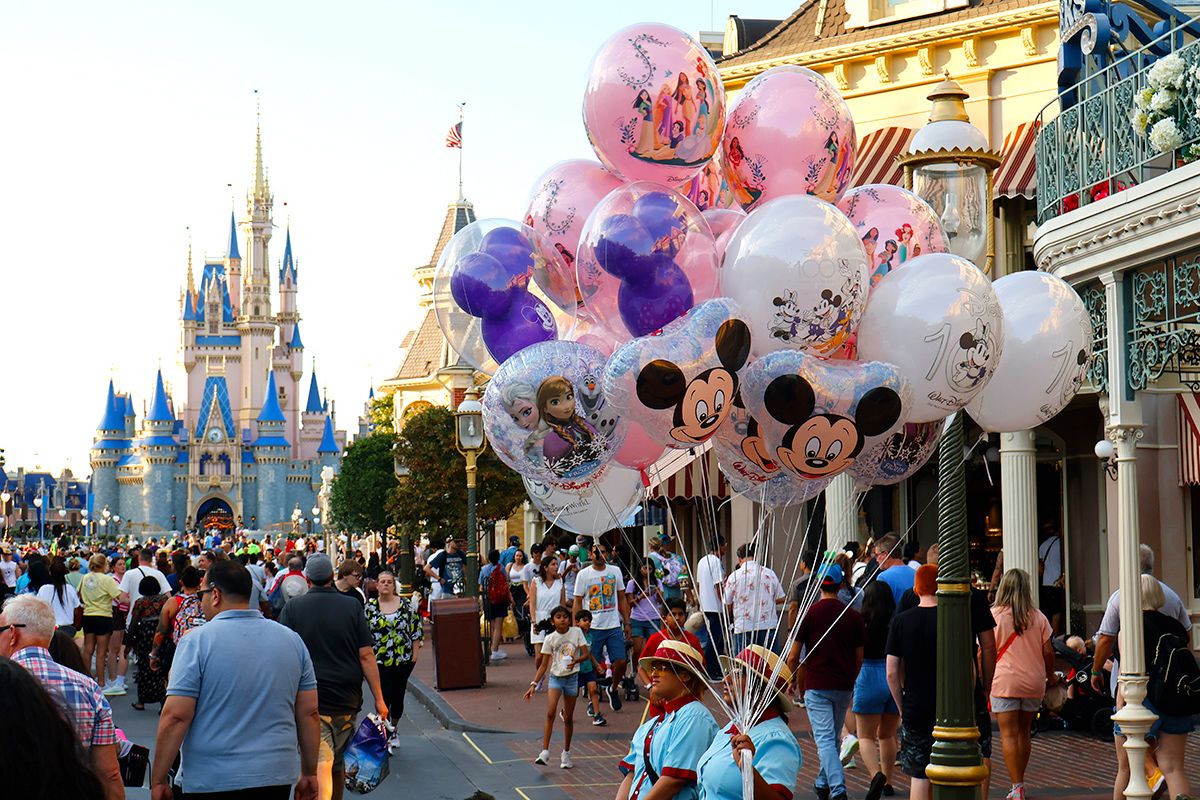
Disney parks offer a full sensory experience for guests, including carefully crafted scents. This is why the delightful aromas of candy and popcorn that waft down the sidewalks of Magic Kingdom’s Mainstreet, U.S.A are no coincidence. Those are achieved using scent machines called “Smellitizers” that release fragrances throughout the parks.

Jody Jean Dreyer, the former head of synergy and special projects at Disney, emphasized in an interview with Fast Company that Imagineers are “mindful that people are using all their senses” during their visit. Scents are strongly tied to emotions and often help us form lasting memories, which is why Imagineers employ various scents to make an impact on guests and transport them into different lands, attractions, and experiences.  For instance, guests are greeted in the lobby of Disney’s Polynesian Village Resort by a perfume of hibiscus flowers, instantly transporting them to a Pacific island without leaving Orlando.

Disney has patented a technique called “scent blending” for use on rides. This technology gradually disperses scents, allowing for smooth transitions between scenes, similar to audio or video transitions in movies that are designed to be subtle, not jarring. As one scent fades, another becomes more prominent, creating a more natural, seamless experience for guests.

Credit: russell102/ Adobe Stock

Forced Perspective

One of Disney’s most impressive tricks is the use of forced perspective throughout its parks, allowing buildings and landmarks to appear larger, smaller, closer, or farther away than they actually are. As explained by the popular YouTube channel Art of Engineering, forced perspective allows Disney to create “unbelievable structures that would otherwise be impossible, or at least too impractical, to construct in reality.” For instance, Disneyland’s Sleeping Beauty Castle is only 77 feet tall, but it appears to soar to greater heights thanks to this optical illusion.

On Disneyland’s Main Street, U.S.A., forced perspective is employed to make buildings appear taller than they actually are. The ground floor of each building is constructed close to normal size, while the upper floors are scaled down gradually, becoming smaller as they rise. Since our brains naturally expect each floor to be the same height, this shrinking technique creates the illusion that the buildings are much taller. This design enhances immersion, allowing Disney to achieve a grand effect without the need to construct full-scale buildings.

By contrast, the American Adventure building in Walt Disney World’s Epcot is designed to appear smaller than it actually is. Although it stands five stories tall, it appears to be only two and a half stories high. This is achieved by incorporating exaggerated architectural features, such as oversized windows and doors, in the exterior. This design choice allows the structure to have the more diminutive appearance of real-life colonial architecture while providing more internal space for theaters, a gallery, and a restaurant.

To make objects appear very far away, size alone isn’t always enough. This is where “atmospheric perspective” comes in. This concept involves adjusting the colors of objects to mimic the way color changes as light travels through the air, influenced by water droplets and small particles in the atmosphere. Those factors cause colors to fade or change. 

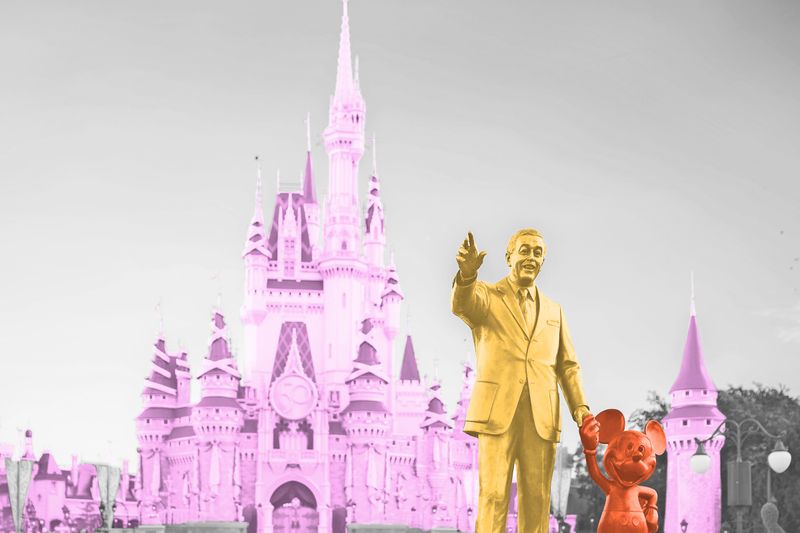
In the case of Disneyland’s Sleeping Beauty’s castle, warm pink hues are used on the lower towers, while the top features a cooler tone by incorporating blue. This gradation helps the landmark appear much taller and more majestic.  

Credit: Jonathan Blair/ Corbis Historical via Getty Images

“Utilidor” Tunnels

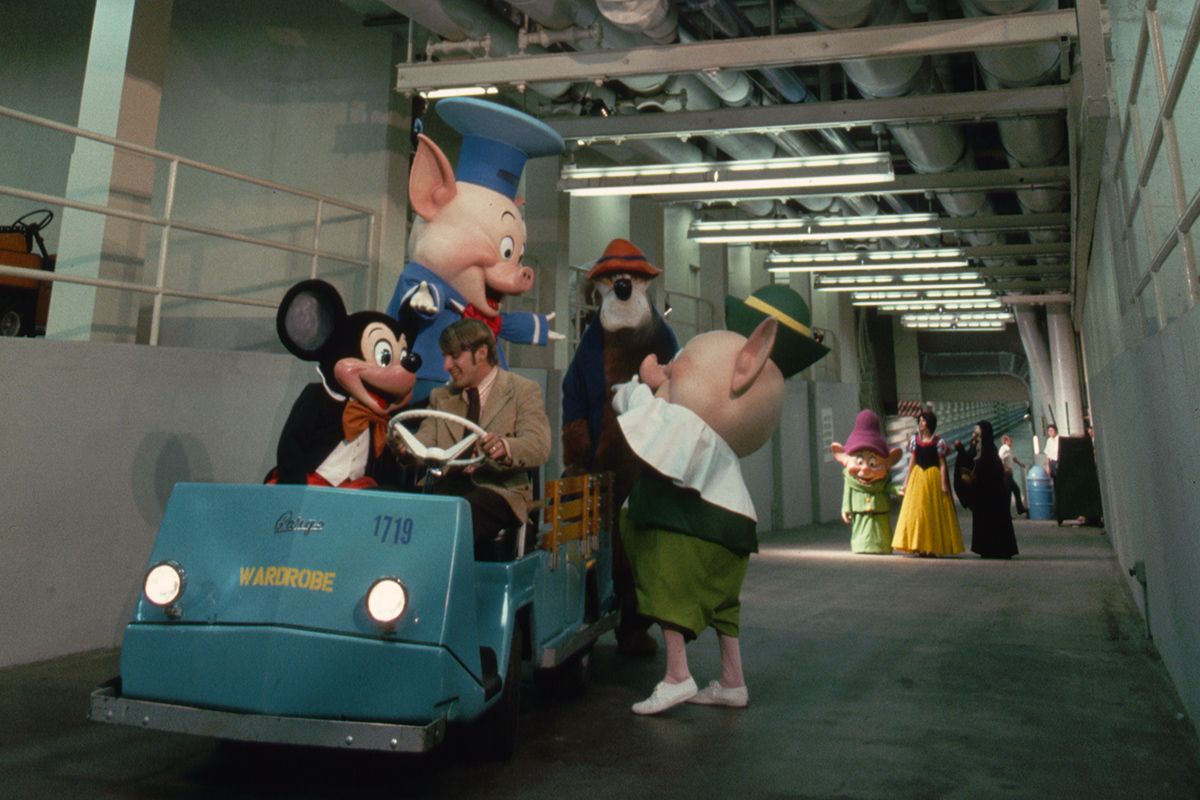
One of the secrets behind Disney’s signature magic is how effortlessly it keeps its behind-the-scenes operations hidden from guests. In fact, the guest-accessible areas of Walt Disney World’s Magic Kingdom are built on the second level of a massive structure. Beneath guests’ feet, on the actual ground level, is the “utilidor“— a portmanteau of “utility” and “corridor” — a sprawling tunnel system that quietly powers the park.

The utilidor system connects all corners of the park via 29 access points, allowing Disney’s “Cast Members” and supplies to move between areas without crossing paths with guests, preserving the immersiveness at all times. The tunnels also house essential utilities (sewer lines, electrical wiring, and plumbing) as well as staff-exclusive necessities such as dressing rooms, offices, breakrooms, and the Mouseketeeria dining facility.

While typically off-limits to the public, guests aged 16 and older can experience the utilidor by joining Disney’s Keys to the Kingdom Tour, a guided experience that allows visitors to discover this backstage area. 

Credit: Judi Saunders/ Alamy Stock Photo

High-Speed Trash Tubes

Guests won’t encounter any trash pileups at Disney’s Magic Kingdom (the most-visited Disney park in the world) thanks to an advanced trash removal system. Every 15 minutes, this underground system of vacuum tubes transports waste to a trash compactor at an astonishing 60 miles per hour. That’s as fast as TRON Lightcycle Power Run, the fastest ride at the Magic Kingdom. 

However, individual trash cans themselves aren’t connected to this system. Instead, custodians empty the hundreds of bins spread across the park into one of 17 collection stations. The waste ends up in a trash compactor behind Splash Mountain, where it’s then removed from the park.

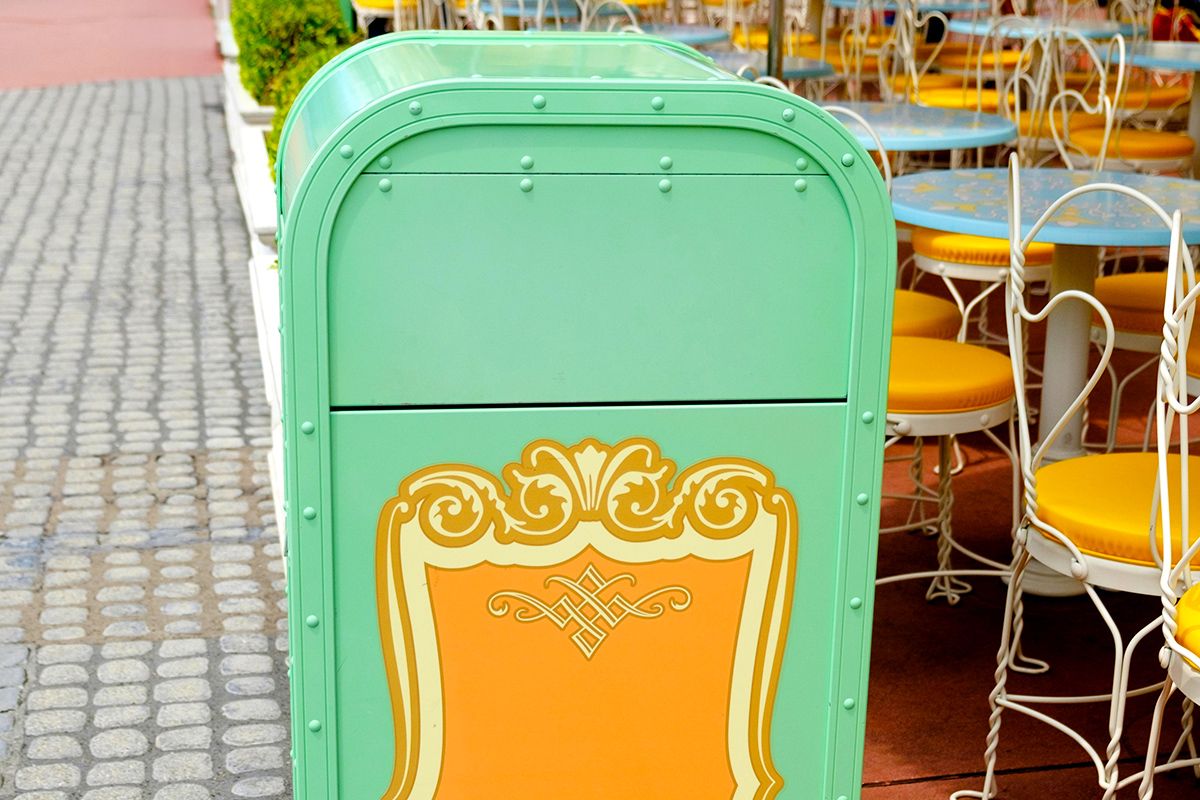
According to CBS News, when Walt Disney was designing his first park — Disneyland in Anaheim, California — he noted that if trash cans were more than 30 steps apart, people had a tendency to litter. He decided Disney’s trash cans had to be closer together than that, and since it’s Disney, they’re no ordinary waste receptacles. They’re specially designed to blend in with their surroundings: For example, the cans in Star Wars: Galaxy’s Edge feature space-themed motifs, while the bins next to the castle are adorned with princess-pink patterns.

Rachel Gresh
Writer

Rachel is a writer and period drama devotee who's probably hanging out at a local coffee shop somewhere in Washington, D.C.

Original photo by lixu/ iStock

Whether chopped up in a salad, sliced onto a sandwich, or pulverized into pasta sauce, tomatoes are widely regarded as a delicious and nutritious treat. But in addition to their culinary versatility, these juicy red orbs possess a rich history that extends far beyond the kitchen. 

Tomatoes have been the subject of court cases, used as ammo in citywide food fights, and have even made their way into outer space. Here are seven mouthwatering facts about the humble yet mighty tomato.

Credit: Ming/ Adobe Stock

Heinz Tomato Ketchup Has a “Speed Limit”

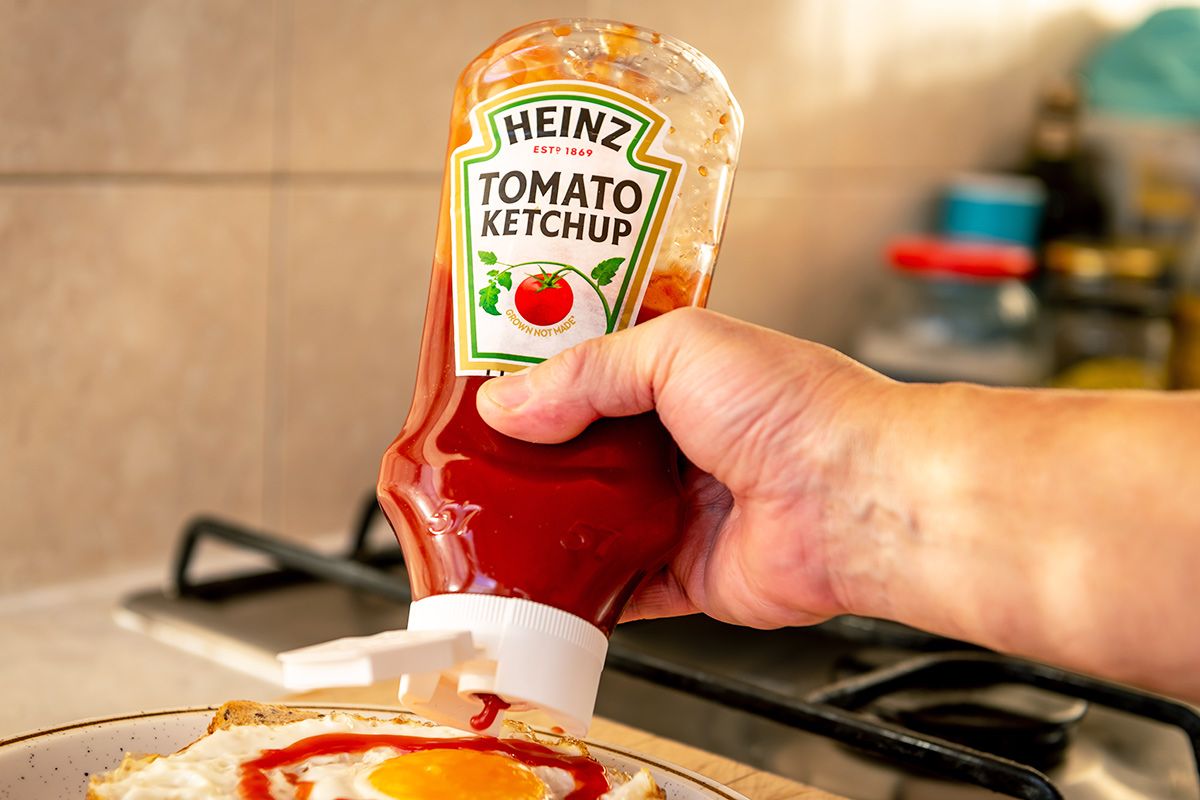
Heinz is one of the biggest ketchup producers in the world, and its iconic glass bottles can be found in supermarkets and restaurants worldwide. The condiment itself actually has a “speed limit” — a maximum flow rate of .028 miles per hour set by the company as an indicator of the product’s thick consistency.   

Each batch of ketchup is tested in a device Heinz calls a “quantifier,” which measures how far the product flows over the course of 10 seconds. If the ketchup travels too fast, indicating it isn’t sufficiently thick or doesn’t have the ideal texture,, it’s not released to the public.

In 2021, Heinz partnered with Waze and Burger King as part of a marketing campaign to reward drivers stuck in traffic with a free Impossible Whopper. Anyone forced to travel at the measly rate of 0.028 mph due to traffic was given redemption details in the Waze app.

And in 2023, Heinz released the “Slowmaster 57” in conjunction with the Abu Dhabi Grand Prix. Playing off the idea of race cars speeding at hundreds of miles per hour, this specially designed mini racetrack ramp invited people to test out the famous slowness of Heinz ketchup for themselves.

Credit: Nathalia de Franca Guimaraes/ iStock

Tomatoes Originated in South America

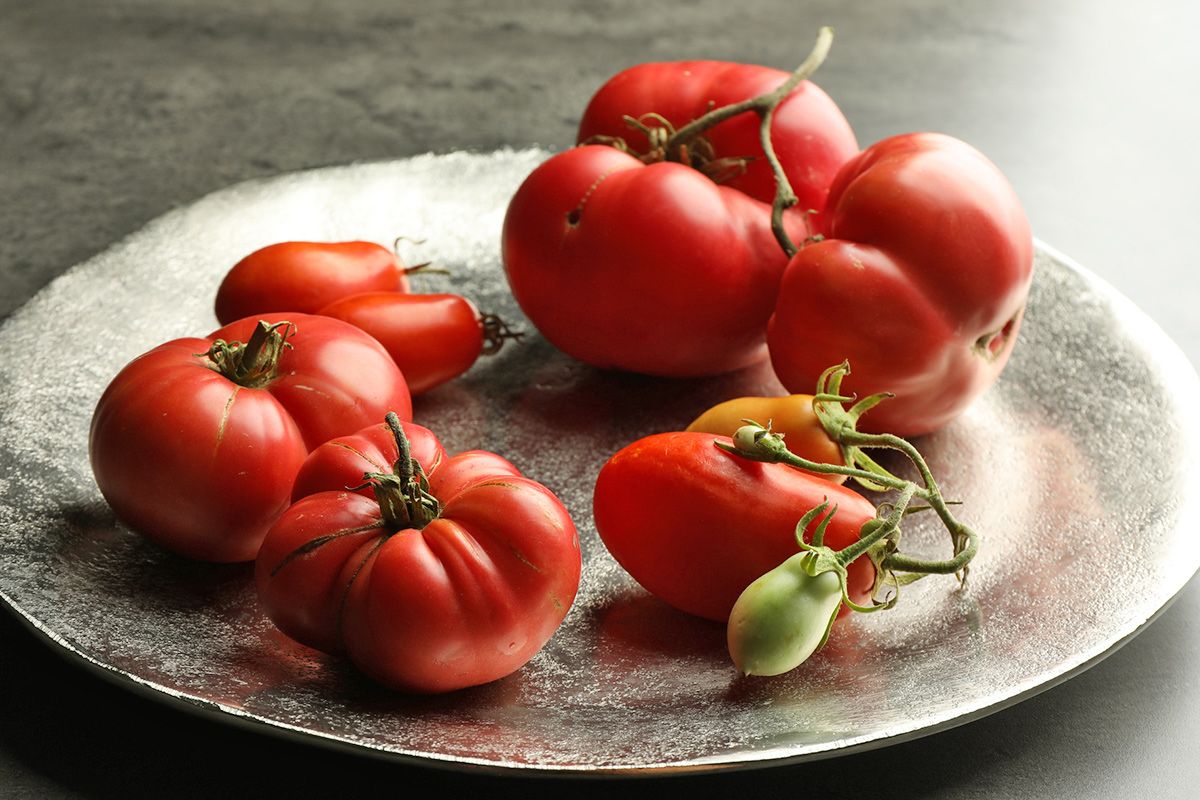
Though many people associate tomatoes with Italian cuisine today, they were originally cultivated in the Andes region of South America, though there are competing theories regarding the fruit’s precise lineage. Some believe the 10,000 modern tomato varieties can be traced to a pea-sized fruit native to parts of northern Peru and southern Ecuador called Solanum pimpinellifolium — also known as “pimp” — which was cultivated some 7,000 years ago.

However, a 2020 study indicates the timeline should be pushed further back to 80,000 years ago, when cherry-sized tomatoes may have been grown in Ecuador. In either case, these smaller tomato plants migrated to Mesoamerica, which is where tomatoes were first domesticated an estimated 7,000 years ago. 

It wasn’t until European explorers came to the Americas that tomatoes were introduced to the European continent. Sixteenth-century Spanish explorers encountered what the Aztecs referred to as tomatl (“plump fruit”), and returned to Spain with the treat in tow. Tomatoes were introduced to Italy via Spain no later than 1544 — the date of the earliest known printed reference to tomatoes, from Italian physician Pietro Andrea Mattioli.

Credit: Olga Yastremska/ iStock

Europeans Thought They Were Poisonous

When tomatoes first made their way to Europe, they weren’t exactly considered a culinary delicacy. In fact, they earned a frightening and unwarranted reputation for being toxic and were hence dubbed “poison apples.” 

It’s long been theorized that this unsavory reputation stems from reports of wealthy Europeans falling ill after eating tomatoes served on pewter plates, which contain lead. Given tomatoes are highly acidic, the acid would leach the lead from the plate, leaving the consumer with lead poisoning. 

However, author Joe Schwarcz argues in the Montreal Gazette that this oft-repeated lead theory is just a myth. Schwarcz claims the idea that tomatoes were poison likely stemmed from tomato plants being erroneously classified as deadly nightshades by uneducated herbalists. Tomato plants visually resemble the belladonna bush, whose fruits were known to be toxic, and so tomatoes were believed to be the same.

It was only around the late 1800s that European society began to view tomatoes as tasty, nontoxic treats. Tomatoes were normalized in part due to the 1880s invention of the modern pizza in Naples, Italy. This plus the 1897 debut of Campbell’s condensed tomato soup helped popularize tomatoes in the culinary world, and the fruit earned a far more favorable reputation.

Credit: Niday Picture Library/ Alamy Stock Photo

The Supreme Court Ruled Them To Be Vegetables 

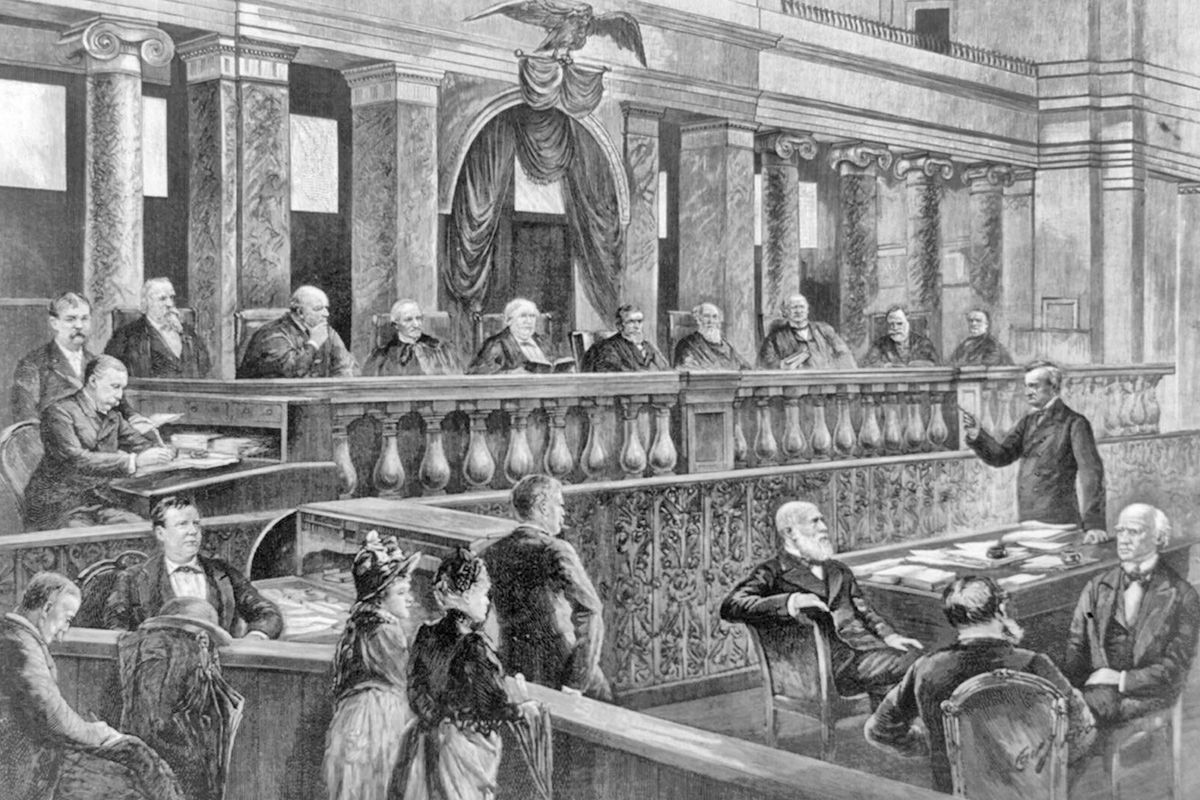
In 1893, the U.S. Supreme Court heard the case Nix v. Hedden, which debated whether tomatoes should be classified as fruits or vegetables for taxation purposes. This all came to pass after the Tariff of 1883 took effect, which imposed a 10% tariff on any imported vegetables. Imported fruits, however, were deemed tax-free. 

Tomatoes are indeed fruits in a botanical sense, because they meet two important criteria: They contain seeds and they grow from flowering plants. But many people viewed tomatoes as vegetables based on the way they were cooked and eaten, including Edward Hedden — the tax collector for the Port of New York.

It’s unknown whether Hedden didn’t realize tomatoes were technically fruits or simply chose to ignore that fact, but in either case he imposed the 10% tariff on the food. Manhattan-based wholesaler John Nix & Co. found this out the hard way when it was taxed on a shipment of tomatoes from the Caribbean. Nix argued tomatoes should be taxed like the fruits they are and subsequently sued Hedden.

In 1893, the Supreme Court unanimously ruled in Hedden’s favor, claiming that despite technically being fruits, tomatoes were more commonly treated as veggies by the general public and should therefore be taxed as such. Justice Horace Gray wrote in his opinion, “Botanically speaking, tomatoes are the fruit of a vine … But in the common language of the people, whether sellers or consumers of provisions, [tomatoes] are vegetables.”

Credit: Teen00000/ iStock

Tomato Juice Is the Official State Drink of Ohio

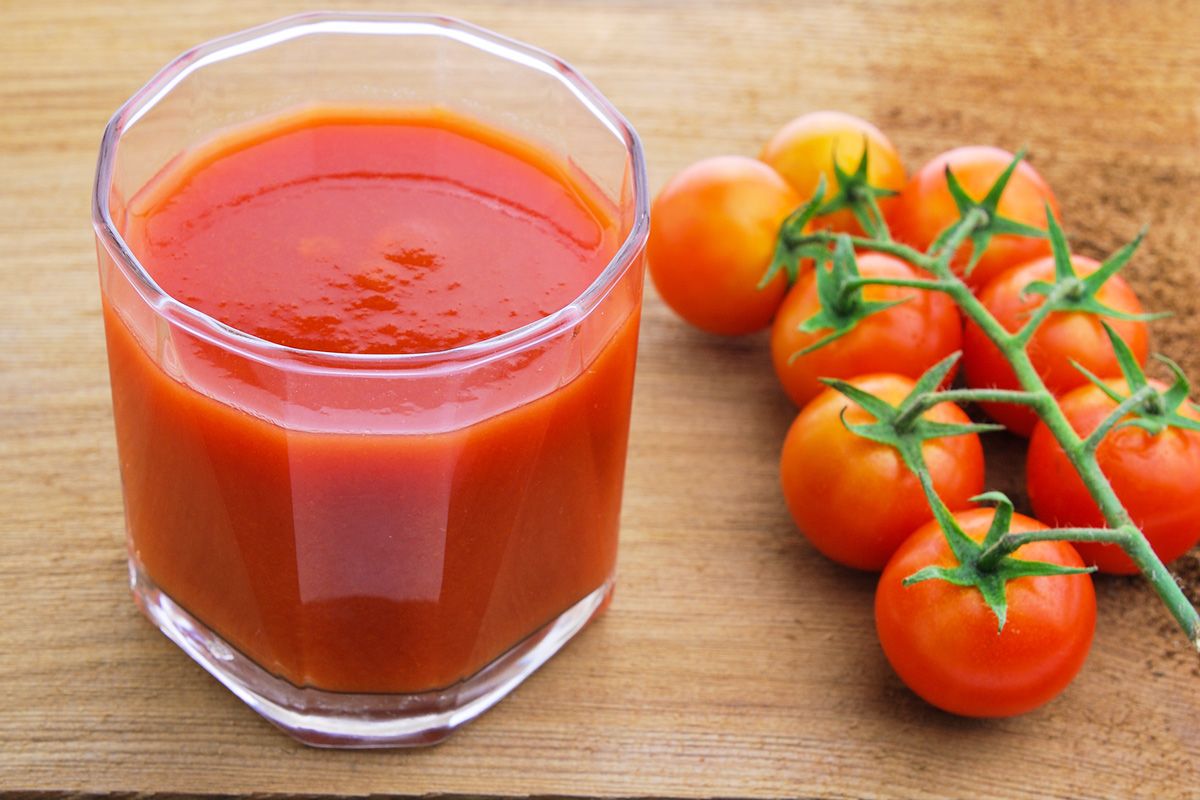
Before 1965, no U.S. state had an official state drink. But that changed on October 6 of that year, when the Buckeye State adopted Senate Bill 92, which stated, “The canned, processed juice and pulp of the fruit of the herb Lycopersicon esculentum, commonly known as tomato juice, is hereby adopted as the official beverage of the state.” While other states have since declared official beverages of their own (with milk being the most popular choice) Ohio remains the only state to name tomato juice as its official beverage.

This choice paid homage to the state’s thriving tomato industry; at the time, Ohio was the second-largest producer of tomatoes in the nation behind California. It was also a native Ohioan named Alexander Livingston who helped popularize tomatoes nationwide. In 1870, Livingston — a horticulturist by trade — developed the “paragon,” the first commercially successful variety of tomato in the U.S., and his hometown of Reynoldsburg continues to host an annual tomato festival dedicated to his legacy.

Credit: NASA/piemags/ Alamy Stock Photo

A Tomato Went Missing in the International Space Station

In March 2023, astronaut Frank Rubio harvested what’s considered to be the very first tomato grown in space. The fruit was grown as part of the eXposed Root On-Orbit Test System (XROOTS) — a test program to determine the feasibility of growing produce for astronauts to enjoy in space. 

Rubio grew the historic tomato on the International Space Station, though after harvesting, he subsequently misplaced the fruit. After 20 hours of searching, Rubio gave up and assumed the tomato had been lost forever. But that December, astronauts successfully recovered the lost tomato after eight long months of wondering where it could have gone. Though dehydrated, slightly squished, and mildly discolored, the fruit was in otherwise okay shape without any fungal growth.

Credit: Royalty-free/ Corbis Documentary via Getty Images

A 20,000-Person Tomato Fight Is Held Each Year in Spain

La Tomatina is an annual festival in which attendees pelt each other with tomatoes —  colloquially known as the “world’s biggest food fight.” The event occurs each year on the final Wednesday in August in the Spanish town of Buñol, located roughly 25 miles west of Valencia. 

While the town’s permanent population is just 9,000 people, as many as 50,000 revelers have participated in La Tomatina at its peak. The number of ticketed participants was capped at 20,000 in 2013, which is where it remains today.

The festival began in the 1940s, though it was temporarily banned in 1956 by the city council amid pressures from Francisco Franco’s dictatorial regime to disallow unauthorized celebrations. However, La Tomatina returned in 1957 in the form of a parodic “Burial of the Tomato” funeral procession, which instilled a deep sense of community in its participants. Due to mounting local pressure, the tradition was officially recognized as a city festival in 1959, with a more rigid organizational structure.

An estimated 330,000 pounds of tomatoes are hurled during the food fight each year, which are brought to the town by six loaded trucks. Organizers also make a point of limiting food waste by only using tomatoes that have been deemed unfit for consumption and would’ve otherwise been thrown out.

Bennett Kleinman
Staff Writer

Bennett Kleinman is a New York City-based staff writer for Inbox Studio, and previously contributed to television programs such as "Late Show With David Letterman" and "Impractical Jokers." Bennett is also a devoted New York Yankees and New Jersey Devils fan, and thinks plain seltzer is the best drink ever invented.

Original photo by BongkarnThanyakij/ iStock

Whether commuting on a train to work, riding the light rail into the city for a night out, or taking the bus across town to run an errand, the people aboard any form of public transport are likely trying to enjoy a quick and quiet trip to their destination — but sometimes the actions of a noisy or otherwise inconsiderate passenger can ruin the journey for their fellow riders. 

Those rude behaviors may include blasting music, taking up extra seats, or even talking loudly on the phone. Don’t be like that — instead, pay attention to these six etiquette tips for being a perfectly polite passenger.

Credit: andresr/ iStock

Use Headphones, Not Speakers

Loud audio coming from your phone is a surefire way to earn the ire of fellow travelers, whether it be from playing music, watching a video, or having a FaceTime conversation or phone call on speaker. This increasingly common practice is known as “bare beating,” describing disruptive audio that carries throughout an entire train or bus. As anyone who’s experienced bare beating knows, that tinny sound that emanates from a phone’s speakers can be highly disruptive and grating.

Public transit companies in states including New York, Pennsylvania, and Texas remind all riders to use headphones if listening to music, as it’s considered common courtesy. There’s also an ongoing effort in the U.K. to punish violators with hefty fines, but despite the advisories and warnings, bare beating continues to spread. 

One issue is that tech companies have removed standard headphone jacks from newer models of smartphones, requiring special corded connections or Bluetooth-enabled headphones. If someone doesn’t have one of those options easily accessible, they might listen to their phone audio over the speaker anyway. But the break in etiquette also has to do with modern browsing habits.

In an interview with The New York Times, etiquette expert Myka Meier touches on the idea that “we selfishly have interests that we are able to tap into any second of any day, and we are so used to it that we forget other people around us.” That said, we suggest doing your part to limit public transit noise by either keeping track of a pair of headphones or waiting until the ride is over to use your speakers.

Credit: urbazon/ iStock

Avoid Obtrusive Self-Grooming

While there’s nothing wrong with quickly reapplying lipstick or combing your hair so it looks presentable, some passengers groom themselves in a way that affects other riders. One of the most egregious examples is cutting your fingernails (or even toenails, as one San Francisco rider chose to do) in the middle of the train or bus. First and foremost this is a hygiene issue, as the detritus may land on a seat or in another person’s lap, but the sound of the clicking clippers is also annoying to fellow passengers. 

But cutting one’s nails is just the tip of the iceberg. Many self-grooming habits should be taboo on public transit, including shaving, plucking hairs, or applying certain makeups — anything that causes unwanted debris. New York Magazine’s style and culture guide The Cut adds that hairsprays and powdered makeup can negatively affect the quality of the communal air that everyone has to breathe. Don’t be the reason that the person next to you on the bus starts sneezing, and keep your grooming habits at home.

Credit: Aida Lopez Jimenez/ iStock

Keep Personal Items Off Seats

Whether you’re riding the bus, train, or ferry, it’s a widely accepted rule that seats are for passengers — not inanimate objects. The El Metro service of Laredo, Texas has a policy that puts it well: “You’re welcome to carry belongings as long as they’re small enough to fit on your lap or at your feet. Don’t block aisles or take over the seat beside you.”

If the train or bus is empty, you can get away with it, but it’s common sense to move your bags when the seats are needed — and don’t make someone ask you to move it. Keeping a large bag on the seat next to you is depriving someone of a much-needed place to sit. Putting your belongings in the aisle will impede foot traffic, so make sure to  place the bags on your lap or use any available luggage racks. Or do what etiquette expert Louise Fox suggests with a rhyming reminder: “Take only one seat and put packages and belongings at your feet.”

Credit: simonkr/ iStock

Let People Exit Before Boarding

When the train doors open, it’s tempting to rush into the car in order to grab one of the few available seats. But slow down — it’s basic etiquette to let all riders exit before anyone new enters the vehicle. In an article written for Trainline, etiquette expert William Hanson says, “Let others off the train before you try and get on and stand to the side of the train doors to allow disembarking passengers to exit easily.” 

If you stand in the doorway or try to rush on, you’ll end up creating a logjam. This makes the exiting and boarding process take longer, and the more it happens, the more likely it is to cause system-wide delays. Your rush can also create difficulties for passengers with disabilities attempting to exit. 

It’s good to remember that some people may need more time or space to navigate, and being patient won’t mean you’ll miss the ride. As Hanson says, “It’s not a race.” 

Credit: frantic00/ iStock

Don’t Consume Odorous Food or Drink

Some foods and drinks should be avoided on public transit, such as ones with particularly pungent odors and dishes that are prone to spillage. One extreme example of offensive food is commonly found throughout Southeast Asia. A native fruit called durian is banned from many public transport services due to its pungent odor. 

In an interview with the Huffington Post, etiquette expert Diane Gottsman says, “Your favorite snack may be a plastic container full of hard-boiled eggs, but these should be enjoyed in the privacy of your own kitchen.” Even if the food smells good, a powerful odor can make other passengers nauseous in such a confined space.

But not all food is taboo. Etiquette consultant Jodi R.R. Smith told the Huffington Post that people should opt for foods that are “self-contained and minimally fragrant.” Consider crackers, dried fruit, and similar items. When it comes to drinks, stick to water if possible, and use a lid to prevent accidentally spilling all over the vehicle — or worse, onto another person.

Credit: eclipse_images/ iStock

Know the Rules for Pets

Even if your dog is well-behaved and loving, public transit is no place to let them roam freely. While exceptions are made for service animals, pets (even those dubbed emotional support animals) are subject to a clear set of rules that each passenger is expected to adhere to. 

The exact requirements may differ on each transit system, so be sure to look up the pet guidelines before your trip. The MTA — which services the New York City area and is the busiest public transit route in the country — requires pets to be contained “in a bag or other container and carried in a way that doesn’t annoy other riders.” (Some people have gotten around this rule by carrying their animals in creative bag solutions, such as large IKEA tote bags — examples of which can be seen on social media.) 

Nevertheless, the train or bus is no place for an unleashed dog, even if they’re usually a very good boy or girl. If your pet is too large to abide by these rules, consider alternative forms of transportation (such as a private rideshare) that won’t affect other riders.

Bennett Kleinman
Staff Writer

Bennett Kleinman is a New York City-based staff writer for Inbox Studio, and previously contributed to television programs such as "Late Show With David Letterman" and "Impractical Jokers." Bennett is also a devoted New York Yankees and New Jersey Devils fan, and thinks plain seltzer is the best drink ever invented.

Original photo by princessdlaf/ iStock

From humble barley soup during the Great Depression to the rise of fast food-style staples such as pizza and chicken nuggets, the evolution of school lunches in the U.S. tells a story of changing priorities in American culture. Here’s how the typical foods on a school lunch tray have changed over the last century.

Credit: Library of Congress/ Corbis Historical via Getty Images

Early 20th Century

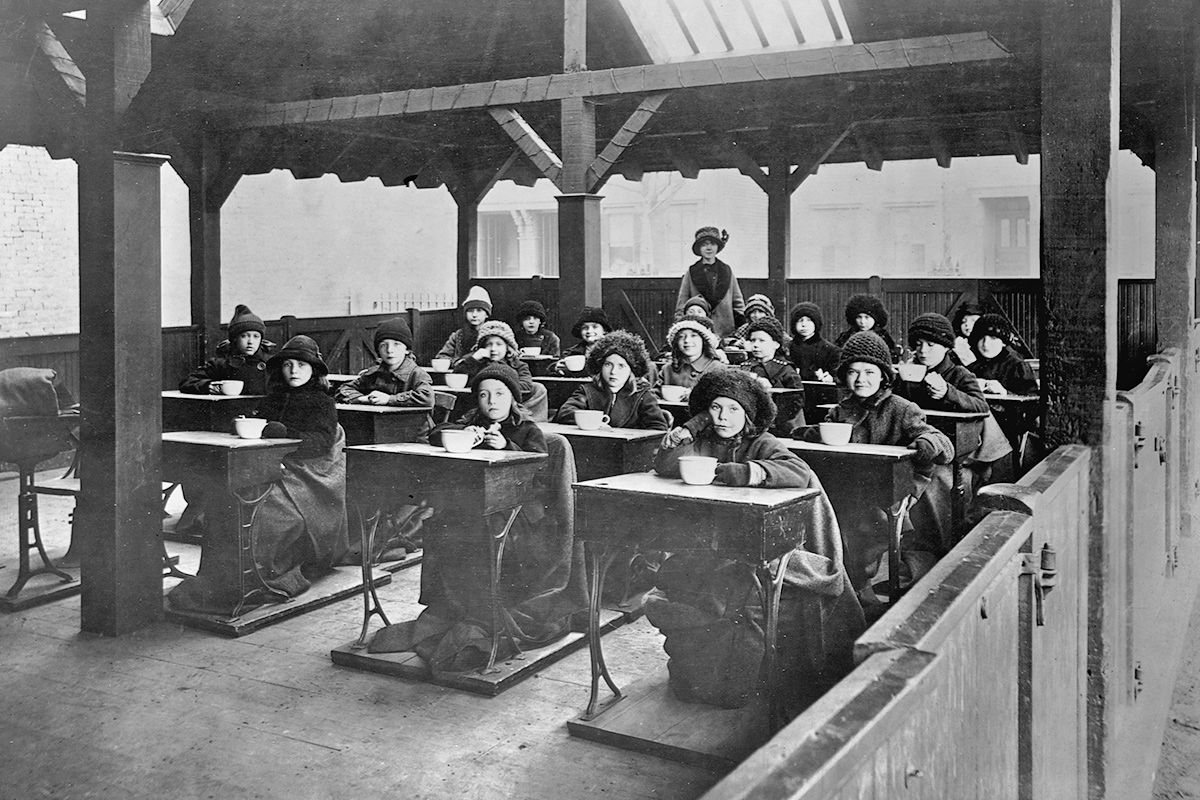
School lunches in the early 1900s were far from standardized — in fact, many schools in the U.S. didn’t serve lunch at all. After all, public education itself wasn’t compulsory in all 50 states until 1918. When school lunches were offered, they were often funded by charities, churches, local committees, or private donors, especially to assist low-income children. 

While some students went home for lunch, economic hardship during World War I meant that many kids went home to little or no food. Around this time, pediatricians began emphasizing the benefits of receiving a well-balanced meal at school, which led to the emergence of school lunch programs across the country.

In 1910, one experimental program in Boston began to feed elementary students twice a week. Eating at their desks (the schools lacked cafeterias), students enjoyed sandwiches and milk prepared by home economics classes. In Milwaukee, some children were able to enjoy a warm meal by purchasing items such as soup and rolls for 1 cent. Those who couldn’t afford to pay received food for free.

Some schools received enough funding to provide students with a variety of lunch options, featuring à la carte pricing. In Cincinnati, for example, a rotating menu of five items was available for a penny each. The options included things such as hot meat sandwiches, sausages, baked sweet potatoes, oranges, bananas, “candy balls,” graham crackers, rice pudding, and cakes.

By contrast, rural districts across the nation didn’t receive the same level of funding as urban schools, leading to more meager lunch options. Students typically received cold meals, most of which were of “questionable nutritive value,” according to Gordon W. Gunderson, author of “The National School Lunch Program.”

Teachers took the initiative to help students heat jars of food brought from home by using water boiled in buckets on the classroom stove. Some foods commonly brought from home in these communities included soup, macaroni, and cocoa.

Credit: PF-(usna)/ Alamy Stock Photos

The Great Depression

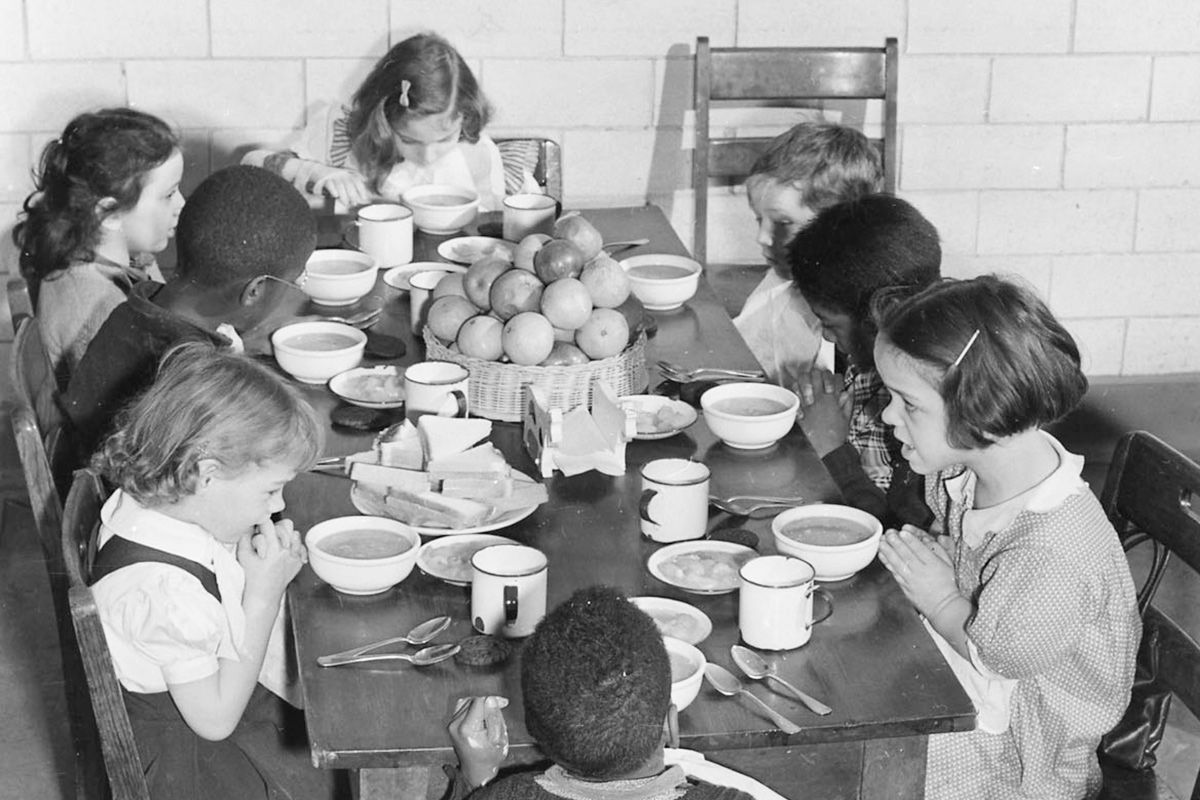
As the Great Depression devastated the nation during the 1930s, growing concerns about childhood malnutrition pressured schools to respond accordingly. Many states introduced legislation allowing schools to serve daily meals, creating structure and uniformity among school lunch programs. By 1937, 15 states had passed laws authorizing schools to operate physical lunchrooms (which functioned like modern lunchrooms with staff and seating), and the federal government began offering support.

During this time, the U.S. Department of Agriculture (USDA) began purchasing surplus food from farmers and distributing it to schools and food pantries. Despite nationwide economic struggles, this federal intervention helped schools provide healthier meals, often including hard-to-get items such as fresh produce and meat. 

Still, menu options were limited to what was available, so there wasn’t much variety. For instance, children reportedly hid apples in toilets to fake the appearance of having eaten them after growing tired of eating the fruit every day. A typical Depression-era school meal included a simple soup, such as lima bean and barley, with a bread-and-butter sandwich, chocolate pudding, and milk.

Credit: ZUMA Press, Inc./ Alamy Stock Photo

World War II

As the Great Depression came to an end, the U.S. found itself facing a new crisis: World War II. Schools began to place a greater emphasis on nutrition (known as “defense nutrition”) than ever before, to improve the readiness of future soldiers. During this era, recommended dietary allowances were introduced to establish a 2,000-calorie daily diet after many young military recruits showed signs of malnutrition. 

A 1944 War Food Administration poster recommended a healthy school lunch should consist of one hot dish (e.g., meat or vegetables), a sandwich, fruit, and milk. Common menu items included chipped beef, broiled carrots, and prune pudding. For many children, this was the only hot meal they’d eat all day.

World War II highlighted the importance of school meals. After the war ended, President Harry Truman signed the 1946 National School Lunch Act, providing permanent federal aid for such programs and quickly expanding the availability of school lunches across the nation. In Truman’s words, “No nation is any healthier than its children or more prosperous than its farmers.”

Credit: Ted Streshinsky Photographic Archive/ Corbis Historical via Getty Images

Baby Boom

Along with the postwar baby boom came a rising demand for school meals. During the 1950s, private companies began contracting with school districts to introduce more menu options. A focus on protein-rich meals — such as liver-sausage loaf, meatloaf, and pork-apple salad — started around this time.

The 1960s saw the emergence of modernized school cafeterias, featuring streamlined services, diverse menus, and a greater emphasis on taste. This was largely driven by the expanding student populations that followed the 1954 abolition of segregated schools. 

School meals also became less health-focused, often featuring popular items such as country-fried steak, carrot relish, cornmeal yeast rolls, and peanut butter cake. However, schools didn’t receive enough federal money to cover their costs. During the 1970s, a series of legislation overhauled the lunch programs, allowing more districts to partner with private food vendors while simultaneously expanding free or reduced lunch programs.

Concerns about childhood obesity also began to grow during the 1970s. Efforts were made to promote healthier meals, but after opening cafeterias to the private sector, the introduction of fast food undermined nutritional goals. Although they were offered healthier choices such as vegetable soup and fresh fruit, students began to favor less nutritious items such as hamburgers, pizza, chicken nuggets, tacos, Jell-O, and juice. This marked the emergence of processed, prepackaged school foods, a trend that continues today.

Credit: James Leynse/ Corbis Historical via Getty Images

Modern School Lunches

During the 1990s, fast-food chains such as McDonald’s found their way into school cafeterias, sparking a wave of reform. Nutrition advocates pushed back against unhealthy lunches, instead championing fresh produce, whole grains, and low-fat dairy. 

The Healthy, Hunger-Free Kids Act (HHFKA) of 2010 introduced significant changes by revising nutritional guidelines, regulating school vending machines, and giving thousands more students access to free or reduced-fare lunches. School salad bars gained popularity, but processed food remained a standard, albeit in new whole-grain or reduced-sodium forms. Today, schools continue to juggle taste, nutrition, and budget as awareness of healthy eating grows.

Rachel Gresh
Writer

Rachel is a writer and period drama devotee who's probably hanging out at a local coffee shop somewhere in Washington, D.C.