
Original photo by andresr/ iStock

Each time you fill up at the gas station, you’ll notice there are multiple fuel options, each with distinct characteristics and intended applications. The primary fuel types available typically include regular gasoline, plus (or mid-grade) gasoline, premium gasoline, and diesel fuel. 

These different grades represent fundamentally different fuel compositions designed for specific engine types and performance requirements, and knowing which one to choose is vitally important for the health of your vehicle. Putting more expensive premium gas in a car that doesn’t require it won’t improve performance, while using a lower grade of gas than what’s recommended can lead to problems. 

To best understand the various gasoline types, we first need to understand the basics of two terms: “octane ratings” and “engine knocking.” Octane ratings are measures of fuel stability based on the pressure at which a fuel will spontaneously combust in an engine; the higher the number, the more stable the fuel. 

A higher rating means the gasoline is more resistant to what is known as engine knocking. It occurs when the air-fuel mixture in an engine cylinder ignites prematurely, before the spark plug fires, potentially damaging the engine. So the higher the octane rating, the more stable the fuel, and the better it is at resisting engine knocking (diesel, being a different fuel type altogether, experiences its own distinct type of knocking).  

With the basics of octane ratings and knocking in mind, let’s take a look at the four most common fuels available at the gas station — but no matter which one sounds right for your ride, it’s always best to check your vehicle’s manual before filling up. 

Credit: fredgoldstein/ iStock

Regular Gasoline: The Standard Choice

Regular gasoline, typically rated at 87 octane, is the most commonly used automotive fuel in the United States. This fuel grade is formulated to meet the basic requirements of most standard passenger vehicles, including sedans, SUVs, and trucks with naturally aspirated engines (engines in which the air intake depends on atmospheric pressure alone rather than requiring forced induction). 

From an economic perspective, regular gasoline offers the best value for vehicles designed to use it. Putting premium fuel in an engine designed for regular gasoline provides no performance benefits and is, to put it bluntly, a waste of money. The engine management systems in vehicles designed for regular fuel are calibrated to optimize performance and efficiency with 87 octane fuel, making it the logical choice for most drivers.

Credit: jabejon/ iStock

Plus Gasoline: The Middle Ground

Plus gasoline, also known as mid-grade or intermediate gasoline, typically carries an octane rating of 89. This fuel grade occupies the middle ground between regular and premium gasoline, both in terms of octane content and price. Plus gasoline is often created by blending regular and premium gasoline at the pump, though some refineries produce it as a distinct product.

Mid-grade fuel accounts for only about 7% of all gasoline sales, and it’s likely that at least some of those sales are the result of drivers who unnecessarily purchase plus gasoline thinking it offers some kind of benefit when regular gas would do exactly the same job. Plus gasoline represents a compromise solution rather than an optimal choice for most vehicles. 

So then, why does it exist? The only real application for plus is in vehicles that experience slight knocking with regular fuel — typically older vehicles from the 1980s and 1990s — but that don’t require the full octane rating of premium gasoline. Among cars sold today, hardly any actually require mid-range, 89 octane gas, apart from some RAM 1500 trucks, Dodge Durangos, and the Jeep Grand Cherokee. 

Credit:  Lemon Photo/ iStock

Premium Gasoline: High-Performance Fuel

Premium gasoline is any gas with an octane level of 91 or greater, with 91 octane and 93 octane being the most common versions of premium gasoline available at gas stations in the United States (93 octane is sometimes called “ultra” or “super-premium”). 

Premium is specifically formulated for high-performance and luxury vehicles. It contains a higher concentration of octane-boosting compounds that allow it to withstand higher compression and temperature without pre-igniting. This gives it superior knock resistance, making it ideal — and in many cases essential — for vehicles with high-compression engines, turbochargers, or superchargers. 

Putting premium gas in a vehicle designed to run on regular‐grade fuel offers no benefits: It won’t produce more horsepower, improve fuel economy, or result in lower tailpipe emissions. However, due to its superior-sounding name, many consumers confuse premium gas for “better” gas. 

In 2016, the American Automobile Association found that 16.5 million Americans ignored manufacturer recommendations for regular gasoline and instead used premium, unnecessarily spending a whopping $2.1 billion per year on premium‐grade gasoline when regular would have worked just as well. 

Today, more vehicles require premium gasoline than ever before. More than half of all light-duty models (as opposed to heavy-duty vehicles) sold in 2024 require premium, including the Chevrolet Suburban, Dodge Durango, Nissan Z, and Toyota GR. Some new-vehicle buyers may not realize they’ve purchased a model that requires the more expensive type of gas until after they’ve already taken the car home, so it’s important to always ask in advance to get the full scoop on what you’re signing up for. 
Credit: Federico Rostagno/ Adobe Stock

Diesel Fuel: A Different Option Altogether

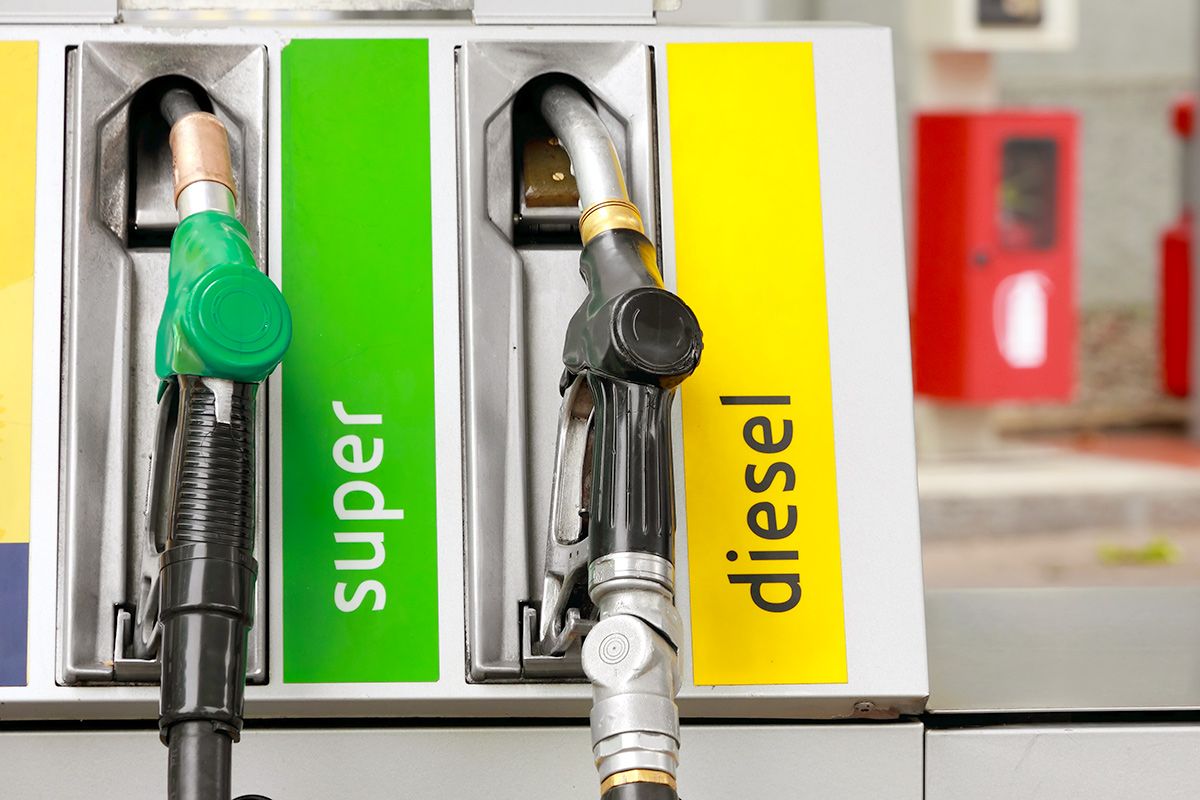
Gasoline and diesel are both fuels derived from petroleum, but diesel represents a fundamentally different approach to automotive power, utilizing compression ignition rather than spark ignition. Diesel has a greater energy density than other liquid fuels and is typically used in vehicles requiring high torque and fuel efficiency, such as commercial trucks, most construction and farming vehicles, and other heavy equipment. Gasoline, on the other hand, is used for vehicles that require more horsepower and that favor speed over brute strength. 

As a vehicle owner, it’s vital to know whether your vehicle runs on gas or diesel. However, it’s actually quite difficult to accidentally fill up your car with diesel if it takes gasoline, because most diesel fuel pump nozzles have a larger diameter filler pipe than gasoline nozzles.

If you do manage to put diesel in a non-diesel vehicle, it’s best to not start the engine and instead call a mechanic right away. Your car may move a few miles, but it will then likely come to a stop, potentially causing cylinder and timing issues in your engine that could cost thousands of dollars to repair.

Tony Dunnell
Writer

Tony is an English writer of nonfiction and fiction living on the edge of the Amazon jungle.

Original photo by AlbertPego/ iStock

Created to honor the legacy of George Washington, the towering marble obelisk that stands on the National Mall in Washington, D.C., serves as a reminder of the indelible role the first U.S. president played in the country’s history. 

The Washington Monument is one of the nation’s most recognizable landmarks, but there’s also a fascinating backstory behind its imposing appearance. Here’s a look at five little-known facts about this iconic American structure.

Credit: Print Collector/ Hulton Archive via Getty Images

It Was Once the World’s Tallest Structure

After 36 years of construction, the Washington Monument was finally completed on December 6, 1884, clocking in at 555 feet and 5.125 inches tall, making it the world’s tallest building at the time. The obelisk wrested this title from the previous record holder, Germany’s 516-foot-tall Cologne Cathedral, which had been the world’s tallest building since its completion in 1880.

The monument’s time as the world’s tallest structure lasted only five years, as it was soon overtaken by the 1,083-foot-tall Eiffel Tower in 1889. But the Washington Monument remained the tallest human-made monument in the United States until 1939, when the 567-foot-tall San Jacinto Monument was completed in La Porte, Texas. Nowadays, the obelisk ranks third in this category, having also been surpassed by the 630-foot-tall Gateway Arch in St. Louis, Missouri.

Credit: Library of Congress/ Corbis Historical via Getty Images

The Stone Blocks Are Held Together Without Cement

While stone structures are often held together by mortar (a combination of cement, sand, and water), the Washington Monument is a notable outlier whose blocks are held together simply by gravity and friction. Engineers did use some mortar on the project, though it was for weatherstripping purposes rather than structural support. 

What’s more, there’s no reinforced steel skeleton or any other supporting mechanism. In a 2011 report for Today, Al Roker noted the monument “is built the way the pyramids were … It is the weight of the stones that actually keeps [the monument] together.” According to Carol Johnson of the National Park Service, the lack of mortar technically makes the Washington Monument the world’s “tallest free-standing stone structure.”

Credit: Photo 12/ Universal Images Group via Getty Images

The Pope Donated a Stone (Which Was Later Stolen)

During the monument’s early construction, commemorative stones were donated from around the world, which were later included in the obelisk’s interior walls. All told, 193 such stones were incorporated, including one made of Alaskan jade and another that was constructed using remnants from the Parthenon in Greece. Pope Pius IX even donated a stone on behalf of the Catholic Church, though this donation was met with backlash, and the stone was eventually stolen.

The pope’s stone read “A Roma Americae” (“From Rome to America”) and was made of materials taken from the ancient Temple of Peace in Rome. But not everyone was enthused by this donation, especially nativist, anti-Catholic political groups in the U.S. such as the Know Nothing Party. One widely circulated pamphlet read, “This gift of a despot, if placed within those walls, can never be looked upon by true Americans but with feelings of mortification and disgust.” 

Nonetheless, the stone was donated and kept in storage until it was to be incorporated into the larger monument. However, the pope’s donation was stolen in 1854 by nine anonymous Know Nothing Party members, who subsequently damaged the stone beyond repair and threw it into the Potomac River. It wasn’t until 1982 that the stone was finally replaced when Pope John Paul II sent over a replica to be installed.

Credit: Bettmann via Getty Images

A Small Aluminum Pyramid Sits Atop the Monument

The Washington Monument’s original design called for a flat top made of stone, unlike the pointed tip we know today. But the engineers eventually decided to top the monument with a pointed metal tip to serve as a lightning rod and protect the stone structure from damage.

Engineer Thomas Lincoln Casey Sr. — who oversaw the final phases of the monument’s construction  — consulted William Frishmuth, a metallurgist in Philadelphia, who suggested the tip be made of aluminum. Frishmuth cast an 8.9-inch, 100-ounce piece of aluminium for the monument — the largest ever cast at that time. 

Before delivering the aluminum cap to D.C., Frishmuth displayed it at Tiffany’s in New York City. On December 6, 1884, the cap finally made its way to the nation’s capital, where it was placed atop the Washington Monument to complete its construction.
In an interview with Atlas Obscura, Dru Smith of the National Geodetic Survey noted that the aluminum cap was less durable than anticipated. Within six months, repeated lightning strikes had whittled the tip down by three-eighths of an inch. In July 1941, it was nearly recycled as part of a nationwide aluminum scrap drive to support the World War II war effort, though it still remains in place today.
Credit: dibrova/ iStock

The Color Changes 152 Feet Up

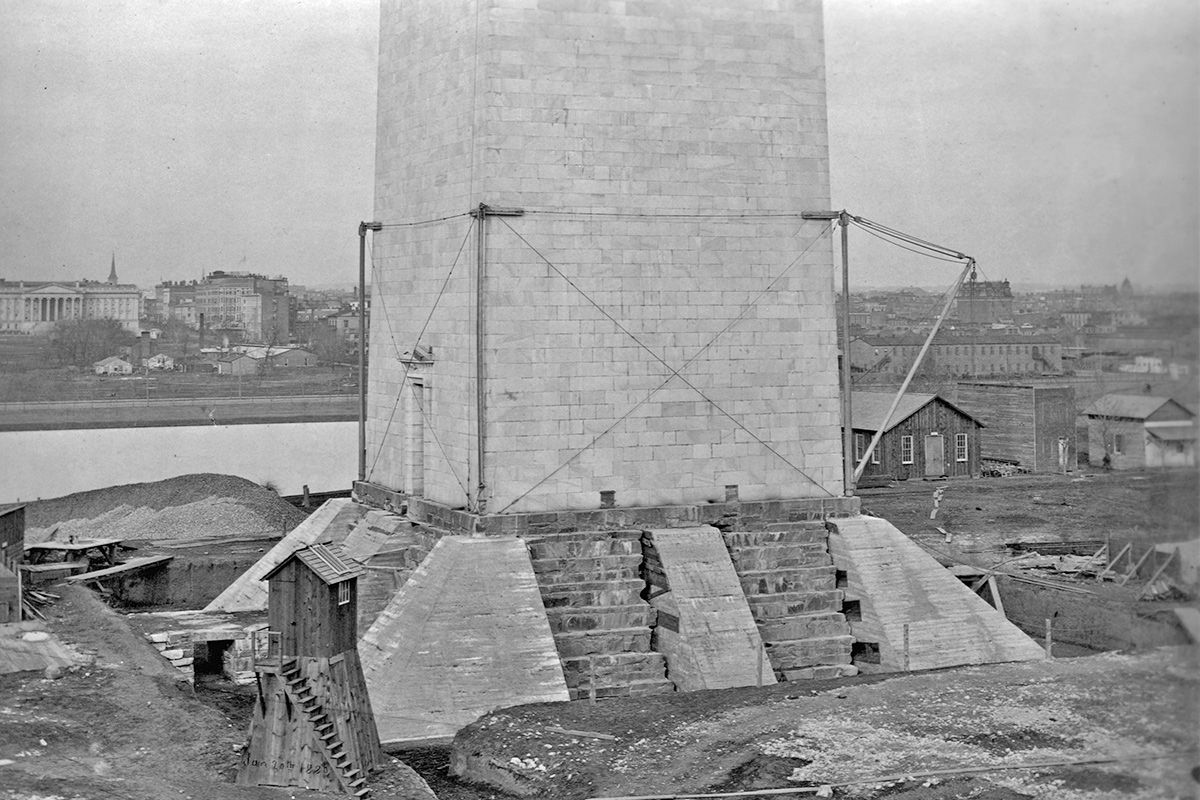
If you examine the Washington Monument closely, you’ll notice the color of the stone changes roughly a third of the way up the obelisk. This is because there was a substantial delay during the landmark’s construction. When work finally resumed, stone had to be sourced from different quarries, and the two distinct types of stone have aged differently ever since.
The first phase of construction lasted from when the cornerstone was laid in 1848 until construction was halted in 1854 after private donations ran out. By the end of that phase, the monument had reached a height of 152 feet. 

In 1876, Congress formally authorized a resumption of construction. But at this point, the stone could no longer be sourced from the Baltimore quarry that was initially used. Instead, marble was sourced from a different Maryland quarry and combined with  granite from several quarries in New England.

When the monument was completed in 1884, its color appeared to be uniform from top to bottom. However, the two sets of stone began to age individually as they weathered wind, rain, and other environmental factors. Today, there’s a clear visible difference between the stones used during the initial and latter phases of construction, with the upper two-thirds of the monument appearing slightly more yellow than the lower third.

Bennett Kleinman
Staff Writer

Bennett Kleinman is a New York City-based staff writer for Inbox Studio, and previously contributed to television programs such as "Late Show With David Letterman" and "Impractical Jokers." Bennett is also a devoted New York Yankees and New Jersey Devils fan, and thinks plain seltzer is the best drink ever invented.

Original photo by Mike Prince/ Unsplash

Sleep duration varies drastically across the animal kingdom, with some critters such as the koala sleeping for as many as 22 hours each day, while others require just a few hours of daily rest to function. Sometimes these abbreviated sleep schedules are due to external factors (such as the threat of predators), but in other cases it has more to do with a creature’s biological makeup. Let’s take a closer look at seven animals that require very little sleep.

Credit: Michael/ Adobe Stock

Elephant Seals

According to a 2023 study, elephant seals sleep for less than two hours a day when out at sea, which is among the shortest average total among mammals. They also don’t sleep for two hours straight; instead, they take several naps that often last for less than 20 minutes. Elephant seals tend to sleep at depths of around 1,000 feet for added security, to stay below potential predators.

The 2023 study helped answer some long-debated questions as to when elephant seals sleep. Study author and oceanographer Jessica Kendall-Bar told the National Science Foundation, “The dive records show that [elephant seals] are constantly diving, so we thought they must be sleeping during what we call drift dives, when they stop swimming and slowly sink… Now we’re finally able to say they’re sleeping during those dives.” 

It’s worth noting that this shortened sleep pattern only occurs for about seven months out of the year. During breeding season — which usually lasts from November to March — elephant seals come ashore and sleep for more than 10 hours each day. This makes elephant seals unusual,” according to Kendall-Bar, as “they switch between getting a lot of sleep when they’re on land … and two hours or less when they’re at sea.”

Credit: bucky_za/ iStock

African Elephants

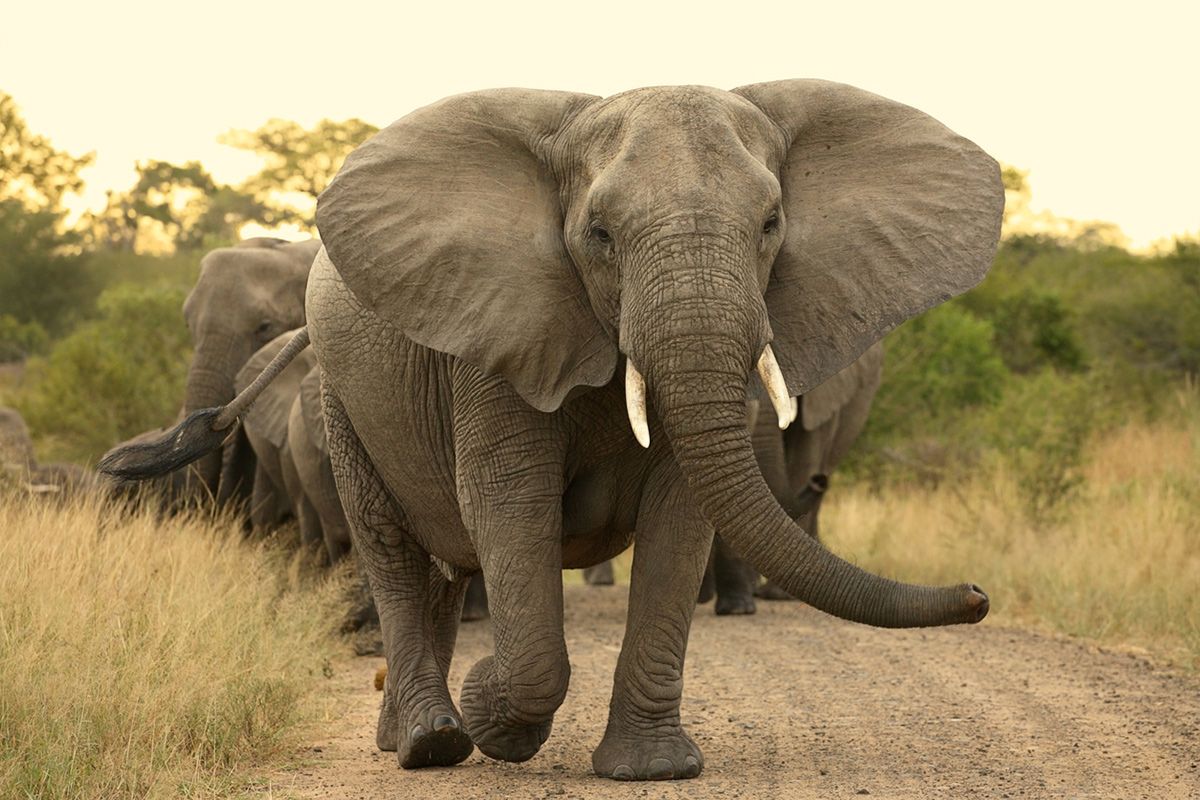
Leading up to the publication of a 2017 study on elephant sleep patterns, researchers tracked two free-roaming African elephants through Botswana. Their findings suggested these creatures tend to sleep for just two hours per day, often between the hours of 2 a.m. and 6 a.m. They also noted that the elephants went without sleep for as many as 46 hours in a sustained period of activity that may have had something to do with the threat of potential predation.

This isn’t to say elephants aren’t capable of sleeping for longer periods of time. For example, captive zoo elephants may sleep for between four and six hours, given the more secure environment. Wild elephants in larger family groups also tend to sleep for longer periods of time given their strength in numbers. The matriarch of a large herd may even sacrifice her own sleep in order to keep an eye out for predators, thus allowing others in the herd to rest. Basically, elephants may sleep for longer periods if there’s no perceived threat, though they often function on a mere two hours of sleep.

Credit: MARIOLA GROBELSKA/ Unsplash

Giraffes

In the wild, giraffes sleep for as little as 30 minutes a day, often due to their need to remain alert in the face of potential predators. Free-roaming giraffes have even been observed sleeping while standing up in order to allow for a quick escape, and they’ve been known to lean against trees to support their long necks and bodies. 

According to the San Diego Zoo, 30 minutes may actually be on the high end for wild giraffes, as some giraffes get as little as five minutes of sleep for every 24-hour period. This meager amount of sleep may come in the form of short  bursts of one or two minutes rather than one prolonged sleep session.

Of course, much like other animals, a giraffe’s sleep schedule may change in captivity. For instance, it’s normal for zoo-based giraffes to sleep for around six hours a day, as there’s no immediate threat to their safety. Whether in the wild or in captivity, the majority of this sleep happens in the nighttime, though it’s often supplemented by brief afternoon naps.

Credit: SeppFriedhuber/ iStock

Walruses

The sleep patterns of an average walrus differ quite substantially depending whether the animals are on land or in the water. On land, walruses tend to be major sleepyheads, dozing off for anywhere between two and 19 hours at a time, according to a 2009 study. But walruses have unparalleled endurance while in the water and have been known to stay awake when swimming for as long as 84 straight hours.

Walruses are prone to experiencing a phenomenon known as unihemispheric sleep, which essentially means half the brain sleeps while the other half stays active, allowing walruses to enjoy prolonged periods of activity while still resting part of their brain.

Credit: janeff/ iStock

Fruit Flies

In 2019, researchers analyzed a group of fruit flies to learn more about the critters’ sleep patterns. As expected, some of the bugs slept for substantial periods of time — anywhere from five to 10 hours a day. However, the research team also noticed something unusual among certain fruit flies: Around 6% of female fruit flies slept for just 72 minutes a day, while some outliers slept for as little as four minutes. 

To make matters more interesting, the flies that slept for shorter periods lived just as long as the flies that slept longer. While it’s been hard to make any conclusive claims based on the findings thus far, it raises some interesting questions about just how much sleep is truly necessary for fruit flies — and similar animals — to survive.

Credit: vkilikov/ Adobe Stock

Newborn Bottlenose Dolphins

While mature bottlenose dolphins have relatively unremarkable sleep schedules, newborns tend to avoid sleep altogether. Most babies in the animal kingdom require sleep to develop, but that’s not the case for these marine mammals. 

For the first month of life, bottlenose dolphins don’t sleep at all. Instead, the dolphins remain continually active and come up to the surface to breathe every three to 30 seconds. These findings come from a 2005 study led by researcher Jerome Siegel, who told New Scientist magazine, “The idea that sleep is essential for development of the brain and body is certainly challenged.”

Once dolphins reach maturity, they’re known to sleep for between five to eight hours per day, though the manner in which they sleep is quite different from what we’re used to as humans. Instead of becoming fully unconscious, they experience unihemispheric sleep, same as walruses. Even when “sleeping,” dolphins of many different species leave one eye open to stay aware of their surroundings, and half their brain rests while the other half functions.

Credit: Daniel Quiceno M/ Unsplash+

Cows

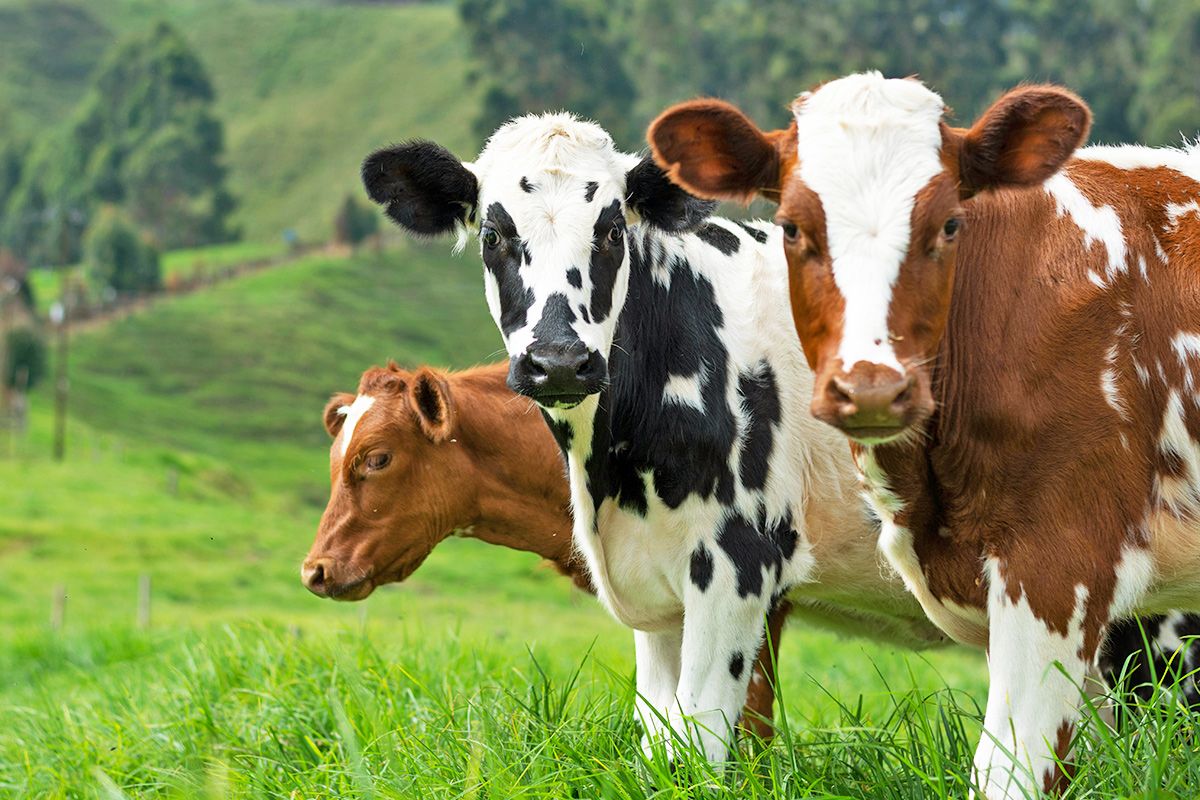
Cows tend to live a relaxing lifestyle; you’ve probably seen them grazing or lying in open fields. But when you see a cow sprawled out on the grass, odds are it’s simply drowsing — resting but remaining conscious — rather than outright sleeping. 

According to a 1972 study, cows drowse for roughly eight hours a day. They only sleep for up to four hours each day, which is on the low end among mammals. For example, chimpanzees sleep 9.5 hours each day, dogs nap anywhere between 10 and 18 hours, and housecats average 12 to 16 hours of daily sleep.

Cows, however, generally manage around 45 minutes or so of REM sleep, or deep sleep. In a 2019 study of dairy cows, it was discovered that this sleep comes in three to five minute periods that add up over the course of the entire day.

Bennett Kleinman
Staff Writer

Bennett Kleinman is a New York City-based staff writer for Inbox Studio, and previously contributed to television programs such as "Late Show With David Letterman" and "Impractical Jokers." Bennett is also a devoted New York Yankees and New Jersey Devils fan, and thinks plain seltzer is the best drink ever invented.

Original photo by klebercordeiro/ iStock

It’s a hot summer day and you’re enjoying that perfect scoop of ice cream to beat the heat. But then — ow! —  a sharp zing of pain shoots through your mouth. Or maybe you’re at the movie theater, savoring some Junior Mints or Skittles when that jolt of discomfort kicks in.

If you’ve ever winced while eating ice cream, sipping an iced coffee, or biting into a candy bar, you’re not alone. Millions of people deal with tooth sensitivity, and while it may feel alarming, the reasons behind it are usually simple, rooted in our evolution as a species. Let’s explore what’s really happening when your teeth react to cold or sweet foods — and what you can do about it.

Credit: sujit kantakad/ iStock

Teeth Are Tough, But Also Sensitive

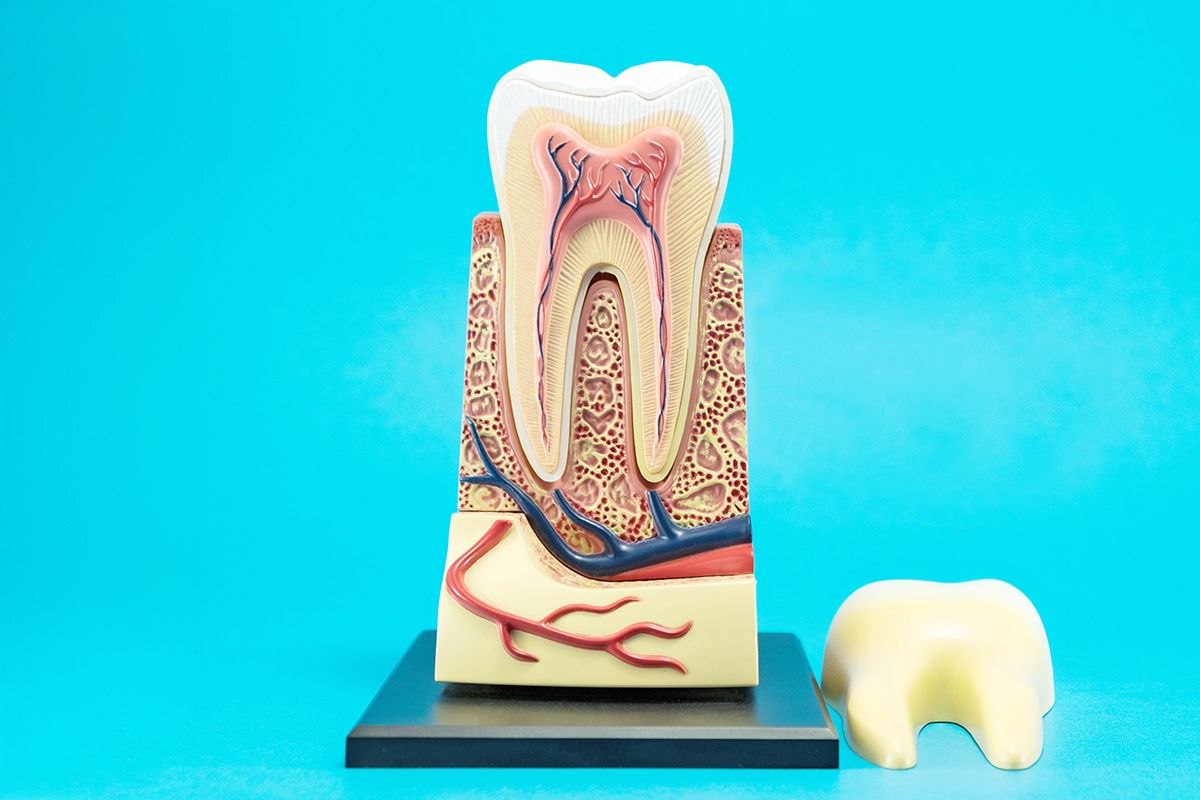
Your teeth may look like simple little bones, but they’re far more complex, and more sensitive, than they seem. Each tooth is made up of multiple layers. The outermost layer, enamel, is the hardest substance in your body and serves as a protective shell. Beneath the enamel is dentin, a more porous material filled with microscopic tubules

Those tiny channels lead to the pulp, where your tooth’s nerves and blood vessels live. When enamel wears down or gums recede, the dentin gets exposed — and that’s when discomfort can start. 

Cold drinks and food can be especially painful because they cause rapid temperature shifts in the mouth. Those sudden drops in temperature move quickly through the dentin’s tubules, stimulating the nerves and producing that painful zing. Cold tends to cause a more abrupt shift than heat, which is why it often provokes a sharper, more intense response. 

Sweet foods introduce a different challenge; sugar can seep into those open channels and irritate the nerves directly. It also feeds the mouth’s bacteria, which produce an enamel-weakening acid as a byproduct. While cold is the most common culprit, even hot or tangy food and beverages can lead to pain if the dentin is already exposed. This all adds up to a cycle of sensitivity that’s surprisingly easy to trigger.

Credit: StefaNikolic/ iStock

Our Teeth Can Become More Sensitive as We Age

Tooth sensitivity often becomes more noticeable as we get older. That’s because the protective layers around the nerves — enamel and gum tissue — gradually wear down over the years. Brushing too hard or using a stiff-bristled toothbrush can also contribute to enamel erosion and gum recession. 

And once the roots of your teeth are exposed, they’re especially vulnerable to pain. Unlike the crowns of your teeth, roots aren’t covered by enamel — just a thin layer of a specialized calcified substance called cementum that can easily wear away.

Other common causes of sensitivity include nighttime teeth grinding (bruxism), which can wear down enamel over time, as well as recent dental procedures such as fillings or deep cleanings, which may leave teeth temporarily tender. A combination of age, daily habits, and gradual wear-and-tear makes older adults more prone to feel that sudden sting when eating or drinking cold, sweet, hot, or even sour foods.

Credit: Science History Images/ Alamy Stock Photo

Teeth Weren’t Always Tools for Chewing

So as we age, our teeth may become more vulnerable — but that sensitivity isn’t a mere design flaw. In fact, it may be a feature that dates back hundreds of millions of years.

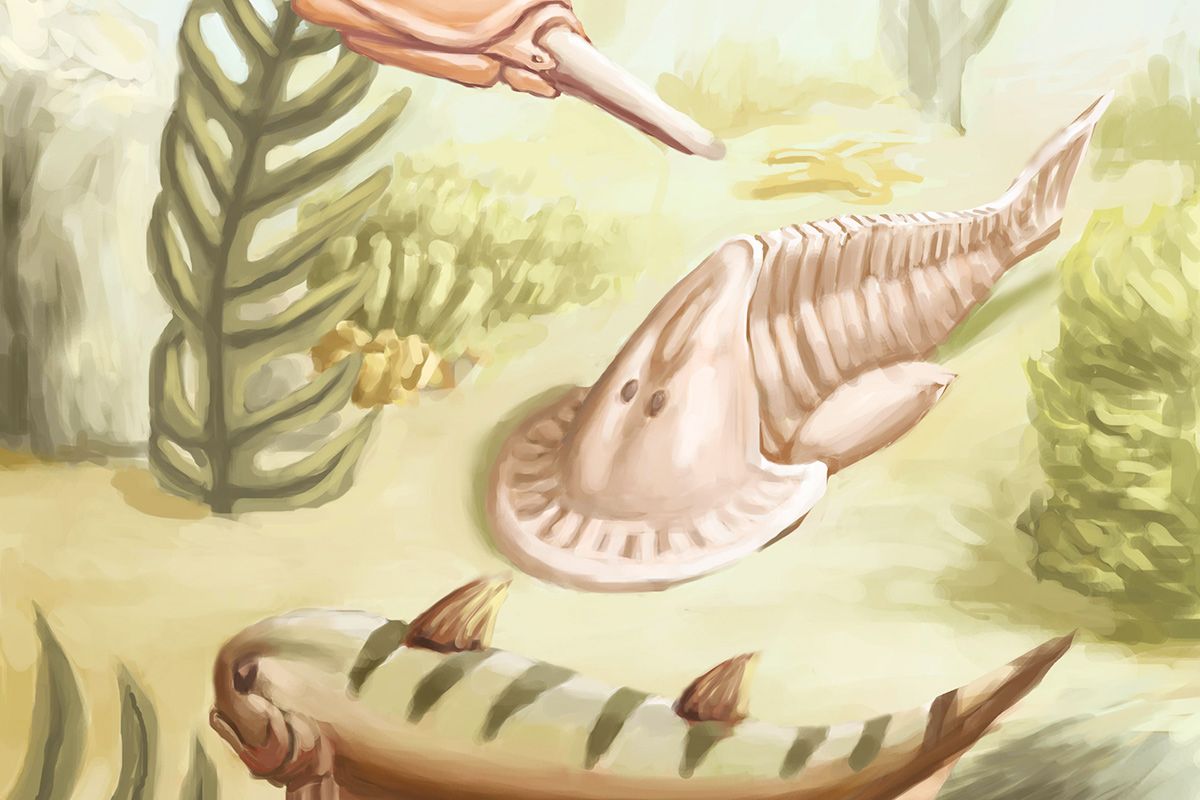
Recent research on ancient fish fossils reveals that teeth didn’t originally evolve for biting or chewing at all. The earliest tooth-like structures appeared more than 465 million years ago as part of the tough, armored skin of jawless fish. 

Those structures weren’t for eating — they were for sensing. Embedded in bony plates, they likely helped fish detect subtle changes in their environment, acting more like pressure or motion sensors than tools for eating food.

Over time, as fish evolved jaws and began snapping at prey, those sensory structures migrated inward and became specialized for biting and processing food, but they never shed their original function entirely. Even today, teeth are wired to be highly sensitive, especially to changes in temperature, pressure, and chemical composition. In a way, that sharp pain you feel when you sip something cold is a throwback to an ancient biological function: Your teeth aren’t just for chewing — they’re also essentially little environmental sensors in your mouth.

Credit: gpointstudio/ iStock

That Twinge May Be Your Tooth Demanding Attention

Occasional tooth sensitivity isn’t always cause for concern, but if the discomfort becomes frequent or intense, or if it lingers, it could point to something more serious such as a cavity, cracked tooth, or gum disease. Teeth are excellent messengers when something’s not quite right, and they typically won’t stop signaling until you do something to alleviate the pain.

Understanding the root causes of sensitivity can help you respond with more care and less worry. Small changes, including avoiding overly acidic foods or switching to a softer toothbrush or one specifically meant for sensitive teeth can make a big difference over time and make it easier to enjoy your favorite dessert.

So the next time you feel that sudden zing after a cold drink or sweet bite, you can thank evolution — and take it as a gentle reminder to give your teeth a little extra care. After all, they’re millions of years in the making.

Kristina Wright
Writer

Kristina is a coffee-fueled writer living happily ever after with her family in the suburbs of Richmond, Virginia.

Original photo by SWLphoto/ iStock

Clothing is often made to stand out, but beyond the bold prints and tailored cuts, some useful and clever details may also be lurking. You may not notice them unless you know what to look for: some strange stitching, a little extra fabric, or a seemingly random hole. 

These are more than just design quirks — they’re well-planned elements with a specific purpose. Here are a few of the hidden features in your wardrobe that make your clothing more versatile than you may realize.

Credit: apugach/ iStock

Extra Fabric in Seams and Hems

If you’ve ever peeked inside a suit jacket or at the hem on a pair of dress pants, you may have noticed a little more fabric than seems necessary. It’s not sloppy sewing — it’s actually quite the opposite. 

Known as seam or hem allowances, this extra material allows for easy alterations. It’s not as common in mass-produced clothing, but in higher quality or tailored pieces, that extra fabric exists so the item can be adjusted, whether you need to let out the shoulders, lengthen the sleeves, or amend the waist. 

Standard seam allowances are usually around one-half to five-eighths of an inch, but in garments made for alteration, they may be closer to 1 inch or more. Hems, especially on pants or coats, can have 2 or even 3 extra inches folded under. It’s a subtle but smart detail that could just give that favorite coat of yours a second life. 

Credit: seraficus/ iStock

Horizontal Buttonholes

On many dress shirts, you’ll notice something a little different about the very top and bottom buttonholes: They’re horizontal openings, while the rest are vertical. This subtle variation is a clever way to help keep those buttons from popping open

Vertical buttonholes are easier to fasten, but that also means they’re easier to unfasten, which isn’t ideal in high-stress spots such as the collar or waist. Horizontal buttonholes make the top and bottom buttons less likely to pop open when you adjust your tie, tug on your collar or shirt hem, or tuck and untuck your shirt. 

Credit: SomeMeans/ iStock

Sleeve Plackets

Most button-up shirts have plackets, aka a reinforced opening in a garment. It’s typically held shut with buttons, snaps, or a zipper, and its purpose is to make a garment easier to get on or off. 

On a dress shirt or blouse, for instance, a placket holds the buttons that fasten the shirt. And sleeve plackets allow the cuff to open up wider so you can easily slide your hand through or roll up your sleeves without stretching or tearing the fabric. Without this, your options would be tight cuffs or oversized sleeves — neither of which is especially ideal.

A standard sleeve placket has a peaked “roof” shape at the top and two overlapping sections: a wider strip roughly 6 inches long and an underlap that’s usually around half an inch. This key part of a shirt sleeve’s construction also helps the cuff lie flat and look polished when buttoned, a small but thoughtful detail that does a lot of quiet work.

Credit: Stakhov-Yuriy/ iStock

Hanger Strings

You’ve probably noticed thin ribbon, string, or even clear rubbery loops dangling from the inside shoulders of sweaters or dresses. They seem to serve no purpose (other than perhaps being slightly annoying) when you’re wearing the garment. But those strange little strings are actually very helpful, ensuring slippery clothes stay put on your hangers.

By looping them over the hanger hooks, they help distribute the weight of the item more evenly across the hanger and prevent wide or delicate necklines from sliding off and ending up crumpled on the closet floor. They’re not glamorous, and many people just cut them off, but for structured storage, they’re quite practical.

Credit: Michael Derrer Fuchs/ Adobe Stock

Shoulder Straps

You’ll see them on trench coats and leather jackets and motorcycle jackets: short straps on the shoulders, usually snapped closed near the collar. They’re also called epaulettes, and while they’re mostly decorative today, they have a practical history. 

The word “epaulette” comes from epaule, a French word for shoulder. Early epaulettes were simple cloth straps used to keep sashes, belts, or gear from slipping — a handy feature for soldiers carrying bags, rifles, or swords. They were also a way to display rank, with embroidered insignia placed on the strap or near the rounded portion around the edge of the shoulder.

In the 1830s, both the U.S. Army and Navy began phasing them out of everyday uniforms in favor of flat shoulder straps, partly because the raised epaulettes were considered too conspicuous. But the style stuck around. On modern motorcycle jackets, shoulder straps can still serve a functional purpose by helping keep bag straps from sliding while riding. Whether or not you use them that way — or ever even thought to at all — they’re a time-tested nod to utility.

Credit: Tarzhanova/ iStock

Material Darts

If you’ve ever noticed small, triangle-shaped seams near the bust or waist of a shirt or dress, they aren’t the same as the V-shaped “Dorito” near a sweatshirt collar — what you’re looking at are actually called “darts.” These stitched folds help shape the garment to the human body, creating structure and definition in all the right places.

Darts allow designers and sewists to contour clothing without relying on stretchy fabrics or loose fits. You’ll find them most often in tailored items such as blouses, dresses, and suit jackets, subtly transforming otherwise flat fabric into a three-dimensional shape that drapes over your body the way it should.

Credit: kool99/ iStock

Heel Locks

Some athletic shoes have extra eyelets near the top, set a bit back from the rest, that don’t seem to have much of a reason for being there. Maybe you’ve ignored them, assuming they were simply decorative, or perhaps you’ve included them when lacing up your kicks. 

If the latter is the case, you’ve accidentally discovered heel-lock lacing. Also called a runner’s loop, using these heel locks helps create a tighter fit around the ankle to keep your heel from sliding around (which can happen even if your running shoes fit well).

To lock that heel in, loop each lace through the top eyelet on the same side to form a small loop, then cross the laces and pull them through the opposite loops before tying a regular bow. They’re not strictly necessary, but if you’ve got the eyelets, you’ve got the option — and your feet will probably thank you for it.

Nicole Villeneuve
Writer

Nicole is a writer, thrift store lover, and group-chat meme spammer based in Ontario, Canada.

Original photo by Parsing Eye/ Unsplash

Many of us probably think of deserts as barren stretches of sand, but there’s far more to these landscapes than you might assume. While it’s true they can be harsh and sometimes hauntingly isolated, few deserts are completely desolate. They’re vibrant ecosystems that in many cases support human populations, and nearly all the planet’s deserts are home to uniquely resilient plant and animal life. 

Deserts are so much more than hot and sandy — and they actually exist on every continent, including the icy plains of Antarctica. Here are six fascinating facts that just might change the way you think about deserts.

Credit: VCG via Getty Images

They Aren’t Defined by Heat

It’s easy to assume deserts are just scorching-hot stretches of sand that bake under the sun. But the real defining feature of a desert isn’t temperature — it’s precipitation. By scientific definition, a desert is any region that receives fewer than 10 inches of precipitation per year. And while that moisture usually falls as rain, snow can also occur in hot deserts when clear skies and exposed land surfaces allow temperatures to plummet.

Deserts can be hot — such as the Sonoran in the Southwestern United States or the Sahara, which spans much of North Africa — or cold, such as Antarctica and the Gobi in the wintertime in Northern China. What they all share is extreme dryness, leading to sparse vegetation and limited surface water.

Credit: Jack Smith/ iStock

Cacti Aren’t Native To Most Deserts

Cacti have become synonymous with desert life, but these spiny mascots are native only to the Americas. These plants have unique areoles, aka small structures from which spines and flowers can grow. That means the towering saguaros of Arizona or the rounded golden barrels of Mexico won’t be found in other parts of the world.

Cacti have become synonymous with desert life, but these spiny mascots are native only to the Americas. Defined by their unique areoles, the small structures that sprout both spines and flowers, cacti didn’t evolve elsewhere, so familiar sights like the towering saguaros of Arizona or the rounded golden barrels of Mexico won’t be seen in other parts of the world.

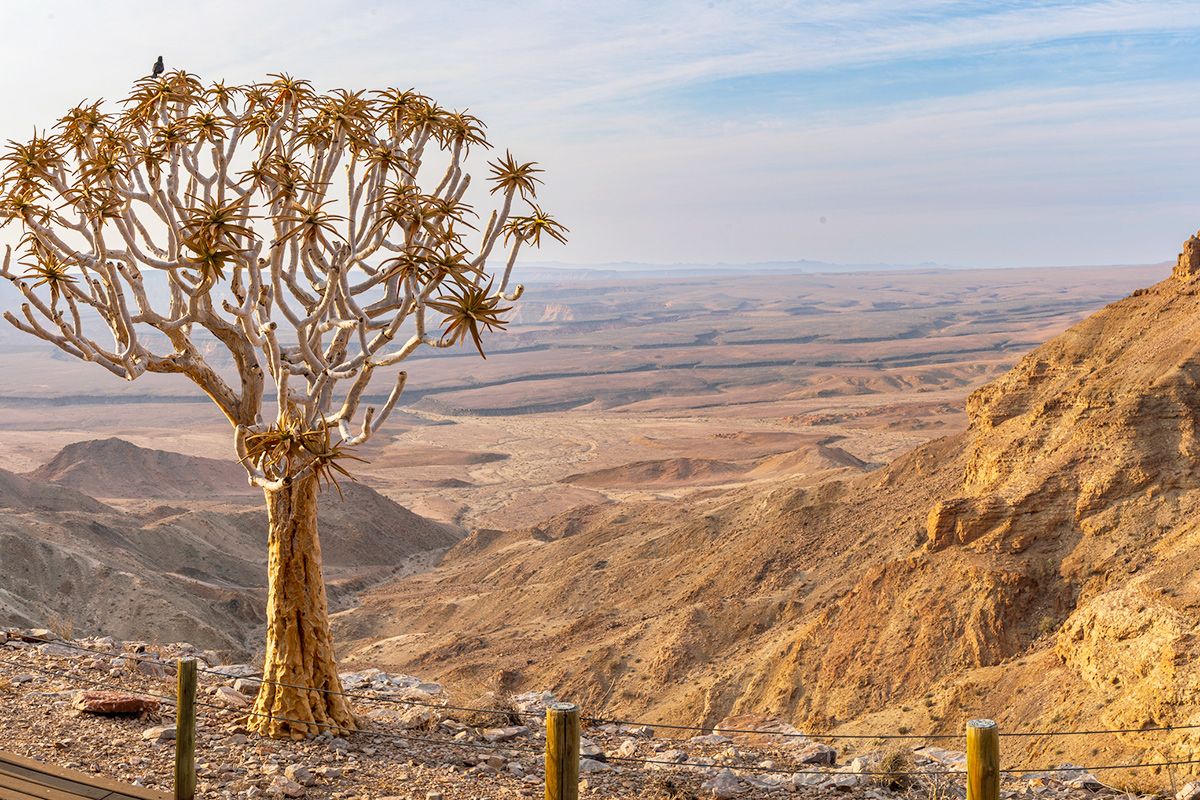
Australia’s Outback or Africa’s Namib Desert, for example, are home to their own drought-adapted plants, but they aren’t true cacti. Australia’s bottle trees store water in specialized tissues, while the Namib’s rare Welwitschia plant can survive for thousands of years in some of the driest places on Earth.

Credit: Temir Shintemirov/ iStock

Deserts Make Up Roughly One-Fifth of the Earth’s Surface

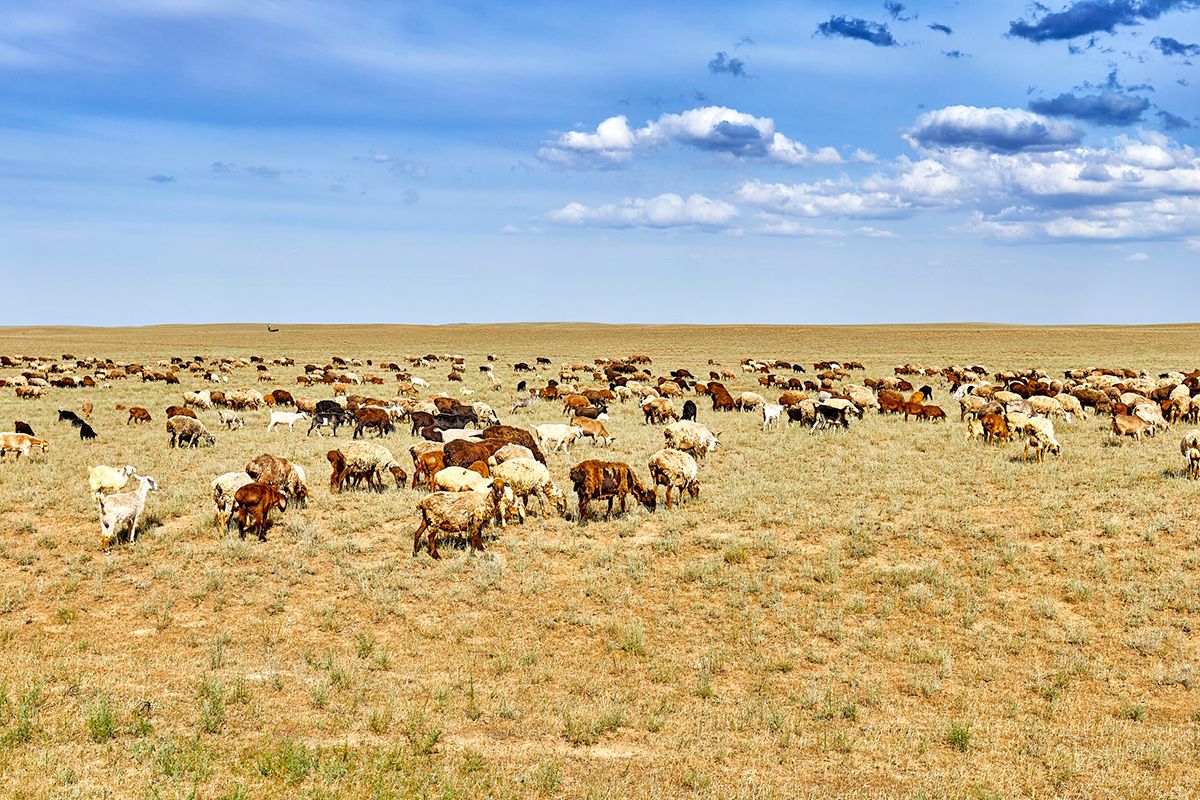
Although deserts may seem like rare or remote environments, they’re actually a common land type. About 20% of Earth’s land surface is classified as a desert due to the low levels of precipitation. If you include all arid and semi-arid regions — areas that experience long dry seasons or persistent moisture deficits — that number rises to about 33% of Earth’s land surface, making drylands one of the planet’s most widespread biomes. 

Those vast stretches don’t just sit empty, of course: More than 1 billion people live in or around desert regions, including communities across the Sahara, the Gobi, and the American Southwest. Many have adapted over generations, building livelihoods around nomadic herding and breeding as well as dryland farming.

Credit: sumikophoto/ Adobe Stock

Life Thrives Below the Surface

At first glance, deserts may appear sunbleached and lifeless — but just below the surface, a surprising amount of life is hard at work. One of the most important players is biological soil crust. In the desert, this thin, living layer consists mostly of cyanobacteria, ancient photosynthetic bacteria that have been around for more than 2.5 billion years.

These microorganisms form dense, thread-like networks just below the ground’s surface; as they move through the soil, they secrete a sticky substance known as desert glue that helps resist erosion and holds moisture. These humble microbes are often the first life forms to settle and thrive in barren land, paving the way for mosses, lichens, and eventually, plants.

Credit: Anna Volk/ iStock

Deserts Can Bloom After Rain

Most of the time, deserts are dry and dusty, but when the conditions are right — usually after a rare rainfall — they can erupt into a short-lived explosion of color. This phenomenon is known as a “superbloom,” and it’s as stunning as it is unpredictable. Just one good rainfall can trigger a dramatic transformation almost overnight: Dormant seeds, some of which may have been lying in wait for years, suddenly burst into vibrant life.

Those hardy seeds can sprout wildflowers, grasses, and flowering cacti. When they receive that long-awaited rain, they germinate quickly, race to bloom, and set seed again before the water disappears. In places such as California’s Anza-Borrego Desert or Chile’s Atacama, these superblooms can blanket the landscape in vibrant purples, yellows, and oranges, making for a surreal sight in what’s typically a largely monochromatic sea of sand and stone.

Credit: slowmotiongli/ Adobe Stock

There’s a Specific Term for Desert Animals

Animals that live in deserts are so uniquely adapted to their environment that they have their own name: xerocoles. Xerocoles have developed incredible strategies to beat the desert heat and survive on minimal moisture. For example, fennec foxes, which are native to Northern African deserts, have large ears to help dissipate heat, while kangaroo rats get all the water they need from seeds without having to drink a single drop.

Many of these (often adorable) critters are also nocturnal, coming out only at night to avoid the sun’s punishing rays. Others burrow underground or go into torpor — essentially a mini-hibernation that temporarily slows down body function — to conserve energy and ensure they don’t just survive, but continue to thrive in their rather harsh surroundings.

Nicole Villeneuve
Writer

Nicole is a writer, thrift store lover, and group-chat meme spammer based in Ontario, Canada.

Original photo by LightStock/ iStock

When you stroll the produce aisles of a modern grocery store, it’s easy to take for granted the vibrant, plump fruits and vegetables that line the shelves. But what you are actually seeing is, in many cases, the result of thousands of years of selective breeding during which humans transformed wild plants into the common agricultural products we know today. 

In fact, much of our modern produce would be virtually unrecognizable to our ancestors. The opposite is also true: If you were to go back thousands of years, you might well turn your nose up at the tough skin, bitter flesh, and overly large seeds of those ancient foodstuffs — characteristics that farmers have selectively removed over the centuries, giving us produce with more desirable traits to satisfy our modern tastes.

Here are six fruits and veggies that have transformed over time, representing the culmination of thousands of years of agricultural artistry.

Credit: Fellipe Abreu/ iStock (left), mikvivi/ iStock (right)

Corn

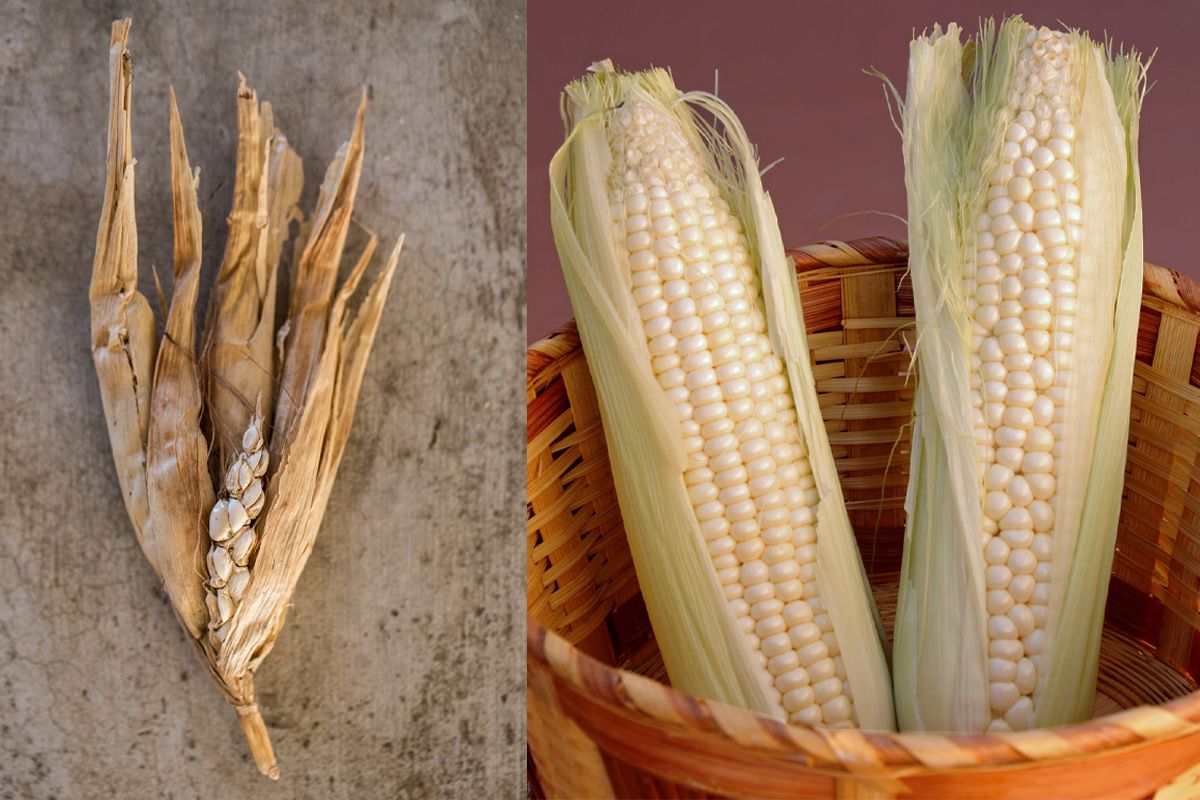
Of all the common fruits and vegetables, corn has possibly undergone the most dramatic transformation.  It evolved from a wild grass called teosinte, and while the two plants are surprisingly alike at the DNA level, they are very different in terms of their plant architecture.

Teosinte is a bushier, branching grass with small, inconspicuous seed spikes holding just 10 grains each, with its kernels encased in hard, dark shells. This is a far cry from modern corn (also considered a member of the grass family), with its erect stem and ears and succulent cobs that bear several hundred grains.

The history of modern-day corn stretches back as far as the dawn of agriculture itself. Some 10,000 years ago, ancient farmers in what is now Mexico began selecting seeds to plant from the largest, most productive, or tastiest corn specimens. Thus began the process of selective breeding, one harvest after another, which eventually led to the corn cobs we know and love today. 

Credit: piemags/ Alamy Stock Photo (left), THEPALMER/ iStock (right)

Watermelons

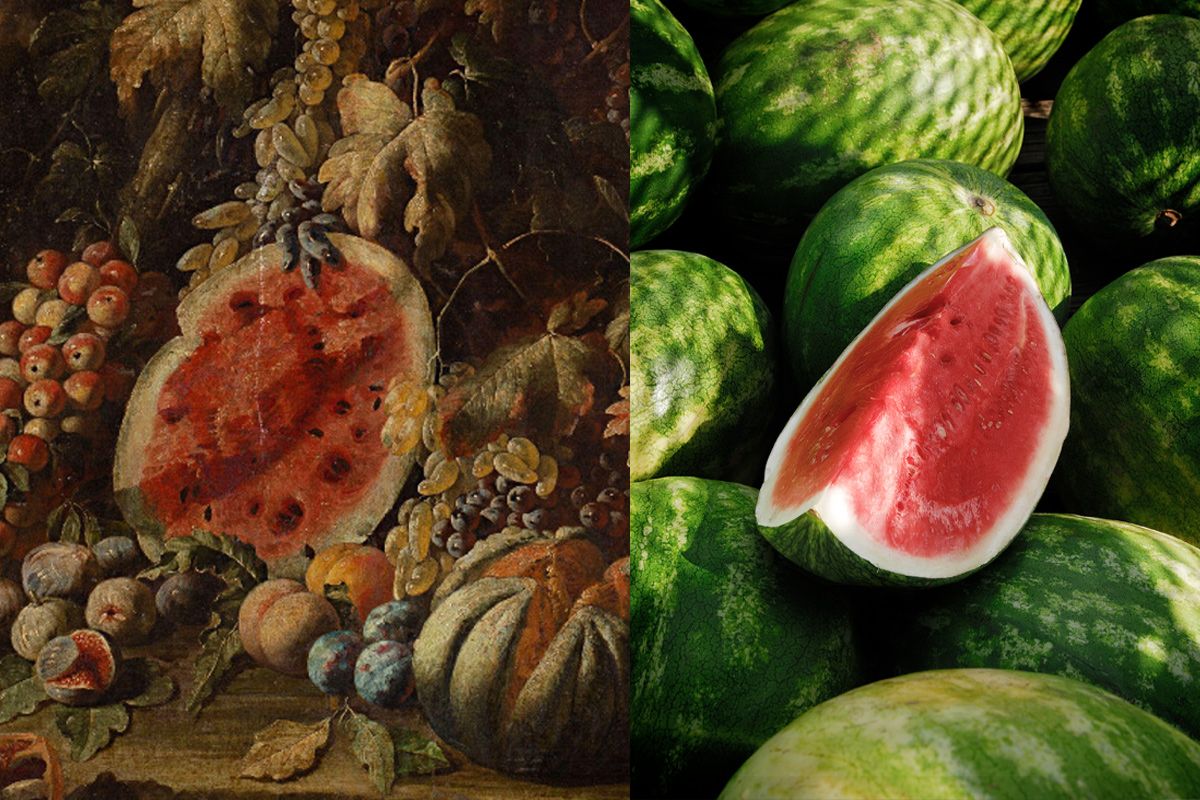
People have been eating watermelon for millennia, but it didn’t always look or taste the same as it does today. Initially, the fruit was hard and unappetizing, tasting either bitter or bland — a far cry from the sweet, juicy fruit we enjoy now. Watermelon seeds have been discovered in Egyptian tombs built more than 4,000 years ago, but back then the fruit was likely stored for its water content rather than its taste; it was meant to provide the deceased with hydration on their journey to the afterlife. 

After centuries of selective breeding, farmers gradually developed varieties with sweeter flesh, more water content, and the characteristic red color we associate with ripe watermelons (which is caused by the pigment lycopene and is closely tied to the fruit’s sweetness). But even when watermelons arrived in European gardens and markets around 1600, they still didn’t look the same as today. One way we know this is through artistic representations of fruit, such as Giovanni Stanchi’s painting from the 17th century, which clearly displays watermelons with a noticeably different internal color and structure to those we now buy at the supermarket. 

Credit: Swapan/ Adobe Stock (left), tycoon751/ iStock (right)

Bananas

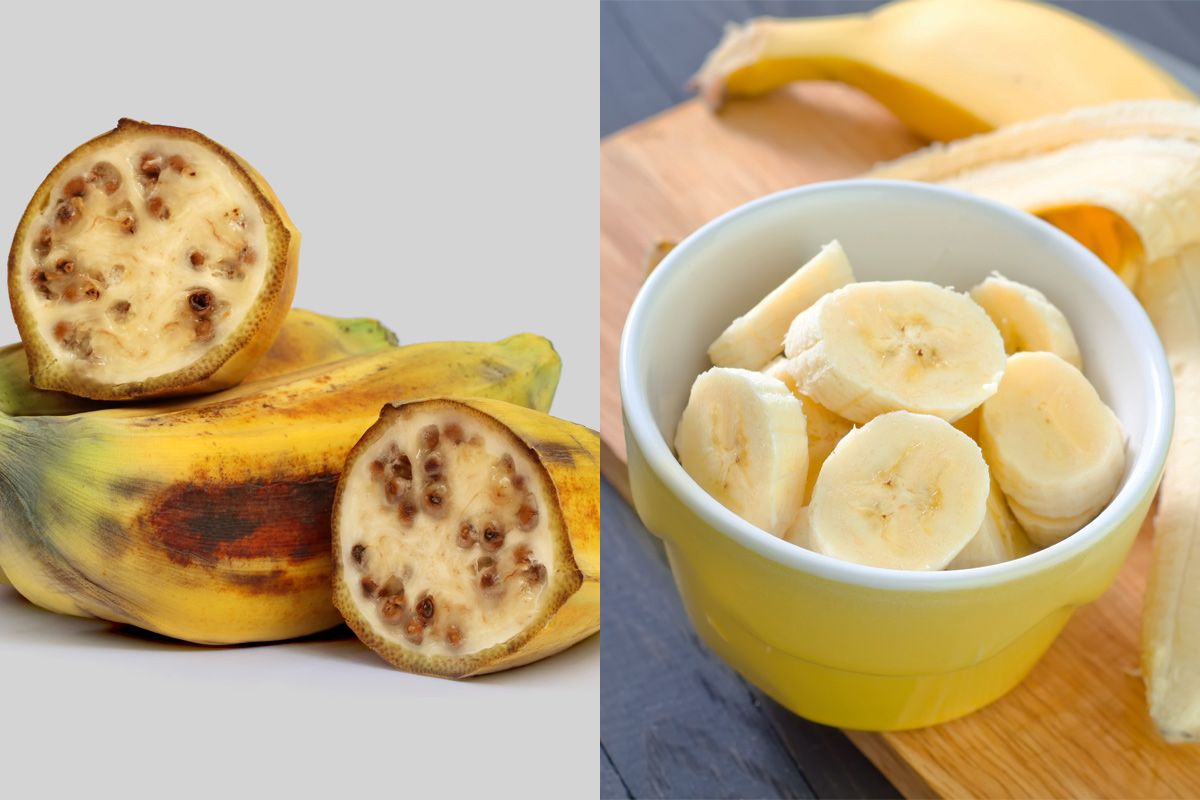
Bananas are one of the most widely grown and consumed fruits in the world, but they underwent quite a makeover before achieving their current popularity. The wild ancestors of modern, domesticated bananas were riddled with bullet-like seeds and contained very little edible fruit — barely recognizable when compared to the creamy, sweet bananas we eat today.

Banana domestication began some 7,000 years ago, first by crossbreeding wild species and then through careful selective breeding of domesticated crops. This eventually led to our modern bananas, which are almost all flesh and contain only residual seeds, rendering them sterile. In the case of the banana, the emphasis on sweetness and edibility exceeded — and eventually did away with — the domesticated fruit’s reproductive capability, requiring the fruits to now be primarily grown through asexual propagation methods.

Credit: Old Images/ Alamy Stock Photo (left), pepifoto/ iStock (right)

Peaches

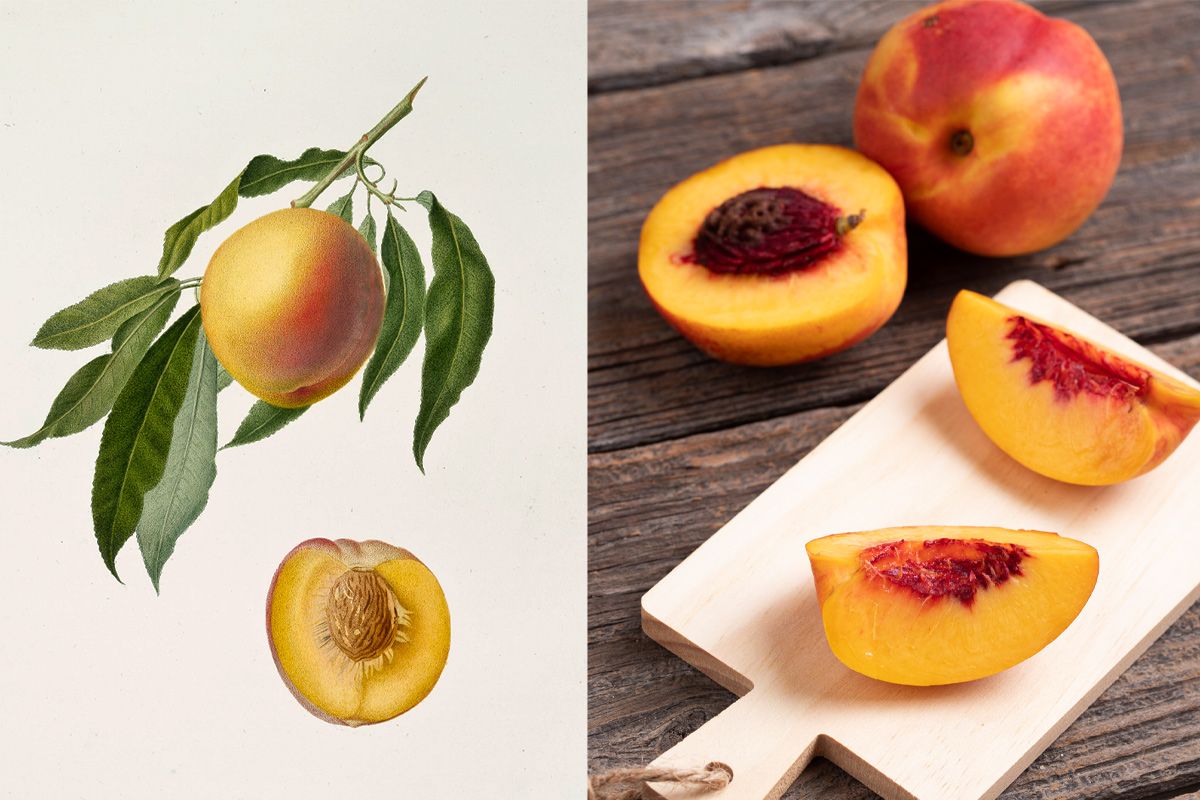
Peaches have been cultivated for thousands of years, with evidence suggesting domestication of the fruit occurred as early as 6000 BCE in China’s Zhejiang province. But these were not the large, delicate, sweet, juicy peaches we know today.

In fact, we don’t know what the original wild peaches looked like, and for good reason: Fossil evidence shows that wild peaches have been evolving in China since long before there was even a human presence in the region, much less agriculture. But we do know that the earliest cultivated peaches were much smaller than those we eat today, with a more acidic taste and a greenish-cream color.

Credit: Chris Howes/Wild Places Photography/ Alamy Stock Photo (left), Andrelix/ iStock (right)

Carrots

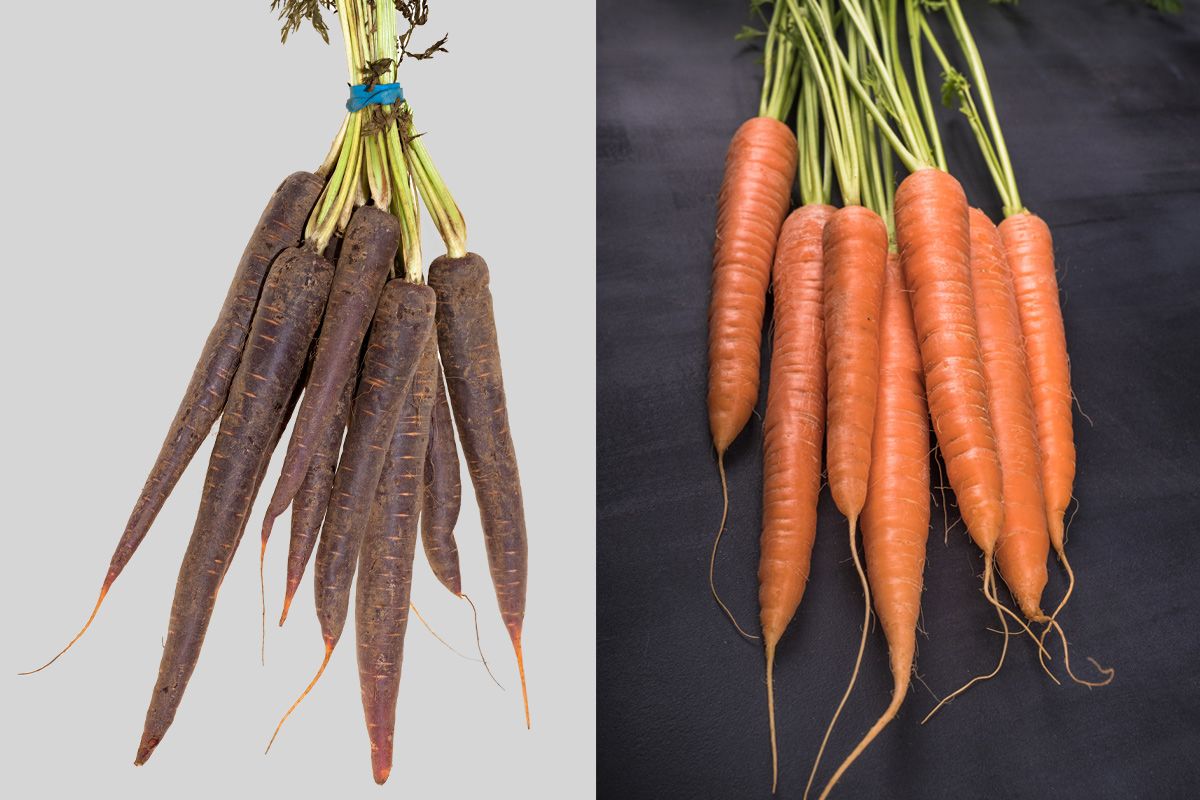
If you ask someone to name something orange, a common answer would be “a carrot.” But carrots acquired their characteristic orangeness a long time after they were first cultivated. 

Carrot domestication began more than 1,000 years ago in ancient Persia, at which point they were purple or yellow and likely had tough, bitter, and spindly forked roots. It was only during the 17th century that farmers in Holland began doing some crafty selective crossbreeding that would ultimately give carrots their now-standard orange color. 

Tony Dunnell
Writer

Tony is an English writer of nonfiction and fiction living on the edge of the Amazon jungle.

Original photo by 1971yes/ iStock

We all have some preconceived notions about how certain things sound, often shaped by movies, television, and our own assumptions rather than reality. If someone tells us a story involving a noisy scene, our brain tends to fill in the gaps and is quite capable of imagining a particular sound even if we’ve never heard it in real life. 

This can lead to some surprising disconnects between expectation and reality. Some things are much quieter than we expect, others produce entirely different tones, and some make no sound at all despite our certainty that they should. Here’s a look at a few things that don’t sound the way we think — starting with our own voices. 

Credit: FabrikaCr/ iStock

Our Own Voices

For many of us, listening to a recording of ourselves speak is a truly cringeworthy experience. This phenomenon is so common that the negative reaction even has a name: voice confrontation. When recorded, our voices don’t sound like we think they should partly because a recording removes the sounds we hear internally through the bones in our head, which produce deeper and lower frequency vibrations. 

As such, our recorded voices can sound higher in pitch than we’re used to, which can be surprising and not entirely pleasing to our ears. In general, however, the more we listen to recordings of ourselves speaking, the more accustomed we become to how we sound to other people, and the less it makes our skin crawl.

Credit: nito100/ iStock

Punches

If we’re lucky, we’ll live our lives without ever being on the receiving end of a proper punch. And yet, we all tend to have a certain idea of what a punch sounds like, even if we’ve never gotten (or given) one or even heard one close-up. Once again, this is largely thanks to TV and movies, whether it’s the Bam! Kapow! of the original Batman series or the epic thwacks and smacks of action films such as Rocky and John Wick

But real punches — as well as kicks, chops, and slaps — don’t tend to produce anywhere near as much noise as they do on the big screen. Actual physical strikes create much duller, less dramatic sounds — more like a thud than a crack. In movies, these noises are deliberately heightened, with sound effects departments using all manner of techniques to create a dramatic punch effect, whether it’s by smacking a piece of raw meat with a leather-gloved hand or socking a cabbage.

Credit: razihusin/ iStock

Submarines

When we see submarines in movies, they’re almost always gliding through the water while emitting a constant pinging sound and carrying a chatty crew. In reality, submarine operations are normally carried out as silently as possible, with crews speaking in whispers or not at all, avoiding all unnecessary noise — including that constant pinging, which would be counterproductive on most missions. 

While the sonar operator may hear some pings, the rest of the crew often hear nothing at all. Divers are sometimes able to hear active sonar sounds coming from subs out in the water, which they normally perceive as a mid- to high-pitched noise, but not that classic Hollywood ping. And sometimes the sonar emits an ear-piercing shriek — enough to spook even the most seasoned underwater adventurers.

Credit: supersizer/ iStock

Car Crashes 

We’re all familiar with what cars sound like on a day-to-day basis. But when it comes to less common vehicular events such as car crashes, our expectations have often been misled by Hollywood. Car crashes in real life can be noisy, traumatic events, but they are rarely as loud as depicted in the movies, which tend to feature an excess of shattered glass and twisted metal, followed by unrealistic explosions. It’s almost impossible for a car to explode the way they do in Hollywood films, and vehicles also rarely catch fire. 

Another common movie sound effect that makes car aficionados grit their teeth in frustration is the ubiquitous screeching tire. Foley artists — the people who add sound effects into movies in the post-production process — sometimes get carried away in chase scenes, making tires squeal excessively on gravel, dirt, wet pavement, and even snow and ice (looking at you, James Bond) — places where tires don’t normally screech.

Credit: Dmitri Toms/ iStock

Silencers on Guns

Silencers, also known as suppressors, significantly reduce the noise made when firing a weapon. In the movies, however, that noise is often reduced to unrealistic levels, with the gun hardly making any noise at all.

In reality, even the most effective suppressors on the smallest caliber firearms can only reduce the peak sound level of a gunshot to around 110-120 decibels. An unsuppressed gunshot can reach up to 160 decibels, so the noise reduction when using a suppressor is significant — but far from the whisper-quiet shots depicted in many films.

Tony Dunnell
Writer

Tony is an English writer of nonfiction and fiction living on the edge of the Amazon jungle.

Original photo by Thaishutter_2528/ iStock

Gold has been a universal symbol of wealth, power, and beauty for thousands of years. Its chemical symbol, Au, is derived from the Latin aurum, meaning “shining dawn,” a tribute to the element’s radiant luster. The Romans weren’t the only ancient civilization to value gold, though: There’s evidence of gold mining in Eastern Europe dating back to around 4000 BCE. 

Today, gold can be found in many facets of daily life, from jewelry and collectibles to modern spacecraft and medical devices. It has endured as a universally revered metal, both rare and resilient, leaving a lasting mark on human history. But just how much gold exists in the world, and what is its true value? Here’s a rundown of all the gold on Earth, from the rings on your fingers to the ore deposits hidden deep inside the ground.

Credit: powerofforever/ iStock

How Much Gold Have We Already Mined?

According to the World Gold Council, the total amount of gold above ground worldwide is 216,265 metric tons, equivalent to approximately 238,391 U.S. tons. This accounts for nearly all the gold humanity has ever unearthed, most of which has been mined within the last century. In fact, approximately two-thirds of the total mined gold on Earth wasn’t extracted until 1950 or later, mainly due to advancements in the mining industry. 

While this may sound like an unimaginable amount of gold, this metal is surprisingly compact. If you melted down every ounce of gold ever mined and formed it into a cube, it would measure only 22 meters across, or approximately 72 feet 2 inches — about the length of a standard semitruck.

So where is all this gold now? The most considerable portion, approximately 45% (107,088 tons), has been crafted into jewelry: rings, necklaces, bracelets, and other adornments that span cultures and centuries. The second-largest portion of mined gold, 22%, is found in bars and coins, which includes gold-backed exchange-traded funds (ETFs), while another 17% is held by central banks. 

The remaining 14% is allocated for industrial uses, including electronics, the aerospace industry, and medicine. In dentistry alone, approximately 13 U.S. tons of gold are used annually to fashion crowns, bridges, inlays, and dentures. Gold’s nontoxic and noncorrosive properties have made it invaluable in these fields.

Credit: TomasSereda/ iStock

How Much Gold Is Still Hidden Underground?

The truth is we will never be able to unearth all the planet’s gold. Beneath our feet lies an estimated 186,880 metric tons (approximately 206,000 U.S. tons) of gold, holding the potential to nearly double our world supply — but this doesn’t include the tiny flecks and nuggets of gold distributed throughout rocks and water that aren’t economically viable to mine. There are .004 grams of gold per ton of Earth’s crust, which shakes out to 400 million metric tons (441 million U.S. tons) of gold in the crust.

The World Gold Council categorizes the mineable underground stock into two groups: “reserves” and “resources.” Approximately 30% of the below-ground stock is classified as “reserve” gold — that is, an ore deposit that can be economically extracted. These are confirmed sources that have been marked as viable for future mining operations.

The remaining 70% of underground deposits are categorized as “resources.” There’s less certainty surrounding these deposits, and they may ultimately never be mined due to geological, technological, or regulatory challenges. Although these are speculative sources, they exist nonetheless.

But all these numbers come with one massive caveat: More than 99% of the planet’s gold is located in its core and is excluded from this data because mining it will never be possible. One estimation posits that 1.6 quadrillion tons of gold lie within the Earth’s core.

Credit: ayala_studio/ iStock

What Is the World’s Total Gold Supply?

When combining all the mined gold with the estimated below-ground deposits, the total amount of gold on Earth comes to approximately 403,145 metric tons (444,391 U.S. tons). To put this into perspective, that’s equivalent to the weight of roughly 59,286 African elephants or four Nimitz-class aircraft carriers

But despite its weight, as we previously mentioned, gold is deceptively compact. It’s one of the densest naturally occurring metals on Earth — heavier than lead, silver, copper, nickel, and iron — weighing in at 0.698 pounds per cubic inch. If all 400,000+ tons of gold were melted down, it would form a cube measuring roughly 40 meters across, or about half the length of a football field.

Credit: Björn Wylezich/ Adobe Stock

How Much Is It All Worth?

The most common method to determine the value of this precious metal is through the “spot price,” aka the current price for immediate delivery of gold. The spot price is determined by trading values in major gold markets worldwide, including the London Bullion Market Association and the New York COMEX, based on supply and demand. 

This price constantly fluctuates during market hours; for example, it rose from approximately $2,630 per troy ounce in January 2025 to more than $3,340 per troy ounce in July 2025. A “troy ounce” is the traditional metric unit of measurement for precious metals (originating in Troyes, France) that’s been used since the Middle Ages. One troy ounce equals 1.097 regular ounces. 

According to the spot price of gold in July 2025, the total estimated global gold supply as of 2025 — 403,145 metric tons — would be valued at an astonishing $43.29 trillion. However, this figure only tells part of the story: The spot price of gold doesn’t account for other real-world expenses involved in transforming raw metals into products, so the value of the world’s gold is actually much higher.

For instance, a one-ounce 2025 American Eagle Gold collectible coin may have a spot price of approximately $3,300, but it currently sells for $3,525.40 (despite having a face value of $50). This added cost takes into account factors such as refining, minting, packaging, and demand. While $43 trillion is a reasonable estimate based on the current market value of Earth’s gold, its actual value, considering rarity, craftsmanship, labor, and other factors, could be significantly higher.

Rachel Gresh
Writer

Rachel is a writer and period drama devotee who's probably hanging out at a local coffee shop somewhere in Washington, D.C.

Original photo by Thaishutter_2528/ iStock

Playing cards aren’t just one of the most ubiquitous objects in human culture (who doesn’t have a deck lurking in a drawer somewhere?) — they’re also one of the most iconic. Whether new and neatly packaged or old and well-thumbed, cards have a certain mystique about them. From the casino table to the magician’s hand, these simple pieces of plastic-coated paper have achieved a status that transcends their simple yet elegant design. 

Yet despite this familiarity, few people know the fascinating journey that cards have taken throughout history. Here, we take a look back through time to trace the origin of playing cards.

Credit: JUN LI/ Alamy Stock Photo

Ancient Origins 

The earliest known written reference to playing cards is found in Chinese literature from the 10th century, though there are no details about card markings or the particular games played. In The Invention of Printing in China and Its Spread Westward, author Thomas Francis Carter notes that playing cards likely originated in China around the same time as paged books, writing, “As the advent of printing made it more convenient to produce and use books in the form of pages, so was it easier to produce cards.” 

Carter goes on to explain how these cards, known as “sheet-dice,” began to appear before the end of the Tang dynasty, which ruled China from 618 to 907 CE. He also suggests the possibility that “sheet-dice” evolved in two different directions during the Song dynasty (960-1279 CE). Some were eventually made using bone or ivory and developed into games such as mahjong, while others retained their paper form, were embellished with new and more intricate images and designs, and became the true ancestors of modern playing cards. 

Credit: Art Collection 2/ Alamy Stock Photo

Playing Cards Take Shape

As trade routes expanded during the Song dynasty, early playing cards began to spread westward along the Silk Road, carrying with them the fundamental concepts that evolved into the decks we recognize today. The most important stage on this journey happened in the Islamic world. By the 14th century, playing cards had reached the Mamluk Sultanate, which controlled Egypt and parts of the Middle East, at which point the cards underwent a significant transformation.

Thanks in part to the discovery of one particular set of cards from the 1400s, we can see how card design progressed toward something simil (440ar to modern decks. The Mamluk pack, as it is sometimes referred to, was discovered in 1931 in Istanbul’s Topkapi Palace Museum. The deck is divided into four suits, with 13 cards per suit. It has just 47 cards, but if it were complete, it would have contained 52 cards, just like today. 

The design of this centuries-old deck is also surprisingly similar to the packs of cards we use today. The cards feature a symbol for each of the four suits: cups, coins, swords, and polo sticks, which reflect the culture and interests of the Islamic aristocracy. And each suit contains 10 numbered cards as well as three court cards: the king (malik), the viceroy or deputy king (naib), and the second deputy (naib thani).

Credit: Charles Walker Collection/ Alamy Stock Photo

Origins of the Four Modern Suits

Playing cards made their way to Europe in the late 14th century. Some theories suggest they were brought back by returning Crusaders, which is possible, although scant supporting evidence exists. It’s more likely they came through trade with the Islamic world, including with the Mamluks. 

Thanks to written accounts from Spain, France, and Switzerland, we do know that playing cards grew in popularity in Europe from 1370 to 1400, although standardization was still a long way off. During the 15th century, European decks sometimes contained five rather than four suits, and specific regional tastes meant that different suit motifs also emerged. Germans, for example, used hearts, acorns, bells, and leaves, while the Italians favored cups, swords, batons, and coins. 

It was the French, however, who made perhaps the most significant contribution to modern playing card design. In the late 1400s, they adapted the German suits to create pique, coeur, carreau, and trèfle — known in English as spades, hearts, diamonds, and clubs.

French card makers also simplified the production process by using stencils and developing more efficient printing techniques, making cards more affordable and widely available. This helped popularize the design in Europe, and the colonial exploits of the French, Spanish, and British introduced the newly standardized playing cards to the rest of the world.

Tony Dunnell
Writer

Tony is an English writer of nonfiction and fiction living on the edge of the Amazon jungle.