

Original photo by © Natalia Blauth/Unsplash.com
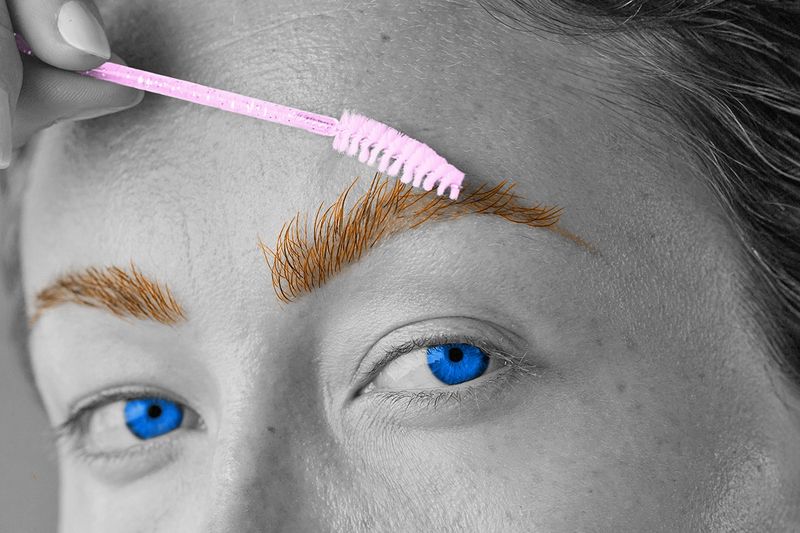
Eyebrows are one of those features we rarely stop to question, even though they’re central to human expression. They frame and highlight the eyes, shift with our changing emotions, and help us recognize one another. Entire beauty trends have revolved around styling them, from the pencil-thin brows of the 1920s to today’s fuller, more feathery looks.
But unlike other facial features such as eyes or teeth, eyebrows don’t seem immediately essential for survival. So why did we evolve them at all?

They Protect the Eyes
One of the simplest functions of eyebrows is protection. They help divert sweat, rain, and debris away from the eyes. Even a small amount of moisture can blur vision or cause irritation, which would have been a significant disadvantage for early humans navigating unfamiliar terrain or tracking prey.
The shape of the brows helps channel liquid sideways toward the temples rather than straight down into the eyes. In that sense, eyebrows function a bit like a built-in gutter system.
Some researchers believe the heavy brow ridges seen in early hominins provided additional protection for the eye area. Those prominent ridges gradually became smaller as human faces evolved, but the hair above them remained.
Eyebrows also help block dust, dirt, and tiny particles before they reach the eye. The brows’ slightly arched shape is particularly effective for this, because it catches and diverts material that may otherwise fall directly downward.
They Help Us Communicate
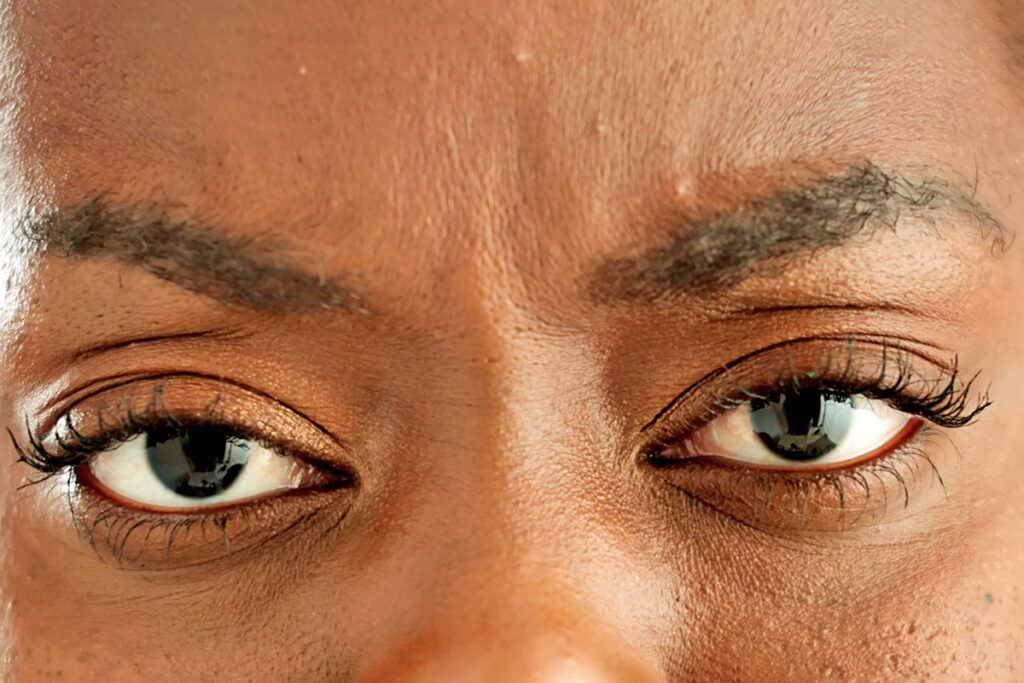
Humans are unusually expressive compared to most animals, and eyebrows play a major role in that ability. A raised eyebrow can signal surprise, skepticism, curiosity, or amusement, while a furrowed brow communicates concern, anger, confusion, or concentration. Those movements happen so quickly and naturally that we rarely think about them, but the people around us are constantly reading them.
We may be especially dependent on eyebrows because our faces are relatively hairless compared to many other mammals. Without heavy facial fur, subtle eyebrow movements become easier to see, making them a potent communication tool. Some anthropologists have even proposed that the reduction of large brow ridges in modern humans may have made facial expressions easier to read.
Research has shown that eyebrows are also surprisingly important for facial recognition. In one study, people had more difficulty identifying images of familiar faces when the eyebrows were removed than when the eyes were removed. Eyebrows may even serve a role in sexual selection. Distinctive facial features often influence attractiveness, and eyebrows contribute more to appearance than many people realize. Their shape, thickness, symmetry, and movement can subtly yet powerfully affect how healthy, youthful, approachable, or trustworthy someone is perceived to be.

Do Other Animals Have Eyebrows?
Humans aren’t the only species with specialized features above the eyes. Many animals have evolved eyebrow-like structures, although they often serve different purposes.
Among primates, facial markings and fur patterns around the eyes can help individuals recognize members of their own group, interpret social signals, and even distinguish between closely related species. That ability can be important for finding appropriate mates and avoiding interbreeding — plus, social species tend to benefit from features that make communication and recognition easier.
Dogs provide another interesting example: Researchers have found that domestic dogs have evolved muscles around the eyes that wolves either lack or use to a far lesser extent. Those muscles allow dogs to produce the familiar “puppy dog eyes” expression that humans find especially appealing. Whether intentionally or not, dogs have become remarkably adept at communicating with us through facial expressions.
Birds don’t have eyebrows in the mammalian sense, but many species possess feather patterns that perform similar visual functions. Some use those patterns for species recognition, while others use them to signal aggression, dominance, or readiness to mate. Birds of prey often have pronounced bony ridges above the eyes that create a permanent “frowning” appearance, which helps reduce glare from sunlight while also protecting the eyes during hunting.
More Interesting Reads


How Eyebrows Have Evolved
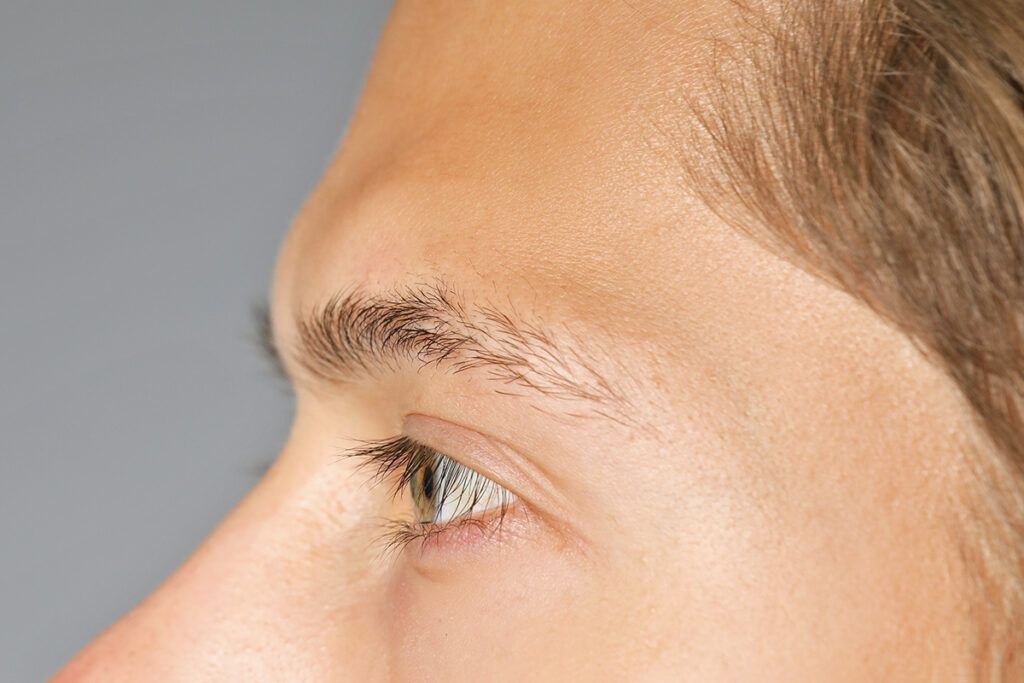
Over time, human eyebrows have evolved alongside major changes in skull shape and facial structure. Early hominins had large, prominent brow ridges, and for years, scientists debated why those ridges existed at all.
Some suggested they helped absorb physical stress during chewing, while others argued they offered protection or served as visual signals. Whatever their original purpose, those ridges gradually diminished as human faces became flatter and jaws became smaller.
For a long time, researchers assumed that was simply a side effect of other evolutionary changes. More recently, however, some scientists have proposed that smaller brow ridges may have been advantageous because they made facial expressions easier to interpret. In other words, humans may have traded heavy, imposing brow ridges for more flexible and expressive eyebrows.
That shift would fit with a broader pattern in human evolution: As people became increasingly dependent on cooperation, communication became more valuable. The ability to quickly pinpoint friendliness, fear, uncertainty, or trustworthiness would have helped strengthen social bonds and reduce conflict within groups.
Even eyebrow hair itself is specialized — unlike scalp hair, eyebrow hair has a much shorter growth cycle, which is why it only grows to a relatively short length. If eyebrow hair followed the same growth pattern as the hair on your head, it would eventually hang down over your eyes. That specialized growth pattern suggests that eyebrows have been undergoing evolutionary fine-tuning for a very long time.

Kristina is a coffee-fueled writer living happily ever after with her family in the suburbs of Richmond, Virginia.
top picks from the Inbox Studio network
Interesting Facts is part of Inbox Studio, an email-first media company. *Indicates a third-party property.