

Original photo by © deimagine/iStock
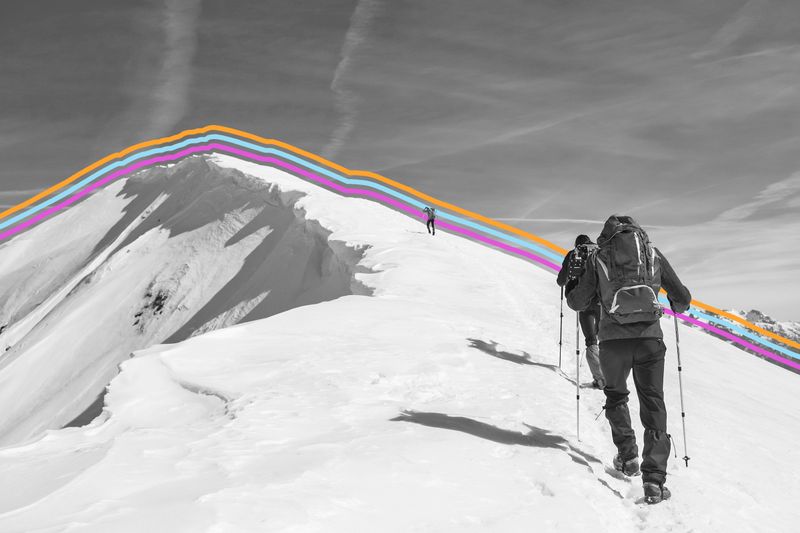
On a bright summer day, you can look up at the peak of a towering mountain and see it capped with snow and ice. But if that peak is in direct sunlight — and thousands of feet closer to the sun than we are on the ground — why is it covered in snow? Here’s a look at what’s going on up there, and why a mountaintop is so much colder than the ground below.
What the Sun Actually Does
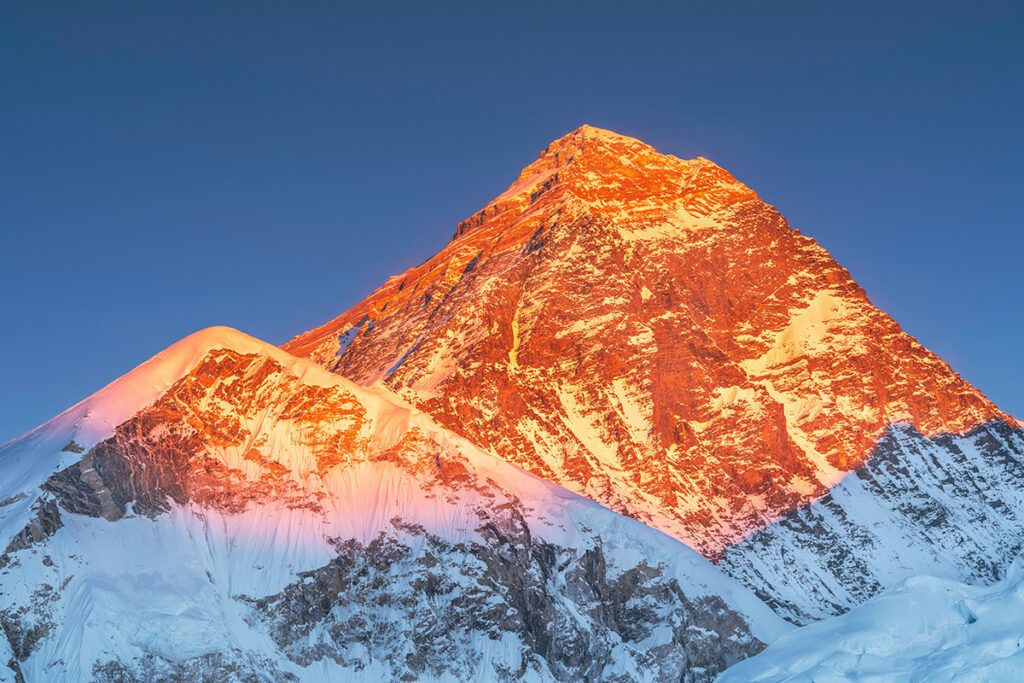
The sun, on average, is about 93 million miles from Earth. Mount Everest, the highest mountain on our planet, is about 5.5 miles tall. So when it comes to distance from the sun, the relative difference between a mountaintop and a valley floor is so infinitesimally small that it’s essentially unmeasurable. In other words, being a mile or so closer to the sun has no significant effect on the temperature at the top of a mountain.
This is because sunlight doesn’t work the way you might assume. When solar radiation reaches Earth, about 30% of the solar energy is reflected back into space, while the rest is absorbed into Earth’s atmosphere. But that energy passes through the relatively thin atmosphere largely without warming it. The atmosphere is mostly transparent to incoming solar radiation; what sunlight actually heats is the surface of the Earth — the land, oceans, rocks, and soil beneath our feet.
Once the ground absorbs the solar energy, it then re-radiates the energy as infrared heat, warming the air from the bottom up. This is a key part of why the lowest layers of the atmosphere — at ground level — are the warmest, and why temperature drops steadily as you gain altitude.
The air near a mountain’s base has been warmed by the surrounding land and lower atmosphere. As the air rises, it cools and the heat dissipates. A mountain’s summit is far from the heat source, and the air has very little to warm it — hence the chilly temperatures and peaks covered in ice and snow.
The rate of change in temperature experienced while moving up through the Earth’s atmosphere is known as the lapse rate. On average, the normal lapse rate is 18.8 degrees Fahrenheit per mile of altitude gained. That rate isn’t perfectly uniform — atmospheric conditions, humidity, and local geography can all cause variations — but it’s fairly reliable as a general rule.
The Effects of Thin Air
Another reason mountaintops are often covered in snow is the thinness of high-altitude air. Due to the pull of gravity, air pressure decreases with altitude; there are fewer gas molecules in the atmosphere as you go higher up, so the air becomes much thinner. And fewer molecules in the air means less capacity to absorb and retain heat.
Dense air holds heat quite effectively, but at the summit of a tall mountain the air is thin, dry, and contains far fewer of the greenhouse gases — particularly water vapor — that give lower-altitude air its heat-trapping ability. Any heat that does arrive at higher altitudes rapidly dissipates and can be lost back into space. To put it simply, high-altitude air is a very poor blanket.
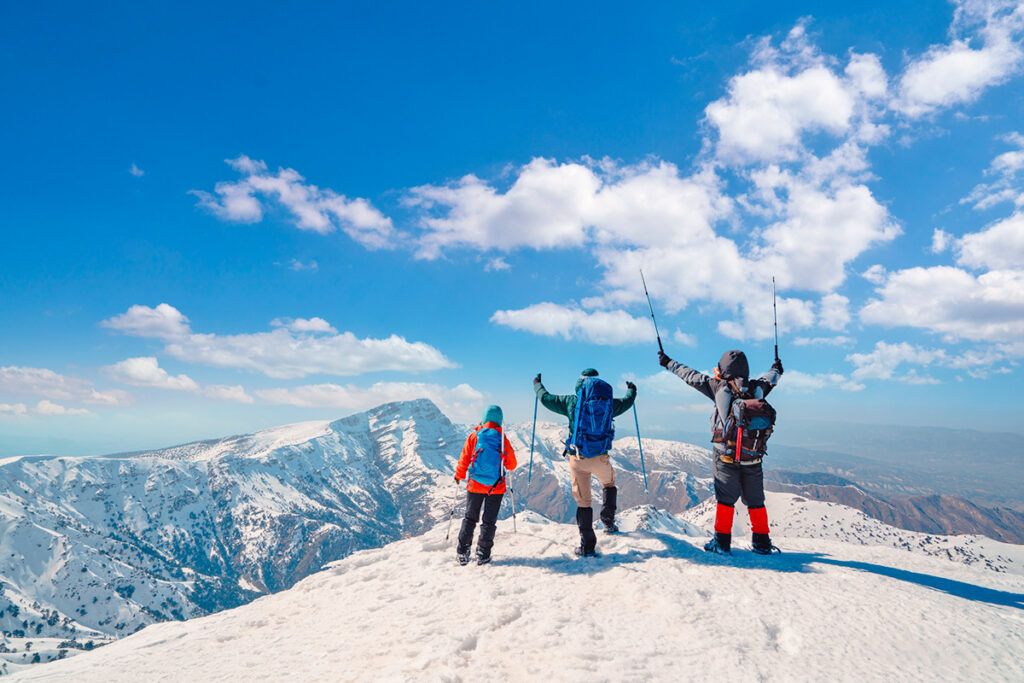
While the sun can feel intensely bright at the top of a mountain, and the risk of sunburn increases greatly because there’s more direct solar radiation with less atmospheric filtering (and therefore higher UV levels), solar radiation directly warming the skin isn’t the same as warm air. So, while a mountaineer can stand in blazing sunshine at the very top of a peak, they can still be surrounded by snow and ice in temperatures well below freezing.

Tony is an English writer of nonfiction and fiction living on the edge of the Amazon jungle.
top picks from the Inbox Studio network
Interesting Facts is part of Inbox Studio, an email-first media company. *Indicates a third-party property.