

Original photo by © Prostock-studio/stock.adobe.com

If every spring and fall finds you sneezing, sniffling, and reaching for the antihistamines, you’re not alone. In the United States, seasonal allergies affect more than 80 million people every year, triggered by familiar culprits including pollen, ragweed, mold, and dust. But while most allergies are common enough to have pharmacy aisles dedicated to mitigating their symptoms, some are so unusual they sound almost made up.
These unusual conditions blur the line between allergy, sensitivity, and immune dysfunction. Some aren’t true allergies in the strict medical sense — meaning they aren’t triggered by the immune system reacting to a specific allergen such as food proteins or pollen — but they can look and feel similar in the body, causing hives, swelling, pain, and other symptoms. And like more common allergies, most are managed — at least in part — with antihistamines, though some require additional precautions or emergency medication.
What makes these conditions especially fascinating is how mundane the triggers are; they’re things most of us experience on a daily basis without a second thought. Here are five of the most surprising allergies.

Water
It sounds impossible, but some people live with a rare condition called aquagenic urticaria, in which contact with water, regardless of its temperature or source, can trigger painful hives or a burning skin reaction. Rain, sweat, tears, or even a shower can induce symptoms, which typically appear within minutes and last anywhere from 30 minutes to a couple hours.
Only about 50 cases have been documented worldwide since the first case was reported in 1964, making it one of the rarest known hypersensitivity conditions. Researchers believe water may interact with substances in or on the skin to form compounds that trigger a localized histamine response.
Living with the condition requires constant caution. Everyday actions such as handwashing or getting caught in the rain become risks that require mitigation, often with barrier creams or antihistamines, though there’s no definitive cure yet.

Sunlight
For those with solar urticaria, spending mere minutes in or near light can trigger painful skin reactions. This rare condition causes hives, redness, itching, and swelling after exposure to ultraviolet or even visible light, sometimes through thin clothing or glass. While exact numbers are difficult to pin down, fewer than a thousand cases have been documented worldwide, making it one of the rarer known light-induced conditions.
Symptoms can range from mild irritation to severe blistering or swelling, and treatment includes phototherapy (controlled exposure to light) and immune therapy. Because sunlight is almost impossible to avoid completely, managing the condition on a daily basis often involves protective clothing, high-SPF sunscreen, and limiting outdoor exposure.
Touch
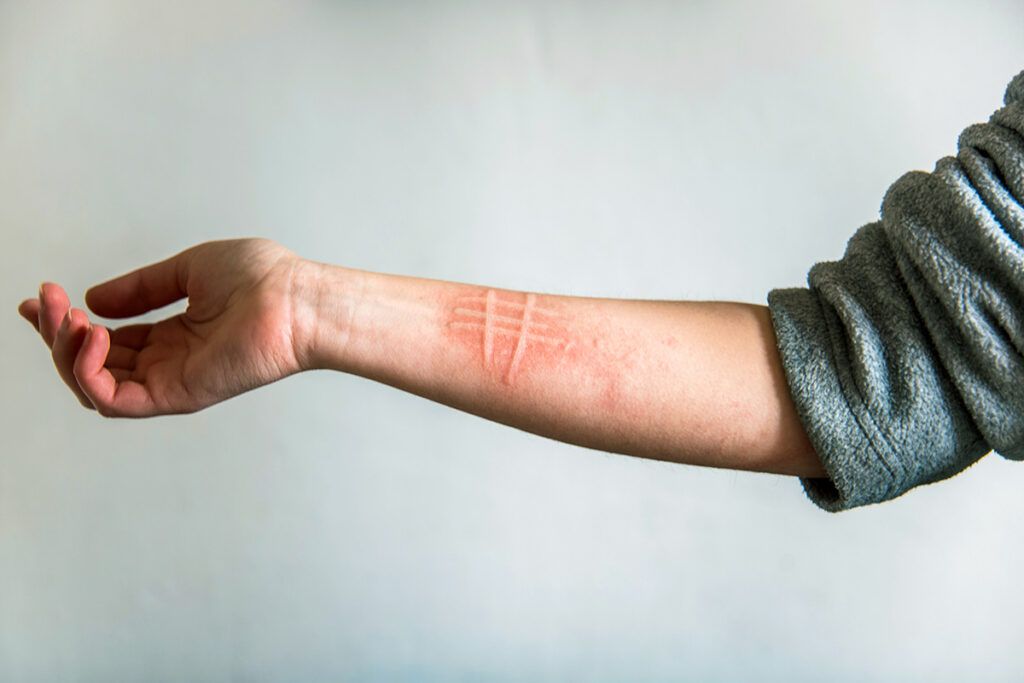
Dermatographia, sometimes called “skin writing,” is one of the more visually striking allergic conditions. People with it develop raised red welts when their skin is lightly scratched, rubbed, or even pressed — sometimes so predictably that words or shapes can be “written” across the skin using a fingernail or blunt object.
The marks can appear within minutes, often tracing exactly where pressure was applied, and may look alarming to anyone seeing them for the first time. This condition is estimated to affect roughly 2% to 5% of people, though severity varies widely and symptoms can ebb and flow over time.
The reaction occurs when mast cells in the skin release histamine in response to minor physical stimulation, leading to localized swelling that typically fades within 30 minutes to an hour. While it can look dramatic, dermatographia is considered a benign condition, though it can be uncomfortable or socially awkward in everyday situations involving tight clothing, accidental scratches, or casual touch.
More Interesting Reads



Cold
For people with cold urticaria, exposure to low temperatures — think swimming in cold water, stepping into a chilly wind, or even holding a cold drink — can trigger an allergy-like reaction. The skin can quickly develop hives, swelling, or, in more severe cases, systemic reactions that affect the whole body. It’s estimated to affect roughly one in 2,000 people, making it a rare but well-documented form of physical urticaria.
The condition is believed to involve an abnormal immune response in which cold temperatures trigger mast cells in the skin to release histamine. In rare cases, sudden full-body exposure, such as jumping into cold water, can provoke a rapid, widespread reaction that includes dizziness, low blood pressure, or fainting.
In some cases, the severity can even lead to life-threatening anaphylaxis. For that reason, people with cold urticaria are often advised to avoid abrupt temperature changes and may carry emergency medication including antihistamines or epinephrine.

Exercise
Exercise is usually associated with improved health, but in rare cases it can trigger a condition known as exercise-induced urticaria, in which physical activity leads to hives, itching, or swelling. In its more serious form, exercise-induced anaphylaxis, symptoms can escalate to difficulty breathing, dangerous drops in blood pressure, and, in extreme cases, even life-threatening reactions. It’s estimated to affect roughly 0.01% to 0.05% of people, making it uncommon but well documented.
In some individuals, exercise alone is enough to trigger symptoms. In others, reactions only occur when physical activity is combined with consuming specific foods — such as wheat, shellfish, or certain fruits — beforehand, a subtype known as food-dependent exercise-induced anaphylaxis.
The exact mechanism isn’t fully understood, but exercise appears to lower the threshold for mast cell activation, rendering the immune system more reactive under physical stress. Because of this unpredictability, people with the condition often have to carefully time their meals, avoid certain trigger foods before workouts, and carry emergency medication such as epinephrine.

Kristina is a coffee-fueled writer living happily ever after with her family in the suburbs of Richmond, Virginia.
top picks from the Inbox Studio network
Interesting Facts is part of Inbox Studio, an email-first media company. *Indicates a third-party property.