
Original photo by © Tony98/iStock
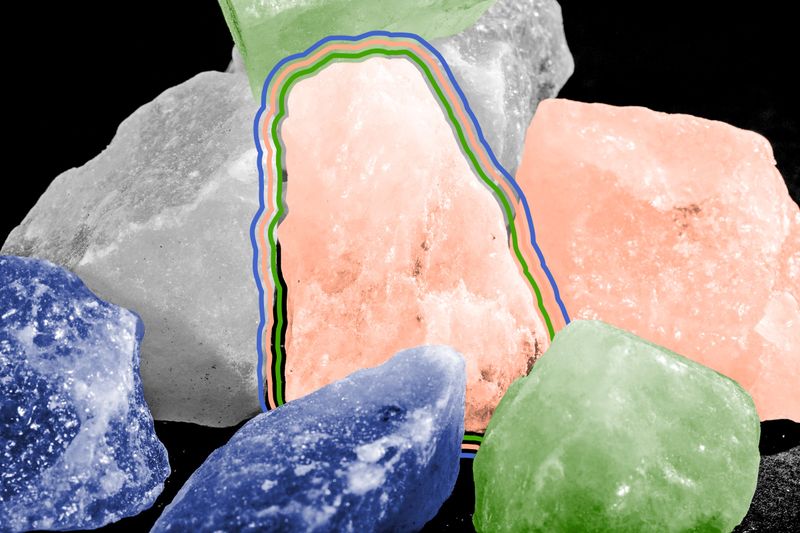
Of all the rocks on Earth, almost none are eaten directly by humans — and even fewer play a biological role in our survival. There is one striking exception to this, however: salt.
A mineral is a single natural substance with a specific chemical makeup, while a rock is a mixture of one or more minerals. Natural salt in its mineral form is called halite, a crystalline version of sodium chloride (NaCl). Halite is a mineral, but it commonly occurs in large natural deposits known as rock salt — a rock made mostly of halite. When this material is mined and refined for everyday use, it becomes table salt, a purified and often iodized form of the same compound.




Oops, incorrect!
It's a fibThough wartime rationing changed how people cooked, salt and pepper had already been a standard pairing since 17th-century France, when black pepper became the preferred spice for seasoning food without overpowering it.
Unlike most minerals, halite is not only edible in small amounts; it’s biologically essential. When dissolved in water, it separates into sodium (Na⁺) and chloride (Cl⁻), charged particles the body depends on as electrolytes. Those ions help regulate fluid balance, enable nerve signaling, and support muscle contraction in the human body.
While many minerals contain elements the body needs — including calcium, iron, and magnesium — those are typically obtained indirectly through food or supplements, not by consuming the minerals themselves. Halite stands apart as the rare case in which a naturally occurring rock is routinely processed, consumed, and required for human physiology.
For thousands of years, this simple crystal has shaped human history. It was used to preserve food long before refrigeration and became so valuable that people used it as currency in ancient markets. It helped power trade routes and influence the rise of civilizations, making salt one of the most important minerals in human history.

Numbers Don't Lie
More Interesting Reads



The largest underground salt mine in the world is in Goderich, Ontario, located 1,800 feet under ______.
Ready to reveal?
Confirm your email to play the next question?
The largest underground salt mine in the world is in Goderich, Ontario, located 1,800 feet under Lake Huron.

The placement of salt on the table once determined where you sat.
In medieval Europe, salt was more than a seasoning; it was also a symbol of status. At formal feasts, a large salt container called a salt cellar was placed prominently on the table, often near the host. A guest’s position in relation to the salt was significant: Those seated closer to the host were considered “above the salt,” while those farther away were “below the salt,” a phrase that came to signal lower social standing. Because salt was expensive and essential for preserving food, it became a natural marker of rank, wealth, and honor.

Kristina is a coffee-fueled writer living happily ever after with her family in the suburbs of Richmond, Virginia.
top picks from the Inbox Studio network
Interesting Facts is part of Inbox Studio, an email-first media company. *Indicates a third-party property.