

Life as we know it today is less the result of a steady evolutionary flow than a series of cataclysmic fits and starts. To date, the Earth has experienced five mass extinctions, a variety of ice ages, and other climatic changes that have had huge impacts on plant and animal life, often wiping the terrestrial slate clean. However, a few incredible survivors live among us — including magnolias. Named for the 17th-century French botanist Pierre Magnol, these trees have a history that far surpasses the ancien régime. In fact, it’s estimated that magnolias first sprouted on Earth 95 million years ago — smack dab in the middle of the Cretaceous Period. That’s about 27 million years before Tyrannosaurus rex roamed the Earth.
Dinosaurs and humans are part of the same geologic eon.
The worlds of dinosaurs and of mammals seem vastly different, but both eras are part of the Phanerozoic — a 541 million-year geologic eon that began with the Cambrian explosion. While half a billion years seems like a lot, the preceding Proterozoic Eon is four times longer.
Back here in the Holocene (the current geological epoch), the magnolia family’s native ranges can be found in East and Southeast Asia and the southern U.S., as well as Mexico, northern South America, and the Caribbean. Although a modern favorite among plant lovers, magnolias still sport evidence of their ancient upbringing. Because they are so old, they evolved to be pollinated by beetles and flies instead of bees, butterflies, or moths. That’s because back in the Cretaceous, those other pollinators didn’t exist yet. Magnolias have tough carpels (the female parts of the flower) to protect themselves from a beetle’s less-than-graceful mandibles, and invest more energy in producing showy, nectar-filled, sweet-smelling flowers in an effort to attract these insects. The beautiful magnolia tree and the flightless beetle may seem like an odd couple, but it’s a relationship that has worked since the Mesozoic.
The world’s loneliest tree species survived the extinction of the dinosaurs.
In 1895, British botanist John Medley Wood was exploring the Ngoya Forest on the coast of South Africa when he came across an ancient-looking tree. Although he didn’t know it at the time, this particular cycad (now called Encephalartos woodii in his honor) was the only specimen left in existence. Some 250 million years ago, at the dawn of the Triassic, cycads — including Encephalartos woodii — dominated the globe. This particular species survived the explosive asteroid impact that likely snuffed out land-based dinosaurs, and a half-dozen or so ice ages, until only one solitary male specimen was left. That specimen is believed to have died in 1964, although basal offsets of the stem (essentially clones of the original cycad) can be found in botanical gardens around the globe. Alas, Encephalartos woodii needs a female in order to produce naturally, and several expeditions to find a plant partner have failed. Scientists are now trying to create a close approximation of a female woodii by mating the plant with a close cycad cousin (Encephalartos natalensis). With a little bit of luck, maybe one day the world’s loneliest tree will find love again.
Darren Orf
Writer
Darren Orf lives in Portland, has a cat, and writes about all things science and climate. You can find his previous work at Popular Mechanics, Inverse, Gizmodo, and Paste, among others.
Advertisement
top picks from the Inbox Studio network
Interesting Facts is part of Inbox Studio, an email-first media company. *Indicates a third-party property.
The average American woman is 5 feet, 3.5 inches tall, with genetics playing the largest role in determining a person’s height. Roughly 11% of women in the U.S. are taller than 5 feet, 7 inches, and just 1% reach a height of 6 feet — which explains why seemingly every tall person gets asked if they play basketball, as the average height among WNBA players is 6 feet.
The average female height in the U.S. is also fairly average in the grand scheme of things, as women in the Netherlands (the tallest country for both men and women) stand an average of 5 feet, 7 inches, and their counterparts in Guatemala (whose women are the shortest) are comparatively diminutive at 4 feet, 11 inches on average. The shortest woman in the world, Jyoti Amge, is 2 feet tall; in 2024, she met Rumeysa Gelgi, whose 7-foot stature makes her the tallest woman in the world.
George Costanza wasn’t a fluke — shorter men really are more likely to go bald, as the genes that cause each are linked to one another.
It’s estimated that about 80% of a person’s height is determined by the DNA sequences they’ve inherited, while environmental factors (especially nutrition) are responsible for the remainder. More than 700 of those gene variants — including the ones that affect cartilage in growth plates in the legs and arms — have been discovered, and more are expected to be identified in the future. As for men, the average American stands 5 feet, 8 inches, while the average male height in the Netherlands is 6 feet and in Timor-Leste, the shortest country for men, the average is 5 feet, 3 inches.
James Madison was the fourth U.S. president, serving two terms from 1809 to 1817. At 5 feet, 4 inches, he was also the shortest. His wife, Dolley Madison, was 3 inches taller than him. Other relatively short presidents include Benjamin Harrison (5 feet, 6 inches), Martin Van Buren (5 feet, 6 inches), William McKinley (5 feet, 7 inches), and John Adams (5 feet, 7 inches), while Abraham Lincoln remains the tallest at a statuesque 6 feet, 4 inches.
Michael Nordine
Staff Writer
Michael Nordine is a writer and editor living in Denver. A native Angeleno, he has two cats and wishes he had more.
Advertisement
top picks from the Inbox Studio network
Interesting Facts is part of Inbox Studio, an email-first media company. *Indicates a third-party property.
Most of us think of rainbows as arches that stretch across the sky, but in reality, every rainbow forms a complete circle. That circle is centered on the point in the sky directly opposite the sun — the same direction your shadow points. From the ground, the horizon blocks the lower half of that circle, so you usually see only the rainbow’s upper arc.
The higher your vantage point, the more of that hidden circle you can see. From airplanes, observers can sometimes view the complete circular rainbow, since nothing blocks the ring’s lower half from that perspective. Photographs taken from research and weather aircraft often capture those full rings floating in clouds, revealing the rainbow’s true shape.
Lunar rainbows — or moonbows — form when moonlight refracts through rain or mist, just like sunlight does. Because moonlight is faint, they often appear white to the naked eye, but cameras can reveal their full spectrum of color.
A rainbow is formed by the way sunlight interacts with millions of tiny raindrops. As light enters a droplet, it bends (refracts), reflecting off the inside of the droplet, and then bends again as it exits. Those changes in direction separate the light into its different colors and direct them back toward your eyes. Only the droplets positioned at a specific angle relative to the sun — about 42 degrees for red light, for instance — send color your way.
Every raindrop that sends light to your eye does so at the same angle from the point opposite the sun, and all the droplets at that shared angle form a circle around that point, creating that curved colorful band in the sky. Because the effect depends on your exact position relative to the sun, the rainbow you see is tied to your unique viewpoint. Move even a few steps, and a different set of droplets creates slightly different colors. No two people ever see precisely the same rainbow.
The spot directly opposite the sun at the center of a rainbow is called the antisolar point.
Advertisement
One of the most recognizable album covers of all time features a rainbow.
The prism and color spectrum on Pink Floyd’s 1973 album The Dark Side of the Moon is arguably the most iconic rainbow in rock history. The original album artwork, designed by Storm Thorgerson, depicts a beam of white light entering a triangular prism from the left and emerging on the right as a rainbow — though it omits the indigo band typically included in a full spectrum.
Kristina Wright
Writer
Kristina is a coffee-fueled writer living happily ever after with her family in the suburbs of Richmond, Virginia.
Advertisement
top picks from the Inbox Studio network
Interesting Facts is part of Inbox Studio, an email-first media company. *Indicates a third-party property.
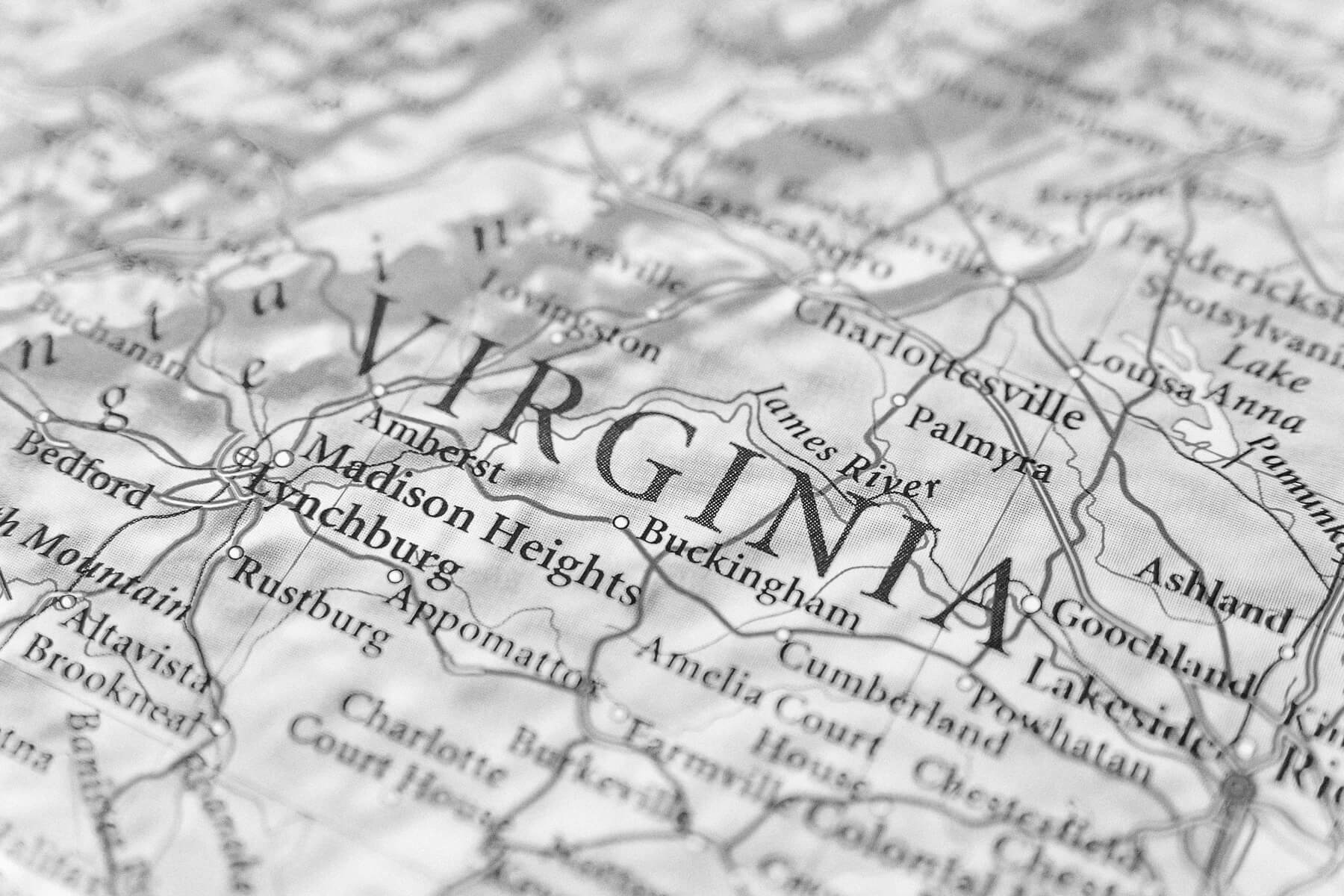
The border between Arkansas and its six neighboring states is quite the geographical oddity. Arkansas shares its approximately 170-mile-long southern border with Louisiana. But you can also travel south from various points in Arkansas and wind up in Missouri, Tennessee, Mississippi, Texas, or Oklahoma.
Arkansas is home to America’s first national river.
In 1972, Arkansas’ Buffalo River became the first U.S. body of water designated as a national river. The river begins in the Ozark Mountains and flows eastward for 135 miles, ultimately merging with the White River near Buffalo City.
One of Arkansas’ longest borders is with Missouri, a state largely located to the north. But there’s a region of Missouri at the eastern end of that border, called the Missouri Bootheel, that dips south into what was once Arkansas Territory. The Missouri-Arkansas boundary was originally meant to be a straight line, but the Bootheel was created when some settlers in the Arkansas Territory successfully petitioned for their land to be included in Missouri. As a result, you can technically travel south from the northeasternmost part of Arkansas into its neighbor to the north.
Meanwhile, Arkansas shares its eastern border with Tennessee and Mississippi along the Mississippi River. As the river flows south, it angles west, creating a situation where parts of Arkansas are located north of its two eastern neighbors. And the Arkansas-Oklahoma border to the west is angled in such a way that if you’re located in the northwestern part of Arkansas, you can travel due south to end up in Oklahoma.
In 1962, Walmart opened its first-ever store in Rogers, Arkansas.
Advertisement
There’s a state law regarding the official pronunciation of “Arkansas.”
In 1881, the Arkansas General Assembly ended a long-standing debate over the spelling and pronunciation of the state’s name. A formal resolution decreed “Arkansas” to be the official spelling and “Ar-kan-saw” (written phonetically as /ˈɑrkənˌsɔ/) the official pronunciation.
The law’s exact wording states that the name “should be pronounced in three (3) syllables, with the final ‘s’ silent, the ‘a’ in each syllable with the Italian sound, and the accent on the first and last syllable.” In this context, the “Italian sound” suggests an open pronunciation of the vowel /a/, similar to the sound in the words “father” and “pasta.”
Bennett Kleinman
Staff Writer
Bennett Kleinman is a New York City-based staff writer for Inbox Studio, and previously contributed to television programs such as "Late Show With David Letterman" and "Impractical Jokers." Bennett is also a devoted New York Yankees and New Jersey Devils fan, and thinks plain seltzer is the best drink ever invented.
Advertisement
top picks from the Inbox Studio network
Interesting Facts is part of Inbox Studio, an email-first media company. *Indicates a third-party property.

One country’s trash can be another’s treasure. In Sweden, household waste is valuable because it helps create energy. Only about 1% of the country’s trash ends up in landfills; 49% is recycled, and the remaining 50% is incinerated at one of Sweden’s “waste-to-energy” power plants. There, heat from burned trash is used to generate energy in the same way that power plants burn coal or gas. Waste-powered electricity makes up a small fraction of Sweden’s power grid overall, however: Nuclear, hydro, and wind power account for 90% of the country’s electrical energy use. Still, Sweden’s high-heat disposal of garbage is so effective that the nation imports trash from nearby countries to keep its incinerators running.
Sweden was the first European country to have a national park.
Europe is home to more than 460 national parks, though the very first was created in Sweden. Sarek National Park, located in the country’s north, was established in 1909, and features nearly 100 glaciers and six of Sweden’s tallest mountain peaks.
While technically biodegradable, food waste can have negative effects on the environment — particularly when it ends up in a landfill and produces methane, a greenhouse gas. That’s why South Korea began banning food from landfills in 2005 and instead has a robust recycling program that encourages composting and food reuse. Today, about 95% of food waste in South Korea is recycled, compared to 2% at the time the ban was enacted. Citizens who don’t compost can take food scraps to an area recycling station, where their trash is weighed and logged; households then receive a monthly bill based on the amount they toss out. Collected food is turned into fertilizer or animal feed, and methane and natural gases produced during the recycling process (called biogas) are also used to create energy that fuels the recycling facility, giving each tossed scrap a second opportunity to help nourish the planet.
Nicole Garner Meeker
Writer
Nicole Garner Meeker is a writer and editor based in St. Louis. Her history, nature, and food stories have also appeared at Mental Floss and Better Report.
Advertisement
top picks from the Inbox Studio network
Interesting Facts is part of Inbox Studio, an email-first media company. *Indicates a third-party property.
Original photo by NASA Image Collection/ Alamy Stock Photo
Earth’s moon has its craters, Saturn has its rings, and Jupiter has its Great Red Spot. Far more than a cosmetic anomaly, the planet’s most distinctive feature is actually a storm that’s bigger than Earth. The ever-swirling vortex is thought to have been raging for at least 300 years, but up until recently little was known about it. Our knowledge of the 10,000-mile-wide storm expanded around late 2021, after NASA’s Juno mission passed over it twice. According to Paul Byrne of Washington University in St. Louis, the Great Red Spot is “basically clouds” and “not all that dissimilar to the kinds of things we know as cyclones or hurricanes or typhoons on Earth” — just, you know, infinitely larger, older, and more cosmically terrifying.
Jupiter is more massive than all the other planets combined.
When it comes to our solar system, Jupiter lives up to its “gas giant” title — it’s more than twice as massive as every other planet combined, and 318 times more massive than Earth.
The winds of this particular storm reach 400 miles per hour. No one’s entirely sure why it’s red, although one theory suggests that the color has to do with chemicals being shattered apart by sunlight in the planet’s upper atmosphere. Making the solar system’s largest storm slightly less imposing — but no less fascinating — is the fact that it’s shrinking at a rate of about 580 miles per year. That adds up quite a bit: The Great Red Spot was closer to 30,000 miles long in the late 19th century (nearly three times its current size), and some believe it could vanish entirely within 20 years.
Jupiter was named after the Roman equivalent of Zeus.
Advertisement
Jupiter also has rings.
When most of us think of ringed planets, Saturn comes to mind first. But Saturn isn’t the only planet in our solar system with rings: Jupiter has them too, as do fellow gas giants Neptune and Uranus. Relatively faint and composed primarily of dust, the Jovian rings have three main elements: the halo, main ring, and gossamer rings (of which there are two). The halo is wide, doughnut-shaped, and closest to the planet itself. The main ring, which is brighter and thinner, is where the moons Adrastea and Metis orbit; the dust it’s made up of is thought to have been ejected from those two small natural satellites. Then there are the extremely faint, wide gossamer rings, which extend beyond the orbit of moon Amalthea. Jupiter’s rings and moons were recently captured in infrared by the James Webb Space Telescope, offering one of the most stunning views of them yet.
Michael Nordine
Staff Writer
Michael Nordine is a writer and editor living in Denver. A native Angeleno, he has two cats and wishes he had more.
Advertisement
top picks from the Inbox Studio network
Interesting Facts is part of Inbox Studio, an email-first media company. *Indicates a third-party property.

Original photo by ZUMA Press, Inc/ Alamy Stock Photo
For more than two decades, Judy Sheindlin — known to her adoring audience as Judge Judy — delivered famously withering verdicts from the bench in her daytime TV show of the same name. Although Judge Judy was encased in courtroom-esque fiction, Sheindlin is a real judge (having been originally appointed to family court by NYC Mayor Ed Koch in 1982), and her sharp-tongued legal smackdowns reflected her genuine jurisprudence style.
Judy Sheindlin originally wanted to name her eponymous show “Hot Bench.”
Sheindlin originally wanted to name her show “Hot Bench,” and then thought “Judy Justice” might work. The two names did eventually find other homes: Sheindlin became producer of CBS Studio’s “Hot Bench” in 2014, and in 2021 launched a new show on Amazon Prime called “Judy Justice.”
While Sheindlin herself is the real deal, her cases were not decided in a real court of law. Most of the cases that appeared on the serialized juggernaut Judge Judy (which began in 1996) were real disputes sourced from small claims courts, but instead of playing out in court, they went through a process known as arbitration — a method for settling disputes outside the actual legal system. (“Arbiter Judy” doesn’t have quite the same ring to it.)
Even though the show didn’t take place in a real courtroom, Judge Judy still earned some serious bucks. In fact, during the tail end of the show’s tenure, from 2012 to 2020, Sheindlin made an estimated $47 million per year. She was also the highest-paid TV show host in 2018, after she sold the show’s 5,200-episode catalog for a cool $100 million to CBS. Judge Judy wrapped its final season in 2021, but that wasn’t the end for Sheindlin, who launched a brand-new show, Judy Justice, on Amazon Freevee in 2021.
The first Supreme Court chief justice was John Jay, who also wrote part of the Federalist Papers.
Advertisement
The Supreme Court doesn’t allow video recordings of its proceedings.
While cameras in the courtroom make for good television, much of the U.S. court system, especially the highest court in the land — the U.S. Supreme Court — doesn’t allow any visual recording of court proceedings. Enacted in 1946, Federal Rule 53 states that “the court must not permit the taking of photographs in the courtroom during judicial proceedings or the broadcasting of judicial proceedings from the courtroom.” In 1972, the government doubled down and banned television cameras as well. (Oral arguments have been recorded since 1955.) With the Supreme Court making groundbreaking decisions on a regular basis, there has been growing pressure to allow visual recording to help inform the American public. It may not have the entertainment value of The People’s Court or Judge Judy, but it would give Americans a front-row seat to some of the most consequential legal decisions in the country’s history.
Darren Orf
Writer
Darren Orf lives in Portland, has a cat, and writes about all things science and climate. You can find his previous work at Popular Mechanics, Inverse, Gizmodo, and Paste, among others.
Advertisement
top picks from the Inbox Studio network
Interesting Facts is part of Inbox Studio, an email-first media company. *Indicates a third-party property.

Plants may not have ears, but they’re able to detect sound vibrations in ways that would astonish most gardeners. Scientific research has revealed some plants perceive and respond to acoustic signals in their environment. They then use those vibrations to make crucial decisions about defense, growth, and even reproduction.
In 2019, biologist Lilach Hadany of Tel Aviv University discovered evening primroses can pick up the specific frequencies of bees’ wings. Within minutes, the plants increase their nectar’s sugar concentration, making themselves more attractive to the visiting pollinators. Hadany surmised that the flower’s bowl-shaped blossoms act as an earlike structure, helping to detect the vibrations.
One of the world’s largest carnivorous plants is big enough to eat rats.
Nepenthes rajah, the world’s largest pitcher plant, secretes a sweet-scented nectar to lure prey — including rats, frogs, and insects — into its acidic pitcher traps, which then slowly digest the unfortunate creatures.
And in 2014, researchers at the University of Missouri found that when a caterpillar chews on the leaves of a plant, it creates distinctive vibrations that travel through the plant’s tissues. Some plants can detect those very specific vibrations and perceive them as a threat; they then engage their chemical defenses, producing compounds that make their leaves less palatable to the munching insects.
Researchers refer to this as “hearing” because the plants aren’t just reacting to being touched or shaken — they’re “listening” for the unique “sounds” (vibrational rhythms) of the specific input (such as a predator chewing). Remarkably, the study showed plants can distinguish between different vibrations, whether it’s a munching insect or another mechanical disturbance such as the wind or raindrops — activating their defenses only when genuinely threatened.
Further studies have shown plants can even use sound to navigate their environment. In 2014, researchers discovered that plant roots are capable of locating water sources by sensing the vibrations generated by moving water — further evidence that plants can sense more than we give them credit for.
The clinical term for an intense fear of plants is botanophobia.
Advertisement
The long-eared jerboa has the largest ears relative to its body size.
African elephants possess the largest ears on our planet, typically measuring a mighty 6 feet long and 5 feet wide. But the creature with the largest ears relative to its body size is the tiny — and unbelievably adorable — long-eared jerboa (Euchoreutes naso).
This minuscule, nocturnal rodent, native to the deserts of Mongolia and China, was first caught on film in 2007. It measures just 4 inches from head to rump (not counting its long, spindly tail) and weighs between 24 and 38 grams. Its lovably large ears, which help shed excess body heat in hot, dry environments, are 1.5 to 2 inches long — roughly 40% to 50% the length of its body.
Tony Dunnell
Writer
Tony is an English writer of nonfiction and fiction living on the edge of the Amazon jungle.
Advertisement
top picks from the Inbox Studio network
Interesting Facts is part of Inbox Studio, an email-first media company. *Indicates a third-party property.

Hummingbirds sometimes seem otherworldly compared to other feathered friends. They see more colors than the human eye does and can even enter a deathlike state to survive frigid winter nights. But their most remarkable ability has to do with their incredibly fast-moving wings, with the fastest flapping upwards of 70 times per second. Thanks to those incredible appendages, hummingbirds can hover — and they’re the only species of bird that can do so on their own for a sustained period of time. Hummingbirds can also move up, down, left, right, forward, and yes, even backward (another unique ability), reaching speeds of 75 miles per hour. According to Audubon, the hummingbird also has really sensitive “brakes” and can switch from flying 25 miles per hour to coming to a dead stop within the length of a human index finger.
A species of hummingbird is the smallest bird in the world.
The world’s smallest bird is the bee hummingbird (Mellisuga helenae), which can be found only in Cuba. This pint-sized hummingbird is only 2.25 inches long and weighs around 2 grams — about the weight of a dime.
How are hummingbirds such aerial aces? Well, most birds achieve lift only when flapping their wings down, but hummingbirds swish their wings in a side-to-side, figure-eight pattern, which is more characteristic of an insect than a bird. (The feat has earned them the excellent nickname “hummingbugs.”) Although hummingbirds have evolved to use their wing muscles efficiently, their tiny bodies have an incredibly high metabolism, which means the creatures must constantly hunt for food to survive. Remarkably, hummingbirds can drain up to 10 drops of nectar from a flower in 15 milliseconds (or one-hundredth of a second).
The patches of glittering feathers on the necks of hummingbirds are called gorgets.
Advertisement
Hummingbirds are found only in the Americas, but they originated in Europe.
Hummingbirds are so unlike other birds that scientists still don’t quite understand their origins. One lingering mystery: why hundreds of species of hummingbirds can be found in the Americas when absolutely zero are seen zipping around Europe. The situation is particularly strange because hummingbirds appear to have originated in Europe, breaking away from swifts — their closest avian cousin — around 45 million to 55 million years ago, with the earliest hummingbird-like fossils found in Germany. One theory suggests that the birds migrated across a former land bridge between Siberia and Alaska, although it’s not clear why. It’s also possible that the Old World fossils and the New World species represent a case of convergent evolution: when two unrelated species develop the same attributes in response to similar pressures in their environment. For now, the true story of hummingbird evolution remains a mystery.
Darren Orf
Writer
Darren Orf lives in Portland, has a cat, and writes about all things science and climate. You can find his previous work at Popular Mechanics, Inverse, Gizmodo, and Paste, among others.
Advertisement
top picks from the Inbox Studio network
Interesting Facts is part of Inbox Studio, an email-first media company. *Indicates a third-party property.

Gold is present in low levels throughout the Earth. It’s been found on every continent except Antarctica, as well as in the planet’s core, the oceans, plants, and in humans, too. The average human body of about 150 pounds is said to contain about .2 milligrams of gold, which we excrete through our skin and hair. Babies less than 3 months old tend to have more gold in their manes than older people, thanks to the precious metal being passed along in human breast milk. And while no one’s suggesting we should mine the gold in hair or breast milk (as far as we know), researchers are studying whether gold — and other metals — might be recovered from human waste.
Both your hair and your nails are made of a protein called keratin, which the human body produces naturally. Keratin also forms the outer layer of your skin, the epidermis.
Gold is far from the only metal found in our bodies, however. Researchers estimate that 2.5% of the human body’s mass is made up of metals; think iron, cobalt, copper, zinc, calcium, and more. Many of these metals have important health functions — gold helps transmit electrical signals throughout the body, and plays a role in maintaining our joints. As for how gold and other precious metals got to Earth in the first place, some astrophysicists believe it’s all thanks to two neutron stars that crashed into each other about 4.6 billion years ago, leading to residual deposits of gold, silver, platinum, and more that eventually settled on our planet. Because these elements eventually found their way into our bodies, we can say that we truly are made of star stuff.
The chemical symbol for gold, Au, comes from the Latin “aurum.”
Advertisement
Olympic gold medals are made mostly from silver.
According to the International Olympic Committee, athletes’ gold medals must be composed of at least 92.5% silver and plated with about 6 grams of pure gold. (Silver medals are authentically advertised as solid silver, yet bronze medals are actually 95% copper and 5% zinc.) However, genuine gold medals were briefly part of the Olympic Summer Games. In the St. Louis 1904 Games — the first Olympiad where the modern medal configuration was observed — top finishers received medals made entirely of gold. The practice ended after the 1912 Olympics in Stockholm, after World War I led to gold shortages. Cold-weather winners never had the chance to take home fully gold hardware, as the Olympic Winter Games launched in 1924.
Jenna Marotta
Writer
Jenna is a writer whose work has appeared in The New York Times, The Hollywood Reporter, and New York Magazine.
Advertisement
top picks from the Inbox Studio network
Interesting Facts is part of Inbox Studio, an email-first media company. *Indicates a third-party property.