
Original photo by Photo 12/ Alamy Stock Photo
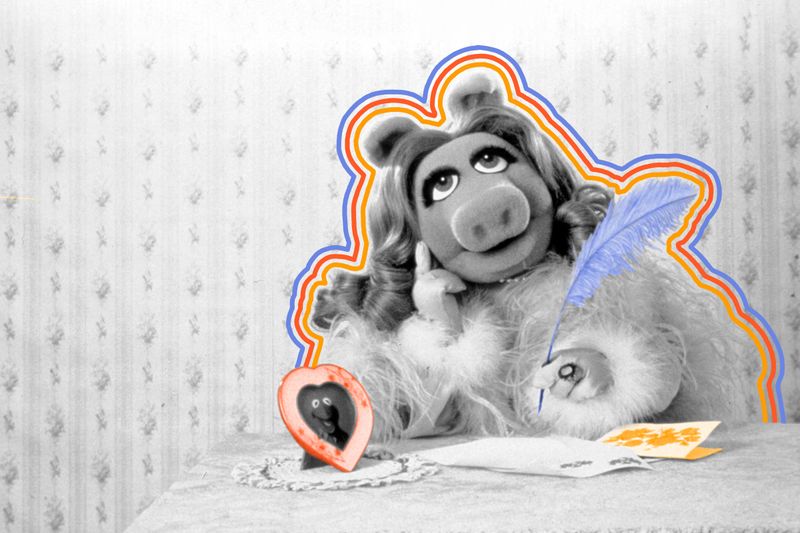
Not unlike Madonna, Lady Gaga, and other world-famous divas, Miss Piggy has never deigned to use her full name among us mere mortals. If she had, more of us might know that her first name is actually short for “Pigathius,” which comes from a Greek word supposedly meaning “river of passion.” Given her tumultuous love affair with a certain green frog, it’s more than fitting. Her last name, meanwhile, is Lee, which Muppets creator Jim Henson referenced in a 1974 note describing her as “delicate and lovely” (accurate). 

Miss Piggy is a New York Times bestselling author.

Ready to reveal?

Oops, incorrect!

It's a fact

“Miss Piggy’s Guide to Life” spent 29 weeks on the NYT bestseller list after it debuted in 1981. The 113-page book features self-help tips and pearls of wisdom as only the porcine prima donna could offer. (Among her pointers: If troubled by crows’ feet, wear scarecrow earrings.)

Said note also revealed her original love interest: Hamilton Pigg, who, despite belonging to the same species, is also “cigar smoking — the epitome of grossness,” according to Henson. It’s no wonder their romance didn’t last as long as that of Miss Piggy and Kermit the Frog. The two have been the most famous Muppets for decades, appearing in all manner of TV shows, movies, and even theme park attractions together. 

Numbers Don't Lie

Numbers Don't Lie

Episodes of “The Muppet Show”
120
Emmys won by “The Muppet Show” (out of 21 nominations)
4
Offspring Kermit and Miss Piggy have in “The Muppet Christmas Carol”
4
Year the “Pigs in Space” sketch first aired on “The Muppet Show”
1976

Kermit the Frog’s eyes were originally made from ______.

Ready to reveal?

Confirm your email to play the next question?

Kermit the Frog’s eyes were originally made from pingpong balls.

Placeholder Image

Kermit the Frog has appeared on Capitol Hill.

In addition to his fellow Muppets, Kermit also cares about his fellow amphibians — so much so, in fact, that in 2008 he joined a team of conservationists and the Association of Zoos & Aquariums to promote awareness of endangered amphibians by giving a speech on Capitol Hill. A certain red friend of his from Sesame Street, Elmo, had earlier testified before a House Appropriations subcommittee to support federal funding of music education and research. With his puppeteer hunched below the witness table, Elmo sang and danced as he answered questions about how very important music is for his learning and development. That appearance, in 2002, was the first time a Muppet had appeared in an official capacity in front of Congress. Elmo appeared in the written transcript of the hearing in part as “Mr. Monster.”

Michael Nordine
Staff Writer

Michael Nordine is a writer and editor living in Denver. A native Angeleno, he has two cats and wishes he had more.

Original photo by incamerastock/ Alamy Stock Photo

Years before Edgar Allan Poe wrote “The Raven,” Charles Dickens had an actual pet raven. The endlessly influential author of A Christmas Carol and David Copperfield was a bit eccentric, as many great artists are, and in 1841 wrote a letter to a friend in which he revealed that the protagonist of his new novel would be “always in company with a pet raven, who is immeasurably more knowing than himself. To this end I have been studying my bird, and think I could make a very queer character of him.” That novel was Barnaby Rudge: A Tale of the Riots of Eighty, published later the same year, and the bird in question was the beloved Grip. Grip had a habit of eating and drinking paint, alas, and died (probably as a result of doing what he loved) just a few weeks after that letter was sent. Dickens later had two more pet ravens, also named Grip.

Dickens sometimes wrote under a pseudonym.

Ready to reveal?

Oops, incorrect!

It's a fact

Dickens’ 1834 short story “The Boarding-House” was published under the name Boz, as was the 1839 compilation of essays and short stories “Sketches by Boz.” The pen name came from “Moses,” Dickens’ nickname for his brother, which he pronounced closer to “Boses” and eventually shortened.

As for Poe’s famous poem, there’s reason to suggest he drew inspiration from Grip. Dickens sent a manuscript of Barnaby Rudge to Poe, who wrote back that he enjoyed it but felt that the raven should have played a larger role. “The Raven” was published just a few years later, in 1845. Dickens, for his part, was so fond of dear old Grip that he had the bird taxidermied; today it sits atop a log in the Free Library of Philadelphia, where it can be visited by the public.

Numbers Don't Lie

Numbers Don't Lie

Age at which Dickens began working in a warehouse
12
Pages in “Bleak House,” Dickens’ longest novel
928
Year a raven named Grip came to live in the Tower of London
2012
Lines in Poe’s “The Raven,” divided into 18 stanzas
108

A group of ravens is known as a(n) ______.

Ready to reveal?

Confirm your email to play the next question?

A group of ravens is known as a(n) unkindness.

Placeholder Image

Dickens would have hated his funeral.

To say that the author didn’t want a big funeral would be an understatement. Dickens stipulated in his will that “no public announcement be made of the time or place of my burial” and originally wanted his final resting place to be “in the small graveyard under Rochester Castle wall, or in the little churches of Cobham or Shorne,” which were near his country home. His will also dictated that he was to be “buried in an inexpensive, unostentatious, and strictly private manner,” which isn’t what happened. He was instead interred in Westminster Abbey’s Poets’ Corner in part at the behest of Arthur Stanley, then the Dean of Westminster, as well as Dickens’ biographer John Forster. Though only a dozen people attended his private funeral on June 14, 1870, thousands showed up to pay their respects over the next two days.

Michael Nordine
Staff Writer

Michael Nordine is a writer and editor living in Denver. A native Angeleno, he has two cats and wishes he had more.

Original photo by Jean-Claude Caprara/ Shutterstock

Although his name draws scant recognition from most today, John Duns Scotus was among the towering intellectual figures of medieval Europe. A Scottish Catholic priest and Franciscan friar, Scotus earned renown in the late 13th and early 14th centuries for his compelling arguments regarding the univocity of all creatures — i.e., humans are beings just as God is a being — and for his defense of the immaculate conception of the Virgin Mary. His academic achievements earned him the prestigious post of regent master of theology at the University of Paris, while his scrupulous reasoning yielded the nickname “Doctor Subtilis” — the Subtle Doctor.

National Dunce Day is celebrated on the anniversary of John Duns Scotus’ death.

Ready to reveal?

Oops, incorrect!

It's a fact

Grouped among other lesser-known commemorations such as National Sandwich Day and King Tut Day, National Dunce Day is indeed observed on the anniversary of Scotus’ accepted death date of November 8, 1308.

However, by the late 16th century, Europe’s rising humanist movement had taken aim at the old-fashioned rationale of the Scotists, and the Dunsmen (also known as the Duns), as his followers were known, were derided as outdated and overly pedantic. Eventually, the term “dunce” came to refer to someone who was slow or dim-witted. It’s not entirely clear exactly when dunce caps came on the scene, but they may have been modeled on the fools’ caps worn by jesters or clowns, and by 1791 they were being put on the heads of British schoolchildren who had made too many mistakes in class or otherwise misbehaved. (Some accounts say the Subtle Doctor and his followers actually wore such hats themselves because they believed the conical shape would capture free-flowing knowledge, but evidence is lacking.) 

Whether adorned with a telltale “D” or other embellishments like donkey ears, the dunce cap served as a common if crude form of punishment across European and American schools in the 19th and early 20th centuries. Although it largely disappeared from the American education system by the 1950s, the concept survives in popular culture as a visual shorthand for stupidity. But don’t feel too bad for Scotus. He was beatified by Pope John II in 1993, and renewed interest in his works in recent years has reaffirmed the decidedly non-dunce-like essence of his brain-twisting logic.

Numbers Don't Lie

Numbers Don't Lie

Year of Scotus’ ordainment to the priesthood
1291
Price, in U.S. dollars, of a dunce cap from Walmart.com
28.99
Height, in inches, reached by the stalks of the Chinese Dunce Cap
6
Words that can be formed from the letters in “dunces”
47

The Scotist term for “thisness,” a feature that makes every person unique, is “______.”

Ready to reveal?

Confirm your email to play the next question?

The Scotist term for “thisness,” a feature that makes every person unique, is “haecceity.”

Placeholder Image

Vanderbilt University researchers have created a real-life “thinking cap.”

While students have dutifully heeded instructions to don their thinking caps for generations, even the dunces among us grasp the concept of its existence being metaphorical as opposed to physical. In recent years, however, a team led by Vanderbilt University psychologists has developed something resembling a real-life thinking cap designed to stimulate and measure brain activity. This futuristic-sounding piece of headwear is actually just a cloth EEG cap fitted with tin disks. After electrodes are attached to a subject’s head and face, through which mild electrical currents are applied, the disks record brain waves as the subject undertakes a learning task. Early rounds of testing have shown that subjects learn faster when a current is directed from the top of the head to the cheek, with the effects of this stimulation lasting for about five hours. While it’s highly unlikely this electrical setup will appear in elementary school classrooms any time soon, its proponents have suggested that the caps could provide a boost to people suffering from neurological disorders or brain injuries.

Tim Ott
Writer

Tim Ott has written for sites including Biography.com, History.com, and MLB.com, and is known to delude himself into thinking he can craft a marketable screenplay.

Original photo by dpa picture alliance/ Alamy Stock Photo

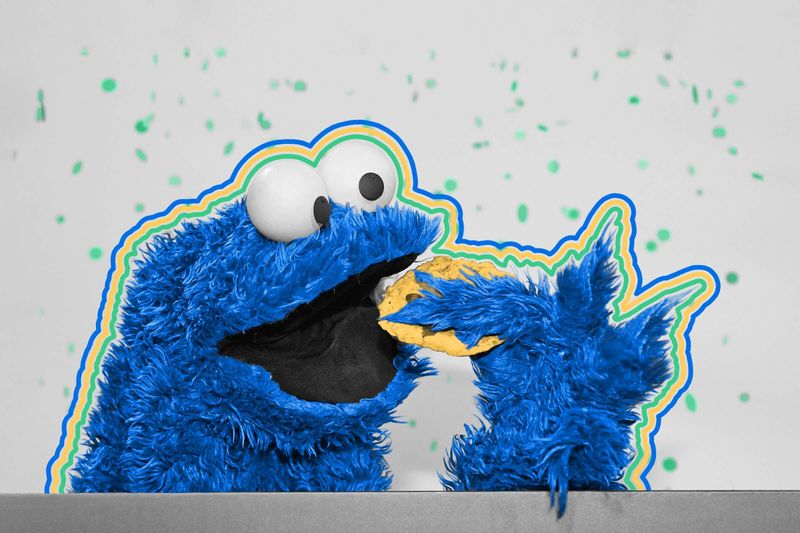
If you’ve ever wondered what appears on Cookie Monster’s birth certificate, the answer isn’t “Cookie Monster” — it’s “Sid.” Sesame Street’s resident cookie-lover joins the likes of Cap’n Crunch (Horatio Magellan Crunch), Yoshi (T. Yoshisaur Munchakoopas), and other fictional characters who have “real” names you might not know. (Speaking of Sesame Street, Snuffleupagus’ first name is actually Aloysius.) Cookie Monster revealed his actual name in the 2004 segment “The First Time Me Eat Cookie,” which includes the line, “In fact, back then, me think me name was Sid.” Despite this, many were still shocked when, in October 2022, the character tweeted, “Did you know me name is Sid? But me still like to be called Cookie Monster.”

Oscar the Grouch has always been green.

Ready to reveal?

Oops, incorrect!

It's a fib

In his original drawings of the character, Jim Henson designed Oscar the Grouch as a “spiky, grumpy-looking magenta monster.” But because early color TVs didn’t handle magenta well, Oscar’s color was changed to orange. He didn’t premiere his current look until the second season.

Though he made waves with the 2004 song “A Cookie Is a Sometimes Food,” Cookie Monster’s love of his namesake treat remains undiminished — and no, he isn’t going to change his name to Veggie Monster. Sid was designed by Jim Henson for an unaired General Foods Canada commercial in 1966, made his Sesame Street debut on the beloved show’s first episode three years later, and has remained a fan favorite in the more than half-century since.

Numbers Don't Lie

Numbers Don't Lie

Seasons of “Sesame Street” as of November 2022
53
Position on the Billboard Hot 100 Singles chart reached by “Rubber Duckie, You’re the One” in 1970
16
Fingers on each of Cookie Monster’s hands (the other Muppet monsters have four)
5
Daytime Emmys won by “Sesame Street,” the most of any show
142

Elmo’s favorite food is ______.

Ready to reveal?

Confirm your email to play the next question?

Elmo’s favorite food is wasabi.

Placeholder Image

“Sesame Street” almost had a different name.

While still in the development stage, the show was going to be called 123 Avenue B. There were two overlapping problems with that title, however: It was a real address in New York City, and the creators feared that viewers outside the city wouldn’t be intrigued by it. Sesame Street was chosen in part to evoke the “Open, sesame” command from “Ali Baba and the Forty Thieves,” a story in One Thousand and One Nights. Traces of the original title can be found in the show’s most famous address — 123 Sesame Street — a two-story brownstone apartment where Bert and Ernie live.

Interesting Facts
Editorial

Interesting Facts writers have been seen in Popular Mechanics, Mental Floss, A+E Networks, and more. They’re fascinated by history, science, food, culture, and the world around them.

Original photo by Sueddeutsche Zeitung Photo/ Alamy Stock Photo

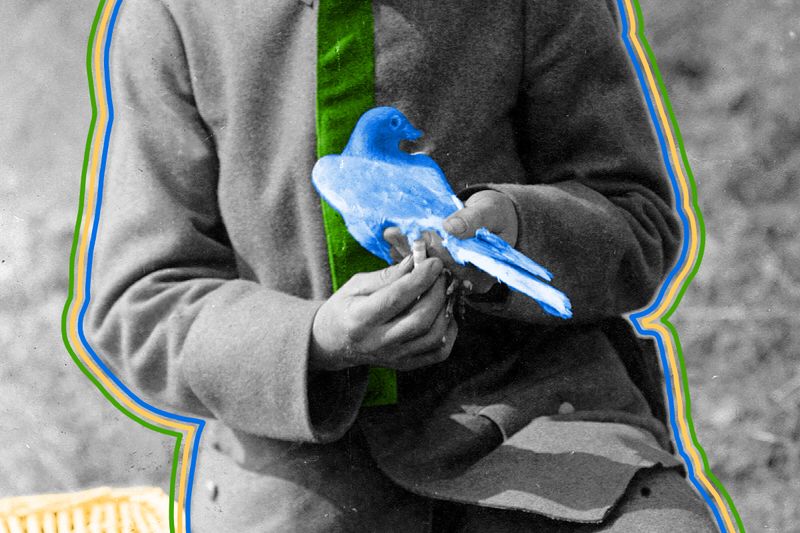
Pigeons tend to get a bad rap among urban dwellers, but the birds have a distinguished history of service. Bred for their instinctive ability to find their way home from long distances, homing pigeons were trained as message-bearers as far back as in ancient Egypt. With their deployment by besieged Parisians during the Franco-Prussian War of 1870, the era of the military pigeon was underway. 

Pigeons can recognize letters of the alphabet and learn words.

Ready to reveal?

Oops, incorrect!

It's a fact

A 2016 study demonstrated that pigeons could be trained to pick out words from a group of nonwords, marking the first time that a nonprimate was shown to have an orthographic brain.

By the time the United States entered World War I, homing pigeons were being used on both sides of the fighting for their ability to reliably deliver progress updates from planes, tanks, and mobile lofts on the front lines. While telephone and radio communications were more advanced heading into World War II, there were still times when conditions rendered such technologies useless, and the only solution was to strap a message to a pigeon and send it airborne through a hail of gunfire. Sometimes, a lone bird’s efforts saved the lives of hundreds of soldiers: One such instance occurred in Italy in 1943, when an American pigeon named G.I. Joe was dispatched to an Allied air base in the nick of time to call off the planned bombing of a village that had just been liberated by British troops.

That year, White Vision, Winkie, and Tyke became the first three of the 32 pigeons to receive the People’s Dispensary for Sick Animals (PDSA) Dickin Medal for exceptional wartime accomplishments. Although the award came into being too late to honor pigeon predecessors like Cher Ami and President Wilson, the more recent creation of the Honorary PDSA Dickin Medal in 2014 honored all the winged warriors and other service animals who served during World War I. And although the PDSA is based in the U.K., the Dickin Medal is awarded to animals in theaters of war around the world, and recognized worldwide.

Numbers Don't Lie

Numbers Don't Lie

Number of pigeons supplied by the United States to Allied forces in WWII
54,000
Year the U.S. Army pigeon service was disbanded
1957
Speed, in miles per hour, of the fastest recorded pigeon
110
Price, in dollars, paid for racing pigeon New Kim in 2020
1.9 million

The sense that enables pigeons to perceive direction via Earth’s magnetic field is ______.

Ready to reveal?

Confirm your email to play the next question?

The sense that enables pigeons to perceive direction via Earth’s magnetic field is magnetoreception.

Placeholder Image

One cat has won the Dickin Medal.

That would be Simon, a tomcat who had the misfortune of getting caught in the strife of the Chinese Civil War in 1949. A crew mascot aboard the British HMS Amethyst, Simon sustained shrapnel injuries when the ship was attacked and cornered by communist forces on the Yangtze River. Not only did Simon get back on his feet and provide comfort to his rattled shipmates, but he also fought off the rats that attempted to raid the dwindling food supply as the crew waited for weeks for safe passage to freedom. Simon then became something of a celebrity after the Amethyst made news with its escape to Hong Kong, with a designated “cat officer” assigned to handle his fan mail. Sadly, the battle-scarred feline died shortly before he was scheduled to receive his Dickin Medal late in 1949, although TIME magazine provided an additional salute by featuring his picture on its obituary page.

Tim Ott
Writer

Tim Ott has written for sites including Biography.com, History.com, and MLB.com, and is known to delude himself into thinking he can craft a marketable screenplay.

Original photo by Album/ Alamy Stock Photo

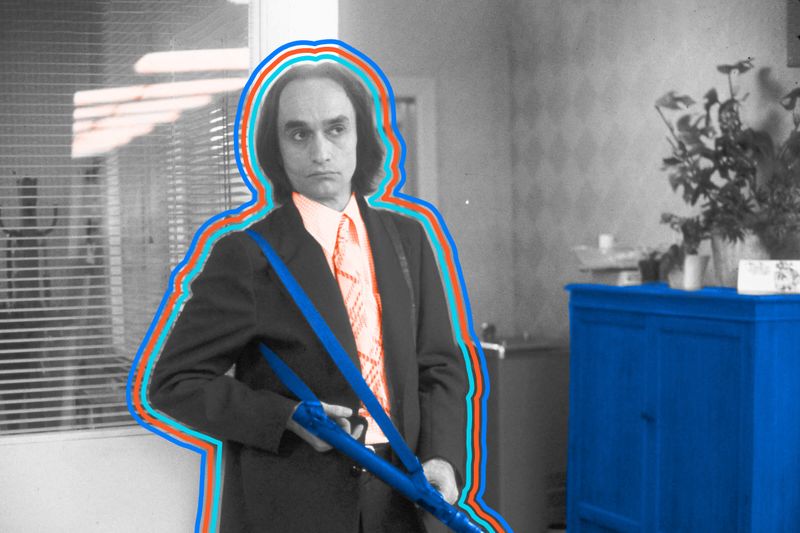
There are impressive filmographies, and then there’s John Cazale's. The actor only appeared in five films during his lifetime, all of which were nominated for Best Picture at the Academy Awards: The Godfather (1972), The Conversation (1974), The Godfather Part II (1974), Dog Day Afternoon (1975), and The Deer Hunter (1978). Even more remarkably, three of them — both Godfathers and The Deer Hunter — won the top prize. The last of these was released after Cazale’s untimely death from bone cancer in March 1978, at which time the 42-year-old thespian was the romantic partner of fellow great Meryl Streep. (He was also in 1990's The Godfather Part III via archival footage, which didn’t break his streak — that sequel was also up for Best Picture.)

John Cazale was nominated for an Oscar himself.

Ready to reveal?

Oops, incorrect!

It's a fib

Despite receiving widespread praise for his performances, Cazale was never nominated for an Academy Award himself. He fared better during his stage career, winning an Obie for his performance in 1968’s “The Indian Wants the Bronx” — as did Pacino, with whom he shared the stage.

Described by no less an authority than his Godfather co-star Al Pacino as “one of the great actors of our time — that time, any time,” Cazale remains best known for playing the tragic Fredo Corleone in Francis Ford Coppola’s mafioso saga. Revered by everyone from contemporaries Gene Hackman and Robert De Niro to more recent admirers such as Michael Fassbender and Steve Buscemi, he was the subject of the 2009 documentary I Knew It Was You: Rediscovering John Cazale. The film was well received upon its premiere at the Sundance Film Festival, and further cemented Cazale’s status as one of the most respected performers of his generation.

Numbers Don't Lie

Numbers Don't Lie

Oscars won by Cazale’s five films
15
Global box-office gross for “The Godfather”
$250 million
Golden Globe nomination received by Cazale, for “Dog Day Afternoon”
1
Copies sold of Mario Puzo’s novel “The Godfather”
20 million–30 million

John Cazale and Al Pacino met while working for ______.

Ready to reveal?

Confirm your email to play the next question?

John Cazale and Al Pacino met while working for Standard Oil Company.

Placeholder Image

Two actors won Oscars for playing the same "Godfather" character.

Marlon Brando won the Academy Award for Best Actor twice during his legendary career, the first time for 1954’s On the Waterfront (“I coulda been a contender”) and the second time for The Godfather (“I’m gonna make him an offer he can’t refuse”). Few silver-screen characters are as iconic as “Don” Vito Corleone, not least because Brando wasn’t the only all-time great to play him. The Godfather Part II is both a sequel and a prequel, with Robert De Niro playing a young Vito Corleone as he emigrates from Sicily to New York and ascends to power. Like Brando before him, De Niro won an Oscar for his performance — this time as Best Supporting Actor. It was the only time two actors had earned Oscars for playing the same character until Joaquin Phoenix was named Best Actor for playing the title character in 2019’s Joker 11 years after Heath Ledger’s performance as Batman’s nemesis in The Dark Knight. The feat was repeated again in 2022, when Ariana DeBose got a trophy for playing West Side Story’s Anita 60 years after Rita Moreno did likewise.

Michael Nordine
Staff Writer

Michael Nordine is a writer and editor living in Denver. A native Angeleno, he has two cats and wishes he had more.

Interesting Facts

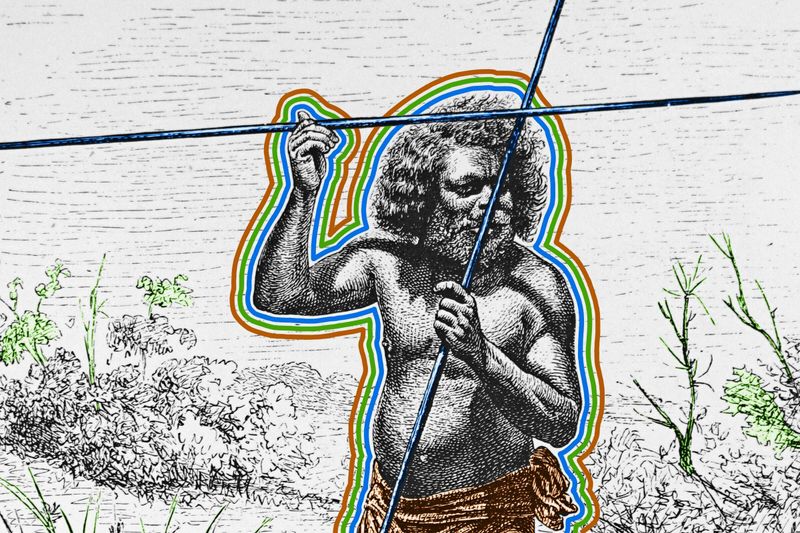
What is the oldest continuous culture in the world? Some might say it’s the Egyptians, since they’ve been kicking around for several thousand years, or perhaps the Indians living along the Indus River Valley — one of ancient history’s greatest (and least-known) civilizations. However, the real answer lies far away from these centers of ancient wonder, in the Land Down Under, among that continent’s first peoples — the Aboriginal Australians. A study in 2016 by an international team of researchers gathered genomic data that showed this group first arrived on the continent some 50,000 years ago, after leaving Africa about 70,000 years ago. 

The British were the first Europeans to land on the Australian continent.

Ready to reveal?

Oops, incorrect!

It's a fib

Although British explorer James Cook’s arrival in the Land Down Under in 1770 is well known, it was actually Dutch explorer Willem Janszoon who, in 1606, landed at what is now called Cape York Peninsula in northern Australia.

However, it’s worth noting that Aboriginal peoples are far from a homogenous unit. After the first peoples arrived on the continent, they quickly spread across Australia, forming isolated pockets that developed independently of one another. By the time Europeans arrived en masse in the late 18th century, some 200 nations of Aboriginal Australians — each with their own language — lived throughout the continent. But that diversity goes beyond just tribes or nations; a study in December 2023 concluded that Aboriginal peoples have high levels of genetic diversity compared to European or Asian populations. 

Unfortunately, Aboriginal Australians continue to struggle compared to non-Indigenous Australians, and experience an eight-year shorter life expectancy, poorer health and educational outcomes, and other ill effects stemming from colonialism and mistreatment. But if the past 75,000 years have taught us anything, it’s that Aboriginal Australians are a resilient culture, and they aren’t going anywhere. 

Numbers Don't Lie

Numbers Don't Lie

Number of Indigenous languages in Australia, along with around 800 dialects
250+
Percent of the Australian population that identifies as Aboriginal or Torres Strait Islander
3.8
Year the last Australian state changed its laws to allow Aboriginal peoples the right to vote
1965
Years ago the Australian continent fully separated from Antarctica
30 million

First elected in 1972, ______ was Australia’s first Indigenous parliamentarian.

Ready to reveal?

Confirm your email to play the next question?

First elected in 1972, Neville Bonner was Australia’s first Indigenous parliamentarian.

Placeholder Image

Aboriginal peoples are not the only Indigenous group living in Australia today.

Although Aboriginal Australians make up the lion’s share of the country’s Indigenous peoples, another important group, called Torres Strait Islander Australians, lives on an archipelago of some 274 small islands between mainland Australia and Papua New Guinea. According to a 2021 census, Torres Strait Islanders constitute roughly 8% of Australia’s Indigenous population. These native peoples first migrated to these islands nearly 70,000 years ago when the land was still part of Papua New Guinea, and while James Cook claimed ownership of the Torres Strait Islands in 1770, the islanders weren’t annexed by Queensland (then a British colony and now an Australian state) until 1879. While the cause of Indigenous rights in Australia often pairs Aboriginal peoples and Torres Strait Islanders together, the two groups possess languages and cultures that are wholly separate. In 2013, the Aboriginal and Torres Strait Islander Peoples Recognition Act finally acknowledged that these two peoples were to forever be considered the first inhabitants of Australia.

Interesting Facts
Editorial

Interesting Facts writers have been seen in Popular Mechanics, Mental Floss, A+E Networks, and more. They’re fascinated by history, science, food, culture, and the world around them.

Interesting Facts

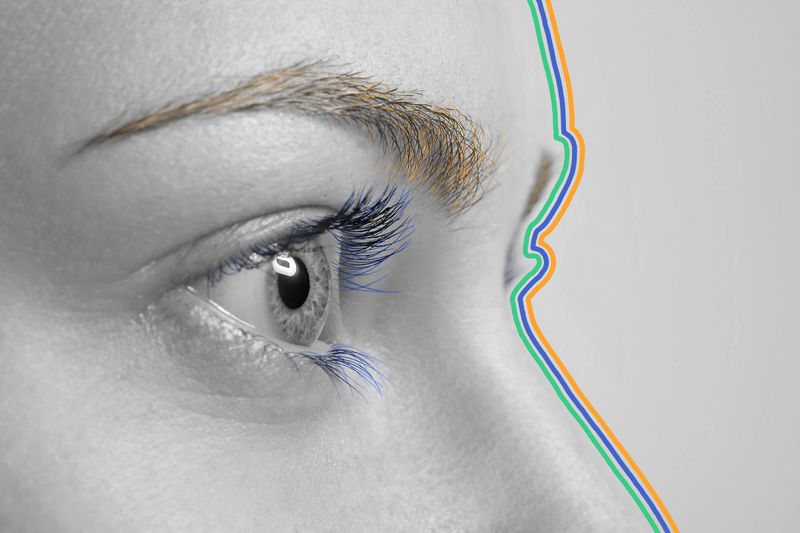
Human eyes are entirely unique; just like fingerprints, no two sets are alike. But some genetic anomalies create especially unlikely “windows” to the world — like gray eyes. Eye experts once believed that human eyes could appear in only three colors: brown, blue, and green, sometimes with hazel or amber added. More recently, the ashy hue that was once lumped into the blue category has been regrouped as its own, albeit rarely seen, color.

Brown-eyed folks are in good company, with up to 80% of the global population sporting the shade, while blue eyes are the second-most common hue. Traditionally, green was considered the least common eye color, though researchers now say gray is the most rare, with less than 1% of the population seeing through steel-colored eyes. 

Human eyes can develop freckles.

Ready to reveal?

Oops, incorrect!

It's a fact

Sun-kissed skin is often dotted with freckles — which can also appear on our eyes. Optical freckles are common and generally harmless; some form before birth as molelike spots called nevi, while others appear on the iris thanks to sun exposure and aging.

Eye color is an inherited trait, meaning it’s likely members of the same family have similar eye colors. However, geneticists now believe determining a child’s eye color isn’t as simple as looking at their parents. That’s because as many as 16 genes work together to impact the final hue. Intriguingly, the eye color we have at birth isn’t necessarily the one we’ll have as adults. Most babies are born with fainter eyes that often look gray, light blue, or light brown until the melanocytes — the protein that creates color — produce enough melanin to color the iris. People with less active melanocytes typically have lighter eyes (like blue or green), while people with more melanin usually end up with brown eyes. In most cases, our final eye color begins to emerge around 3 to 6 months old, though it can continue changing until a baby’s third birthday.

Numbers Don't Lie

Numbers Don't Lie

Percentage of the U.S. population with brown eyes
45
Average number of times humans blink per minute
15-20
Number of muscles in the human eye
6
Year singer Van Morrison released his hit “Brown Eyed Girl”
1967

Having two different colored eyes is called ______.

Ready to reveal?

Confirm your email to play the next question?

Having two different colored eyes is called heterochromia.

Placeholder Image

The letters on an eye exam chart are called “optotypes.”

Picking out which letters you can (and can’t) see from a chart is now a routine part of an eye exam, in part due to Dutch ophthalmologist Herman Snellen. For hundreds of years, eye doctors used a variety of methods to test their patients’ visual acuity (aka how far and clearly a person can see), including vision charts of their own design featuring seeds and common symbols, though no one test was widely used. In the 1860s, Snellen designed his first vision chart using squares and circles, but ultimately decided to use letters. The chart-topping sizable E, along with the C, D, F, L, O, P, T, and Z were dubbed “optotypes” — a style of consistently sized and geometrically balanced lettering. Snellen’s test became popular when the British Army began using it around 1863, and it eventually became the standard acuity test. While other charts have since emerged (along with tweaks to Snellen’s design), it remains the most widespread eye exam tool, in part because it’s easy and inexpensive to reproduce.

Nicole Garner Meeker
Writer

Nicole Garner Meeker is a writer and editor based in St. Louis. Her history, nature, and food stories have also appeared at Mental Floss and Better Report.

Original photo by josephgruber/ iStock

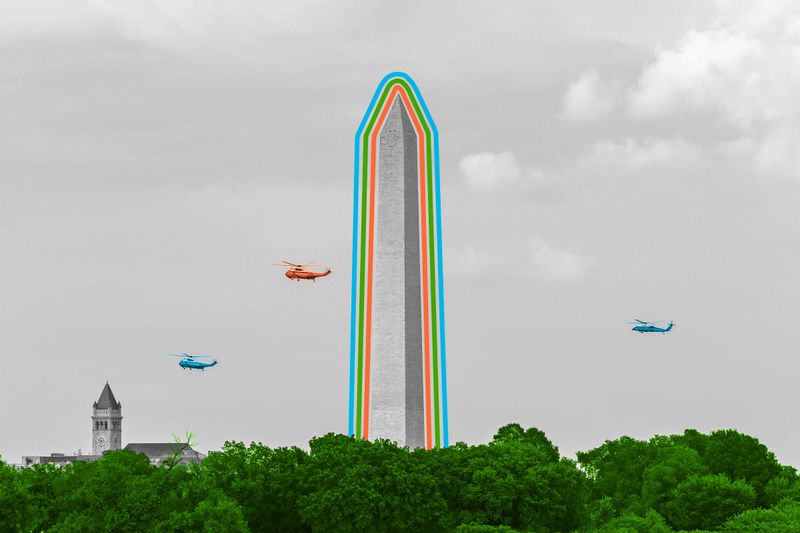
Today, aluminum is a common material you can buy for cheap at your local supermarket, but in the mid-to-late 19th century, it was as valuable as the most precious of metals. Although the material is easily found in the Earth’s crust, a pure form of aluminum doesn’t occur naturally. Instead, it requires a laborious process to extract it from other elements with which it appears, such as iron or silicon. So when the U.S. government needed an impressive topper for the Washington Monument, they went with a 9-inch pyramidion (a small pyramid at the top of an obelisk) made of aluminum — the largest piece of aluminum ever made at the time. The pyramid was affixed atop the Washington Monument on December 6, 1884; after 36 laborious years of construction, the 555-foot memorial to the nation’s first president was finally completed. 

Aluminum is the most abundant metal on Earth.

Ready to reveal?

Oops, incorrect!

It's a fact

Aluminum has been used by humans in some form since the ancient Egyptians. But it wasn’t until the arrival of electricity in the 19th century that pure aluminum became readily available, as its smelting process required vast amounts of energy.

Although the 9-inch aluminum pyramid was dazzling in its day, the hunk of metal also served a more practical purpose. Because the Washington Monument towered over nearby buildings, its designers also intended it as an effective lightning rod. The pyramidion was connected by four iron rods that went down the monument and traveled 40 feet underground into a pool of groundwater, which dispelled the electricity. (Gold-plated copper rods with copper points were also added to the structure after lightning cracked it during a storm in 1885.) Unfortunately, the Washington Monument was a little too good at being a lightning rod — repeated lightning strikes have melted down the aluminum cap by 3/8 inch. Today, two lightning rods divert strikes from the pyramidion, which still glistens atop the monument’s peak.

Numbers Don't Lie

Numbers Don't Lie

Atomic number of aluminum on the periodic table
13
Age of Eliza Hamilton when attending the dedication of the Washington Monument cornerstone in 1848
91
Percentage of the Earth’s crust made up of aluminum
8%
Magnitude of the earthquake that damaged the Washington Monument in 2011 (it’s since been repaired)
5.8

During the Civil War, the land around the Washington Monument was used as a ______.

Ready to reveal?

Confirm your email to play the next question?

During the Civil War, the land around the Washington Monument was used as a cattle pen.

Placeholder Image

Although Britons say “aluminium,” it was a British scientist who named it “aluminum.”

The phonetic differences between American and British English are usually a case of stressing different syllables or pronouncing vowels differently. However, the pronunciation of “aluminum” vs. “aluminium” (if you grew up outside the U.S. and Canada) often throws speakers for a loop. Perhaps strangely, North Americans use the original pronunciation as coined by British scientist Sir Humphry Davy, who named the element “aluminum” in his 1812 book Elements of Chemical Philosophy. Davy’s coinage did not sit well with some chemists, including Thomas Young, who proposed the alternate spelling in a review of Davy’s book, following an established “-ium” spelling trend seen in words such as helium, lithium, magnesium, sodium, etc. Webster’s English Dictionary, famous for establishing many of the subtle differences between American and British English, went with Davy’s original spelling in its 1828 edition, and nearly a century later, the American Chemical Society followed suit. However, in 1990, the International Union of Pure and Applied Chemistry (IUPAC) accepted the extra “i” as a permanent fixture of the word. Much like the metric system, Americans weren’t having it, and three years later, the IUPAC also recognized “aluminum” as a correct spelling. Everyone wins.

Darren Orf
Writer

Darren Orf lives in Portland, has a cat, and writes about all things science and climate. You can find his previous work at Popular Mechanics, Inverse, Gizmodo, and Paste, among others.

Original photo by QBR/ Shutterstock

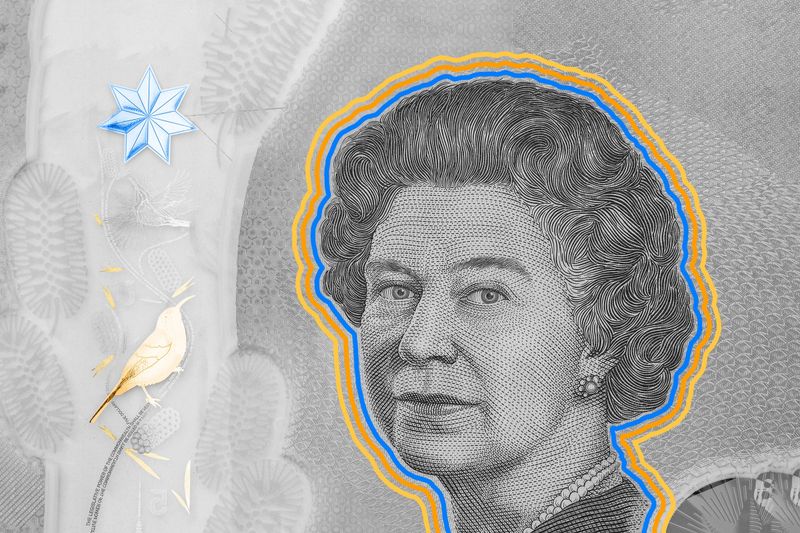
Leaders have historically used body doubles to thwart would-be assassins, but Queen Elizabeth II’s double served a different — and significantly less bloody — purpose. A big part of being the queen of the United Kingdom was simply showing up. Whether opening a hospital or hosting a foreign dignitary, the queen was always busy. A majority of her events required rehearsals, and that’s where Ella Slack came in. Although Slack and the queen didn’t look alike, they were about the same height and build, so if an event needed to test camera angles or see if the sun would be in the queen’s eyes, Slack was the person for the task. 

Dolly Parton once lost a drag queen celebrity look-alike contest.

Ready to reveal?

Oops, incorrect!

It's a fact

According to the country music icon, she did lose a drag queen look-alike contest. “They had a bunch of Chers and Dollys that year, so I just over-exaggerated — made my beauty mark bigger, the eyes bigger, the hair bigger,” Parton told ABC News. “I got the least applause.”

Slack got the job while working for the BBC’s events department in the 1980s. She stood in for the queen more than 50 times, including riding in the royal carriage and attending rehearsals for the opening of Parliament. However, Slack didn’t get to enjoy all the comforts of royalty. As a strict rule, she was never allowed to sit on the throne in the House of Lords and instead just “lurked” above it. Slack also was never paid for her stand-in efforts but considered her role “a pleasure and an honor.” 

Numbers Don't Lie

Numbers Don't Lie

Number of diamonds in Queen Elizabeth’s Imperial State Crown
2,868
Year Felix Dadaev revealed he was one of at least four body doubles for Joseph Stalin
2008
Average amount of letters Queen Elizabeth II received annually
70,000
Running time (in minutes) of the 1984 Brian de Palma thriller “Body Double”
114

Queen Elizabeth was the first female British royal to be a full-time active member of ______.

Ready to reveal?

Confirm your email to play the next question?

Queen Elizabeth was the first female British royal to be a full-time active member of the armed forces.

Placeholder Image

Technically, the queen owned all unmarked mute swans in open waters in the U.K.

Since the 12th century, the English monarchy has held the title of Seigneur (lord) of the Swans. For many years, mute swans — the elegant type you know from “Swan Lake” — were a popular food served by the rich. It was the king or queen who granted swan ownership rights, and the cost of going against those rights was severe. For example, anyone caught stealing swan eggs could face a year in prison, and it was treasonous to illegally eat a swan until 1998. In the 14th century, the crown granted swan ownership rights to Abbotsbury Swannery, one of only a few surviving companies with such privileges. The swannery marks their swans with a small ring around the bird’s leg. Any mute swan that isn’t marked in such a way remains property of the monarch. Strangely, this law also applies to dead swans, so any well-meaning taxidermist not wishing to run afoul of the law must contact the royal swan marker before stuffing any of the crown’s birds.

Darren Orf
Writer

Darren Orf lives in Portland, has a cat, and writes about all things science and climate. You can find his previous work at Popular Mechanics, Inverse, Gizmodo, and Paste, among others.