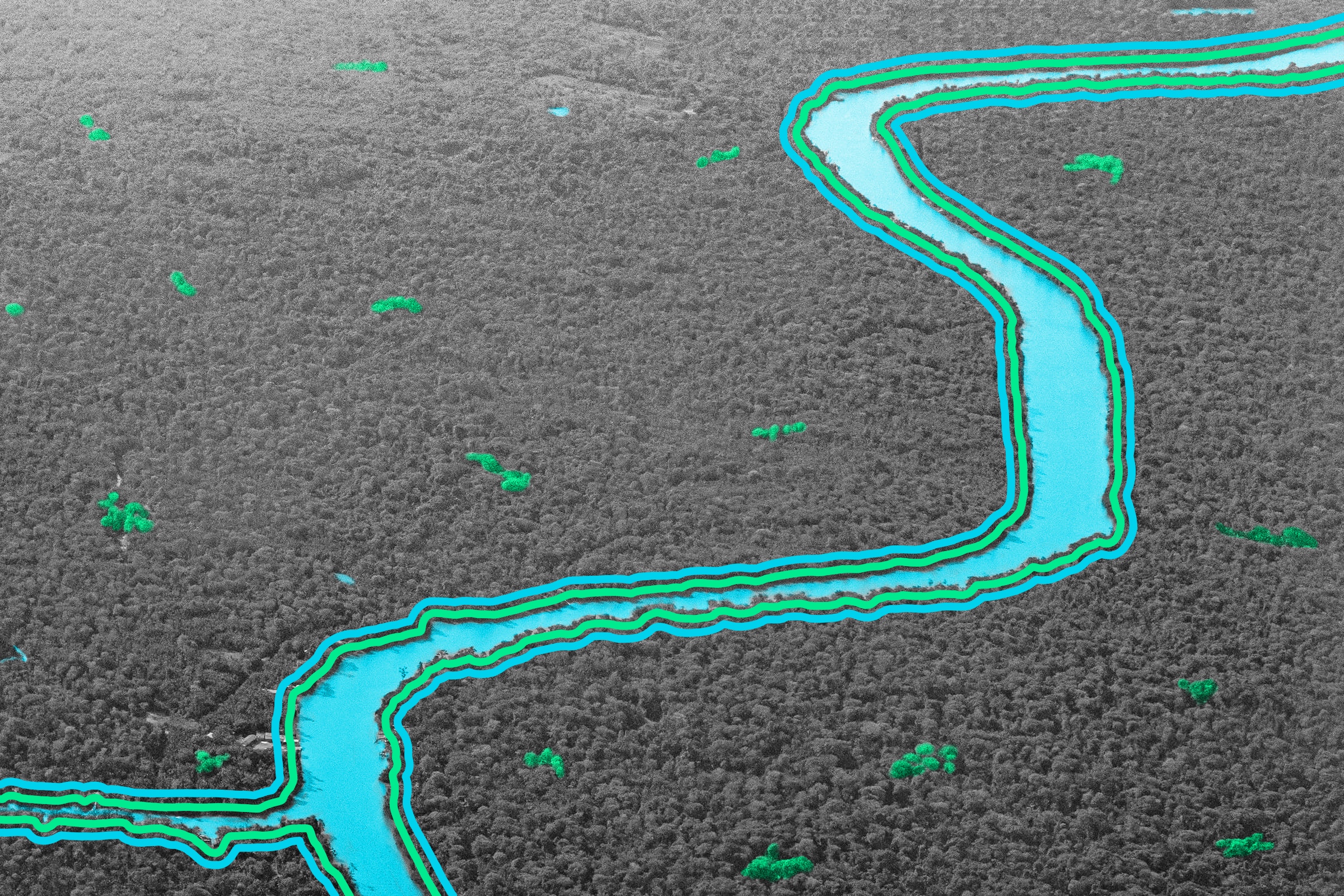

When it comes to the Amazon River, there’s no such thing as water under the bridge. The idiom simply doesn’t apply there, as no bridges cross the Amazon River despite it being at least 4,000 miles long. This isn’t because the idea has never occurred to anyone — it would just be extremely difficult to build any. The Amazon has both a dry season and a rainy season, and during the latter its waters rise 30 feet, causing 3-mile-wide crossings to grow by a factor of 10 as previously dry areas are submerged. The river bank itself is also in a near-constant state of erosion due to how soft the sediment it consists of is, and there’s no shortage of debris floating in the water.
The longest river in the world is actually the Nile, which is 4,132 miles long — about 132 miles longer than the Amazon, though counts vary. Third on the list is the Yangtze, at 3,915 miles.
Beyond all those logistical hurdles, there simply isn’t much use for bridges across the massive river. For one thing, there are few roads on either side of the Amazon that need to be connected. The river is, of course, in the middle of a dense rainforest, the vast majority of which is sparsely populated. Other long rivers have numerous crossings, however: The Nile has nine bridges in Cairo alone, for instance, and more than 100 bridges have been built across China’s Yangtze River in the last three decades. For now, boats and ferries are the preferred method of crossing the Amazon, and are likely to remain so for the foreseeable future.
The Amazon used to flow in the opposite direction.
These days, the river flows east and into the Atlantic. That wasn’t always the case, as it used to flow west into the Pacific — and even both directions simultaneously. This was during the Cretaceous Period, between65 million and 145 million years ago, and was the result of a highland (mountainous area) that formed along the east coast of South America when that landmass and Africa broke apart. The Andes eventually formed on the western half of the continent, which forced the river into its current eastward flow.

Michael Nordine
Staff Writer
Michael Nordine is a writer and editor living in Denver. A native Angeleno, he has two cats and wishes he had more.
Advertisement
top picks from the Inbox Studio network
Interesting Facts is part of Inbox Studio, an email-first media company. *Indicates a third-party property.
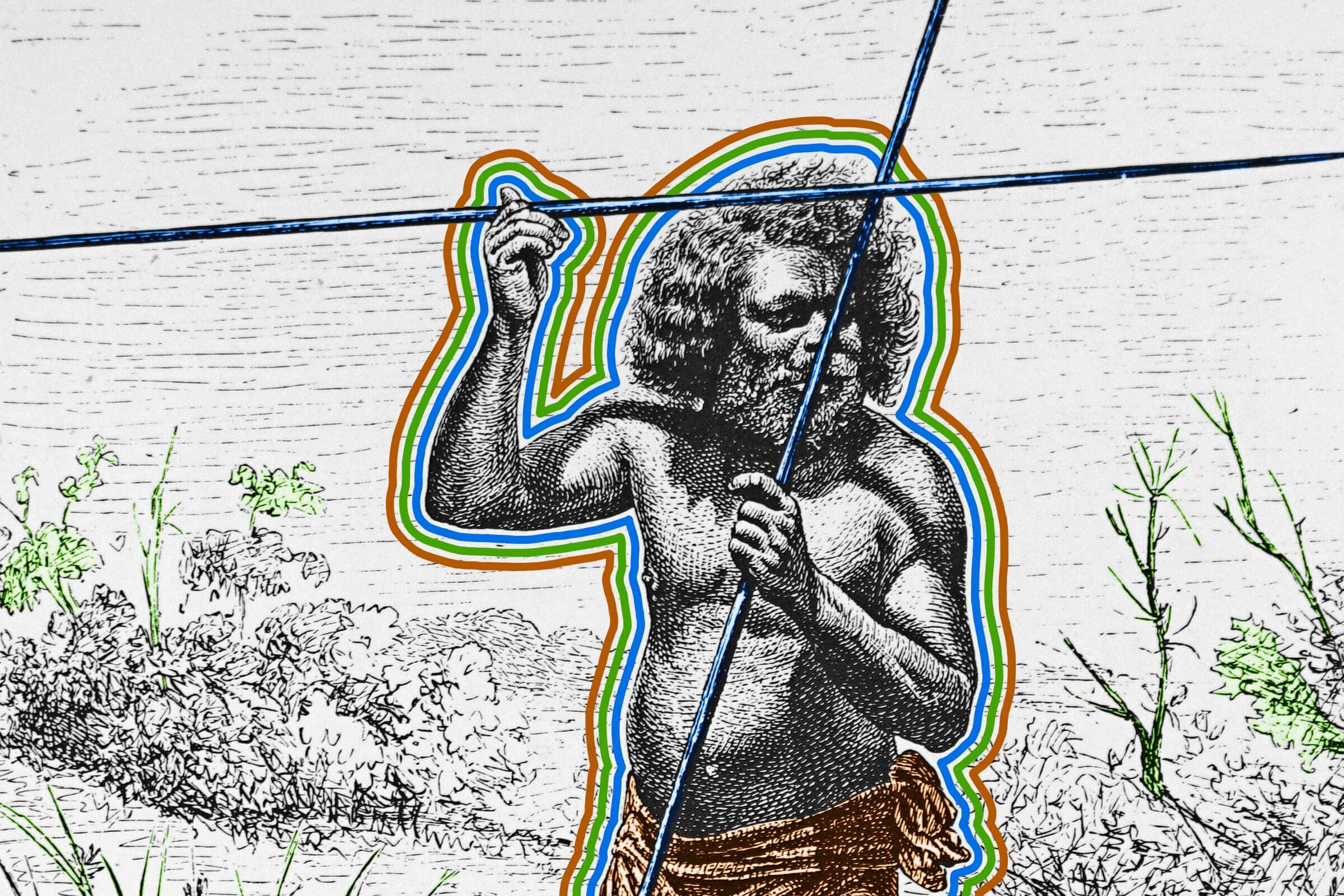
What is the oldest continuous culture in the world? Some might say it’s the Egyptians, since they’ve been kicking around for several thousand years, or perhaps the Indians living along the Indus River Valley — one of ancient history’s greatest (and least-known) civilizations. However, the real answer lies far away from these centers of ancient wonder, in the Land Down Under, among that continent’s first peoples — the Aboriginal Australians. A study in 2016 by an international team of researchers gathered genomic data that showed this group first arrived on the continent some 50,000 years ago, after leaving Africa about 70,000 years ago.
The British were the first Europeans to land on the Australian continent.
Although British explorer James Cook’s arrival in the Land Down Under in 1770 is well known, it was actually Dutch explorer Willem Janszoon who, in 1606, landed at what is now called Cape York Peninsula in northern Australia.
However, it’s worth noting that Aboriginal peoples are far from a homogenous unit. After the first peoples arrived on the continent, they quickly spread across Australia, forming isolated pockets that developed independently of one another. By the time Europeans arrived en masse in the late 18th century, some 200 nations of Aboriginal Australians — each with their own language — lived throughout the continent. But that diversity goes beyond just tribes or nations; a study in December 2023 concluded that Aboriginal peoples have high levels of genetic diversity compared to European or Asian populations.
Unfortunately, Aboriginal Australians continue to struggle compared to non-Indigenous Australians, and experience an eight-year shorter life expectancy, poorer health and educational outcomes, and other ill effects stemming from colonialism and mistreatment. But if the past 75,000 years have taught us anything, it’s that Aboriginal Australians are a resilient culture, and they aren’t going anywhere.
First elected in 1972, Neville Bonner was Australia’s first Indigenous parliamentarian.
Advertisement
Aboriginal peoples are not the only Indigenous group living in Australia today.
Although Aboriginal Australians make up the lion’s share of the country’s Indigenous peoples, another important group, called Torres Strait Islander Australians, lives on an archipelago of some 274 small islands between mainland Australia and Papua New Guinea. According to a 2021 census, Torres Strait Islanders constitute roughly 8% of Australia’s Indigenous population. These native peoples first migrated to these islands nearly 70,000 years ago when the land was still part of Papua New Guinea, and while James Cook claimed ownership of the Torres Strait Islands in 1770, the islanders weren’t annexed by Queensland (then a British colony and now an Australian state) until 1879. While the cause of Indigenous rights in Australia often pairs Aboriginal peoples and Torres Strait Islanders together, the two groups possess languages and cultures that are wholly separate. In 2013, the Aboriginal and Torres Strait Islander Peoples Recognition Act finally acknowledged that these two peoples were to forever be considered the first inhabitants of Australia.
Interesting Facts
Editorial
Interesting Facts writers have been seen in Popular Mechanics, Mental Floss, A+E Networks, and more. They’re fascinated by history, science, food, culture, and the world around them.
Advertisement
top picks from the Inbox Studio network
Interesting Facts is part of Inbox Studio, an email-first media company. *Indicates a third-party property.
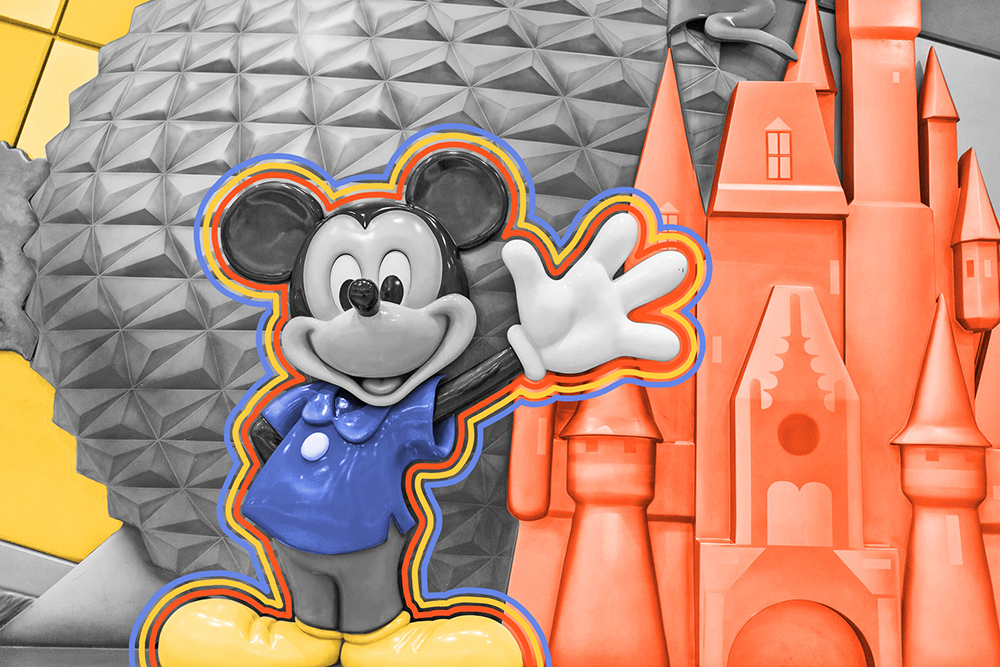
You may love Disney, but you probably don’t love it as much as Jeff Reitz. The 49-year-old brought new meaning to the term “Disney adult” by visiting the Happiest Place on Earth 2,995 days in a row — a streak that only ended when Disneyland shut down during the pandemic. It began as “a joke and a fun thing to do” between him and a friend when the two were in between jobs on New Year’s Eve 2011, and it continued for eight years, three months, and 13 days. The original plan was to spend every day of 2012 at the park, in part because it was a leap year and Reitz liked the idea of going 366 days in a single year, but he didn’t feel inclined to stop once 2013 rolled around. He became the unofficial record-holder at the 1,000-day mark and was oh so close to reaching 3,000 days before COVID-19 prevented that particular milestone when Disneyland shut down on March 14, 2020.
Mickey was actually preceded by one Oswald the Lucky Rabbit, the star of 26 short cartoons beginning in 1927. After losing the rights to Oswald, Disney came up with Mickey — and the two creatures bear a striking resemblance to one another.
Reitz, who worked in nearby Long Beach, would usually arrive at Disneyland between 4:30 and 5 p.m. and log some 10,000 steps during his three-to-five-hour visits. Though he initially struggled with the park’s closure, he eventually made peace with it: “A lot has changed over the eight years that I started it,” he said after his streak ended. “I’m good with it. I went more than eight years. I got to see a lot of changes at the park. Now, I’m not worried about going every day like I was.” After more than a year of being closed, Disneyland reopened in April 2021. It’s not clear if Reitz has been back, but he has enough memories to last him a while.
Disneyland employees aren’t allowed to use the phrase " I don’t know ."
Advertisement
Walt Disney received a custom-made Oscar statuette for “Snow White and the Seven Dwarfs.”
Walt Disney won 32 Academy Awards, a record for the most individual Oscars, and one that’s unlikely to be broken anytime soon (if ever). Because there was no award for Best Animated Feature until 2001, when Shrek won the inaugural prize, he received an Honorary Oscar for Snow White and the Seven Dwarfs in 1939 that included a unique custom design — one regular Oscar statuette and seven miniature ones placed along a stepped base. The Oscar was awarded for Snow White’s “significant screen innovation which has charmed millions and pioneered a great new entertainment field for the motion picture cartoon.” It was presented to him by Shirley Temple, who was a bit confused as to why the star of the film wasn’t being honored as well: “I thought that the big statue was for Walt and that the Seven Dwarfs were the little ones going down the side and that Snow White herself hadn’t gotten anything,” she later said.
Interesting Facts
Editorial
Interesting Facts writers have been seen in Popular Mechanics, Mental Floss, A+E Networks, and more. They’re fascinated by history, science, food, culture, and the world around them.
Advertisement
top picks from the Inbox Studio network
Interesting Facts is part of Inbox Studio, an email-first media company. *Indicates a third-party property.
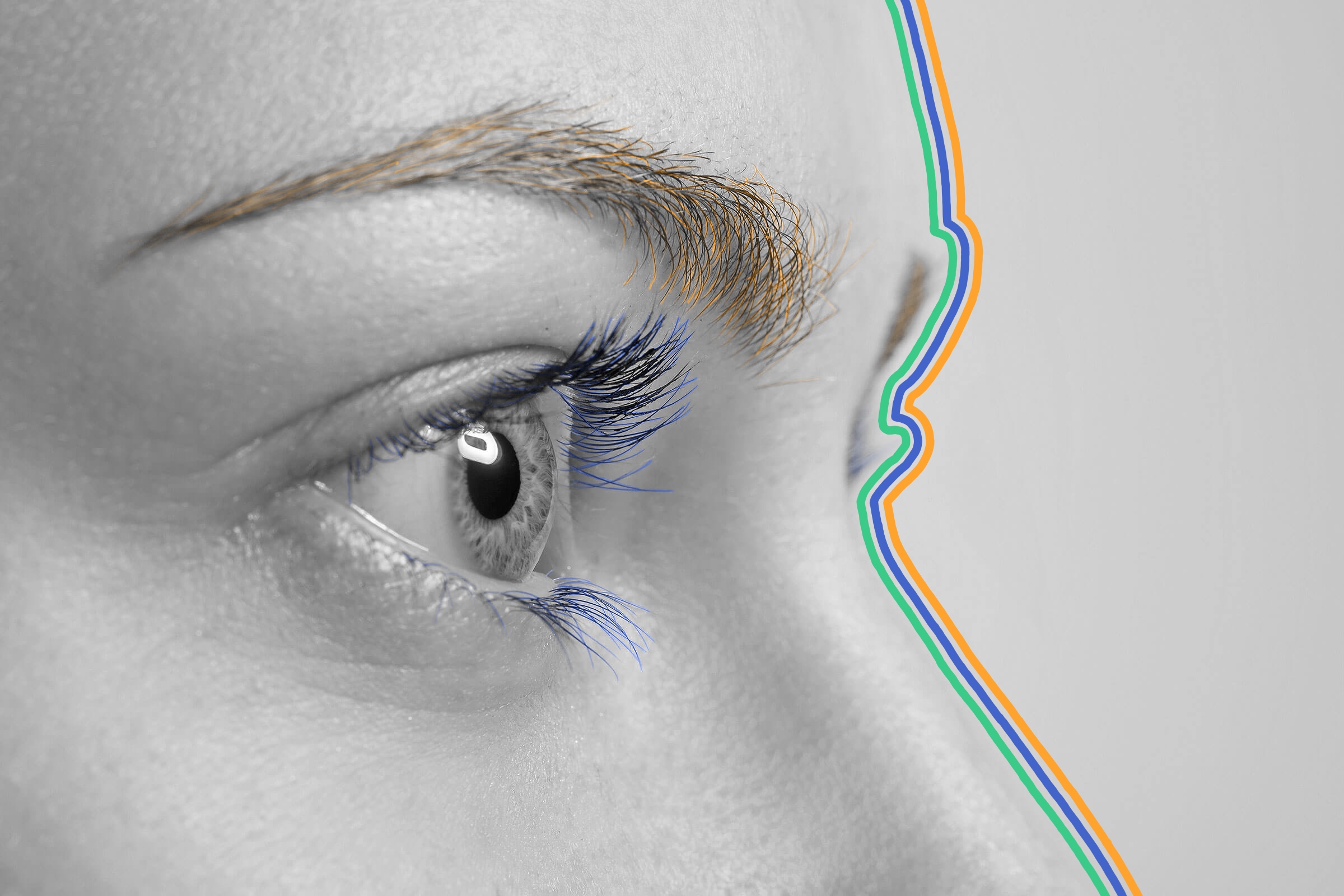
Human eyes are entirely unique; just like fingerprints, no two sets are alike. But some genetic anomalies create especially unlikely “windows” to the world — like gray eyes. Eye experts once believed that human eyes could appear in only three colors: brown, blue, and green, sometimes with hazel or amber added. More recently, the ashy hue that was once lumped into the blue category has been regrouped as its own, albeit rarely seen, color.
Brown-eyed folks are in good company, with up to 80% of the global population sporting the shade, while blue eyes are the second-most common hue. Traditionally, green was considered the least common eye color, though researchers now say gray is the most rare, with less than 1% of the population seeing through steel-colored eyes.
Sun-kissed skin is often dotted with freckles — which can also appear on our eyes. Optical freckles are common and generally harmless; some form before birth as molelike spots called nevi, while others appear on the iris thanks to sun exposure and aging.
Eye color is an inherited trait, meaning it’s likely members of the same family have similar eye colors. However, geneticists now believe determining a child’s eye color isn’t as simple as looking at their parents. That’s because as many as 16 genes work together to impact the final hue. Intriguingly, the eye color we have at birth isn’t necessarily the one we’ll have as adults. Most babies are born with fainter eyes that often look gray, light blue, or light brown until the melanocytes — the protein that creates color — produce enough melanin to color the iris. People with less active melanocytes typically have lighter eyes (like blue or green), while people with more melanin usually end up with brown eyes. In most cases, our final eye color begins to emerge around 3 to 6 months old, though it can continue changing until a baby’s third birthday.
Having two different colored eyes is called heterochromia.
Advertisement
The letters on an eye exam chart are called “optotypes.”
Picking out which letters you can (and can’t) see from a chart is now a routine part of an eye exam, in part due to Dutch ophthalmologist Herman Snellen. For hundreds of years, eye doctors used a variety of methods to test their patients’ visual acuity (aka how far and clearly a person can see), including vision charts of their own design featuring seeds and common symbols, though no one test was widely used. In the 1860s, Snellen designed his first vision chart using squares and circles, but ultimately decided to use letters. The chart-topping sizable E, along with the C, D, F, L, O, P, T, and Z were dubbed “optotypes” — a style of consistently sized and geometrically balanced lettering. Snellen’s test became popular when the British Army began using it around 1863, and it eventually became the standard acuity test. While other charts have since emerged (along with tweaks to Snellen’s design), it remains the most widespread eye exam tool, in part because it’s easy and inexpensive to reproduce.
Nicole Garner Meeker
Writer
Nicole Garner Meeker is a writer and editor based in St. Louis. Her history, nature, and food stories have also appeared at Mental Floss and Better Report.
Advertisement
top picks from the Inbox Studio network
Interesting Facts is part of Inbox Studio, an email-first media company. *Indicates a third-party property.

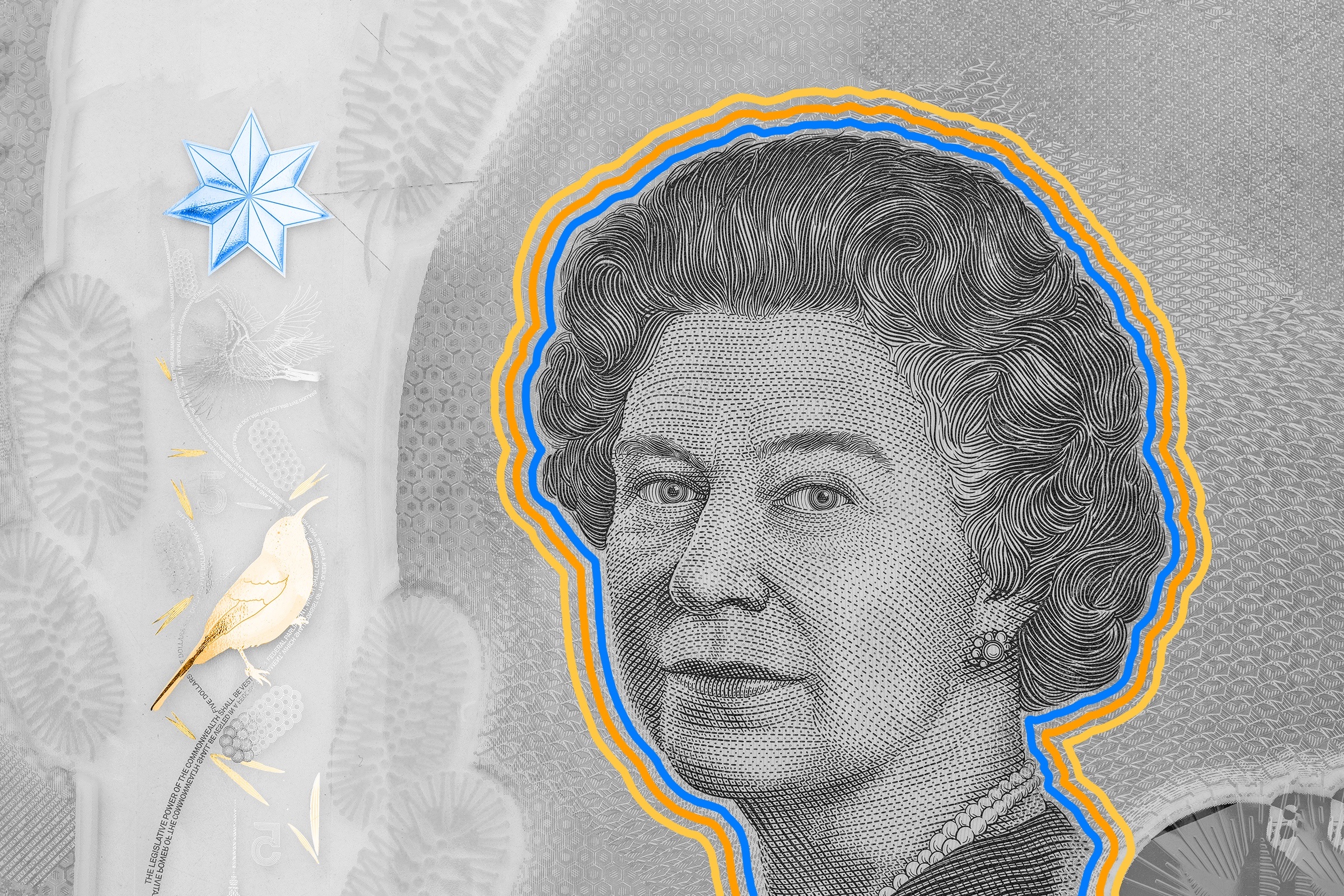
Leaders have historically used body doubles to thwart would-be assassins, but Queen Elizabeth II’s double served a different — and significantly less bloody — purpose. A big part of being the queen of the United Kingdom was simply showing up. Whether opening a hospital or hosting a foreign dignitary, the queen was always busy. A majority of her events required rehearsals, and that’s where Ella Slack came in. Although Slack and the queen didn’t look alike, they were about the same height and build, so if an event needed to test camera angles or see if the sun would be in the queen’s eyes, Slack was the person for the task.
Dolly Parton once lost a drag queen celebrity look-alike contest.
According to the country music icon, she did lose a drag queen look-alike contest. “They had a bunch of Chers and Dollys that year, so I just over-exaggerated — made my beauty mark bigger, the eyes bigger, the hair bigger,” Parton told ABC News. “I got the least applause.”
Slack got the job while working for the BBC’s events department in the 1980s. She stood in for the queen more than 50 times, including riding in the royal carriage and attending rehearsals for the opening of Parliament. However, Slack didn’t get to enjoy all the comforts of royalty. As a strict rule, she was never allowed to sit on the throne in the House of Lords and instead just “lurked” above it. Slack also was never paid for her stand-in efforts but considered her role “a pleasure and an honor.”
Queen Elizabeth was the first female British royal to be a full-time active member of the armed forces.
Advertisement
Technically, the queen owned all unmarked mute swans in open waters in the U.K.
Since the 12th century, the English monarchy has held the title of Seigneur (lord) of the Swans. For many years, mute swans — the elegant type you know from “Swan Lake” — were a popular food served by the rich. It was the king or queen who granted swan ownership rights, and the cost of going against those rights was severe. For example, anyone caught stealing swan eggs could face a year in prison, and it was treasonous to illegally eat a swan until 1998. In the 14th century, the crown granted swan ownership rights to Abbotsbury Swannery, one of only a few surviving companies with such privileges. The swannery marks their swans with a small ring around the bird’s leg. Any mute swan that isn’t marked in such a way remains property of the monarch. Strangely, this law also applies to dead swans, so any well-meaning taxidermist not wishing to run afoul of the law must contact the royal swan marker before stuffing any of the crown’s birds.
Darren Orf
Writer
Darren Orf lives in Portland, has a cat, and writes about all things science and climate. You can find his previous work at Popular Mechanics, Inverse, Gizmodo, and Paste, among others.
Advertisement
top picks from the Inbox Studio network
Interesting Facts is part of Inbox Studio, an email-first media company. *Indicates a third-party property.

Some caricaturists, whether in celebrity restaurants or theme parks, face customers who are less than thrilled with their portraits, but to be drawn by caricaturist Al Hirschfeld was considered an honor. Hirschfeld began working with The New York Times in 1929, often drawing the stars of Broadway and Hollywood, but it wasn’t until the birth of his daughter Nina in 1945 that a now-legendary game began. In many of his drawings following her birth, for the Times and other prominent publications, Hirschfeld hid his daughter’s name “in folds of sleeves, tousled hairdos, eyebrows, wrinkles, backgrounds, shoelaces — anywhere to make it difficult, but not too difficult, to find,” Hirschfeld once said. Next to his signature, the artist included the number of times “Nina” appeared throughout the image.
Leonardo da Vinci is one of the first caricaturists.
Although the Renaissance master is known for his explorations of human perfection (see: Vitruvian Man), Leonardo da Vinci also drew sketches of exaggerated and grotesque faces. Some scholars consider these works the beginning of caricature.
This tradition inspired an unofficial puzzle for decades, as readers scanned Hirschfeld’s work to find each and every “Nina” — and this included Hirschfeld himself. According to his foundation’s website, the artist became so accustomed to adding his daughter’s name as part of his artistic process that he often had to go back through the piece and find every hidden “Nina” for himself in order to come up with the total count. Hirschfeld continued this tradition for nearly 60 years, until his death at the age of 99 in 2003.
The word “caricature” comes from the Italian verb “caricare,” which means “to load.”
Advertisement
A computer programmer built an algorithm for finding Waldo in “Where’s Waldo?”
When it comes to hiding secrets in illustrations, nothing compares to Where’s Waldo? First published in Britain in 1987 under the title Where’s Wally? (it’s still called that in the U.K.), this famous series of books follows the bespectacled and candy cane-colored Waldo through various adventures as he hides among artist Martin Handford’s amazingly detailed illustrations. “As I work my way through a picture, I add Wally when I come to what I feel is a good place to hide him,” Handford once told the publisher Scholastic. Because Waldo’s location is random in all the original 68 illustrations in Handford’s original seven books, any sort of sleuthing strategy seems impossible. Well, almost impossible. In 2015, a doctoral student named Randal Olson from Michigan State University’s High-Performance Computing Center developed a computer algorithm for locating Waldo. By performing a “kernel density estimation” on Waldo’s 68 locations, Olson developed a few simple tips. For example, Waldo never appears in the top left corner, bottom right corner, or near the edges of either page. Then, Olson developed an algorithm for scanning a typical Waldo spread, including step-by-step processes for which parts of the page to scan first. When the algorithm was put to the test, Olson says he spotted Waldo in most spreads in less than 10 seconds. However, some “outlier” illustrations took a bit longer, proving Waldo can still stump both man and machine.
Darren Orf
Writer
Darren Orf lives in Portland, has a cat, and writes about all things science and climate. You can find his previous work at Popular Mechanics, Inverse, Gizmodo, and Paste, among others.
Advertisement
top picks from the Inbox Studio network
Interesting Facts is part of Inbox Studio, an email-first media company. *Indicates a third-party property.