
Original photo by Bildagentur Zoonar GmbH/ Shutterstock
Earth is far from the perfect “blue marble” we like to picture. In reality, our planet is filled with deep trenches, towering mountains, and centrifugal bulges that make its mass uneven across the globe — and that unequal distribution can really mess with gravity. One famous example is the Hudson Bay region in northeastern Canada, where gravity reaches some of its weakest levels in the entire world. These levels aren’t extraordinarily low — residents weigh only one-tenth of an ounce less than they would elsewhere — but it’s enough for scientists to take notice and wonder why this particular area experiences gravity differently.
Hudson Bay is the farthest south penguins live year-round.
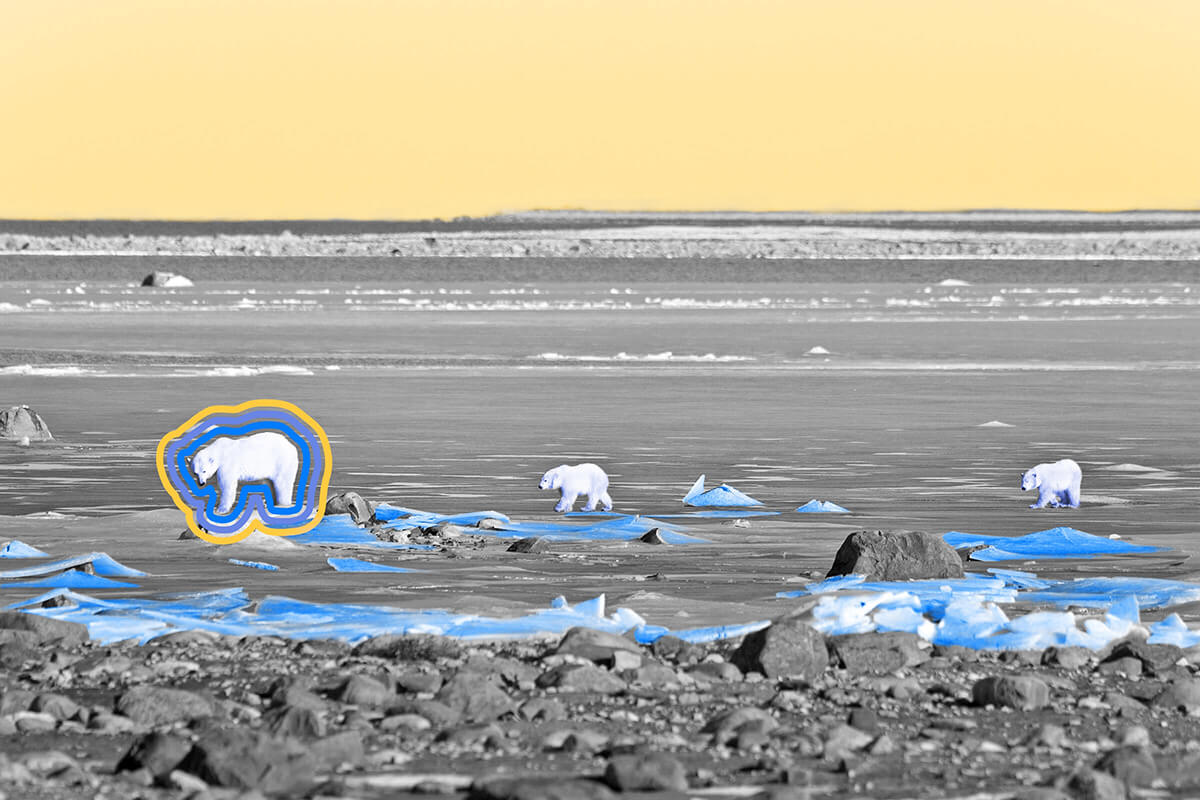
Hudson Bay is a vital habitat for one arctic species — but it’s not penguins. Polar bears live year-round near James Bay, a body of water connected to the southern Hudson Bay. The Hudson Bay’s yearly freeze-up allows polar bears to hunt seals on the bay itself.
The force of gravity is calculated using mass and distance. To put it simply, the mass of the Earth, combined with our proximity to its surface, is why we feel gravity the way we do. This is also why astronauts experience lower gravity as they move farther away from the Earth’s surface. Because we experience the Hudson Bay anomaly while still on Earth, that must mean the area somehow has less mass. It turns out there’s not only one, but two reasons for this. The first is a process in the Earth’s mantle (found 60 to 124 miles beneath the planet’s surface) called convection, in which super-hot magma moves continuously in a circular motion, sinking and rising back up again — and pulling tectonic plates with it. One of these sinking currents occurs in the Hudson Bay region, and could account for an estimated 55% to 75% of its “missing” gravity.
The second reason takes us back 20,000 years to the last ice age, when much of North America was covered by a nearly 2-mile-thick glacier called the Laurentide Ice Sheet. Its massive bulk, especially around Hudson Bay where the glacier formed huge domes, compressed rock into the Earth’s mantle and created a giant indent with less mass. Scientists have confirmed that gravity is slowly increasing in the area as the Earth rebounds (at about half-an-inch per year) from this glacial trauma, but residents of the Hudson Bay region will still experience some gravity-induced weight loss for the next 5,000 years or so.
Hudson Bay is second in size only to the Bay of Bengal, the largest bay in the world.
Advertisement
Gravity travels at the speed of light.
Traveling 186,000 miles a second, light takes only about eight minutes to traverse the 93 million miles between the sun and the Earth. It’s the fastest thing known to science — well, one of the fastest. Gravity also travels through space at the speed of light, as hypothesized by Albert Einstein’s General Theory of Relativity. However, gravity is much harder to measure than light, in part because it’s a much weaker force, and because scientists can’t just turn it on and off while scribbling notes. In 2003, nearly 90 years after Einstein first shared his grand theory, scientists from the National Radio Astronomy Observatory (NRAO) used a once-in-a-decade celestial alignment to measure the speed of gravity. As the massive bulk of Jupiter passed in front of a specific quasar (very bright young galaxies located very far away), scientists measured how the quasar’s radio waves bent around the gas giant. Because the amount of bending depended on how quickly gravity propagated around Jupiter, NRAO scientists could finally determine its speed. The fact that light and gravity move at the same speed means that if the sun were to instantly vanish, Earth would still enjoy about eight minutes of sunshine while orbiting around, well, nothing — before being slingshot into the cold vastness of space.

Darren Orf
Writer
Darren Orf lives in Portland, has a cat, and writes about all things science and climate. You can find his previous work at Popular Mechanics, Inverse, Gizmodo, and Paste, among others.
Advertisement
top picks from the Inbox Studio network
Interesting Facts is part of Inbox Studio, an email-first media company. *Indicates a third-party property.
Video games aren’t often associated with literary figures, but The Legend of Zelda has always been unique. Take, for instance, the fact that its title character was named after writer, artist, and Jazz Age icon Zelda Fitzgerald, whose marriage to The Great Gatsby author F. Scott Fitzgerald generated nearly as many headlines as his professional output. Zelda, who’s been described as the first flapper of the Roaring '20s (and the inspiration for Gatsby’s Daisy Buchanan), was chosen because a Nintendo PR rep suggested that the eponymous princess should be “a timeless beauty with classic appeal” and that Zelda Fitzgerald was one such “eternal beauty.”
Despite being its namesake, Princess Zelda isn’t the character you play as in these games — that would be Link, whose green attire and pointy hat were inspired by Peter Pan. Shigeru Miyamoto wanted its hero to be instantly recognizable, and the boy who never grew up fit the bill.
Shigeru Miyamoto, the game’s creator, agreed: “She was a famous and beautiful woman from all accounts, and I liked the sound of her name,” he has said. The name chain didn’t end there; actor Robin Williams was such a fan of the series that he named his daughter after the Princess of Hyrule. As for Zelda F. herself, she was — rather fittingly — named for the fictional heroine of a 19th-century novel.
F. Scott Fitzgerald’s final, unfinished novel was called “The Love of the Last Tycoon.”
Advertisement
F. Scott Fitzgerald was a terrible speller.
If you don’t think it’s possible for a bad speller to be a good writer, one of the 20th century’s most acclaimed authors might prove you wrong. Fitzgerald was both a poor student and an abominable speller, with some suggesting he may have been dyslexic. Upon reading a typo-laden version of Fitzgerald’s This Side of Paradise, literary critic Edmund Wilson (who was also a classmate of the author at Princeton) deemed it “one of the most illiterate books of any merit ever published … full of English words misused with the most reckless abandon.” Fitzgerald, who was friends with Ernest Hemingway, even misspelled his fellow writer’s first name as “Earnest” in letters.
Michael Nordine
Staff Writer
Michael Nordine is a writer and editor living in Denver. A native Angeleno, he has two cats and wishes he had more.
Advertisement
top picks from the Inbox Studio network
Interesting Facts is part of Inbox Studio, an email-first media company. *Indicates a third-party property.
The Earth’s oceans are just as dynamic a landscape as the bits of rock that peek above its surface. Our seas are home to the world’s longest mountain chain, its deepest trenches, and other impressive natural structures that boggle the mind. The ocean is even home to its own underwater lakes and rivers. When seawater seeps up from the seafloor, it mixes with the salt layers above and creates a depression in the seabed, where this heavy, dense, and briny mixture rests. Some of these depressions can be more like puddles than proper lakes, stretching only a few feet across, but others can be many miles wide or long, and even feature their own underwater waves. And like lakes and rivers on land, these underwater features also have coastlines and animals that rely on these salty seas within seas to survive.
The oceans contain the vast majority of the world’s wildlife.
Some 94% of the world’s wildlife can be found in the oceans. However, the oceans contain just 1% of life overall as measured by biomass (tons of carbon); plants, which mostly live on land, account for more than 82% of biomass. Humans, meanwhile, comprise just 0.01% of biomass.
These aren’t the only types of “rivers” found in the world’s oceans. Where some of the world’s major rivers (including the Amazon and Congo) meet the sea, an underwater current of silt and sand can create massive channels that move more sediment in a few weeks than all the world’s regular rivers combined can move in a year. Although these are massive undersea structures, scientists discovered them only 40 years ago with the advent of sonar mapping, and many mysteries still surround them. In fact, some oceanographers have said that we know more about the surface of Mars than the depths of the Earth’s oceans, and less than 19% of the ocean floor has been mapped in detail. Which raises the question: What other amazing aquatic wonders have yet to be discovered?
In 2012, director James Cameron completed the first solo dive to the deepest point on the Earth’s seabed.
Advertisement
An estimated 80% of all volcanic eruptions occur underwater.
Volcanic eruptions are some of the most dramatic geologic events that humans can witness, but a large majority of them actually happen without us noticing. The National Oceanic and Atmospheric Administration (NOAA) estimates that 80% of all volcanic eruptions occur underwater — but these explosive Earth burps don’t work the same way as their land-based relatives. Because the weight of the water above these volcanoes creates such high pressure, submarine volcanoes rarely truly explode. Instead they create what’s called “passive lava flows” along the seafloor, which over the course of millions of years can form volcanic island chains such as Hawaii. These submarine volcanoes that never peak above sea level are known as seamounts, and their lava-churning drama occurs out of sight and (for most of us) out of mind.
Darren Orf
Writer
Darren Orf lives in Portland, has a cat, and writes about all things science and climate. You can find his previous work at Popular Mechanics, Inverse, Gizmodo, and Paste, among others.
Advertisement
top picks from the Inbox Studio network
Interesting Facts is part of Inbox Studio, an email-first media company. *Indicates a third-party property.
Original photo by Greg Balfour Evans/ Alamy Stock Photo
In 1928, Walt Disney’s Hollywood studio was on the brink of bankruptcy, plagued with debts and failed contracts. Miraculously, it took just one mouse to turn things around. Disney’s first iteration of its most recognizable animated character is often referred to as Steamboat Willie thanks to his role in a short movie of the same name; today, of course, everyone knows his name is Mickey Mouse. In 2024, the copyright protection over his first adventure will expire, sailing the character into the waters of the public domain. (Later versions of Mickey will remain protected until their own copyrights expire.)
A Dutch company once tried to copyright its cheese.
In 2018, two feuding Dutch cheese producers asked EU courts to determine if cheese — in this case an herb-veggie spread — could be copyrighted. The European Court of Justice decided that tastes cannot be copyright protected, in part because they vary from person to person.
Dissolving Disney’s copyright over the Steamboat Willie star could lead to choppy waters for artists, brands, and others who want to use the character. That’s because Disney may retain some rights to its earliest mouse thanks to trademarks (which, unlike copyrights, can last in perpetuity), potentially sparking conflicts over fair use. However, it could also spark a wave of creative remixes that rejuvenate the 95-year-old character — a move public domain advocates say helps restore forgotten works and build upon cultural heritage.
Before relocating to L.A., Walt Disney’s first animation studio was in Kansas City.
Advertisement
One of Disney’s earliest animation sensations was a rabbit.
Mickey Mouse may be Walt Disney’s most popular character, but the inspiration for his creation came from another animation: Oswald the Lucky Rabbit. In 1923, Walt Disney and his brother Roy set up a small animation studio in Hollywood and landed themselves a deal with Universal Pictures to create short cartoon films. The pair (along with a team of fellow animators) debuted Oswald in 1927, setting him apart from rival animators’ popular cat characters by giving him long rabbit ears and a distinctive personality. Disney’s studio produced 26 short films with Oswald, the last of which was released in 1928 — the same year Disney lost control of the cartoon thanks to brewing tensions, contract disputes, and ownership disagreements with Universal Pictures. Oswald was featured in nearly 200 cartoon shorts through the 1930s, and eventually made his way back to Disney in 2006, thanks to a deal with NBC Universal. In 2022, Disney animators created a new Oswald film for the first time in nearly 100 years.
Nicole Garner Meeker
Writer
Nicole Garner Meeker is a writer and editor based in St. Louis. Her history, nature, and food stories have also appeared at Mental Floss and Better Report.
Advertisement
top picks from the Inbox Studio network
Interesting Facts is part of Inbox Studio, an email-first media company. *Indicates a third-party property.

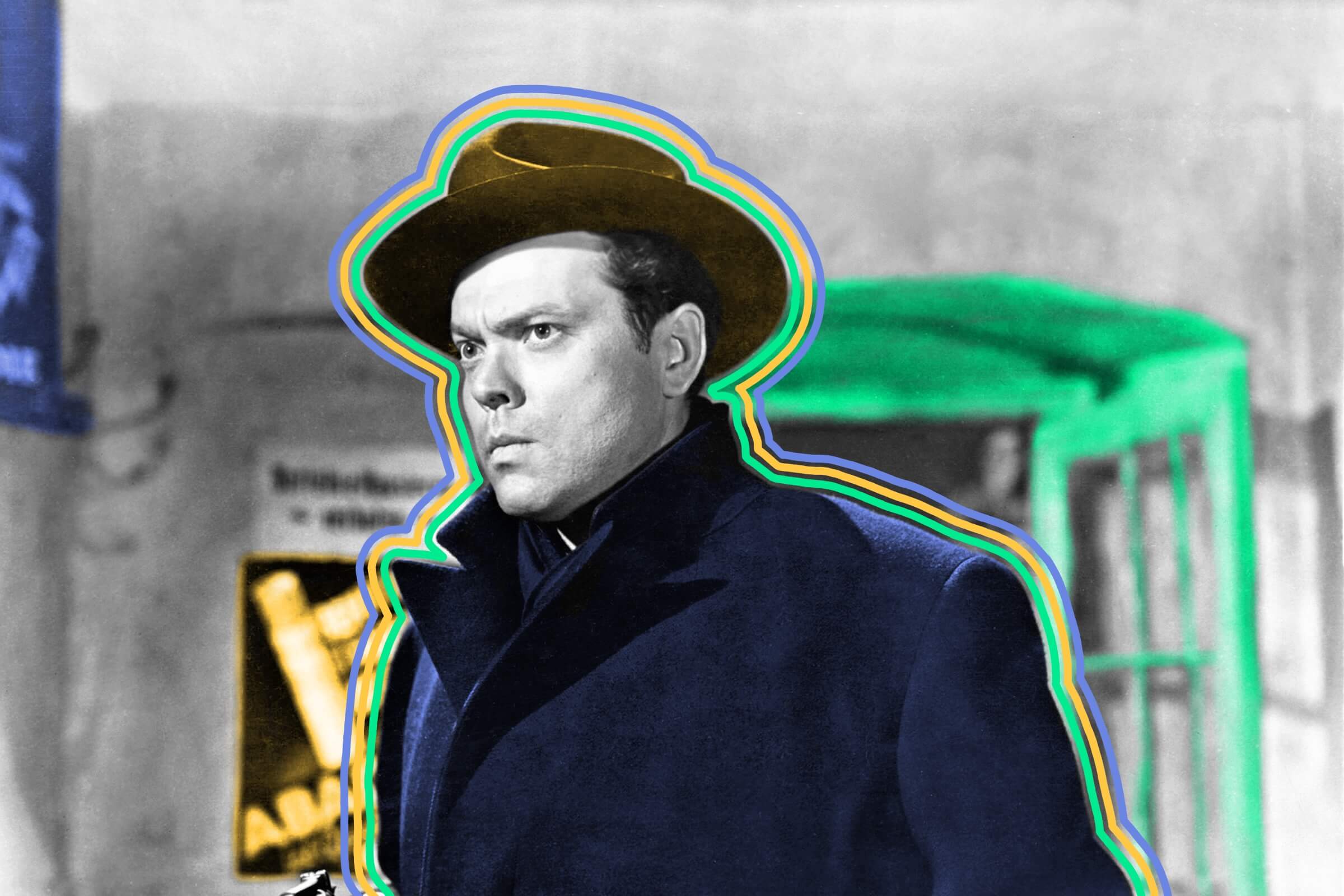
Orson Welles is among the most influential filmmakers of all time, but his impact isn’t confined to the world of cinema and radio. The multihyphenate behind Citizen Kane has even made a splash among biologists — there’s a genus of giant spiders named after him. In total, there are 13 species in the Orsonwelles genus, all of which are found in the Hawaiian islands: six on Kauai, three on Oahu, two on Molokai, and one each on Maui and Hawaii itself (the Big Island). Gustavo Hormiga, the arachnologist who discovered them, explained their name thus: “[Welles] was gigantic in a way in terms of moviemaking. These guys are very unique. They’re also very gigantic. So I just said, OK, I'm going to name them Orson Welles.”
Welles won Best Original Screenplay for “Citizen Kane” in 1942 and an Honorary Award in 1971. He also received Best Actor and Best Director nominations for “Kane,” losing to Gary Cooper and John Ford, respectively.
Several of the creepy-crawlies are named after movies Welles directed and roles he performed: Orsonwelles macbeth, Orsonwelles bellum (named for War of the Worlds, with bellum meaning “war”), Orsonwelles othello, Orsonwelles falstaffius, and Orsonwelles ambersonorum. (The last of these is named for The Magnificent Ambersons, which some say is Welles’ greatest film — sorry, Citizen Kane!) If you consider yourself an arachnophobe, try not to fret too much over the description of these eight-legged creatures as “giant”: They’re only about the size of a thumbtack.
Orson Welles’ last role was in 1986’s “Transformers: The Movie.”
Advertisement
Welles’ final film was completed decades after his death.
When he died in 1985, Welles had nearly as many uncompleted projects as he did finished films and television programs. The most notable of these was The Other Side of the Wind, about a maverick filmmaker who returns to Hollywood to complete his passion project (life imitates art!), which Welles worked on intermittently between 1970 and 1976 but had to abandon due to insufficient funding as well as legal and other complications. Any chance of the “Holy Grail for zealous film buffs” ever being finished seemed to die along with Welles — except it didn’t. Peter Bogdanovich, who starred in the film and was a hugely influential filmmaker in his own right, helped oversee its completion beginning in 2014, after Royal Road Entertainment acquired the project and more than $400,000 was crowdfunded. Netflix eventually stepped in to distribute the film once it was completed, and after decades of uncertainty, The Other Side of the Wind premiered at the 2018 Venice Film Festival to enthusiastic reviews.
Michael Nordine
Staff Writer
Michael Nordine is a writer and editor living in Denver. A native Angeleno, he has two cats and wishes he had more.
Advertisement
top picks from the Inbox Studio network
Interesting Facts is part of Inbox Studio, an email-first media company. *Indicates a third-party property.
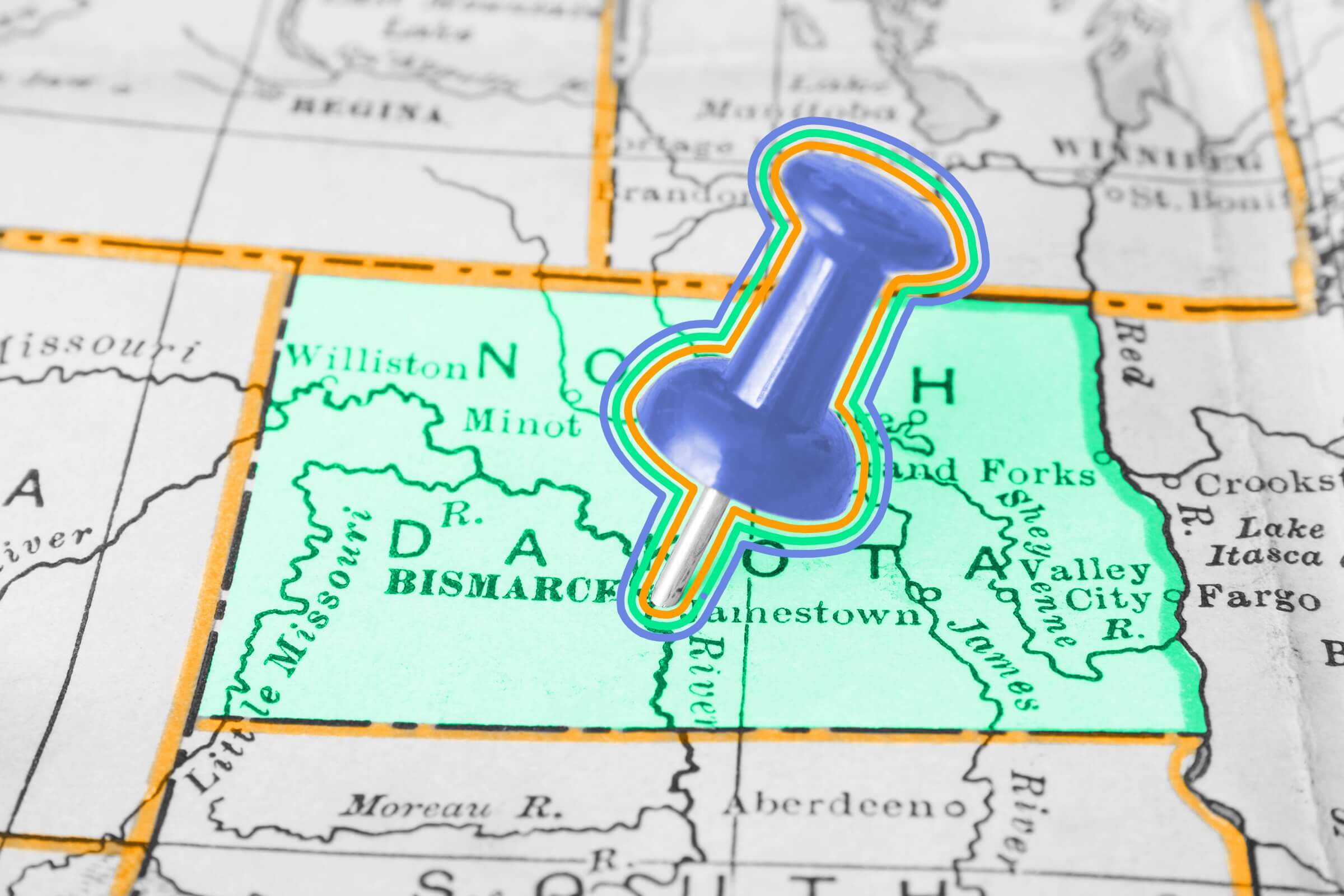
North Dakota was admitted to the Union as the 39th state on November 2, 1889, except it kind of sort of wasn’t. Its constitution left out a key detail that, according to some, was enough of a technicality that North Dakota didn’t actually become a state until 2012. A local historian by the name of John Rolczynski first noticed in 1995 that North Dakota’s state constitution failed to mention the executive branch in its section concerning the oath of office, which he felt made it invalid; the United States Constitution requires that officers of all three branches of a state’s government be bound by said oath, and North Dakota’s only mentioned the legislative and judiciary branches.
North and South Dakota were admitted to the Union simultaneously.
Both became states at the same time in 1889, but North Dakota is usually listed as the 39th state and South Dakota is the 40th. The order is alphabetical — President Benjamin Harrison shuffled the statehood papers to conceal which state’s he signed first.
This led to a campaign that included an unanswered letter to then-President Bill Clinton and ended with the successful passage of an amendment to Section 4 of Article XI of the state constitution, which fixed the omission. “It’s been a long fight to try to get this corrected and I’m glad to see that it has,” Rolczynski said at the time. “The amendment will be voted on in November 2012. In the interim, North Dakota is a territory.” North Dakota had enjoyed all the benefits and responsibilities of statehood for well over a century by that point, of course, but you can never be too thorough.
One of North Dakota’s official nicknames is “the Peace Garden State.”
Advertisement
Only a few scenes from “Fargo” were shot in North Dakota.
Despite being named for the state’s largest city (population 126,748), the Coen brothers’ classic was filmed mostly in Minnesota, and not a single scene was shot in Fargo itself. It’s largely set in Minnesota, too — aside from the opening scene, in fact, the entire movie takes place in the Land of 10,000 Lakes. (The on-screen text that opens the film by falsely claiming it’s a true story even claims, “The events depicted in this film took place in Minnesota in 1987.”) The only reason any filming took place in North Dakota is that an unusually mild winter forced production to move farther north. The Coens were originally going to name the film Brainerd, the city in Minnesota where much of the action takes place, but changed it to Fargo because it sounded better.
Michael Nordine
Staff Writer
Michael Nordine is a writer and editor living in Denver. A native Angeleno, he has two cats and wishes he had more.
Advertisement
top picks from the Inbox Studio network
Interesting Facts is part of Inbox Studio, an email-first media company. *Indicates a third-party property.

Original photo by Patti McConville/ Alamy Stock Photo
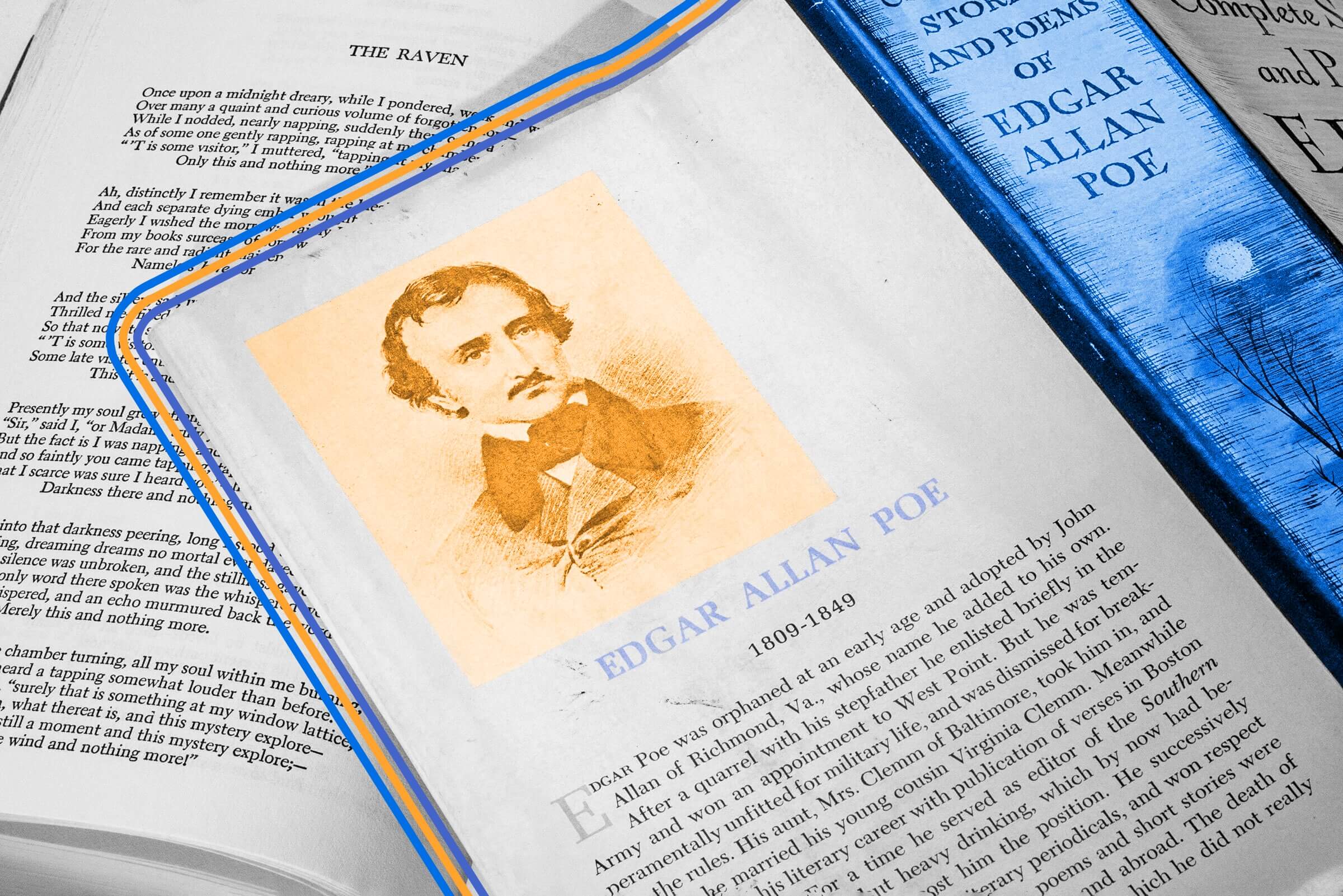
In 1838, Edgar Allan Poe temporarily departed from the usual brevity of his short stories and completed his first novel — The Narrative of Arthur Gordon Pym of Nantucket. It was also his last novel. Now considered the beginnings of the science fiction and detective genres, Poe’s works are best known for macabre plots that consistently feature the supernatural, and Arthur Gordon Pym is no different. Written five years before Poe published some of his most popular works — including "The Masque of the Red Death," "The Pit and the Pendulum," and "The Tell-Tale Heart" — Poe’s only novel was set at sea, recounting the adventures of a New Englander named Arthur Gordon Pym who stows away on a ship. Upon leaving land, Pym suffers a series of misadventures, including shipwreck, mutiny, and cannibalism.
Edgar Allan Poe once tried to become a professional cryptographer.
Poe loved ciphers, and embedded them in stories such as “The Gold-Bug.” At one point, the author — who collected and solved reader-submitted puzzles while working for a newspaper — even contacted the federal government about a code-cracking job, though there were no vacancies.
Despite the fact that Poe had experienced some previous literary success, his novel was received harshly. That was in part because of the political quagmire of American slavery; at the time the novel was published, the abolition movement was gaining momentum, and scenes in Arthur Gordon Pym seemed to reflect then-bubbling social tensions. Many literary critics interpreted the story and its symbols, including a clash between white sailors and Black islanders, as a political statement about the evils of slavery; others dismissed Poe’s novel for its depictions of violence. Some readers, believing the book was based on a true story, were upset to find it was fiction, and declared it a hoax. Given its poor reception, Poe returned to the short story format and wrote off his own novel, calling it a “very silly book.”
But not everyone considered Poe’s book a flop. Literary historians believe it was likely read by author Herman Melville, and may have served as inspiration for Melville’s book Moby-Dick (published in 1851). Over time, reviews of Arthur Gordon Pym softened, and in 1897, author Jules Vern wrote a two-volume sequel called An Antarctic Mystery, continuing on with Poe’s supernatural story nearly 60 years after it first went to press.
Poe may have earned only $15 for his most famous poem, “The Raven.”
Advertisement
While he was alive, Poe’s bestselling work was about seashells.
Edgar Allan Poe achieved literary fame for his dark and brooding tales, though his bestselling book while he was alive was actually a reworked textbook. In 1839, Poe was hired to condense the Manual of Conchology; the book’s author, Thomas Wyatt, was a lecturer and teacher who believed his initial text was too expensive and detailed for everyday readers. Wyatt looked to produce an abridged version that he could market to children and other shell-collecting beginners, though his publisher disagreed, believing a simpler version would cut into profits. Wyatt proceeded anyway, selecting Poe for the secret job, unbeknownst to his publisher. The Baltimore poet reshuffled the diagrams and text in a new order, wrote a new introduction, and added his own name to the front cover with Wyatt’s insistence — though the book remained so similar to its original that Poe was accused of plagiarism and blacklisted from at least one publishing house. Nevertheless, The Conchologist’s First Book was an instant hit, selling out its first edition in two months, and prompting two updated versions that collectively outsold any of Poe’s original works during his lifetime.
Nicole Garner Meeker
Writer
Nicole Garner Meeker is a writer and editor based in St. Louis. Her history, nature, and food stories have also appeared at Mental Floss and Better Report.
Advertisement
top picks from the Inbox Studio network
Interesting Facts is part of Inbox Studio, an email-first media company. *Indicates a third-party property.

Istanbul (formerly known as Constantinople, and before that as Byzantium) isn’t just the biggest city in Turkey. At 15.4 million people, it’s the most populous city in all of Europe, and its location — between the Black Sea and the Mediterranean — has helped to make it one of the most famous cities in history, not to mention the capital of both the former Byzantine and Ottoman empires. (The capital of modern-day Turkey, incidentally, is the inland city of Ankara.)
Istanbul is the only transcontinental city in the world.
Istanbul isn’t alone. The Egyptian city Suez lies mostly in Africa but a small portion spills into Asia. Three cities along the Ural river — Orenburg and Magnitogorsk in Russia and Atyrau in Kazakhstan — are also considered transcontinental cities, straddling Europe and Asia.
In addition to its more than 2,500-year-old history and fascinating architecture (including the Hagia Sophia, built as a church in the sixth century CE), Istanbul is notable for being split between two continents, Europe and Asia, by a thin ribbon of water called the Bosporus. Around one-third of Istanbul’s residents live in Asia — east of the Bosporus — while the rest live in Europe. The European portion of Turkey is also known as East Thrace or Turkish Thrace (after the ancient Thracian tribes that inhabited the region), while the Asian region is sometimes called Anatolia. Istanbul itself is stitched together across the Bosporus with multiple bridges, two underwater tunnels, and lots of ferries. The newest addition, the Eurasia tunnel, opened on December 20, 2016, and allows cars to travel between the two continents in just 15 minutes.
The word “Istanbul” comes from Greek speakers saying they were going “eis tēn polin,” which means “into the city.”
Advertisement
The Black Sea may have once been a freshwater lake.
Around 7,000 years ago, the Black Sea might not have been a sea at all. A leading scientific theory suggests that as glaciers retreated from the Earth’s most recent ice age, the Black Sea was a freshwater lake filled with glacial melt. But as the world’s seas rose, so did the salt water from the ocean-fed Mediterranean. This rise created a narrow connection to the Mediterranean through both the Bosporus and Dardanelles (another strait in Turkey), transforming the Black Sea into the inland sea it is today. Over the millennia, the heavier salt water sank and created an anoxic — zero oxygen — environment in the depths (around 600 feet) of the Black Sea, meaning that almost nothing can live there. The lack of physical and chemical processes that contribute to decay has transformed the sea into a well-preserved graveyard of shipwrecks stretching back thousands of years.
Darren Orf
Writer
Darren Orf lives in Portland, has a cat, and writes about all things science and climate. You can find his previous work at Popular Mechanics, Inverse, Gizmodo, and Paste, among others.
Advertisement
top picks from the Inbox Studio network
Interesting Facts is part of Inbox Studio, an email-first media company. *Indicates a third-party property.

Original photo by Pavlovska Yevheniia/ Shutterstock
While names like Hershey’s and 3 Musketeers (which originally included three bars) are fairly straightforward, some candy bar monikers are more elusive. Case in point: What, exactly, is a Snickers? Well, it’s actually a “who” — and not a human “who” at that. The candy bar was named after one of the Mars family’s favorite horses. Franklin Mars founded Mars, Incorporated (originally known as Mar-O-Bar Co.) in 1911, introducing Snickers in 1930; when it came time to name his product, he did what any pet-lover would do, and immortalized his equine friend as only a candy magnate could. (By some accounts, the horse had passed away shortly before the product’s launch.)
Snickers is one of the bestselling candy bars in the world.
It isn’t just Americans who love the nougaty, nutty confection — Snickers is popular across the globe. Other bestsellers in the chocolate bar category include Toblerone, Twix, and the classic Hershey Milk Chocolate Bar.
As Mars has grown into America’s fourth-largest private company, it has retained a dual focus on both candy and pets. M&M’s, Twix, and Milky Way are all Mars products, as are Iams, Pedigree, and Royal Canin. If you’ve ever wondered how M&M’s got their name, the story is slightly less interesting — it’s simply the last initials of Forrest Mars (Frank’s son) and partner-in-candy Bruce Murrie. The company is known for secrecy, with the family itself having been described as a “reclusive dynasty,” which means it’s a minor miracle that the identity of Snickers the horse was ever revealed in the first place.
Snickers was originally called Marathon in the U.K.
Advertisement
Baby Ruth bars weren’t named after the baseball player.
Despite how similar their names are, Baby Ruth bears no relation to Babe Ruth. The chocolate bar was actually named after Ruth Cleveland, daughter of President Grover Cleveland — assuming you believe the company’s official story, that is. The treat was introduced in 1921, 17 years after Ruth Cleveland’s untimely passing from diphtheria at age 12 and 24 years after the former President left office. The Great Bambino, meanwhile, had become the first person to hit 50 home runs in a single season the year before. The Sultan of Swat went so far as to end up in a court battle with the Curtiss Candy Company after he licensed his own name to a rival confectioner, but the 1931 ruling wasn’t in his favor. Baby Ruth’s connection to America’s pastime has only grown since then, and in 2006 it was even named the official candy bar of Major League Baseball for three years.
Michael Nordine
Staff Writer
Michael Nordine is a writer and editor living in Denver. A native Angeleno, he has two cats and wishes he had more.
Advertisement
top picks from the Inbox Studio network
Interesting Facts is part of Inbox Studio, an email-first media company. *Indicates a third-party property.

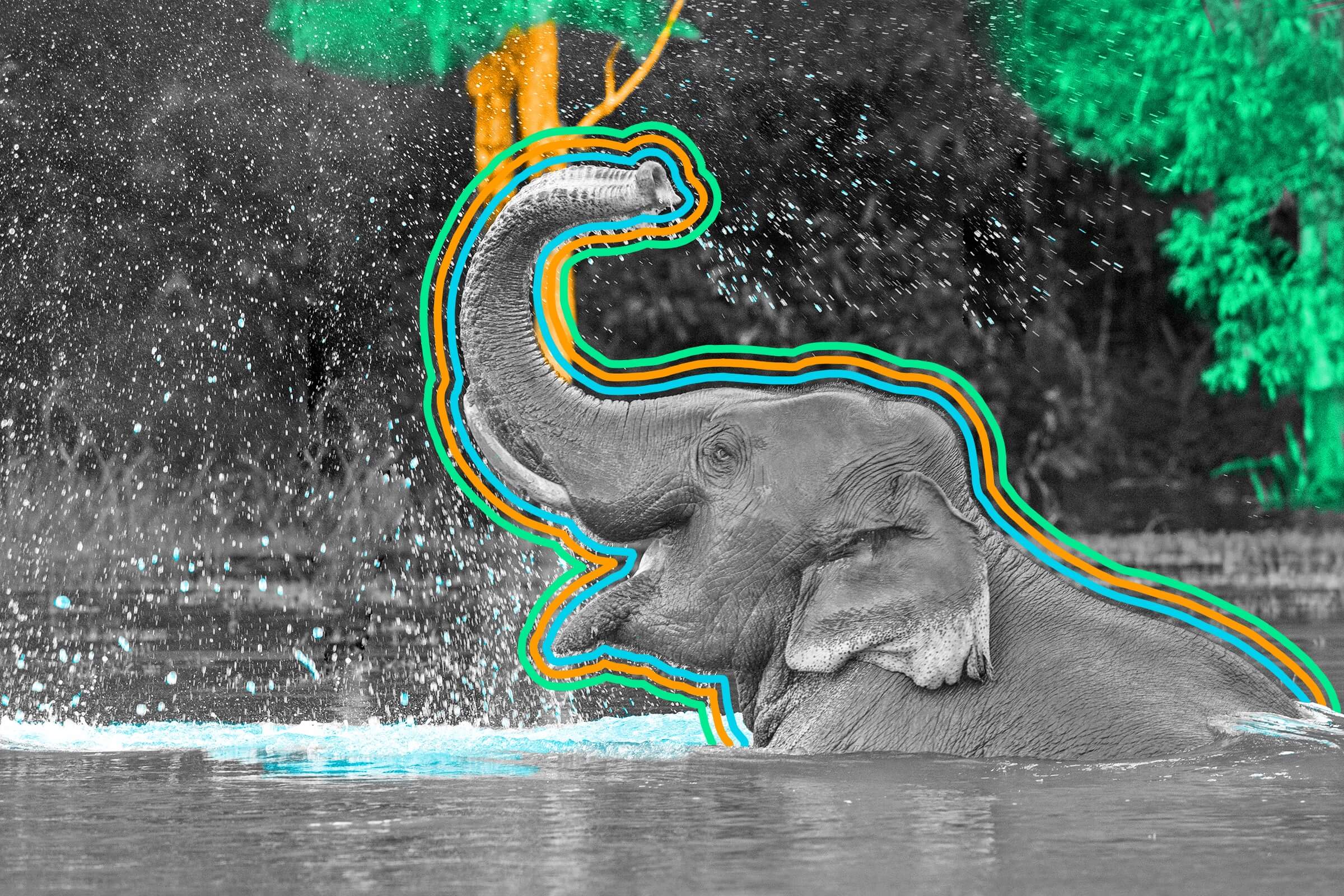
Unlike gorillas, wild turkeys, and many other male-dominant species, elephants are matriarchal. The leader of each herd (the group is also sometimes known as a memory) tends to be the oldest and largest female around. She has a lot of responsibility — a herd can consist of anywhere from eight to 100 elephants, and include many calves that the entire group looks after. Elephants aren’t the only matriarchal species, though. Lemurs, meerkats, spotted hyenas, orcas, and many other animals are also led by females — killer whales, in fact, stay with their mothers their entire lives.
Despite being known as the “kings” of the jungle, lions also live in matriarchal societies. Known as prides, these groups usually consist of 15 to 40 lions in which the females hunt while the males protect the group.
Even so, patriarchies are far more common. Of the 76 non-human mammals analyzed in one study, the vast majority were led by males. Whether a species is matriarchal or patriarchal depends on a variety of factors, including physical strength, longevity, and the social bonds they form with one another. Female hyenas are stronger than their male counterparts, for instance, whereas “elephant females are born to leadership” in part because they’re better at remembering the location of water and other vital resources, according to Cynthia Moss of Amboseli Trust for Elephants.
The elephant’s closest relative on land is the hyrax.
Advertisement
Elephant tusks are actually teeth.
It’s common knowledge that elephant tusks are made of ivory. Less well-known is the fact that they’re actually teeth. Deeply rooted and made of a bony tissue called dentin, tusks are also covered in enamel. They never stop growing, meaning that an elephant with especially long tusks is likely old and wise. Also, no two tusks are alike. Not all elephants have tusks, however — most African elephants do, but only some male Asian elephants grow them.
Michael Nordine
Staff Writer
Michael Nordine is a writer and editor living in Denver. A native Angeleno, he has two cats and wishes he had more.
Advertisement
top picks from the Inbox Studio network
Interesting Facts is part of Inbox Studio, an email-first media company. *Indicates a third-party property.