
Original photo by Miroslav Hlavko/ Shutterstock
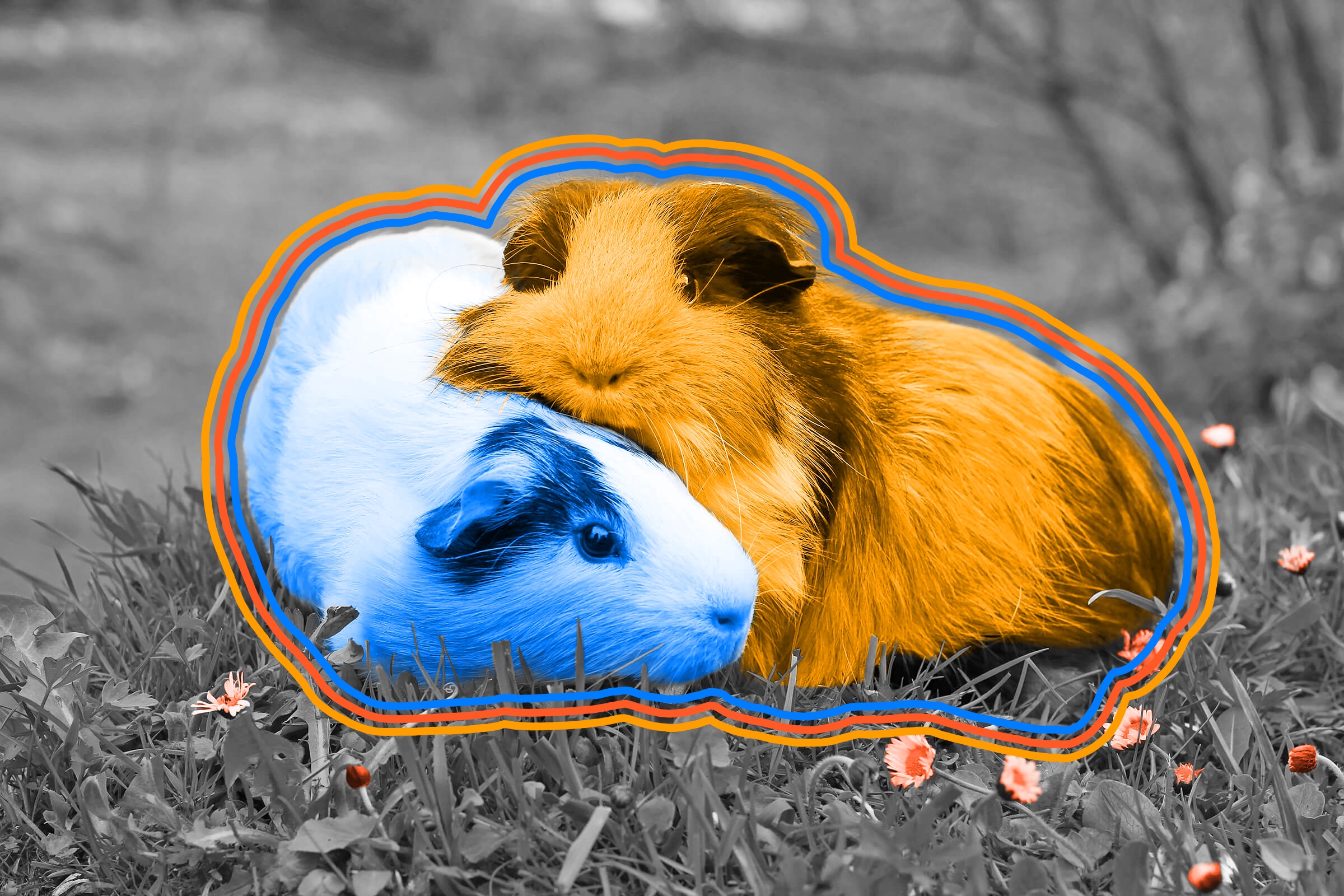
The Swiss are known for their historic commitment to neutrality, but they’ve taken a firm stand on one of the most important issues of our time: guinea pigs. Because guinea pigs are social creatures who grow lonesome without a friend, it’s illegal to own just one of them in Switzerland. The law was introduced in 2008 as part of a legislative effort to grant social rights to pets. Should one guinea pig depart this mortal coil and leave its companion alone — and its owner in potential legal trouble — rent-a-guinea-pig services have emerged as a temporary solution.

Guinea pigs are named after the country.

Ready to reveal?

Oops, incorrect!

It's a fib

Guinea pigs are native to South America, thousands of miles away from the African country. Some believe the name can be traced back to the cost of buying one in 17th-century England — one guinea coin — while others think it’s based on the Guianas, a region of South America.

Guinea pigs aren’t the only pets afforded special status in Switzerland. Goldfish are also prohibited from being kept alone, cats must at least have access to a window where they can see their fellow felines prowling around, and, for a time, dog owners were required to take an obligatory training course with their pooch (although that law was repealed in 2016). For all this, Switzerland doesn’t have an official national animal — though both the country and the Alps in general are strongly associated with cows and St. Bernards.

Numbers Don't Lie

Numbers Don't Lie

Switzerland’s rank on the 2023 Global Peace Index (10th most-peaceful)
10
Recognized guinea pig breeds
13
Life expectancy in Switzerland, the fourth-highest in the world
84.2
Estimated number of different sounds made by guinea pigs
11

Guinea pigs are also known as ______.

Ready to reveal?

Confirm your email to play the next question?

Guinea pigs are also known as cavies.

Placeholder Image

Guinea pigs aren’t related to pigs.

Guinea pigs are rodents, which is to say that they’re closely related to hamsters, chinchillas, and some other small creatures, but have little in common with actual pigs. Their scientific name, Cavia porcellus, is Latin for “little pig” and would appear to be based on the passing resemblance they bear to their porcine friends. This includes not only their physical appearance, but the pig-like squeaks they’re known for — as well as their healthy appetites.

Michael Nordine
Staff Writer

Michael Nordine is a writer and editor living in Denver. A native Angeleno, he has two cats and wishes he had more.

Original photo by Rustycanuck/ Alamy Stock Photo

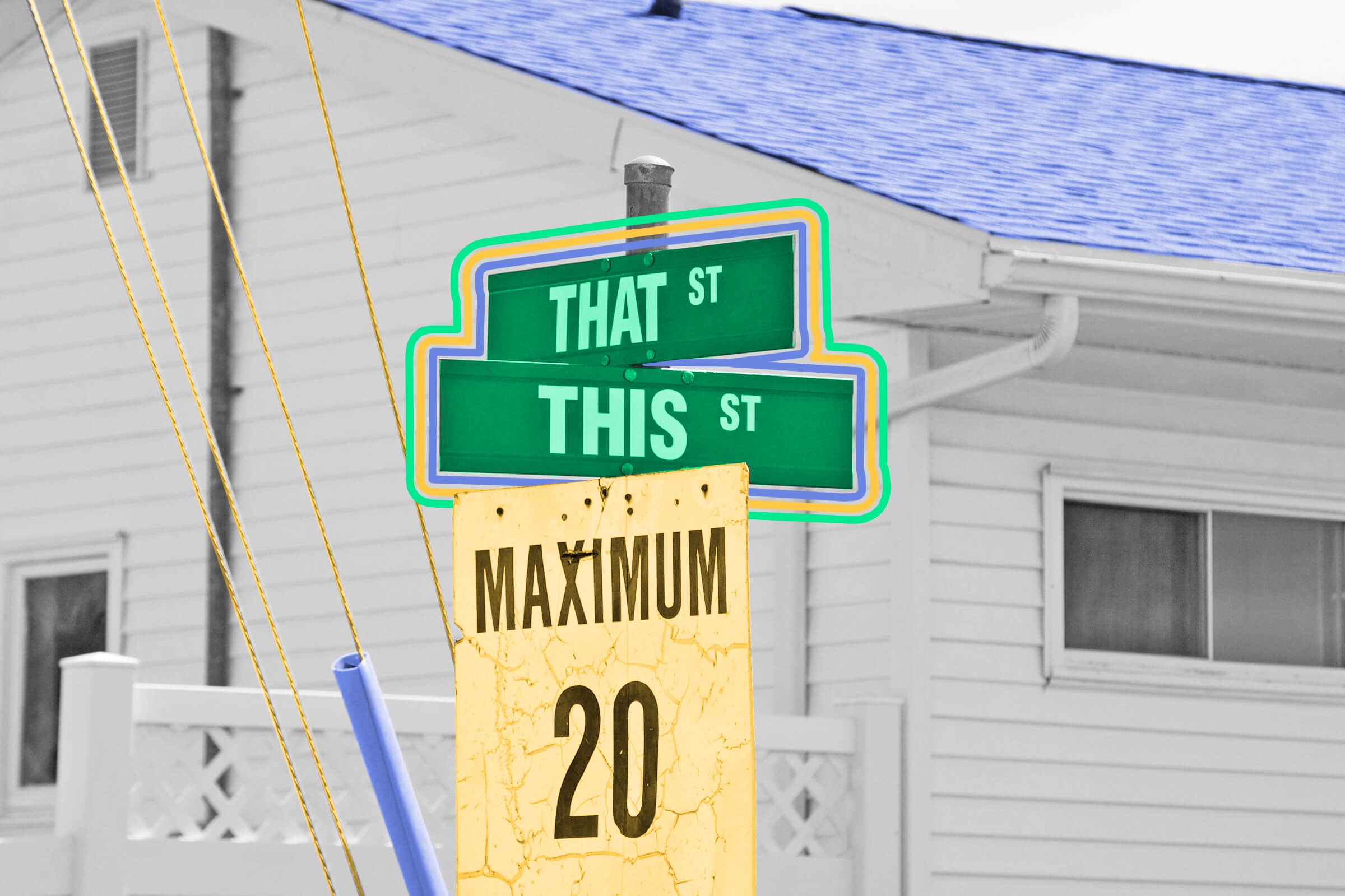
Drive down the highway in Nova Scotia, Canada, some 30 minutes northeast of Halifax, and you’ll run into a trio of odd street names. Just down the street from the Porters Lake Community Center, at the tip of a peninsula jutting out into nearby Porters Lake, are This Street, That Street, and The Other Street, obviously referencing the well-worn idiom “this, that, and the other.” Strange as these street names may seem, the 3,200 or so residents of Porters Lake would find common ground with Americans in Culver, Oregon, who named two of their streets “This Way Lane” and “That Way Lane.” (Meanwhile, in a somewhat similar vein, attendees of the Tennessee music festival Bonnaroo have to Abbott & Costello their way around What Stage, Which Stage, This Tent, That Tent, and The Other Tent.)

Sesame Street is a real street.

Ready to reveal?

Oops, incorrect!

It's a fact

You can now tell someone how to get to Sesame Street. In 2019, New York City officially renamed a stretch of West 63rd Street near Broadway as “Sesame Street.” For more than 50 years, the nonprofit Sesame Workshop has been headquartered near the intersection of 63rd and Broadway.

Canada is known for places with unusual monikers. For example, in Iqaluit, the capital city of Nunavut, there’s a street called the “Road to Nowhere.” In Ottawa, there’s Scully Way and Mulder Avenue, a nod to the hit TV series X-Files; the neighborhood even held a block party for the show’s 20th anniversary in 2013. Also in the pop culture realm, the Alberta town of Vulcan leans heavily into its Star Trek connection with a visitor’s center that looks like a space station, and even received a visit from Mr. Spock himself, Leonard Nimoy, who led a parade there in 2010. Then there’s Saint-Louis-du-Ha! Ha!, Québec — reportedly the only town in the world with two exclamation points in its name. The reason for the exclamation points is far from clear, although by one (dubious) account the French trappers who founded the town exclaimed “Ha! Ha!” in joy when they discovered its beautiful scenery.

Numbers Don't Lie

Numbers Don't Lie

Length (in miles) of the Pan-American Highway, the longest roadway in the world
19,000
Worldwide box-office gross for the 2006 film “Zyzzyx Road,” one of the lowest-grossing ever
$30
Year Scottish earl Sir William Alexander founded the colony of Nova Scotia (meaning “New Scotland”)
1621
Miles of navigable roadways in the U.S.
4,183,707

______ is the most popular street name in the U.S. that isn’t a number.

Ready to reveal?

Confirm your email to play the next question?

Park is the most popular street name in the U.S. that isn’t a number.

Placeholder Image

Nova Scotia is home to the highest tides in the world.

Not every tide is created equal. Take, for example, the Bay of Fundy, which separates the Canadian provinces of New Brunswick and Nova Scotia. Due to the bay’s funnel-esque shape and a geographical anomaly called “tidal resonance,” where a wave pushing in from the ocean to a bay takes the same amount of time to hit the farthest shore and return to the ocean as your typical tidal period (around 12.5 hours), the Bay of Fundy experiences extraordinary tidal extremes. Whereas your typical average for an ocean tidal range — the difference between low and high tide — is about 3 feet, in the Bay of Fundy the difference is upwards of 56 feet (and during storm surges, it can be even higher). Because of this enormous difference, more than 160 billion tons of water enter and exit the bay with every tide. That’s more flowing water than all the world’s freshwater rivers combined.

Darren Orf
Writer

Darren Orf lives in Portland, has a cat, and writes about all things science and climate. You can find his previous work at Popular Mechanics, Inverse, Gizmodo, and Paste, among others.

Original photo by KeithSzafranski/ iStock

It was 1942, and, among many other challenges, wartime Great Britain had a big problem: Nazi U-boats. These German submarines destroyed U.K.-bound merchant ships laden with much-needed food and supplies, and the attacks became so frequent that from March to September of that year they sank close to 100 merchant ships a month. Airplanes at the time couldn’t fly far enough from land-based airstrips to protect these ships in the ocean, and this aviation limitation left a 300-mile lane of unprotected waters known as “the mid-Atlantic Gap.” Britain’s legendary prime minister, Winston Churchill, was desperate to close this gap by any means necessary, and dreamed of building floating islands where planes could refuel. Unfortunately, aircraft carriers were few and far between, and steel was hard to come by during the war effort, when it was needed for weapons, tanks, ships, and more.

It takes more than 20 years for some modern aircraft carriers to run out of fuel.

Ready to reveal?

Oops, incorrect!

It's a fact

In the decades following WWII, aircraft carriers increased in size and complexity. Today, a modern aircraft carrier uses nuclear power for fuel, an energy source so dense that these massive ships — some weighing 97,000 tons — don’t need refueling for more than 20 years.

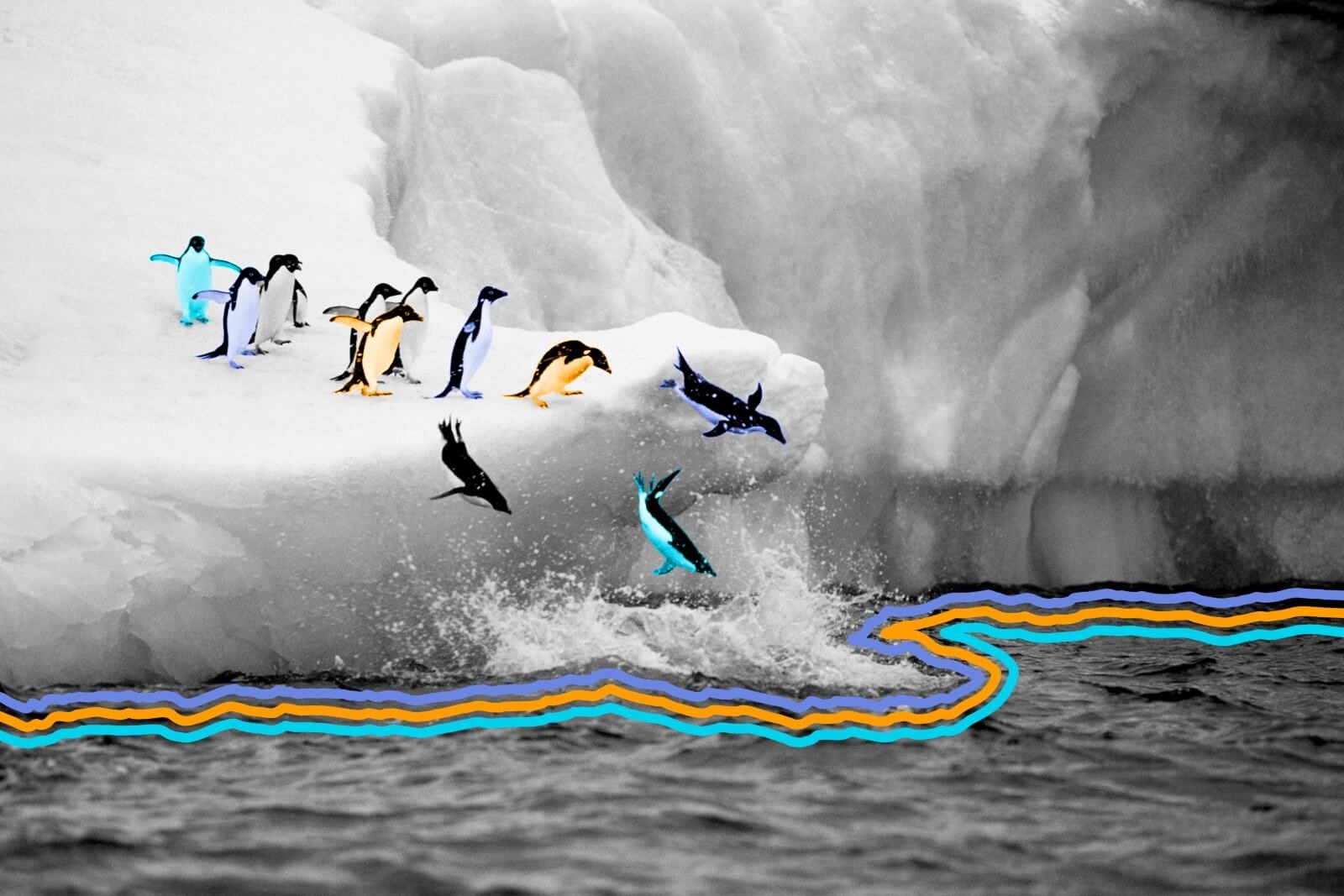
One day, a potential solution arrived when Lord Louis Mountbatten, the head of Britain’s Combined Operations Command (and beloved uncle of the future Prince Philip), presented Churchill with a strange chunk of ice. This wasn’t any normal piece of ice, however: It was pykrete (named after its creator Geoffrey Pyke), which was a type of ice reinforced with wood pulp. The result was a material that melted very slowly, and for Churchill, a vision of a fleet of aircraft carriers made from pykrete came into focus. The proposed pykrete ship would’ve been the biggest “ship” ever constructed, displacing 26 times more water than the largest ship at the time and requiring 26 electric motors for propulsion. A 60-foot-long prototype was soon constructed in Alberta, Canada, that weighed as much as five blue whales. But by 1943, things had changed. Escort carriers had arrived in the Atlantic and long-range aircraft such as the B-24 Liberator had closed the gap for good. Despite pykrete’s amazing ability to hold its shape, the dream of an iceberg aircraft carrier soon melted away. 

Numbers Don't Lie

Numbers Don't Lie

Wingspan (in feet) of the Spruce Goose, a successful attempt to build a WWII plane without steel
320
Size (in square miles) of the world’s current largest iceberg
1,544
Height (in stories) of the proposed WWII iceberg ship’s rudder
15
Approximate percentage of an iceberg that’s below the water’s surface
90%

When an iceberg breaks off from a glacier it’s called ______.

Ready to reveal?

Confirm your email to play the next question?

When an iceberg breaks off from a glacier it’s called calving.

Placeholder Image

Some scientists think the moon might be partly responsible for the Titanic’s demise.

On January 4, 1912, a celestial event occurred that hadn’t happened for more than a thousand years. The moon made its closest approach to Earth in the last 1,400 years while it was almost full, only a day after the Earth made its own annual close approach to the sun. According to Texas State University scientists, this one-of-a kind cocktail of astronomical activities created an exceptionally high tide. Their theory posits that this tide allowed some icebergs that would usually get stuck on their journey south from Greenland to be refloated, pushed into southbound currents, and into the path of unsuspecting ships crossing the Atlantic. One such ship was the Titanic, which famously — and tragically — struck an iceberg that April.

Darren Orf
Writer

Darren Orf lives in Portland, has a cat, and writes about all things science and climate. You can find his previous work at Popular Mechanics, Inverse, Gizmodo, and Paste, among others.

Original photo by duncan1890/ iStock

Modern English wouldn’t be the same without William Shakespeare. Thanks to the Bard’s plays and sonnets, more than 1,700 words have been added to our language. But Shakespeare did more than just spice up the dictionary; he also may have invented one of the world’s greatest (or worst) comedy setups — the knock-knock joke. Strangely, the joke isn’t found in one of Shakespeare’s masterful comedies. Instead, it’s embedded within one of his darkest, most intense works. 

Shakespeare wrote the first “Yo Mama” joke.

Ready to reveal?

Oops, incorrect!

It's a fib

While the Bard did include a “maternal insult” joke in his play “Titus Andronicus,” a Babylonian student etched the first known “Yo Mama” joke on a tablet 3,500 years ago. The damaged tablet was deciphered in 2012, but sadly the punchline has been lost to history.

The beginning of Act 2, Scene 3 of Macbeth, after the tortured title character has just killed King Duncan, is known as the “porter scene.” It opens with a drunken porter (or gatekeeper) at Macbeth’s castle hearing a distant knock, pretending to be the porter of “hell-gate,” and saying, “Knock, knock, knock, who’s there?” Adding a bit of comic relief, the porter imagines the arrival of a farmer, an equivocator, and a tailor, using the same “knock-knock” construction each time. Although there’s none of the eye-rolling wordplay central to the modern knock-knock joke, this is the first known reference to a “knock, knock/who’s there” sentence structure in the context of comic relief. Yet it wasn’t until the 1930s that the modern knock-knock joke really caught on, as a reassuringly predictable form of comedy during the Great Depression. In other words, across its 400-year history, it seems the knock-knock joke has a knack for bringing levity to dark times. 

Numbers Don't Lie

Numbers Don't Lie

Year the first performance of “Macbeth” was likely held at court
1606
Year of Akira Kurosawa’s film “Throne of Blood” (a “Macbeth” adaptation)
1957
Birth year of Frank Knox, a 1936 VP nominee whose name fed the popularity of knock-knock jokes
1874
Number of years after Shakespeare’s death that “Macbeth” was first published
7

National Knock-Knock Joke Day occurs each year on ______.

Ready to reveal?

Confirm your email to play the next question?

National Knock-Knock Joke Day occurs each year on October 31.

Placeholder Image

Macbeth was a real person, but quite unlike Shakespeare’s depiction.

Mac Bethad mac Findláich, also known as Macbeth, was born around 1005 in Scotland. In August 1040, Macbeth killed King Duncan I to become king of Scotland — but that’s where any similarities end with Shakespeare’s famous work. Macbeth wasn’t tortured by his actions, as far as we know: Instead, he flourished as king for more than a decade, ruling magnanimously, imposing order, and even pulling off a few successful military campaigns. So where did the Bard’s portrayal come from? Shakespeare, along with his contemporaries Christopher Marlowe and Edmund Spenser, based much of their work on the 16th-century English historical text known as “Holinshed’s Chronicles.” Modern historians have identified this chronicle as pretty inaccurate thanks to tensions among its multiple authors, each with different religious backgrounds, among other issues. “Holinshed’s Chronicles” is the reason behind Shakespeare’s monstrous-looking Richard III, and why Macbeth is such a tormented soul.

Darren Orf
Writer

Darren Orf lives in Portland, has a cat, and writes about all things science and climate. You can find his previous work at Popular Mechanics, Inverse, Gizmodo, and Paste, among others.

Original photo by Lindsey Savage/ Unsplash

Ruth Wakefield was no cookie-cutter baker. In fact, she is widely credited with developing the world’s first recipe for chocolate chip cookies. In 1937, Wakefield and her husband, Kenneth, owned the popular Toll House Inn in Whitman, Massachusetts. While mulling new desserts to serve at the inn’s restaurant, she decided to make a batch of Butter Drop Do pecan cookies (a thin butterscotch treat) with an alteration, using semisweet chocolate instead of baker’s chocolate. Rather than melting in the baker’s chocolate, she used an ice pick to cut the semisweet chocolate into tiny pieces. Upon removing the cookies from the oven, Wakefield found that the semisweet chocolate had held its shape much better than baker’s chocolate, which tended to spread throughout the dough during baking to create a chocolate-flavored cookie. These cookies, instead, had sweet little nuggets of chocolate studded throughout. The recipe for the treats — known as Toll House Chocolate Crunch Cookies — was included in a late 1930s edition of her cookbook, Ruth Wakefield’s Tried and True Recipes

German chocolate cake was actually created in Texas.

Ready to reveal?

Oops, incorrect!

It's a fact

Baker's Chocolate employee Sam German created a baking chocolate — Baker's German's Sweet Chocolate — for the company in 1852. More than a century later, Mrs. George Clay of Dallas used his chocolate when she submitted the first German chocolate cake recipe to her local newspaper.

The cookies were a huge success, and Nestlé hired Wakefield as a recipe consultant in 1939, the same year they bought the rights to print her recipe on packages of their semisweet chocolate bars. To help customers create their own bits of chocolate, the bars came pre-scored in 160 segments, with an enclosed cutting tool. Around 1940 — three years after that first batch of chocolate chip cookies appeared fresh out of the oven — Nestlé began selling bags of Toll House Real Semi-Sweet Chocolate Morsels, which some dubbed “chocolate chips.” By 1941, “chocolate chip cookies” was the universally recognized name for the delicious treat. An updated version of Wakefield’s recipe, called Original Nestlé Toll House Chocolate Chip Cookies, still appears on every bag of morsels. For her contributions to Nestlé, Wakefield reportedly received a lifetime supply of chocolate.    

Numbers Don't Lie

Numbers Don't Lie

Year Milton S. Hershey founded Hersheypark, a Pennsylvania amusement park that now boasts 70 rides and attractions
1906
Emmy nominations Taraji P. Henson received for playing Cookie Lyon on the Fox series “Empire”
2
Weight, in pounds, of the world’s largest chocolate truffle, created by Sweet Shop USA of Mount Pleasant, Texas
2,368.5
Individual chocolate “morsels” Nestle sells every year, mostly in 12-ounce bags
90 billion

Jim Carrey's reporter in the 2003 film “______” often uses the sign-off “That’s the way the cookie crumbles.”

Ready to reveal?

Confirm your email to play the next question?

Jim Carrey's reporter in the 2003 film “Bruce Almighty” often uses the sign-off “That’s the way the cookie crumbles.”

Placeholder Image

Cookie Monster’s first name is Sidney.

Sesame Street’s resident treat fanatic first revealed his given name in a 2004 episode. During a flashback to his high-chair years, this furry blue Muppet (voiced by puppeteer David Rudman) sings about his introduction to cookies. Mid-duet with his mom, the bonneted baby monster rhymes, “Me was just a mild-mannered little kid/In fact, back then, me think me name was Sid.” The show’s official Twitter account later confirmed that “Sid” was short for “Sidney.” In a 2017 video interview, Cookie Monster reiterated, “Me real name’s Sid Monster.” Incidentally, when Rudman wears the puppet, the back of Cookie Monster’s throat runs down Rudman’s sleeve to give the appearance that Cookie Monster is really eating. The baked treats Cookie Monster “consumes” are actually decorated rice cakes, since the oils from real cookies would damage the puppet.

Interesting Facts
Editorial

Interesting Facts writers have been seen in Popular Mechanics, Mental Floss, A+E Networks, and more. They’re fascinated by history, science, food, culture, and the world around them.

Original photo by joecicak/iStock

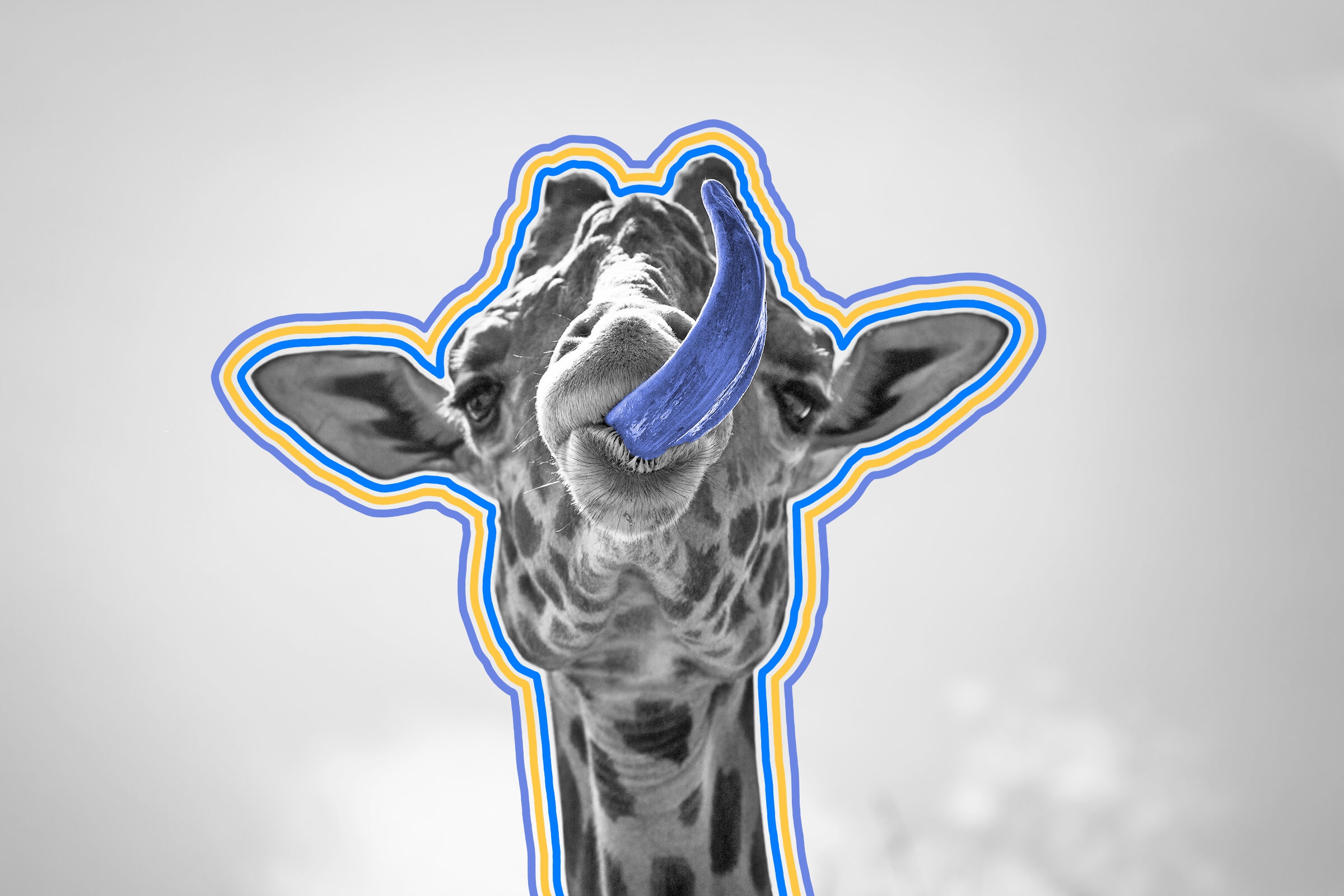
In addition to their spots and long necks, giraffes have another distinguishing feature: their tongues are often dark purple. Whereas most animals have fully pink tongues, a giraffe’s is infused with melanin that makes it darker — sometimes it’s even blue or black rather than purple — although the base and back are indeed pink. And while it hasn’t been proven definitively, the most widely accepted theory is that the melanin provides ultraviolet protection, preventing giraffe tongues from getting sunburned while the animals feed on tall trees. Giraffe tongues are also long (up to 21 inches) and covered in thick bumps known as papillae, which help protect them from the spiky defensive thorns of the animal’s favorite snack: acacia trees.

No two giraffes have the same spot patterns.

Ready to reveal?

Oops, incorrect!

It's a fact

Not unlike human fingerprints, giraffe spot patterns are unique. The different species and subspecies are partially distinguished by the typical shape of their spots, however.

Giraffes aren’t the only creatures with darker tongues, of course; okapis, polar bears, impalas, and chow chow dogs have them as well, among other animals. However, giraffes are distinguished from their purple-tongued friends not only by their status as the world’s tallest mammal, but also because they give birth standing up. Newborn giraffes fall to the ground from a height of more than five feet, not that they mind — they can stand within half an hour and run within 10 hours, usually alongside their doting (and similarly dark-tongued) mother.

Numbers Don't Lie

Numbers Don't Lie

Species of giraffe (southern, northern, Masai, and reticulated)
4
Years a giraffe can typically live in the wild
26
Average height (in feet) of an adult giraffe
14–19
Giraffes that can live in the same group
20

A group of giraffes is called a ______.

Ready to reveal?

Confirm your email to play the next question?

A group of giraffes is called a tower.

Placeholder Image

Giraffes have extremely high blood pressure — and it isn’t a problem.

When it comes to most living creatures, hypertension is a serious health issue. By virtue of their extreme height, however, high blood pressure is not only a good thing for giraffes, but an essential part of their biology — a way for their hearts to overcome gravity and pump blood up their long necks. In order to maintain a blood pressure of 110 over 70 at the brain, a normal number for a large mammal, giraffes need a blood pressure at the heart of roughly 220 over 180. That number would be beyond concerning to your cardiologist, as lower than 120 over 80 is considered healthy for humans. Giraffes’ cardiovascular strength is of great interest to scientists, who have marveled at their resilience — and tried to see what lessons we might learn from it.

Michael Nordine
Staff Writer

Michael Nordine is a writer and editor living in Denver. A native Angeleno, he has two cats and wishes he had more.

Original photo by ilbusca/ iStock

For about 37 years of its history, the U.S. has been without a second-in-command. Before the passage of the 25th Amendment in 1967, there was no procedure for filling the role if a commander in chief died in office. Instead, there just wasn’t a VP if that happened — at least not until the next presidential election. Thanks to this legislative quirk, John Tyler, Millard Fillmore, Andrew Johnson, and Chester Arthur (all VPs under a President who died in office) served their entire presidential terms without a Vice President. 

National elections are held on Tuesdays in early November thanks to 19th-century farmers.

Ready to reveal?

Oops, incorrect!

It's a fact

When the U.S. came up with a nationwide voting day in 1845, they picked November — a month when farmers were done harvesting but before winter set in. Tuesday allowed farmers (who often had long trips to polling sites) to go to church on Sunday and to market day on Wednesday.

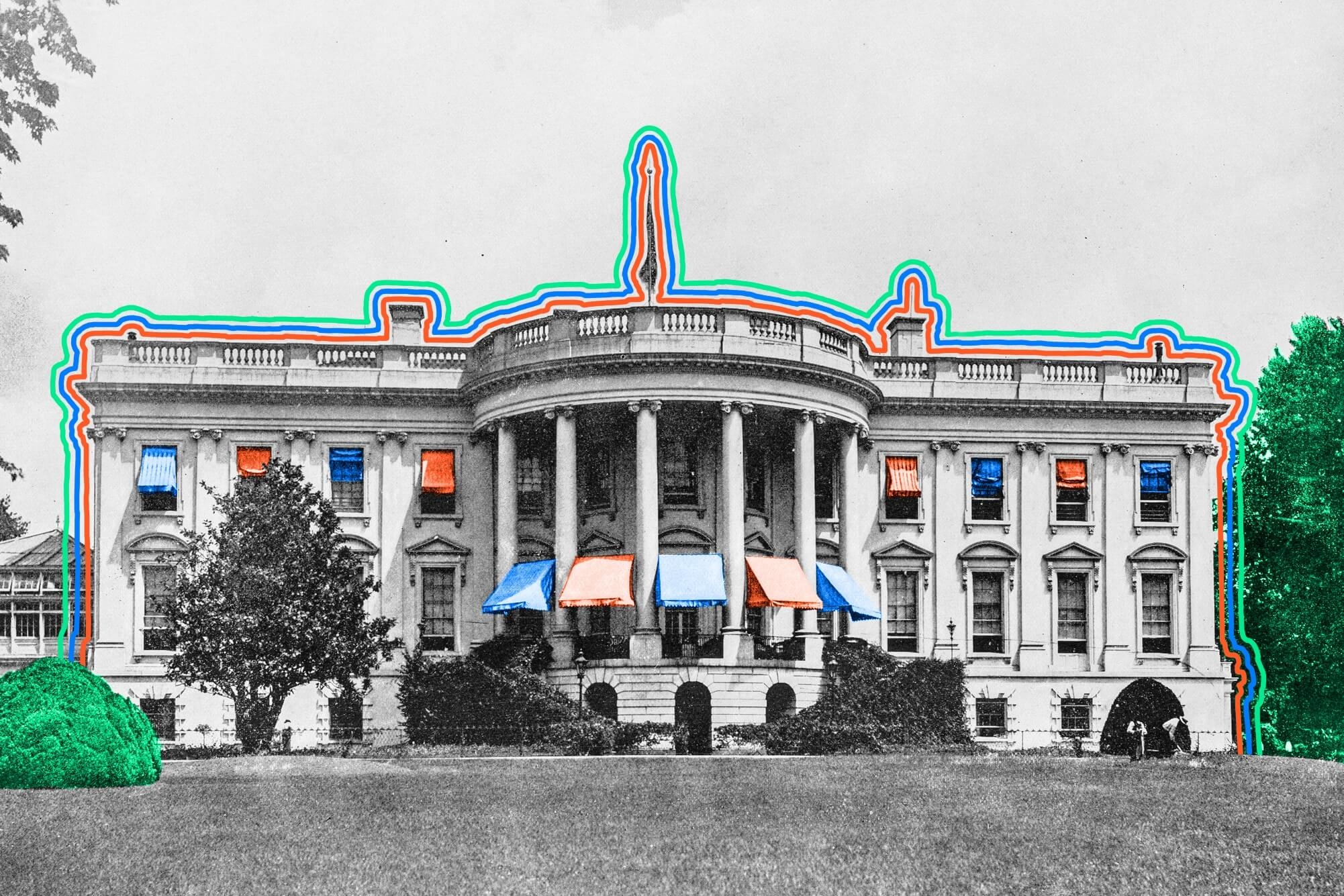
Other Presidents have gone without VPs for at least part of their terms, whether through resignation (two) or because their veeps died in office (seven). The first VP vacancy occurred in 1812, when George Clinton, President James Madison’s running mate, died in office. Strangely, Madison’s VP pick for his second term also died in office, after serving only about 20 months. The last executive shuffle occurred during the Nixon administration in 1973–74, when Spiro Agnew and Richard Nixon both resigned (Agnew about nine months before Nixon, amid tax evasion and corruption charges). Nixon nominated Gerald Ford to replace Agnew, and after Nixon himself resigned in August 1974 following the Watergate scandal, Ford became the first and only President never elected by the U.S. people. Ford left the vice presidency vacant for several months until Nelson Rockefeller finally filled the position on December 19, 1974. Since then, the U.S. has never been without a veep.

Numbers Don't Lie

Numbers Don't Lie

Number of Vice Presidents who became President of the United States
15
Year Walter Mondale moved into official VP residence Number One Observatory Circle (the first VP to do so)
1977
Number of VPs who’ve won the Nobel Peace Prize
3
Number of episodes of HBO’s “Veep,” starring Julia Louis-Dreyfus as fictional VP Selina Meyer
65

The political term “gerrymandering” is named for fifth Vice President ______.

Ready to reveal?

Confirm your email to play the next question?

The political term “gerrymandering” is named for fifth Vice President Elbridge Gerry.

Placeholder Image

The vice presidency used to be a consolation prize.

We’re used to seeing a presidential ticket featuring one person aiming for the top job and their running mate, but for the first three U.S. administrations, that wasn’t how things worked. In the beginning, the vice presidency was given to the candidate who came in second in the presidential election. During the nation’s first election, in 1789, electors (members of the Electoral College) voted for two people to be President. General George Washington received 69 votes, but fellow founding father John Adams received 34, enough to secure the second-place spot and, in turn, the vice presidency. But pretty quickly — and especially as U.S. political parties began to form — this system displayed a fatal flaw: It forced men who had been bitter rivals to work right next to each other. In 1796, Thomas Jefferson became Adams’ Vice President after tallying the second-most votes, but the two were from opposing parties (with Adams a Federalist and Jefferson a Democratic-Republican). By 1803, Congress had become convinced that the vice presidency needed a tweak, which came in the form of the 12th Amendment — a change that allowed electors to cast a separate vote for President and Vice President, which ensured that both leaders came from the same party.

Darren Orf
Writer

Darren Orf lives in Portland, has a cat, and writes about all things science and climate. You can find his previous work at Popular Mechanics, Inverse, Gizmodo, and Paste, among others.

Original photo by ArisSu/ iStock

The animal kingdom is full of incredible variety, thanks to evolution, but one thing most animals have in common is that they use a set of eyes to navigate the world around them. But even the pupil of the eyeball, the biological aperture responsible for how much light enters the eyes, is nearly as diverse as the types of birds that soar the skies or fish that swim the seas.

Humans can’t keep their eyes open when they sneeze.

Ready to reveal?

Oops, incorrect!

It's a fib

Most people experience an automatic response to close their eyes when sneezing, but it is possible to keep them open (your eyes won’t pop out either). Scientists think the response keeps irritants, which the sneeze just expelled, from re-entering the body through the eyes.

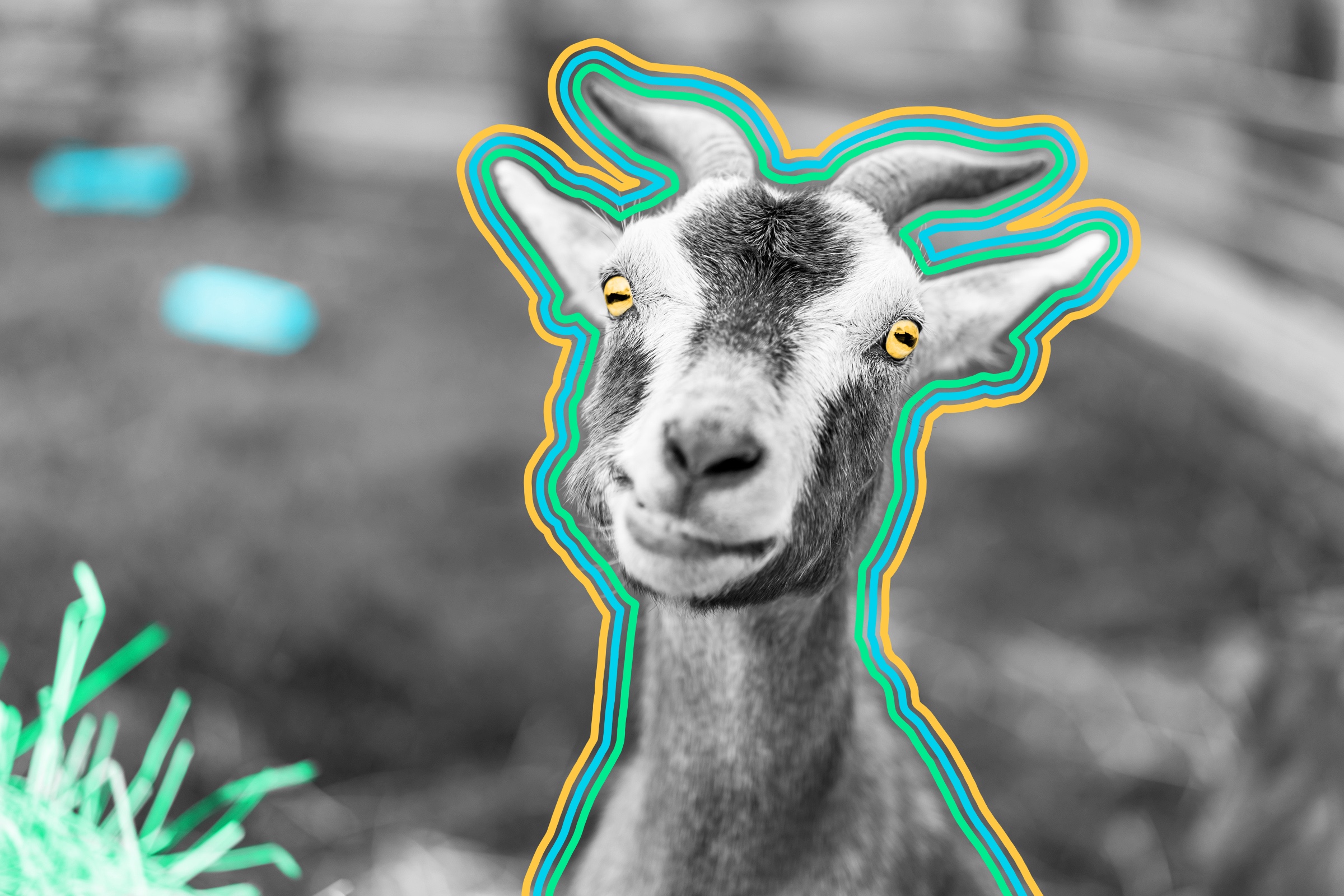
For mammals, one big factor determining the shape of a pupil is whether the creature is predator or prey. For example, a goat is a grazing prey animal that would be a pretty easy target for coyotes, bears, and other predators with sharp teeth. Yet evolution gave the goat a few tools to defend itself. The horns certainly help, but the biggest advantage is a goat’s horizontal rectangular pupils. These long, horizontal pupils create a panoramic view that lets the animal see more of the landscape, which makes it harder to sneak up on them. The pupils also enhance the image quality of objects (read: threats) all around the goats, and they cut down on glare from the sky by capturing less light from above and more from below. Cats and snakes, on the other hand, are ambush predators, whose vertical pupils help them hunt in the night and judge the distance between themselves and their next meal. But according to scientists, vertical pupils are reserved only for animals whose eyes are close to the ground. That’s why other cats that are higher up, like lions and tigers, have round pupils rather than vertical ones.

Numbers Don't Lie

Numbers Don't Lie

Years ago the first animals with eyes appeared on the planet
550 million
Maximum size (in millimeters) of the human pupil in the dark (at full dilation)
8
Approximate year the first goats were domesticated, in western Iran
8000 BCE
Height (in feet) a mountain goat can jump in a single bound
12

The first use of the acronym GOAT (Greatest Of All Time) was in reference to ______.

Ready to reveal?

Confirm your email to play the next question?

The first use of the acronym GOAT (Greatest Of All Time) was in reference to Muhammad Ali.

Placeholder Image

Goats have accents.

A 2012 study from Queen Mary University of London revealed that kids (the goat kind, not the human kind) altered their bleating when socializing with other goats. The ability to change one’s voice in response to a social environment is known as “vocal plasticity,” and humans display an extreme form of this concept — it’s how we can develop accents. Goats develop similarly distinct accents based on their social group, admittedly with a more limited vocabulary. In the study, scientists analyzed one-week-old goats compared to five-week-old goats; the latter is about the time goats form social groups known as “crèches.” They found that young goats raised in the same crèches developed similar bleats, altering their noises to fit in their social group as they aged. It’s also possible these accents help goats identify members of their group, an idea familiar to anybody who’s traveled outside their home country — or even their hometown.

Darren Orf
Writer

Darren Orf lives in Portland, has a cat, and writes about all things science and climate. You can find his previous work at Popular Mechanics, Inverse, Gizmodo, and Paste, among others.

Original photo by Rui Serra Maia/ Shutterstock

The American West is known for its wide open spaces, but nowhere is quite as wide open as the area around Glasgow, Montana. Crunching some numbers back in 2018 in an effort to definitively define “the middle of nowhere,” The Washington Post found that a whopping 98% of Americans in the contiguous U.S. live within an hour of some kind of urban center (that is, a metropolitan area with at least 75,000 people). But Glasgow, located in the northeast corner of the state, is an estimated 4.5 hours from the nearest urban center, making it the most isolated town (with a population of 1,000 or more) in the Lower 48. 

Glasgow, Montana, was named by spinning a globe.

Ready to reveal?

Oops, incorrect!

It's a fact

Though you might think that Glasgow has an intimate connection with Scotland, the isolated Montana town, previously named “Siding 45,” was actually named randomly after a railroad clerk spun a globe and his finger landed on the Scottish city.

Glasgow was founded in 1887 as a railroad town, and during World War II was home to the Glasgow Army Airfield, which eventually transformed into the Glasgow Valley County Airport. After a nearby Air Force base left town in the late ’60s, Glasgow’s population settled around 3,000. Although it’s now the most remote town on the mainland, many towns in Alaska rival Glasgow’s “middle of nowhere” claim when it comes to the nation as a whole. Utqiagvik, formerly known as Barrow, is the U.S.’s northernmost city, is only accessible by plane, and is 500 miles away from Fairbanks. In other words, Alaska takes the idea of “wide open spaces” to a whole new level. 

Numbers Don't Lie

Numbers Don't Lie

Estimated year when St. Kentigern established a religious community in present-day Glasgow, Scotland
550 CE
Year Montana joined the union as the 41st state
1889
Distance (in miles) of Pitcairn Island from New Zealand, one of the most remote inhabited islands in the world
3,240
Population of the state of Montana, according to the 2020 census
1,084,225

The farthest spot from land is called ______, after a character in “Twenty Thousand Leagues Under the Seas.”

Ready to reveal?

Confirm your email to play the next question?

The farthest spot from land is called Point Nemo, after a character in “Twenty Thousand Leagues Under the Seas.”

Placeholder Image

The object farthest from the sun in our solar system is called Farfarout.

Things don’t get much more isolated than the trans-Neptunian object (TNO) Farfarout — so named because it’s the farthest known object in our solar system. With the technical name 2018 AG37, Farfarout takes an entire millennium to complete its orbit around the sun; it’s an average of 132 astronomical units (AU) away from our host star. With one AU equaling the distance between Earth and the sun (about 93 million miles), Farfarout is true to its name. However, depending on where it is in its orbit, Farfarout can be up to 175 AU away or as close as 27 AU, which is about as near as Neptune. While astronomers found this far-flung celestial body searching for “Planet X” — an unknown, hypothesized planet somewhere beyond the orbit of Neptune (sorry, Pluto) — Farfarout puts the “dwarf” in dwarf planet, as it stretches only about 250 miles across.

Darren Orf
Writer

Darren Orf lives in Portland, has a cat, and writes about all things science and climate. You can find his previous work at Popular Mechanics, Inverse, Gizmodo, and Paste, among others.

Original photo by scyther5/ iStock

Our diversity is part of what makes human beings special. Yet as far as our genes are concerned, we’re all fairly similar: Humans share 99.9% of their genes with one another. To put this into perspective, bonobos and chimpanzees — the closest relatives to humans in the animal kingdom — share approximately 98.8% of their genes with humans. Clearly, even small differences in genetic similarity can have a major impact. 

Modern humans still have traces of DNA from other human species.

Ready to reveal?

Oops, incorrect!

It's a fact

Some 70,000 years ago, at least four species of humans coexisted on Earth — Homo sapiens, Neanderthals, Homo floresiensis, and Denisovans. Evidence of this coexistence can be found in human genetics, with small percentages of Neanderthal and Denisovan DNA embedded in our genes.

That may be especially true when it comes to human health. According to the National Institutes of Health, nine of the 10 leading causes of death in the U.S. (barring accidental deaths) are influenced by our genetics, and variations among individuals can mean significantly varying health outcomes. 

In the 21st century, advances in our understanding of the human genome — thanks to the completion of groundbreaking scientific studies including the Human Genome Project — have pushed medicine into the genetic frontier. Now doctors can screen newborns for genetic abnormalities and sometimes use gene-based therapies, while nutritionists are using genomics to tailor diets to specific genetic dispositions. According to some, the future of medicine is in our genes.

Numbers Don't Lie

Numbers Don't Lie

Estimated number of human genes (by one count)
20,000
Number of people who had their DNA sequenced by 23andMe as of 2022
12 million
Year the Human Genome Project (mostly) finished sequencing the human genome
2003
Distance (in miles) a person’s DNA would stretch if unwound and linked together
110 billion

The ancestor of all life is a single-celled organism called ______.

Ready to reveal?

Confirm your email to play the next question?

The ancestor of all life is a single-celled organism called Luca (Last Universal Common Ancestor).

Placeholder Image

The woman who discovered DNA’s double helix was denied the Nobel Prize.

Photo 51 is one of the most famous images in science history. Taken by British chemist Rosalind Franklin in 1952, the image revealed the now-famous double helix structure of deoxyribonucleic acid (DNA). The photo was shared with scientists Francis Crick and James Watson at the Cavendish Laboratory, likely without Franklin’s knowledge. In 1953, the two scientists, along with Franklin’s colleague Maurice Wilkins, published their DNA work alongside Franklin’s photo without crediting her. A decade later, the three scientists received the Nobel Prize — and Franklin was once again neglected. (Sadly, she had died in 1958 of ovarian cancer.) Thankfully, in the decades since, the scientific community has honored Franklin’s contribution to science. In 2019, the European Space Agency even named its new Mars rover the Rosalind Franklin.

Darren Orf
Writer

Darren Orf lives in Portland, has a cat, and writes about all things science and climate. You can find his previous work at Popular Mechanics, Inverse, Gizmodo, and Paste, among others.