
Original photo by Barisev Roman/ Shutterstock

Although the sky is blue throughout the year, it’s often a richer blue in the fall and winter, especially at latitudes farther from the equator. Why? Well, the answer has to do with both electromagnetism and the biology of the human eye. As a refresher: All visible colors are tied to some wavelength along the electromagnetic spectrum. When sunlight enters Earth’s atmosphere, gas and dust particles reflect the shorter wavelengths of visible light (such as blue) more than longer wavelengths (such as red). That — and the sensitivity of the human eye to the color blue — is why the sky appears as a cool sapphire.

Boston is considered the U.S.’s fall foliage capital.

Ready to reveal?

Oops, incorrect!

It's a fib

While New England attracts legions of leaf-peepers every autumn, it’s the northern city of Stowe, Vermont, that’s widely regarded as the best place to view fall foliage. Some 850,000 people visit the small town every year in the summer and fall.

However, as the seasons progress, one part of this equation changes: the sun’s position. As the sun gets lower and lower in the sky during its annual journey back toward the equator (and eventually the Tropic of Capricorn), the angle of the sun’s light hitting the atmosphere causes even more blue light to scatter, while red and green light decrease. That causes the sky to turn an even richer blue. These blue skies are especially easy to see in much of North America as cooler temperatures mean less moisture (and therefore fewer clouds), giving you an uninterrupted view of that deep azure atmosphere.

Numbers Don't Lie

Numbers Don't Lie

Year Irving Berlin wrote the song “Blue Skies”
1926
Max length (in nanometers) of the electromagnetic wavelength our eyes perceive as blue
495
Percentage of U.S. citizens who prefer the color blue — the most of any color — according to one survey
31
Year the phrase “blue devils” was first recorded; it eventually influenced the name of the “blues” genre
1756

The original name for the fall season was “______.”

Ready to reveal?

Confirm your email to play the next question?

The original name for the fall season was “harvest.”

Placeholder Image

When leaves change color, they’re revealing pigments that have been there all along.

The multihued splendor of fall foliage is one of the most indelible symbols of the season. Although this process is often described as leaves “changing color,” it might be better to say they’re showing off color that’s always been there. During the spring and summer, a tree’s leaves are green due to the busy work of photosynthesis, which produces the pigment chlorophyll. When trees prepare for the dark and cold months ahead, they stop producing chlorophyll, and as this green color recedes, pigments that have always been present in the leaves, such as carotenoids (orange and brown) and anthocyanins (red and purple), are finally able to shine through.

Darren Orf
Writer

Darren Orf lives in Portland, has a cat, and writes about all things science and climate. You can find his previous work at Popular Mechanics, Inverse, Gizmodo, and Paste, among others.

Interesting Facts

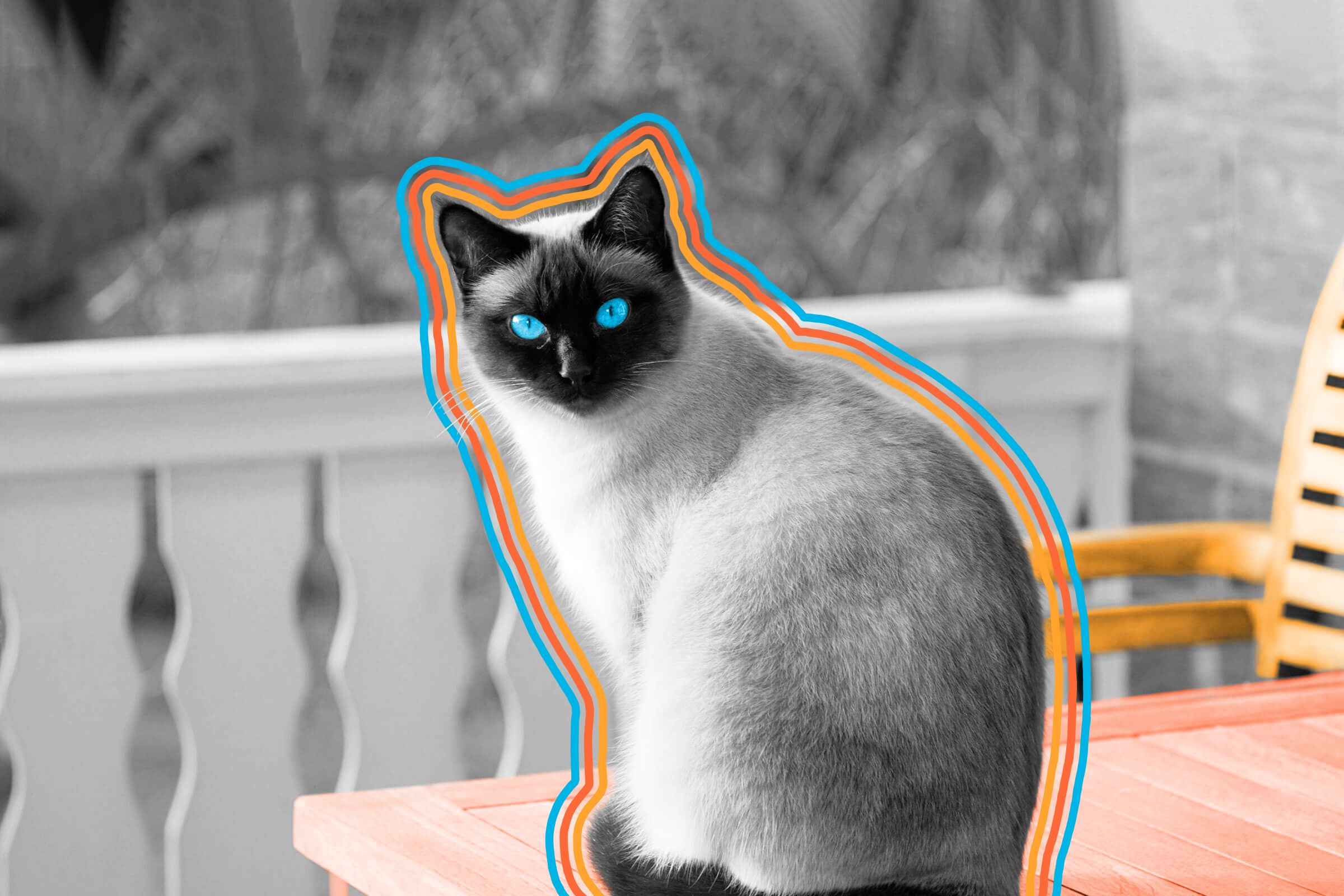
Cats certainly aren’t unknown in the world of physics. Isaac Newton had a cat named Spithead (and supposedly created a cat door for him), while Albert Einstein once said that only two things provided refuge from the misery of life: “music and cats.” Of course, the most famous example is Schrödinger’s cat, a thought experiment devised by Austrian physicist Erwin Schrödinger to explain the complexity of quantum superposition. But none of these cats, whether real or allegorical, has ever written an influential physics paper. That distinction belongs solely to F.D.C. Willard, a Siamese cat otherwise known as Chester.

The CIA tried using cyborg cats as spies in the 1960s.

Ready to reveal?

Oops, incorrect!

It's a fact

As part of Operation Acoustic Kitty, the CIA implanted a microphone and a radio transmitter inside a cat to spy on Cold War adversaries. But the project quickly hit a dead end, with a now-unclassified document stating the obvious problem: “Cats are not especially trainable.”

While it’s fun to imagine Jack H. Hetherington — the paper’s very human author — working alongside his cat to explore atomic behaviors at different temperatures, the reason for the feline’s inclusion was actually a matter of pronouns. Before submitting his paper for publication in the journal Physical Review Letters back in 1975, Hetherington noticed that he’d used the royal “we” throughout his work, and a colleague informed him that the journal only used such verbiage when a paper had multiple authors. Unwilling to go back and change the entire paper (these were typewriter days after all), Hetherington instead invited Chester, under the more official-sounding pseudonym F.D.C. Willard, to be his collaborator. Hetherington’s deception was baked right into the name: Felis Domesticus Chester Willard (Felis domesticus being the genus and species of the common house cat, and Willard being Chester’s father’s name). According to Hetherington, the journal’s editors didn’t find the feline contribution especially amusing, but time heals all wounds. In 1980, Willard even went on to become the sole “author” of a scientific paper in French. In 2014, Physical Review Letters granted free access to all cat-written physics papers as an April Fools’ Day joke.

Numbers Don't Lie

Numbers Don't Lie

Number of animals (including one cat named Simon) who’ve received Britain’s Dickin Medal for wartime animals
75
Estimated number of households in the U.S. that have a feline family member
46.5 million
Year Erwin Schrödinger devised the thought experiment “Schrödinger’s cat”
1935
Number of ship sinkings a cat nicknamed “Unsinkable Sam” survived during World War II
3

The Norse goddess of fertility ______ rode in a chariot pulled by two tomcats.

Ready to reveal?

Confirm your email to play the next question?

The Norse goddess of fertility Freyja rode in a chariot pulled by two tomcats.

Placeholder Image

In 1963, France sent the world’s first (and still only) cat to space.

On October 18, 1963, a Parisian stray cat named Félicette began her spacefaring journey aboard a French rocket launched from the Sahara Desert. The black-and-white cat was chosen from a crew of 14 cats trained for the mission, and she quickly traveled from the surface nearly 100 miles skyward, far beyond the Kármán line that separates Earth’s atmosphere and outer space. After becoming the first cat to escape the gravitational embrace of Earth, Félicette parachuted back to the planet’s surface. There, she was recovered by helicopter (still very much alive); the entire trip lasted only 15 minutes. Today, few people know about Félicette’s epic journey, as it’s often overshadowed by the 1957 flight of the Soviet space dog Laika. To commemorate the one and only astrocat’s achievements, a 2017 Kickstarter campaign raised £43,323 to create a memorial to Félicette. Today, the bronze statue — featuring Félicette perched atop the globe — resides at the International Space University in Strasbourg, France.

Darren Orf
Writer

Darren Orf lives in Portland, has a cat, and writes about all things science and climate. You can find his previous work at Popular Mechanics, Inverse, Gizmodo, and Paste, among others.

Original photo by zagi89/ iStock

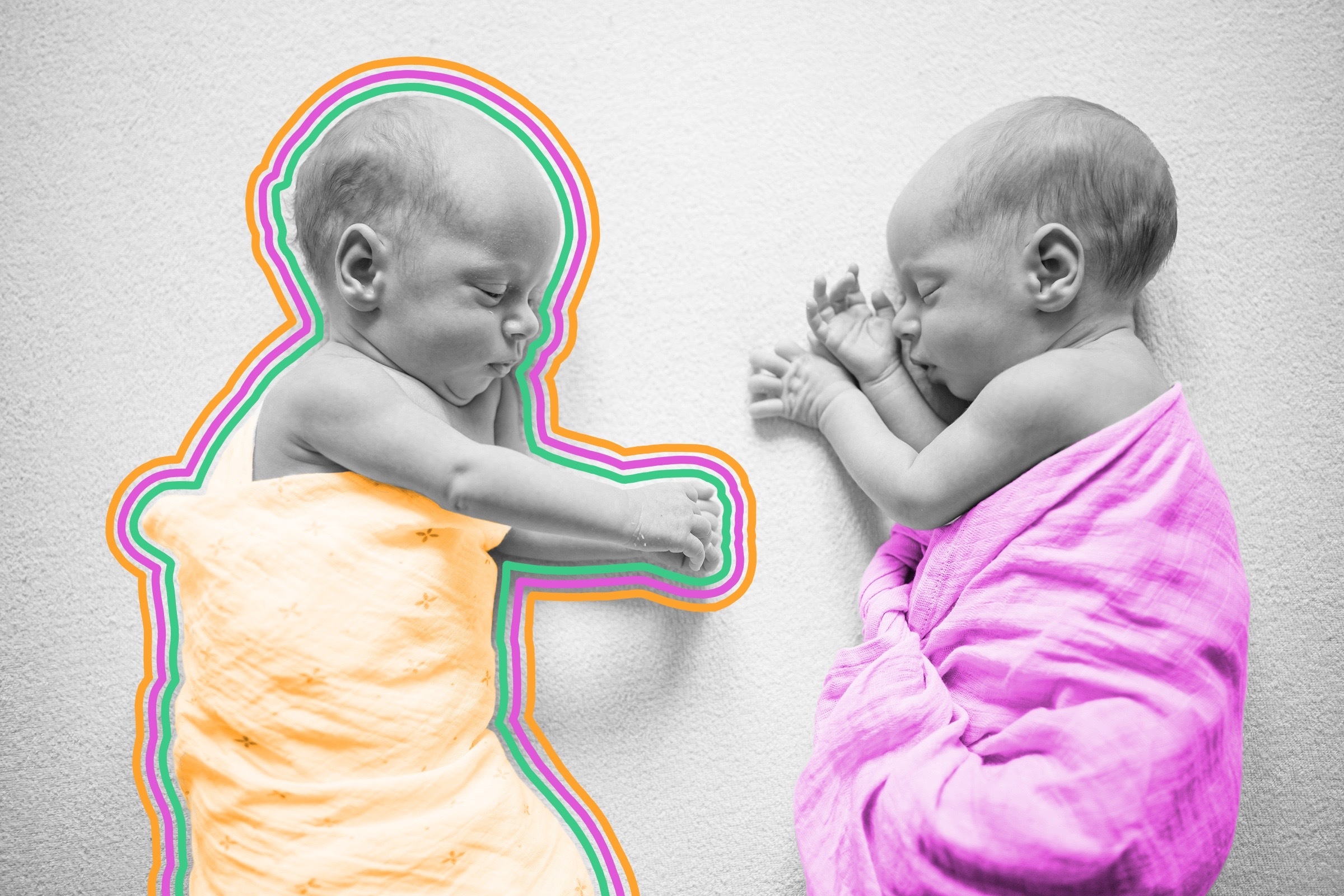
On average, twins are delivered just a few minutes apart — but this isn’t always the case. In 1996, for instance, a Maryland woman named Lesa West gave birth to fraternal twins over a span of 90 days. On January 1 of that year, Lesa and her partner David welcomed their daughter Molly into the world, who was born premature. After Molly’s birth, doctors were able to stop Lesa’s contractions so she could carry the other baby to full term. Three months later, on March 30, Lesa finally gave birth to little Benjamin, setting an all-time record for the longest gap between the birth of two twins.

Four babies were born at a Rolling Stones concert in 1969.

Ready to reveal?

Oops, incorrect!

It's a fact

On December 6, 1969, the Rolling Stones headlined the Altamont Free Concert in California, alongside Santana, Jefferson Airplane, and others. According to the American Red Cross, four concertgoers gave birth during the six-hour spectacle, which was attended by roughly 300,000 people.

When it comes to triplets, the longest recorded interval between births is shorter, albeit still quite substantial. On September 20, 2004, Kara McBurney of Missouri gave birth prematurely to her son Lorne. Kara then remained in the hospital for weeks until she delivered her son Sullivan 17 days, 18 hours, and 55 minutes later, and her son Isaac shortly after. There have also been two recorded instances of women delivering quadruplets over the span of several days. In general, twins are delivered earlier than single-baby pregnancies, and less than one in every two twin pregnancies lasts beyond 37 weeks. Once the first baby is delivered, it’s preferable to deliver the next child in about 15 minutes to avoid complications, and the majority of twins are delivered within 30 minutes. It doesn’t always take that long, however: The shortest recorded time between twin births was a Canadian woman named Amanda Dorris, whose twins were born just 22.976 seconds apart on April 6, 2017.

Numbers Don't Lie

Numbers Don't Lie

Average birth rate of twins per 1,000 live births in the U.S. (as of 2022)
31.2
Most surviving children ever delivered during a single birth
9
Weight (in pounds) of the heaviest baby ever born
22
Percentage of twins who are said to share their own “secret language”
~40%

Babies are born with around 300 ______.

Ready to reveal?

Confirm your email to play the next question?

Babies are born with around 300 bones.

Placeholder Image

African elephants have the longest gestation period of any land mammal.

If you thought being pregnant for nine months was difficult, you should thank your lucky stars you aren’t an elephant. The African elephant has a gestation period of around 22 months, the longest of any land mammal. Asian elephants are also known for their lengthy gestation periods, between 18 and 22 months. But that’s just on land — things get a bit more extreme when you factor in creatures that live in the water. Take, for instance, the Chlamydoselachus anguineus, a shark found off the coasts of Chile and South Africa. This creature is believed to have a gestation period of up to 42 months, possibly due to its intensely cold habitat slowing down its metabolism. On the flip side, there are a few land mammals with gestation periods as short as 12 to 13 days, including the Virginia opossum and the water opossum.

Bennett Kleinman
Staff Writer

Bennett Kleinman is a New York City-based staff writer for Inbox Studio, and previously contributed to television programs such as "Late Show With David Letterman" and "Impractical Jokers." Bennett is also a devoted New York Yankees and New Jersey Devils fan, and thinks plain seltzer is the best drink ever invented.

Original photo by NASA/ Unsplash

It being a vacuum and all, space isn’t often thought of as having a scent of its own. And while no one has directly smelled outer space — exposure without a helmet would be fatal — many astronauts have reported that it smells like a mix of gunpowder and burnt steak. The odor is most noticeable after an astronaut returns to their spacecraft through the airlock and removes their helmet, at which point the lingering scent can be detected by both the astronaut who had been outside the ship and their crewmates who remained aboard.

The sun is one of the biggest stars.

Ready to reveal?

Oops, incorrect!

It's a fib

It’s actually quite average, with a radius of about 435,000 miles. The biggest known star, UY Scuti, has a radius of 738 million miles.

It’s been theorized that the source of space’s scent is dying stars, which release molecules called polycyclic aromatic hydrocarbons — a chemical compound also found in coal, oil, and food — as they near the end of their existence. There’s even a cologne named “Eau de Space” based on the smell, which was originally synthesized by biochemist Steve Pearce at NASA’s behest to better prepare astronauts for every aspect of the job. Based on his interviews with astronauts who had been to space, Pearce described the aroma as “hot metal, burnt meat, burnt cakes, spent gunpowder, and welding of metal.”

Numbers Don't Lie

Numbers Don't Lie

Dwarf planets in our solar system (Pluto, Ceres, Haumea, Makemake, Eris)
5
Craters on the moon officially recognized by the International Astronomical Union
9,137
Different types of olfactory receptors in the human nose
~400
Average surface temperature (in degrees Fahrenheit) of Neptune’s moon Triton
-391

Sunsets on Mars are the color ______.

Ready to reveal?

Confirm your email to play the next question?

Sunsets on Mars are the color blue.

Placeholder Image

A day on Venus is longer than a year.

There are many reasons why humans will never go to Venus — it’s so hot and uninhabitable that it’s been called Earth’s “evil twin” — but if we did, we’d experience something hard to imagine: a day that lasts longer than a year. It takes the planet 243 Earth days to fully rotate on its axis, but only 225 days to orbit the sun, meaning that a year on Venus is indeed shorter than a day there. This is believed to be due to the planet’s thick and stormy atmosphere, which slows down its rotation.  

Michael Nordine
Staff Writer

Michael Nordine is a writer and editor living in Denver. A native Angeleno, he has two cats and wishes he had more.

Original photo by Gatot Adri/ Shutterstock

It’s physically impossible to hum while pinching your nose. Go ahead, give it a try. See? To understand why humming, which we often associate with the mouth, would be affected by the nose, we have to look at the anatomy of our vocal folds. Vocal folds, aka vocal cords, are delicate bands of muscle located in the larynx, aka the voice box. When relaxed (i.e., when we’re quiet), our vocal folds resemble a wishbone. But when we speak, sing, yell, grunt, whisper — and, yes, hum — we send air up from the lungs and through the voice box. Simultaneously, those thin bands of muscle contract together, as if the open end of the wishbone has snapped shut. In reality, our vocal folds move in a wavelike pattern, vibrating against one another in varying frequencies that allow us to speak, sing, shout, and murmur. The faster our folds vibrate together, the higher the pitch; the slower, the lower.

We have “true” vocal cords and “false” vocal cords.

Ready to reveal?

Oops, incorrect!

It's a fact

“False” vocal cords, also known as the vestibular or ventricular folds, are thick folds of mucous membrane that sit above the “true” vocal folds to serve as backup protection against food or liquid entering the airway. Manipulating the “false” vocal cords can produce a deep, gravelly tone.

While we might think of humming as a sound that emanates from our mouth and lips, we actually produce this sound by sending air from the voice box to the nasal cavity and out through the nostrils. Thus, when we pinch our noses, there’s nowhere for the air to travel, and the vibration and corresponding sound stops. This also explains why pinching your nose mid-hum might make you feel like something’s caught in the back of your throat. (That’s the air trying to find a way out.) Another good way to test this theory is to hum when you’re congested. Depending on how blocked your nostrils are, you might not be able to hum at all, or you might even feel the mucus in your nose trying to move around as the air attempts to escape your nostrils — gross, but pretty interesting, too!

Numbers Don't Lie

Numbers Don't Lie

Frequency (in hertz) of the vocal folds of adult males
125
Year French anatomist Antoine Ferrein coined the term “vocal cords”
1741
Length (in millimeters) of vocal folds when we’re born
6-8
Length (in minutes) of the longest continuous vocal note
~2

In addition to the “humming” of their wings, Anna’s hummingbirds have distinct calls that last more than ______ seconds.

Ready to reveal?

Confirm your email to play the next question?

In addition to the “humming” of their wings, Anna’s hummingbirds have distinct calls that last more than 10 seconds.

Placeholder Image

There’s an Amazonian language that uses hums to communicate.

Pirahã is an Indigenous language spoken by fewer than 500 people. The Pirahã people live along a tributary of the Amazon River called the Maici River in northwest Brazil, and their language is largely regarded as one of the simplest tongues known to humankind. Its limited use of linguistic elements allows its speakers to communicate via humming, as well as yelling, singing, and whistling. You know when you’re trying to talk with a mouth full of food or while brushing your teeth and it comes out as a sort of rhythmic hum? The Pirahã language is a little like that — except its speakers actually understand what they’re saying to each other.

Melanie Davis-McAfee
Writer

M. Davis-McAfee is a freelance writer, musician, and devoted cat mom of three living in southwest Kentucky.

Original photo by Nailya Yakubova/ Shutterstock

Brunch has an understandable hold on Americans — after all, who can pass up the opportunity to enjoy a delicious smattering of sweet and savory plates (alongside good company, of course)? Apparently, Americans of the past couldn’t say no either, gathering to share food and fun at so-called “waffle frolics.” These waffle-eating get-togethers were most popular during the colonial era, eventually petering out by the mid-20th century. At their peak, they were elaborate, multicourse meals that showcased freshly ironed waffles as the main course. 

Eggo waffles were originally called “froffles.”

Ready to reveal?

Oops, incorrect!

It's a fact

California inventors and brothers Frank, Anthony, and Sam Dorsa debuted frozen cooked waffles, dubbed “Froffles” (“frozen” + “waffles”), in 1953. They changed the name to Eggos after the name of their company, which originally sold an egg-rich mayonnaise.

Little is recorded about the particulars of early waffle frolics, but one description, by William Livingstone, a 21-year-old Yale student who recounted his party experience in a 1744 letter, describes the soiree as a lavish affair. “After a few games, a magnificent supper appeared in grand order and decorum,” he wrote. “[B]ut for my own part I was not a little grieved that so luxurious a feast should come under the name of a wafel-frolic, because if this be the case I must expect but a few wafel-frolics for the future.”

Waffles have been widely eaten throughout Europe since the Middle Ages, sold by street vendors and often consumed on religious holidays. Eventually, they made their way to the American colonies alongside the Pilgrims, and it was in the New World where they were paired with maple syrup for the first time. Culinary lore sometimes suggests it was founding father Thomas Jefferson who ignited the waffle frolic craze in the 1790s upon his return from France, after he arrived with four waffle irons in his luggage. As president, Jefferson reportedly served the treat to Meriwether Lewis at the White House prior to the Lewis and Clark expedition. However, historians at Jefferson’s Monticello estate say there’s little evidence that the third president heavily influenced colonial waffle culture. It’s possible the crispy, grid-marked cakes were destined to become an American favorite all on their own. 

Numbers Don't Lie

Numbers Don't Lie

Year the first waffle iron was patented in the U.S.
1869
Waffles cooked and served every minute at Waffle House restaurants
145
Year waffle cones (for ice cream) debuted at the world’s fair in St. Louis
1904
Weight (in pounds) of the world’s largest waffle, created in the Netherlands in 2013
110

______ produces 71% of the world’s pure maple syrup.

Ready to reveal?

Confirm your email to play the next question?

Canada produces 71% of the world’s pure maple syrup.

Placeholder Image

John F. Kennedy’s waffle recipe is stored in the National Archives.

Presidential favorite foods are often a topic of interest on the campaign trail; after all, it’s interesting to think the nation’s chief executive might like the same foods we do. While President John F. Kennedy was known for his fondness for soup (particularly New England fish chowder), it’s likely he was also a fan of waffles. Historians at the John F. Kennedy Presidential Library and Museum report they have been unable to verify the 35th President’s favorite breakfast food, but during his time as a senator, Kennedy frequently mailed out copies of his preferred waffle recipe, possibly drafted by First Lady Jackie Kennedy. It’s likely the formula — which swaps regular flour for lighter cake flour and uses whipped egg whites — was dispatched from the legislator’s office upon request from constituents, or submitted to cookbook compilations sold as fundraisers. Today, Kennedy’s recipe remains available to the public, preserved by the National Archives for endless future breakfasts.

Nicole Garner Meeker
Writer

Nicole Garner Meeker is a writer and editor based in St. Louis. Her history, nature, and food stories have also appeared at Mental Floss and Better Report.

Original photo by LWH/ Alamy Stock Photo

Today Captain Morgan is one of the world’s most well-known buccaneers — not for the Welshman’s very real 17th-century exploits (of which there were many), but because of the spiced rum bottles that bear his name. History knows him as Sir Henry Morgan, lieutenant governor of Jamaica and arguably the most infamous buccaneer who ever lived. In the 17th and 18th centuries, buccaneers were a distinct flavor of privateer (sort of a legal pirate), usually bankrolled by the English, who harassed the Spanish Empire in the Caribbean. 

Disney invented “pirate speak.”

Ready to reveal?

Oops, incorrect!

It's a fact

Historians don’t know how pirates spoke when sailing the high seas, but the pirate-speak of today (“arrg,” “ye matey,” etc.) can be traced to the 1950 Disney film “Treasure Island,” with Robert Newton as Long John Silver. Newton created the accent based on his West Country dialect.

Morgan first arrived in the Caribbean around 1654, and became captain of a privateer vessel eight years later. Soon, he was plundering Spanish colonies in the Caribbean with support from the English crown. Morgan proved so adept at the trade that he amassed a great fortune, established sugar plantations in Jamaica, and by the decade’s end, had 36 ships and around 1,800 men under his command. Then, in 1671, Morgan attacked Spanish-held Panama City, not knowing that England had signed a treaty with Spain a year earlier. To appease the enraged Spanish, England arrested Morgan and sent him to London, but he received a hero’s welcome there, with King Charles II knighting him in 1674. Morgan soon returned to Jamaica, where he lived out the rest of his days. Even before his death in 1688, published stories detailed Morgan’s buccaneering career. Around 250 years later, in 1944, a distiller named Seagram’s bought a spiced rum recipe from a Jamaican pharmacy. The infamous Captain Morgan seemed a fitting namesake for the Caribbean-born liquor.

Numbers Don't Lie

Numbers Don't Lie

Year archaeologists discovered one of Henry Morgan’s sunken ships near Panama’s Lajas Reef
2011
Amount of rum (in liters) produced every day at the Cathedral of Rum in Puerto Rico, the world’s largest rum distillery
100,000
Number of Super Bowls won by the Tampa Bay Buccaneers (2003 and 2021)
2
Year rum producer Captain Morgan was established
1944

The island of ______ in the West Indies is home to the world’s oldest rum distillery.

Ready to reveal?

Confirm your email to play the next question?

The island of Barbados in the West Indies is home to the world’s oldest rum distillery.

Placeholder Image

Rum was the most popular liquor in colonial America.

Today the U.S. is known for its world-class whiskey and craft beers, among other beverages, but in colonial America, rum was king. By the 1630s, distilleries in the West Indies began transforming molasses into rum, a liquor perfectly suited for colonial society. Rum kept better than beer and cider, and with easily available raw materials (due to the grossly exploitative Atlantic slave trade) and a higher alcohol by volume than its competition, the liquor quickly became popular with colonists as both a libation and a medicine. The first colonial rum distillery opened on Staten Island in 1664, and another opened in Boston three years later. By one account, colonists drank 3.7 gallons of the stuff annually per person by the time of the American Revolution, and the sweet liquor was so valuable that it was sometimes even traded as currency. As the colonies’ relationship with Britain soured — most directly in the forms of the Molasses Act (1733), the Sugar Act (1764), and eventually a wartime blockade — distillers moved away from increasingly costly rum. Instead, they began producing more of a corn-based alcohol known as whiskey, a liquor that soon became synonymous with American patriotism. With that, the reign of rum was more or less over.

Darren Orf
Writer

Darren Orf lives in Portland, has a cat, and writes about all things science and climate. You can find his previous work at Popular Mechanics, Inverse, Gizmodo, and Paste, among others.

Original photo by Tania Melnyczuk/ Unsplash

You wouldn’t think of the filmmaker responsible for Psycho, The Birds, and Vertigo as having any phobias, let alone one as rare as ovaphobia. And yet the Master of Suspense once admitted on the record that he was “worse than frightened” of eggs, which he said revolted him — so much so, in fact, he refused to ever taste egg yolk, which he found particularly repulsive. “Have you ever seen anything more revolting than an egg yolk breaking and spilling its yellow liquid?” he asked in one interview. (Anyone who’s seen such lesser-known Hitchcock works as Frenzy and Family Plot might say yes, but the point stands.)

Hitchcock never won a competitive Academy Award.

Ready to reveal?

Oops, incorrect!

It's a fact

Despite receiving five Best Director nominations — for “Rebecca,” “Lifeboat,” “Spellbound,” “Rear Window,” and “Psycho” — Hitchcock left each ceremony empty-handed. To make up for it, the Academy presented him with the honorary Irving G. Thalberg Memorial Award in 1968.

The breakfast staple wasn’t the filmmaker’s only fear. As fate would have it, Hitchcock was as afraid of his own films as most of his viewers were. “I’m frightened of my own movies,” he said in a 1963 interview. “I never go to see them. I don’t know how people can bear to watch my movies.” So if you’ve yet to muster the courage to watch Psycho, take solace in the fact that Hitchcock himself would understand your reluctance.

Numbers Don't Lie

Numbers Don't Lie

Feature films Hitchcock is traditionally credited with directing
53
Cameos made by the director in his own movies
39
Dozens of eggs produced in America in 2020
9.3 billion
Words in Hitchcock’s acceptance speech for his honorary Oscar (“Thank you … very much indeed.”)
5

Hitchcock made four films each with lead actors ______.

Ready to reveal?

Confirm your email to play the next question?

Hitchcock made four films each with lead actors Cary Grant and Jimmy Stewart.

Placeholder Image

Alfred Hitchcock popularized the MacGuffin.

You might not know them by name, but you’re almost certainly familiar with MacGuffins, a term likely coined by British screenwriter Angus MacPhail. Think of the glowing suitcase in Pulp Fiction, the eponymous statue in The Maltese Falcon, or even the Dude’s rug in The Big Lebowski — if a physical object kick-starts a movie’s narrative but doesn’t serve any true purpose in and of itself, it’s a MacGuffin. Hitchcock made frequent use of MacGuffins, in everything from The 39 Steps to North by Northwest, and held a unique view of them; namely, that the best MacGuffins are those that end up being utterly useless. “The main thing I’ve learned over the years is that the MacGuffin is nothing,” he said to fellow auteur François Truffaut in 1962. “I’m convinced of this, but I find it very difficult to prove it to others.”

Michael Nordine
Staff Writer

Michael Nordine is a writer and editor living in Denver. A native Angeleno, he has two cats and wishes he had more.

Original photo by DROPERDER/ Shutterstock

One of the most complex parts of human anatomy is also one (or rather two) that we use hundreds of times per day yet often take for granted. Human hands are the body’s multipurpose tools, equipped with 27 individual bones. About half of those are found in our fingers, the tactile appendages that will bend and flex roughly 25 million times over the course of our lifespan. Our fingers are able to perform the everyday tasks we need thanks to thousands of nerve endings and touch receptors that can sense pressure, texture, temperature, movement, and more. But there’s one thing our hardworking digits don’t have: muscles.

Fingernails grow faster than toenails.

Ready to reveal?

Oops, incorrect!

It's a fact

Fingers and toes are topped with nails for good reason: Both help protect our delicate digits by preventing injuries and infections. However, these nails don’t grow at the same speed. A 2010 study found fingernails grow twice as fast as toenails, on average.

Muscles make it possible for our bodies to move, and the human frame relies on more than 600, which are tasked with helping us in nearly every motion. So how do fingers perform the intricate tasks we require without them? Turns out, human fingers are controlled by the muscles in our forearms and the tops and palms of our hands. Small intrinsic muscles in the hand allow the fingers to perform fine motor movements, while extrinsic muscles in the forearm and elbow control how the wrist and hand move. Finger bones (aka phalanges) are connected to these muscles by tendons — fibrous, cordlike connective tissues — and when the attached muscles contract, fingers are able to perform their range of motion. Flexor tendons in the palm help fingers to bend, while extensor tendons on the top of the hand are responsible for straightening the fingers back out — essential movements that allow our hands to touch, grasp, and hold objects.

Numbers Don't Lie

Numbers Don't Lie

Number of bones in each finger, excluding thumbs (which have only two bones)
3
Time (in milliseconds) it takes to snap our fingers, about 20 times faster than blinking
7
Muscles in the human hand, which control how the fingers bend, spread, and flex
30+
Number of puppets in the world’s largest finger puppet collection (as of 2023)
1,517

The ______ has copper fingers that measure 8 feet long.

Ready to reveal?

Confirm your email to play the next question?

The Statue of Liberty has copper fingers that measure 8 feet long.

Placeholder Image

Some primates have six fingers.

Primates and humans tend to share some similarities, like having five fingers on each hand (along with five toes on each foot). But just like in the human world, there are anomalies among primates — like the aye-aye, a six-fingered lemur. Native to Madagascar, aye-ayes are the world’s largest nocturnal primate, utilizing batlike ears that echolocate their prey. As researchers recently discovered, aye-ayes also differ from their primate relatives by relying on an extra thumblike digit found near their wrist, though it’s unclear just how the finger is used. Aye-aye finger-related differences don’t end there; the lemurs tap their exceptionally long middle fingers against logs and limbs, using the reverberations to eke out an insect’s hiding spot before digging them out.

Nicole Garner Meeker
Writer

Nicole Garner Meeker is a writer and editor based in St. Louis. Her history, nature, and food stories have also appeared at Mental Floss and Better Report.

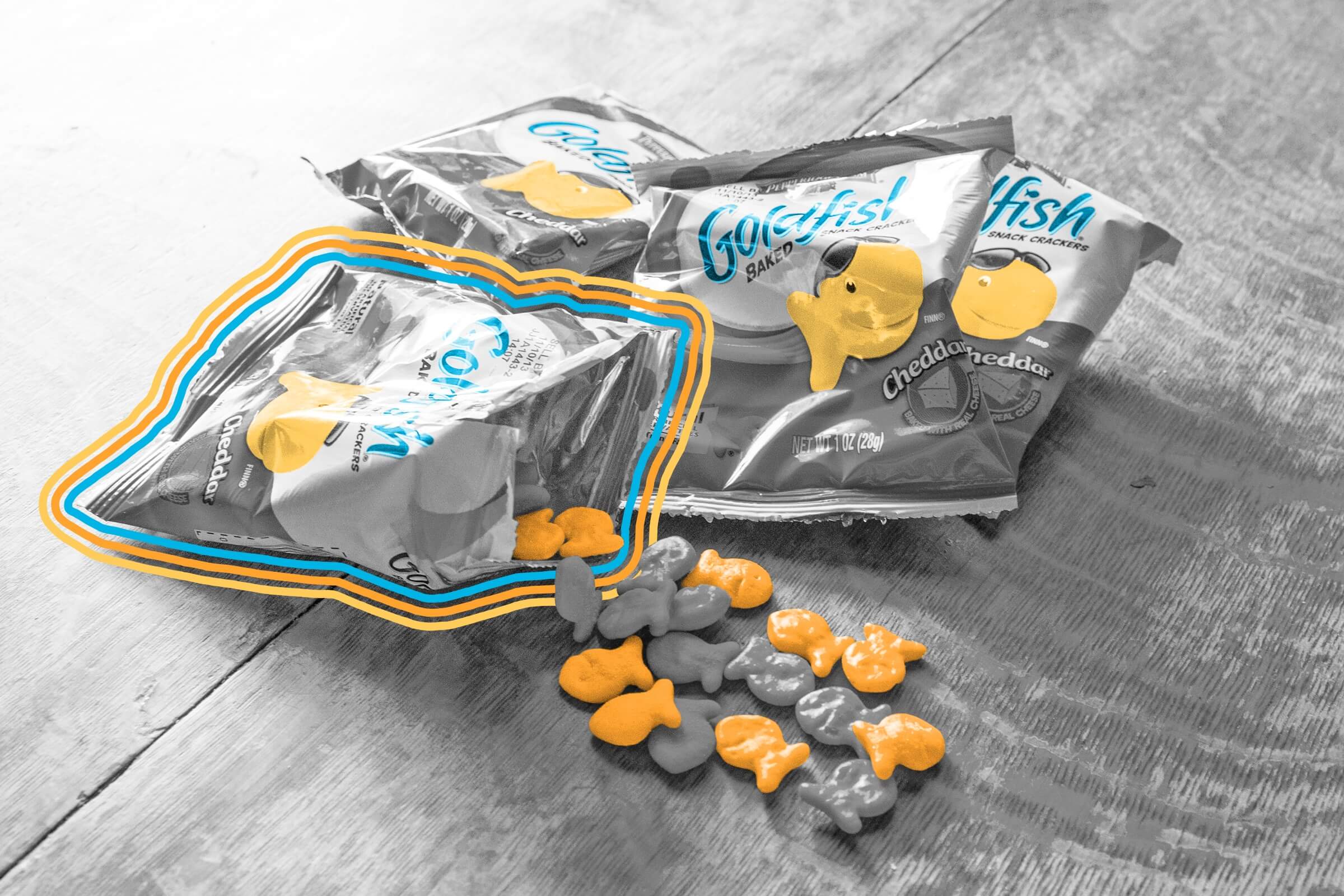
Original photo by Food Tree Images/ Alamy Stock Photo

Some snacks are known for their distinctive shapes: Think of Pringles’ classic curve or Ruffles’ ridges. The same goes for Goldfish crackers, which were originally designed as a birthday gift for the creator’s wife, whose astrological sign, Pisces, is symbolically represented by two swimming fish. The idea came about in 1958, when Oscar J. Kambly — head of the Kambly commercial bakery in Switzerland — was looking to surprise his wife on her birthday. He instructed a technician to create a new cracker mold in the shape of a fish, then baked the first-ever Goldfish cracker that afternoon before presenting it to his beloved later that evening.

A 14-year-old boy won a $5 prize for creating Mr. Peanut.

Ready to reveal?

Oops, incorrect!

It's a fact

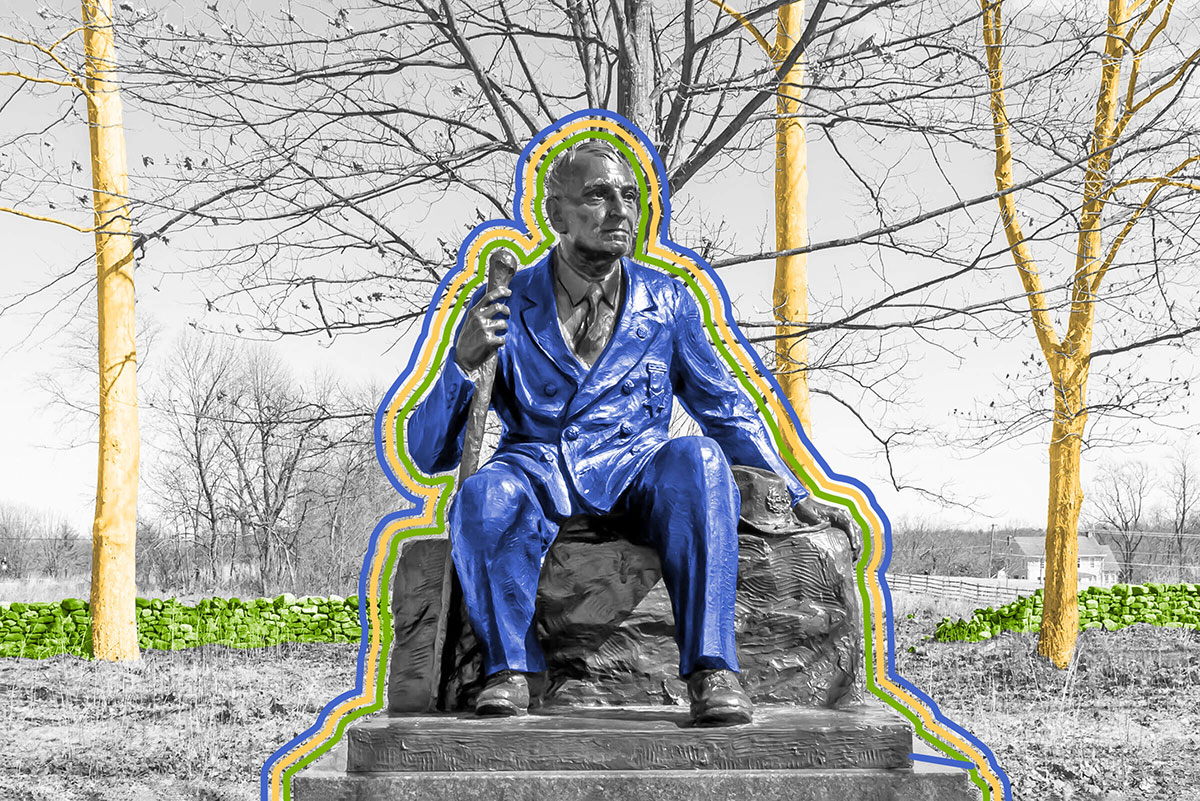
In 1916, the Planters Nut & Chocolate Company held a contest to design a new mascot. The winning drawing came from 14-year-old Antonio Gentile of Suffolk, Virginia, who was awarded a $5 prize (roughly $144 today) for his sketch of a walking peanut holding a suitcase and cane.

Kambly quickly realized how popular the innovative crackers could be as a mass-produced snack food. He took the product to market under the name Goldfischli, German for “Goldfish.” Within a year, the fish-shaped crackers were being sold in 17 countries. In 1962, American businesswoman Margaret Rudkin — founder of Pepperidge Farm — was on vacation in Switzerland when she came upon Goldfish crackers for the first time. Intrigued by the product, Rudkin struck a deal to acquire the licensing rights and began producing the crackers in the United States. The snack continued to blossom into a global sensation, and Kambly introduced alternate flavors for the first time in 1983. In 1995, the name of the original product was officially changed from Goldfischli to Goldfish.

Numbers Don't Lie

Numbers Don't Lie

Length (in inches) of the world’s longest live goldfish
18.7
Milk chocolate Hershey’s Kisses produced daily
70 million+
Percentage of orange candies in each bag of Reese’s Pieces
50%
Year ballpark nachos were first sold
1976

Pop-Tarts were originally called ______.

Ready to reveal?

Confirm your email to play the next question?

Pop-Tarts were originally called Fruit Scones.

Placeholder Image

Chocolate chip cookies were invented by accident.

Ruth Graves Wakefield may not be a household name, but she managed to create one of the most popular snacks of all time, and largely by accident. Wakefield was the proprietor of the Toll House Inn in Whitman, Massachusetts. One night in the late 1930s, while baking a popular Colonial-era cookie recipe for guests, she decided to experiment by adding in pieces from a block of Nestlé chocolate she had broken up with an icepick. But rather than disseminating through the dough as she’d anticipated, the chocolate remained in individual gooey chunks, much to the delight of Wakefield’s guests. She dubbed this recipe the “Chocolate Crunch Cookie,” and it became a smash hit after being advertised on an episode of the popular radio show Betty Crocker Cooking School of the Air. Wakefield later struck a deal with Nestlé to provide them with the recipe rights in exchange for a lifetime of free chocolate.

Bennett Kleinman
Staff Writer

Bennett Kleinman is a New York City-based staff writer for Inbox Studio, and previously contributed to television programs such as "Late Show With David Letterman" and "Impractical Jokers." Bennett is also a devoted New York Yankees and New Jersey Devils fan, and thinks plain seltzer is the best drink ever invented.