
Original photo by Ro_ksy/ Shutterstock

Human ears have two main jobs: alerting us to noises in the world around us, and keeping our bodies balanced as we move throughout the day. However, researchers have found another small trick our ears can perform: determining the temperature of water. While they may look identical, hot and cold water make different sounds when poured. With a little help from our brains — which learn to recognize the contrasting tones over a lifetime of repeated exposure — most people can tell the difference between cold water poured from a pitcher or hot water transferred from a kettle, without even seeing the cup being filled.

Salt makes water boil faster.

Ready to reveal?

Oops, incorrect!

It's a fact

There is truth to this kitchen lore — adding salt makes it harder for water molecules to become steam, creates a higher boiling point, and makes water hotter, faster. But in small amounts, like a teaspoon, salt’s effects are limited, meaning this trick saves just a few seconds of time.

Without the cues of visible boiling or a collection of ice crystals, liquid water tends to look the same regardless of its temperature. What humans can’t see is that temperature actually affects water’s viscosity (aka thickness), which produces different sounds that we can hear. At lower temperatures, water molecules are sluggish and create temporary bonds that thicken the liquid, producing a lower-frequency sound when poured. Conversely, heated water molecules are more energetic, making it harder for molecules to join together. Fewer bonds result in thinner water, which produces a noticeably higher-pitched sound when transferred into a cup. Researchers say bubbling also plays a role in water acoustics — hot liquids have more bubbles than cool liquids, which contribute to the higher tones we hear while pouring out a cup of coffee or tea.

Numbers Don't Lie

Numbers Don't Lie

U.N. member states that use the Fahrenheit scale exclusively
5
Temperature (in degrees Fahrenheit) of the ocean’s surface near the North and South Poles
28
Year scientists began recognizing heat as a form of energy
1798
Size (in gallons) of the world’s largest cup of hot tea, brewed in Mexico in 2023
2,410

The study of heat, temperature, and energy is called ______.

Ready to reveal?

Confirm your email to play the next question?

The study of heat, temperature, and energy is called thermodynamics.

Placeholder Image

Humans can’t actually feel wetness.

Feeling wet — from stepping out of the shower, diving into a pool, or getting caught in the rain — seems like a straightforward sensation, though amazingly, humans can’t actually feel wetness itself. While our skin contains thousands of nerve endings that recognize temperature, texture, and pain, there are none for wetness. Instead, scientists believe humans are born without an understanding of wetness, though one slowly develops through a mix of temperature and texture sensations; over time, experience helps our brains build an understanding of wet and dry. However, even with decades of data, our brains aren’t foolproof and can cause occasional confusion. That’s why it can be difficult to determine whether something is cold or wet, like a metal park bench on a chilly day.

Nicole Garner Meeker
Writer

Nicole Garner Meeker is a writer and editor based in St. Louis. Her history, nature, and food stories have also appeared at Mental Floss and Better Report.

Original photo by Jeff Whyte/ Shutterstock

The U.S. and Canada share the longest land border in the world, and along any border that measures in the several-thousand-mile range, there are bound to be some quirks. One of those is Point Roberts, a tiny U.S. town in Washington state that’s essentially cut off from the rest of mainland U.S. by the Canadian border. The small town of only 1,200 or so residents is what geographers call a “pene-exclave,” which is a part of a country that is only accessible by traveling through another country. Point Roberts lies at the tip of the ​​Tsawwassen peninsula, which is under the 49th parallel — the circle of latitude that largely marks the western portion of the U.S.-Canada border. Although Point Roberts residents could technically travel by plane or boat to the U.S. mainland without entering Canada, nearly everyone commutes through British Columbia to get to other parts of Washington state.

A majority of Canadians live south of the 49th parallel.

Ready to reveal?

Oops, incorrect!

It's a fact

Although Canada has the nickname “the Great White North,” nearly 70% of its residents live south of the 49th parallel, in major cities such as Toronto, Ottawa, Montreal, and Quebec City.

Point Roberts isn’t the only U.S. pene-exclave along the 49th parallel. In north Minnesota, a 120-square-mile speck of land dubbed the “Northwest Angle” is separated from the rest of the state by the Lake of the Woods. Short of taking a boat ride (or driving across the lake when it’s frozen), the area’s 120 residents have to cross the U.S.-Canada border twice to hang out with other Minnesotans. This strange pene-exclave was created in large part due to a cartography error; the map used to create the northern border of the U.S. during the negotiations that led to the 1783 Treaty of Paris included an inaccurate depiction of the Lake of the Woods, which was supposed to hit the “northwest angle” of the border. Yet even when more accurate maps were created, Americans were loath to change anything in the treaty that had granted them their independence. A joint U.S.-Canada boundary commission has maintained the boundary around this strange slice of Minnesota since 1925.

Numbers Don't Lie

Numbers Don't Lie

Year the 49th parallel was first set as the U.S.-Canadian border, from the Lake of the Woods to the Rocky Mountains
1818
Percentage of Canadians who live within 100 miles of the U.S.-Canada border
90%
Length (in miles) of the U.S.-Canada border, the longest in the world
5,525
Length (in feet) of an illegal smuggling tunnel discovered underneath the B.C.-Washington border in 2005
360

The name “Canada” was derived from a description of the present-day city of ______.

Ready to reveal?

Confirm your email to play the next question?

The name “Canada” was derived from a description of the present-day city of Quebec.

Placeholder Image

Canada finally resolved a border dispute with Denmark in 2022.

Hans Island is a 0.5-square-mile landmass that lies 11 miles off the coast of both the Canadian territory of Nunavut and northwestern Greenland, in the Nares Strait. Although this barren rock sports no vegetation, it was nonetheless at the center of a 50-year-long border dispute between Canada and Greenland, which is an autonomous territory of Denmark. The disagreement began in 1973 when the countries met to settle disputes along the Nares Strait. Hans Island became a point of contention, so the officials decided to discern its status at a later date. But that decision came to a head in 1984 when Canadian troops stuck a maple leaf flag on the rock and buried a bottle of the country’s finest whisky there. A few weeks later, Denmark responded to this provocation with a flag planting and a schnapps-burying ceremony of its own. This bit of friendly back-and-forth became known as the “Whisky Wars,” and the battle “raged” for nearly 50 years (at worst, maybe some feelings were hurt). Finally, in June 2022, the two countries settled amicably, with Canada taking ownership of roughly 40% of the island while the Danes took the remaining 60%. The agreement was sealed with a ceremonial exchange of liquor bottles. The Whisky Wars officially ended, and now Canada and Denmark enjoy the world’s longest maritime border — conflict-free.

Darren Orf
Writer

Darren Orf lives in Portland, has a cat, and writes about all things science and climate. You can find his previous work at Popular Mechanics, Inverse, Gizmodo, and Paste, among others.

Original photo by shananies/ iStock

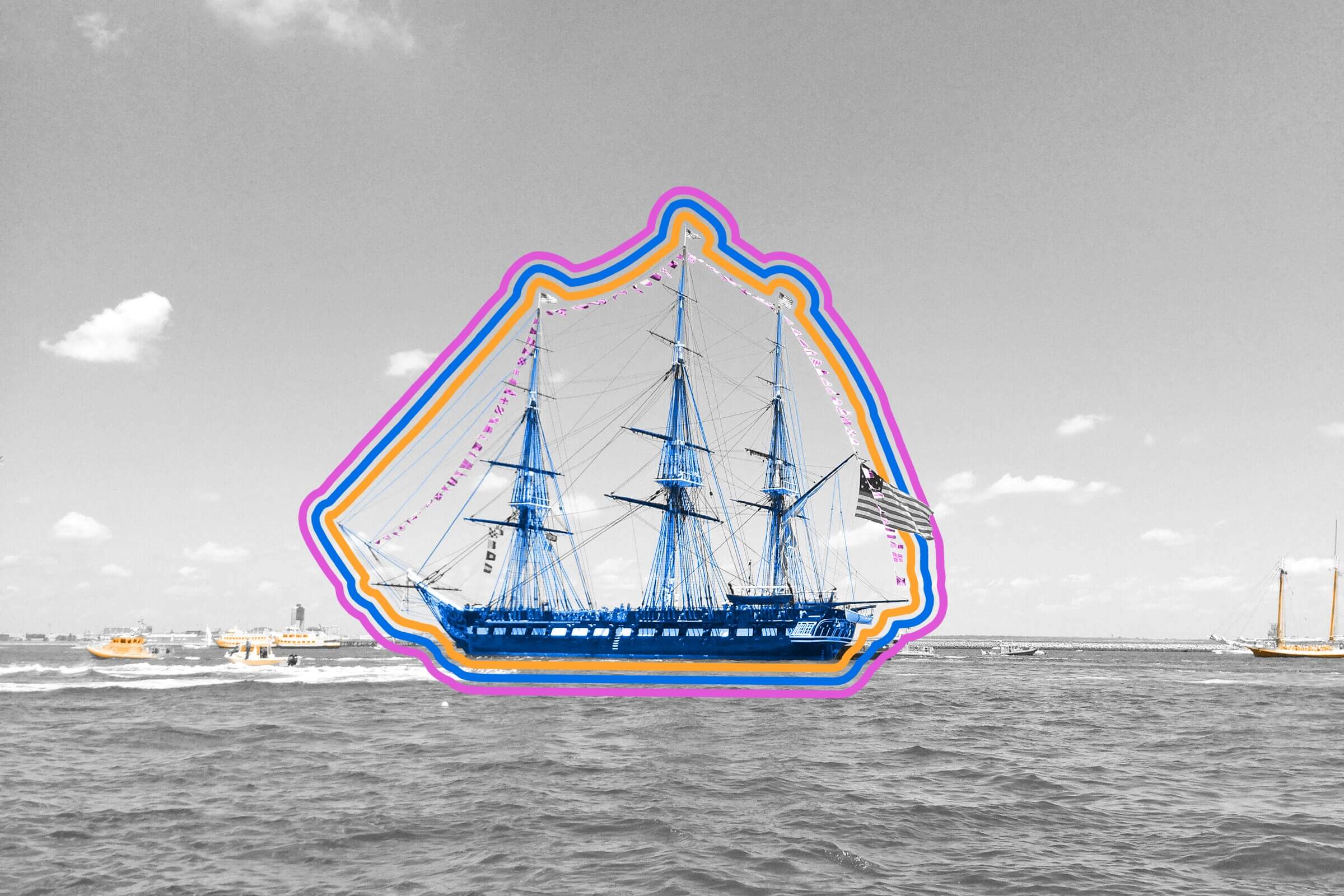
Following congressional passage of an "Act to provide a Naval Armament" in March 1794, shipbuilder Joshua Humphreys set about designing six frigates that would form the backbone of the United States Navy fleet. Of those six, the USS Constitution has defied the odds to remain in service, making "America's Ship of State" the world’s oldest commissioned warship still afloat.

Paul Revere helped build the USS Constitution.

Ready to reveal?

Oops, incorrect!

It's a fact

The famed midnight rider provided the Constitution's copper and brass fittings from his Boston foundry in the 1790s, and was later tapped to replace the ship's copper sheathing during an 1803 refitting.

Launched from Boston Harbor on October 21, 1797, the Constitution was soon deployed to the Caribbean to engage privateers during the Quasi War with France. A few years later, the 44-gun frigate was instrumental in a military campaign against the state-supported Barbary Pirates of North Africa, resulting in an 1805 treaty with Tripoli. But the Constitution truly proved its worth with an impressive showing against the mighty British navy in the War of 1812. One overwhelming victory over the HMS Guerriere, which seemed unable to dent the American frigate with its cannon fire, gave the ship its nickname: "Old Ironsides." A few months later, the Constitution took down the HMS Java despite having its wheel blown off in battle, requiring crew members to manually move the tiller for steering. These heroic stands were still in the minds of the American public as the Constitution was reported to be nearing the end of its service life in 1830, resulting in a national campaign to keep the beloved warship in active duty.

After patrolling the African coast for slave vessels during the 1850s, Old Ironsides was primarily used as a training ship before being decommissioned in 1881. A grand centennial celebration in 1897 underscored its status as a national icon, and in 1931, the historic ship was recommissioned for Navy service. Now docked at the Charlestown Navy Yard in its city of birth, the USS Constitution is temporarily grounded as it undergoes repairs to its masts, yet remains a venerable component of the powerful naval force it helped usher into existence more than 200 years ago.

Numbers Don't Lie

Numbers Don't Lie

Displacement (in tons) produced by the USS Constitution
2,200
Cost (in dollars) to build the USS Constitution (about $7.3 million today)
302,718
Ships in the U.S. Navy’s battle force, as of July 2023
299
Launch year of the U.K.’s now-dry-docked HMS Victory
1765

The tribute poem "Old Ironsides" was composed by American writer (and doctor) ______.

Ready to reveal?

Confirm your email to play the next question?

The tribute poem "Old Ironsides" was composed by American writer (and doctor) Oliver Wendell Holmes Sr.

Placeholder Image

The first papal visit to U.S. soil took place aboard the USS Constitution.

While the Constitution was stationed off the coast of Naples in the summer of 1849, Captain John Gwinn informed his squadron commander, Commodore Charles W. Morgan, of a special request to host a visit from Pope Pius IX and King Ferdinand II of the Two Sicilies. Absolutely not, was the reply — with the Papal States then enmeshed in political turbulence, Commodore Morgan had no intention of disrupting a professed stance of neutrality. However, after a U.S. ambassador received another personal request from Ferdinand, Captain Gwinn took the Constitution to the port of Gaeta to receive the pontiff and king on August 2. Along with visiting every part of the ship over the course of three hours, Pope Pius delivered benediction to the Catholic crew members and managed to overcome the temporary crisis of being seasick. Commodore Morgan wrote a letter of disapproval to the Navy Department, but Capitan Gwinn died of gastritis the month after the papal visit, and never suffered any earthly consequences from it.

Tim Ott
Writer

Tim Ott has written for sites including Biography.com, History.com, and MLB.com, and is known to delude himself into thinking he can craft a marketable screenplay.

Original photo by Pigprox/ Shutterstock

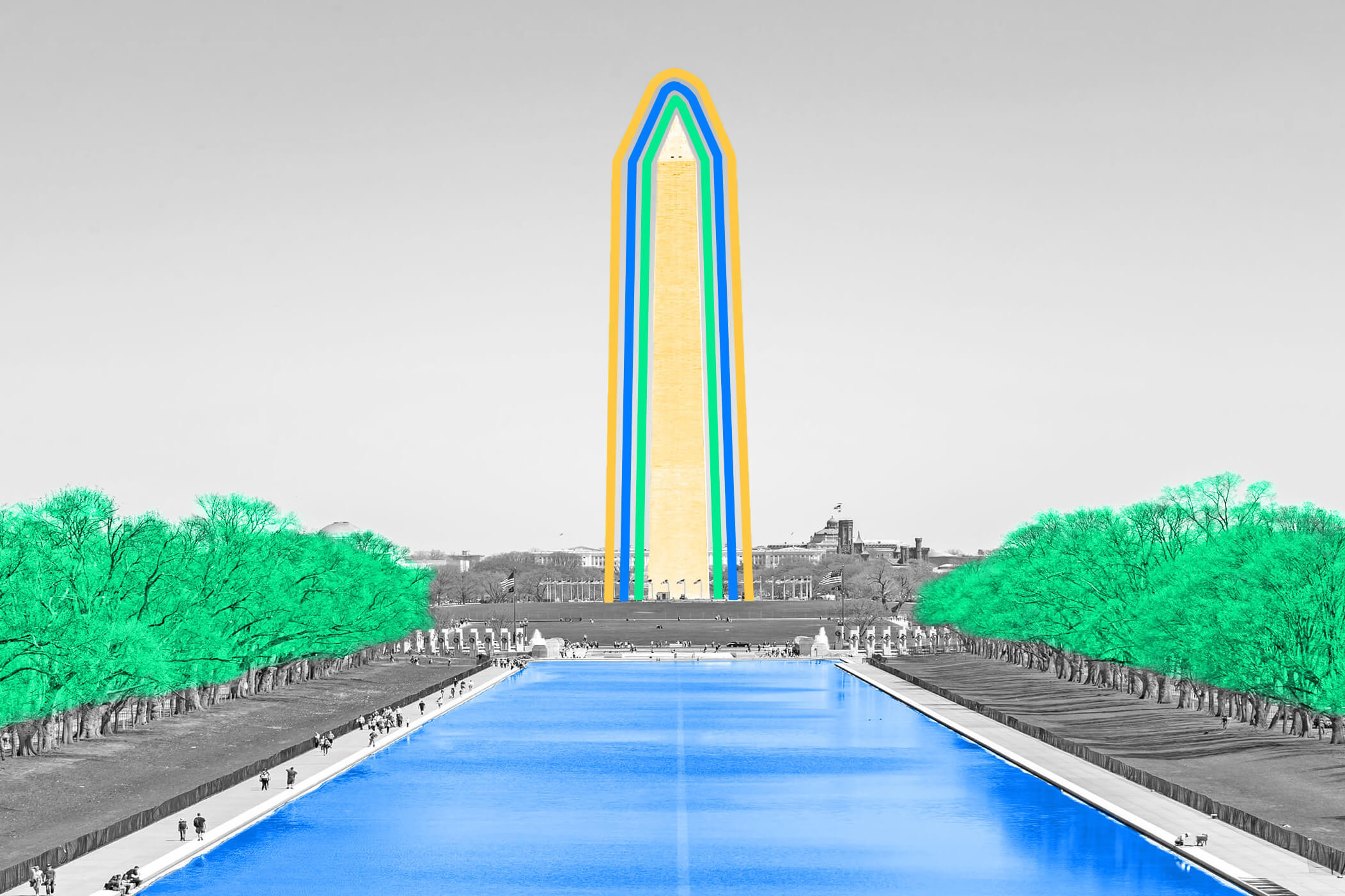
Hidden directly in front of the Washington Monument, encased in brick and tucked under a manhole cover, is another Washington Monument — only in miniature. But this 12-foot-tall replica isn’t in the business of paying homage to one of America’s Founding Fathers. Instead, its purpose is much more down-to-earth; specifically, measuring the Earth. This hidden monolith is actually a geodetic control point, one of some 1.5 million such markers across the country that are used as part of NOAA's National Geodetic Survey (NGS). These points give mapmakers, engineers, surveyors, and project managers a body of fixed and reliable data points across the U.S. to determine location and elevation. 

The Washington Monument is based on ancient Greek monoliths.

Ready to reveal?

Oops, incorrect!

It's a fib

In the early 1800s, America was in the grips of “Egyptomania,” inspired in part by Napoleon’s Egyptian campaign at the turn of the 19th century. That’s part of why designers of the Washington Monument chose ancient Egyptian obelisks as their architectural muse.

Because this particular point was so close to the Washington Monument when the marker was built in the 1880s, its creators decided to borrow the monument’s likeness. Usually, geodetic control points are little more than metal poles encased in concrete, topped off with a bronze disc saying what kind of mark it is (an azimuth mark, bench mark, gravity mark, etc.). Some markers may also commemorate important moments — one marker on the University of Utah’s campus both honors the 2002 Winter Olympic Games and serves as a control point — and Walt Disney World even has its own network of geodetic markers throughout its parks. Although most people don’t know it’s there, the Washington Monument marker has been used in every NGS survey ever conducted since the early 1900s, and was recently used to remeasure the surrounding area after the 2011 Virginia earthquake. Despite being mostly obsolete in the era of GPS, these markers now help surveyors place GPS-receiver antennas and provide an analog method of checking the accuracy of these systems.

Numbers Don't Lie

Numbers Don't Lie

Height (in feet) of the Washington Monument
555
Years it took to finish the Washington Monument, from dedication to completion
40
Estimated number of manholes in the U.S.
20 million
Number of marble and granite blocks that make up the Washington Monument
36,000

The Washington Monument was the world’s tallest structure before the ______ was finished in 1889.

Ready to reveal?

Confirm your email to play the next question?

The Washington Monument was the world’s tallest structure before the Eiffel Tower was finished in 1889.

Placeholder Image

The myth of Washington chopping down a cherry tree was a lie to sell books.

The story goes that George Washington’s father, Augustine, gave young Washington a hatchet for his sixth birthday. After discovering a destroyed cherry tree, Augustine questioned his son about whether he had committed the heinous act of planticide. Washington fessed up, saying, “I cannot not tell a lie.” Although the tale has a powerful moral about the value of telling the truth, there’s one problem — it probably never actually happened. As the leader of the Continental Army and the nation’s first president, Washington loomed large in the lives of early Americans, and it was a shock when he died unexpectedly at age 67 (possibly from a throat infection) in December 1799. Within a month, Mason Locke Weems — a minister-turned-bookseller — had pitched a biography of the late leader filled with intimate details and morality lessons, and “show[ing] that his unparalleled rise and elevation were due to his Great Virtues.” Published in 1800, The Life of Washington was an instant bestseller. It wasn’t until its fifth printing, in 1806, that the myth of George Washington and the cherry tree emerged. Weems said the story came from an anonymous family friend of Washington’s — not exactly a credible source. Historians agree that the tale is most likely pure fiction, even if it instilled an honorable idea in a fledgling nation.

Darren Orf
Writer

Darren Orf lives in Portland, has a cat, and writes about all things science and climate. You can find his previous work at Popular Mechanics, Inverse, Gizmodo, and Paste, among others.

Original photo by GarySandyWales/ iStock

Humans are members of the great ape family Hominidae, and the physical similarities between us and our primate cousins are clear. We have the same arrangement of internal organs and roughly the same number of bones, we lack external tails, and we even get the same diseases. So it only makes sense that we share some psychological similarities as well. A 2012 study published in the Proceedings of the National Academy of Sciences reported that chimpanzees and orangutans experienced a midlife crisis similar to that of humans.

Humans and apes have the same blood type.

Ready to reveal?

Oops, incorrect!

It's a fact

Like humans, other great apes have A, B, AB, and/or O type blood, all thanks to common ancestors who lived nearly 20 million years ago. However, humans can’t donate blood to chimps (or vice versa) any time soon, as subtle blood differences make such an idea a dangerous one.

The study analyzed the behavior of 508 chimps and orangutans in captivity at zoos in five different countries, and found that these animals’ well-being hits its nadir around their mid-20s or early 30s (the equivalent of middle age for chimps and orangutans). Of course, scientists couldn’t directly ask the chimpanzees how they felt, but instead relied on zookeeper questionnaires to assess the animals’ overall mood, level of joy in social situations, and how successful they were in achieving particular goals. Although the dataset is subjective, its sheer size highlights an overall trend that’s remarkably human, since we also tend to experience a dip in happiness and well-being around midlife. It’s just another trait that entwines us with our primate brethren. 

Numbers Don't Lie

Numbers Don't Lie

Estimated number of mountain gorillas that exist in the wild
1,063
Average weight (in pounds) of the gibbon, the world’s smallest ape
20
Year primatologist Jane Goodall first traveled to Tanzania to study chimps
1960
Year in which the original 1968 “Planet of the Apes” film is set
3978

The lead actress in the 1933 film “King Kong” was ______.

Ready to reveal?

Confirm your email to play the next question?

The lead actress in the 1933 film “King Kong” was Fay Wray.

Placeholder Image

One of humanity’s closest living relatives is matriarchal.

Chimpanzees (Pan troglodytes) and bonobos (Pan paniscus) are the closest living relatives to humans — they both share 98.8% of our DNA. Despite these similarities, these two members of the Pan genus developed entirely different social structures. While chimps form dominant (and often violent) male hierarchies, bonobos — which are only found in the central forest of the Democratic Republic of the Congo — are matriarchal. This is particularly striking because female bonobos leave their birthplace before puberty, and so often form strong female bonds with no familial ties whatsoever. Why do female bonobos form such bonds when their chimpanzee cousins do not? One theory suggests that the plentiful resources found in central DRC — compared to the drier climates of equatorial Africa where chimps live — allowed female bonobos to feel less competition when foraging, creating room for stronger bonds.

Darren Orf
Writer

Darren Orf lives in Portland, has a cat, and writes about all things science and climate. You can find his previous work at Popular Mechanics, Inverse, Gizmodo, and Paste, among others.

Original photo by spn/ iStock

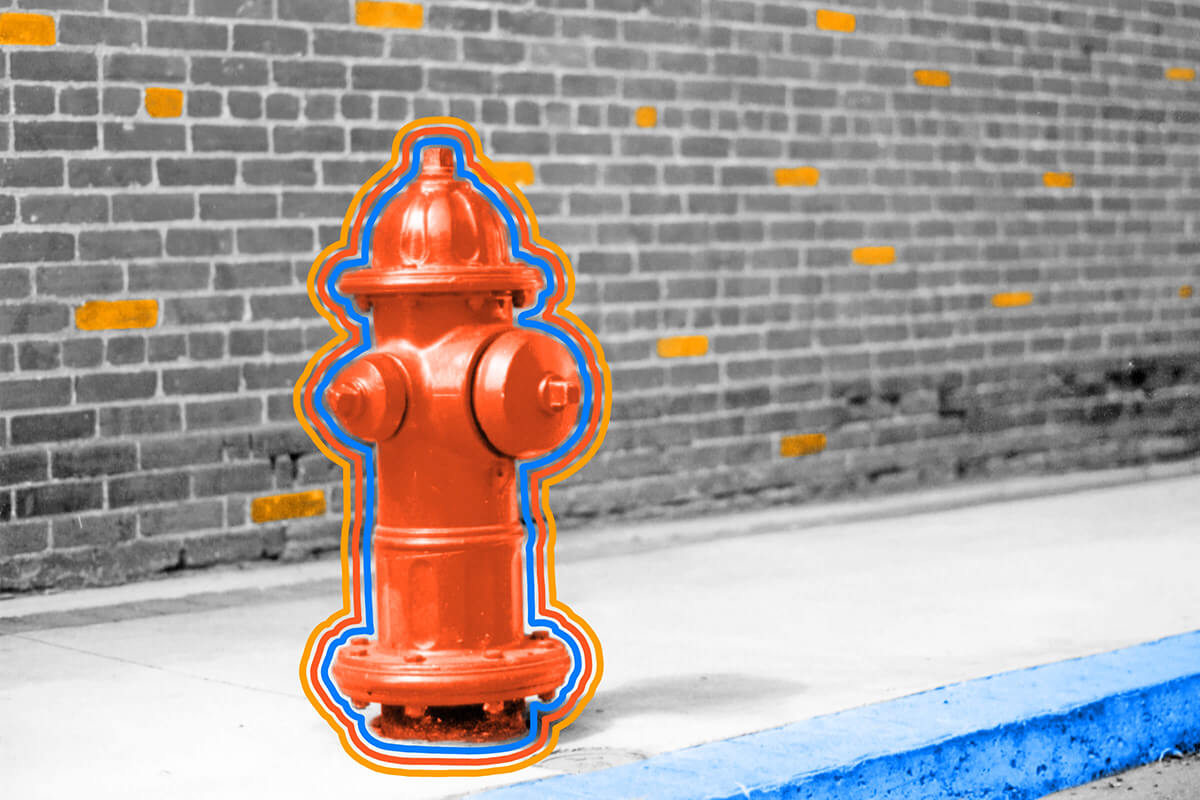
For early Americans, fire was a feared necessity; it warmed homes, provided hot meals, and offered late-night reading light. But fire could also destroy entire communities, which was probably the inspiration behind the invention of the fire hydrant — though we may never really know the full story, thanks to a fire in 1836.

At the time, Americans had been eagerly filing patents for nearly five decades thanks to the Patent Act of 1790, recommended to Congress by President George Washington himself. By the 1830s, the Patent Office housed nearly 10,000 patents — an impressive but risky collection considering they were all original documents with no copies.

Fire hydrants are painted bright colors so they’re easy to find.

Ready to reveal?

Oops, incorrect!

It's a fib

While bright hues don’t hurt visibility, fire hydrants are color-coded based on how much water they produce per minute. Red hydrants produce the slowest flow at 500 gallons per minute, compared to blue hydrants, which top out at 1,500 gallons. (Orange and green spigots fall in between.)

On December 15, 1836, a fire in the basement of Blodgett’s Hotel (which then housed the Patent Office, U.S. Post Office, and a branch of the local fire department) smoldered from the embers of ashes that had been stored alongside firewood in a wooden box. Firefighters stationed in the building responded to the growing blaze, but couldn’t do much with the department’s dilapidated hoses. The former hotel — and every document inside — was gone in under 20 minutes. Assigned the impossible task of reconstructing its records, the Patent Office put out a call to inventors to mail in any documentation they had of their awarded patents, but only around 2,800 patents were restored. Those that couldn’t be reproduced were voided. In the years since, some scholars have pointed to Frederick Graff Sr., an early 19th-century Philadelphia engineer, as the possible inventor of the fire hydrant. However, another innovator by the name of Birdsill Holly Jr. was awarded a patent in 1869 for his “modern” fire hydrant, which was soon adopted in cities around the U.S. and Europe. Today, the United States Patent and Trademark Office takes up five buildings in Alexandria, Virginia, and many patents are applied for and stored digitally — making them much less likely, thankfully, to be destroyed by fire.

Numbers Don't Lie

Numbers Don't Lie

Year the first U.S. patent was issued — for potash, a fertilizer ingredient
1790
Cost of submitting a patent application in 1790 (compared to $320 in 2022)
$4-5
Congress’ original budget for the Patent Office’s post-fire patent restoration project
$100,000
Estimated number of models destroyed in 1877 in a second patent office fire
87,000

______ is the only U.S. president to be awarded a patent.

Ready to reveal?

Confirm your email to play the next question?

Abraham Lincoln is the only U.S. president to be awarded a patent.

Placeholder Image

The 1890 census was also lost in a fire.

Family historians know the frustrating difficulty of tracing ancestors through time, only to lose track of them between 1880 and 1900 thanks to two fires that destroyed nearly all of the 1890 census. Counting nearly 63 million people, that census was the first of its kind; while census-takers had been performing the population count every decade since 1790, the 1890 count was the first to use an electrical tabulation system with data punched into cards. And unlike with prior censuses, the only records were forwarded on to Washington, D.C., despite the former protocol of leaving some copies with local county clerks. Six years after the count’s close, a fire destroyed some of the data in March 1896, though the general population schedules — the personal information that most genealogists sift through today — remained intact. But a second fire at the U.S. Commerce Building in January 1921 dramatically changed that picture; while some of the census documents were initially considered salvageable, water and mold damage soon rendered most illegible. By the mid-1930s, the government destroyed the remaining documents despite public outcry — a controversy that would set in motion the creation of the National Archives.

Nicole Garner Meeker
Writer

Nicole Garner Meeker is a writer and editor based in St. Louis. Her history, nature, and food stories have also appeared at Mental Floss and Better Report.

Original photo by oscargutzo/ Shutterstock

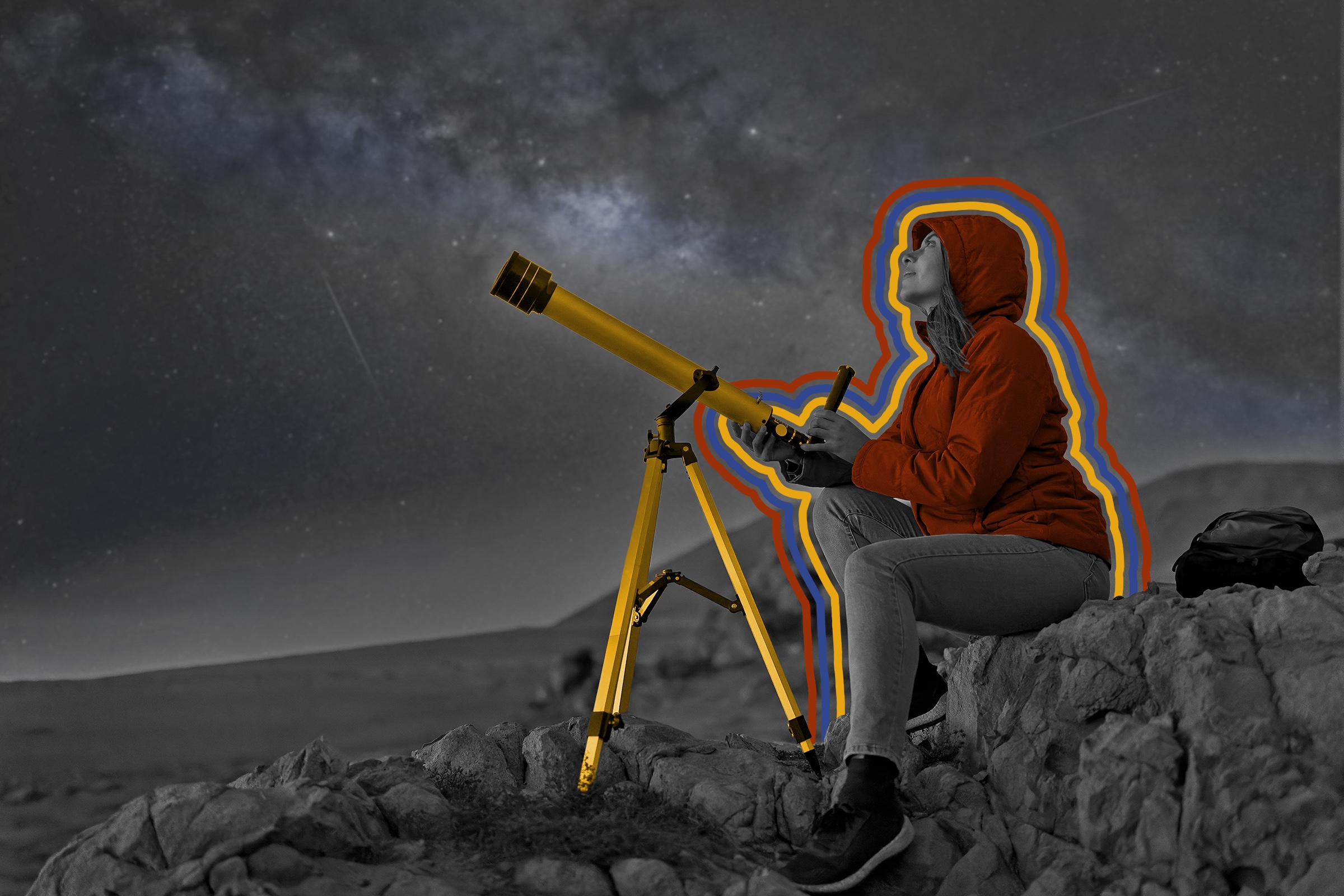
Stargazers who live in major cities know all about light pollution, but this lack of complete darkness goes beyond geography. It turns out the sky is never totally black no matter where you live, even at night. We can mostly chalk this up to the luminous effects of moonlight and starlight, as well as to our atmosphere, which, in addition to making the planet’s air breathable, scatters all the light that passes through it. (This is what makes the sky appear blue during the day, as the atmosphere scatters blue light more than other colors.)

Water is intrinsically blue.

Ready to reveal?

Oops, incorrect!

It's a fact

Though it appears clear and colorless in small amounts, water naturally has a slight blue color caused by the absorption of light at red wavelengths.

In highly populated areas, the effect of light pollution is known as skyglow, and it’s what gives the night sky its milky, sometimes yellowish complexion. But even if you find yourself in an extremely remote location, the sky would be closer to a navy blue than black. As previously mentioned, this is partially because of the moon, but it’s also because the atmosphere itself emits a faint light of its own (in addition to the light it scatters), known as both airglow and nightglow. Depending on where you are, that glow could be any combination of red, green, purple, and/or yellow. If you’d like to see a completely black sky, you’d have to go to the moon, which has no atmosphere and thus nothing to scatter or emit light.

Numbers Don't Lie

Numbers Don't Lie

Hex color code for black
#000000
Portion of the world that lives in light-polluted areas
83%
Americans who can see the Milky Way at night
20%
Stars you can see on a clear night in a remote location
~2,000

The city with the most light pollution is ______.

Ready to reveal?

Confirm your email to play the next question?

The city with the most light pollution is St. Petersburg, Russia.

Placeholder Image

The darkest shade of black absorbs 99.995% of light.

For several years, the “blackest black” was something called Vantablack — a super-black coating whose name comes from the vertically aligned nanotube arrays that helped create it. Pictures of it look genuinely unreal, as though a portion of the image has been cropped out and replaced with a blank background. Vantablack’s reign came to an end in 2019, when MIT engineers announced they’d created a shade 10 times blacker. It absorbs 99.995% of all light and looks even more like a void than its predecessor. Made from vertically aligned carbon nanotubes (CNTs), the material could have practical applications beyond aesthetics, such as reducing glare in telescopes and other optical instruments, which could help them detect planets beyond our solar system.

Michael Nordine
Staff Writer

Michael Nordine is a writer and editor living in Denver. A native Angeleno, he has two cats and wishes he had more.

Original photo by Iana Miroshnichenko/ iStock

The Gerber baby food company has long operated under the slogan “Babies are our business… our only business.” But for a brief period in 1974, that promise wasn’t exactly true. That year, the company unveiled Gerber Singles, a line of glass jars containing ready-to-eat meals that were advertised to young adults and college students. This new product was part of a larger effort by Gerber to expand its customer base in response to a 25% drop in the U.S. birth rate from 1960 to 1972, which heavily impacted the baby food market.

The Gerber baby was modeled after a young Humphrey Bogart.

Ready to reveal?

Oops, incorrect!

It's a fib

The Gerber baby illustration by artist Dorothy Hope Smith began appearing in ads in the 1920s. Rumors claimed Smith designed the baby after a number of celebs, including a young Humphrey Bogart. In reality, the logo was modeled after Smith’s neighbor, a young girl named Ann Turner Cook.

With the tagline “We were good for you then, we’re good for you now,” Gerber Singles were essentially advertised as whole meals for single people on the go or those who chose not to cook. Flavors included Beef Burgundy, Mediterranean Vegetables, and Blueberry Delight, and all you needed to do was heat up the jar and eat it right out of the container. However, Gerber Singles proved deeply unpopular, as the idea of eating pureed food out of a glass jar failed to catch on. People were also turned off by depressing ad campaigns that promoted Gerber Singles as food for “whenever you eat alone.” The product rollout was a flop, and the jars were pulled from shelves after just three months.

Numbers Don't Lie

Numbers Don't Lie

Year Gerber became the first baby food company to advertise on TV
1951
Price Nestlé paid to acquire Gerber in 2007
$5.5 billion
Original Gerber flavors (strained peas, prunes, carrots, spinach, beef vegetable soup)
5
Cost of a jar of Gerber baby food in 1928 (~$2.75 today)
15¢

The Gerber company is based in the state of ______.

Ready to reveal?

Confirm your email to play the next question?

The Gerber company is based in the state of Michigan.

Placeholder Image

"Cosmopolitan" magazine produced a failed line of yogurt.

Cosmopolitan magazine has long focused on healthy eating and diet culture, but its own foray into the retail food space left something to be desired. In 1999, Cosmo unveiled a short-lived line of low-fat yogurts and soft cheeses, which were discontinued after just 18 months. The product failed to catch on with a larger audience, as Cosmo chose not to advertise to the general public. Instead, it marketed the yogurt exclusively to readers of the magazine, which limited the potential customer base. The yogurt was also more expensive than its competitors, so despite offering tasty flavors such as cherry and peach, it failed to fly off the shelves.

Bennett Kleinman
Staff Writer

Bennett Kleinman is a New York City-based staff writer for Inbox Studio, and previously contributed to television programs such as "Late Show With David Letterman" and "Impractical Jokers." Bennett is also a devoted New York Yankees and New Jersey Devils fan, and thinks plain seltzer is the best drink ever invented.

Original photo by Supamotion/ Shutterstock

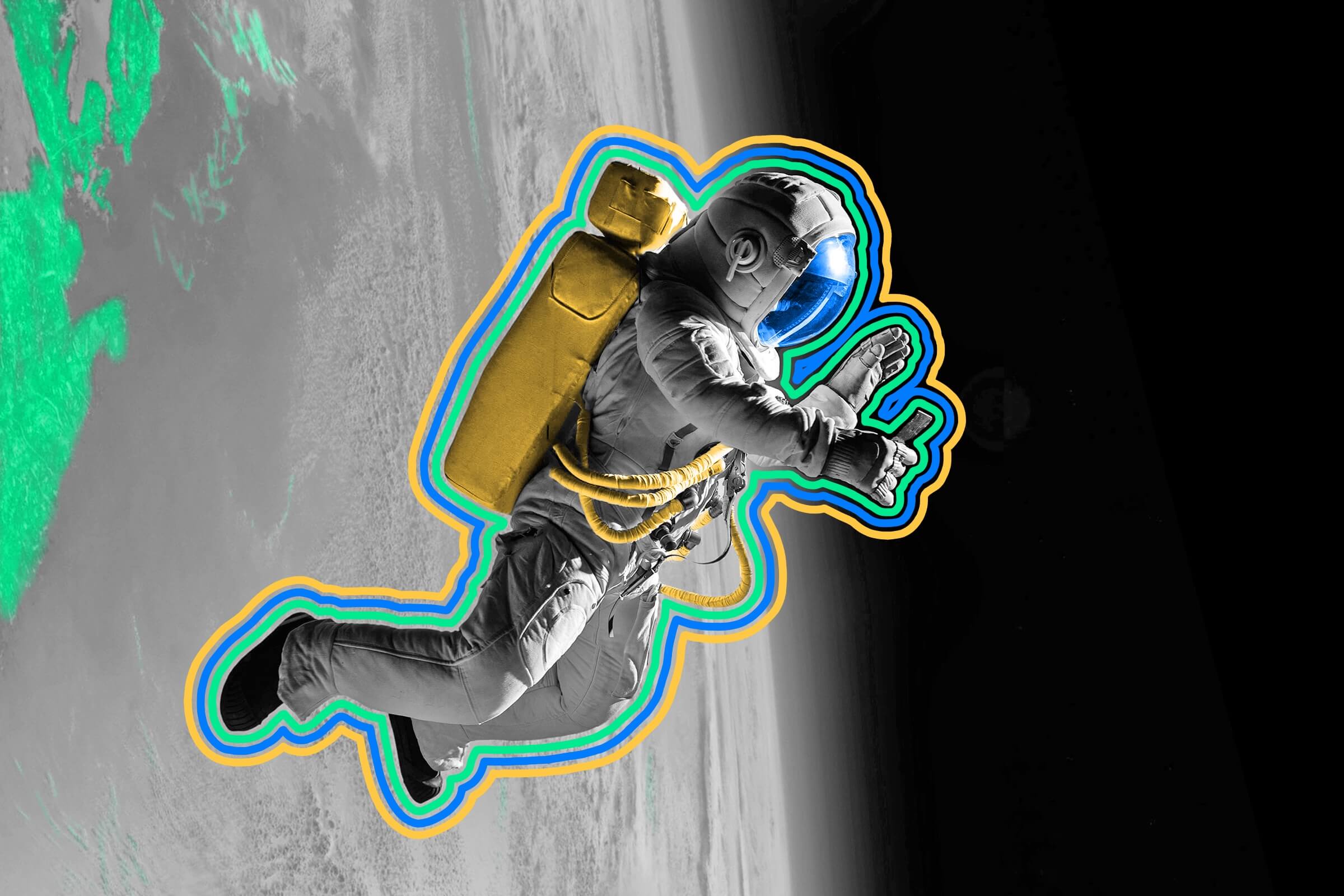
As human space exploration has evolved, trips offworld have grown longer and longer. In 1961, Yuri Gagarin spent less than two hours in orbit; today, it’s common for astronauts to stay in space for six months to a year. Because astronauts are spending larger portions of their lives hundreds of miles above us, the voting process has had to adapt. A pivotal moment occurred in September 1996, when NASA astronaut John Blaha went to the Russian space station Mir for a 118-day stay and completely missed voting in the 1996 presidential election. In response, Texas state Senator Mike Jackson proposed legislation to allow astronauts to vote in space. (Notably, many astronauts live in Texas because they train at the Johnson Space Center in Houston.) In 1997, NASA astronaut David Wolf, who was also aboard the Mir, became the first astronaut to successfully vote in space. Wolf told The Atlantic in 2016 that he was particularly moved by the experience, saying that voting “mak[es] a person feel like part of a civilization somewhere.”

World War II was the first time absentee voting occurred on a large scale.

Ready to reveal?

Oops, incorrect!

It's a fib

Historical evidence of absentee voting in the U.S. dates back to the 17th century, when some landowners could vote in absentia under certain circumstances. But the nation’s first large-scale absentee voting happened during the Civil War, for members of the military.

Although the idea of voting from a tin can some 254 miles above the planet may sound complex, the actual process is relatively straightforward. The county clerk from the astronaut’s home state (usually Texas) sends an electronic ballot to NASA; at the same time, an encrypted electronic ballot is sent to the orbiting astronaut via NASA’s Space Network, which manages all data and communication from the ISS to ground crews. The astronaut fills out the ballot (even putting “low-Earth orbit” on the address line) and sends it back using NASA’s Tracking and Data Relay Satellite to a ground antenna in New Mexico. NASA sends the ballot to Johnson Space Center, and then on to the appropriate county clerk. Throughout, only the clerk and the astronaut have access to the encrypted ballot to preserve its security. This entire process unfolded during the 2020 election, when NASA astronaut Kate Rubins submitted her ballot, calling it “an honor to be able to vote from space.”

Numbers Don't Lie

Numbers Don't Lie

Record-setting number of days Russian cosmonaut Valeri Polyakov spent continuously on the Mir space station
437
Record number of people who voted in a 2019 national election in India, known as the world’s largest democracy
614 million
Approximate speed (in mph) the International Space Station travels to stay in Earth’s orbit
17,500
Year the International Space Station will be decommissioned and crash into the Pacific Ocean
2031

In the 1980s, President Ronald Reagan announced plans for a proposed space station called ______.

Ready to reveal?

Confirm your email to play the next question?

In the 1980s, President Ronald Reagan announced plans for a proposed space station called Freedom.

Placeholder Image

An Apollo 13 astronaut forgot to pay his taxes while he was in space.

On April 11, 1970, Apollo 13 astronauts Jim Lovell, Fred Haise, and Jack Swigert lifted off from Cape Canaveral, Florida, headed toward the moon. Swigert, originally on the backup team for the Apollo 13 mission, joined the main roster as the command module pilot after another astronaut was exposed to German measles. However, some 24 hours into the launch, Swigert had a stunning realization. He then asked his fellow crewmates, “Uh oh; have you guys completed your income tax?” Because Apollo 13 wasn’t scheduled to splash down until April 17, Swigert would miss the Internal Revenue Service’s usual mid-April deadline. Although Mission Control (as well as his fellow astronauts) got in a few chuckles at Swigert’s expense, NASA did get Swigert an extension. That’s good news, because the mission’s jovial atmosphere turned deadly serious when, almost 56 hours after takeoff, an oxygen tank explosion doomed the mission’s lunar landing and put the astronauts’ lives in danger. Thankfully, due to the heroic efforts of Mission Control and the crew, Apollo 13 splashed down in the Pacific and all three astronauts survived the harrowing experience. Swigert, now a national hero, dutifully filed his income taxes penalty-free.

Darren Orf
Writer

Darren Orf lives in Portland, has a cat, and writes about all things science and climate. You can find his previous work at Popular Mechanics, Inverse, Gizmodo, and Paste, among others.

Original photo by jo Crebbin/ Shutterstock

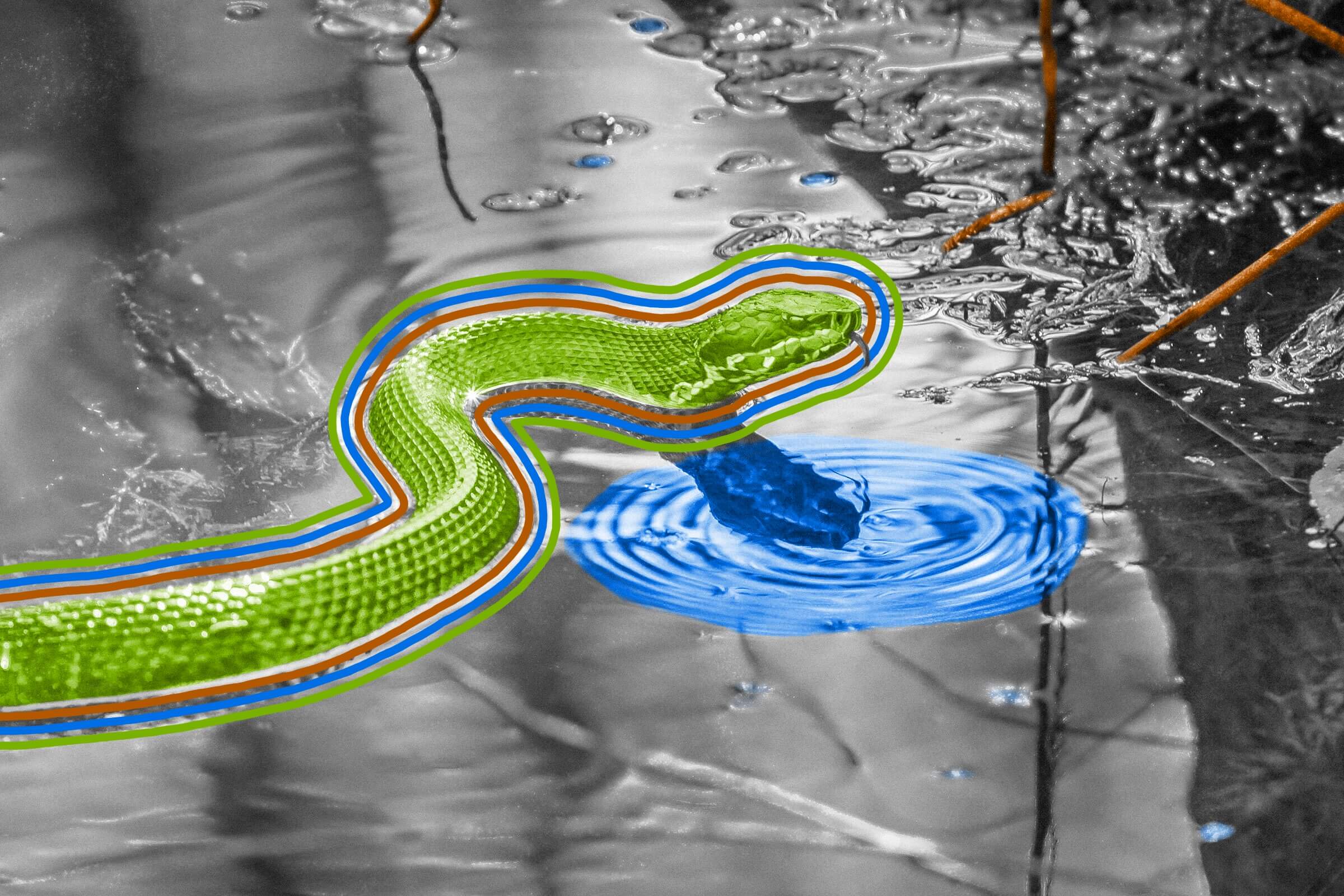
Snakes are often pictured curled around a tree in a dense jungle or hiding in a desert waiting to strike some unsuspecting prey. But they’re just as capable in the water as they are on land — in fact, all species of snakes can swim. In North America, a famous example is the cottonmouth (Agkistrodon piscivorus), named for the white color on its mouth that goes on full display when the creature is angry. This snake, native to the southeastern U.S., also goes by the name “water moccasin” because of its predilection for estuaries, bays, and rivers. 

All snakes lay eggs.

Ready to reveal?

Oops, incorrect!

It's a fib

Only about 70% of snakes are oviparous, meaning they lay eggs to produce young. The other 30% give birth, known as ovoviviparity, to snakes encased in an amniotic sac. This is especially true for snakes in cold climates, where eggs wouldn’t survive.

But even going a step beyond the familiar cottonmouth, some 60 species of marine snakes derived from the cobra family call the ocean their home, and monstrously large snakes such as anacondas also spend most of their life in the water. Even snakes that generally have no business in water, such as the desert-loving rattlesnake, can swim in a pinch. Members of the suborder Serpentes (to which all snakes belong) are such good swimmers because their elongated bodies can easily propel them through the water, and some have even evolved tails that look like paddles. But don’t worry, ophidiophobes: It’s not like the Earth’s waters are teeming with snakes. Snakes can’t live in areas that are too cold, and many spots — Alaska, New Zealand, and Ireland, to name a few — are entirely free of them. 

Numbers Don't Lie

Numbers Don't Lie

Average length (in inches) of the Barbados threadsnake, the world’s smallest snake
4.1
Number of snake species as of August 2023, of which 70 or so live in the ocean
4,056
Number of venomous snake species worldwide
600
Number of Americans (out of 10) who fear snakes, the highest number for any phobia
3

The country with the most snake species in the world is ______, followed closely by Brazil.

Ready to reveal?

Confirm your email to play the next question?

The country with the most snake species in the world is Mexico, followed closely by Brazil.

Placeholder Image

A small Brazilian island is so jam-packed with serpents, it’s called “Snake Island.”

Located 21 miles off the coast of the Brazilian state of São Paulo is Ilha da Queimada Grande, better known by its nickname, “Snake Island.” Although the island is only 106 acres, it’s absolutely swarming with snakes — specifically, the very venomous golden lancehead (Bothrops insularis). This particular snake is up to five times more venomous than other lancehead species, and its bite is known to “melt” flesh around the impact site. In fact, this golden-hued serpent is so dangerous that the Brazilian government forbids travel to the island except for the occasional scientific excursion. Migratory birds who use the island as a resting spot help sustain this large snake colony, and conservative estimates place the snake population of the place at around 2,000 to 4,000.

Darren Orf
Writer

Darren Orf lives in Portland, has a cat, and writes about all things science and climate. You can find his previous work at Popular Mechanics, Inverse, Gizmodo, and Paste, among others.