
Original photo by Panther Media GmbH/ Alamy Stock Photo

By the end of the 1970s, Hollywood screenwriter Robert Towne had reached the pinnacle of his profession by way of his celebrated work on classics such as Chinatown and Shampoo. Set to make his directing debut with the sports drama Personal Best, he was also heavily invested in a film adaptation of Edgar Rice Burroughs' Tarzan books, which he intended to direct.

Rin Tin Tin garnered the most votes for Best Actor at the first Academy Awards.

Ready to reveal?

Oops, incorrect!

It's a fib

Although legend has it that the winning votes for the prolific German shepherd actor were overturned by organizers who wanted the 1929 ceremony to be treated seriously, further research has shown that consideration for Rin Tin Tin came from a studio executive’s joke ballot.

Of course, it's a dog-eat-dog world in the high-stakes business of moviemaking, and after a 1980 Screen Actors Guild strike halted production of Personal Best, Towne sought out independent financing in a deal that ultimately forced him to relinquish his rights to the Tarzan property. And when Personal Best flopped at the box office in 1982, Warner Bros. handed Tarzan to director Hugh Hudson, who subsequently brought in writer Michael Austin to revise Towne's sprawling, unfinished script.

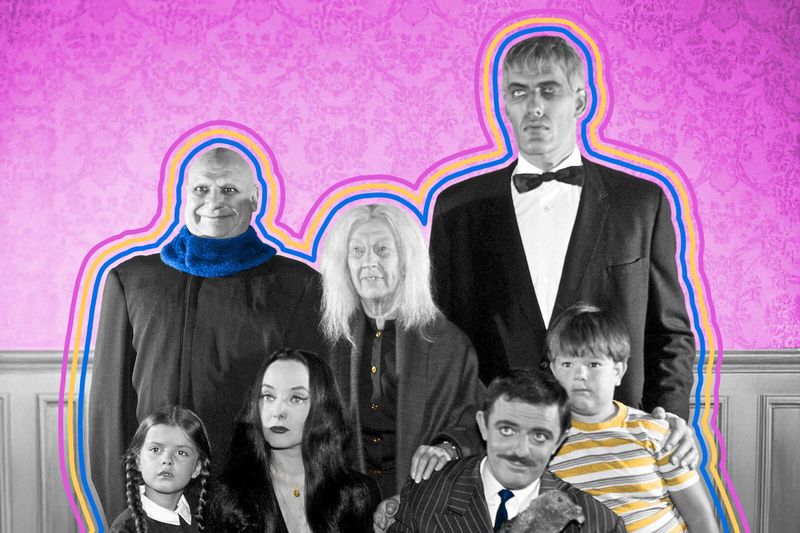
Unhappy with the wholesale changes to his story, Towne took a page from the disgruntled directors who disown their films under the pseudonym of Alan Smithee and insisted on being credited as "P.H. Vazak" — the name of his Hungarian sheepdog — for his contributions to the script. Lo and behold, the completed Greystoke: The Legend of Tarzan, Lord of the Apes garnered a Best Adapted Screenplay Oscar nomination in 1985 for the duo of Michael Austin and P.H. Vazak. The awards ceremony seemed ripe for comedy, but ultimately human Peter Shaffer received the trophy for Amadeus.

Numbers Don't Lie

Numbers Don't Lie

Dollars grossed by “Greystoke” at the box office
45,858,563
Number of films starring Johnny Weissmuller as Tarzan
12
Number of dogs allowed per household in L.A. County
4
Puppies used for the 1996 live-action remake of “101 Dalmatians”
300

The voice of Andie MacDowell, who played Jane in “Greystoke,” was overdubbed by actress ______.

Ready to reveal?

Confirm your email to play the next question?

The voice of Andie MacDowell, who played Jane in “Greystoke,” was overdubbed by actress Glenn Close.

Placeholder Image

Animal actors once had an annual ceremony called the PATSY Awards.

While our favorite screen animals are normally excluded from Oscar recognition, they once enjoyed their own annual awards ceremony, complete with Hollywood pageantry and celebrity. Conceived by the American Humane Association, the Picture Animal Top Star of the Year (PATSY) Awards debuted in 1951 with Ronald Reagan as emcee and Jimmy Stewart on hand to award the night’s biggest prize to Francis the Talking Mule. The Performing Animal Television Star of the Year division was added in 1958, providing a stage for stalwarts like Lassie and Mister Ed to receive their due, and by 1973, the awards were being broadcast nationally. Sadly, the PATSYs were canceled after the 1987 ceremony.

Tim Ott
Writer

Tim Ott has written for sites including Biography.com, History.com, and MLB.com, and is known to delude himself into thinking he can craft a marketable screenplay.

Original photo by h heyerlein/ Unsplash

Bioluminescence, the strange biology that causes certain creatures to glow, is usually found at the darkest depths of the ocean where the sun’s light doesn’t reach. While these light-emitting animals seem otherworldly, the trait is actually pretty common — in fact, you’re probably glowing right now. 

The largest known bioluminescent creature is the anglerfish.

Ready to reveal?

Oops, incorrect!

It's a fib

While the anglerfish is perhaps the creepiest bioluminescent animal, the “largest” accolade belongs to the Dana octopus squid, with the biggest measuring some 7.5 feet long and weighing 130 pounds. Scientists think the squid uses its lights to blind prey in the dark ocean depths.

According to researchers at Tohoku Institute of Technology in Japan, humans have their own bioluminescence, but at levels 1,000 times less than our eyes can detect. This subtle human light show, viewable thanks to ultra-sensitive cameras, is tied to our metabolism. Free radicals produced as part of our cell respiration interact with lipids and proteins in our bodies, and if they come in contact with a fluorescent chemical compound known as fluorophores, they can produce photons of light. This glow is mostly concentrated around our cheeks, forehead, and neck, and most common during the early afternoon hours, when our metabolism is at its busiest. At such a low level, human bioluminescence likely isn’t an intentional product of evolution as it is for deep-sea fish, fireflies, and many other animals. And most other bioluminescent creatures rely on a compound called luciferin (Latin for “light bringer”) — which humans lack — for their light show. Fortunately, we have unique ways of making light that are all our own.

Numbers Don't Lie

Numbers Don't Lie

Rotten Tomatoes score for the Netflix comedy-drama “GLOW,” about the Gorgeous Ladies of Wrestling
92%
Length (in feet) of the bioluminescent giant siphonophore
150
Year Raphaël Dubois demonstrated the first luciferin reaction
1885
Ticket price for the 1971 Grateful Dead show in New Haven, Connecticut, the first concert with glow sticks
$5–$7

In antiquity, ______ was the name given to Venus as the morning star at dawn.

Ready to reveal?

Confirm your email to play the next question?

In antiquity, Lucifer was the name given to Venus as the morning star at dawn.

Placeholder Image

The man who discovered the glowing element phosphorus was trying to make gold using human urine.

German merchant Hennig Brand was a dedicated believer in alchemy, a pseudoscience that thought certain elements could be transmuted into gold using what was called a philosopher’s stone. In 1669, Brand focused his attention on turning distilled crystals from human urine into the precious stone. After stockpiling 1,200 fermented gallons of the stuff, he began boiling it. The astonishing result was a white, waxy residue that glowed in the dark, which Brand called phosphorus (Greek for “light bringer,” the equivalent of “lucifer”), and which more fearful folk called the “Devil’s Element.” Brand’s moment of discovery was immortalized in Joseph Wright of Derby’s painting “The Alchymist.” The discovery sparked a new era of chemistry and was one of the first new elements discovered by modern science. Brand never found his philosopher’s stone, but phosphorus wasn’t a bad consolation prize.

Darren Orf
Writer

Darren Orf lives in Portland, has a cat, and writes about all things science and climate. You can find his previous work at Popular Mechanics, Inverse, Gizmodo, and Paste, among others.

Original photo by Jeremy Yap/ Unsplash

Even if you’ve never heard of Alan Smithee, there’s a chance you’ve seen one of his movies. Well, kind of. For decades, directors followed guidance from the Directors Guild of America by using the pseudonym when they didn’t want their actual name on a film. That most often occurred when the finished product was far removed from the director’s original vision due to studio interference or other issues. Most films carrying this dubious distinction aren’t well known — you probably haven’t heard of The Barking Dog, Let’s Get Harry, or Ghost Fever — but there are exceptions, including a Hellraiser sequel and one segment of a Twilight Zone episode.

The Coen Brothers have used a pseudonym on several movies.

Ready to reveal?

Oops, incorrect!

It's a fact

Joel and Ethan Coen have been writing, directing, producing, and editing movies together for decades, but they haven’t always used their real names. In order to avoid repetition, they’ve given editing credit to the pseudonym Roderick Jaynes, who has received multiple Oscar nominations.

Perhaps the most revered and well-known filmmaker to be credited as Alan Smithee is David Lynch, who disowned his ill-fated 1984 adaptation of Dune due to studio meddling; he has since insisted on having final cut on all his projects in order to avoid a repeat of that experience. (Lynch has called the film a “huge, gigantic sadness,” and though his name appears on the theatrical version, Alan Smithee is credited on subsequent editions.) Sometimes the reason for the pseudonym was less dramatic, as when movies such as Michael Mann’s Heat or Martin Brest’s Scent of a Woman were edited for television or airlines and the director didn’t agree with the changes in those versions. Smithee officially retired in 2000 following a decision by the Directors Guild of America, though nonmembers have continued to use the name on occasion.

Numbers Don't Lie

Numbers Don't Lie

First year Alan Smithee was used as a pseudonym
1969
Budget of Lynch’s “Dune,” which it failed to recoup at the box office
$40 million
Directing credits for Smithee on IMDb
157
Rotten Tomatoes score for “An Alan Smithee Film: Burn Hollywood Burn”
8%

The first movie credited to Alan Smithee was “______.”

Ready to reveal?

Confirm your email to play the next question?

The first movie credited to Alan Smithee was “Death of a Gunfighter.”

Placeholder Image

A made-up screenwriter was nominated for an Oscar.

When Charlie Kaufman set out to write Adaptation (2002), his follow-up to the mind-bending Being John Malkovich, he “honestly did not think [the] movie would ever see the light of day.” But the beguiling metafictional drama about writing, orchids, and twin brothers did indeed get made — albeit with a little help from Kaufman’s fictional twin Donald, who appears as a character in the film (played by Nicolas Cage) and also received a co-screenwriting credit. “Their” script went on to receive an Academy Award nomination for Best Adapted Screenplay, making Donald the first fictional screenwriter to be so honored. Kaufman later won the Oscar for Best Original Screenplay in 2004 for Eternal Sunshine of the Spotless Mind, a feat he achieved without the aid of his cinematic, and entirely made-up, sibling.

Michael Nordine
Staff Writer

Michael Nordine is a writer and editor living in Denver. A native Angeleno, he has two cats and wishes he had more.

Original photo by The Len/ Shutterstock

The end of the dinosaurs is often pictured as an apocalyptic event complete with a giant asteroid, a cataclysmic collision, and general fire and brimstone-type stuff, but the ends of biological epochs are rarely so cut-and-dried. In fact, the story of the dinosaurs didn’t even end on that unfortunate spring day 65 million years ago, because dinosaurs still live among us — we just call them birds. 

Chickens are the most abundant wild birds in the world.

Ready to reveal?

Oops, incorrect!

It's a fib

Chickens are the most abundant domesticated birds, but the most plentiful wild bird is the red-billed quelea (Quelea quelea). This sparrow-like bird, native to sub-Saharan Africa, flies in synchronized hordes, and has an estimated world population of 1.5 billion.

Today, scientists consider all birds a type of dinosaur, descendants of creatures who survived the mass extinction event at the end of the Cretaceous. And yes, that even includes the chicken. In 2008, scientists performed a molecular analysis of a shred of 68 million-year-old Tyrannosaurus rex protein, and compared it to a variety of proteins belonging to many different animals. Although proteins from alligators were relatively close, the best match by far belonged to ostriches — the largest flightless birds on Earth — and the humble chicken. 

Today’s chicken is a descendant of a still-extant tropical bird known as the red junglefowl, and a member of an order of birds known as Galliformes (gallus means “rooster” in Latin). Following the initial 2008 study, further research has proved that a chicken’s genetic lineage closely resembles that of its avian dinosaur ancestors. Scientists have even concluded that a reconstruction of T. rex’s chromosomes would likely produce something similar to a chicken, duck, or ostrich. So the next time you eat a chicken for dinner, you might pause to consider its connection to some of the most fearsome beasts to ever stalk the planet.

Numbers Don't Lie

Numbers Don't Lie

Length (in feet) of a T. rex’s forearms
3
Number of chickens alive in the U.S. at any given time
1.522 billion
Estimated max number of generations of T. rex that lived on Earth, 68 million to 65 million years ago
188,000
Year the chicken became the first bird to have its entire genome sequenced
2004

The ______, the most dangerous bird in the world, is known as a “living dinosaur.”

Ready to reveal?

Confirm your email to play the next question?

The cassowary, the most dangerous bird in the world, is known as a “living dinosaur.”

Placeholder Image

The egg came before the chicken.

There’s a well-known riddle that seems to present a biological paradox: What came first, the chicken or the egg? At first glance, the question may seem impossible to answer, but that actually depends on what you mean by “egg.” Sexual reproduction emerged in nature some 2 billion years ago, and the ancestors of birds began laying eggs around 300 million years ago. With the modern chicken only emerging some 10,000 years ago, the egg — if we mean any kind of egg — clearly predates the chicken. When discussing specifically a chicken egg, the answer changes. Although scientists can’t pinpoint the exact moment, at some point ancient landfowl breeders chose two of the tamest red junglefowls (Gallus gallus) and produced an egg with an embryo mutated just enough to be considered a modern chicken (Gallus gallus domesticus). In 2010, researchers found that chicken eggs can’t be produced without a protein found in chicken ovaries called ovocledidin-17 — which suggests that the first chicken had to come before the first chicken egg, which was probably laid when that first chicken reached maturity at around 18 weeks of age.

Darren Orf
Writer

Darren Orf lives in Portland, has a cat, and writes about all things science and climate. You can find his previous work at Popular Mechanics, Inverse, Gizmodo, and Paste, among others.

Original photo by Faizal Ramli/ Shutterstock

Rules are meant to be broken, except when they’re not. To wit: There’s a rule for the order of adjectives in English that almost everybody follows without realizing it. It’s called order force, and it goes as follows: opinion, size, age, shape, color, origin, material, purpose. If that sounds hard to wrap your head around, think of a pet. You would refer to your beloved tabby who’s been getting on in years as “my old orange cat” rather than “my orange old cat,” which sounds strange and somehow wrong even if you’re not sure why. Order force is why, just as it’s the reason My Big Fat Greek Wedding wasn’t called My Greek Fat Big Wedding — the latter conveys the same information, but seeing it in that order just doesn’t feel right.

English came from England.

Ready to reveal?

Oops, incorrect!

It's a fib

The language was actually brought to Britain in the fifth century by three Germanic tribes (the Angles, Saxons, and Jutes) from what’s now Germany and Denmark. It’s thought that Britons at the time spoke a Celtic language, whereas the invaders spoke a forerunner to Old English.

According to Mark Forsyth’s book The Elements of Eloquence: How To Turn the Perfect English Phrase, the stakes are higher than you might think: “If you mess with that order in the slightest you’ll sound like a maniac,” he writes. Forsyth might be exaggerating for effect, but it’s still true that mixing up the order of adjectives in his example — “a lovely little old rectangular green French silver whittling knife” — into, say, “a rectangular old French little green lovely silver whittling knife” makes the description almost incoherent. Fortunate, then, that we all abide by order force whether we mean to or not.

Numbers Don't Lie

Numbers Don't Lie

Percentage of words in the Concise OED that include the letter “e,” the most of any letter
11.16%
Words in current use with full entries in the Oxford English Dictionary
171,476
English speakers in the world
1.5 billion
English dialects in the United States
24

The most common consonant in English is “______.”

Ready to reveal?

Confirm your email to play the next question?

The most common consonant in English is “r.”

Placeholder Image

“Ough” can be pronounced 10 different ways.

If you’ve ever wondered why English is considered a fairly difficult language to learn for non-native speakers, consider “ough.” Depending on the context, it can be pronounced at least 10 different ways — and it isn’t always readily apparent which is correct. Those 10 different ways are off (as in cough), uff (as in tough), ow (as in plough), oh (as in though), uh (as in the British pronunciation of thorough), oo (as in through), up (as in hiccough, the British spelling of hiccup), aw (as in thought), ock (as in hough, a primarily Scottish way of spelling hock), and och (as in lough, another way of spelling loch). Here’s a sentence that uses nine of them: “A rough-coated, dough-faced, thoughtful ploughman strode through the streets of Scarborough; after falling into a slough, he coughed and hiccoughed.” Try saying that five times fast.

Michael Nordine
Staff Writer

Michael Nordine is a writer and editor living in Denver. A native Angeleno, he has two cats and wishes he had more.

Original photo by PeskyMonkey/ Shutterstock

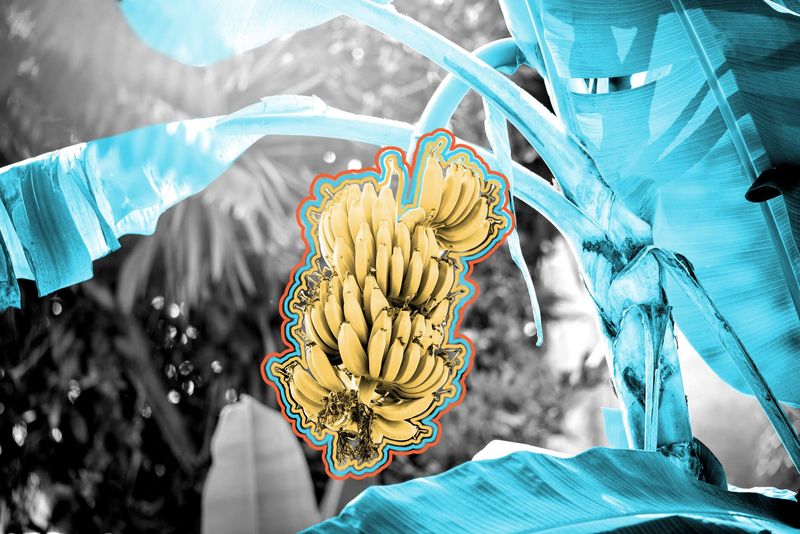
You’d be hard-pressed to find a film set in New York City that doesn’t feature a canary-hued taxi cab in the background. But contrary to popular belief, taxis haven’t always been bright yellow. In fact, when businessman Harry Allen imported the first gas-powered taxis to New York City from France in 1907, the cabs appeared in shades of red and green

New York City’s first motorized taxis were electric vehicles.

Ready to reveal?

Oops, incorrect!

It's a fact

The Electric Carriage and Wagon Company was NYC’s first taxi service, ferrying passengers in battery-operated cars as early as 1897.

Allen’s cabs were the first in the Big Apple to feature toll calculators, aka taximeters, a feature he sought out when getting into the industry, thanks to his experience being price-gouged on a short trip through Manhattan. In an expensive act of revenge, Allen’s whirlwind dive into the taxi business included hiring uniformed cab drivers to haul around customers in brand-new cars; within a year, the businessman had expanded from a mere 65 cabs to 700. Allen wouldn’t hold a cab monopoly though; his employees soon demanded higher wages and began to strike over unfair business practices. Competing cab companies cropped up, and to stand out, they began painting their cars in easy-to-spot colors: yellow, orange, green, or with black-and-white checkered trim.

New York City’s taxi industry was plagued with issues for decades thanks to the Great Depression, legal and labor disputes, and an increase in traffic accidents. To combat those problems, the city enacted a medallion system in 1937 under the Haas Act, a law that limited the number of available taxis and cut down on street gridlock. But it was about 30 years later that the city added on a new regulation that would give cabs their iconic hue — by 1970, licensed cabs in New York had to be painted yellow, specifically Dupont M6284. The reasoning? The bright color could help passengers pick out permitted cabs, which all charge the same fair rate, from unlicensed taxis, which weren’t allowed to be painted yellow.

Numbers Don't Lie

Numbers Don't Lie

Number of yellow taxis in New York City, a maximum set by law
13,587
Year inventor Wilhelm Bruhn invented the taximeter to calculate fares
1891
Distance (in miles) of the world’s longest taxi ride, through 50 countries, from 2011 to 2012
43,319
Year actor Robert De Niro played a cab driver in the crime drama “Taxi Driver”
1976

The word “cab” is shortened from ______, a two-wheeled horse-drawn carriage.

Ready to reveal?

Confirm your email to play the next question?

The word “cab” is shortened from cabriolet, a two-wheeled horse-drawn carriage.

Placeholder Image

School buses are considered one of the safest vehicles, in part because of their color.

Before the 1940s, catching a ride to school looked different depending on where a student lived; it was common to be picked up by bus, truck, or even horse-drawn wagon. In an effort to make school transportation safer, educators from across the country met in 1939, hoping their ideas could also standardize school bus designs and thereby save money. That’s where education expert Frank Cyr, the so-called “Father of the Yellow School Bus,” unveiled the shade we know today: color 13432, aka National School Bus Glossy Yellow. Cyr’s research found that the orange-yellow color was incredibly visible to other travelers, and paint experts agree the hue stands out far better than any shade (even red) in our peripheral vision, making it harder to miss. That’s in part why school buses — which are heavily regulated to include additional features like swing-arm stop signs — are considered 70 times safer for schoolchildren than riding in cars.

Nicole Garner Meeker
Writer

Nicole Garner Meeker is a writer and editor based in St. Louis. Her history, nature, and food stories have also appeared at Mental Floss and Better Report.

Original photo by Tetiana Yablokova/ Shutterstock

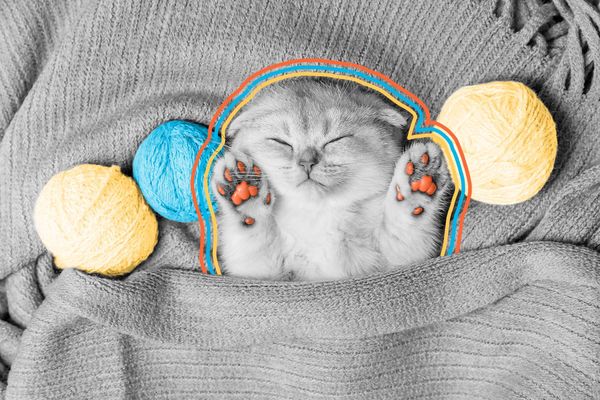
Humans tend to adore cats despite some of their more difficult tendencies, which include sprawling across laptops and books, delivering (unwanted) gifts of mice, and begging for a food refill before their bowl is even empty. Not to mention keeping their pet parents up all night with loud yowls and frenzied midnight runs. But who can blame a house cat for the mischief they get up to in the wee hours? After all, cats sleep around 15 hours per day, so it makes sense that their bedtime routines don’t align with ours. However, cats don’t bank all those hours of rest at once. While sleep habits can vary by breed, domesticated cats generally take frequent catnaps lasting 15 to 30 minutes each, followed by bursts of activity, and then occasional periods of deeper rest.

Humans spend about one-third of our lives asleep.

Ready to reveal?

Oops, incorrect!

It's a fact

For humans, sleep is just as vital to survival as food and water, allowing our bodies to rest, heal, and retain information. It’s why we doze so frequently and for so long. Banking seven to eight hours each night adds up quickly; about one-third of our lifespan is spent snoozing.

Feline researchers believe cats’ unique sleeping patterns evolved from their need to store energy between hunts. Prowling for and pouncing on prey is a major energy drain, and resting after hunting and eating allows cats to prepare for their next pursuit. However, cats have developed different styles of sleeping to still be aware of the world around them during their daytime naps. Catnapping felines remain partially awake, can still move their ears and tails, and even keep their eyes partially open to detect danger. When they do doze more deeply, cats experience REM sleep just like humans — one reason scientists believe they dream like us, too.

Numbers Don't Lie

Numbers Don't Lie

Estimated time (in hours) humans spend dreaming each night
2
Average hours per day a growing kitten spends sleeping (about 90% of their kittenhood)
20
Estimated percentage of people who snore nightly
25%
Percentage of a cat’s day spent grooming themselves
30%-50%

Cats are ______ animals, meaning they’re most active at dawn and dusk.

Ready to reveal?

Confirm your email to play the next question?

Cats are crepuscular animals, meaning they’re most active at dawn and dusk.

Placeholder Image

Koalas sleep the most of any animal.

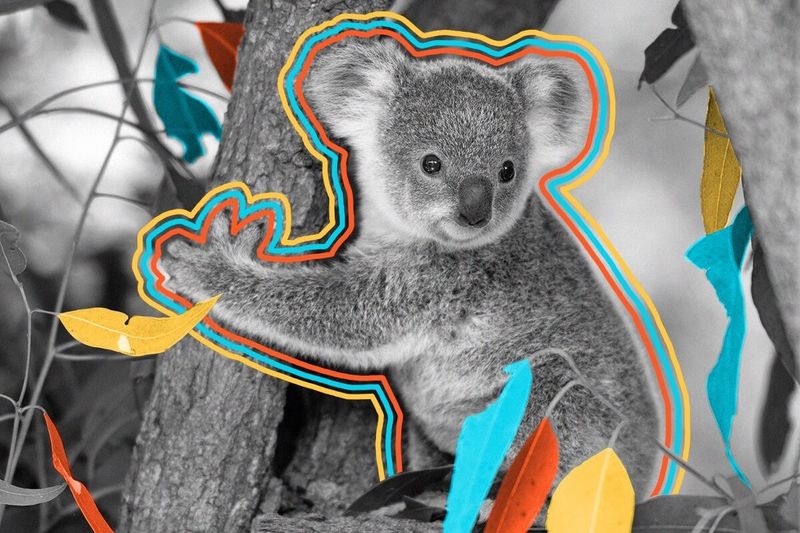
Cats may spend most of their days lounging around, but another mammal holds the record for sleepiest animal: koalas. These pouched tree-dwellers snooze between 20 and 22 hours per day, waking at night to feast primarily on eucalyptus leaves. While toxic to other animals, eucalyptus is the koala’s primary food source, and it’s tough to digest; the leaves are especially fibrous and are light in nutrients. That means koalas require extra rest just to power the digestion process. However, active koalas can use that banked energy to really move around; when spooked, the marsupials can run at speeds up to 18 miles per hour.

Nicole Garner Meeker
Writer

Nicole Garner Meeker is a writer and editor based in St. Louis. Her history, nature, and food stories have also appeared at Mental Floss and Better Report.

Original photo by RiverNorthPhotography/ iStock

Canada is famously known as the Great White North, but most of its citizens live in the country’s southerly regions — which are more southerly than you might think. In fact, 90% of Canadians live within 100 miles of the U.S.-Canadian border, and around 60% of all Canadians live south of Seattle, Washington. All in all, 27 states in the U.S. are totally or partially north of Canada’s most southern point, at Middle Island in Lake Erie in Ontario. Areas above that highest point even include a small sliver of California, which may seem counterintuitive considering the state contains one of the hottest places on Earth (Death Valley). Utah and Nevada also contain land north of Canada’s most southern point. 

Canada has the longest coastline in the world.

Ready to reveal?

Oops, incorrect!

It's a fact

Canada isn’t always known for its sandy, oceanside destinations, but it’s actually home to the world’s longest coastline, at 125,567 miles long. The second-place finisher is Indonesia, at 61,567 miles long.

Why do so many Canadians cling to these southern regions? In large part, agriculture. According to Canadian historian William Lewis Morton, commercial agriculture in these warmer climates formed a network of towns, which then developed into modern cities following the Industrial Revolution. These numbers could change as the world continues to warm, and Canada’s colder regions prepare for an influx of climate refugees. In 50 to 100 years, Canada likely won’t resemble the Great White North anymore.

Numbers Don't Lie

Numbers Don't Lie

Year a California grizzly was last seen near Yosemite
1924
Degrees Celsius the average temperature increased in Canada from 1948 to 2022
1.9
Size (in acres) of Middle Island, Canada’s southernmost point
46
Distance (in miles) from Canada to France’s islands of St. Pierre and Miquelon
16

The coldest city in the world is ______ with a recorded low of -83.9 degrees Fahrenheit.

Ready to reveal?

Confirm your email to play the next question?

The coldest city in the world is Yakutsk, Russia, with a recorded low of -83.9 degrees Fahrenheit.

Placeholder Image

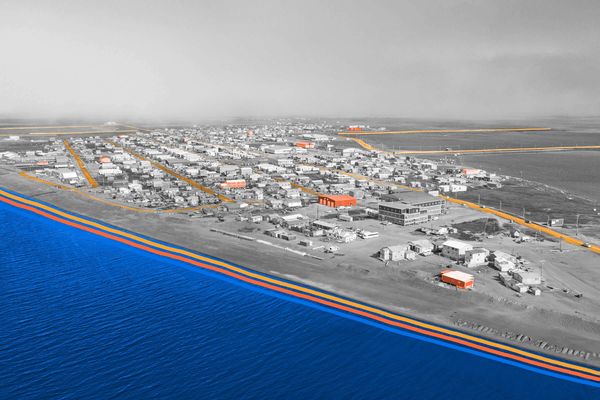
A stretch of Canadian coast has been burning for millennia.

In the far north of Canada’s Northwest Territories — sandwiched between the Yukon in the west and Nunavut in the east — lies a strange geological phenomenon: a strip of coast that’s been constantly burning for thousands of years. Aptly named the “Smoking Hills,” this fuming piece of northern coastline near Cape Bathurst was mentioned in the early 1800s by Irish explorer Captain Robert McClure, whose crew was in search of the missing Franklin expedition. When McClure saw the smoke, he thought maybe it was from campfires belonging to the missing crew, but a closer inspection found no people — just smoke. Some of McClure’s men even grabbed pieces of the burning shale, which, when placed on the captain’s desk for inspection, reportedly burned a hole straight through. At the time, the explorers believed this unending burning was caused by some unseen volcanic activity, but in reality it was something else entirely. Underground oil shales rich in sulfur and brown coal cause spontaneous ignition as the rock erodes and these deposits are exposed to oxygen. The resulting sulfur dioxide has essentially created a micro-ecosystem with incredibly high acidity. Of course, few people ever lay eyes on this strange landscape, since it’s accessible only by boat or helicopter, temperatures are often bone-chillingly cold, and just standing near the site is incredibly toxic to humans. It goes without saying that the Smoking Hills won’t be featured in Canadian tourism ads anytime soon.

Darren Orf
Writer

Darren Orf lives in Portland, has a cat, and writes about all things science and climate. You can find his previous work at Popular Mechanics, Inverse, Gizmodo, and Paste, among others.

Original photo by FreshSplash/ iStock

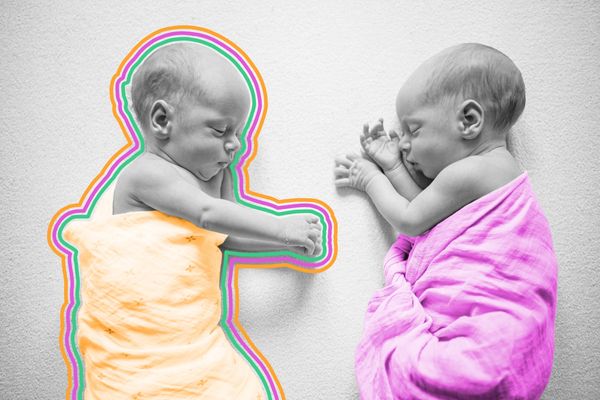
The number of global languages fluctuates each year — as of 2021, linguists recorded 7,151 actively spoken languages. But one dialect that has gone uncounted is the only language we can all decipher without a translator: baby talk. That’s because parental prattle using a softer tone and more rhythmic inflection — also called “parentese” — is believed to exist across nearly every spoken language. Recently, Music Lab researchers, now part of Yale’s Haskins Laboratories, set out to determine if caregivers of all backgrounds alter their speech when talking to babies. They recorded more than 1,600 parent-baby interactions across 18 languages and six continents, including urban, rural, and hunter-gatherer societies. The results showed that adults communicating with infants modified their voices and speech patterns in the same high-pitched, sing-songy way, transcending culture or language. What’s more, over 51,000 adults who listened to the recordings were able to correctly distinguish if the speakers were talking to babies or adults around 70% of the time — even when the listener spoke a different language.

Babies can read lips.

Ready to reveal?

Oops, incorrect!

It's a fact

Babies — entirely oblivious to manners — are notorious gawkers, and for good reason: Watching mouths helps them learn to speak. A 2012 study revealed infants between 6 and 12 months hyperfocus on speakers’ lips instead of eyes, which helps them decode and replicate words.

Parentese once had a reputation as silly, but some scientists believe that baby talk — at least the kind using real words, if delivered in an exaggerated tone — may have evolved as a tool to help babies and parents bond while teaching language skills. High-pitched sounds catch a baby’s attention, and stretched vowel sounds help them process and replicate new words. Using repetitive phrases, which can be annoying to anyone who’s outgrown diapers, is credited with helping babies memorize words and establish an early vocabulary. Recent research into baby talk’s benefits encourages parents to chit-chat with their infants from the start — young brains grow at a staggering speed, up to 55% of their final size in just the first three months after birth.

Numbers Don't Lie

Numbers Don't Lie

Average age (in months) when babies begin to say their first word
12
Estimated number of words in a toddler’s vocabulary by 24 months
50
Languages spoken in Papua New Guinea, the most of any country
840
“Endangered” languages with a declining number of speakers, as of 2021
3,045

More people speak ______ as a first language than any other mother tongue.

Ready to reveal?

Confirm your email to play the next question?

More people speak Mandarin Chinese as a first language than any other mother tongue.

Placeholder Image

Some bat pups babble like human babies.

They’re tiny, love milk, and make adorable babbling sounds — baby bats, they’re just like us! In 2021, chiropterologists (aka bat scientists) studying bats in Central and South America discovered that at least one bat species learns to communicate by making babbling sounds, similar to human babies. Greater sac-swinged bat (Saccopteryx bilineata) pups spend their days nursing, sleeping, and practicing their species’ songs and calls by making repetitive, rhythmic chirps. In 2021, researchers recorded and analyzed more than 55,000 bat sounds and determined the pups worked through 25 distinct syllables that make up the language adult bats use to attract mates and protect their territories. S. bilineata babies were recorded babbling up to 40 minutes at a time, and often during interactions with other bats that encouraged the practice pronunciations. And surprisingly to researchers, all baby bats babbled, even though only adult male sac-winged bats sing. Scientists have yet to identify other bats that produce practice patterns, but with more than 1,400 bat species worldwide, it’s possible we just haven’t heard them yet.

Nicole Garner Meeker
Writer

Nicole Garner Meeker is a writer and editor based in St. Louis. Her history, nature, and food stories have also appeared at Mental Floss and Better Report.

Original photo by Alexander Lukatskiy/ Shutterstock

Although 75% of volcanoes are found in the Ring of Fire — a tectonic belt stretching 25,000 miles from Asia up to Alaska and down South America — every continent on the planet is home to volcanoes, whether they were created through continental rifts (as in the Ring of Fire) or magma hot spots (like Hawaii’s volcanoes). However, no active volcanoes can currently be found on the mainland of the Land Down Under, although it is home to some extinct volcanic specimens. This is because the continent is missing tectonic plate boundaries. It’s at these boundaries — where two tectonic plates meet — that most volcanoes form. Instead, Australia rests squarely on the Australian Plate.

The word “volcano” was inspired by the name of a Roman god.

Ready to reveal?

Oops, incorrect!

It's a fact

In Roman mythology, Mount Etna, a volcano on the east coast of Italy, was the fiery furnace for the god of fire: Vulcan. “Vulcano,” in Italian, means “burning mountain,” and Mount Etna became the first place called by such a name.

Although Australians might feel like they’re missing out, the country technically has two active volcanoes in its outlying external territories, on Heard Island and McDonald Island, located some 2,485 miles southwest of Perth. But with both islands uninhabited — and a two-week boat ride being the only way to get there — few Australians (or anyone else for that matter) will ever lay eyes on the country’s remote volcanic exceptions. 

Numbers Don't Lie

Numbers Don't Lie

Height (in feet) of Mount Kosciuszko, the highest point in mainland Australia
7,310
Diameter (in miles) of Australia’s Tweed Volcano
63
Ratio of the world’s population that lives in the danger zone of active volcanoes
1:20
Estimated percentage of Earth’s landmass created from volcanoes
80%

The most volcanically active country on Earth is ______.

Ready to reveal?

Confirm your email to play the next question?

The most volcanically active country on Earth is Indonesia.

Placeholder Image

Australia was a part of Antarctica only 30 million years ago.

Although both are in the Southern Hemisphere, Australia and Antarctica seem to have nothing in common. Australia is well known for its scorching deserts, which make up nearly 20% of its landmass, and it’s filled with some of the most amazing animal life on Earth. Antarctica, on the other hand, is extremely cold, and it’s home to only one native insect. However, dig into each continent’s geologic past, and you’ll find that they were once part of a larger landmass known as Gondwana. That was true only 30 million years ago — a relative stone’s throw in Earth’s 4.6 billion-year-long existence. In fact, fossil records in the Antarctic even show that it was once home to marsupials.

Darren Orf
Writer

Darren Orf lives in Portland, has a cat, and writes about all things science and climate. You can find his previous work at Popular Mechanics, Inverse, Gizmodo, and Paste, among others.