
Original photo by tristan tan/ Shutterstock

Eating eel is common around the world, especially in Japan, where it’s often found in sushi. But whether it’s freshwater or marine eel, the animal is always served cooked, because toxins found in its blood can cause extreme muscle cramping if consumed by humans. This cramping can affect your body’s most important muscle — the heart — which is why eating raw eel can be fatal. Luckily, when eels are cooked, those deadly toxins break down and the animal becomes safe to consume. This is good news for chefs, since eel provides a rich taste similar to squid but with a softer texture. 

All animals contain some form of blood.

Ready to reveal?

Oops, incorrect!

It's a fib

Although blood is a common trait among most animals, it’s not necessarily a prerequisite. Flatworms, nematodes, sea anemones, and jellyfish don’t have blood, and animals like starfish instead use seawater to transfer vital nutrients throughout their bodies.

Although eel blood is a particularly dangerous fluid, that didn’t stop French physiologist Charles Richet from experimenting with the stuff in the early 1900s. Inspired by fellow countryman Louis Pasteur and his discoveries in immunology, Richet experimented with a toxin found in eel blood serum and discovered the hypersensitivity reaction known as anaphylaxis. “Phylaxis, a word seldom used, stands in the Greek for protection,” Richet said during a lecture after receiving the Nobel Prize for his work in 1913. “Anaphylaxis will thus stand for the opposite.” So while the everyday eel may be a slippery, slimy, and all-around unappealing animal to some, it holds a distinguished position in the annals of both scientific history and culinary delight.

Numbers Don't Lie

Numbers Don't Lie

Size (in centimeters) of Snyder’s moray eel, the smallest eel in the world
11.5
Release year of the animated film “The Little Mermaid,” featuring villainous eels Flotsam and Jetsam
1989
Distance (in miles) of capillaries, veins, and arteries in the human body if laid end-to-end
60,000
Estimated number of eel species
800

American eels are ______, which means they’re freshwater fish that spawn in salt water.

Ready to reveal?

Confirm your email to play the next question?

American eels are catadromous, which means they’re freshwater fish that spawn in salt water.

Placeholder Image

Electric eels inspired the world’s first battery.

From smartphones to electric cars, today’s world is powered by batteries, and it’s all thanks to electric fish and one stubbornly curious Italian chemist. Near the end of the 18th century, Alessandro Volta wanted to see if he could artificially recreate the electric organs found in electric eels (which are technically not eels) and rays. These organs look like stacked cells that closely resemble a roll of coins, and are used to stun potential prey with up to 1,000 volts. Volta tried to mimic this structure by stacking sheets of various materials to see if he could similarly produce electricity. All of his experiments failed, until he stumbled across a winning combination: alternating copper and zinc disks separated by paper soaked in salt water. While Volta originally named the world’s first battery an “artificial electric organ,” he actually discovered a wholly separate mechanism for creating electricity. Instead, fishes like eels use a process similar to how human nerves transmit electricity, but on a much larger scale. Yet because of Volta’s happy electrochemical accident, you can read these words on your favorite battery-powered, eel-inspired device.

Darren Orf
Writer

Darren Orf lives in Portland, has a cat, and writes about all things science and climate. You can find his previous work at Popular Mechanics, Inverse, Gizmodo, and Paste, among others.

Original photo by nicoletaionescu/ iStock

We're all familiar with the feelings that come with watching a fright flick — the sense of dread that engulfs us as a character enters a foreboding place, ominous music building, etc. According to a 2012 study commissioned by the video subscription service Lovefilm, these heart-pounding moments can do more than cause a good old-fashioned scare, however. Of the 10 movies tested, half caused participants to burn at least 133 calories, more than the amount used up by a 140-pound adult on a brisk 30-minute walk.

A large movie theater popcorn has more calories than a large soda.

Ready to reveal?

Oops, incorrect!

It's a fact

A large popcorn, which normally ranges from 17 to 20 cups, can easily top 900 calories even before being soaked in butter. A 44- to 54-ounce large soda, on the other hand, has 400 to 500 calories.

Granted, this limited study was hardly robust enough to earn a write-up in a peer-reviewed journal. Yet the science behind the results is essentially valid, thanks to human hard-wiring that traces to when our primitive ancestors had good reason to fear the monsters lurking in the night. When exposed to a harrowing situation, our sympathetic nervous system triggers the "flight or fight" response, which sends adrenaline into the bloodstream, diverts blood and oxygen to muscles, and kicks heart activity into a higher gear. Add in the outwardly physical reactions often prompted by the scariest scenes, such as jumping back in your seat or instinctively reaching for a companion, and it's easy to see how sitting through The Shining (184 calories) or Jaws (161 calories) delivers results akin to sweating through a workout.

There are other benefits to putting ourselves through this sort of simulated danger, including the release of endorphins and dopamine, which allows us to feel relaxed and fulfilled after "surviving" the events witnessed on screen. Of course, not everyone is a fan of the frightening imagery in The Exorcist (158 calories) or Alien (152 calories), and researchers caution that stress can outweigh the gains for people who are genuinely repulsed by these movies. If health is your goal and the sight of blood makes you queasy, you're better off rising from the couch and getting your legs moving instead of watching someone else flee the clutches of a zombie.

Numbers Don't Lie

Numbers Don't Lie

Calories burned during the study’s airing of “A Nightmare on Elm Street”
118
Weekly minutes of exercise recommended by the U.S. HHS
150
Percentage of respondents who enjoy scary movies, per a 2021 CBS poll
48%
Box-office gross (in dollars) of 2000’s “Scary Movie”
278 million

The part of the brain responsible for controlling the fear response is called the ______.

Ready to reveal?

Confirm your email to play the next question?

The part of the brain responsible for controlling the fear response is called the amygdala.

Placeholder Image

Competitive chess players can burn up to 6,000 calories per day during a tournament.

If scary movies aren’t your cup of tea and you want another creative way to burn calories, then competitive chess may be your ticket. According to Stanford University researcher Robert Sapolsky, a chess player can go through 6,000 calories a day over the course of a tournament, about three times the daily amount expended by the average person. The reasons are largely the same as those previously mentioned — the heightened tension of a high-stakes game forces bodies into a state of energy-consuming overdrive. However, the effects are magnified by the behavior of participants, who often skip meals and endure sleepless nights as they obsess over strategy. As a result, top players have taken to training like professional athletes to prepare for the grueling toll of tournaments. Norway’s Magnus Carlsen, for example, partakes in an array of activities that include running, soccer, skiing, and yoga, a regimen that helped him reign supreme as the undisputed world chess champion from 2013 to 2023.

Tim Ott
Writer

Tim Ott has written for sites including Biography.com, History.com, and MLB.com, and is known to delude himself into thinking he can craft a marketable screenplay.

Original photo by Matteo Omied/ Alamy Stock Photo

In 1943, in a letter to his first wife, Hadley Mowrer, Ernest Hemingway wrote, “One cat just leads to another.” All these years later, the famed writer’s adage rings true, especially at his former estate in the Florida Keys, which is home to about 60 cats. These feline descendants of Hemingway’s original cat colony share a special trait: They’re polydactyl, meaning they have more toes than the average housecat. (According to the museum, about half the cats there display “the physical polydactyl trait but they all carry the polydactyl gene in their DNA.”) Most domesticated felines have 18 toes — five on each front paw and four on each back foot — but polydactyl cats can have as many as eight “toe beans” on each paw.

Key West is home to thousands of street chickens.

Ready to reveal?

Oops, incorrect!

It's a fact

While Key West was called the “Isle of Cats” long before Hemingway’s horde, the city also has a hefty number of roving street chickens. The free-range fowl are both beloved and known for causing trouble, though particularly problematic poultry are relocated out of the city.

Those enlarged feet are considered lucky among sailors, who believe they help boat cats better plant their paws in turbulent waters and catch stowaway rodents. That could partly be why Hemingway, known for his love of sailing, favored polydactyl cats; the first of his colony, named Snow White, was reportedly gifted to him by a sea captain. 

Despite his reputation for machismo, Hemingway had a soft spot for cats. While he was alive, the Florida home where he penned several novels was something of a cat sanctuary, home to as many as 80 cats at once, which were frequently mentioned in his letters to family and friends. More than six decades after Hemingway’s death, his cat clan lives on. Each cat at the author’s residence is born there, given (per tradition) a celebrity name like Lucille Ball, Ginger Rogers, or Alfred Hitchcock, and granted free roam. They’re friendly with the thousands of visitors they meet each year, and may just take after Hemingway’s tough nature — fortunately, the cats safely rode out both Hurricane Irma in 2017 and Hurricane Ian in 2022 with not a hair out of place.

Numbers Don't Lie

Numbers Don't Lie

Record number of toes on Jake, a Canadian polydactyl cat, counted in 2002
28
Year Hemingway published his debut novel, “The Sun Also Rises”
1926
Number of novels written by Hemingway, including two posthumous releases
9
Years Hemingway lived at his Key West home full-time (from 1931 to 1939)
8

Polydactyl cats are also called “______” because of their paw shape.

Ready to reveal?

Confirm your email to play the next question?

Polydactyl cats are also called “mitten cats” because of their paw shape.

Placeholder Image

Author Mark Twain was known for “renting” cats.

Hemingway wasn’t the only writer with an affinity for cats. Mark Twain also was known for preferring the company of felines — and while it was just a fraction of Hemingway’s herd, Twain’s colony included nearly 20 cats at one time. The author’s ingenious wit wasn’t just reserved for his writings; his cat companions received colorful names such as Sour Mash, Soapy Sal, and Blatherskite. Cats were such constant companions for Twain that he couldn’t bear to be without them, going so far as to “rent” cats when his travels took him far from his own. In one such case, Twain spent the summer of 1906 in New Hampshire, where he borrowed three kittens from a nearby farm, naming one Sackcloth and both kittens in an identical pair Ashes. But Twain’s summertime stays weren’t just a feline fling; his cat rental fee included lifetime care for his short-term companions.

Nicole Garner Meeker
Writer

Nicole Garner Meeker is a writer and editor based in St. Louis. Her history, nature, and food stories have also appeared at Mental Floss and Better Report.

Original photo by dpa picture alliance/ Alamy Stock Photo

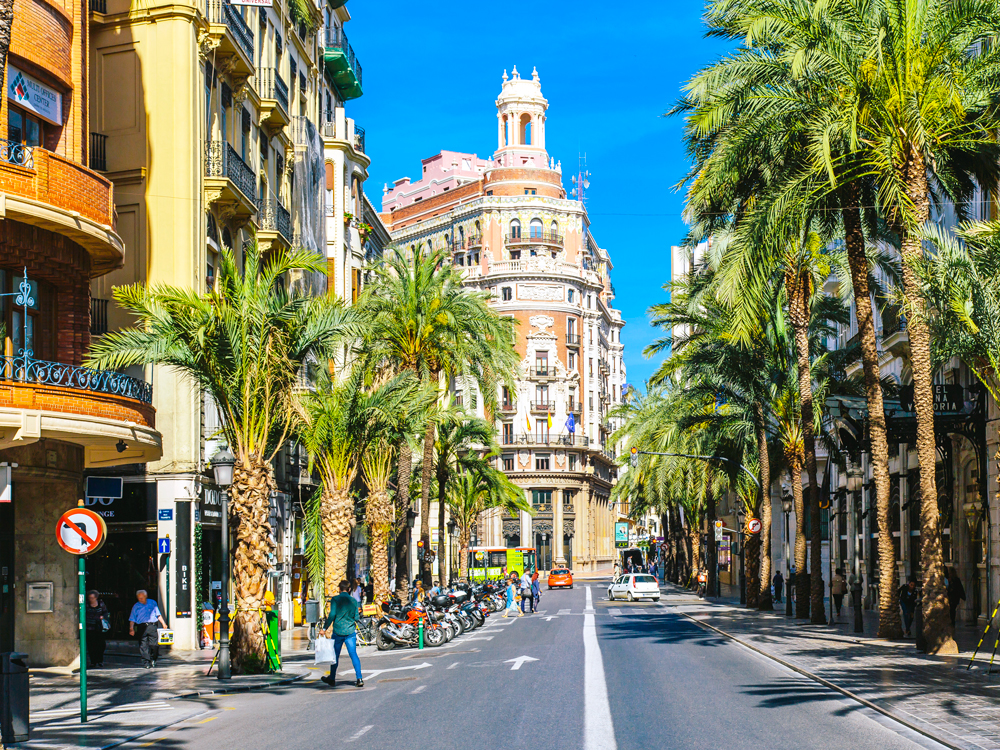
If you suffer from claustrophobia, you might want to avoid the world’s narrowest street. Spreuerhofstrasse — located in Reutlingen, Germany — measures 1 foot, 0.2 inches at its tightest, and a meager 1 foot, 7.68 inches at its widest, at least when last evaluated for Guinness World Records in 2006. The 65-foot-long street is also limited vertically; those over 5 feet, 10 inches have to duck at the exit, and many who pass through are pelted with drips from overhead gutters. Despite those inconveniences, tourists flock to the record-holding passageway. 

“Second Street” is the most common street name in the U.S.

Ready to reveal?

Oops, incorrect!

It's a fact

U.S. cities have used numbered streets since the 17th century, and one ordinal — “Second” — is the most common name. That’s because many cities skip having a “First Street” and instead designate that road as “Main Street.”

Sandwiched between two buildings in Reutlingen’s oldest area, Spreuerhofstrasse was initially created not as a tourist attraction, but by a 300-year-old construction faux pas. In 1726, much of the city was destroyed by a fire, and residents rebuilding the area disregarded regulations for wider spaces between buildings that were meant to prevent future devastating blazes. For its first 100 years, Spreuerhofstrasse’s status as a street was debatable, but local lore suggests that in 1820 it received its official designation as a municipal street thanks to a slender town official who could easily squeeze down the alleyway. 

However, no one is sure how long Spreuerhofstrasse will be able to hold on to its record. Within the last decade, area officials have become concerned about the adjacent buildings, as their walls slowly close in on the street’s space. If Spreuerhofstrasse becomes too narrow to pass — or widens, in the case of demolitions — the street would lose its world record, possibly to another competing lane, like England’s 14th-century Parliament Street, which measures just 25 inches wide.

Numbers Don't Lie

Numbers Don't Lie

Length (in feet) of Ebenezer Place in Wick, Scotland — the world’s shortest street
6.75
Length (in miles) of Denver’s Colfax Avenue — the U.S.’s longest commercial street
26.5
Year Philadelphia became the first American city to use numbered streets
1682
Miles of roads mapped and added to Google Maps’ photo database as of 2019
10 million+

Shibuya Crossing, the world’s busiest intersection for vehicles and pedestrians, is in ______.

Ready to reveal?

Confirm your email to play the next question?

Shibuya Crossing, the world’s busiest intersection for vehicles and pedestrians, is in Japan.

Placeholder Image

Salt Lake City has the widest streets of any major U.S. city.

Not all cities follow the same guidelines when it comes to designing their roadways. Take, for example, Salt Lake City, where the streets in the city’s heart are a hefty 132 feet wide. That’s at least double the width of streets in cities such as San Francisco and New York. Salt Lake City’s massive streets were inspired by Mormon religious leader Brigham Young; when Mormon pioneers arrived in Utah and began constructing the city in 1847, Young declared the streets should be wide enough for drivers to turn their wagons around without “resorting to profanity.” However, wide streets aren’t the easiest (or safest) for pedestrians when it comes to crossing, which is why city officials are looking to use some of that extra space for bike lanes and additional sidewalks.

Nicole Garner Meeker
Writer

Nicole Garner Meeker is a writer and editor based in St. Louis. Her history, nature, and food stories have also appeared at Mental Floss and Better Report.

Original photo by Al Rublinetsky/ Shutterstock

Benjamin Franklin is often credited with launching the U.S. Postal Service after the Continental Congress authorized him to create postal routes in 1775. But before the ingenious founding father became the first U.S. postmaster, there was another important mail manager: a tavern owner by the name of Richard Fairbanks. About 136 years before Franklin’s post office management, Fairbanks’ tavern became the first post office in the United States. There, the businessman, who was permitted to sell “wine and strong water” along Boston’s Water Street, became responsible for collecting and distributing mail.

You can mail unwrapped coconuts from Hawaii.

Ready to reveal?

Oops, incorrect!

It's a fact

Each year, about 3,000 unwrapped coconuts are mailed from the Hoolehua Post Office on Molokai, where senders decorate, address, and affix postage to the fruit’s shell. The “Post-A-Nut” program began in 1991, offering senders free coconuts with paid postage to anywhere in the world.

Combining a post office and a bar might seem unusual by today’s standards, but in the 17th century it was a common and clever system. European practices of the time often designated inns and taverns as post offices because they were regular gathering spots within communities. Public houses had a major influence on colonial life too, providing meals and directions for travelers, entertainment, and news. That logic is why, on November 6, 1639, the Massachusetts General Court designated Fairbanks’ tavern as the official post office for “all letters which are brought from beyond the seas,” specifically meaning any correspondence between the colony and Great Britain. Fairbanks was paid one penny for each letter he handled. As for intercolonial mail, early Americans were resourceful at communicating with fellow New Worlders, privately sending their letters throughout the colonies with the help of traveling neighbors and merchants.

Numbers Don't Lie

Numbers Don't Lie

Pieces of mail processed by the USPS in 2022
127.3 billion
Size (in square feet) of the smallest U.S. post office, found in Ochopee, Florida
61.3
Year the Sanquhar Post Office, the oldest still-operating office in the world, opened in the U.K.
1712
Residential addresses that receive mail delivery in the U.S. as of 2022
152.2 million

Vanuatu, an island country in the South Pacific Ocean, has the world’s only ______ post office.

Ready to reveal?

Confirm your email to play the next question?

Vanuatu, an island country in the South Pacific Ocean, has the world’s only underwater post office.

Placeholder Image

Americans once paid to receive their mail, not send it.

Popping to the post office to purchase a book of stamps is a routine task for many Americans, though it wasn’t the norm until 175 years ago. At one time, American letter senders didn’t pay postage — the recipient of their message did. That is, until 1847, when Congress allowed the U.S. Postal Service to issue its first official stamp. Although mail service had existed in America since the Revolutionary period, by the 1840s the USPS was operating at a budget deficit, in part because delivery fees weren’t always paid upon delivery. Postage upon delivery was not cheap — the cost of sending a letter from New York City to Buffalo, New York, was as much as 25 cents at a time when many workers barely earned $1 a day. Mail recipients could refuse letters, meaning the postal service was on the hook for the round-trip delivery cost. Many Americans were skeptical of prepaying postage, believing it an insult that suggested the recipient was too poor to cover the fee, but by 1855 Congress’ mail reforms made stamps mandatory, while also standardizing and lowering the cost of mail delivery.

Nicole Garner Meeker
Writer

Nicole Garner Meeker is a writer and editor based in St. Louis. Her history, nature, and food stories have also appeared at Mental Floss and Better Report.

Original photo by klaravlas/ iStock

Humans aren’t the only animals that suffer from motion sickness. For instance, despite being equally comfortable on land or in water, seals can reportedly get seasick if you put them on a boat. Like human beings and many other animals, they rely on their inner ears for balance. The conflict between the signals sent to the brain by their eyes and ears results in the same discomfort experienced by anyone who’s struggled to get their sea legs, but at least the adorable mammals have the option of jumping in the water to alleviate their queasiness.

Crabeater seals don’t eat crabs.

Ready to reveal?

Oops, incorrect!

It's a fact

Despite their name, these seals, which are native to Antarctica, mostly eat krill. In fact, there aren’t many crabs in Antarctica at all. The name is a misnomer attributed to them by early sealers and whalers who misunderstood the animals’ diet.

Aside from this minor impairment, however, seals are highly physically attuned to their environments. Their underwater eyesight is excellent, and their whiskers are also important when hunting. The latter allows them to sense vibrations caused by swimming prey and are so effective that even blind seals can hunt and feed underwater — just don’t ask them to share their catch on your boat afterward.

Numbers Don't Lie

Numbers Don't Lie

Years seals have existed
28 million–30 million
Species of pinnipeds
33
Maximum weight (in pounds) of the southern elephant seal
8,800
Birth year of Sheba, the oldest known seal
1974

Seals belong to a group of marine mammals known as ______, meaning “fin-footed.”

Ready to reveal?

Confirm your email to play the next question?

Seals belong to a group of marine mammals known as pinnipeds, meaning “fin-footed.”

Placeholder Image

No one knows how Baikal seals got where they are.

Baikal seals can be found in just one location: Lake Baikal in Siberia. They’re the only pinniped species that lives exclusively in fresh water, as well as one of the smallest true (aka earless) seals. As for how they came to reside in the world’s deepest, oldest, and most voluminous lake, no one knows. Between 80,000 and 100,000 Baikal seals live in the lake, so despite the enigmatic origins, they seem to be doing quite well in their environment.

Michael Nordine
Staff Writer

Michael Nordine is a writer and editor living in Denver. A native Angeleno, he has two cats and wishes he had more.

Original photo by Clay Banks/ Unsplash

The modern credit card may not exist if it weren’t for a businessman who forgot his wallet more than 75 years ago. In 1949, Frank McNamara was dining with clients at Major’s Cabin Grill in New York City, when he realized he didn’t have any cash on him and couldn’t pay. Accounts differ about whether McNamara’s wife came to his rescue or he simply promised to pay the restaurant back later. In either case, he was reportedly determined never to allow this embarrassing situation to occur again and began brainstorming new ways for people to pay if they also found themselves cashless.

A billionaire once charged a $170.4 million painting to his credit card.

Ready to reveal?

Oops, incorrect!

It's a fact

In 2015, Chinese billionaire Liu Yiqian won Modigliani’s “Nu couché” (“Reclining Nude”) at auction. Rather than pay in cash or by check, he put the entire $170.4 million purchase on his American Express card — earning millions of rewards points in the process.

With the help of lawyer Ralph Schneider, McNamara conceived of a company called the Diners Club, which issued pocket-sized cardboard credit cards featuring details such as a person’s name, address, and membership number. The idea was for members to use the cards at participating restaurants, each of which kept track of a running personal monthly tab connected to each card. While the concept of a running tab wasn’t new, this was the first card that could be used at an array of businesses instead of one establishment. At the end of each month, each eatery would tell the Diners Club how much debt was owed, and the company would collect money from its members and send the necessary amount to each restaurant, minus a processing fee.

The service made its debut on February 8, 1950, when McNamara returned to Major’s Cabin Grill for a dinner that Diners Club International now refers to as the “First Supper.” At the end of the meal, McNamara provided his charge card and signed his name, serving as proof of purchase. The Diners Club became an immediate sensation, amassing more than 330 participating businesses and 42,000 card holders within a year.

Numbers Don't Lie

Numbers Don't Lie

Cards in the largest personal collection of valid credit cards
1,638
Year magnetic stripes were first added to credit cards
1969
Americans with at least one credit card account
~191 million
Highest credit score currently possible
850

A fear of spending money is known as ______.

Ready to reveal?

Confirm your email to play the next question?

A fear of spending money is known as chrometophobia.

Placeholder Image

Coca-Cola accepted mobile payments in the 1990s.

Though they’re commonplace today, digital payments didn’t exist before the 1990s. The first legitimate online transaction was in 1994, when someone purchased a copy of the Sting album Ten Summoner’s Tales online for $12.48 plus shipping. In 1997, Coca-Cola launched a rudimentary method of paying for products with a cellphone.

The company installed two vending machines in Helsinki, Finland, allowing customers to send payment using SMS text. The service was called “Dial-a-Coke,” and the charges were eventually added to the customer’s monthly telephone bill. The idea caught on, with just under one-third of the vending machines’ cans successfully purchased with a mobile phone. The concept later expanded to Tallinn, Estonia, by 1999 and Australia in 2001.

Interesting Facts
Editorial

Interesting Facts writers have been seen in Popular Mechanics, Mental Floss, A+E Networks, and more. They’re fascinated by history, science, food, culture, and the world around them.

Original photo by Mariusz S. Jurgielewicz/ Shutterstock

The largest and oldest ocean basin on Earth, the Pacific has roughly twice as much water as the Atlantic. Yet it didn’t receive the name we know today until the 16th century. On November 28, 1520, Portuguese navigator Ferdinand Magellan — after 38 days of weathering the treacherous waters of the strait that’s now named after him at the tip of southern Chile — became the first European to reach the ocean by way of the Atlantic. Happy to have the harrowing journey behind him, Magellan referred to this new ocean as “Mar Pacifico,” meaning “Peaceful Sea.” While the moniker made sense at the time, today we know that both the Pacific and Atlantic can be tumultuous at times.

Every continent could fit inside the Pacific Ocean basin.

Ready to reveal?

Oops, incorrect!

It's a fact

70% of the Earth's surface is covered in water, and the Pacific Ocean is doing a lot of the heavy lifting. All seven continents could fit within its watery boundaries — with millions of square miles to spare.

Yet “Pacific” isn’t the only name this big blue expanse has been known by. In 1513 — seven years before Magellan glimpsed the Pacific — Spanish conquistador Vasco Nunez de Balboa led an expedition across the isthmus of Panama and named the sea he found on the other side the far less poetic “el mar del sul,” or the “South Sea.” However, the most authentic moniker for the Pacific Ocean may be the Hawaiian term “Moananuiākea.” Interestingly, this name — perhaps over a thousand years old — is closely related to the Maori “Te Moana Nui a Kiwa,” meaning the “Great Ocean of Kiwa” (Kiwa being a Maori guardian of the sea). So while “Pacific” is the name most of us now know, it’s certainly not the one used by the people who mapped and sailed the Pacific’s 63 million square miles for centuries before the Europeans arrived.

Numbers Don't Lie

Numbers Don't Lie

Year the word “america” first appeared on a map (the Martin Waldseemüller world map)
1507
Approximate number of volcanoes along the Pacific Rim, known as the “Ring of Fire”
450
Number of years after Magellan’s voyage that Sir Francis Drake led the second circumnavigation of the globe
58
Percentage of the Earth’s surface covered by the Pacific Ocean
30%

The Americas are named after the Italian explorer ______.

Ready to reveal?

Confirm your email to play the next question?

The Americas are named after the Italian explorer Amerigo Vespucci.

Placeholder Image

Ferdinand Magellan wasn’t the first person to circumnavigate the globe.

Most people learn in history class that Ferdinand Magellan was the first person to circumnavigate the globe during his famous voyage from 1519 to 1522, but the truth is a lot more complicated. For one, the famous (or infamous) explorer never actually finished the voyage from Spain to the Moluccas (Spice Islands), because he was killed in the Philippines in 1521. Another mariner on his expedition, Juan Sebastián del Cano, brought the Victoria, the last surviving vessel of Magellan’s fleet, back to Spain in September 1522. But even if Magellan had survived that skirmish, the first person to actually circumnavigate the globe may have been an enslaved individual named Enrique, whom Magellan had seized during the Portuguese conquest of Malacca in 1511. Eight years later, Enrique served as an interpreter on Magellan’s globe-trotting quest. After Magellan’s death, Enrique abandoned the mission only a few hundred miles short of Malacca. If he returned home in 1521 (we’ll likely never know), then he’d officially be the first person to ever travel the entire globe.

Interesting Facts
Editorial

Interesting Facts writers have been seen in Popular Mechanics, Mental Floss, A+E Networks, and more. They’re fascinated by history, science, food, culture, and the world around them.

Original photo by kate_sept2004/ iStock

If you go into an Italian restaurant and order spaghetto, chances are you’ll leave hungry. That’s because “spaghetto” refers to just a lone pasta strand; it’s the singular form of the plural “spaghetti.” Other beloved Italian foods share this same grammatical distinction — one cannoli is actually a “cannolo,” and it's a single cheese-filled “raviolo” or “panino” sandwich. Though this may seem strange given that these plural terms are so ingrained in the English lexicon, Italian language rules state that a word ending in -i means it’s plural, whereas an -o or -a suffix (depending on whether it’s a masculine or feminine term) denotes singularity. (Similarly, “paparazzo” is the singular form of the plural “paparazzi.”) As for the term for the beloved pasta dish itself, “spaghetti” was inspired by the Italian word “spago,” which means “twine” or “string.” 

The BBC once told viewers that spaghetti grows on trees.

Ready to reveal?

Oops, incorrect!

It's a fact

It may seem outlandish in retrospect, but on April Fools’ Day, 1957, the BBC informed viewers that there was a “spaghetti farm” in Switzerland. They even aired a fabricated video featuring Swiss women harvesting spaghetti from an orchard. Of course, it was just a (skillful) hoax.

Despite pasta’s deep association with Italy, it’s far from an Italian invention. Though its precise origins are somewhat obscure, Arab traders are thought to have introduced pasta to Sicily sometime in the eighth or ninth centuries. Even pasta sauce isn’t originally Italian: Tomatoes were brought to Europe in the 16th century by explorers from the New World, with the first tomato sauce recipe appearing in a 1692 Italian cookbook written by chef Antonio Latini. More than 300 years later, spaghetti is a perennially popular dish, even if most of us haven't always known what to call it.

Numbers Don't Lie

Numbers Don't Lie

Weight (in pounds) of the world’s largest bowl of pasta
17,417
Cans of SpaghettiOs sold per year
175 million
Length (in feet) of the longest pasta noodle
12,388
Year the spaghetti Western “A Fistful of Dollars” was released
1964

National Spaghetti Day occurs on ______ each year.

Ready to reveal?

Confirm your email to play the next question?

National Spaghetti Day occurs on January 4 each year.

Placeholder Image

Thomas Jefferson helped popularize pasta in the United States.

Around the time he served as U.S. minister to France (1784–1789), future President Thomas Jefferson wrote, “The best maccaroni in Italy is made with a particular sort of flour called Semola, in Naples.” Jefferson even tasked his secretary and diplomat William Short with tracking down a machine for making “maccaroni,” a term he used to describe pasta in general. Jefferson was known for offering pasta to his dinner guests during his presidency, and even had his own written recipe for an early form of mac and cheese that survives to this day. He was also known for serving White House visitors other European delicacies of the time, such as macaroons and ice cream. Though Jefferson was the famous face often connected to pasta’s growing popularity, his Black, enslaved cooks were the ones truly responsible for crafting the delicious dishes – among them James Hemings, Peter Hemings, Edith Hern Fossett, and Frances Gillette Hern.

Bennett Kleinman
Staff Writer

Bennett Kleinman is a New York City-based staff writer for Inbox Studio, and previously contributed to television programs such as "Late Show With David Letterman" and "Impractical Jokers." Bennett is also a devoted New York Yankees and New Jersey Devils fan, and thinks plain seltzer is the best drink ever invented.

Original photo by Daniel Krasoń/ Alamy Stock Photo

eBay is one of the world’s largest online retailers, auctioning off nearly anything you can think of. While vehicles, jewelry, and electronics are some of the most commonly sold items today, there’s one unusual purchase cemented in the digital storefront’s history: a broken laser pointer.

Silicon Valley developer Pierre Omidyar launched eBay from his home in 1995, though originally it was called Auction Web. When it came time to test the online venture, Omidyar decided to list an inexpensive item he already owned, uploading an ad for a broken laser pointer. He had purchased the $30 device for presentations, but ended up using the laser to play with his cat. When the laser pointer broke after a few weeks, the eBay founder listed it online for $1, making sure to clearly label the device as inoperable. After a week, interest picked up, and a bidding war kicked off; the final, winning bid for the laser pointer topped out at $14.83.

eBay was created for Pez dispenser collectors.

Ready to reveal?

Oops, incorrect!

It's a fib

In eBay’s early days, rumors swirled that founder Pierre Omidyar created the site as a way to find more Pez dispensers for his fiancée’s collection. The myth, which was started by the company’s PR specialist to attract attention to the site, was debunked in 2002 but lives on.

Soon after, the online auction marketplace exploded in popularity, and within two years the company had rebranded to its current name and sold its millionth item — a Sesame Street-themed jack-in-the-box toy. However, it would take another two decades for Omidyar’s broken laser pointer to resurface. Canadian Mark Fraser came forward in 2015 amid the company’s 20th anniversary celebration, identifying himself as the very first eBay customer. A self-proclaimed “electronics geek,” he purchased the discounted laser pointer with the hopes of repairing it himself. Although unsuccessful, Fraser held onto the tool for decades and more recently even considered relisting the item on eBay to see what it would fetch.

Numbers Don't Lie

Numbers Don't Lie

Year the first laser was invented, by physicist ​​Theodore Maiman
1960
Final eBay bid for a cornflake shaped like Illinois, sold in 2008
$1,350
eBay sale price for a grilled cheese sandwich resembling the Virgin Mary, in 2004
$28,000
Approximate number of live listings on eBay
1.9 billion

More than $500 million worth of ______ have been sold on eBay.

Ready to reveal?

Confirm your email to play the next question?

More than $500 million worth of Beanie Babies have been sold on eBay.

Placeholder Image

The first item scanned at a grocery store was a pack of gum.

Lasers have many practical applications, though when they were first invented in 1960, scientists weren’t sure exactly how they could be used. At one point, the technological breakthrough was considered a “solution seeking a problem.” With more experimenting, lasers slowly became commonly used tools — and one of the first places to utilize them was the grocery store checkout. The first supermarket scanners were installed in Marsh Supermarket in Troy, Ohio, in 1974; paired with the newly devised Uniform Product Code (aka UPC or barcode), the scanners could automatically record purchases and tally grocery totals through a computerized system for the first time. A pack of Wrigley’s Juicy Fruit chewing gum was the first item scanned using the system, a choice that wasn’t left to chance — grocery store executives were initially dubious that tiny UPCs could be scanned successfully.

Nicole Garner Meeker
Writer

Nicole Garner Meeker is a writer and editor based in St. Louis. Her history, nature, and food stories have also appeared at Mental Floss and Better Report.