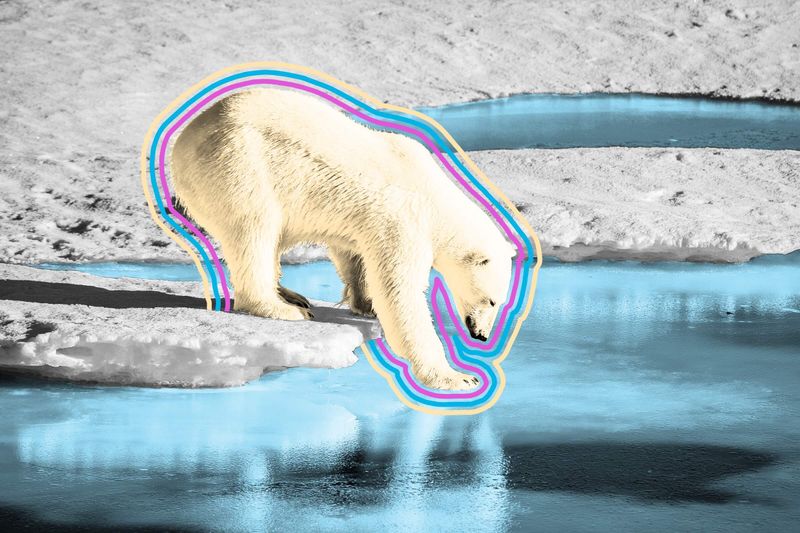

On the list of things women don’t get enough credit for, being the first to brew beer might not seem like the most important. But fermented beverages have played a vital role in human culture for perhaps almost as long as society has existed, providing nutrients, enjoyment, and often a safer alternative to drinking water before the advent of modern sanitation. Scholars disagree over exactly when beer was first introduced — although the earliest hard evidence for barley beer comes from 5,400-year-old Sumerian vessels that were still sticky with beer when archaeologists found them — but one thing has never been in question: “Women absolutely have, in all societies, throughout world history, been primarily responsible for brewing beer,” says Theresa McCulla, who curates the Smithsonian’s American Brewing History Initiative.
Oktoberfest actually begins in mid-to-late September and is over on the first Sunday of October, usually lasting 16 to 18 days. Known locally as d’Wiesn (a nickname for Theresienwiese, the Munich fairgrounds where the fest takes place), it was first held in 1810.
Just look to the Babylonian Code of Hammurabi, a set of 282 laws written in 1750 BCE that gave women exclusive jurisdiction over brewing and even tavern ownership. Among the societies likely governed by those rules was ancient Sumer (modern-day southern Iraq), where The Hymn to Ninkasi (the Sumerian goddess of brewing) was composed approximately 50 years before the Code of Hammurabi. Including lines such as “Ninkasi, you are the one who pours out the filtered beer of the collector vat; it is [like] the onrush of the Tigris and Euphrates,” as well as a beer recipe, the song of praise is the first — but far from the last — known text devoted to the praise of beer.
Czechia consumes more beer per capita than any other country.
Advertisement
The world’s bestselling beer is almost exclusively sold in one country.
And that country is China, the world’s largest beer market by far — the nation accounts for about a quarter of global beer sales, which is why the bestselling beer there is also the bestselling beer in the world. Snow, which costs as little as 49 cents U.S. per can, is made by SABMiller and China Resources Enterprise. Some 101 million hectoliters (about 86 million U.S. beer barrels) of the inexpensive brew were sold in 2017, more than twice as many as its closest competitor for global beer dominance: Budweiser, which sold 49.2 million hectoliters (nearly 42 million U.S. beer barrels) the same year. Despite — or perhaps because of — its ubiquity, Snow isn’t highly regarded among beer aficionados.
Michael Nordine
Staff Writer
Michael Nordine is a writer and editor living in Denver. A native Angeleno, he has two cats and wishes he had more.
Advertisement
top picks from the Inbox Studio network
Interesting Facts is part of Inbox Studio, an email-first media company. *Indicates a third-party property.
Original photo by Universal Images Group North America LLC/ Alamy Stock Photo
A country’s borders can take many shapes and sizes, but only three countries in the world can be considered enclave nations. An enclave is territory of one state surrounded by territory of another, and enclave nations are those that exist wholly within another country’s borders on all sides. In Europe, Italy surrounds two of these enclave nations — Vatican City, the seat of the Roman Catholic Church, and San Marino, a microstate located on the northeastern slopes of the Apennine Mountains. The world’s other enclave nation is Lesotho, a country that is completely enclosed by South Africa, and that owes at least part of its long history of independent rule to its incredibly mountainous, hard-to-conquer terrain.
San Marino, one of the world’s smallest countries, is also one of the oldest.
St. Marinus founded San Marino in the fourth century CE. The country’s constitution, instituted in 1600, is also the oldest in the world, making San Marino the oldest surviving republic. Today, this landlocked enclave is a relic of a time when powerful city-states ruled Europe.
Enclaves are not to be confused with exclaves, which are a different territorial phenomenon. An exclave is a portion of one country that’s completely cut off from the rest of the same nation. One of the world’s most famous exclaves is also one of its most gorgeous: The county around the Croatian city of Dubrovnik, perched on the Adriatic Sea and filled with 16th-century charm, is separated from the rest of its mother country by a strip of land belonging to Bosnia and Herzegovina. An example of an exclave much closer to home is Alaska, which is completely surrounded on land by Canada. However, Alaska is technically considered a “pene-exclave,” because it can be reached via water without going through another nation’s territory. With Alaska being nearly one-fifth the size of the contiguous United States, the Vatican being home to one of the world’s most influential religious leaders, and Dubrovnik being a major filming location for Game of Thrones, it’s clear that enclaves and exclaves have been key players in world history — however confusing their geography.
The Dutch town of Baarle-Nassau is home to nearly 30 Belgian enclaves.
Advertisement
Up until 2015, a piece of India was inside Bangladesh inside India inside Bangladesh.
Most enclaves are one country’s territory inside another — simple enough. But in some cases, a second-order enclave, or counter-enclave, can take shape. A good example of this is the United Arab Emirates (UAE) territory of Nahwa, which is encircled by an Oman territory called Madha, which is in turn encircled by the UAE. However, the story of the Indian territory of Dahala Khagrabari is even stranger. This small piece of India, stretching only about 2 acres, was inside Bangladesh’s territory, which was inside India, which was inside Bangladesh — forming the world’s only third-order enclave. Thankfully, in June 2015, after decades of confusion, India ratified a Land Boundary Agreement that officially ceded this small spit of land to Bangladesh.
Darren Orf
Writer
Darren Orf lives in Portland, has a cat, and writes about all things science and climate. You can find his previous work at Popular Mechanics, Inverse, Gizmodo, and Paste, among others.
Advertisement
top picks from the Inbox Studio network
Interesting Facts is part of Inbox Studio, an email-first media company. *Indicates a third-party property.
The international date line, established in 1884, lies smack dab in the middle of the Pacific Ocean, far removed from the coasts of any major continent. But even though the date line may appear to be in the middle of nowhere, this imaginary boundary has caused temporal oddities for some Pacific nations over the years.
Take, for example, the country of Samoa, which the international date line runs right through. Countries bisected by the date line can choose which side to be on, and in 1892, in a move meant to strengthen ties to the U.S., the island nation decided to move to the time zone on the eastern side of the line. Because this change was officially implemented on July 4, the Pacific archipelago technically experienced the same day twice.
American Samoa is the only inhabited U.S. territory located south of the equator.
The U.S. is the third-largest country in the world by total area, and all that land is located in the Northern Hemisphere — except for the 76-square-mile island territory of American Samoa, situated 14 degrees south of the equator.
But that wasn’t the end of Samoa’s strange journey through time. Fast-forward to 2011, when the country decided to strengthen ties with two other important trade partners, Australia and New Zealand, by moving back to the western side of the date line. That year, Samoa never experienced December 30, 2011; when the clock struck midnight on December 29, Samoan calendars flipped over to December 31.
Today, Samoa is still on the western side of the international date line, but when its close neighbor American Samoa — a U.S. territory only about 135 miles away — was asked to do the same, it declined, choosing to stick with the U.S. on the eastern side. That makes American Samoa the very last inhabited U.S. territory to enter each new year.
The only city in Samoa is Apia, which serves as the country’s capital.
Advertisement
There are four genders in traditional Samoan culture.
For centuries, many Indigenous cultures have viewed gender beyond the binary of male or female, and in Samoa, there are four recognized genders. These include male and female as well as two other genders, fa’afafine and fa’afatama. The former translates to “in the manner of a woman,” referring to people assigned male at birth who embody both traditionally masculine and feminine traits, and the latter to “in the manner of a man,” referring to people assigned female at birth who similarly embody both sets of traditional gender traits.
Fa’afafine and fa’afatama fulfill important roles in Samoan culture by educating their fellow Samoans about sex (which is otherwise taboo for men and women to discuss directly), taking care of the elderly, and performing rituals such as the dance of the taupou. Today, organizations including the Samoa Fa’afafine Association continue to advocate for equal rights for all genders throughout the archipelago.
Darren Orf
Writer
Darren Orf lives in Portland, has a cat, and writes about all things science and climate. You can find his previous work at Popular Mechanics, Inverse, Gizmodo, and Paste, among others.
Advertisement
top picks from the Inbox Studio network
Interesting Facts is part of Inbox Studio, an email-first media company. *Indicates a third-party property.
For the most part, the world’s largest navies are held by the nations you’d expect, with the United States, China, and Russia all at the top of the list. For a brief time in 1989, however, the sixth-largest naval fleet was controlled not by a country but by a company: Pepsi.
This wasn’t because the soft drink manufacturer was bent on global domination — rather, it had to do with its unique status as the first American product to be manufactured and sold in the Soviet Union, starting in 1972. Because the ruble had no value outside the USSR and couldn’t be exchanged for other currencies, however, a barter system was instituted whereby PepsiCo instead received Stolichnaya vodka, which it then sold in the U.S. and other markets.
That title belongs to Coca-Cola, which is sold in about 200 countries around the world.
This mutually beneficial arrangement came to an end in 1989, when Pepsi received a much different form of payment: millions of dollars’ worth of warships (17 submarines, a frigate, a cruiser, and a destroyer). Though the company quickly sold the vessels — all of which were either decommissioned or in disrepair — to a Norwegian shipbreaker for scrap metal without ever actually taking possession of the ships, Pepsi technically owned a larger naval fleet than the likes of Spain and Australia for a very brief moment in time. Pepsi’s special relationship with the Soviet Union dissolved along with the USSR itself in 1991.
7UP got off to a rough start for two reasons: The first is that it was first introduced just two weeks before the 1929 stock market crash, a hurdle it clearly overcame in time. The other is what’s reported to have been its original name: “Seven-UpLithiated Lemon Soda.” Part of that ungainly — and possibly mythical — moniker was owed to the fact that it contained the mood-stabilizing substance lithium citrate, which allowed it to be marketed as a means of lifting one’s spirits and even curing hangovers. The name is said to have been shortened to “7 Up Lithiated Soda” before becoming simply “7UP” in 1936, and lithium was removed from the recipe in 1948 due to safety concerns. The name’s meaning and origins are still debated nearly a century later, with several theories having been proposed (and usually shot down) in the interim: that it originally contained seven ingredients, that it was sold in 7-ounce cans, and that “Seven Up” has seven letters. As no official explanation has ever been given, the mystery lives on.
Michael Nordine
Staff Writer
Michael Nordine is a writer and editor living in Denver. A native Angeleno, he has two cats and wishes he had more.
Advertisement
top picks from the Inbox Studio network
Interesting Facts is part of Inbox Studio, an email-first media company. *Indicates a third-party property.

Nearly 25 years after Ulysses S. Grant’s death, a peculiar story hit the pages of the Washington Evening Star. Within the paper’s Sunday edition one day in 1908, retired police officer William H. West recounted how he had caught the 18th president speeding through the streets of Washington, D.C. — and decided the only appropriate course of action was to proceed with an arrest.
The U.S. government has at times set the maximum speed limit on highways.
President Nixon signed the Emergency Highway Energy Conservation Act in 1974, dropping highway speed limits to 55 mph. At the time, OPEC’s 1973 fuel embargo had created an energy crisis; Nixon’s move tried to reduce fuel use by cutting down on speeding. The law was repealed in 1995.
West’s tale hearkened back to 1872, during a particularly bad bout of traffic issues, when complaints of speeding carriages were on the rise. West had been out investigating a collision when he witnessed Grant — then the sitting president — careening his horse-drawn carriage down the road. The officer flagged down the carriage, issued a warning, and sent Grant on his way. But Grant, who had a reputation for high-tailing horse rides, couldn’t resist the need to speed. West caught him the very next day once again tearing through the city. Feeling he had no other option, the officer placed the president under arrest. At the police department, Grant was required to put $20 (about $490 in today’s money) toward his bond before being released.
Historian John F. Marszalek, who oversaw Grant’s presidential collection at Mississippi State University, says the situation blew over pretty quickly. Grant’s arrest wasn’t the first time he had been cited for speeding. It also wasn’t a political quagmire for either party. At the time, West — a formerly enslaved Civil War veteran who became one of just two Black police officers in Washington, D.C., immediately after the war — was commended for his actions in trying to make the city streets safer. And Grant owned up to his mistake — though he did choose to skip his court appearance scheduled for the following day, which meant he forfeited his $20. He didn’t face any further consequences, however.
U.S. presidents aren’t allowed to drive on public roads after leaving office.
After their term is up, U.S. presidents don’t just leave behind the keys to the White House — they effectively hand over their car keys, too. Turns out, the highest government officials in the land are soft-banned from driving in public, a task that’s handed over to their Secret Service detail at the beginning of their presidency, and continues for the rest of their life due to security risks. The Former Presidents Act of 1958 sets out retirement parameters for presidents (including staffing and pay), and while it doesn’t explicitly say former leaders can’t drive themselves around, several presidents have alluded to the unwritten rule’s enforcement by the Secret Service. Lyndon B. Johnson (1963–1969) is credited as the last president to routinely drive himself, and was known for sporting a convertible Lincoln Continental, though the president’s car collection also included a German Amphicar — the first mass-produced amphibious automobile made for civilians — and a Jolly 500 Ghia, a gift from the Fiat Company so rare that it couldn’t be restored due to a lack of existing parts.
Nicole Garner Meeker
Writer
Nicole Garner Meeker is a writer and editor based in St. Louis. Her history, nature, and food stories have also appeared at Mental Floss and Better Report.
Advertisement
top picks from the Inbox Studio network
Interesting Facts is part of Inbox Studio, an email-first media company. *Indicates a third-party property.
It’s generally understood that ocean water gets colder the farther one gets from the warming rays of the sun, but there’s an exception. Hydrothermal vents can pump out fluids at temperatures above 700 degrees Fahrenheit — hot enough to melt lead.
Hydrothermal vents are created by fissures in the seafloor in regions of significant tectonic plate activity. As seawater trickles through the crust, it’s infused with dissolved gases and minerals en route to mixing with magma from the underlying mantle. The superheated liquid then reverses course and shoots back through the seabed, where chemical reactions produce the precipitation of minerals that are generally classified into two categories. Black smokers are vents that release dark deposits of iron sulfide, while white smokers unleash the lighter-colored accumulations of barium, calcium, and silicon.
A hydrothermal vent can remain active for thousands of years.
Although entire vent fields above a body of magma can remain active for millennia, individual vents endure for far shorter periods due to clogging and shifting seafloors.
Beyond generating impressive sediment chimneys, the vents have been found to nurture a bustling ecosystem of marine life, from microorganisms that derive fuel from chemical energy to swarms of tubeworms, fish, shrimp, clams, and crabs that thrive despite the absence of sunlight. Unfortunately, the discovery of gold, silver, and copper among the mineral deposits has ignited commercial interests in mining that could cause environmental damage. Yet scientists are hopeful that the abundance of life-forms, and the potential they offer for more discoveries, will lead to stricter protections for these underwater hot zones.
The process by which underwater life converts chemical energy into food is called chemosynthesis.
Advertisement
Some scientists believe that life on Earth began at hydrothermal vents.
We know that hundreds of distinct creatures make their homes near and even below seafloor vents, but is this also where life as we know it on the planet originated? One popular theory holds that around 3.7 billion years ago, positively charged protons from acidic seawater mixed with negatively charged hydroxide ions from hydrothermal fluids within the vents to spark the formation of cellular membranes and RNA. These primitive cells then developed a “pump” to self-power reactions, enabling them to leave the vents and spread more complex life-forms through the ocean and beyond. Those who subscribe to this belief point to experiments that have successfully created protocells from simple molecules in hot, alkaline seawater, as well as the discovery of the world’s oldest fossils in rocks that were likely part of an ancient hydrothermal vent. The answers to where and how life began are far from settled, but this is one theory that at least seems to hold plenty of water.
Tim Ott
Writer
Tim Ott has written for sites including Biography.com, History.com, and MLB.com, and is known to delude himself into thinking he can craft a marketable screenplay.
Advertisement
top picks from the Inbox Studio network
Interesting Facts is part of Inbox Studio, an email-first media company. *Indicates a third-party property.
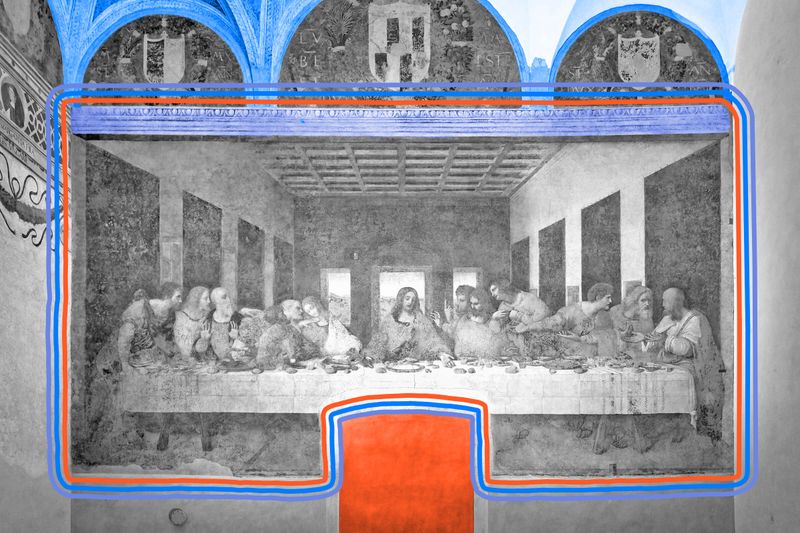
On May 21, 2007, Rod Baber placed a 1-minute, 48-second phone call. He called a voicemail account to leave a message, a move that cost him $4.72. By all accounts, Baber’s call was much like millions made from cellphones every day — except that the renowned British climber was standing on the summit of Mount Everest. Using a Motorola Rizr Z8, Baber made the call at 29,035 feet, earning a place in the Guinness Book of World Records for “highest mobile phone call.” The feat was made possible by China Telecom, which had set up a cell tower at the base camp on the mountain’s north side. Baber also called his family and sent a text to a Motorola employee: “One small text for man, one giant leap for mobilekind.”
The very first cellphone call was made on Sixth Avenue in Manhattan on April 3, 1973. The caller was Motorola’s Martin Cooper, who called a rival at Bell Labs. Cooper then held a press conference at the Hilton, at which reporters were invited to dial their newspaper offices.
Since Baber’s historic phone call, Everest’s cell service has kept up with the times. In 2013, Everest received 4G service so climbers could livestream the view from the summit. In 2020, the mountain got the 5G upgrade, which offers 20 times more capacity at one-third the size. That means that if you want to find some excuse to unplug from work, “climbing Everest” might not be a good one.
The Tibetan name for Everest is Chomolungma, meaning “Mother Goddess of the World.”
Advertisement
Everest isn’t the tallest mountain on Earth.
When it comes to mountains, the accolade of “world’s tallest” is a matter of opinion. If you’re going strictly by height above sea level, then yes, Everest remains the reigning champion. However, if you’re going by tallest from base to summit (that is, including parts of the mountain below sea level), the clear winner is Mauna Kea, which, at 33,500 feet, is some 4,000 feet taller than Everest. However, the most compelling competitor in the “world’s tallest mountain” challenge is little-known Mount Chimborazo in Ecuador. Because (as its name suggests) Ecuador straddles the equator, it’s also farther from the center of the Earth, since the planet’s midsection actually bulges outward due to its constant rotation. This technically makes Chimborazo the farthest away a human can get from Earth while still standing on land.
Darren Orf
Writer
Darren Orf lives in Portland, has a cat, and writes about all things science and climate. You can find his previous work at Popular Mechanics, Inverse, Gizmodo, and Paste, among others.
Advertisement
top picks from the Inbox Studio network
Interesting Facts is part of Inbox Studio, an email-first media company. *Indicates a third-party property.

While the sculptor Gutzon Borglum was working on Mount Rushmore, he had the idea of adding a special room where future generations could learn about the significance of the United States as well as his own creation. The Hall of Records was intended as its own architectural wonder, accented with double doors, a long staircase, and a gold-plated eagle with a 38-foot wingspan. The inside would serve as a museum, housing bronze and glass cabinets full of the country’s key historical documents, busts of important Americans, a list of notable U.S. contributions to the world, and more. Armed with dynamite, miners laid the groundwork for the Hall of Records in 1938 — to the displeasure of Congress, who saw only a 70-foot-deep cave beyond President Lincoln’s hairline. Borglum was instructed to devote his time and federal funding to finishing the quartet of faces. Soon after he died in March 1941, the monument was deemed complete. The Hall of Records remained an empty granite pit for more than half a century.
Theodore Roosevelt was the first president to win a Nobel Peace Prize.
To bring the Russo-Japanese War to an end, President Roosevelt organized a 1905 peace conference in Portsmouth, New Hampshire, which garnered him an eventual Nobel Peace Prize. The other presidents who achieved the honor are Woodrow Wilson, Jimmy Carter, and Barack Obama.
At the behest of Borglum’s family — who worried that the sculpture’s significance “would become a riddle” to historians — the artist’s vision for the room was partly realized on August 9, 1998. A teak box was filled with 16 porcelain enamel tablets containing documents including the Declaration of Independence, the U.S. Constitution, and the Gettysburg Address, plus details about Borglum and the forging of Mount Rushmore. The box was placed in a noncorrosive titanium container, which was lowered deep into a hole at the Hall of Records’ entrance. To seal the opening, a 1,200-pound granite capstone was added, etched with a quote from Borglum. Alas, tourists are not able to explore the hall that might have been.
Alfred Hitchcock filmed parts of his 1959 movie, “North by Northwest,” on location at Mount Rushmore.
Advertisement
Mount Rushmore’s workers assembled their own baseball team.
Lincoln Borglum spent his young adulthood assisting his father on Mount Rushmore, ultimately overseeing the monument’s completion. To increase worker morale, on game days Lincoln parked his car close to the hoist operator and left the radio tuned to baseball; the hoist operator then phoned game updates to those stationed on the mountain. In 1938, Lincoln started recruiting amateur baseball players to work on the monument, and soon founded the Rushmore Drillers. Six days a week, practices followed the 7:30 a.m. to 4 p.m. work shifts, and games were played on Sundays. The team was good enough to make it to the semifinals of the State Amateur Baseball Tournament in 1939, but the Drillers disbanded when the government declared Mount Rushmore finished in 1941.
Jenna Marotta
Writer
Jenna is a writer whose work has appeared in The New York Times, The Hollywood Reporter, and New York Magazine.
Advertisement
top picks from the Inbox Studio network
Interesting Facts is part of Inbox Studio, an email-first media company. *Indicates a third-party property.

Less is more in the Hawaiian alphabet, which consists of just 13 letters: A, E, I, O, U, H, K, L, M, N, P, W, and the ‘okina, which represents the glottal stop consonant — a sound produced by the abrupt obstruction of airflow in the vocal tract. Known as ka pīʻāpā Hawaiʻi in Hawaiian, the alphabet traditionally lists the five vowels first and also includes the kahakō, a bar above vowels that indicates an elongated vowel sound.
When British explorer James Cook made the first known European expedition to the Hawaiian islands in 1778, he spelled the islands’ name as both “Owhyhee” and “Owhyee.” Hawaiian was purely an oral language at the time; its written form wasn’t formalized until American missionary Elisha Loomis printed a primer titled simply “The Alphabet” in 1822. This written alphabet initially consisted of 21 letters before being standardized in 1826, although four of the original letters (F, G, S, and Y) were included only for the purpose of spelling foreign words. Other letters — B, R, T, and V — were excised because they were considered interchangeable with existing letters.
Hawaii is the only U.S. state with two official languages.
English and Hawaiian are both official languages of the Aloha State, but it isn’t the only state with multiple tongues. South Dakota also recognizes Sioux, and Alaska recognizes more than 20 Indigenous languages.
By 1834, Hawaii's literacy rate was estimated to be between 90% and 95%, one of the highest in the world at the time. But the Hawaiian language declined in usage after 1896, when Act 57 of the Laws of the Republic of Hawaii made English the “medium and basis of instruction” for all schools, after which schoolchildren were sometimes even punished for speaking Hawaiian. The language has seen a resurgence since the 1970s, with several groups working toward preserving it.
Hawaii was an independent kingdom for nearly a century.
Six years after George Washington became the first president of the United States, another ruler came into power on the other side of the Pacific: Kamehameha I, who established the Hawaiian Kingdom in 1795 by conquering the islands of Maui, Moloka‘i, O‘ahu, and Lāna‘i. Kauaʻi and Niʻihau joined willingly 15 years later, making every inhabited island part of the kingdom.
The House of Kamehameha reigned until 1874, when the House of Kalākaua came into power. The kingdom was overthrown in 1893 by the United States, which the U.S. officially acknowledged a century later with 1993’s Apology Resolution. The joint resolution acknowledged that “the Indigenous Hawaiian people never directly relinquished their claims to their inherent sovereignty as a people or over their national lands to the United States.” The Hawaiian sovereignty movement continues to this day.
Michael Nordine
Staff Writer
Michael Nordine is a writer and editor living in Denver. A native Angeleno, he has two cats and wishes he had more.
Advertisement
top picks from the Inbox Studio network
Interesting Facts is part of Inbox Studio, an email-first media company. *Indicates a third-party property.
The next time you find yourself enjoying a grilled sandwich, impress any nearby Italian speakers by using its proper name: “panino,” not “panini.” The latter term is actually plural, while “panino” — a diminutive of pane, meaning “bread” — is singular.
This is similar to several other Italian words we English speakers tend to use incorrectly, such as “graffiti” (singular: “graffito”) and “paparazzi” (singular: “paparazzo”). Italian panini also differ from the kind eaten in the U.S. in that they aren’t always grilled and tend to feature just two or three ingredients.
Unlike panini, “spaghetti” is both plural and singular.
Following the same construction as “panini”/“panino,” a single strand of spaghetti is a spaghetto. The same is true of ravioli (raviolo) and gnocchi (gnocco).
Italians have been making sandwiches for centuries, but panini as we think of them today were popularized in Milan in the 1970s. It was there that bars known as paninoteche became so popular that an entire fashion-based youth movement, called paninaro, took its name from them. Young people known as paninari tended to hang out at these sandwich bars because they’d grown weary of the slow pace of other more classic Italian restaurants, and panini were the closest thing to fast food available in the area at the time. Paninari were so hip at the time, in fact, that they inspired a song by Pet Shop Boys. Those must have been some pretty good sandwiches.
Margherita pizza was named in honor of an Italian queen.
Raffaele Esposito, a baker from Naples often credited with inventing the modern pizza, is believed to have named the dish in honor of Queen Margherita of Savoy (sound familiar?) after she visited his city in 1889. In addition, he used the Italian flag’s three colors as inspiration for its main ingredients: red tomatoes, white mozzarella, and green basil.
As the pizza increased in popularity, it also helped improve the reputation of the humble tomato, which had been feared throughout Europe for centuries because it was incorrectly thought to be poisonous. After realizing the true reason some aristocrats were falling ill was because the pewter plates used to serve the fruits contained high levels of lead, attitudes toward the tomato relaxed by the late 1800s.
Michael Nordine
Staff Writer
Michael Nordine is a writer and editor living in Denver. A native Angeleno, he has two cats and wishes he had more.
Advertisement
top picks from the Inbox Studio network
Interesting Facts is part of Inbox Studio, an email-first media company. *Indicates a third-party property.