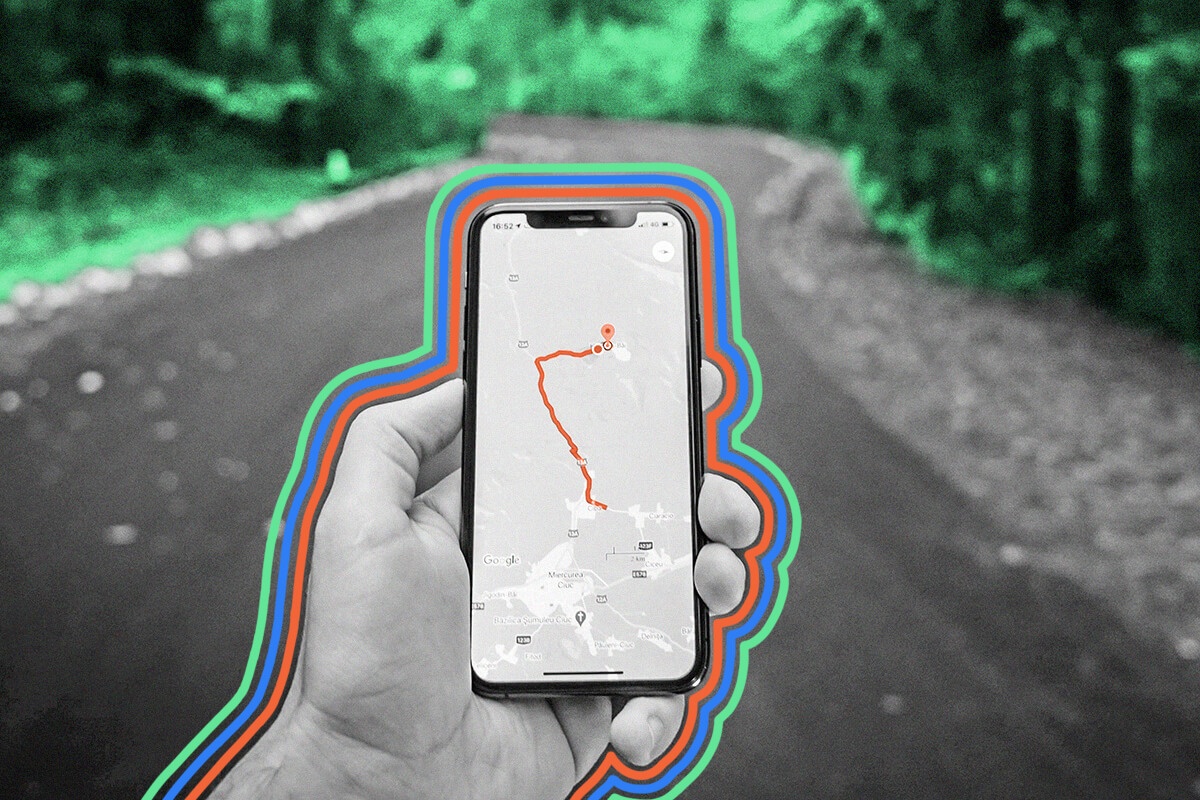

There’s off the map, and then there’s Argleton. The English town was visible on Google Maps until 2009, which is notable for one major reason: No such place exists. So how did it get listed? Though never confirmed by Google, it’s been speculated that Argleton may have been akin to a trap street — a fictitious road used by cartographers to catch anyone copying their work. The reasoning is as simple as it is clever: If a street (or, in this case, town) that you made up ends up on another map, you’ll have caught its creator red-handed in copyright infringement.
The fictional city of El Dorado used to appear on real maps.
Today we know that the mythical city of gold, once thought to be in South America, doesn’t exist, but for centuries it was believed to be real — so much so that it appeared on maps as recently as 1808. (No word on whether Atlantis was on those same maps.)
Though little more than an empty field in West Lancashire, Argleton once had its own (presumably auto-generated) job listings and weather forecasts. Once its (non-)existence became known on the internet, humorous T-shirts with slogans such as “New York, London, Paris, Argleton” and “I visited Argleton and all I got was this T-shirt” appeared online, too. Google itself was tight-lipped on the subject, releasing a brief statement noting that “Google Maps data comes from a variety of data sources. While the vast majority of this information is correct there are occasional errors.” The good people of Argleton likely would have been highly offended by that characterization — if they actually existed.
America is named after the explorer and navigator Amerigo Vespucci.
Advertisement
Most maps are highly misleading.
If you ever had a map of the world on one of your classroom walls, there’s a good chance it used the Mercator projection. Created by Flemish cartographer Gerardus Mercator in 1569, it has proved popular for centuries — but it also distorts sizes and distances near the North and South poles, resulting in major discrepancies. Perhaps the most notable of these is how small Africa appears: Greenland looks larger than the continent, for instance, despite being about 14.5 times smaller. To demonstrate this, a graphic artist created a map of his own showing that the United States, China, India, Japan, and most of Europe could all fit inside Africa.

Michael Nordine
Staff Writer
Michael Nordine is a writer and editor living in Denver. A native Angeleno, he has two cats and wishes he had more.
Advertisement
top picks from the Inbox Studio network
Interesting Facts is part of Inbox Studio, an email-first media company. *Indicates a third-party property.
If you know anything about calico cats, it’s that they’re especially cute. If you know two things about them, the second might be that only about 1 in every 3,000 of them is male. The tricolor kitties — which are most often but not always white, orange, and black — get their distinct coat from their chromosomal makeup. Female cats have two X chromosomes, which carry the coding gene for black and orange coloration, and the only way for calico coloring to occur is for a kitten to get one black-coded X and one orange-coded X. The same is also true of tortoiseshell (tortie) cats, which are predominantly black and orange — and known for their “tortitude.” (The white patches in calicos, meanwhile, happen through a separate genetic process called piebalding, which produces areas of skin and fur without any pigment.)
Quite the opposite, in fact — about 81% of orange cats are male. Whereas females will be orange only if they carry that gene in both X chromosomes, males will be orange if they carry it in either the X or Y chromosome.
Though extremely rare, male calicos and torties do exist. This is usually the result of one of two conditions: chimerism or Klinefelter’s syndrome. The former occurs when two embryos fuse early in pregnancy, resulting in two different sets of DNA, while Klinefelter’s is the result of a male inheriting an extra X chromosome and therefore having XXY chromosomes. Making them even rarer is the fact that male calicos are almost always sterile, meaning it’s all but impossible to breed calicos — every one you see is an anomaly, and all the more special for it.
There’s a reason that maneki-neko are so often depicted as calicos: They’re considered good luck. The “beckoning cat” figurines found throughout Japan and at Japanese and Chinese establishments around the world are intended as tokens of good fortune, with one of their paws raised high in a waving motion. This dates back to the tradition of Japanese sailors traveling with calicos to bring about safe passage — the multicolored cats were believed to be able to chase away storms and ancestral ghosts. In the United States and England, meanwhile, male calicos are considered especially lucky because of their rarity.
Michael Nordine
Staff Writer
Michael Nordine is a writer and editor living in Denver. A native Angeleno, he has two cats and wishes he had more.
Advertisement
top picks from the Inbox Studio network
Interesting Facts is part of Inbox Studio, an email-first media company. *Indicates a third-party property.
Ernest wasn’t the only eccentric Hemingway. Leicester, the younger brother of the author of For Whom the Bell Tolls and The Sun Also Rises, was also a writer and used the proceeds from his biography, My Brother, Ernest Hemingway, to establish his own micronation. He did so on July 4, 1964, citing the obscure U.S. Guano Islands Act of 1856 to claim an 8-by-30-foot bamboo raft floating 8 miles off the coast of Jamaica, in international waters, as his own sovereign land. The Guano Islands Act grants U.S. citizens the right to claim, on behalf of the U.S., any unoccupied “island, rock, or key” where valuable guano (read: bird droppings used as fertilizer) can be found. Patriot that he was, Leicester ceded half of his humble territory to the U.S. and declared the other half the Republic of New Atlantis.
Though they were the only boys in the family, Leicester and Ernest Hemingway had four sisters: Mercelline, Ursula, Madelaine, and Carol. Ernest, who was born in 1899, was the second-oldest after Marcelline, while Leicester (born in 1915) was the youngest.
As is often the case with micronations, the founder of New Atlantis took it more seriously than anyone else. He drafted a constitution that was actually just the United States Constitution with “New Atlantis” replacing every instance of “United States,” created stamps, enlisted his wife to design a nice flag, and declared shark teeth and carob beans to be the country’s official currency, called “scruples.” Not long after Leicester Hemingway was voted the first president of New Atlantis in what we can only assume was a landslide, however, the country’s coffers ran empty (perhaps due to a lack of taxpayer revenue). The country’s primary activity seems to have been issuing stamps — meant to finance marine protections in the area — but the Universal Postal Union never recognized the stamps, or the country. Within a few years of its founding, the raft became untethered during a storm, drifted out to sea, and was destroyed, consigning New Atlantis to the dustbin of history.
Gertrude Stein was the godmother of Ernest Hemingway’s first son, Jack.
Advertisement
Ernest Hemingway preferred to write standing up.
Every writer has their own routine, and it’s little surprise that the A Farewell to Arms scribe’s was as idiosyncratic as he was. Ernest Hemingway preferred to write in the morning, and did so standing up. This was “a working habit he has had from the beginning,” according to TheParis Review, and he might have picked up the habit from his editor, Maxwell Perkins. And though he preferred the pencil, Hemingway turned to the typewriter when he needed to get something down especially quickly, such as dialogue: “When the people are talking, I can hardly write it fast enough or keep up with it,” he toldThe New Yorker in 1950.
Michael Nordine
Staff Writer
Michael Nordine is a writer and editor living in Denver. A native Angeleno, he has two cats and wishes he had more.
Advertisement
top picks from the Inbox Studio network
Interesting Facts is part of Inbox Studio, an email-first media company. *Indicates a third-party property.
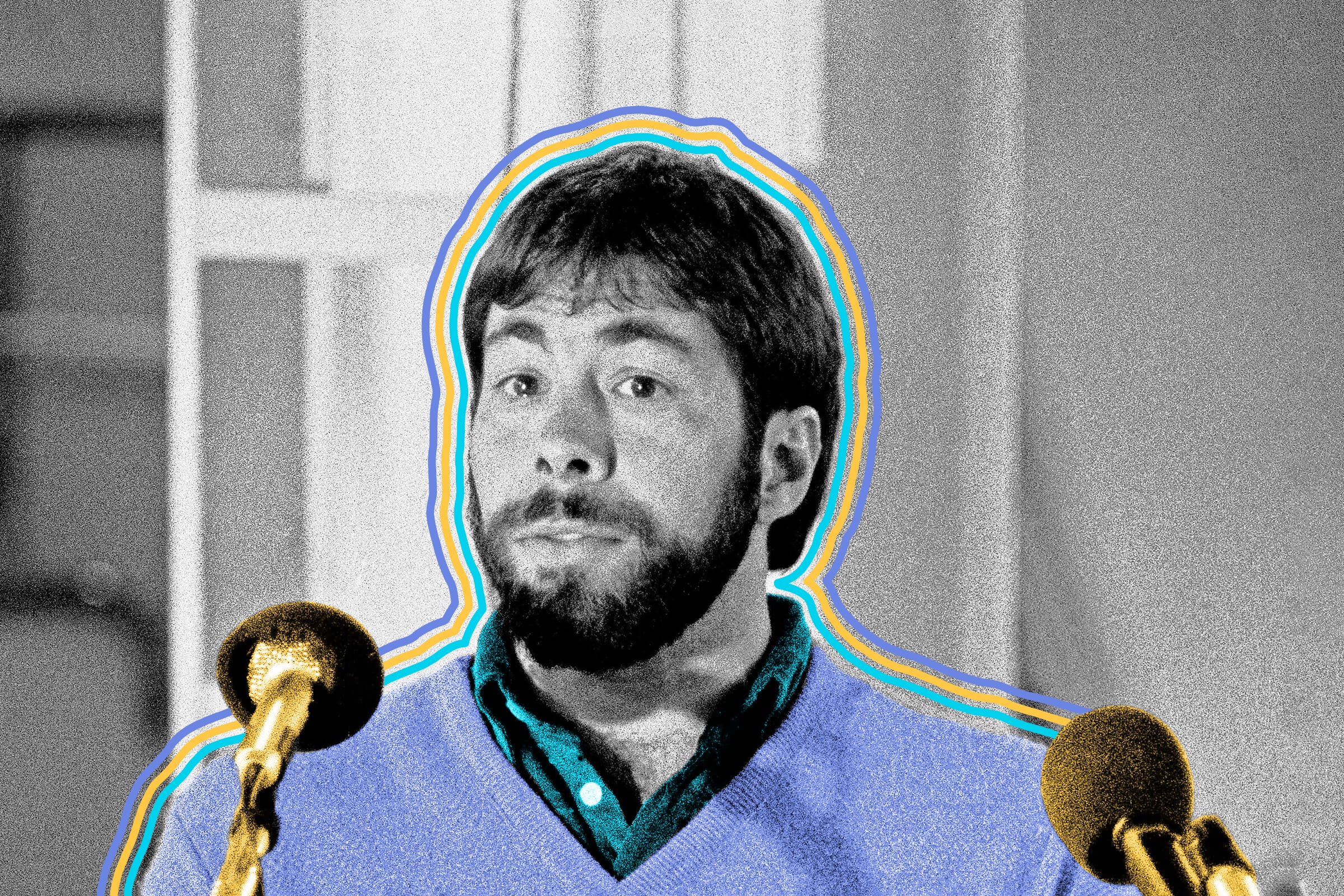
In the early 1970s, a young Steve Wozniak — the future co-founder of Apple — was doing some casual “phreaking” in his college dorm room at Berkeley University. A portmanteau of the word “phone” and “freaking,” phreaking was a method through which technologically savvy ne’er-do-wells could hack into early telecommunication systems using a gadget called a “blue box.” The result? Free phone calls anywhere in the world. To test his newly acquired phreaking abilities, Wozniak placed a call to the Vatican, asking to speak with the pope. Putting on his best impersonation of Henry Kissinger (then-President Richard Nixon’s secretary of state), Wozniak nearly got the pope on the line until a high-ranking bishop caught him in the lie. The jig was up.
Segway polo’s championship cup is named after Steve Wozniak.
In 2006, the sport of Segway polo (it’s exactly what it sounds like) named its championship cup, the Woz Challenge Cup, after its most famous player — Steve “Woz” Wozniak.
This wasn’t a one-off incident — pranks played a vital role in the history of Apple, which was founded in 1976. Steve Jobs, like Wozniak, also had a love for practical jokes. During his early school years, Jobs placed firecrackers under his teacher’s chair (no major injuries were reported), and switched all the combination locks on his classmates’ bikes. After Jobs and Wozniak understood the power of the blue box, the duo sold a homemade version of the gadget for $150 to fellow Berkeley students. Nearly 40 years later, Jobs’ love for pranks hadn’t faded. When he introduced the world to the iPhone in 2007, Jobs called a local Starbucks and ordered 4,000 lattes while on stage. Thankfully, he quickly let the unlucky barista off the hook with a lighthearted “just kidding.”
Steve Jobs sold his Volkswagen minibus to raise capital for manufacturing the first Apple computers.
Advertisement
Steve Wozniak is still an Apple employee.
Although Apple wouldn’t exist without Steve Wozniak, the famous computer engineer hasn’t been actively involved with the company for some 40 years. Wozniak was vital in the company’s early days as the mastermind behind its first big commercial success, the Apple II. But after suffering a head injury in a plane crash in 1981, he began pulling away from the company, and eventually sold much of his stock in 1985 amid growing friction with his fellow co-founder Steve Jobs. However, Apple kept Wozniak on the payroll as an “honorary employee” with a $50-a-month salary. Although that’s a pittance for such an important figure in Apple history, Wozniak made out just fine when Apple went public in 1980, and is worth at least $100 million today.
Darren Orf
Writer
Darren Orf lives in Portland, has a cat, and writes about all things science and climate. You can find his previous work at Popular Mechanics, Inverse, Gizmodo, and Paste, among others.
Advertisement
top picks from the Inbox Studio network
Interesting Facts is part of Inbox Studio, an email-first media company. *Indicates a third-party property.
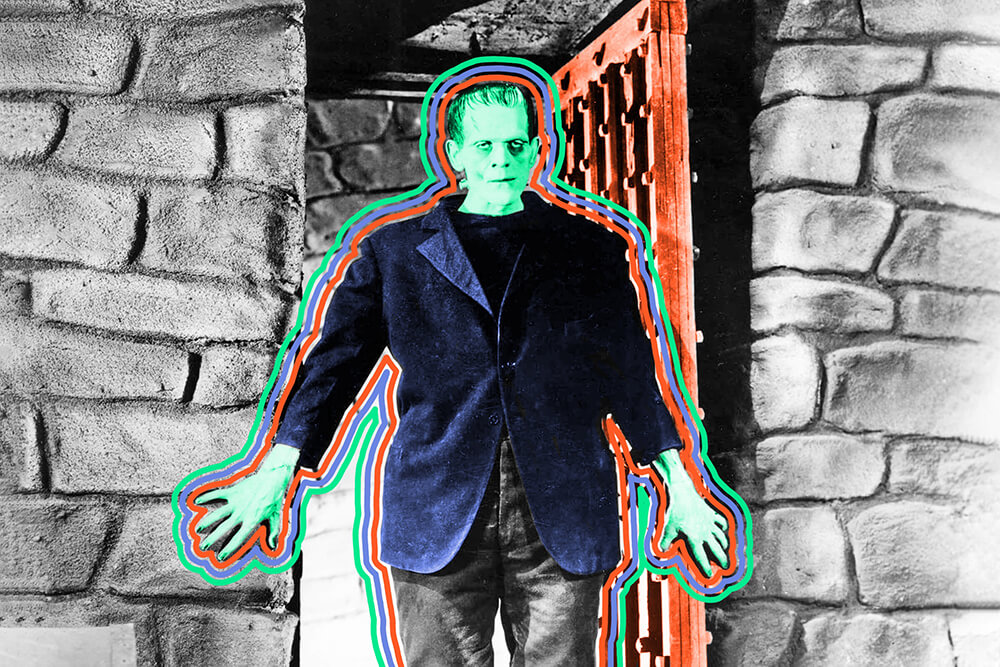
Difficult times can lead to great art. Case in point: the volcanic explosion that caused a “year without a summer” in 1816 — and inspired the novel Frankenstein. The eruption took place at Indonesia’s Mount Tambora, many thousands of miles away from author Mary Shelley’s home in England. In addition to a harrowing death toll, the April 1815 explosion caused mass amounts of sulphur dioxide, ash, and dust to fill the atmosphere, blocking sunlight and plunging the global temperature several degrees lower, resulting in the coldest year in well over two centuries. In part because of the volcano, Europe and North America were subjected to unusually cold, wet conditions the following summer, including a “killing frost” in New England and heavy rainfall that may have contributed to Napoleon’s infamous defeat at Waterloo.
“Frankenstein” was originally published anonymously.
The literary world didn’t exactly welcome female authors with open arms in the early 19th century, and Shelley wasn’t alone in initially publishing her book anonymously. Many believed that Percy Shelley was the author of “Frankenstein,” a falsehood Mary later had to correct many times.
So what does that have to do with Shelley’s masterpiece? Then 18 and still going by her maiden name of Godwin, she and her lover/future husband, Percy Bysshe Shelley, traveled to Lake Geneva in April 1816, a time of extremely gloomy weather. One fateful night that July, the two were with their friend Lord Byron, the infamous poet, when he suggested, “We will each write a ghost story.” Shelley completed hers in just a few days, writing in the introduction to Frankenstein; or, the Modern Prometheus that “a wet, ungenial summer, and incessant rain often confined us for days to the house.” Who knows: If it had been bright and sunny that week, we might never have gotten the endlessly influential 1818 book, which later spawned an assortment of movies, TV shows, plays — and of course, iconic Halloween costumes.
Mary Shelley’s second novel was called “Valperga.”
Advertisement
Shelley claimed the idea for Frankenstein came to her in a waking dream.
After agreeing to Lord Byron’s ghostly prompt, Shelley initially struggled to come up with an idea for her tale. “I busied myself to think of a story,” she later wrote. “‘Have you thought of a story?’ I was asked each morning, and each morning I was forced to reply with a mortifying negative.” The idea eventually came to her one sleepless night, when her “imagination, unbidden, possessed and guided [her].” She then saw “the pale student of unhallowed arts kneeling beside the thing he had put together. I saw the hideous phantasm of a man stretched out, and then, on the working of some powerful engine, show signs of life, and stir with an uneasy, half vital motion. Frightful must it be; for supremely frightful would be the effect of any human endeavor to mock the stupendous mechanism of the Creator of the world.” Two years later, her book was published, leading to Mary Shelley eventually being hailed as the foremother of science fiction.
Michael Nordine
Staff Writer
Michael Nordine is a writer and editor living in Denver. A native Angeleno, he has two cats and wishes he had more.
Advertisement
top picks from the Inbox Studio network
Interesting Facts is part of Inbox Studio, an email-first media company. *Indicates a third-party property.
In an effort to ensure a perfect al dente texture every time, Barilla pasta offers nine Spotify playlists tailored to the precise cook times of popular pasta varieties. Curated as a more entertaining alternative to your everyday kitchen timer, the compilations debuted in 2021, blending both English and Italian music.
There are two playlists apiece for four different pasta varieties: spaghetti, fusilli, linguine, and penne. Each playlist ranges from nine to 11 minutes, based on recommended cooking time. The most popular (based on total followers) is “Mixtape Spaghetti,” which is 9 minutes, 3 seconds in length and includes hip-hop tunes from Jay-Z and Italian rapper Ernia.
The earliest known evidence of noodles was uncovered in China.
In 2005, scientists unearthed a bowl of 4,000-year-old preserved noodles at the Lajia archeological site in northwest China. In an interview with NBC, researcher Houyuan Lu called the find the “earliest empirical evidence of noodles ever found.” The noodles were made from two types of millet.
At 19 minutes, 12 seconds, the longest playlist of the bunch is the only one dedicated to an entire recipe: “Absolute Carbonara.” This film-themed mix incorporates beloved tracks from Grease, Mamma Mia!, and Guardians of the Galaxy, and is tailored to the exact amount of time you’ll need to prepare a bowl of spaghetti carbonara from start to finish.
As of June 2025, the most streamed song on Spotify is "Blinding Lights" by The Weeknd.
Advertisement
The first successful pizza order via computer was in 1974.
On December 4, 1974, a man named Donald Sherman became the first person to order pizza using a computer. Sherman — who struggled with speech because of a neurological condition — used a text-to-speech device nicknamed “Alexander” to place the order. The mechanism was designed by engineers John Eulenberg and J.J. Jackson, who worked in the Artificial Language Laboratory at Michigan State University.
As Sherman typed out his order, the computer converted the text into a robotic voice that read the order aloud over the phone. Several pizza places initially thought it was a prank call and hung up. After some repeated attempts, a local joint called Mr. Mike’s took down Sherman’s order and successfully delivered his pizza. It would be another 20 years until Pizza Hut unveiled PizzaNet — an experimental online ordering system that was among the first services to allow people to order food over the internet.
Bennett Kleinman
Staff Writer
Bennett Kleinman is a New York City-based staff writer for Inbox Studio, and previously contributed to television programs such as "Late Show With David Letterman" and "Impractical Jokers." Bennett is also a devoted New York Yankees and New Jersey Devils fan, and thinks plain seltzer is the best drink ever invented.
Advertisement
top picks from the Inbox Studio network
Interesting Facts is part of Inbox Studio, an email-first media company. *Indicates a third-party property.

Although it may seem like something that emerged alongside ancient Euclidean geometry or Babylonian astronomy, calculus is a surprisingly recent invention — even newer, in fact, than some of the historical institutions that teach it, including Harvard University.
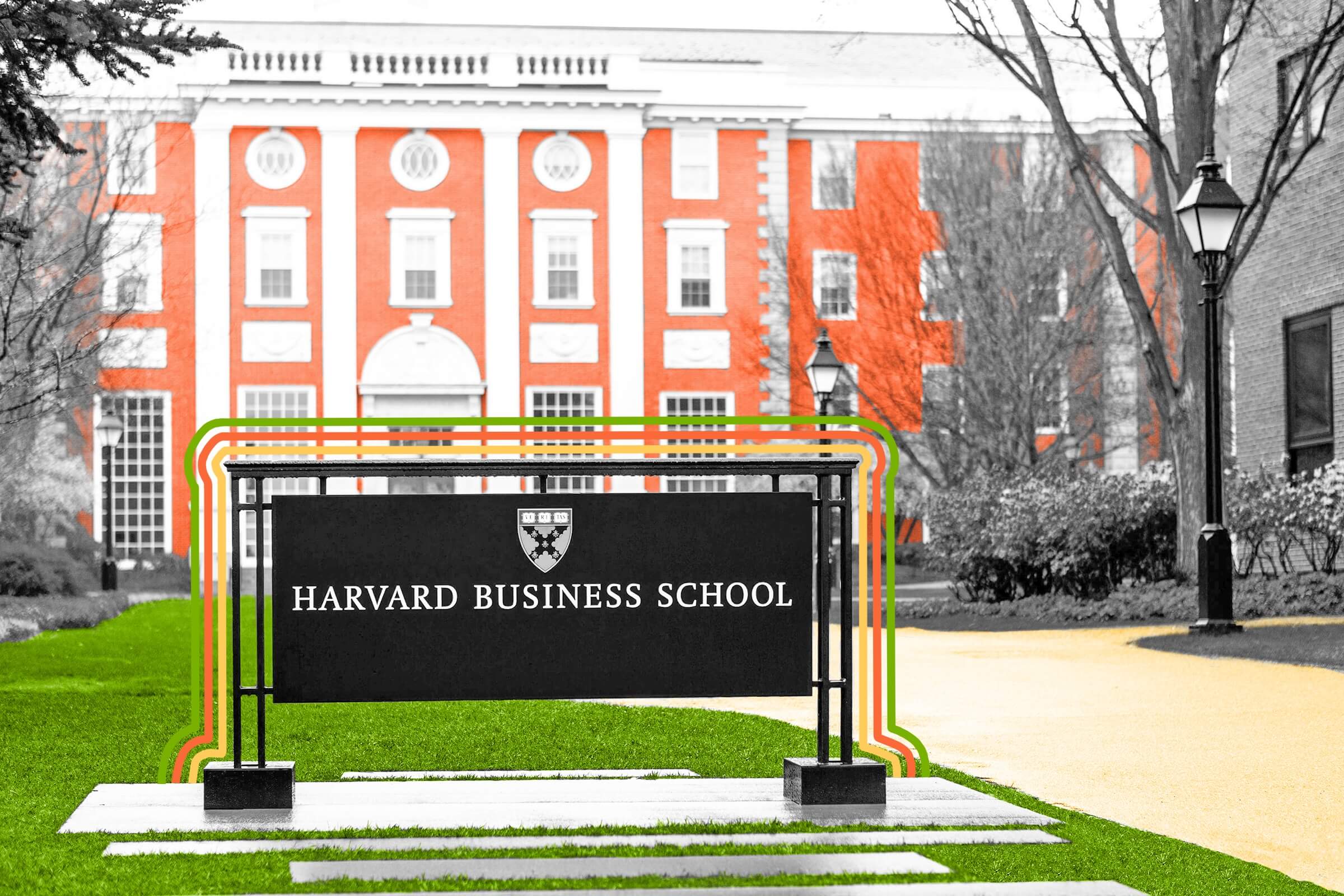
Harvard was founded in Cambridge, Massachusetts, in 1636, making it the oldest operating university in the U.S. Back then, it was set up to train Puritan clergy in the Massachusetts Bay Colony, and its early curriculum focused on classical languages, theology, and logic.
Education at Oxford began around 1096, and the Aztec capital of Tenochtitlan was founded in 1325.
Later on in the 1600s, across the Atlantic, mathematical heavyweights Isaac Newton in England and Gottfried Wilhelm Leibniz in Germany began working on a new kind of mathematics called calculus, a system that could precisely explain motion and change. The two scholars independently developed their respective systems around the same time in the 1660s, and each published early calculus works in the 1680s. By that time, Harvard had already been educating students for more than 40 years.
The university gradually secularized throughout the 18th century, and its religious instruction began to take a back seat to pave the way for more diverse course offerings. Still, it wasn't until the 1720s — nearly a century after Harvard’s founding — that calculus was first introduced into the curriculum.
The word “calculus” comes from the Latin word for “small pebble.”
Advertisement
Harvard has a series of storied underground tunnels.
Beneath Harvard’s stately grounds lies a network of tunnels that have inspired decades of campus intrigue. Originally built to conduct heat and transport services between buildings, they’ve also long been rumored as escape routes and hiding places.
In 1968, Alabama Governor George Wallace reportedly fled from an angry crowd through the tunnels after delivering a speech, and in 1939, a suspected German spy supposedly eluded then-FBI agent Robert Tonis by vanishing into the subterranean lair. Author Jane Langton even set her 1978 murder mystery The Memorial Hall Murder in those mysterious underground tunnels. While the steam tunnels aren’t accessible to the public, a few dormitory tunnels connecting student housing are indeed open and regularly used.
Nicole Villeneuve
Writer
Nicole is a writer, thrift store lover, and group-chat meme spammer based in Ontario, Canada.
Advertisement
top picks from the Inbox Studio network
Interesting Facts is part of Inbox Studio, an email-first media company. *Indicates a third-party property.
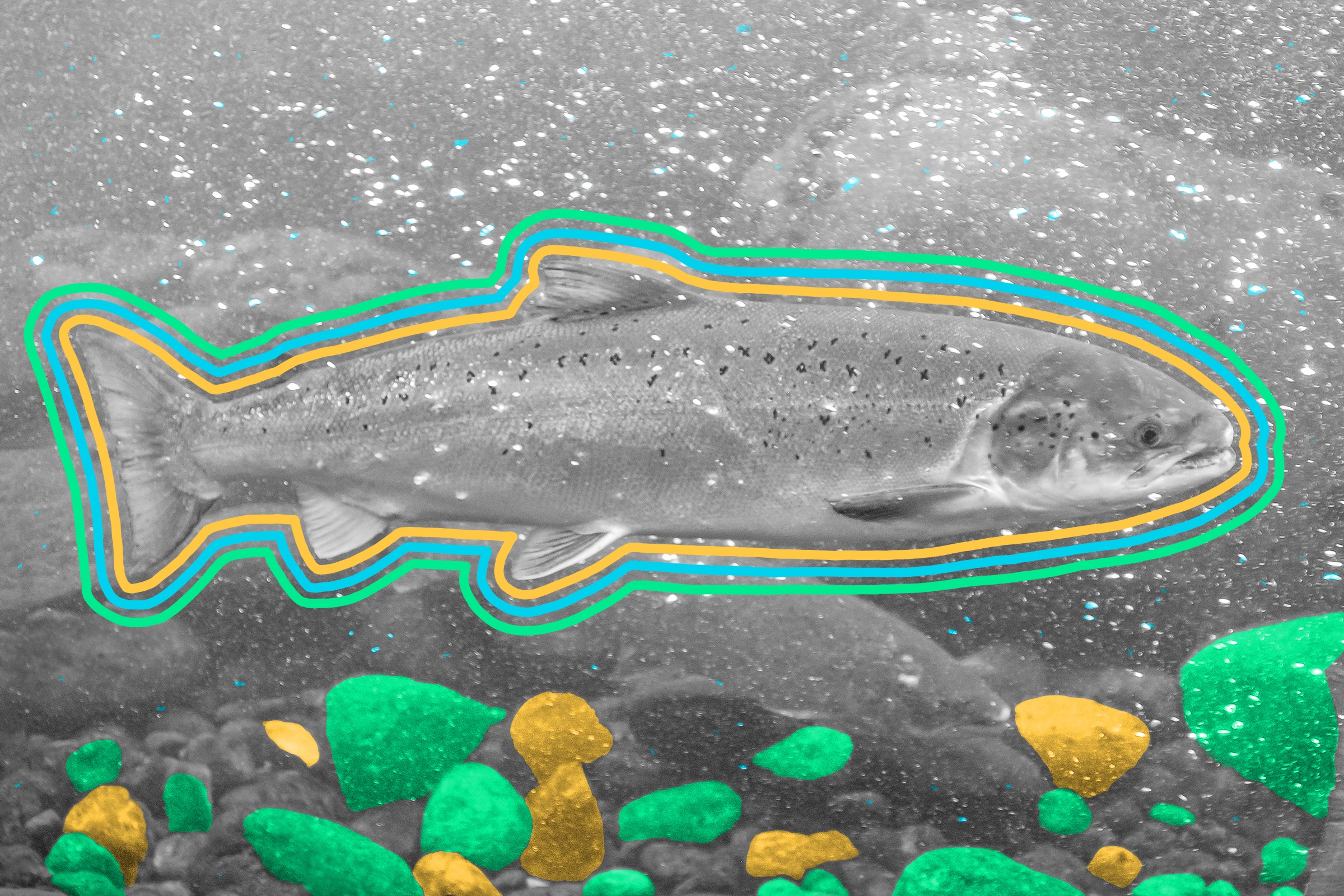
Before humans roamed the Americas in great numbers, the continent was home to some of the Earth’s largest animals: the massive American mastodons of the Yukon, the giant ground sloths of South America, and human-sized armadillo-related creatures called glyptodons. But even before these impressive specimens, another beast of tremendous proportions plied the waters of the Pacific Northwest. Its scientific name is Oncorhynchus rastrosus, but it’s known as the “sabertooth salmon.” The sabertooth salmon looked similar to the pink-hued fish found at most supermarkets today, except for one major thing — it was up to 8 feet long.
Salmon and flamingos are pink for the same reason.
Salmon and flamingos live the maxim “you are what you eat.” Both animals digest orange-red pigment called carotenoids found in krill and shrimp, which turn them pink. Farmers and zookeepers artificially introduce the pigment in order to create this natural hue in captivity.
This giant salmon’s natural range included what’s now California, Oregon, and Washington. Much like modern salmon, it primarily lived in the Pacific Ocean while spawning in bodies of fresh water along the coasts. The fish gets its gruesome name from its teeth, which — unlike those of the similarly named saber-toothed tiger — stuck out like spikes on its snout. Scientists believe these teeth were primarily used in mating displays, fighting, and building redds (aka nesting sites). While this massive salmon went extinct about 5 million years ago, long before humans arrived on the continent, the surviving members of its genus, such as the Chinook and coho salmon, are still some of the most important and beloved species of the Pacific Northwest.
Salmon are anadromous, which means they migrate from oceans to fresh water to spawn.
Advertisement
The saber-toothed tiger is not a tiger.
One of the most fearsome predators of the Pleistocene Epoch (1.8 million to 10,000 years ago) was the saber-toothed tiger. Despite its popular name, this feline, known in scientific circles as “smilodon,” isn’t closely related to the modern tiger at all. Although they share the same family (felidae), smilodon is a member of the now-extinct machairodontinae sub-family, which includes other big-toothed cats from around the world, such as the Homotherium serum (scimitar-toothed cat). But while “tiger” is a bit of a misnomer, “saber-toothed” is right on the money, since the smilodon sported canines that grew to 7 inches long (more than twice the length of a modern tiger’s). Modern humans and “saber-toothed cats,” as scientists now call them, likely co-existed for some time, and scientists are still working to understand exactly why these formidable felines went extinct.
Darren Orf
Writer
Darren Orf lives in Portland, has a cat, and writes about all things science and climate. You can find his previous work at Popular Mechanics, Inverse, Gizmodo, and Paste, among others.
Advertisement
top picks from the Inbox Studio network
Interesting Facts is part of Inbox Studio, an email-first media company. *Indicates a third-party property.
Each June, stores roll out their Father’s Day best — sales on ties, watches, and barbecue grills. But when Father’s Day was first created, a much smaller token was given out to dads: roses. Flowers aren’t as heavily advertised for Father’s Day now as they are for mothers in May, yet the link between dads and the delicate blooms comes from the earliest American celebrations of the holiday.
Many flowers were in the running, but only one became the official bloom of the United States: the rose. President Ronald Reagan signed a proclamation certifying the rose as the national flower in 1986, over other suggestions such as marigolds, dogwoods, and columbines.
The first known Father’s Day is tied to the West Virginia mining community of Fairmont. On July 5, 1908, the town held a church service honoring the lives of fathers in their community, many of whom had perished the December before in what is widely considered the worst mining disaster in U.S. history. However, the church event was held just one time, and another city propelled the holiday into national view.
In 1909, Sonora Smart Dodd launched her campaign to honor fathers from her home in Spokane, Washington. As the daughter of a Civil War veteran and widower who had raised six children, Dodd believed fathers deserved recognition for their roles. Within a year, she had drummed up community support, and on June 19, 1910, Washington became the first state to celebrate Father’s Day. Dodd’s first festivities included an exchange of roses; children gave red roses to their fathers and pinned color-coded buds to their shirts — red for living fathers and white roses in honor of the deceased. The activist even rode through the city, handing out flowers and gifts to fathers who couldn’t leave home. Over time, the tradition of giving roses to dads faded away, but the holiday stuck around. After years of rallying, Father’s Day became a federally recognized holiday in 1972.
The Thousand-Year Rose, the world’s oldest rose bush, grows alongside a church in Germany.
Advertisement
Activists have called for a "Parents' Day" to replace Mother's Day and Father's Day.
Mother’s Day and Father’s Day have long been honored as separate holidays, but in their earliest years, some organizers considered merging the two. A few American activists pushed for a replacement “Parents’ Day” during the 1920s and ’30s, with plans for the festivities to be held on the second Sunday in May (overwriting Mother’s Day). Robert Spero, one of the idea’s most ardent supporters, regularly led Parents’ Day festivities in New York City’s Central Park; in 1931 he argued separate holidays created a “division of respect and affection” within families that should be replaced with a date that instead served as a “reminder that both parents should be loved and respected together.” However, Spero’s efforts never took hold on a grand scale, in part because of the Great Depression. Retailers capitalized on Father’s Day to generate gift-giving dollars in a tight economy, and with the onset of World War II, the date became a new way to honor men’s contributions to the war effort.
Nicole Garner Meeker
Writer
Nicole Garner Meeker is a writer and editor based in St. Louis. Her history, nature, and food stories have also appeared at Mental Floss and Better Report.
Advertisement
top picks from the Inbox Studio network
Interesting Facts is part of Inbox Studio, an email-first media company. *Indicates a third-party property.

Over the course of two weeks in the fall of 1896, some 75,000 people stepped onto the curious contraption stationed at Coney Island's Old Iron Pier. Initially created by engineer Jesse Reno for use in the New York City subway system, the "inclined elevator" carried people on a conveyor belt-type platform, at an angle of 25 degrees, to a height of 6 or 7 feet from the ground. Although it lacked individual steps, the inclined elevator featured accompanying handrails and shallow platform grooves that allowed it to pass seamlessly through a pronged top landing, making it the first working escalator.
There are only two sets of escalators in the entire state of Wyoming.
The escalator sets are located in separate banks in the city of Casper. Their scarcity across the Cowboy State is likely explained by fire codes that prohibit unprotected openings between adjacent floors.
Reno wasn't the first to muse on a means for automatically moving people to higher floors. In 1859, lawyer and inventor Nathan Ames obtained a patent for his "Revolving Stairs," which he proposed could be made from wood or metal, and powered by steam, weights, or hand. In other words, it was more of a fanciful concept than an invention with a clear path to becoming a reality, and the idea was left to gather dust. Thirty years later, amateur engineer Leamon Souder followed suit with a patent for his "Stairway," a series of steps pushed at an incline along an "endless propelling-belt." While more practical than Ames' creation, Souder's Stairway was also never built, leaving Reno to claim the glory after patenting his version in 1892.
While Reno’s business lifted off with the installation of four of his inclined elevators in New York City's Siegel Cooper Department Store in 1896, he soon faced stiff competition from inventor Charles Seeberger. Having purchased a patent from explorer George Wheeler, Seeberger coined the term "escalator" and teamed with the Otis Elevator Company to develop a new and improved model. Similar to today's versions with steps that emerged from the bottom and flattened at the top landing, the prototype wowed onlookers at the 1900 Paris Exposition. By 1920, Otis had absorbed both Seeberger's and Reno's patents and installed 350 escalators around the world, the moving stairway now well past the point of spectacle and clearly established as a mode of casual transportation for modern city-dwellers.
The Norwegian city of Trondheim features the world's only bicycle escalator.
Why bother pedaling a bike up a hill when you can have a machine do the hard work for you? That was the mindset of Norwegian industrial designer Jarle Wanvik, who set about creating an easier way up the 18-degree incline of Trondheim’s Brubakken Hill. Introduced in 1993 as the world’s first bicycle escalator, the Trampe provides a series of footplates that run along a track at the push of a button. With one foot pressed against a plate and the rest of the body on the bike as normal, users are propelled up the 400-plus-foot path at a rate of approximately 5 miles an hour. The Trampe carries 20,000 to 30,000 cyclists per year, according to Trondheim’s tourism site, and it reportedly has a strong safety record. However, perhaps because of high costs of installation — between $2,400 and $3,200 a yard as of 2014 — Brubakken Hill remains the lone place on this planet where bikers can enjoy the reward of quality views without the sweat usually needed to reach such heights (and without getting off their bikes — other “bike escalators” will carry a bike separately up a hill for you).
Tim Ott
Writer
Tim Ott has written for sites including Biography.com, History.com, and MLB.com, and is known to delude himself into thinking he can craft a marketable screenplay.
Advertisement
top picks from the Inbox Studio network
Interesting Facts is part of Inbox Studio, an email-first media company. *Indicates a third-party property.