
Original photo by Oleg Ivanov/ Unsplash+
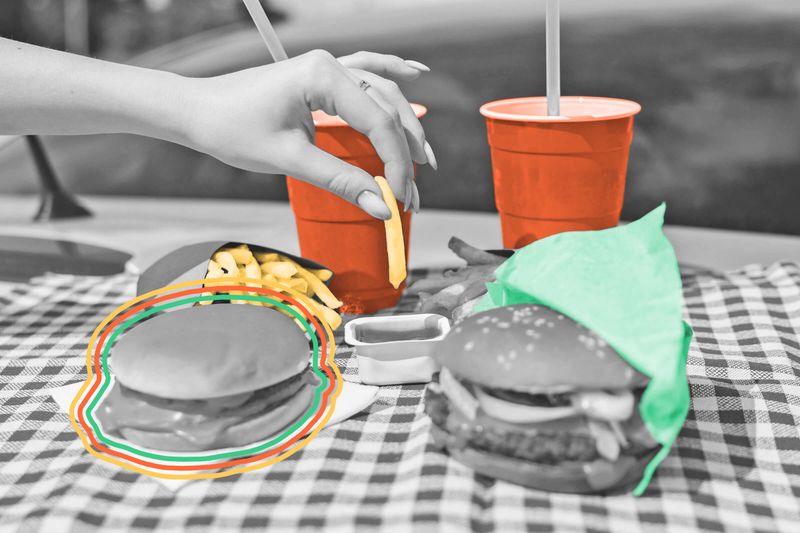
McDonald’s is likely the world’s most popular restaurant, with more than 44,000 locations spread across 100-plus countries. The glow of its golden arches is like a beacon for hungry diners around the world — the company famously boasts that it serves 63 million people every day. However, in one southern Arizona city, it wasn’t always so successful. It took a special sliding window to bring in tons of patrons, particularly those wearing military uniforms. That’s right: The first drive-thru window at McDonald’s was created in 1975 to serve the armed forces.




Oops, incorrect!
It's a factFirst known as McDonald’s Famous Bar-B-Q, the fast-food chain ran as a barbecue restaurant for eight years, primarily selling hot dogs, before switching to a burger-first operation in 1948.
Sierra Vista, Arizona, sits about 20 miles from the U.S.-Mexico border and is home to the Fort Huachuca Army base. While military bases are often good for boosting local businesses, management of the town’s McDonald’s realized that service members often passed by the restaurant without stopping. It wasn’t from lack of hunger; uniform regulations of the time prevented personnel from going into public places on personal business while wearing their uniforms. Soldiers interested in stopping for a burger and fries had to return home and change into civilian clothes before they could place an order.
Knowing this, franchise owner David Rich thought up a way his military customers could skirt the rules. Taking inspiration from other restaurants like In-N-Out Burger and Jack in the Box — which were already using drive-thrus — he added a sliding window to the side of his building where customers could order and receive their food without leaving their cars. Rich’s drive-thru — the first in McDonald’s history — caught on with the restaurant chain. Later that year, a second McDonald’s in Georgia added its own drive-thru, followed by another in Oklahoma City, and by 1979, more than half of McDonald’s 5,000 locations featured drive-thrus. Today, nearly 70% of McDonald’s sales come through its drive-thrus, which are visited by service members and civilians alike.

Numbers Don't Lie
More Interesting Reads




A McDonald’s in ______ has the world’s only “McSki,” a drive-thru for skiers.
Ready to reveal?
Confirm your email to play the next question?
A McDonald’s in Sweden has the world’s only “McSki,” a drive-thru for skiers.

Fast-food dining inspired automobile manufacturers to add cup holders.
Dining and automobiles have always gone together, but until the 1980s, cup holders weren’t commonly included in cars. The earliest vehicles — such as the Model T — had kitchenettes that could be strapped onto the running boards, and by the 1950s, metal tray-like accessories that hung from dashboards could be used to hold snacks. But these items were meant to be used while cars were parked at diners, drive-ins, or picnic sites, not on the go. As restaurant drive-thrus increased in popularity, more people began eating in their cars while en route to their destinations, and auto manufacturers took notice. In 1983, Chrysler installed the first permanent cup holder in its Dodge Caravan and Plymouth Voyager vans, paving the way for long-distance snacking free(r) from spills.

Nicole Garner Meeker is a writer and editor based in St. Louis. Her history, nature, and food stories have also appeared at Mental Floss and Better Report.
top picks from the Inbox Studio network
Interesting Facts is part of Inbox Studio, an email-first media company. *Indicates a third-party property.