
Original photo by Luis Enrique Torres/ Shutterstock
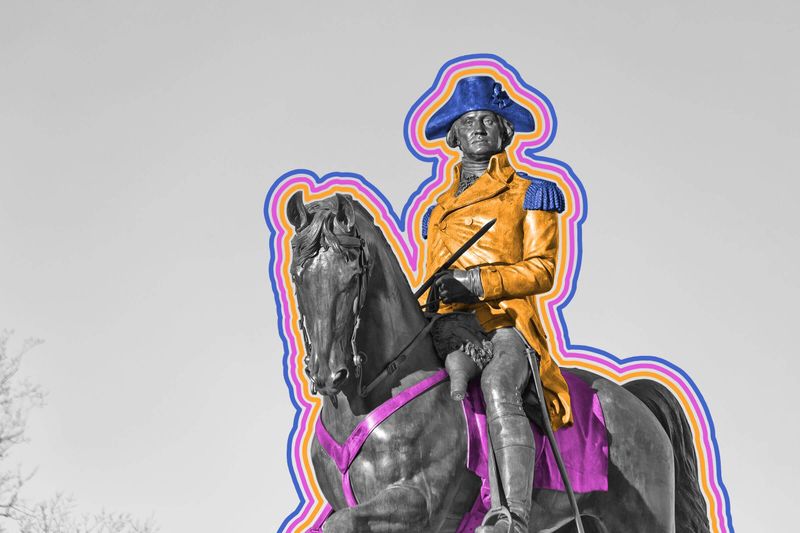
The very first American presidents — George Washington included — led the country through the American Revolution and its earliest days without wearing pants. That’s because the Founding Fathers actually wore breeches, tight-fitting men’s bottoms that cut off at the knee. (Their calves were covered with knee-high stockings.) Breeches were a status symbol; full-length pantaloons were generally reserved for working folk who needed more ease to complete manual labor, which was difficult to do in custom-fitted breeches. The knee-length garments were also the pinnacle of men’s fashion because they were on trend in Europe; Americans generally kept up with overseas styles, in part because the colonies initially couldn’t mass-produce clothing. (For some time, textiles were the top import from England.)


Oops, incorrect!
It's a fibWashington never wore a wig; his hair was entirely his own. The first president was a redhead in his younger years and later powdered his hair, giving it a white appearance. The next four presidents — Adams, Jefferson, Madison, and Monroe — all donned then-trendy white hairpieces.
Another revolution — in France — eventually led Americans to turn their backs on breeches around the start of the 19th century. French political groups such as the sans-culottes (literally meaning “without knee breeches”) stylized longer trousers as the apparel of the everyday man, disparaging breeches as the clothing of the wealthy elite. For a while, American presidents continued to stick with the cropped breeches, though pants slowly crept into everyday style. Americans wouldn’t see the country’s highest leader don full-length pants until 1825, when John Quincy Adams became the sixth president — and the first to be inaugurated while wearing a pair of trousers. (He also ditched the powdered wig.)

Numbers Don't Lie
More Interesting Reads





Before he became the 17th president, Andrew Johnson worked as a ______.
Ready to reveal?
Confirm your email to play the next question?
Before he became the 17th president, Andrew Johnson worked as a tailor.

Pants were once banned in ancient Rome.
When in ancient Rome, dress as the Romans do — and this once meant avoiding pants. In 397 and 399 CE, ruling brothers Honorius and Arcadius issued strict edicts against trouser-wearing, their reasoning being the supposedly uncivilized nature of two-legged apparel. Most Romans wore tunics on a day-to-day basis — togas were generally reserved for formal events — in contrast to the shirt-and-pant combination worn by neighboring Germanic cultures. Many Romans considered the foreign garments to be “aggressive” and uncouth, acceptably worn only by soldiers. The fourth-century ban prohibited civilians from donning pants, and doing so meant risking permanent exile. The influence of trousers, however, was hard to fight off, and the ban wouldn’t hold up as Rome fell; pants eventually became a regular part of Roman court clothing during the fifth and sixth centuries.

Nicole Garner Meeker is a writer and editor based in St. Louis. Her history, nature, and food stories have also appeared at Mental Floss and Better Report.
top picks from the Inbox Studio network
Interesting Facts is part of Inbox Studio, an email-first media company. *Indicates a third-party property.