
Original photo by PIC4U/stock.adobe.com
In the majority of countries, including the United States and United Kingdom, “adulthood” is often said to begin at 18, when people gain certain rights and privileges such as the ability to vote or enter legally binding contracts. But neuroscientifically speaking, the true age of adulthood is one that most people let pass by without any fanfare.
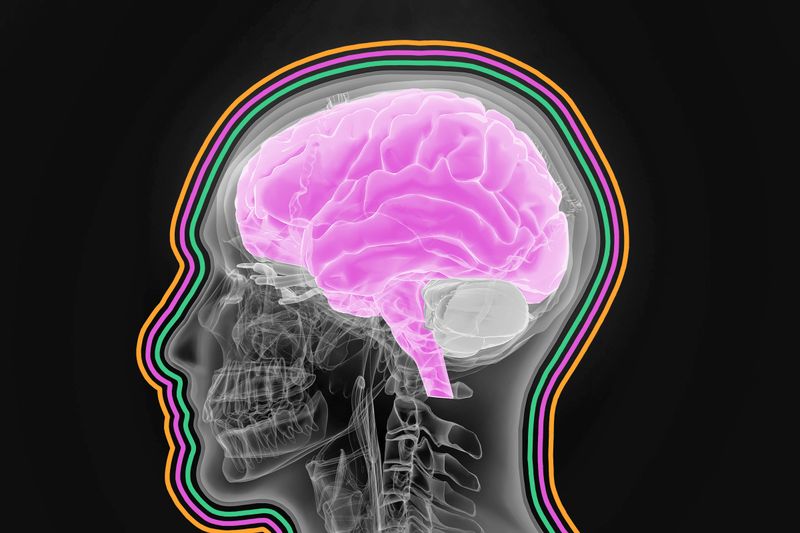
In 2025, scientists at the University of Cambridge published a study in which they determined the brain goes through five stages of aging — and, on average, the “adult” stage begins around age 32. According to the research, which studied the brains of nearly 4,000 people between the ages of 0 and 90, the human brain has four “turning points” over a lifetime, which correspond to major changes in its neural wiring. Those changes happen around ages 9, 32, 66, and 83, and divide the lifespan into five brain eras: childhood, adolescence, adulthood, early aging, and late aging.




Oops, incorrect!
It's a factBabies continuously take in a huge amount of information while learning about themselves and their environment. After the rapid expansion of the first few years, the brain goes through a pruning process in which some connections are strengthened and others are weakened.
Adulthood is by far the longest of the identified eras, lasting roughly three decades. During that time, the brain is much more stable than in previous eras, without any major changes in its size or physical wiring. There’s also a plateau in intelligence and personality, which don’t go through the transformations often seen in younger people “discovering” themselves and making new neural associations with the world around them.

Numbers Don't Lie
More Interesting Reads






The human brain is made up of about 75% ______.
Ready to reveal?
Confirm your email to play the next question?
The human brain is made up of about 75% water.

The legal voting age in the U.S. was 21 until 1971.
Throughout most of U.S. history, the legal voting age was 21. This was established by the American colonies, which adopted the practice from England. It wasn’t until World War II that people began seriously campaigning for a reconsideration of the age limit, due in large part to the fact that soldiers were admitted to (or drafted into) the Army at a minimum age of 18.
From the 1940s until the 1970s, several states considered a change in minimum voting age, but only a few actually made the switch. The slogan “old enough to fight, old enough to vote” regained momentum during the Korean War and Vietnam War. Although there was much debate in Congress about the implications of allowing teenagers to vote, the resolution was finally passed in 1971 and the 26th Amendment granted voting rights to citizens 18 and older. The amendment had the shortest ratification period of any in U.S. history.

Ali Eldridge is a writer and editor based in Chicago. Currently the editor of "What on Earth! Magazine," she has also contributed extensively to Encyclopaedia Britannica and published several books for children. She spends much of her free time learning new languages and trading puns with her clever kid.
top picks from the Inbox Studio network
Interesting Facts is part of Inbox Studio, an email-first media company. *Indicates a third-party property.