

Original photo by © riskms/iStock
Most of us can name a few endangered animals off the top of our heads — orangutans, sea turtles, and tigers often top the list. But beyond these familiar examples there’s a far longer list of lesser-known species that are also on the verge of extinction.
Many endangered animals are small or live in remote corners of the world, which makes them easy to overlook, and often more difficult to protect. In many cases, their survival now depends on targeted conservation efforts — and on people simply knowing they exist in the first place. With that in mind, here are five endangered animals you’ve probably never heard of.

Vaquita
About the size of a medium dog, this small dolphin-like porpoise has a soft gray coloring and, most distinctively, dark rings around its eyes and mouth that resemble a cow’s markings — in fact, the name “vaquita” is Spanish for “little cow.” Vaquitas live in the upper region of Mexico’s Gulf of California; notoriously shy, they usually keep a low profile and quickly slip away at the sound of approaching boats.
The vaquita’s story has unfolded quickly and dramatically. The animal was identified by scientists in 1958, and its known population numbered nearly 600 in the 1990s. Today, however, its population has dwindled to around just 10 individuals remaining, making it the most endangered marine mammal on Earth. The main threat to the vaquita, along with many of its fellow marine creatures such as sea birds and turtles, is accidental entanglement in gillnets set for other fish.
Since conservation efforts gained traction in 2018, there have been hopeful signs that the population is slowly beginning to recover. As recently as 2025, infant vaquitas were observed living longer than they had in recent years, making it past the one or even two-year mark.
Gharial
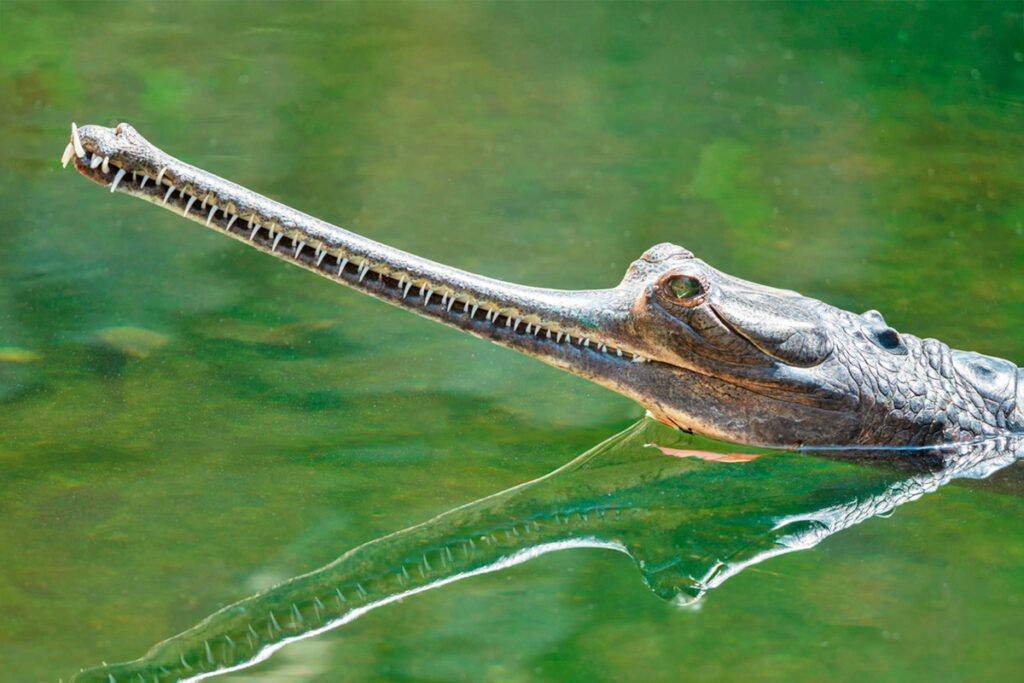
The gharial is a crocodilian that looks even more prehistoric than typical crocodiles, with a long, skinny snout lined with around 100 sharp teeth. While it historically inhabited rivers across Bangladesh, Bhutan, India, Myanmar, Nepal, and Pakistan, only fragmented populations survive in northern India and Nepal today.
Male gharials are especially memorable, sporting a bulbous growth on the tip of their snouts that’s used to amplify their distinct popping and buzzing calls during mating season. But despite their impressive size — they can grow up to 20 feet long — and intimidatingly toothy jaws, gharials are critically endangered. Their sensitivity to water temperature leaves them vulnerable as climate change warms rivers, and river pollution and dam construction have disrupted habitats.
Today, careful conservation programs including habitat restoration, captive breeding, and reintroduction into protected rivers have helped slow the population decline.
Kākāpō
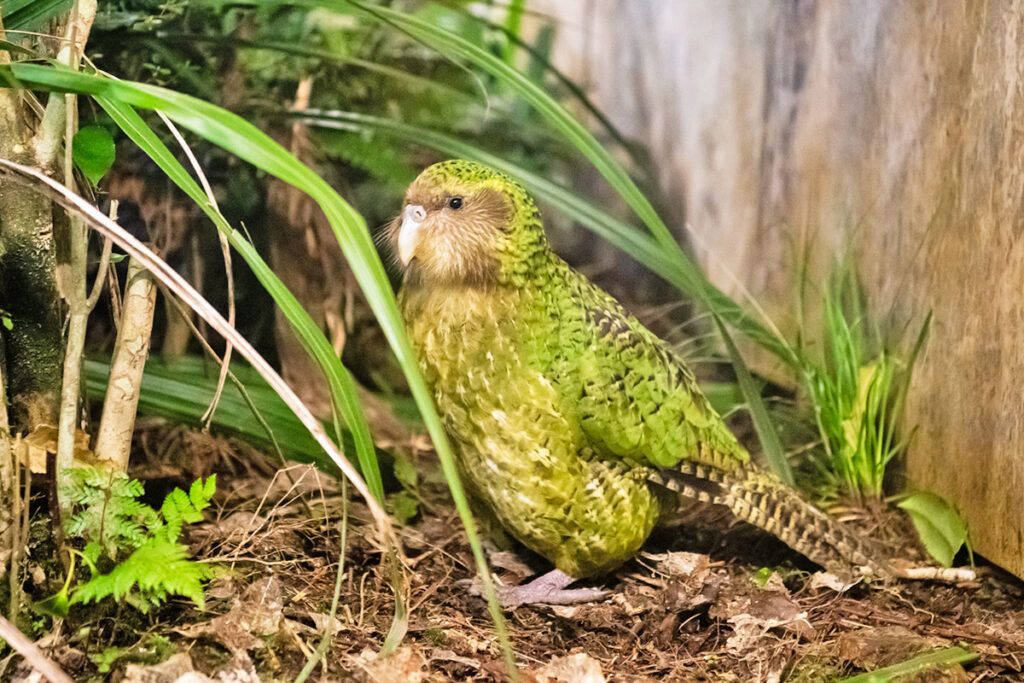
The beautiful kākāpō parrot is an example of what dedicated conservation efforts can achieve for endangered animals. This large, nocturnal, flightless parrot, with its bright-green feathers, owl-like face, and distinct waddle, was once widespread across New Zealand.
Populations began declining after the arrival of Māori settlers around the 13th century due to hunting and the introduction of the fauna-destroying Polynesian rat. The Kākāpō population dwindled further following European settlement in the 18th and 19th centuries due to hunting, habitat loss, and the introduction of predators such as cats. Despite conservation efforts that began in 1894, kākāpōs had nearly gone extinct by the mid-1990s, with fewer than 60 birds left on Earth.
Today, however, thanks to decades of collaborative work by Māori guardians and government conservationists, the population has increased to around 235. In 2023, kākāpōs began to be relocated back from predator-free offshore islands to a mainland sanctuary safe from predators for the first time in about 50 years. In 2026, the parrot had a record-breaking breeding season: More than 100 chicks hatched, the most in more than 30 years.
Though still considered critically endangered, it nonetheless marks a major milestone in bringing these unique birds closer to their original habitat.
More Interesting Reads


Aye-aye
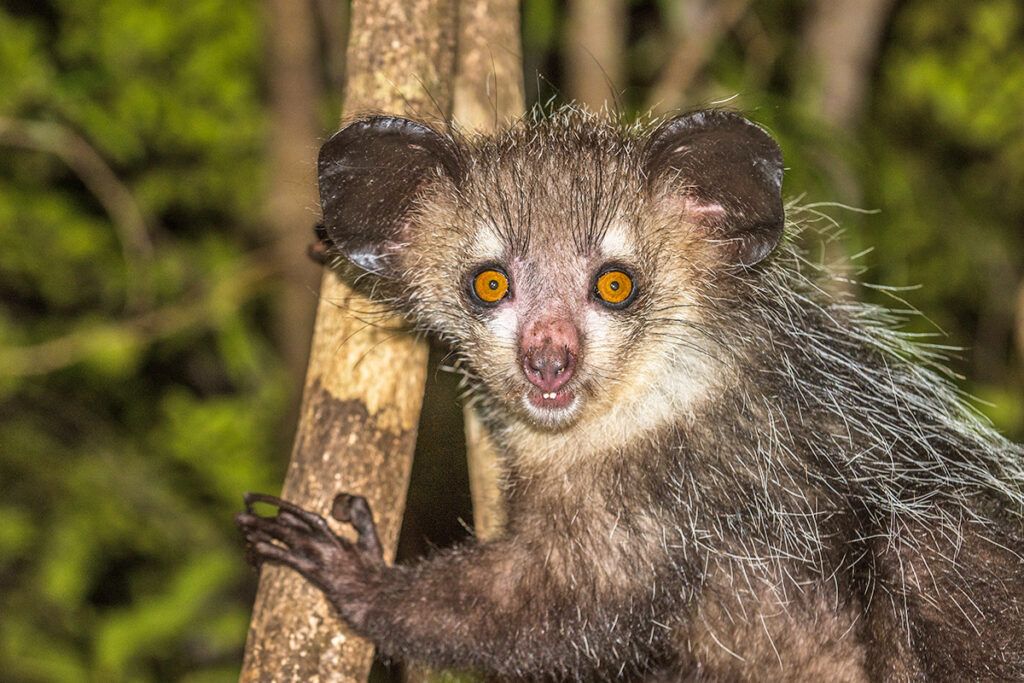
Native to Madagascar, the aye-aye looks like something straight out of the imagination. Roughly the size of a house cat, this nocturnal lemur is distinctive thanks to its big, round eyes, shaggy dark fur, and oversized, moveable ears.
Its most unusual feature, however, is its long, skeletal middle finger. This is used as a built-in tool to tap along tree bark and find hollow spots to drill into and pull out insects hidden inside. It’s a specialized feeding method known as percussive foraging that only few other animals can claim, including striped possums, found primarily in New Guinea.
The aye-aye’s strange appearance has unfortunately worked against it. According to some local traditions, the aye-aye is seen as a bad omen, and it’s often killed on sight. The biggest threat to its population, however, is ongoing deforestation. Although they can adapt to a range of habitats across Madagascar, aye-ayes are rarely seen and seldom encountered in the wild — but the holes they drill in tree bark when looking for food are a sign that they’re around.
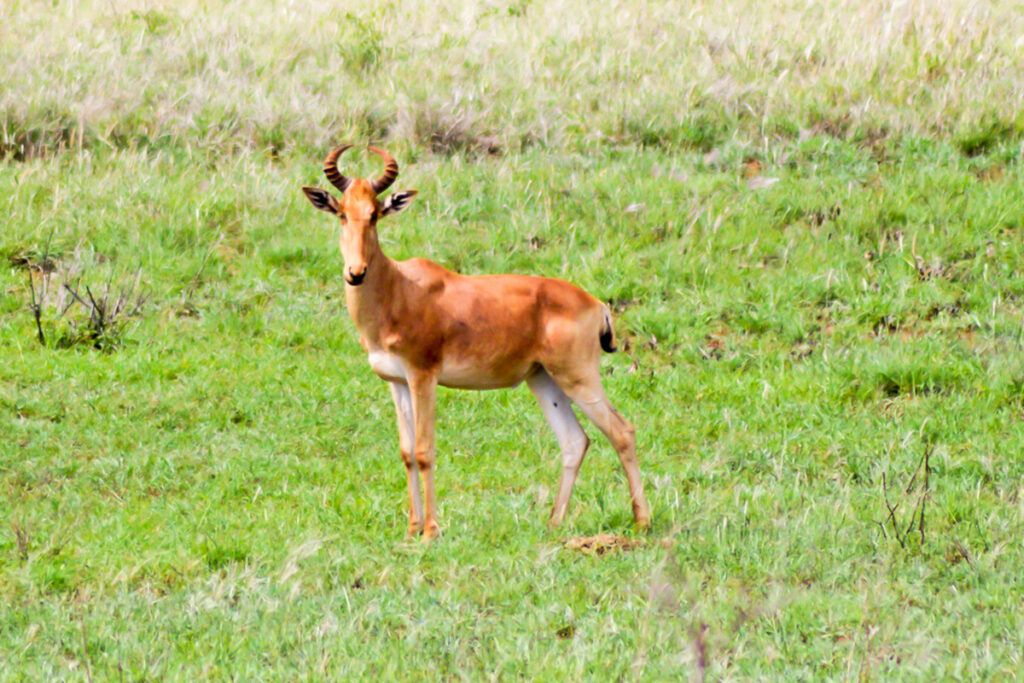
Hirola
Found only in the southern part of the Kenya-Somalia border, the hirola is one of the rarest antelopes on Earth, with an unmistakably striking appearance. These graceful hoofed mammals are best known for their long snouts and the distinctive white goggle-like markings around their eyes, earning them the nickname “four-eyed antelope.” Both males and females sport dark, gently curved horns that stretch upward in a harp-like arc and can grow to nearly 3 feet long.
Unfortunately, hirola numbers have fallen dramatically over the past 50 years, from thousands in the 1970s to around just 500 today. A combination of viral disease outbreaks, tree overgrowth in formerly open grasslands, and abundant predators such as lions, cheetahs, and even eagles has put the species on the brink.
Conservationists are fighting to turn the tide, however: Habitat restoration efforts include protecting rhinos and elephants that naturally work to maintain the hirola’s grasslands by grazing heavily, trampling vegetation, and preventing shrubs and trees from taking over.

Nicole is a writer, thrift store lover, and group-chat meme spammer based in Ontario, Canada.
top picks from the Inbox Studio network
Interesting Facts is part of Inbox Studio, an email-first media company. *Indicates a third-party property.