

Original photo by © Mathew Schwartz/Unsplash.com
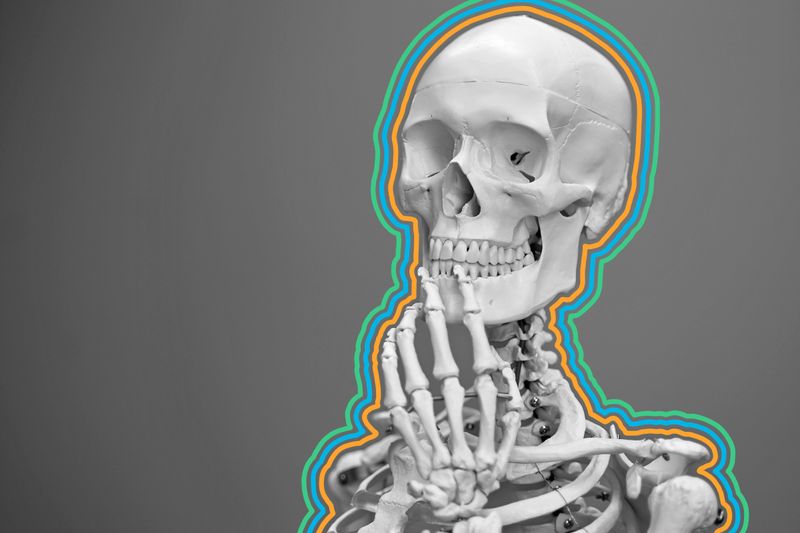
Pain is a complex topic with a lot of variability. Stepping on a Lego brick with your bare foot feels very different from breaking your leg, though most people would describe both sensations as extremely unpleasant. How we experience pain also varies from person to person. Studies have linked individual pain thresholds to numerous factors, including age, sexual characteristics, and even hair color. But while two people might argue over whether a stomachache or a headache is worse, they’ll likely agree that these spots on the human body are especially sensitive to pain.
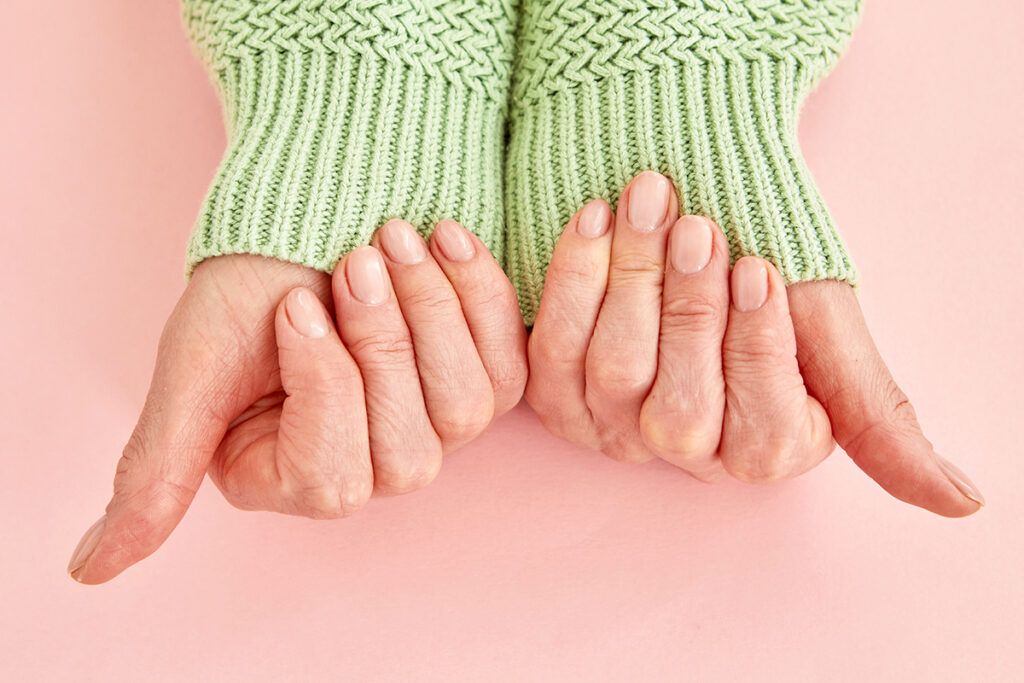
Fingertips
For a 2014 study on pain sensitivity, University College London (UCL) scientists relied on a concept called “spatial acuity”: the ability to pinpoint the exact source of a sensation on the body. After using lasers to administer pain to volunteers without activating their touch receptors, the researchers concluded that fingertips are among the body parts most sensitive to pain. This came as a surprise; while anyone who’s had a paper cut knows how sensitive they can be, fingertips actually have a low density of pain-sensing nerve cells compared to other areas. So what explains the findings? According to the scientists’ theory, we use our fingertips so much that our nervous system adapts them to be extra sensitive.
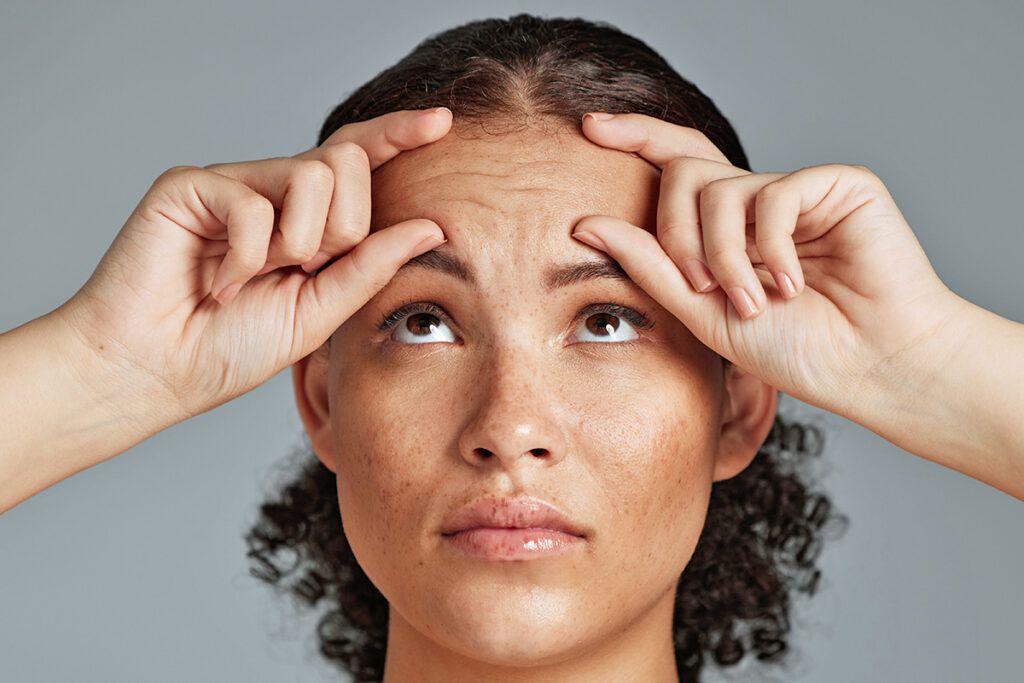
Forehead
The same UCL study found that the forehead ranks up there with fingertips as a part of the body that’s especially sensitive to pain. Not only are we keenly aware of discomfort in the face and head, but research shows that we also may have a harder time coping with it. Duke University scientists found that headaches make you extra miserable because your head’s sensory neurons are wired directly into one of your body’s main emotional signaling centers. The difference in suffering between headaches and other types of pain can even be seen on an MRI.
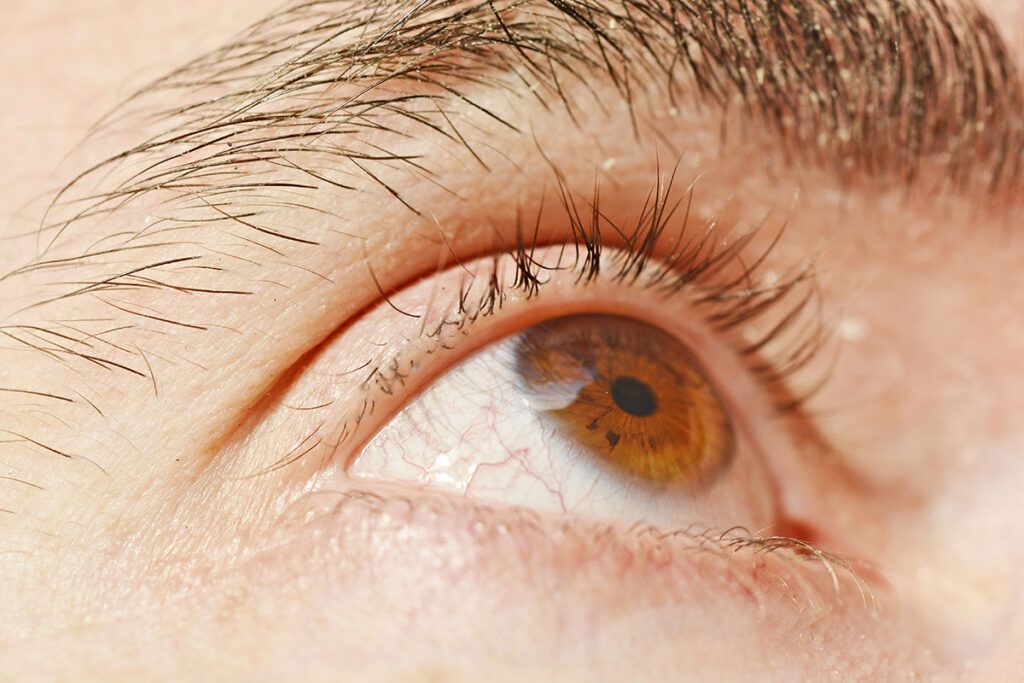
Cornea
Your skin isn’t the only part of your body that’s densely packed with nerves. Consider the cornea: The transparent layer covering the front of your eye is the most densely innervated tissue in the human body. Scientists estimate that the cornea’s extraordinary density of nociceptors — the nerve cells responsible for detecting pain — makes it 300 to 600 times more sensitive than skin.
More Interesting Reads


Shin
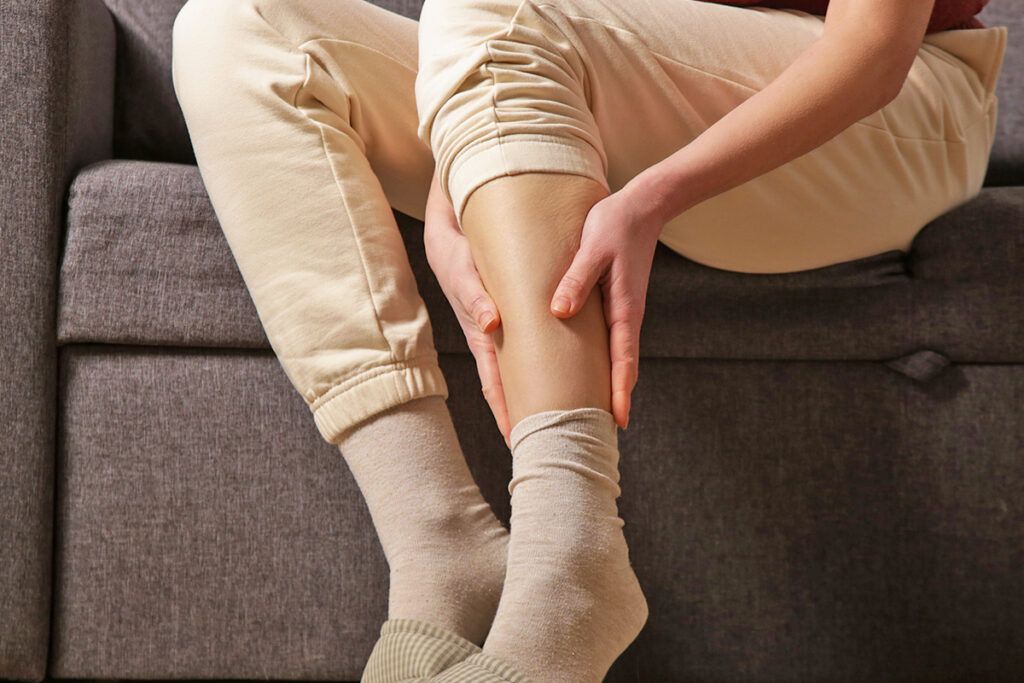
While greater nerve density makes it easier to tell where exactly on your body a painful sensation is happening, the level of pain you experience from certain stimuli depends on other factors. One is the level of cushioning that protects the affected area. Your bones are covered in periosteum, a highly sensitive tissue packed with nociceptors. It can get damaged by blunt force trauma when you fall or get hit by something, which causes those painful “bone bruises” you may have experienced. Layers of muscle and fat can help protect the periosteum, but some areas of your body — like the shins — don’t have much of that padding.
Funny Bone
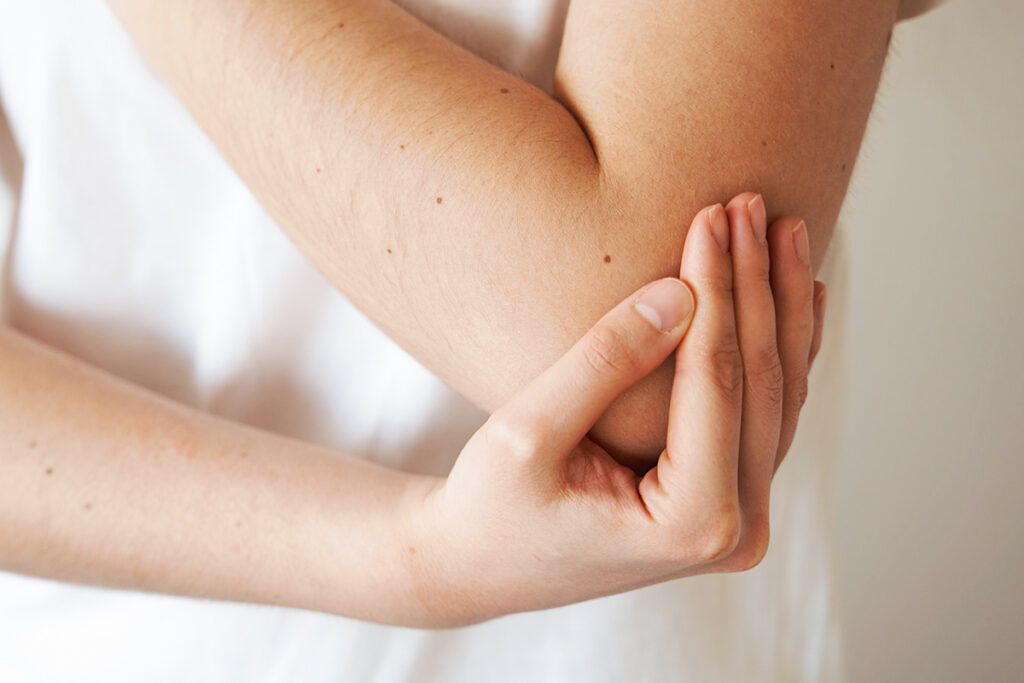
Your so-called funny bone, the point on your elbow that can cause brief but startling pain when hit just the wrong way, isn’t a bone at all; it’s actually the ulnar nerve. This nerve extends down the back of your arm to your hand, helping you move your hand and fingers, and at the elbow it runs directly under your skin. That means a bump to your elbow can hit the vulnerable nerve without much tissue to cushion it, leading to a disproportionately sharp shock.
Genitourinary System
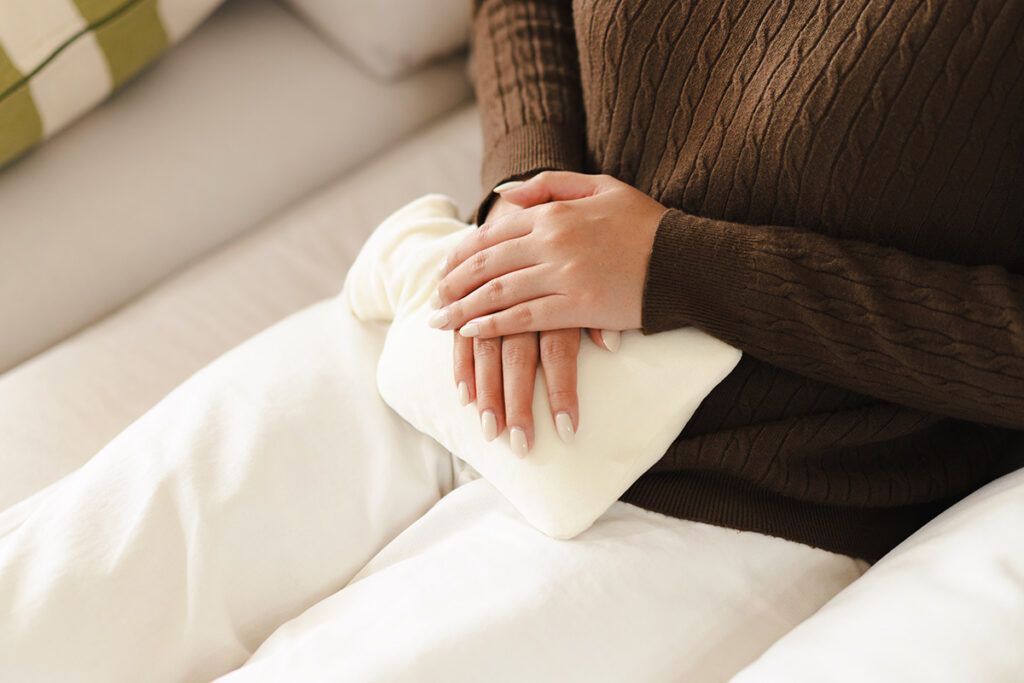
No matter your biology, your genitourinary system (the combined urinary and reproductive systems) is likely the part of you that’s most vulnerable to pain. Genitals are densely packed with nerves, as might be expected for organs so important to the survival of the species. Human testicles are typically on the outside of the body where they’re almost totally unprotected. If they’re hit, the pain can be excruciating, often radiating into the abdomen through a process called “referred pain.” It can be bad enough to cause nausea and vomiting. For people with an ovo-uterine system, pain associated with menstruation (like menstrual cramps) can be so severe that it’s been compared to having a heart attack. Childbirth is also frequently cited as one of the worst pains a human can experience.
However, for many people who’ve experienced it, a certain type of genitourinary pain has no comparison : passing a kidney stone. You might think that the worst part is having a sharp bit of calcified minerals rip through your urethra, but the most painful aspect is typically something called renal colic. This agonizing, cramping flank pain occurs when your urinary system is obstructed. The sensation can radiate through your abdomen and groin, both as a dull ache and sharp waves, and it’s often accompanied by nausea and vomiting. How bad is it? In one study, most women who experienced both said that it was worse than childbirth.
So, to avoid the worst pain possible, protect your skin, eyes, bones, and genital area — and, above all, stay hydrated.

Ali Eldridge is a writer and editor based in Chicago. Currently the editor of "What on Earth! Magazine," she has also contributed extensively to Encyclopaedia Britannica and published several books for children. She spends much of her free time learning new languages and trading puns with her clever kid.
top picks from the Inbox Studio network
Interesting Facts is part of Inbox Studio, an email-first media company. *Indicates a third-party property.