
Original photo by EKKAPHAN CHIMPALEE/ Shutterstock
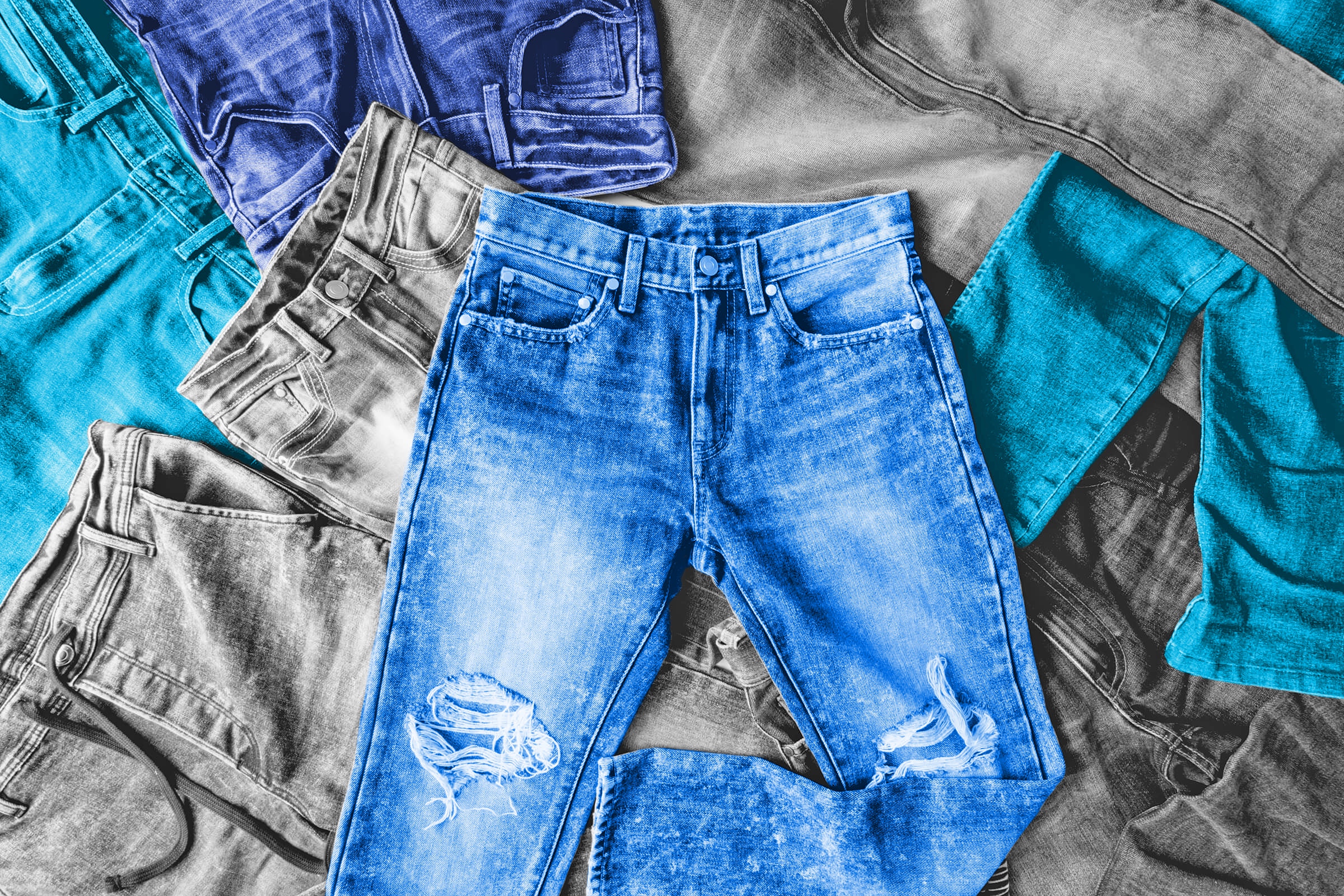
Blue jeans have long been a staple of wardrobes around the world, worn by everyone from construction workers to rock stars. Certain looks, from James Dean’s cuffed 1950s denim to Steve Jobs’ faithful 501s have even become ingrained in our cultural imagination. The classic color of jeans now feels essential to their identity, but it wasn’t originally chosen for stylistic reasons. So why are jeans typically blue?

Feeling Blue
Long before Levi Strauss patented riveted work pants and created the modern blue jean in 1873, laborers across medieval Europe also wore trousers that were dyed blue, first with locally grown woad (a plant in the mustard family) and later with imported indigo. Those early work pants weren’t jeans as we know them today, but they did set the stage for our modern version — particularly the color.
Blue dye wasn’t used simply because it was available — it proved handy for other reasons, too. The dark color hid the grime that came with sweating in the sun or toiling away in soil, and indigo’s unique properties made it a particularly durable choice. As fabric comes out of the dye vat, exposure to the air causes indigo to oxidize and solidify, forming a thin coating around the fibers. This helps indigo resist fading far better and for far longer than most other natural dyes.
There may have been another, subtler benefit to dying trousers blue: The Indigo plant has long been valued in traditional Chinese and Indian medicine for its antibacterial properties, and it’s possible that indigo-dyed garments resisted odor slightly better than undyed cloth, an obvious advantage at a time when washing clothes was infrequent.

Modern Blue Jeans Are Born
By the mid-19th century, cotton pants had become standard workwear for miners, railroad workers, and other laborers in the American West, and the textile industry that supplied them was booming. American mills such as the Amoskeag Manufacturing Company in Manchester, New Hampshire — then one of the largest textile producers in the world — were reliably producing indigo-dyed cotton twill known as denim, a proven workhorse material that had achieved popularity throughout Europe and the Americas.
One of Amoskeag’s customers, a San Francisco dry-goods merchant named Levi Strauss, stocked the company’s blue denim fabric, and Reno tailor Jacob Davis purchased it. When Davis began reinforcing work trousers with metal rivets, he did so on pants made of both undyed duck canvas and blue denim. His customers gravitated toward the most practical color: dark blue.
Eventually, synthetic indigo, which was developed in the 1890s, made blue denim cheaper and easier to produce than ever before. By the 1900s, undyed work wear was all but discontinued, and blue became the de facto dye for work pants.

A Style Icon Emerges
Not only was blue denim standard workwear by the 20th century, but it also became a cultural juggernaut. Hollywood’s cowboys of the 1930s cemented blue jeans as symbols of rugged Americana; soldiers wore denim abroad during World War II, spreading the look’s popularity overseas; and teenagers in the postwar years embraced the garment as a uniform of rebellion. Women who had worn denim in wartime factories also continued reaching for it long after the war ended.
By that point, blue jeans’ ability to retain their sturdiness even as the dye subtly faded at creases and edges had become a signature style. Today, jeans are a timeless wardrobe staple — around 3 billion pairs were sold in 2022 alone — and though they’re available in many colors, the classic pair of jeans will always be blue.

Nicole is a writer, thrift store lover, and group-chat meme spammer based in Ontario, Canada.
top picks from the Inbox Studio network
Interesting Facts is part of Inbox Studio, an email-first media company. *Indicates a third-party property.