
Original photo by Allstar Picture Library Ltd/ Alamy

When we think of inventors, we tend to picture lab-coated scientists hunched over workbenches or obsessive engineers tinkering with strange new technologies. But many have not fit that stereotype at all; in fact, some of history’s innovators have been famous for entirely different reasons, including celebrities from the worlds of stage and screen. Here are 8 inventions by people you probably never would have guessed.
Marlon Brando’s Conga Drum
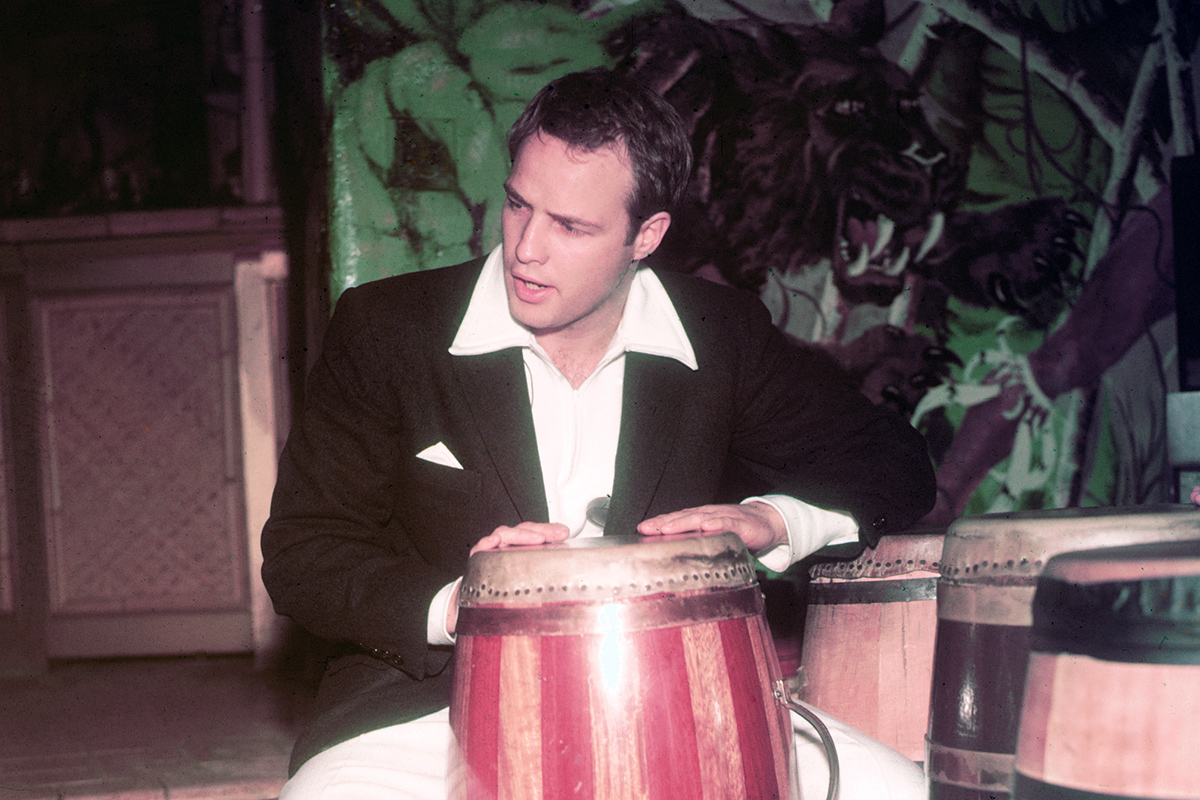
In addition to being widely regarded as one of the greatest actors of all time, Marlon Brando was also an avid percussionist who loved playing conga and bongo drums. Frustrated with the standard method of tuning traditional conga drums, which required laboriously adjusting five or six tension screws, he invented and patented a design for a conga drum that could be tuned using a single crank.
Brando received the patent in 2002, just two years before his death, and his invention unfortunately never gained any traction. Later, professional drummer Poncho Sanchez tried the drum, telling LA Weekly, “It sounded pretty good … It was a cool idea,” but he ultimately concluded the instrument was too impractical and expensive to be a sellable product.
Mark Twain’s Self-Adhesive Scrapbook
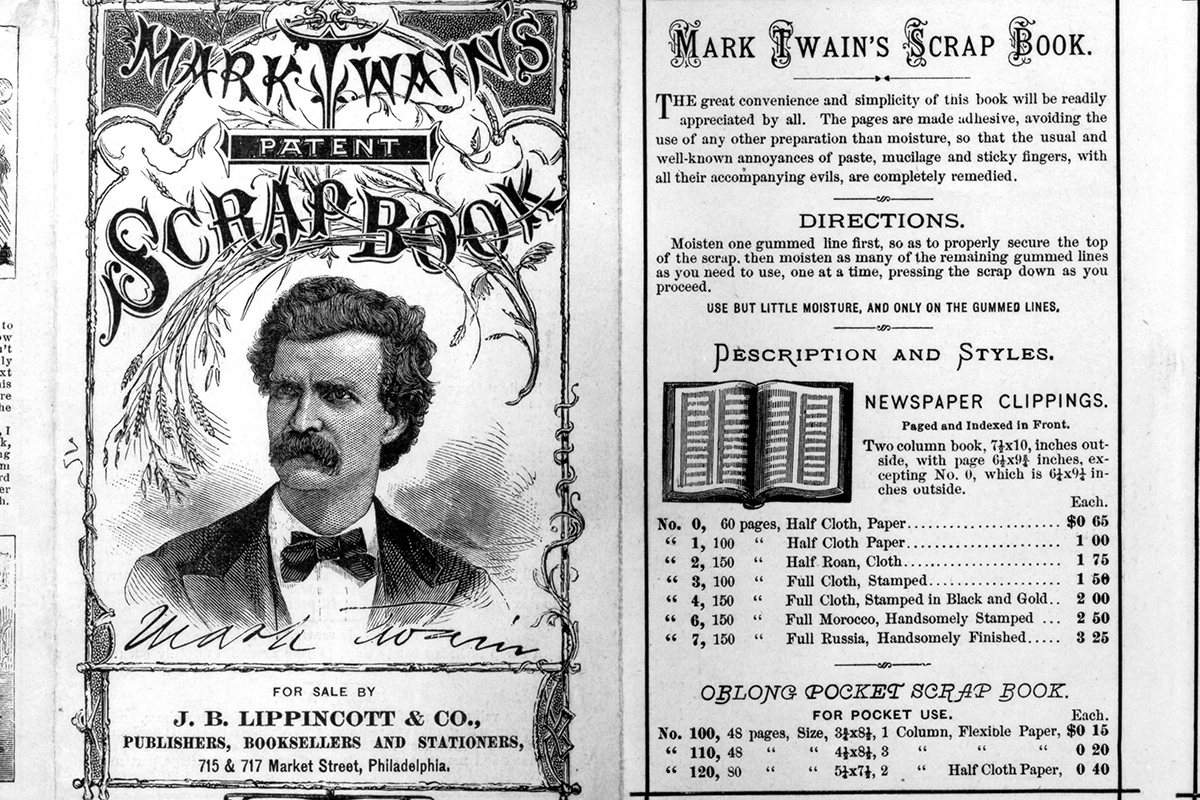
Mark Twain, famously one of America’s greatest humorists, was an avid scrapbooker. Tired of the time and mess involved with manually applying messy glue to each item in the collection, he invented a scrapbook that featured pages with pre-applied adhesive strips users simply had to moisten before pressing items onto the page. The invention was a commercial success, and his scrapbooks remained in production from around 1877 until 1902.
Hedy Lamarr’s Frequency-Hopping Technology
Hedy Lamarr was one of Hollywood’s most celebrated actresses in the 1930s and ’40s, starring in films such as Boom Town (1940) and Samson and Delilah (1949). But when she wasn’t filming, Lamarr worked on complex technological innovations.
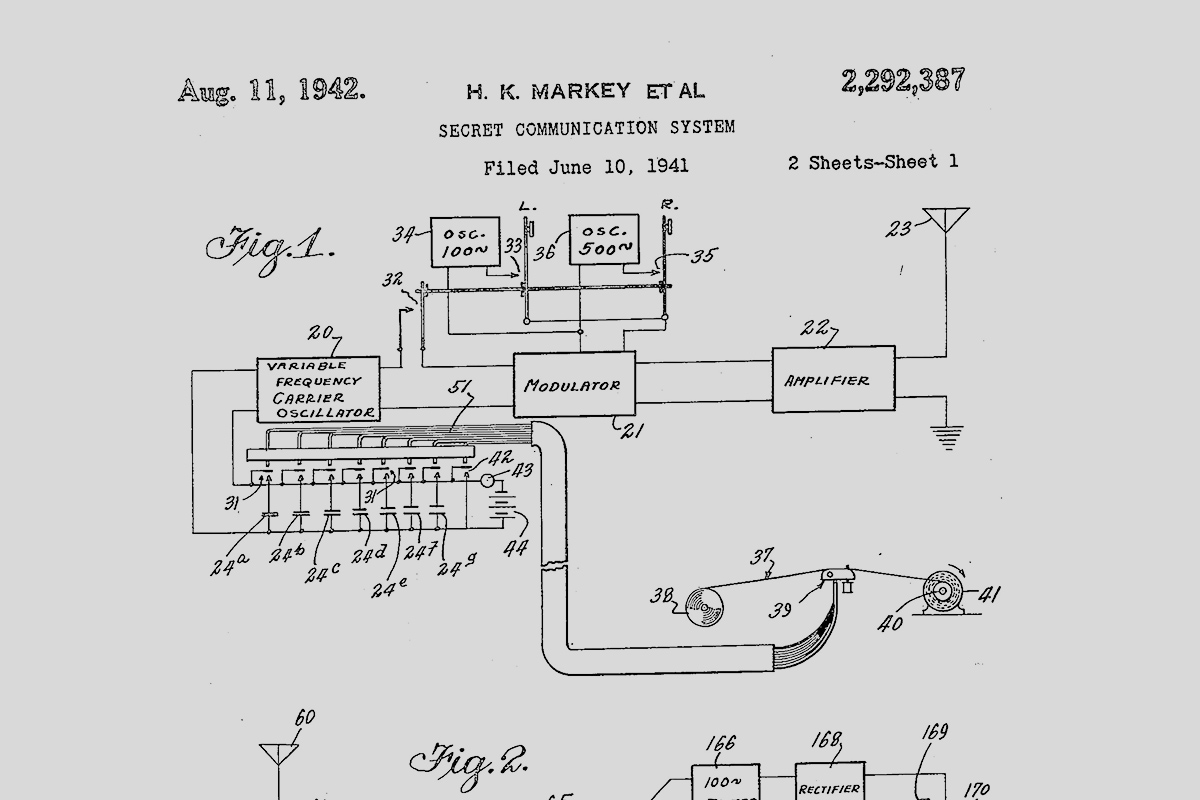
In 1942, she co-invented and patented a “secret communication system” with avant-garde composer George Antheil. Using frequency-hopping spread spectrum technology — a method wherein radio signals rapidly switch between frequencies — she developed unjammable torpedoes to be used against German U-boats. That same technology later formed the basis for Wi-Fi, Bluetooth, and GPS.
More Interesting Reads


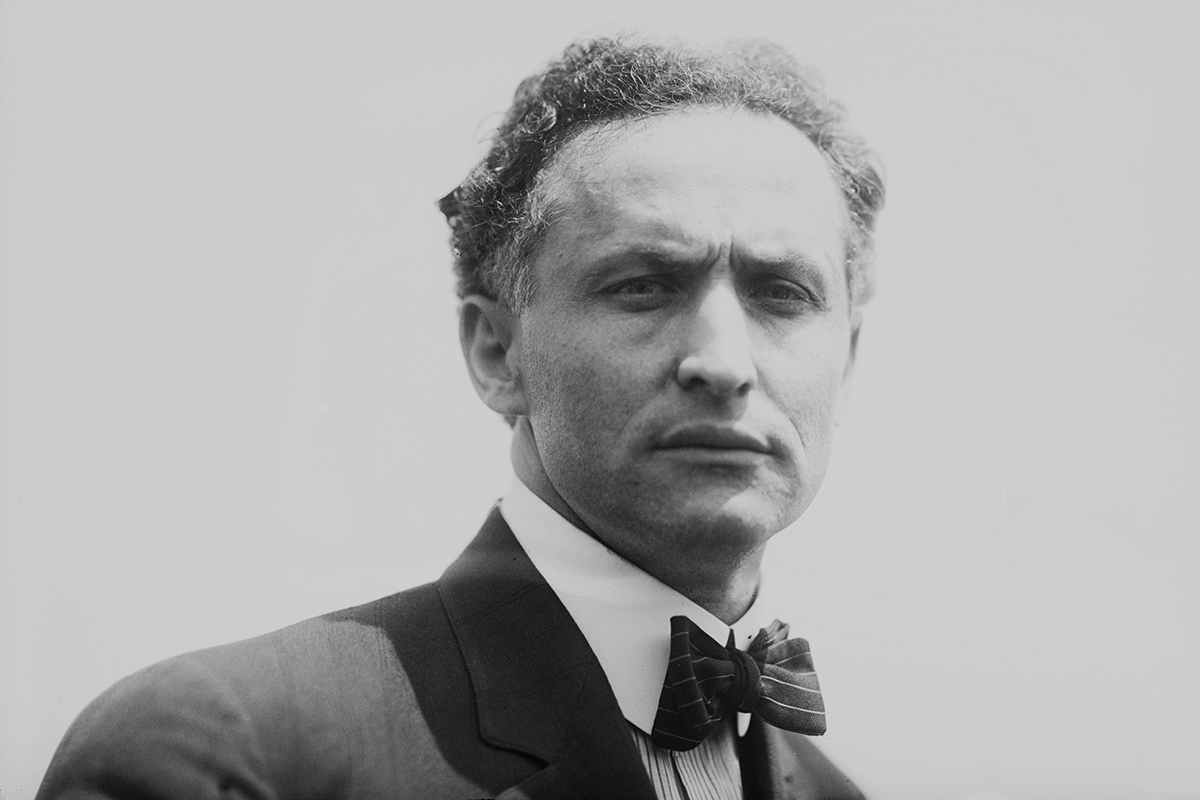
Harry Houdini’s Underwater Diving Suit
Harry Houdini is perhaps history’s most famous escape artist, regularly freeing himself from locked boxes and sealed containers underwater. In 1921, he received a patent for an underwater diving suit that addressed a dilemma he was intimately familiar with: being trapped in the watery depths.
The patent described a deep-sea diving suit that could “permit the diver, in case of danger for any cause whatever, to quickly divest himself of the suit while being submerged.” It was designed for professional divers, such as those in the naval forces, and Houdini never used it himself in any public performances. While never mass-produced, it demonstrates how Houdini’s specific set of skills informed his inventive thinking.

Jamie Lee Curtis’ Dipe and Wipe
When Oscar-winning actress Jamie Lee Curtis became frustrated with the mess of diaper changes after becoming a mother, she decided to do something about it. In 1987, Curtis invented and received a patent for Dipe and Wipe, a disposable diaper with a waterproof pocket built into it that held clean-up wipes — everything needed for a diaper change in one package.
Curtis ultimately decided to hold off on producing her disposable diaper due to environmental concerns. In 2018, she explained on Jimmy Kimmel Live! that, “At the time, it felt a little landfill-y” — but noted how her diaper could be made using more environmentally friendly materials today.
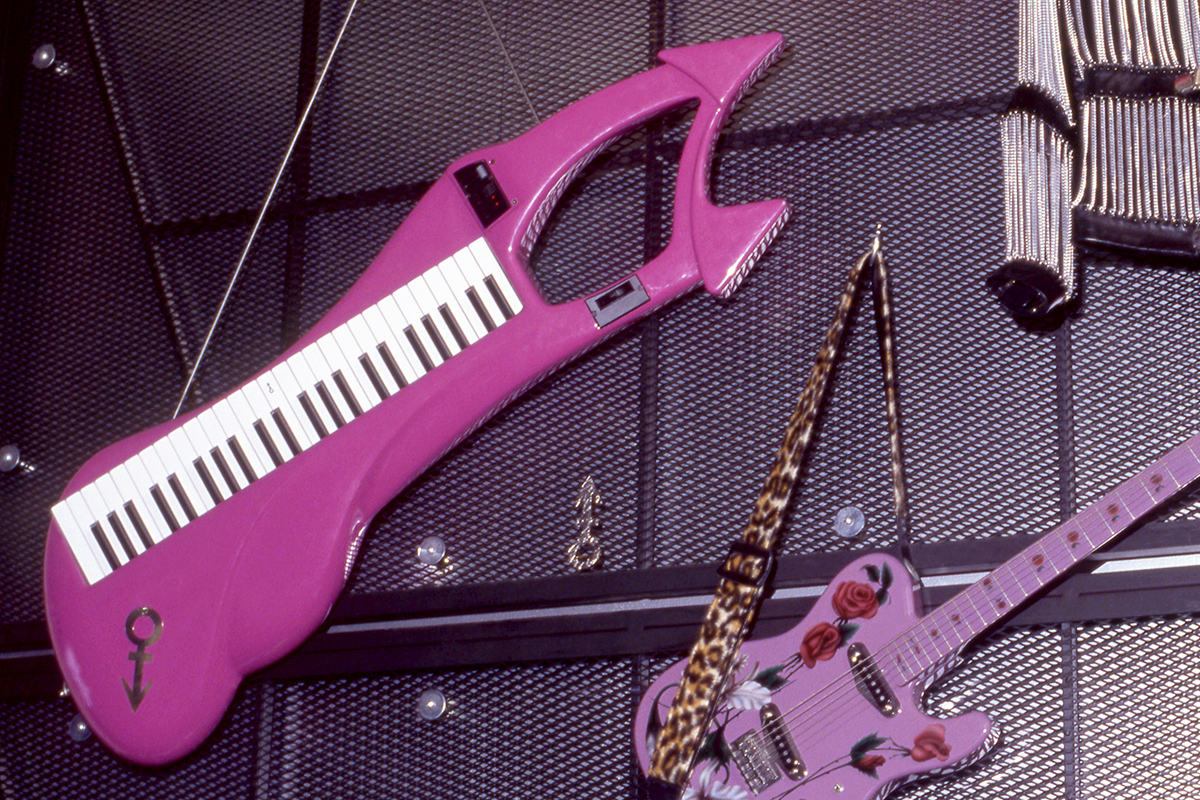
Prince’s Purpleaxxe Keytar
In 1994, the legendary musician Prince received a patent for the design of a “portable electronic keyboard musical instrument,” dubbed the Purpleaxxe. The instrument was a keytar with swooping, curved lines and arrow-like design elements resembling the unpronounceable symbol Prince adopted as his name in 1993. The instrument was regularly used by Prince’s keyboardist Tommy Barbarella, who wielded the fabulous purple keytar during live shows.
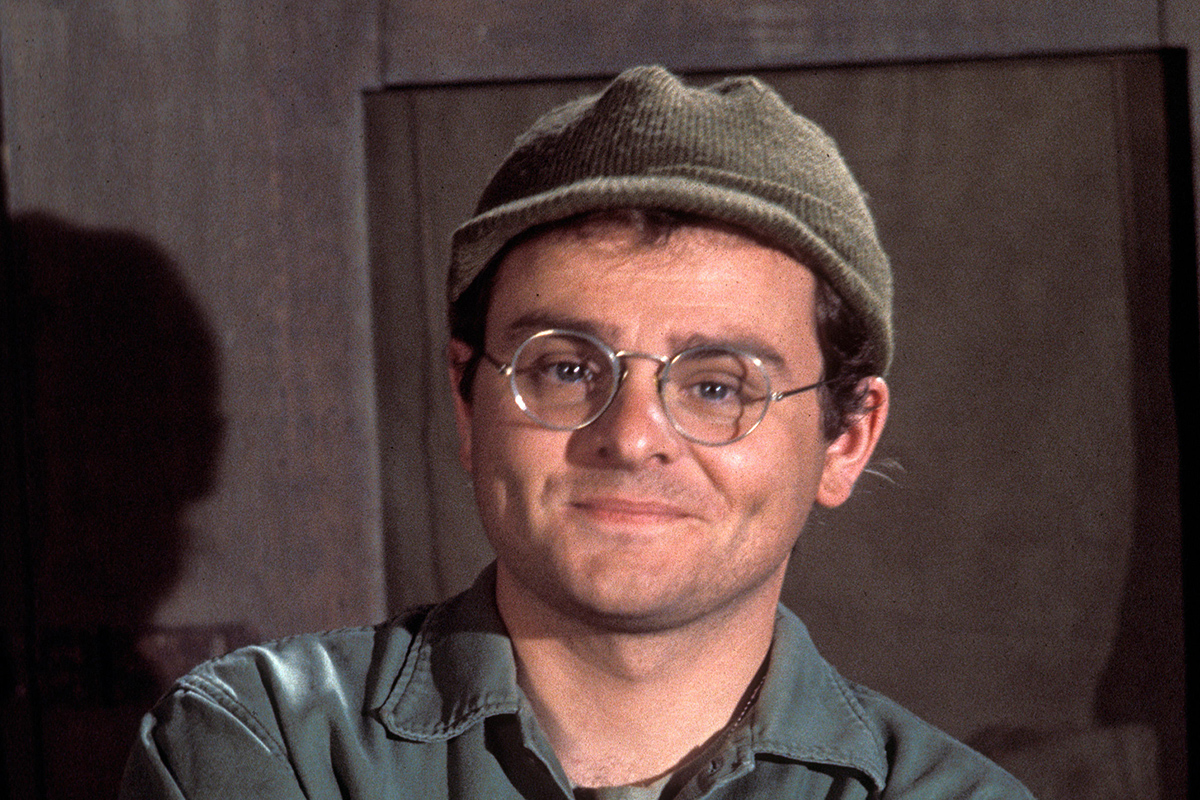
Gary Burghoff’s Fishing Device
Best known for portraying Corporal Walter “Radar” O’Reilly in M*A*S*H, Gary Burghoff is also a keen angler who understands the perpetual need for a better, more effective lure. So, in 1993, he invented “Chum Magic,” a floating apparatus fishermen could fill with chum to slowly disperse the bait over time, creating a consistent scent trail without continuously throwing handfuls of stinky fish bits overboard.
Chum Magic went on sale in the 1990s, and it wasn’t Burghoff’s only invention, either: He also created a new type of fishing pole with a tapered end for enhanced balance and grip comfort as well as a toilet seat-lifting handle that allowed for more hygienic seat-lifting. He received patents for both, but neither saw any commercial success.
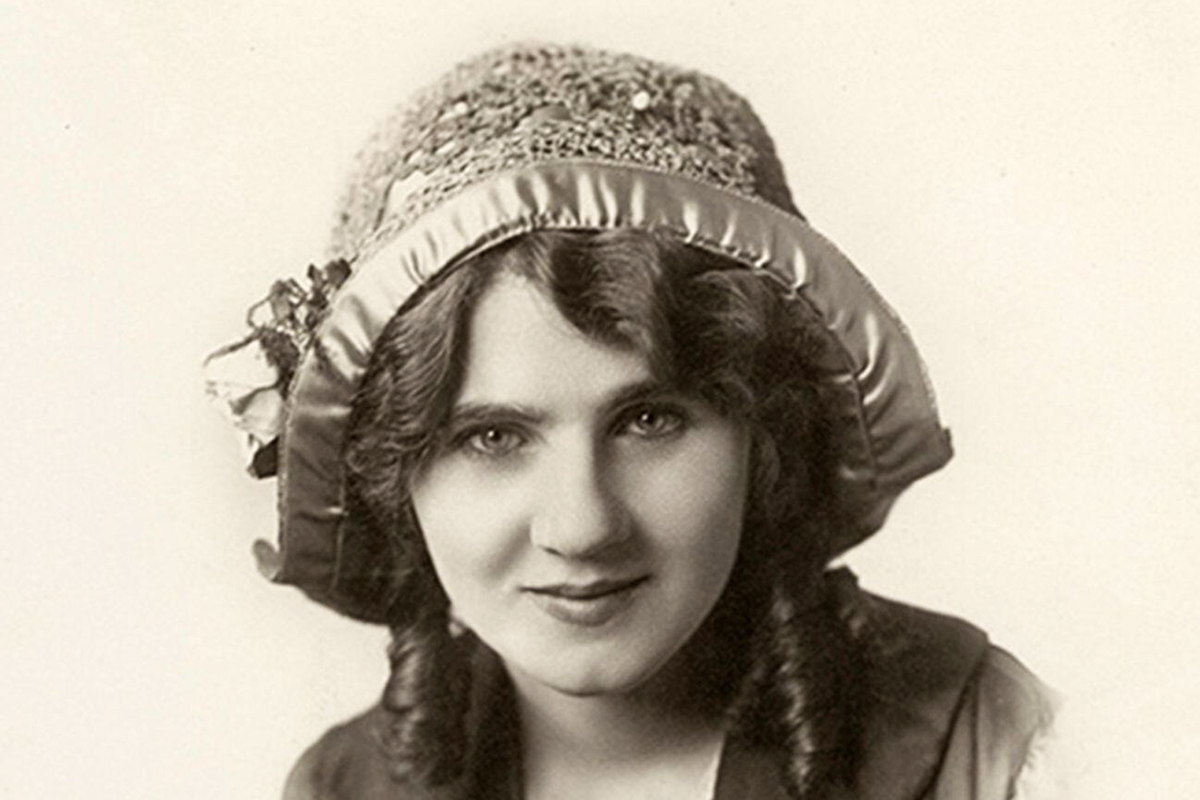
Florence Lawrence’s Turn Signal
Florence Lawrence is widely considered the world’s first movie star, having achieved fame in 1906 when films were still a novelty and actors didn’t even receive screen credits. She also invented one of the most indispensable early automobile innovations: the turn signal.
The device used an arm on the car’s fender that could be lowered or raised via electric push buttons to indicate the driver’s intention to turn. Lawrence never patented her invention — she simply announced it to the press and allowed anyone to use the idea freely. Improved versions of her original design soon became a common sight on cars across the U.S.

Tony is an English writer of nonfiction and fiction living on the edge of the Amazon jungle.
top picks from the Inbox Studio network
Interesting Facts is part of Inbox Studio, an email-first media company. *Indicates a third-party property.