
Original photo by master1305/ iStock

Everyday life is filled with familiar noises we rarely stop to question: the hum of a dial tone, the chime of a computer, or the beep of a microwave to let us know our food is ready. From the earliest telephones and centuries-old clock towers to modern computers and electric vehicles, the chirps and chimes we’ve grown used to hearing didn’t happen by accident — they were carefully created to convey a message. Here are some of their stories.

Phone Dial Tones
In the early days of telephones, dial tones weren’t necessary because people couldn’t call each other directly. Instead, phones relied on human operators, who answered calls and connected them at a central switchboard.
That changed in 1919 when the Bell System adopted automatic dialing, becoming the first U.S. commercial company to do so. But with no operator on the line, callers needed a clear signal that the system was ready to dial; if you began dialing too soon, the first digits of the number wouldn’t register. The solution was a dial tone, an audible clue that you could start dialing.
The U.S. wasn’t the first country to use automatic dialing. One of the earliest adopters was Germany, where the dial tone was invented in 1909 by engineer August Kruckow in Hildesheim. The sound was known as the “Amtston” (German for “office tone” or “exchange tone”), and it was designed to emulate the sound of the letter “A” in Morse code, repeated.
Audible Morse code consists of two sounds: “dits” and “dahs.” Each letter corresponds to a series of “dits” (dots), which are short tones, and “dahs” (dashes), which are long tones. The letter “A,” for instance, looks like “.-” and sounds like “Di-Dah” (the “T” is dropped when followed by another sound).
The Amtston, however, didn’t become universal, and dial tones instead evolved differently across regions. Dial tones came in various sounds until the system became standardized in the 1960s. Today, modern landlines, such as those in offices and hotels, use standard dial tones that vary by country or continent.
In North America, the Precise Tone Plan specifies the dial tone must be a combination of two simultaneous frequencies at 350 Hz and 440 Hz, which were chosen because they don’t interfere with the dialing system’s frequency and are audible above background noise, such as human voices. This results in one steady, recognizable tone, which is very different from Kruckow’s original “Di-Dah” tone. Other regions have different standard tones, such as Europe’s 425 Hz.
Microwave Beeps
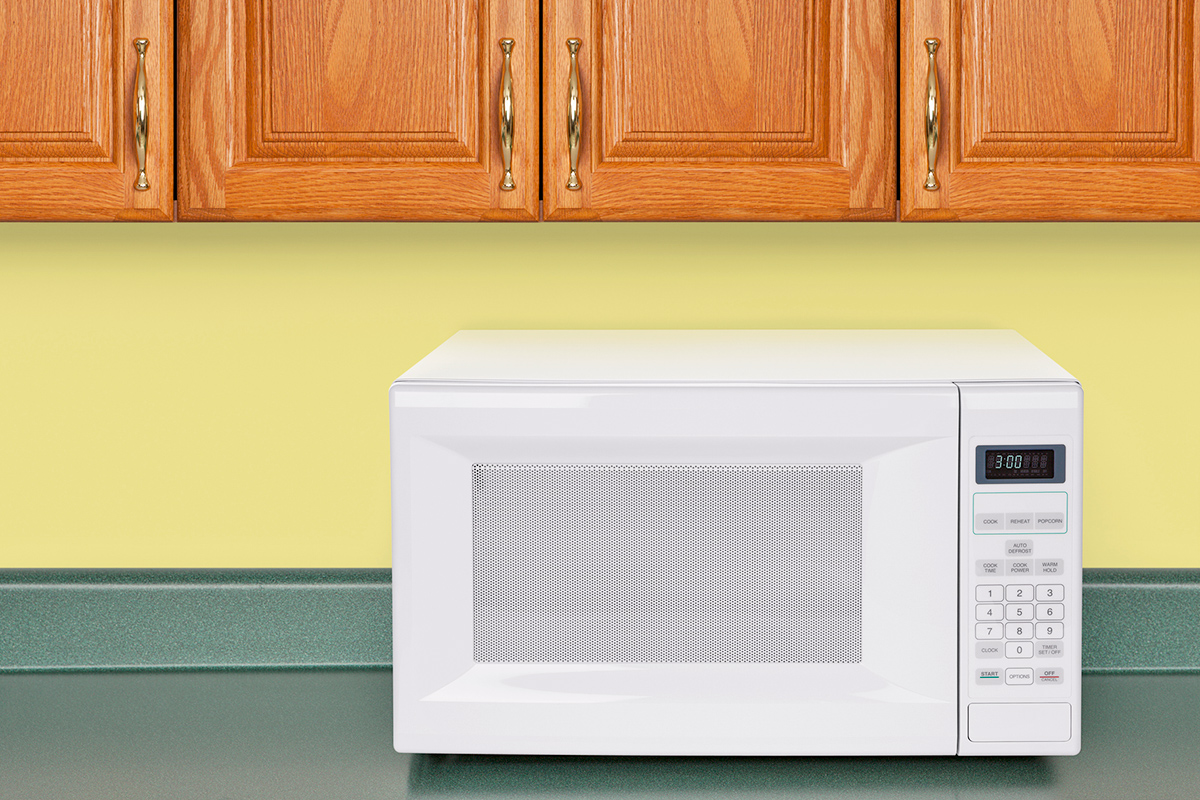
You may have noticed that most microwaves produce a very similar “beeping” tone, regardless of the brand. That’s because the same sound technology is employed across much of the industry — it’s known as the “piezoelectric buzzer.”
The piezoelectric effect was discovered in 1880 by French physicists Pierre Curie (husband of Marie Curie) and his brother Jacques. They found that applying pressure to specific materials, such as crystals and ceramics, generates an electric charge. The effect’s name comes from the Greek word “piezein,” meaning “to squeeze.”
Nearly a century later, during the 1970s and ’80s, this electricity was harnessed by various Japanese manufacturers and used to make buzzers that were placed in many household gadgets, from microwaves to smoke detectors. Piezoelectric buzzers became the standard because they’re inexpensive, energy-efficient, and they work across a wide range of voltages. While some high-end microwaves now use digital sound chips that allow for more varied tones, piezoelectric buzzers are still the norm.
However, piezoelectric buzzers do have limitations, including the sound they produce. The frequency and length of the tone can be adjusted, but the buzzer’s general “beep” noise remains consistent. That’s why most microwaves sound so similar, even decades after the appliance’s debut. Because the sharp, simple tone is widely recognizable and easily cuts through background noise, microwave manufacturers have little incentive to change it.

Computer Startup Tones
Computers come with an array of distinct sounds: email swooshes, keyboard clicks, and startup tones. One of the most recognizable is Apple’s Mac startup sound, a bright C-major chord.
It was designed by audio engineer Jim Reekes, who wanted a pleasant sound during boot-up, especially at a time when computers crashed (and therefore restarted) fairly regularly. Rather than startling users, the chime was meant to signal that everything was working correctly.
Reekes’ inspiration for the sound was the Beatles song “A Day in the Life.” He recorded the new sound in his living room, replacing an earlier (and mostly forgotten) Apple startup sound, which had been a jarring tri-tone. The new Beatles-inspired tone was introduced on the original Quadra computer in 1991 and has been used off and on with various modifications ever since.
By contrast, Microsoft has cycled through various startup tones over the decades, with at least 10 distinct sounds. One of the most memorable — the “ta-da” sound from Windows 3.1 computers — was created as a celebratory noise to signify the debut of the Windows Sound System, released in 1992. Before that, most PC sounds were restricted to basic beeps.
Another distinctive Microsoft startup sound is that of the Windows 95, created by celebrated British ambient music composer Brian Eno. Microsoft sought to create a musical piece with emotional depth, which led to a longer, more complex audio piece. Funnily enough, Eno composed the piece using a Mac.
More Interesting Reads



Electric Vehicle Hums
Electric car motors are nearly silent, a quality many customers appreciate. But this poses a safety risk: Pedestrians and cyclists can’t hear them. To address that, electric vehicles must comply with rules set by the National Highway Traffic Safety Administration (NHTSA), which requires EVs and hybrids to emit artificial sounds when traveling at low speeds below 18.6 mph.
Those almost angelic sounds, often heard as whirs, hums, or soft beeps, are designed to communicate movement. They play when the vehicle is reversing, traveling slowly, or stationary but still on. The goal is to make the vehicle’s presence and direction obvious, allowing drivers and pedestrians within earshot to remain aware of the car and its proximity to them.
The noises are designed with minimum audibility and recognizability in mind, meaning the sounds must be intense enough to be picked up by the human ear, and they must be recognizable enough to be perceived as an automobile. This allows us to react to them as we would to the noises of a gas-powered vehicle. Due to the NHTSA regulations, we can distinguish EV noise from other road noise.
Within those requirements, automakers still have room for creativity. For example, General Motors’ electric Cadillacs used an Australian wind instrument called a didgeridoo to create the brand’s sounds, which were also inspired by NASA recordings of noises made by the sun. BMW took a more cinematic approach, collaborating with Academy Award-winning composer Hans Zimmer to craft custom sounds for the i4 and iX EVs.
Clock Chimes
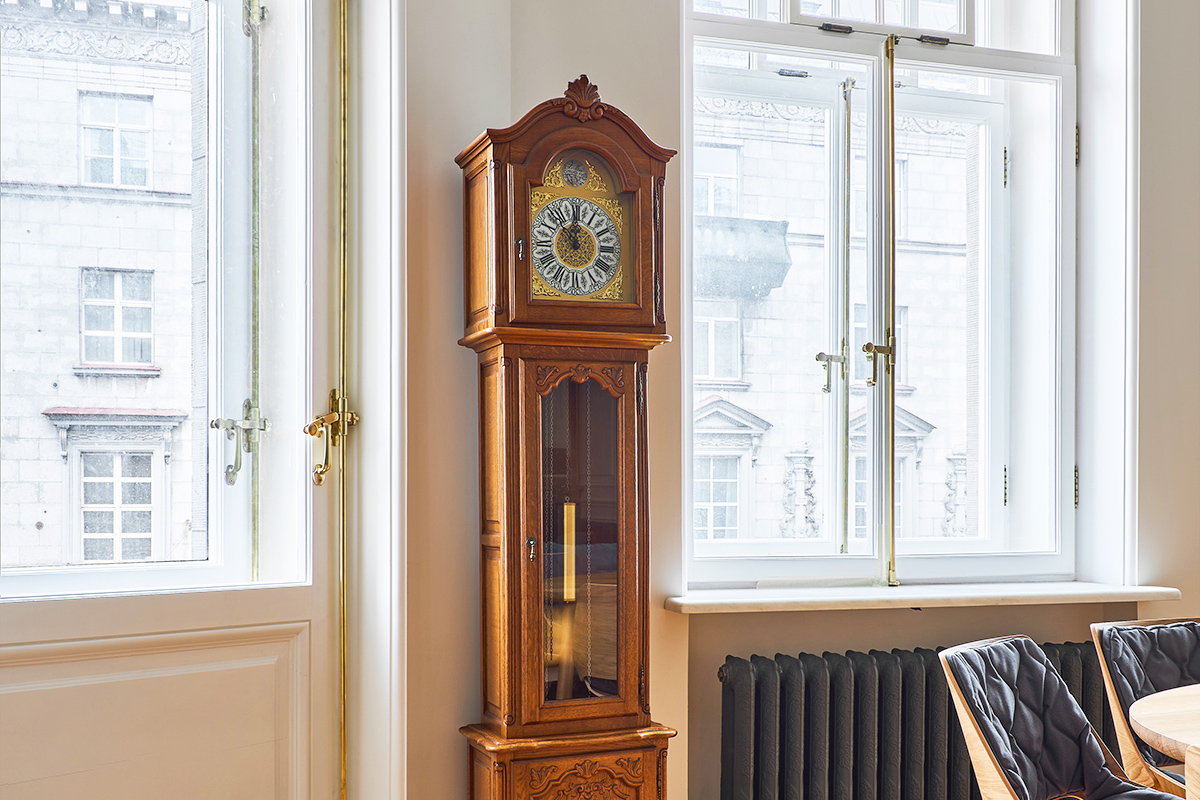
Clock chimes are sharp tones and melodic sounds that indicate the passage of time in 15-minute intervals on analog clocks. Typically, they play a short tune at the intervals and strike a specific number of times at the hour mark to indicate the time.
Those melodies and strikes are made by hammers that strike rods or gongs inside the clock. This mechanism isa holdover from the time before digital clocks, timers, and alarms when the sounds were used to announce the time without the need for a visual. While their practical purpose has faded, their nostalgic appeal remains today, serving mainly decorative purposes.
The most familiar clock melody in English-speaking countries is the Westminster Quarters. The tune originated in 1793 at Great St. Mary’s, the church at the University of Cambridge in England. It was composed by organ student William Crotch with the help of university staff and was inspired by Handel’s “Messiah.”
Originally known as the “Cambridge Quarters,” the chimes use the notes E, D, C, and G in various combinations. The melody was adopted by London’s Houses of Parliament in 1859, with distinct melodies for the quarter, half, three-quarter, and hour mark. Today, London’s Great Clock of Westminster — home to Big Ben — still plays the Westminster Quarters using four smaller bells alongside the famous hour bell.

Rachel is a writer and period drama devotee who's probably hanging out at a local coffee shop somewhere in Washington, D.C.
top picks from the Inbox Studio network
Interesting Facts is part of Inbox Studio, an email-first media company. *Indicates a third-party property.