

Original photo by © Rhys Abel/Pexels
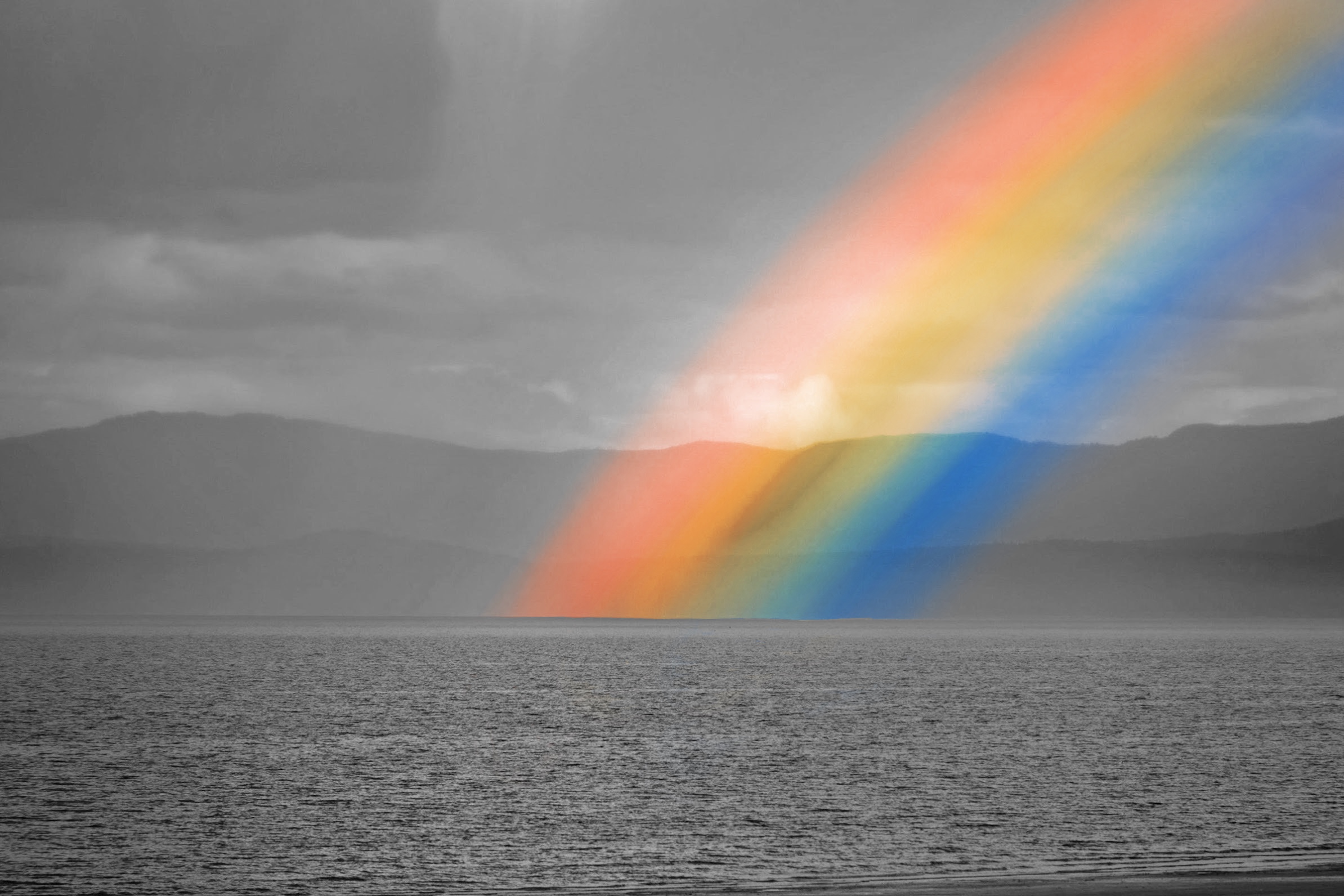
Rainbows have fascinated humans for thousands of years. Long before scientists understood the physics behind these colorful arcs that appeared after rain, cultures around the world came up with various myths and legends to explain them, sometimes seeing them as divine signs or even pathways to treasure.
Today, of course, we know how rainbows work: Sunlight bends, reflects, and separates into different wavelengths inside millions of raindrops in the air, resulting in the familiar technicolor spectrum often remembered by the acronym ROY G. BIV (red, orange, yellow, green, blue, indigo, and violet). But there’s much more to these surprisingly complex optical phenomena than meets the eye. Here are some fascinating facts about these lovely arcs of light.
They Can Last for Hours
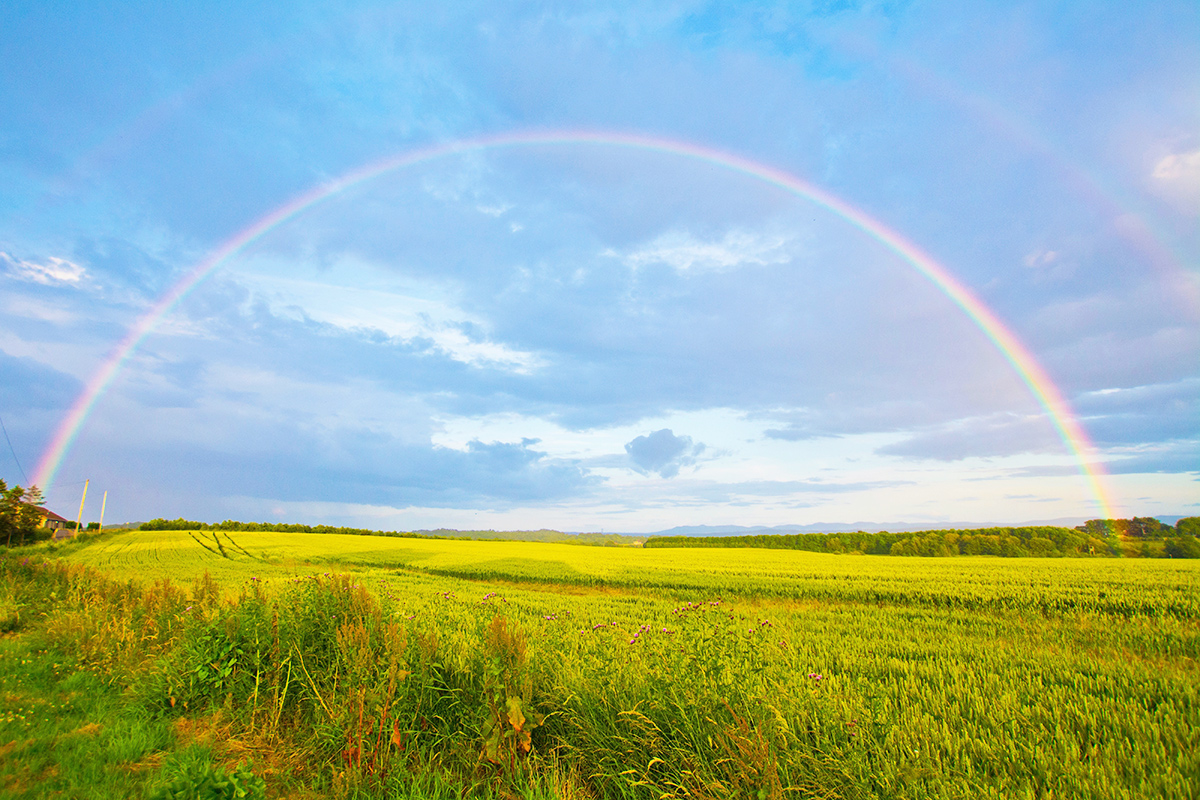
Part of the reason rainbows feel so magical is they appear suddenly after rain and usually vanish almost as quickly, a fleeting display of water and light requiring exact and simultaneous atmospheric conditions. But occasionally, their whimsy lingers far longer than expected.
In rare cases, certain conditions such as steady, low-angle sun, constant fine mist or drizzle, and minimal wind to prevent the droplets from dispersing can all help a rainbow hold its place. When combined with a fixed viewing angle, a rainbow can appear for quite a while longer than its usual few minutes.
Such an occurrence happened in 2017, when the longest-lasting rainbow on record appeared over Taipei’s mountainous Yangmingshan region for eight hours and 58 seconds. The rainbow endured thanks to a combination of steady winter sunlight, trapped moisture from a seasonal monsoon, and very gentle winds. The longest-lasting rainbow prior to that occurred in 1994 in Yorkshire, England, where a rainbow was observed for about six hours.

Double Rainbows Have Reversed Colors
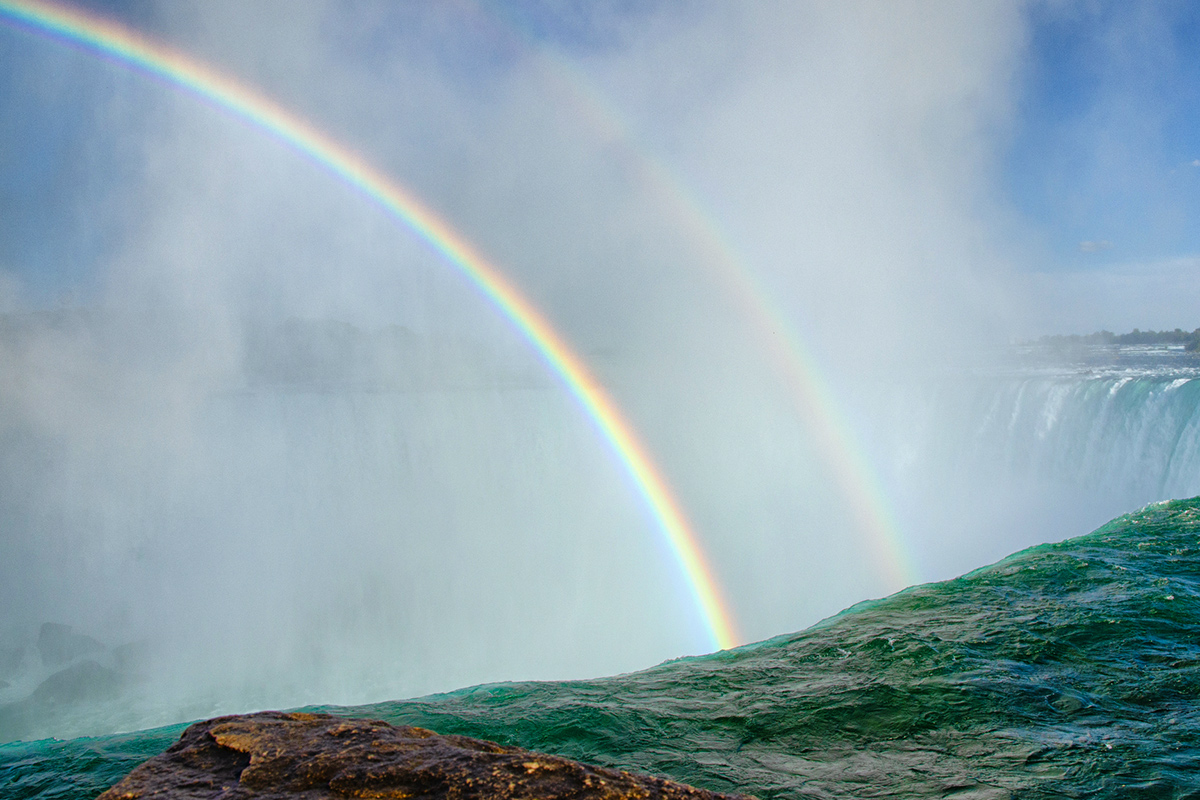
What’s more magical than a single rainbow? A double rainbow. Look closely, though, and you’ll notice something peculiar: The second rainbow’s colors are reversed, with red on the inside and violet on the outside.
Double rainbows happen when sunlight reflects twice inside the raindrop before exiting. The second reflection bends the light differently, flipping the colors’ orders. One rainbow in a double-header will also be noticeably brighter than the other — this is the primary rainbow, and it sits lower than the secondary one. The second rainbow sits on top and is much fainter, since light refracted a second time loses some of its brightness.

Every Person Sees a Slightly Different Rainbow
The rainbow you see isn’t the exact same rainbow seen by someone standing just a few feet away from you. That’s because rainbows aren’t solid objects in the sky — they’re optical effects that are largely based on your viewing angle.
Rainbows are caused by light refracting and then reflecting out from the back of a waterdrop. But each person’s eyes catch the light from slightly different droplets, so we all see unique arcs.
Each person has their own antisolar point, aka an invisible line stretching from the sun through where you’re standing and into the sky where your rainbow appears. Since no two people can stand in exactly the same place at exactly the same time, each rainbow is its own, just for your eyes.
More Interesting Reads

There Are at Least 12 Kinds of Rainbows
Rainbows can appear in many more forms than the classic seven-colored arch. Scientists have identified at least 12 distinct types of single-arc rainbows based on three main traits: the visibility of colors, the strength of Alexander’s band (the dark space between double rainbows where fewer raindrops reflect light), and the presence of supernumerary bows (those faint, repeating rainbow bands that sometimes appear along the edge of a rainbow).
The RAB‑1 rainbow, for instance, dazzles with every color, a strong Alexander’s band, and extra supernumerary bows, while a RAB‑11 is a simpler, all‑red arc more likely to be seen at sunset when the sun is very low in the sky.
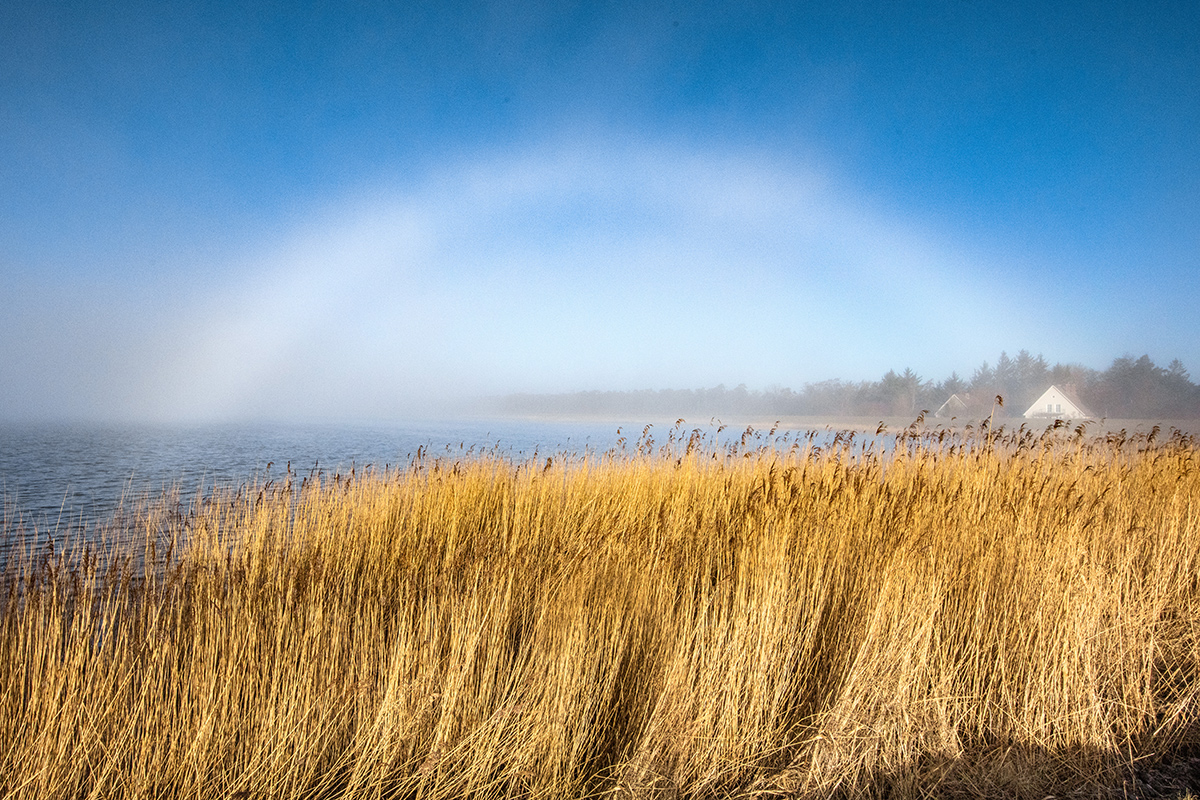
Other types depend on the light source or droplet size. Moonbows, for instance, appear at night under moonlight, while fogbows form in mist with tiny droplets and are sometimes referred to as white rainbows or ghost rainbows.
Twinned Rainbows Are Still a Mystery
Even with all of the different types, rainbows mostly follow a predictable pattern. Twinned rainbows, however, break the rules. Instead of forming a single arc or an evenly spaced double arc, these rare rainbows appear to originate from the same basepoint and then split into two branches, creating a forked effect overhead.
Scientists still aren’t totally sure how these rare occurrences happen. The leading explanation, discovered somewhat accidentally by researchers from Disney studying how to better depict rainbows in animation, points to a mix of differently sized, slightly squashed raindrops known as burgeroids (thanks to their resemblance to the handheld food).
When sunlight passes through burgeroids, it’s thought to cause slightly different arcs to develop side by side, stemming from the same point. The exact conditions that produce twinned rainbows still aren’t fully understood, however, keeping some of rainbows’ magical mystery alive.
Ancient Greeks Believed Rainbows Were the Work of a Goddess
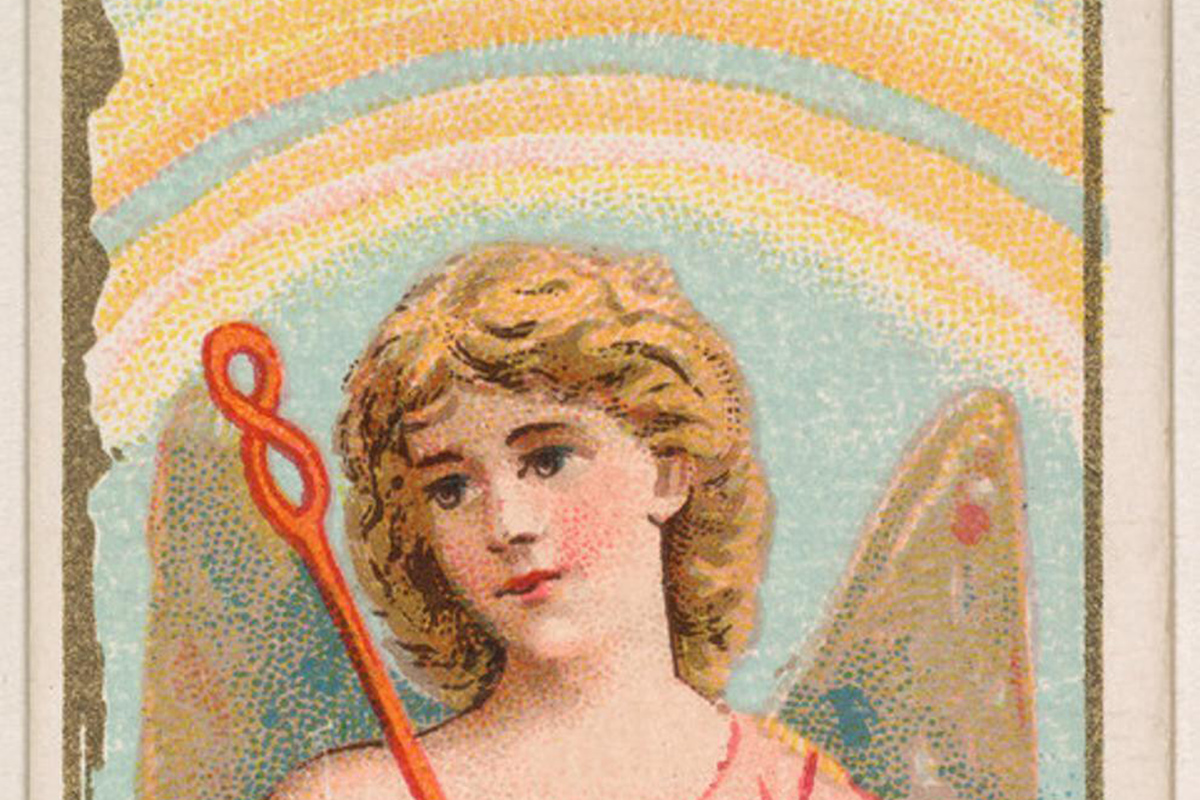
Rainbows may lead to a leprechaun’s pot of gold in Irish folklore, but they carry a very different meaning in Greek mythology. Ancient Greeks often explained natural phenomena through the moods and actions of deities, and the rainbow was believed to be the goddess Iris, a swift-footed messenger who traveled between the heavens and Earth delivering word from the gods. Rainbows were therefore seen as a fleeting bridge that linked mere earthly mortals to the divine.
Described by the poet Hesiod as the daughter of Thaumas and the ocean nymph Electra, Iris was typically depicted with wings, a herald’s staff, and, at times, a vase. She didn’t just carry divine messages; she sometimes carried water from the River Styx for oath ceremonies or even to replenish the clouds after rainfall, her path across the sky thought to leave behind the rainbow that followed the storm.
Her name’s association with vibrant colors still resonates today: The colored part of the human eye takes its name from Iris, as does the vibrant iris flower that comes in a rainbow of hues.

Nicole is a writer, thrift store lover, and group-chat meme spammer based in Ontario, Canada.
top picks from the Inbox Studio network
Interesting Facts is part of Inbox Studio, an email-first media company. *Indicates a third-party property.