
Original photo by Hum Images/ Alamy Stock photo
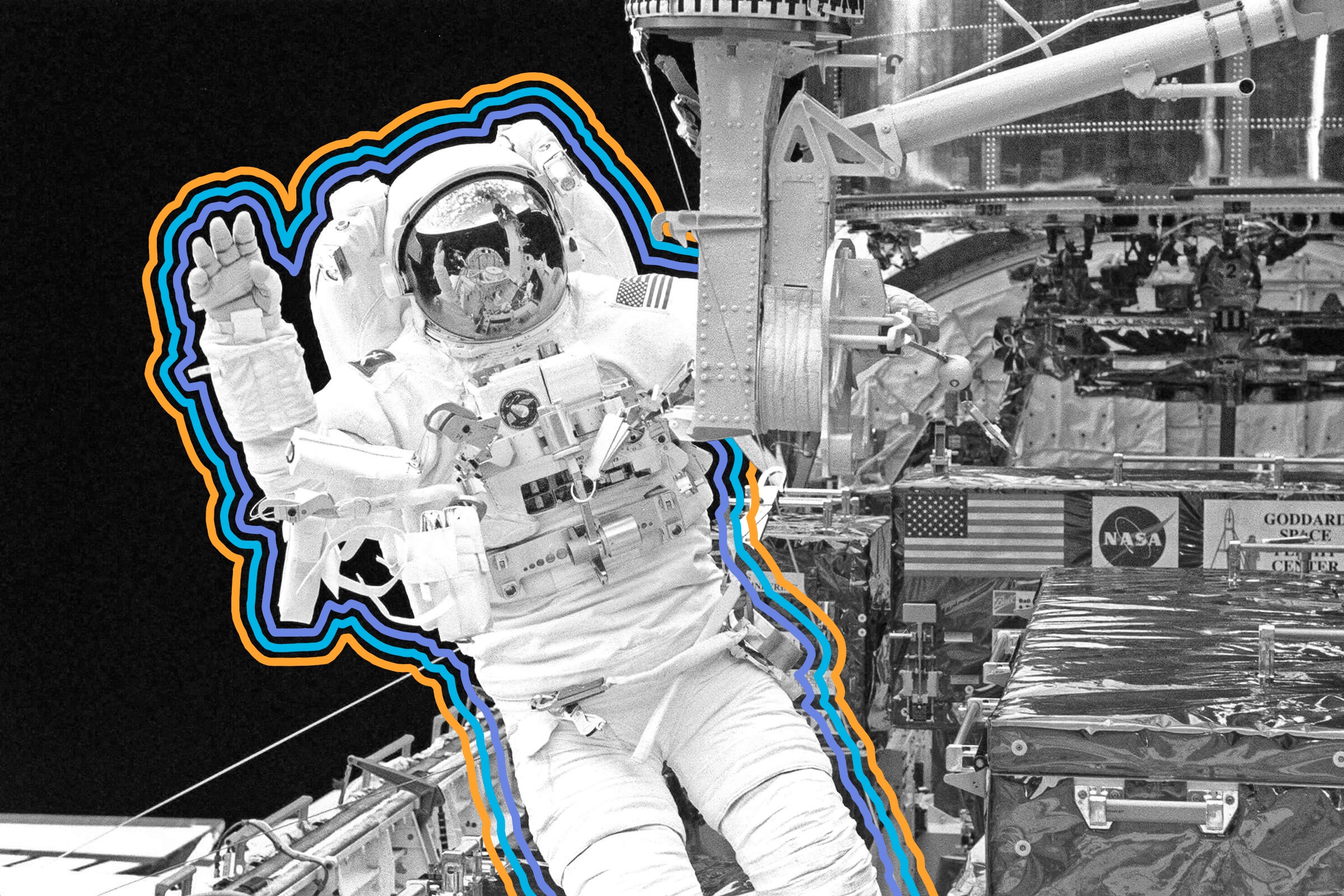
Astronauts are members of a very elite club: As of 2025, only around 670 people have been to space, and fewer still have spent a significant amount of time beyond Earth’s atmosphere. Those who have had an extended stay in space tend to be crew members of the International Space Station (ISS), which has housed more than 280 individuals representing 26 countries since it became fully operational in 2009.
The life of an astronaut is full of adventure, drama, and a certain amount of glamour — but life in space still requires many of the same basic chores we have to handle here on Earth. Of course, without gravity’s assistance, even the most mundane tasks can become complex feats of engineering. Here’s how astronauts aboard the ISS adapt to some familiar chores while traveling at a speed of 5 miles per second some 250 miles above Earth.
Bathing
Water has always been problematic on the ISS, for a number of reasons. It’s heavy, so it comes at a premium in terms of shuttle resupplies; it doesn’t behave in microgravity; and it’s potentially dangerous considering all the electronics aboard the station. Bathing, therefore, is a tricky business.
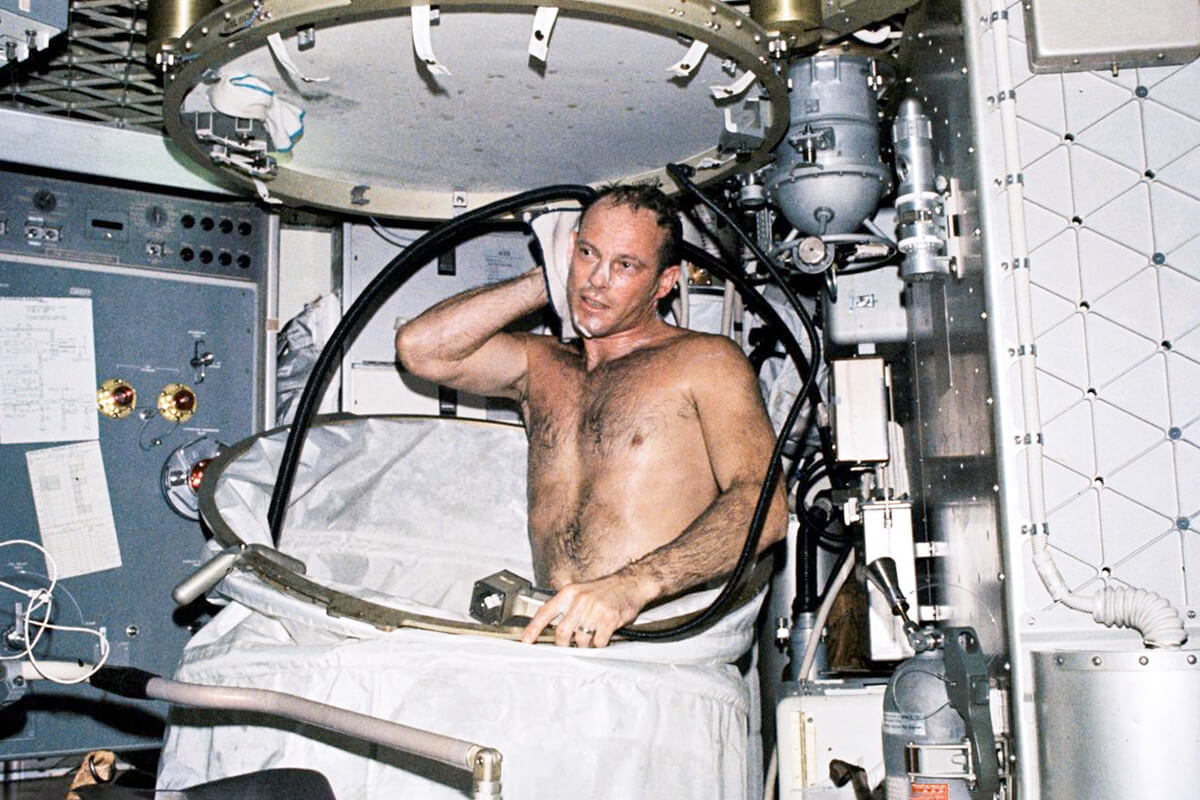
In the 1970s, when NASA operated its first space station, known as Skylab, astronauts used a collapsible tube shower system. But this system took about two hours per shower, mainly because every water droplet had to be painstakingly collected after bathing. On the ISS, there is no shower — astronauts have instead returned to the old-school way of washing, as used during the Gemini and Apollo missions: a simple sponge bath.
They squirt small amounts of water and liquid soap onto their skin and use a special rinseless shampoo to wash their hair, then use towels to wipe off any remaining water. An airflow system nearby quickly evaporates excess water, preventing it from floating around the station.
Housekeeping
Astronauts on the ISS maintain a strict cleaning schedule. The station isn’t a sterile environment, as each astronaut brings microbes from Earth that can potentially flourish on the space station. Cleanliness is therefore a serious priority in the confined environment, both to protect the people living there and the technology and ongoing experiments aboard the orbiting lab.
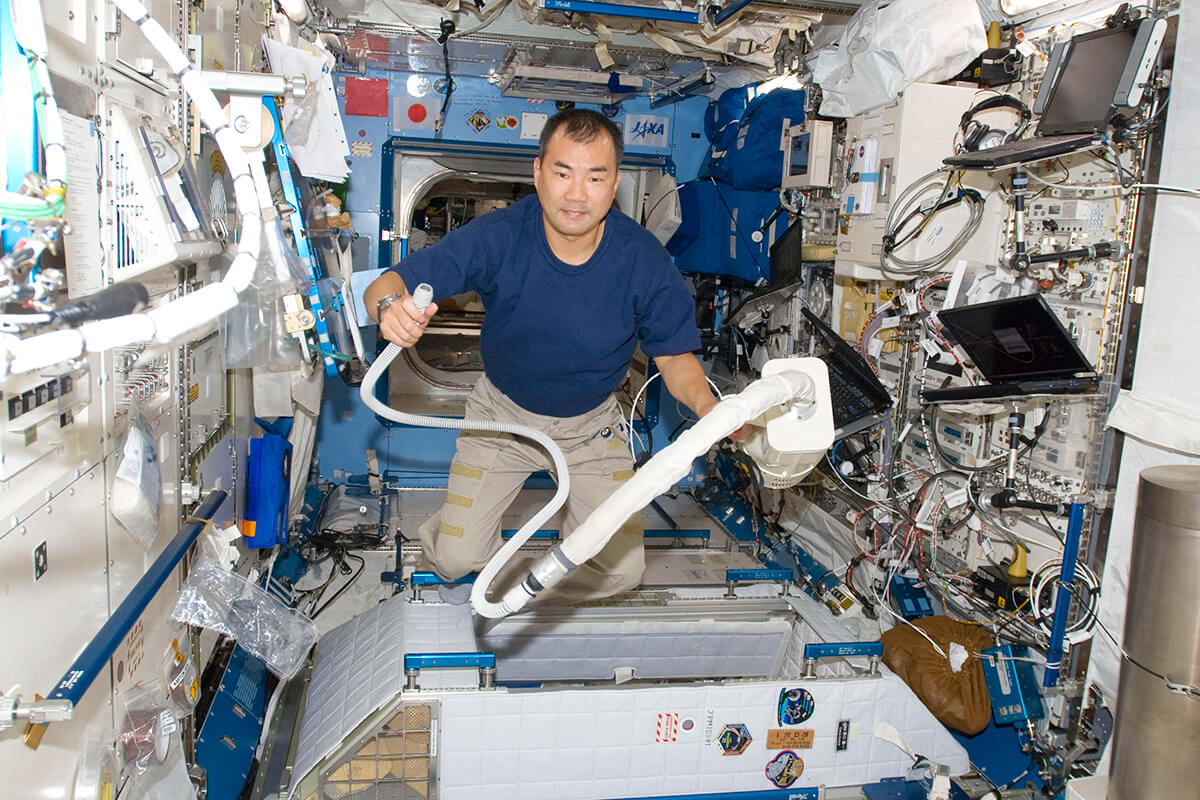
Each astronaut is assigned a regular schedule to wipe down surfaces with antimicrobial wipes, including kitchen areas and sweaty exercise gear. Vacuuming — using a surprisingly standard vacuum just like we’d use on Earth — is also important, especially for cleaning the filters and vents where dust accumulates. It’s a noisy process, but at least astronauts don’t have to worry about annoying the neighbors. In space, no one can hear you clean.
Taking Out the Trash
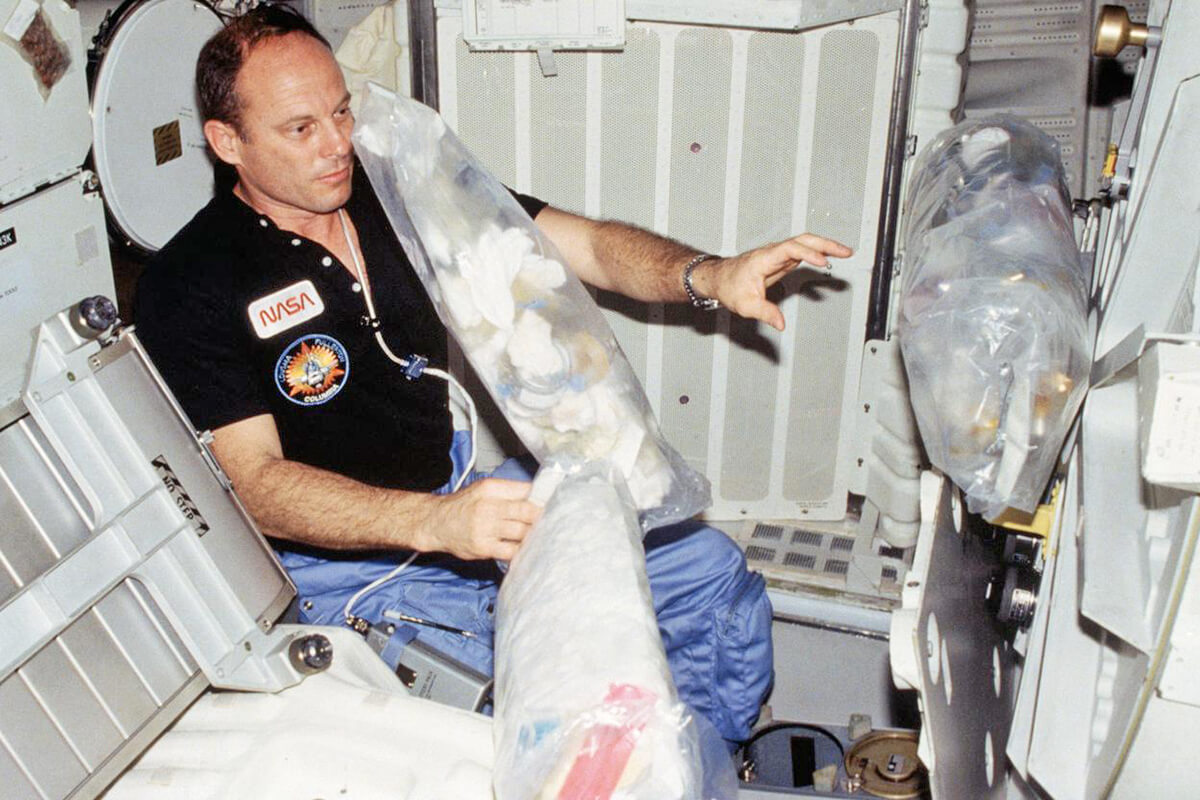
Astronauts generate about 4.4 pounds of trash per person per day, including packaging, paper, tape, filters, food containers, and personal hygiene items. Chucking trash directly into space may seem like the simplest option, but this naturally comes with obvious ethical, practical, and safety concerns.
Instead, astronauts have relied on a remarkably low-tech method of trash disposal. Crew members compress garbage with duct tape into bundles called “trash footballs,” which they later load onto cargo ships such as the Russian Progress or Northrop Grumman’s Cygnus. These ships then jettison the trash, leaving it to burn up during reentry into Earth’s atmosphere.
In 2022, the ISS developed a new, more efficient waste disposal method. By connecting a special waste container with a capacity of 600 pounds to an airlock, this system allows astronauts to store and dispose of larger amounts of trash. The whole container is launched from the station directly into Earth’s orbit, where it also burns up on reentry — with no cargo ships needed and no junk left in space.
More Interesting Reads

Window Cleaning
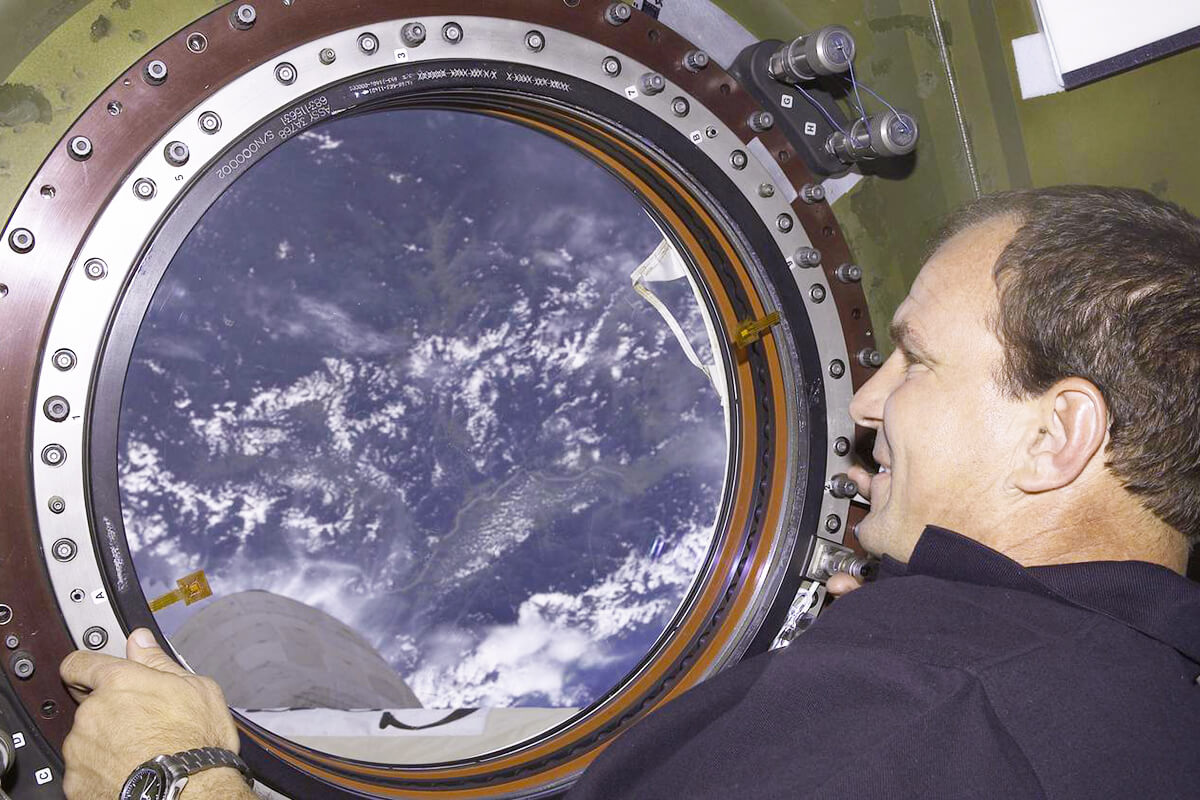
You won’t find many better views than those from the windows of the ISS — but just like here on Earth, those windows need to be wiped down from time to time. Inside the station, astronauts regularly clean windows using alcohol-based wipes to remove fingerprints, condensation, and dust. But that’s the easy part.
You may think that space, being a near-pristine vacuum, wouldn’t cloud the windows outside the station. And while the windows don’t become murky anywhere near as quickly as they do here on Earth, they do still need an occasional polish. Impacts from micrometeoroids and orbital debris, thruster firings from visiting spacecraft, and outgassing from the ISS can all leave particles that settle on the station’s exterior, including the windows.
So the ISS windows do need to be cleaned, albeit infrequently. In 2015, for example, Russian cosmonauts took a five-and-a-half-hour spacewalk during which they wiped away grime that had accumulated on the portholes over a period of years — arguably the most extreme window-washing job imaginable.
Exercising
Free from Earth’s gravity, an astronaut’s bones and muscles can atrophy. On Earth, our bones and muscles constantly work against gravity to support our body weight, maintain posture, and help us move around. But in the microgravity of a space station, human bodies no longer need strong bones and muscles to function — so they adapt by breaking them down.
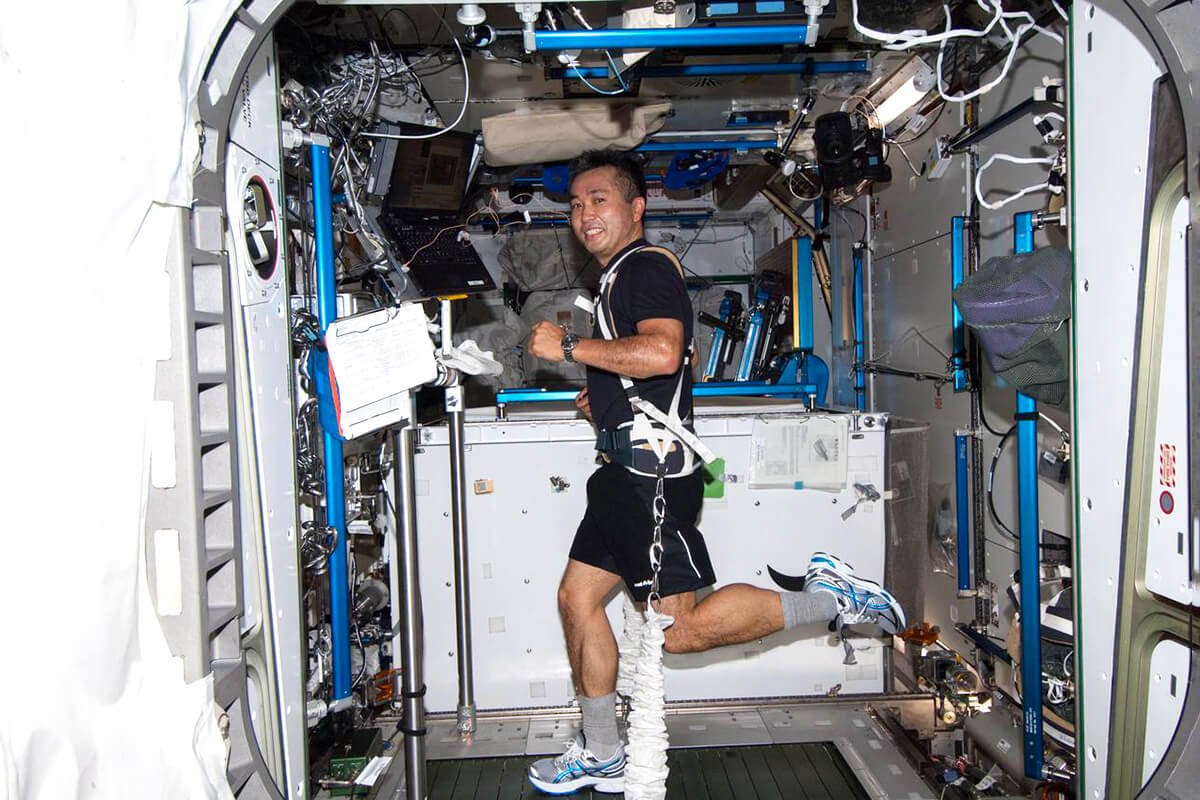
Bones lose density because the signals telling them to rebuild cells have been removed, and muscles atrophy because they’re no longer working as hard as they do on Earth. To combat that, astronauts must exercise for about two hours per day during a long-duration mission.
Crew members on the ISS use three exercise machines to stay in shape, which simulate weightlifting, cycling, and running. (NASA astronaut Sunita Williams even used the ISS treadmill to “complete” the Boston marathon from orbit.)
Despite rigorous exercise programs, some astronauts still experience bone and muscle loss. It remains a critical area of research and technological innovation, especially considering future long-duration missions planned for the moon and Mars.
Maintenance and Repairs
Some of the most demanding chores on the ISS involve maintenance and repairs. Unlike space shuttles that return to Earth for servicing, the ISS never comes home, so astronauts must handle both preventive maintenance (inspection and replacement) and corrective maintenance (fixing broken equipment), which they train for on Earth before heading into orbit.
Inside the station, astronauts repair everything from oxygen generators to water pumps and computer systems. They replace air filters, fix toilets, troubleshoot ventilation systems, and swap out failing components using spare parts stored aboard the ISS.
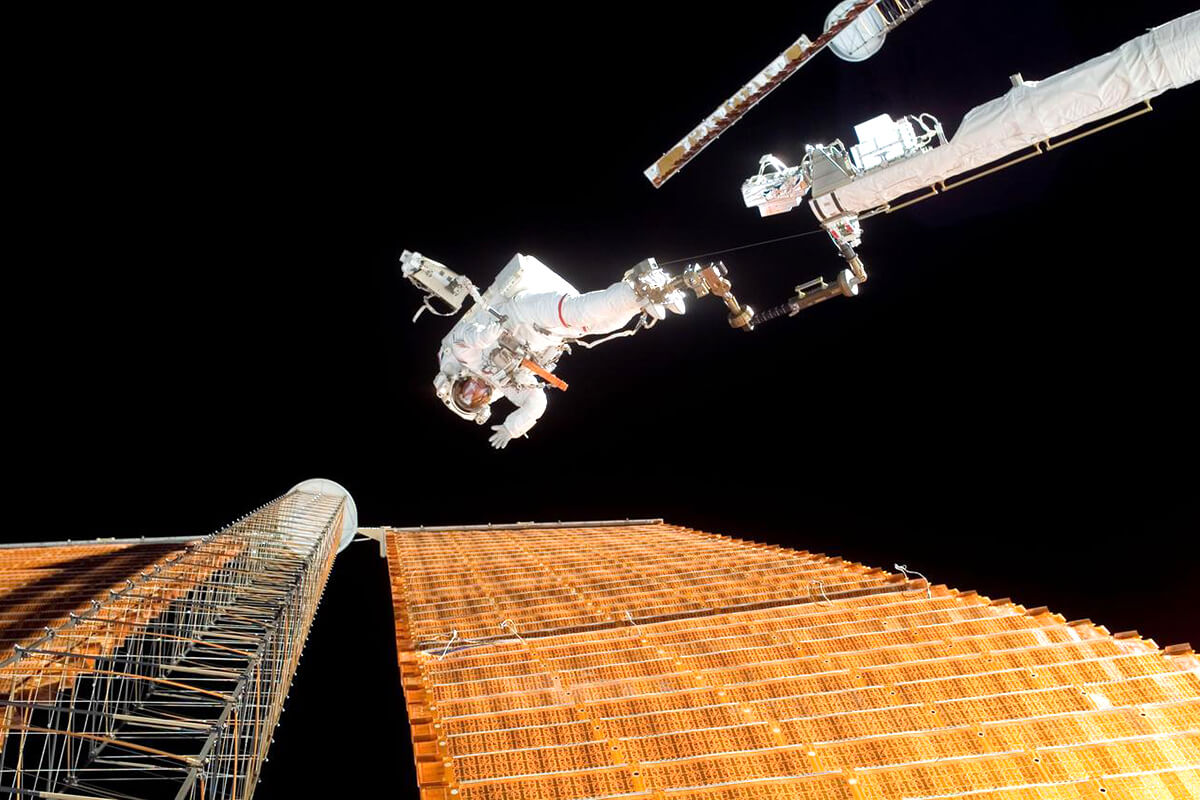
The most dramatic and dangerous repairs are those that must be done outside the station. In 2007, for example, astronaut Scott Parazynski performed one of the most dangerous spacewalks in ISS history, riding on the end of a robotic arm to repair a torn solar panel. Any major repair, especially one outside the station, requires careful planning — and, sometimes, nerves of steel.
Some Chores Are Best Left on Earth
Some common chores aren’t done at all in space, either because they’re not required or because they’re simply too tricky to carry out. Doing laundry, for example, is a nonissue on the ISS. There’s no washing machine on the space station, primarily due to water constraints, so astronauts simply have a limited number of garments they wear again and again until they’re too smelly or dirty for further use (at which point they’re tossed in the trash).
Cooking is another task that requires very little effort. There’s a permanent eight-day menu aboard the ISS, consisting of three meals and one snack a day — but it’s all prepackaged and preprepared, ready to be reheated or rehydrated in seconds (which also means there are no dishes to wash).
Aspiring astronauts in their teenage years can also breathe a sigh of relief, as there’s no need to make beds on the ISS. Sleeping in microgravity is a challenge, and there’s no real way to lie down, so astronauts instead tuck themselves into secured sleeping bags when it’s time to rest.

Tony is an English writer of nonfiction and fiction living on the edge of the Amazon jungle.
top picks from the Inbox Studio network
Interesting Facts is part of Inbox Studio, an email-first media company. *Indicates a third-party property.