

Original photo by lielos/ iStock

Among all your senses, touch is the only one that spans your entire body. The skin — your largest organ — not only protects you from injury and infection but also constantly gathers information about pressure, temperature, vibration, texture, pleasure, pain, and potential threats.
Unlike vision or hearing, which operate at a distance, touch is immediate and immersive, feeding the brain continuous updates about your body and surroundings. Scientists are increasingly discovering that touch is more than a simple bodily function; it’s a foundation of social connection, emotional regulation, and even memory.
What makes touch especially interesting is how complex and psychologically layered it is. Each sensation engages a network of specialized receptors and neural pathways the brain must interpret — rapidly and often unconsciously. The way those signals are processed reveals just how nuanced this seemingly simple sense really is.

Touch Is the First Sense To Develop
Touch develops remarkably early in human life. By around eight weeks of gestation, a developing fetus can respond to light pressure around the lips, and sensitivity quickly spreads across the body as the nervous system forms. Specialized receptors for pressure, temperature, and movement become active months before birth, creating the foundation for how you later interpret the physical world.
This early sense helps shape the developing brain and is crucial for survival and healthy growth. Touch guides fetal movements, supports neural organization, and after birth, it becomes essential for bonding, emotional stability, and healthy social development long before vision and hearing fully mature.

Gentle Touch Helps Regulate Emotions
One of the most interesting discoveries in touch research is the role of C-tactile afferents, aka nerve fibers tuned specifically to gentle, caressing strokes. Those fibers send signals directly to areas of the brain involved in emotional processing, including the insular cortex.
When activated, they can reduce stress hormones, lower heart rate, and trigger the release of oxytocin, a hormone associated with bonding and trust. Those physiological responses help explain why a gentle touch from a trusted person can immediately soothe you, soften distress, and create a sense of safety.
The emotional effects of gentle touch are especially profound in early development. Studies on newborns and premature infants show that skin-to-skin contact — sometimes called “kangaroo care” — can regulate breathing, stabilize body temperature, and promote healthier weight gain, all while strengthening parent-infant bonding.
In adults, similar forms of nurturing touch continue to buffer stress and enhance social connection. Experiments have found that people who receive supportive touch from a partner experience reduced neural responses to threat and even perceive painful stimuli as less intense.

Touch Can Influence Our Decisions
Touch can subtly shape the decisions we make, often without our awareness. Research on embodied cognition shows that physical sensations such as softness, firmness, warmth, or weight can influence how we interpret situations and behave in response.
For example, holding a warm object can momentarily increase feelings of trust and generosity, while rough textures can make social interactions seem more difficult. Even something as small as an item’s weight can affect judgment: People holding heavier objects have been found to rate issues as more serious or consequential than people holding something light. That effect reveals how the brain uses tactile cues as shortcuts, blending physical sensation with abstract evaluation.
In one 2010 study, participants engaged in a simulated negotiation with a car dealer while seated in a chair that was either soft or hard. Those in soft chairs tended to make higher second-round offers than those in hard chairs, suggesting physical comfort can increase psychological flexibility.
More Interesting Reads


There’s a Reason Your Skin Gets Pruney in Water
When your fingers or toes wrinkle in water, it’s not just soggy skin; it’s a nervous system-driven adaptation to help your sense of touch work better in a slippery environment. While the outermost layer of skin does absorb some water, the distinctive prune-like wrinkling pattern is triggered by your sympathetic nervous system. Blood vessels beneath the skin constrict, changing the tension in the tissue and creating those familiar ridges.
The water-formed wrinkles enhance how you interact with wet surfaces. By channeling water away from the fingertips — much like tire treads — they improve tactile control and surface contact. Pruney fingers are the way your body preserves fine touch and dexterity when the normal friction enabled by dry skin disappears.
Touch Helps Your Brain Know What’s Part of Your Body
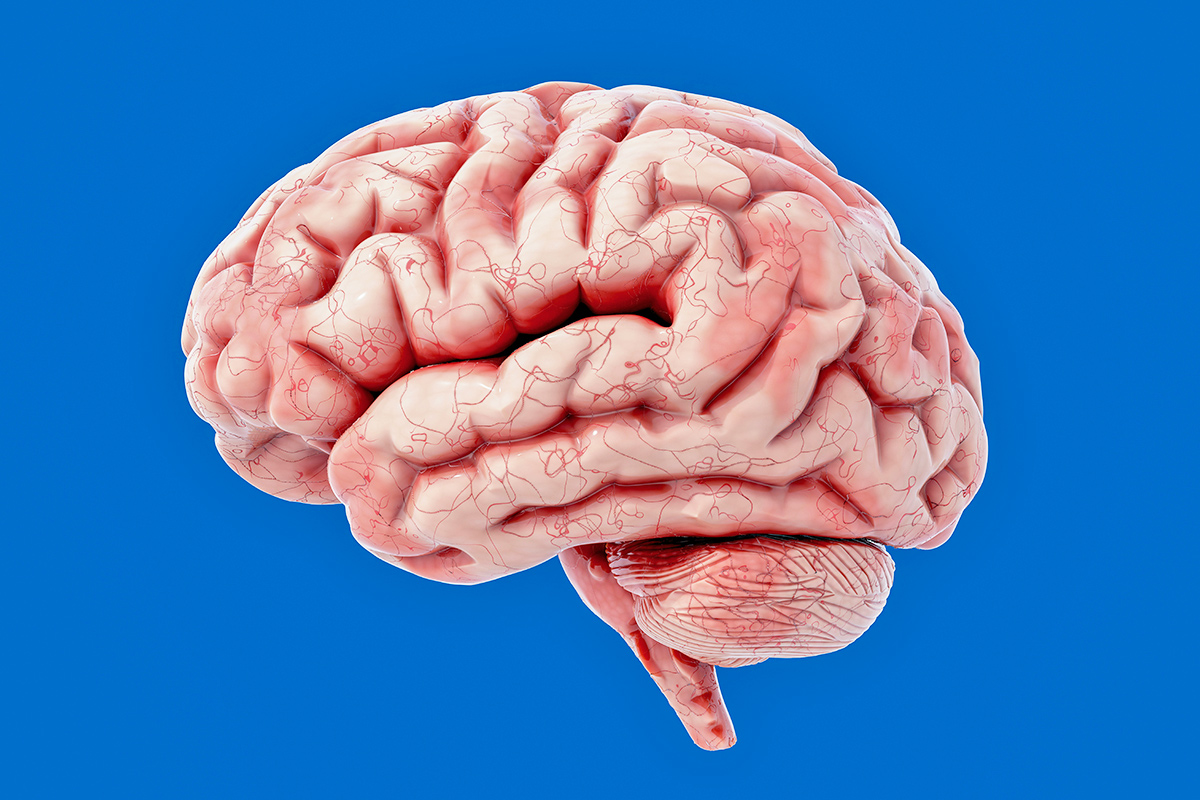
Touch is central to how your brain determines what is part of your body. When visual and tactile signals align — such as seeing a hand that’s not yours touched while feeling the same touch — the brain can interpret the touched surface as “you.” Experiments with delayed or mismatched touch show how quickly that system can falter, revealing how actively — and continuously — the brain maintains a sense of bodily ownership.
The classic rubber hand illusion is an example of this. When a visible fake hand is stroked near and at the same time as a hidden real hand, the brain merges the visual and tactile signals. Within minutes, many people begin to feel the rubber hand as their own, demonstrating how touch, vision, and proprioception (the body’s internal sense of movement and position) are woven together to create the feeling of self.
This fluid sense of self becomes especially clear in phantom limb experiences. After an amputation, many people continue to feel sensations — warmth, pressure, pain — in the missing limb. Those sensations arise from the brain’s map of the limb, which remains intact even after the limb is gone.
Techniques such as mirror therapy show how this map can be reshaped. In mirror therapy, a mirror is positioned so the reflection of an intact limb appears where the missing limb would be, creating the visual illusion that the lost limb is still present and moving.
That visual feedback can help the brain reorganize its internal body model, reducing phantom sensations or pain. The success of such interventions shows that even deeply rooted bodily sensations can shift when the brain receives new sensory information.
Touch Can Create Sensations That Aren’t Really There
Touch doesn’t always reflect the physical world exactly as it is. When sensory signals clash or are incomplete, the brain fills in the missing information — sometimes incorrectly. In many cases, the nervous system must infer what a sensation means, especially when signals are conflicting or ambiguous, and this guesswork becomes particularly noticeable when it comes to temperature.
The thermal grill illusion, in which alternating warm and cool bars placed against the skin produce a burning or painful sensation. Neither temperature is painful on its own, yet the combination activates overlapping neural pathways that the brain misreads as extreme heat.
A similar phenomenon happens when you put your very cold hands under warm water — the warmth can briefly feel uncomfortable or even painful. In both cases, the sensation is created by the nervous system’s attempt to reconcile conflicting temperature signals.

Expectation Shapes What You Think You Feel
Touch also relies on prediction. Before you even make contact with an object, your brain estimates how heavy, smooth, sharp, or firm it should be, and those assumptions shape what you expect to feel.
This is obvious in the size-weight illusion, in which smaller objects feel heavier than larger objects of the same mass — because the brain expects the larger objects to be heavier. When the object is lifted, the mismatch between expectation and sensation creates a strange, persistent perceptual error.
Those constant cycles of prediction, comparison, and correction happen constantly, usually without our awareness. But illusions of temperature and weight prove touch isn’t a simple reflection of physical reality, but a continuous interpretation. The brain draws on assumptions, shortcuts, and memory to construct what you think you feel, and those can occasionally take you by surprise.

Kristina is a coffee-fueled writer living happily ever after with her family in the suburbs of Richmond, Virginia.
top picks from the Inbox Studio network
Interesting Facts is part of Inbox Studio, an email-first media company. *Indicates a third-party property.