

Original photo by © vulkanismus/stock.adobe.com
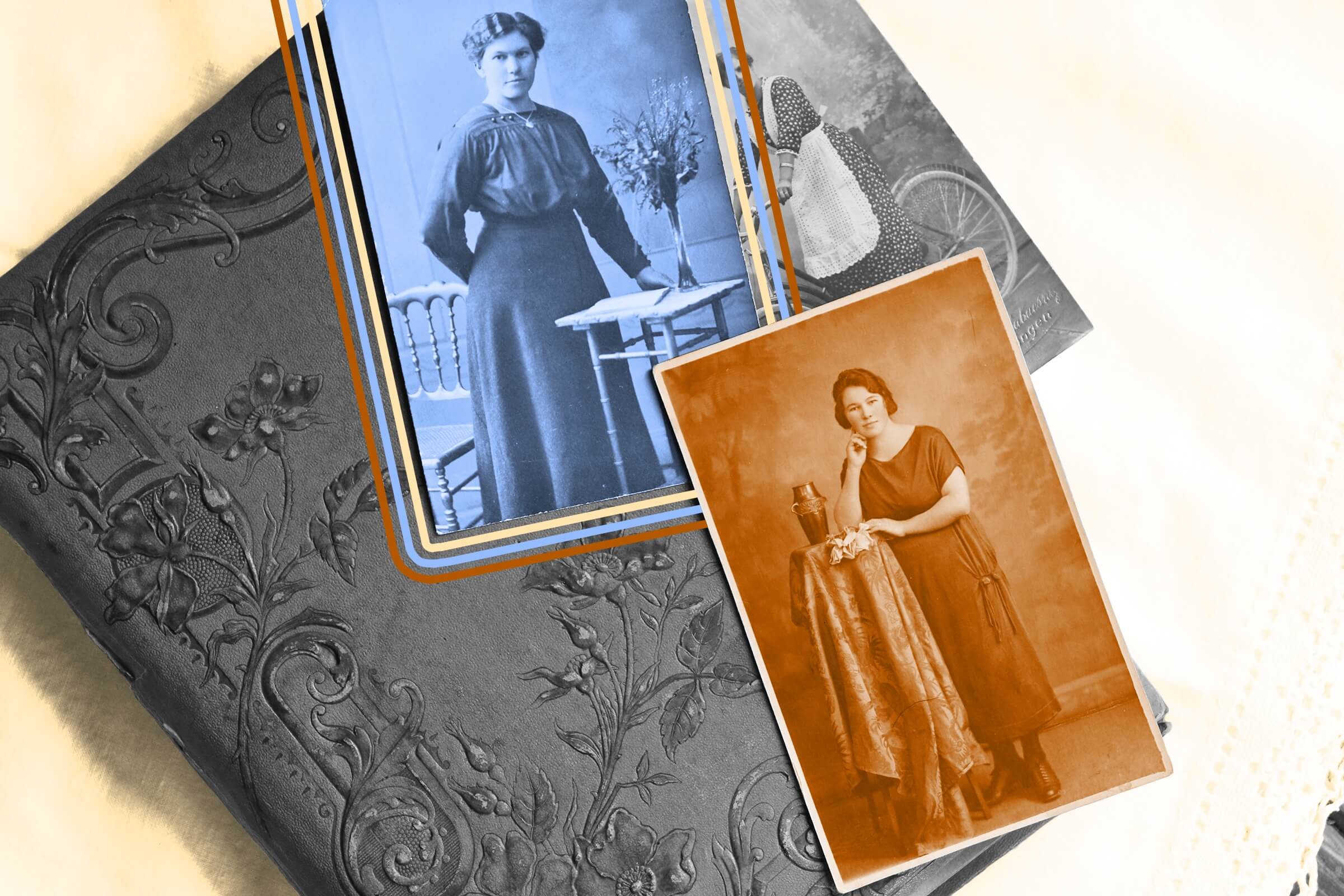
You inherit half of your DNA from each parent, 17% to 34% of which comes from each grandparent for an average of 25%, and 12.5% from each great-grandparent. Beyond that, it gets murky — so much so that you aren’t genetically related to all your ancestors.
The farther up the family tree you go, the more diluted your genetic link becomes; once you get past your great-great-great-grandparents, with whom you share about 3% of your DNA, the more likely it becomes that you aren’t genetically related to your relatives. For example, the percentage drops to a meager 1.56% with your fourth great-grandparents. If you ever see a picture of your great-great-great-great aunt and can’t detect a family resemblance, it may very well be because you didn’t actually inherit any of her DNA.




Oops, incorrect!
It's a factMitochondrial DNA comes from the egg, not the sperm, resulting in you inheriting slightly more genetic material from your mother than you do from your father.
The chance becomes greater with each generation you go back, of course. It increases from a 17.76% chance of not sharing any DNA with one of your sixth great-grandparents to a 37.43% chance with your seventh great-grandparents and a 57.53% chance with your eighth great-grandparents. The DNA you share with most of your cousins is also fairly meager: an average of 14.4% with first cousins, 3.4% with second cousins, and just 0.8% with third cousins.

Numbers Don't Lie
More Interesting Reads


Your mother’s cousin’s child is your ______.
Ready to reveal?
Confirm your email to play the next question?
Your mother’s cousin’s child is your second cousin.

There are more than four DNA bases.
You may be familiar with the four main DNA bases, but there’s more to our genes than ATGC, aka adenine, thymine, guanine, and cytosine. (Fun fact: The sci-fi movie Gattaca got its name by artfully combining those four letters.)
At least 17 modified DNA letters (aka bases) have been found to date, including 5-formylcytosine (5fC), which was discovered in 2011. Technically a transitional form of cytosine that was corrected by repair enzymes, 5fC is an intermediate base that was found by researchers from the University of Cambridge to exist in tissue as a stable structure.

Michael Nordine is a writer and editor living in Denver. A native Angeleno, he has two cats and wishes he had more.
top picks from the Inbox Studio network
Interesting Facts is part of Inbox Studio, an email-first media company. *Indicates a third-party property.