

Original photo by Pi-Lens/ Shutterstock
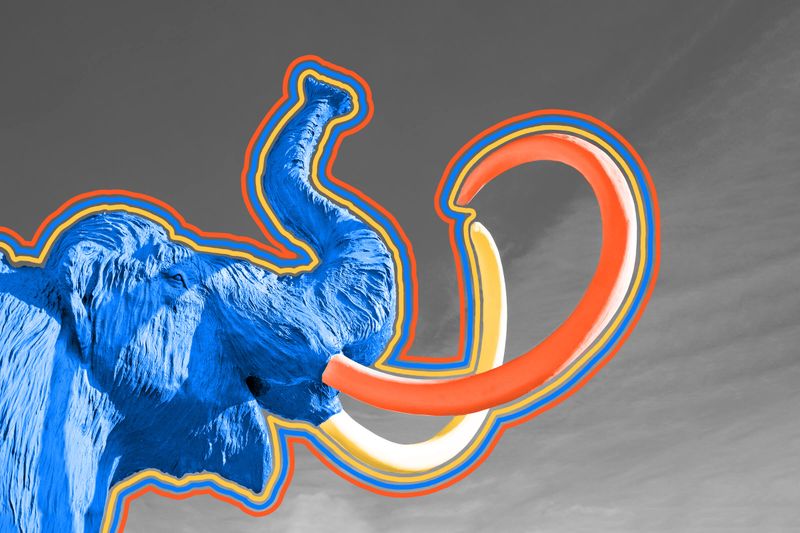
Woolly mammoths seem old-school. Hunted by Neanderthals for tens of thousands of years, these elephant-like mammals, some with tusks up to 15 feet long, evolved hair and layers of fat to withstand the frigid temperatures of the ice age tundra as they roamed the northern reaches of Asia, Europe, and North America. Although no longer among us, their bones — and in some cases mummified remains — fill natural history museums around the world. But these ancient beasts aren’t as ancient as you might think. In fact, it’s estimated that the last woolly mammoth died around 1700 BCE — some 800 years after ancient Egyptians built the Great Pyramid of Giza.




Oops, incorrect!
It's a fibWhile they’re very similar — hairy, huge tusks, elephantine — there are some differences if you know where to look. Mammoth skulls have a knob on top, unlike the mastodon’s smooth domes, and mastodon teeth are designed for snapping twigs, whereas mammoth teeth are built for grazing.
As the Earth began transitioning out of the last ice age some 12,000 years ago, a warming world altered the woolly mammoth’s ecosystem. Melting glaciers created a wetter planet that destroyed the vegetation mammoths relied on for food, and this dramatic shift — along with continued human predation — led to complete extinction of the creatures in most areas around 8000 BCE. However, small pockets survived on some islands that benefited from both cold-weather vegetation and protection from human hunters.
Some of the last known mammoths lived in isolation on Wrangel Island, a Russian possession in the Arctic Ocean just northwest of Alaska, and they didn’t have an easy go of it. Scientists who compared a 4,300-year-old mammoth bone from Wrangel Island to mammoth specimens 10 times older and from the Siberian mainland found that these final woolly mammoths experienced what scientists call a “genetic meltdown” due to the limited gene pool on the island, with mutations that likely made it harder to mark territory and choose mates. As for the ancient Egyptians, they kept chugging along until the death of Cleopatra, in 30 BCE. With its transformation into a Roman province, the 3,000-year-old dynasty also went the way of the woolly mammoth.

Numbers Don't Lie
More Interesting Reads





Woolly mammoths flourished during a geologic epoch known as the ______.
Ready to reveal?
Confirm your email to play the next question?
Woolly mammoths flourished during a geologic epoch known as the Pleistocene.

The woolly mammoth is a leading candidate for a controversial process known as “resurrection biology.”
What if scientists could bring an animal back from extinction? It’s a question famously explored in Michael Crichton’s 1990 science fiction novel Jurassic Park (and the subsequent movie adaptations), even if the answers there were less than encouraging. One problem in the fictional setup was that humans and dinosaurs are separated by 65 million years of evolution — but what if scientists brought back an animal that roamed the Earth alongside humans? That’s the question scientists are exploring with a process called de-extinction, also known as resurrection biology. Because it’s likely impossible to create an exact copy of an extinct animal, de-extinction aims to create “proxy” animals that fulfill the same ecological function. One plan is to alter the genome of elephants to create a cold-resistant, mammoth-elephant hybrid, or a mammophant. Biologists working on the project aren’t aiming to open an ice age-themed amusement park, but instead want to reintroduce the creatures to the tundra where they can once again control arctic shrubs and trees while manuring the soil. In 2021, a de-extinction company called Colossal raised $15 million to bring back the woolly mammoth, and soon announced that calves could walk the Earth within a few years. Yet the idea remains controversial: Instead of working on de-extinction, some scientists want to leverage the gene-editing technology (and the funding that comes with it) to save the many vulnerable animals still struggling for survival today.

Darren Orf lives in Portland, has a cat, and writes about all things science and climate. You can find his previous work at Popular Mechanics, Inverse, Gizmodo, and Paste, among others.
top picks from the Inbox Studio network
Interesting Facts is part of Inbox Studio, an email-first media company. *Indicates a third-party property.