
Original photo by Nikola Spasenoski/ iStock
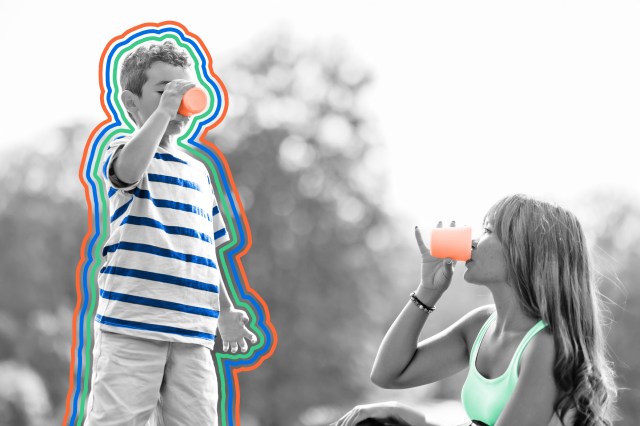
As strange and perhaps alarming as it sounds, children in most of the United Kingdom are legally allowed to consume alcohol at home at the age of 5. (The exception is Scotland, which doesn’t have any minimum age for at-home alcohol consumption.) But that doesn’t mean a 5-year-old can go to an off-licence (a British liquor store) and buy a six-pack of beer — they certainly wouldn’t be served.
In most circumstances, the legal drinking age in the U.K. is 18, meaning below this age, it’s illegal to buy alcohol or drink it in public, including in pubs and restaurants (with some exceptions for 16- and 17-year-olds if accompanied by an adult). However, the 1933 Children and Young Persons Act specifies it’s illegal to give alcohol to “any child under the age of 5 years.”




Oops, incorrect!
It's a factBy order of the Salmon Act 1986, it’s illegal in the U.K. to handle salmon in “suspicious circumstances” — for instance, if the fish is believed to have been obtained illegally, perhaps through poaching. The law includes the furtive handling of trout, eels, lampreys, smelt, and freshwater fish.
Ergo, it’s technically permitted to give a child an alcoholic drink if they meet that age minimum, and, importantly, if they’re not in public. So in the privacy of one’s own home, it’s not against the law — though certainly not recommended — to give a drink to children 5 and up.
Strange as the law may seem, in some parts of the world (such as Scotland) there’s no minimum age at all for children drinking at home — including some states in the U.S. In 29 American states, minors of any age are legally allowed to drink in a private residence under parental supervision.
The intent behind a low (or no) minimum age limit for drinking at home is harm reduction and making alcohol appear less like a tempting “forbidden fruit.” With no age restrictions, parents can teach responsible drinking in a controlled environment. In some countries, the consumption of small quantities of alcohol at home is also part of the culture — in France, for example, it’s quite normal for kids to drink a glass of watered-down wine at family meals.

Numbers Don't Lie
More Interesting Reads






The largest wine-producing country in the world is ______, which puts out around 4.4 billion liters annually.
Ready to reveal?
Confirm your email to play the next question?
The largest wine-producing country in the world is Italy, which puts out around 4.4 billion liters annually.

Beer coaster collecting is known as “tegestology.”
The hobby of collecting beer coasters, also known as beer mats, is tegestology. The first known written usage of the word dates to 1960, but the history of beer mats is much older.
Coasters as we know them today first made an appearance in the late 19th century, and around 1880, the German printing and board mill company Friedrich Horn began making small cardboard mats specifically for beer. Using cardboard allowed for greater absorption of spills and also opened up a whole new world of advertising. It was cheap and easy to print ads on the disposable coasters, and the mats soon appeared in pubs and bars across Europe.
Breweries began making their own coasters to distribute to pubs along with their ales, and the designs became increasingly colorful and ornate — and, ultimately, collectible. Perhaps the most notable tegestologist is Leo Pisker of Langenzersdorf, Austria, who assembled a collection of around 152,860 different beer mats from 192 countries — a feat recognized by Guinness World Records.

Tony is an English writer of nonfiction and fiction living on the edge of the Amazon jungle.
top picks from the Inbox Studio network
Interesting Facts is part of Inbox Studio, an email-first media company. *Indicates a third-party property.