

Original photo by © Planet Volumes/Unsplash.com
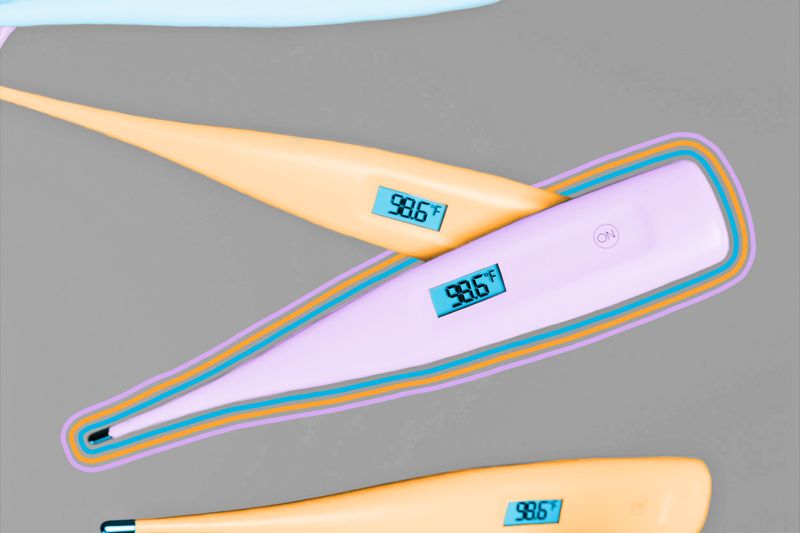
For generations, 98.6 degrees Fahrenheit (37 degrees Celsius) was considered the standard temperature of a healthy human body. It’s one of the most familiar numbers in medicine, taught in schools and repeated in doctors’ offices around the world. But recent research suggests that today’s average person may run a little cooler.
The 98.6-degree benchmark dates to the mid-19th century, when German physician Carl Reinhold August Wunderlich compiled thousands of temperature readings and established what became the accepted norm. His work was groundbreaking for the time, but modern scientists have since revisited the subject using larger datasets and more precise instruments.




Oops, incorrect!
It's a fibIn many cases, a fever is a sign that the body’s immune system is doing exactly what it’s supposed to do. By raising its temperature, the body can make it harder for some pathogens to survive and reproduce.
A 2020 study from Stanford University examined medical records spanning more than 150 years and found that the average body temperature in the United States has steadily declined over time. The researchers concluded that a typical healthy adult today may have a baseline temperature closer to 97.5 to 97.9 degrees Fahrenheit, depending on age, sex, and other factors. That’s around a one-degree drop since the standard was established.
Why the change? Scientists believe it may reflect improvements in overall health. Compared with people living in the 1800s, modern populations experience fewer infections like gum disease and tuberculosis, thanks to advances in sanitation, nutrition, and medicine. That makes the gradual cooling of the human body a possible sign of how dramatically our lives have changed.

Numbers Don't Lie
More Interesting Reads





Infants typically have a slightly ______ average body temperature than older children and adults.
Ready to reveal?
Confirm your email to play the next question?
Infants typically have a slightly higher average body temperature than older children and adults.

Digital thermometers don’t use liquid.
Digital thermometers rely on electronic temperature sensors — most commonly thermistors or thermocouples — that detect temperature by changes in electrical resistance or voltage. The device measures those changes and converts them into a digital reading displayed on a screen, often within just a few seconds. Because there is no glass tube or liquid, digital thermometers can be designed for different measurement sites — such as the mouth, armpit, rectum, ear, or forehead — and they provide quick, easy-to-read results.
Before these affordable and reliable digital alternatives became common in the early 2000s, mercury thermometers were widely used for more than a century. The main reason for the shift was safety; mercury is toxic, and if a glass thermometer breaks, the spilled contents can be difficult and dangerous to clean up. Many countries have restricted or banned mercury thermometers, and international efforts like the Minamata Convention on Mercury have further encouraged reducing their production and use worldwide.

Kristina is a coffee-fueled writer living happily ever after with her family in the suburbs of Richmond, Virginia.
top picks from the Inbox Studio network
Interesting Facts is part of Inbox Studio, an email-first media company. *Indicates a third-party property.