
Original photo by Africa Studio/ Shutterstock

New York City’s drinking water is often called “the Champagne of tap water,” and while it doesn’t sparkle, it does have another unique property: It contains microscopic crustaceans. The tiny creatures are nearly invisible to the naked eye, and when they are spotted in a freshly poured cup, they resemble small specks of white dust. Despite their size, the crustaceans — aka copepods — play a major role in keeping the city’s water supply safe. That’s because copepods eat mosquito larvae often found floating in water, naturally improving its quality and taste — a particularly important job considering New York City has the largest unfiltered water system in the U.S. 

Some shrimp can shoot bubbles to catch their prey.

Ready to reveal?

Oops, incorrect!

It's a fact

Pistol shrimp are named for their unusual method of stunning their meals: shooting air bubbles at speeds similar to a bullet. The bursting bubbles create shock waves, complete with flashes of light and loud noise, which have been known to disrupt underwater submarine communication.

Residents of the Big Apple get most of their water from the Catskill and Delaware Watersheds, which supply about 1.2 billion gallons of drinking water per day to more than 9 million city dwellers and those in nearby suburbs. While the water isn’t filtered, it is treated with ultraviolet light and chemicals such as chlorine, and it undergoes around 600,000 health and water quality tests per year. Copepods can survive these cleansers, flowing through the system to often wind up in a glass of New York’s finest tap water. Despite the benefits of copepods, their existence has created concerns for religious Jewish communities that prohibit shellfish consumption. However, water quality engineers and biologists — who report that copepods exist around the globe in nearly all types of water and are entirely safe to consume — note that the creatures can easily be removed with at-home water filters.

Numbers Don't Lie

Numbers Don't Lie

Number of major U.S. cities that do not filter drinking water (NYC, Boston, San Francisco, Seattle, and Portland, Oregon)
5
Year New York City’s current water system was developed
1842
Average size (in inches) of a copepod
0.04–0.08
Number of mosquito larvae one copepod can eat in a day
30–40

Copepods are also called “______ of the sea,” because they graze on aquatic plant life.

Ready to reveal?

Confirm your email to play the next question?

Copepods are also called “cows of the sea,” because they graze on aquatic plant life.

Placeholder Image

Some communities get their drinking water from fog.

Not every community has instant, unlimited access to safe drinking water, which is why some have turned to unorthodox methods of water collection — such as fog harvesting. The process has been successful in arid regions with heavy fog, like coastal countries such as Eritrea, Israel, and Chile. Fog harvesters use mesh nets or screens to collect tiny water droplets from low-lying fog clouds, which then flow into pipes that lead to storage reservoirs. In Peru, a single fog net is capable of capturing between 200 and 400 liters of fresh water per day (about 52 to 105 gallons). While this simple technology is a water-producing game changer, scientists say it’s a recycled idea; evidence of ancient fog harvesters has been unearthed in Egypt, Israel, and the Atacama Desert in South America.

Nicole Garner Meeker
Writer

Nicole Garner Meeker is a writer and editor based in St. Louis. Her history, nature, and food stories have also appeared at Mental Floss and Better Report.

Original photo by Unsplash+ via Getty Images

As the largest and smallest states by area, Alaska and Rhode Island are in some ways diametrically opposed. But they do share one particular quirk: Each has just one area code. In fact, there are a total of 11 U.S. states whose residents use the same area code — Alaska, Delaware, Hawaii, Maine, Montana, New Hampshire, North Dakota, Rhode Island, South Dakota, Vermont, and Wyoming — and the reason has to do with the lower population numbers in those locations.

Helena, Montana, was once home to the most millionaires per capita.

Ready to reveal?

Oops, incorrect!

It's a fact

In 1864, Helena was founded as a camp for miners. Within a few years, many of the town’s residents saw their wealth skyrocket. By 1888, there were around 50 millionaires living among the 12,000 locals, making Helena home to the most millionaires per capita in the world.

In 1947, AT&T introduced area codes in an effort to standardize phone numbers across the United States and parts of Canada. The company issued 86 original area codes that are still in use today; the more well populated a state was, the more likely it was to be allotted multiple area codes. Back then, it was common practice for the middle digit to be “0” if the area code covered an entire state, and “1” if it covered only a portion. Today, many states have grown large enough to be given additional area codes, but there are still 11 holdouts. For instance, every inch of Alaska’s 665,384 square miles uses the same 907 area code. The same is true for the fourth largest state by area, Montana, whose residential phone numbers all start with 406. Many of these 11 states have come to embrace their singular area codes as an emblem of local pride. You’ll often find those three digits emblazoned on shirts, craft beers, bumper stickers, and other souvenirs sold throughout each state.

Numbers Don't Lie

Numbers Don't Lie

Area codes currently used in California (the most of any state)
40
First assigned area code (northeastern New Jersey)
201
Square miles serviced by the 867 area code
1.5 million+
Year Indiana received its first nonoriginal area code
1948

Alaska is nicknamed the "______."

Ready to reveal?

Confirm your email to play the next question?

Alaska is nicknamed the "Last Frontier."

Placeholder Image

Multiple states with single area codes will soon run out of phone numbers.

Of the 11 states that still rely on a single area code, several are projected to run out of available phone numbers in the near future. Once that happens, those states will have to implement new area codes for the first time since 1947. Experts project North Dakota will run out of 701 numbers by 2026, and Montana is estimated to max out its capacity of 406 numbers the following year. Maine is also teetering on the precipice, as it’s expected to supplement its 207 area code by the year 2033. This is due to growing populations and increased cellphone use, both of which require additional phone numbers. However, many local leaders in these states are attempting to delay the addition of other area codes by changing the way phone numbers are assigned, as the current system leads to many numbers being left unused.

Bennett Kleinman
Staff Writer

Bennett Kleinman is a New York City-based staff writer for Inbox Studio, and previously contributed to television programs such as "Late Show With David Letterman" and "Impractical Jokers." Bennett is also a devoted New York Yankees and New Jersey Devils fan, and thinks plain seltzer is the best drink ever invented.

Original photo by Robert Harding Video/ Shutterstock

Lists of the world’s most intelligent animals don’t often feature cows, but our bovine friends have more emotional depth than they tend to get credit for. A 2011 study by scientists at the University of Northampton in England revealed that not only do cows have best friends, but they also get stressed out when separated from their BFFs — a relatable quality if ever there were one. The research was conducted by comparing heart rates and cortisol levels during 30-minute sessions in which a cow was penned with a “preferred partner” it was known to have a close bond with, then a “familiar but nonpreferred individual.” When the besties shared a pen together, their heart rates were lower and other signs of stress were also reduced.

Cows are colorblind.

Ready to reveal?

Oops, incorrect!

It's a fact

Cows have red-green colorblindness, meaning both red and green appear as shades of gray and/or black to them. Red-green colorblindness is also common in dogs, horses, and cats.

Cows aren’t the only animals that form friendships. Chimpanzees and bonobos do, too, as do several others, including dolphins, horses, certain birds, and marmots. Dolphins can identify their friends by taste, whereas most other creatures are known for simply grooming, remaining in close proximity to, and touching their besties — capuchin monkeys, for example, gently stick their fingers in one another’s eye sockets as a bonding ritual.

Numbers Don't Lie

Numbers Don't Lie

Degrees in a cow’s visual field
330
Liters of water a cow can drink in a day
100
Chambers in a cow’s stomach (rumen, reticulum, omasum, abomasum)
4
Weight (in pounds) of Craven Heifer, the heaviest known cow
4,368

Domestic cows originated in ______.

Ready to reveal?

Confirm your email to play the next question?

Domestic cows originated in Turkey.

Placeholder Image

Not all cattle are cows.

There are many different words for cattle, and though they’re sometimes used interchangeably, each one refers to a distinct kind. Bulls are adult males that are usually used for breeding rather than meat, whereas steer are castrated males typically raised for meat. The word “cow” itself refers to a mature female that has birthed at least one calf, and a heifer is a younger female that has not yet given birth.

Michael Nordine
Staff Writer

Michael Nordine is a writer and editor living in Denver. A native Angeleno, he has two cats and wishes he had more.

Original photo by Iren_Geo/ Shutterstock

Photographers have relied on the magic of cheese for decades — just mentioning the word is enough to turn up the corners of our mouths into a picture-perfect grin. But the earliest photographers utilized a different food to help purse their subjects’ puckers: prunes. According to Christina Kotchemidova, a communications professor and researcher, British photography studios of the past encouraged people to say “prunes” in an effort to tighten their lips, a look that was more socially preferable than a wide smile. 

Before instant photos, Polaroid created goggles for dogs.

Ready to reveal?

Oops, incorrect!

It's a fact

Instant photos hit the market in 1948 thanks to inventor Edwin Land. But his company, Polaroid, used polarizer filters in other items before cameras. Some of Land’s earliest products included a 3D movie process, upgraded military periscopes, and even glare-reducing dog goggles.

Most 19th- and early 20th-century photos show subjects with a solemn expression, a look that’s often attributed to the long exposure times of early cameras; holding a neutral expression for several minutes was easier than maintaining a smile. But social norms also played a big role — stern faces remained popular even after photo technology had improved well enough to easily capture smiles by the late 1800s, and some historians say that smiling was once considered improper. Beauty standards of the time called for mouths to have a subdued appearance; Kotchemidova’s research suggests people were expected to have “carefully controlled” mouths with small pouts. 

According to one study of nearly 38,000 high school yearbook photos from the 1900s to the 2010s, smiling in photos became more popular by the mid-20th century. Some historians believe the switch was influenced by two factors: dental care and home photography. Without widespread access to dental care, missing or rotten teeth were common, a detail many wouldn’t have wanted featured in their portrait. Dentistry became a more established field in the early 1900s, the same time period when Kodak was marketing its amateur cameras as a way to capture life’s happier, spontaneous moments — smiles included.

Numbers Don't Lie

Numbers Don't Lie

Exposure time (in hours) of the 1827 Niépce Heliograph, the earliest surviving photo
8
Cost of a commercial U.S. photo portrait in the early 1860s (about $6-$60 today)
$0.25-$2.50
Pounds of fruit produced by a mature prune plum tree each year
150-300
Shelf life of unrefrigerated prunes (in months), with an additional six months if refrigerated
6

In the U.S., ______ is the top prune-growing state.

Ready to reveal?

Confirm your email to play the next question?

In the U.S., California is the top prune-growing state.

Placeholder Image

Cameras from the Apollo space missions are still on the moon.

Documenting humankind’s voyage into space has required astronauts to cart cameras outside Earth’s atmosphere, but they haven’t always returned. Cameras used during many of the Apollo missions are still on the moon five decades later, including one used by Neil Armstrong during the first moonwalk. Between 1961 and 1972, NASA crews prepared and sent into space bare-bones cameras, stripped down for efficiency and to reduce user error, but weight requirements for returning to Earth meant astronauts kept only the film, ditching the cameras to make room for moon rocks and other space samples. In 1969, NASA announced that its moon garbage heaps — which would eventually include 12 cameras — totaled about $1 million in abandoned equipment (about $8.1 million today). However, the film brought back to Earth from the Apollo missions captured 18,000 of our first glimpses into space.

Nicole Garner Meeker
Writer

Nicole Garner Meeker is a writer and editor based in St. Louis. Her history, nature, and food stories have also appeared at Mental Floss and Better Report.

Original photo by GWImages/ Shutterstock

The next time you pop some jelly beans into your mouth, you may want to take a moment to appreciate just how much effort goes into producing these bite-sized delights. As explained by industry giant Jelly Belly, the process begins by heating a sugar, cornstarch, corn syrup, and water mixture, known as a slurry, and adding fruit purée, juice concentrate, or other ingredients for flavoring. From there, the mixture is squirted into cornstarch-coated molding trays, and left to solidify into the chewy jelly bean centers.

President Ronald Reagan had 720 bags of jelly beans delivered to the White House each month.

Ready to reveal?

Oops, incorrect!

It's a fact

Reagan, who turned to the sweets to help stop smoking, developed an insatiable taste for jelly beans during his tenure as California's governor. In 1981, he received 3.5 tons of red, white, and blue jelly beans for his presidential inauguration.

The following day, the bean centers are sent through a steam bath and a sugar shower to keep them from sticking. They are then loaded into a spinning machine for a process known as "panning," in which sugar and syrup are manually applied over the course of two hours to slowly build each bean's candied shell. Following another settling period, the candies receive an additional syrup coating, before being polished with confectioner's glaze and beeswax. Upon earning a final thumbs-up by way of visual inspection and spot taste-testing, the beans are stamped with the Jelly Belly logo and shipped out into the world.

It's a lot of shower, rinse, rest, and repeat for a process that takes seven to 14 days to complete. And while that might seem like an outsized increment of time for such a tiny edible, the Americans who gobble down an average of 16 billion jelly beans every Easter seem to think it's worth it.

Numbers Don't Lie

Numbers Don't Lie

World record for number of jelly beans eaten with chopsticks in one minute
40
Year jelly beans went to space on the space shuttle Challenger
1983
Jelly beans used for Kina Grannis’ 2011 video “In Your Arms”
288,000
Average shelf life (in years) of a packaged jelly bean
1

National Jelly Bean Day is annually celebrated on ______.

Ready to reveal?

Confirm your email to play the next question?

National Jelly Bean Day is annually celebrated on April 22.

Placeholder Image

Jelly beans first appeared in the United States during the 19th century.

Nobody knows for sure where jelly beans came from, but they’re said to have descended from a pair of European predecessors: jellied Turkish delights, which became the pride of Istanbul in the late 18th century, and Jordan almonds, which began receiving their candy shells in the 15th century. Allegedly mentioned early on in a Civil War-era advertisement from Boston candymaker William Schrafft, jelly beans were considered a Yuletide specialty by the end of the 19th century, before becoming more closely associated with Easter within a few decades. But perhaps the biggest step in jelly bean history came in 1965, when the Herman Goelitz Candy Company found a way to flavor both the chewy center and the crunchy shell of their Mini Jelly Beans, creating the modern marvel enjoyed by candy connoisseurs everywhere.

Tim Ott
Writer

Tim Ott has written for sites including Biography.com, History.com, and MLB.com, and is known to delude himself into thinking he can craft a marketable screenplay.

Original photo by murat4art/ iStock

Passengers aboard Loganair Flight LM711, which travels 1.7 miles between the Scottish islands of Westray and Papa Westray, are airborne very briefly. On a good day, the world’s shortest commercial flight takes less than a minute — as little as 53 seconds, in fact. There’s no co-pilot, no lavatory, and only eight passengers aboard the Britten-Norman BN-2 Islander aircraft. Tickets for the journey, which is made just two or three times a day, cost roughly $22. Both Westray and Papa Westray are part of the Orkney archipelago, a sparsely populated set of islands that have proved popular with adventurous travelers in search of a scenic journey that happens to include a record-setting flight.

Scotland doesn’t have an official national anthem.

Ready to reveal?

Oops, incorrect!

It's a fact

The country has never adopted an official anthem, and in 2015 the Scottish government announced it has “no current plans” to do so. However, “Flower of Scotland” continues to serve as an unofficial anthem at international sporting events.


Most of the world’s other shortest flights are likewise between islands. Those who’d prefer not to take the hour-long ferry connecting the Greek isles of Karpathos and Kasos can instead fly between them in just five minutes. Meanwhile, passengers flying the 12 miles from Sint Maarten (one of the Netherlands’ constituent countries) to Anguilla (a British Overseas Territory) can expect to be in the air for closer to 10 minutes.

Numbers Don't Lie

Numbers Don't Lie

Full-time residents of Papa Westray
~80
Passenger capacity of the Airbus A380, the world’s largest passenger aircraft
853
Islands in Scotland, 94 of which are inhabited
790
Year the Loch Ness monster was first written about
565

Scotland’s national animal is the ______.

Ready to reveal?

Confirm your email to play the next question?

Scotland’s national animal is the unicorn.

Placeholder Image

The world’s longest flight is between Newark and Singapore.

On the opposite end of the flight length spectrum is Singapore Airlines Flight 21, a 10,644-mile journey between New Jersey and Singapore with a scheduled length of 18 hours and 50 minutes (a mere 18 hours and 18 minutes under optimal conditions). The daily trek crosses 13 time zones and usually flies over at least a dozen countries. It’s the world’s longest flight, edging out the route between San Francisco, California, and Bengaluru, India, which takes closer to 17 hours and 50 minutes, as well as Qantas’ flight from Perth, Australia, to London, England (17 hours and 45 minutes).

Michael Nordine
Staff Writer

Michael Nordine is a writer and editor living in Denver. A native Angeleno, he has two cats and wishes he had more.

Original photo by bangoland/ Shutterstock

No one likes hiccups. Luckily, these involuntary spasmodic interruptions usually last only a few minutes. On rare occasions, hiccups persist for a few days, and even more rarely still they persist for longer than a month (in which case they can be considered “intractable”). Then there’s the strange case of Charles Osborne, who was afflicted with a continuous case of hiccups for 68 years — recognized by Guinness World Records as the longest case of hiccups in history. Osborne’s story began with an accident on June 13, 1922, in which he accidentally slipped and fell. His doctor later said he popped a blood vessel in his brain the size of a pin, and theorized that Osborne must have damaged the incredibly small area of the brain that controls and inhibits hiccups. 

Nearly all mammals hiccup.

Ready to reveal?

Oops, incorrect!

It's a fact

Most (if not all) air-breathing mammals suffer this same periodic annoyance. However, scientists have not observed hiccups in reptiles, amphibians, or birds.

Osborne’s diaphragm spasmed 20 to 40 times a minute, on average, during his waking hours — meaning he hiccuped roughly 430 million times throughout his life. To cope with this never-before-seen disorder, Osborne learned breathing techniques that effectively masked his constant hiccuping. Later in life, Osborne appeared in magazines and on late-night television shows to talk about his ailment. In 1978, Osborne told the Associated Press that he’d “give everything I got in the world if I could get rid of them.” Although he traveled the world in search of a cure — even offering $10,000 to anyone who could find one — the best he could do was cope with the affliction. Finally, in 1990, his diaphragm suddenly ended its 68-year-long spasmodic episode on its own. Sadly, Osborne died less than a year later, but he was at least able to experience the final days of his life sans hiccups.

Numbers Don't Lie

Numbers Don't Lie

Year the modern spelling of “hiccup” was first recorded (the word itself appeared around the 1570s)
1788
Estimated number of hospital admissions for hiccups every year in the U.S.
4,000
Days of continuous hiccups after which a case is considered “persistent”
2
Earliest (in weeks) that doctors have detected hiccups in human fetuses
8

The medical term for hiccups is “______,” from the Latin for “to catch one’s breath when crying.”

Ready to reveal?

Confirm your email to play the next question?

The medical term for hiccups is “singultus,” from the Latin for “to catch one’s breath when crying.”

Placeholder Image

Scientists aren’t exactly sure why we hiccup.

For something so ubiquitous, it’s surprising that we still can’t explain why hiccups exist. Scientists note that they do exist for a reason, because a hiccup is not simply a twitch of the muscles, but a complex motor act designed to do… something. Although we still don’t know for sure what that “something” is, scientists have a few ideas. One of the most astounding hypotheses is that hiccups are a genetic holdover from way back — like “when we had gills” way back. Some scientists have argued that hiccuping could be an evolutionary leftover from when we had a need for gill ventilation. Other ideas suggest that hiccups are a way that infants learn how to regulate their breathing (which for some reason persists into adulthood). This seems to support other evidence that humans tend to hiccup less as they age. Other theories suggest that hiccups could be a method for clearing food stuck in the esophagus. For now, the humble hiccup remains a perplexing biological mystery.

Darren Orf
Writer

Darren Orf lives in Portland, has a cat, and writes about all things science and climate. You can find his previous work at Popular Mechanics, Inverse, Gizmodo, and Paste, among others.

Original photo by hatman12/ iStock

Most states don’t recognize any language as an official tongue. Yet Hawaii has officially recognized two state languages — English and Hawaiian — since 1978. Hawaiian is a Polynesian language with just 13 letters, and was the main language spoken in the Pacific island chain long before it became a U.S. state. However, as in many Indigenous communities that experienced forced assimilation, by the late 19th century Hawaiians were often prohibited from using their own language. The first ban on speaking Hawaiian in schools appeared in 1896, three years after the U.S. became involved in overthrowing the Hawaiian monarchy; two years later, English became Hawaii’s official language when the islands became a U.S. territory. 

Hawaii grows most of the world’s pineapples.

Ready to reveal?

Oops, incorrect!

It's a fib

Pineapples are synonymous with Hawaii for good reason — at one time, 75% of the world’s pineapples were grown on the island. However, pineapple farming began to decline around the mid-1960s, making way for Costa Rica to become the world’s leading pineapple producer.

By the 1960s, activists began fighting to preserve parts of Hawaiian culture they feared were slipping away, including music and dance, but most importantly the Hawaiian language. Their efforts were rewarded in 1978 when the state constitution was amended to make Hawaiian an official language; the move also gave weight to many legal documents that were originally drafted in Hawaiian before it was banned. Then, in 1990, nearly 100 years after Hawaiian was first banned in schools, the U.S. government passed legislation to help support language learning and the preservation of Hawaiian and other native tongues. Today, many Hawaiians attend immersion schools to study the language, and a survey in 2016 found that about 18,000 people speak the language, along with English, on a daily basis.

Numbers Don't Lie

Numbers Don't Lie

Year Hawaii became the 50th U.S. state
1959
Major islands in the Hawaiian archipelago
8
Approximate distance (in miles) between Hawaii and the U.S. mainland
2,400+
Active volcanoes on the islands of Hawaii and Maui
5

Hawaii’s smallest major island, ______, is uninhabited.

Ready to reveal?

Confirm your email to play the next question?

Hawaii’s smallest major island, Kahoolawe, is uninhabited.

Placeholder Image

Alaska has 21 official languages.

Three states — Hawaii, South Dakota, and Alaska — have more than one official language, though Alaska has the most. In 2014, the northernmost state passed a law recognizing 20 Indigenous languages as official tongues, including Tlingit, Koyukon, and Central Yup’ik, along with English. However, Alaska has far more Native languages than have been made “official,” with nearly 100 dialects found throughout the state. Generally, languages are broken into two main language groups — the Inuit-Yupik-Unangan and the Na-Dene. Both language families have been researched and documented since the 1970s by language preservation groups. However, few of these tongues were written down or recorded, and many have since become rarely spoken or lost, which is why Alaska’s governor issued a state emergency in 2018 to promote Indigenous language learning in public schools.

Nicole Garner Meeker
Writer

Nicole Garner Meeker is a writer and editor based in St. Louis. Her history, nature, and food stories have also appeared at Mental Floss and Better Report.

Original photo by Davizro/ iStock

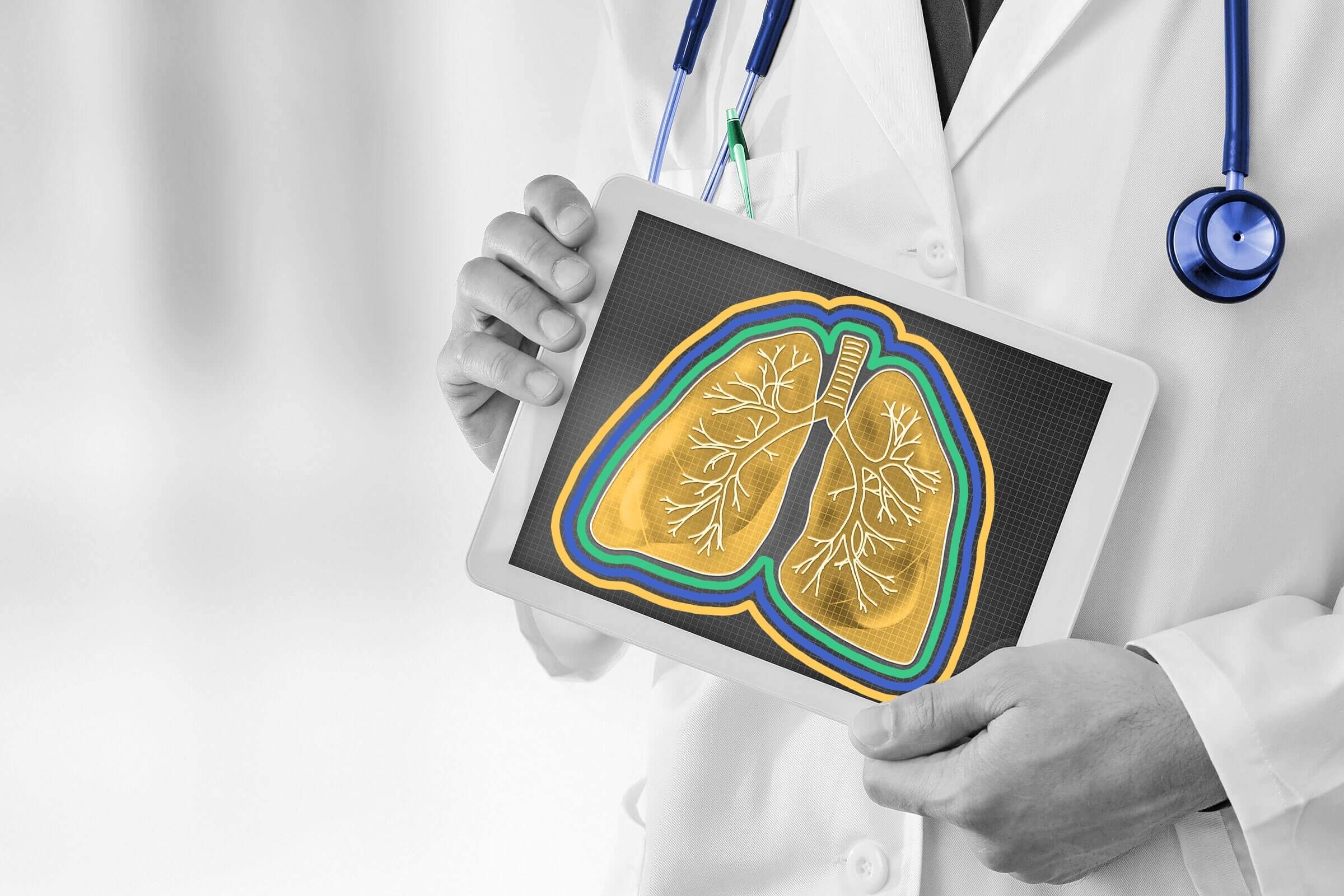
If we could track our breaths the way many people do steps or exercise, the results would be astonishing. While there’s no app for that, scientists estimate that an average person takes 20,000 to 25,000 breaths over the course of 24 hours. That breaks down to between 12 and 18 breaths per minute for an adult. Children typically breathe more quickly, up to 60 breaths per minute, which tapers down to the adult rate by their teenage years. All those inhales and exhales add up, and by age 50, the average human has taken at least 400 million breaths. Each one helps fuel our bodies; oxygen is a crucial component needed for our most basic functions, like moving muscles, digesting food, and even thinking.

Your left lung is smaller than your right lung.

Ready to reveal?

Oops, incorrect!

It's a fact

Most images of lungs show the organ as being symmetrical, but that’s not true. The left lung has two internal chambers (called lobes, which fill with air when we breathe), while the right side has three. The left lung is also slightly smaller to make room for the heart.

Breathing tends to be an automatic process, but some scientists say that not everyone does it right. Mouth breathing isn’t just annoying when you’re sick or to those around you — it’s actually inefficient for your body. Inhaling through the nose helps heat and pressurize air so that the lungs can extract oxygen efficiently, and the cilia (aka nose hairs) are able to stop particles like pollen and pollution from entering the lungs; neither job can be done by the mouth. Mouth breathing can also cause sleep apnea, snoring, and even asthma. Amazingly, it can change the structure of your face over time; children who primarily breathe through their mouths have a higher chance of having narrow mouths and misaligned teeth.

Numbers Don't Lie

Numbers Don't Lie

Average amount of air (in gallons) inhaled by a human in 24 hours
5,000
Number of alveoli, aka tiny air sacs, found in human lungs
300 million-500 million
Breaths a cheetah takes per minute while running at top speeds
150
Minutes actress Kate Winslet held her breath underwater while filming “Avatar: The Way of Water”
7:15

The aptly named ______ has both gills and lungs, used to breathe in and out of water.

Ready to reveal?

Confirm your email to play the next question?

The aptly named lungfish has both gills and lungs, used to breathe in and out of water.

Placeholder Image

Scientists have found parasites that don’t need oxygen.

Breathing is a requirement for most living creatures on Earth, except one: a parasitic, water-dwelling blob called the Henneguya salminicola. In 2020, a group of scientists from Israel, France, and the U.S. announced they had discovered that the parasite — which is microscopic and typically infects salmon — doesn’t appear to breathe. In fact, it could be the only known nonbreathing animal on the planet. H. salminicola belongs to the same family as jellyfish, which do breathe by absorbing the oxygen in water directly through their skin; however, H. salminicola lacks mitochondrial DNA, a part of the DNA sequence that turns oxygen into fuel to power the body’s cells. Earth is home to many simple, single-celled organisms (like yeast and bacteria) that don’t need to breathe, but H. salminicola stands out because it’s the first known multicellular animal that’s not dependent on oxygen — and researchers aren’t sure why. One theory is that the parasite could get the power it needs to survive by stealing protein from its fish hosts.

Nicole Garner Meeker
Writer

Nicole Garner Meeker is a writer and editor based in St. Louis. Her history, nature, and food stories have also appeared at Mental Floss and Better Report.

Original photo by LeoFan/ iStock

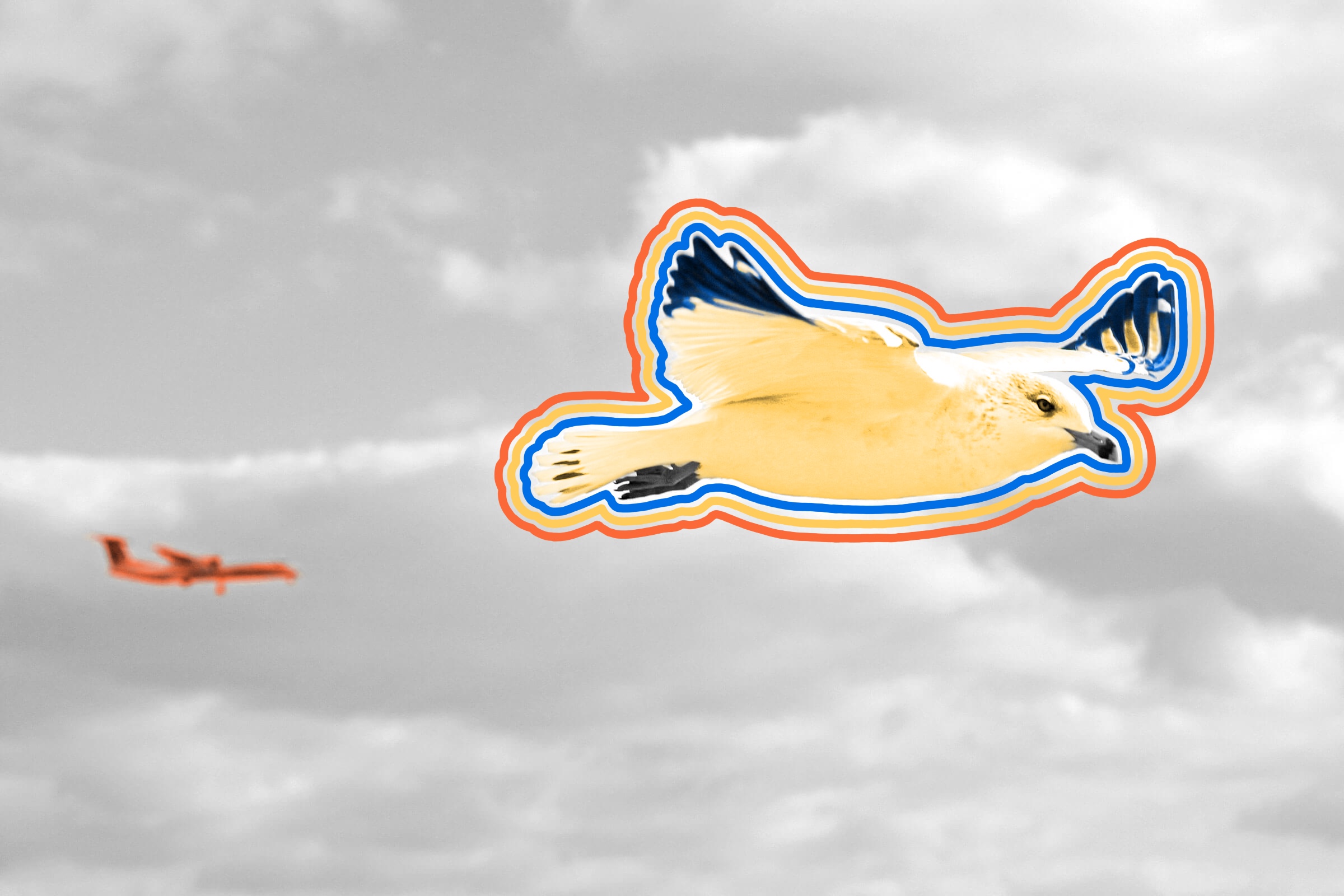
Enlisting animals into military service isn’t entirely unusual — dolphins have been used for underwater surveillance and even camels have helped haul supplies. Those successes could be why a Coast Guard program meant to train pigeons for search and rescue missions was able to get off the ground in the late 1970s. Project Sea Hunt’s goal was to more easily (and quickly) find people lost at sea using trained pigeons to act as real-time spotters. Despite their reputation as nuisance fowl, pigeons are easily trainable creatures with outstanding eyesight; they (like many birds) may even have better vision than humans, thanks to their ability to see UV light.

There’s no scientific difference between pigeons and doves.

Ready to reveal?

Oops, incorrect!

It's a fact

There’s not much difference between the birds beyond their name; the word “dove” has Nordic origins, while “pigeon” comes from French. Both birds belong to the Columbidae family and are often categorized by size, but the use of the terms is often subjective.

Pigeons selected for the program underwent six months of training to spot yellow, orange, and red objects in the ocean (the most common colors for flotation devices and rafts), and were then placed in special pigeon chambers underneath helicopters that had a view of the water below. When the trained birds spotted a bright color, they could signal to Coast Guard pilots above by pecking a special pedal that flashed a signal in the cockpit. Test runs found that the pigeons were able to spot targets 90% of the time, compared to the human success rate of just 38%. The pigeons were also faster than their human counterparts, spotting potential victims before humans did 84% of the time.

Despite these successes, Project Sea Hunt was shuttered due to federal budget cuts in the early 1980s. In the years since, the Coast Guard has combined flyovers, ocean-tracking software, and other methods to quickly and safely rescue those lost at sea.

Numbers Don't Lie

Numbers Don't Lie

Known species of pigeons
300+
Year the Revenue-Marine, the precursor to the U.S. Coast Guard, was established
1790
Average number of search and rescue missions performed by the Coast Guard daily
45
Distance (in miles) racing pigeons can travel in one competition
600+

The last known passenger pigeon, named ______, lived to be 29 years old.

Ready to reveal?

Confirm your email to play the next question?

The last known passenger pigeon, named Martha, lived to be 29 years old.

Placeholder Image

A pigeon saved the lives of nearly 200 American soldiers during World War I.

Pigeons are known for their supreme navigation skills (and for being easily trainable), which is why the U.S. Army relied on them to deliver crucial information during World War I when communication lines were down. The best-known winged warrior, Cher Ami, completed 12 message relays, one of which saved 194 American soldiers in October 1918. The famous flight delivered a message from the 77th Division, a battalion of American soldiers isolated in France’s Argonne Forest behind German lines and suffering from a heavy bombardment of friendly fire. Sending Cher Ami into the sky was risky, since the unit’s other pigeons had been shot down; miraculously, Cher Ami sustained injuries to his chest and leg but returned to the sky, traveling 25 miles in under 30 minutes to deliver information about the battalion’s position that stopped the bombardment. Army medics were able to save Cher Ami, who was retired from service and honored with a Croix de Guerre medal from the French government for his efforts. More than 100 years later, the preserved messenger pigeon is kept on display at the Smithsonian’s National Museum of American History.

Nicole Garner Meeker
Writer

Nicole Garner Meeker is a writer and editor based in St. Louis. Her history, nature, and food stories have also appeared at Mental Floss and Better Report.