
Original photo by skynesher/ iStock

Soap is an everyday essential, but this incredibly useful (and lifesaving) cleanser hasn’t always existed. The earliest known mention of soap dates back 4,500 years, found on a cuneiform tablet unearthed from Girsu, in ancient Mesopotamia (modern Iraq). But even then — and for centuries afterward — humans likely weren’t using the slippery substance for handwashing. Bars of soap made from rendered fat and wood ash were primarily used to clean dirty clothing and raw fibers that were being prepped for weaving. Instead of soap, many ancient peoples (such as the Greeks) used scented olive oils and other substances — including coffee — to clean their bodies.

Soap and detergent are the same thing.

Ready to reveal?

Oops, incorrect!

It's a fib

The words “soap” and “detergent” are used interchangeably, but there is a difference. Soaps are made from oils or fats, and bond with dirt particles, making the latter slippery enough to slide away while washing. Detergents are made from dirt-removing enzymes, and don’t contain any soap.

Historians believe the practice of drinking coffee originated in Ethiopia and slowly spread to the Middle East and Europe, becoming popular around the 15th century. Before then, some cultures relied on the brew not as a beverage, but as a cleanser. Around the 10th century, physicians and botanists in the Middle East began writing in Arabic about “bunk,” a compound similar to modern brewed coffee that could be used for handwashing. Surviving texts from the time credited bunk with removing strong odors from hands without drying out the skin, and recipes for the substance sometimes included spices such as cloves, cinnamon, and fruit peels. Bunk also may have been incorporated into other products, like body oils and perfumed powders. However, little is known about the compound. It appears the practice fell out of popularity as coffee became valued less for its odor-eliminating properties and more for the same thing modern consumers appreciate: that caffeinating buzz.

Numbers Don't Lie

Numbers Don't Lie

Seconds the CDC recommends scrubbing your hands when handwashing
20
Year Purell, the gel-based hand sanitizer, became available in stores
1997
Estimated species of bacteria that live on human hands at any given time
150
Estimated cups of coffee consumed in the U.S. each day, as of 2023
440 million

The chemical process of creating soap is called ______.

Ready to reveal?

Confirm your email to play the next question?

The chemical process of creating soap is called saponification.

Placeholder Image

Soap carving was a popular hobby during the Great Depression.

How do you convince children to like soap? That was manufacturer Procter & Gamble’s big question in the early 1920s, when company executives were looking to draw in a younger demographic of shoppers. Believing that children familiar with the company’s Ivory soap would be future consumers, advertisers launched a marketing campaign that introduced the floating soap bars as art materials. In 1924, Procter & Gamble held its first National Soap Sculpture Competition, promoting the brand’s soap bars as the perfect medium for artistic carvings and awarding amateur artists with cash, trips, and other prizes. Soap carving exploded in popularity for more than a decade to follow, in part because of the Great Depression. Out-of-work Americans with more downtime sought out hands-on hobbies such as carpentry, gardening, and crafts — and with Ivory soap priced at just 25 cents for a six-pack (less than $5 today), soap carving became an inexpensive amusement.

Nicole Garner Meeker
Writer

Nicole Garner Meeker is a writer and editor based in St. Louis. Her history, nature, and food stories have also appeared at Mental Floss and Better Report.

Original photo by Michael Wapp/ Alamy Stock Photo

Egypt's Library of Alexandria, possibly built around the fourth century BCE, was reputed to hold the wealth of humankind's accumulated knowledge in the ancient world. That makes "Alexa" an inspired choice for the name of the voice-activated virtual assistant that debuted with the Amazon Echo smart speaker in 2014. Yet this was hardly the only name strongly considered by Alexa's developers — nor even the favored choice of the company founder who pushed to bring the project to life. 

Alexander the Great founded the Library of Alexandria.

Ready to reveal?

Oops, incorrect!

It's a fib

Although the Macedonian conqueror founded, circa 330 BCE, the Egyptian city that bears his name, he died a few decades before the library was probably established.

As told in Brad Stone's Amazon Unbound: Jeff Bezos and the Invention of a Global Empire, the project's speech-science team had specific criteria for an appropriate "wake word," a vocal signal that would bring the virtual assistant to life. This word needed to have a distinct combination of phonemes — units of sound — and be at least three syllables, to diminish the likelihood of the program being accidentally triggered by everyday conversation. Bezos, the hands-on head honcho, offered several suggestions: "Finch," the title of Jeff VanderMeer's fantasy detective novel; "Friday," the helpful companion of Daniel DeFoe's Robinson Crusoe; and "Samantha," the enchantress played by Elizabeth Montgomery in the hit 1960s sitcom Bewitched. Bezos also came up with "Alexa," but seemed especially attached to "Amazon," reasoning that it could spark favorable feelings toward the company.

Despite the objections of his staff, Bezos clung to "Amazon" as a wake word until finally giving the go-ahead for the switch to "Alexa" a few weeks before the 2014 launch. As the company now proudly notes, the virtual assistant’s name "was inspired by the Library of Alexandria and is reflective of Alexa’s depth of knowledge." Yet certain Alexa-infused products offer the option of changing the wake word, reminiscent of that great learning center of antiquity, to one of a small list of replacements that still includes the choice of "Amazon."

Numbers Don't Lie

Numbers Don't Lie

“Skills” developed for Alexa to perform in the U.S. as of January 2021
80,111
Estimated number of scrolls stored in the Library of Alexandria
400,000-700,000
Smart home devices compatible with Alexa as of July 2020
100,000
U.S. babies given the name “Alexa” in 2022
574

Voice technologies like Alexa analyze human speech via a process known as ______.

Ready to reveal?

Confirm your email to play the next question?

Voice technologies like Alexa analyze human speech via a process known as natural language understanding.

Placeholder Image

The Library of Alexandria probably wasn’t destroyed by a great fire.

One of the enduring legends about the famed Library of Alexandria is that its priceless collection of manuscripts was tragically lost to a massive conflagration. However, modern researchers have serious doubts that such a catastrophic event ever happened. Roman Emperor Julius Caesar certainly was responsible for a fire during the 47-48 BCE siege of Alexandria, though evidence suggests that any damage to the library’s wares was done to books being temporarily stored in dockside warehouses. Citywide destruction also took place during a standoff between Roman and Palmyran forces circa 270 CE, and a temple complex housing the “daughter library” was wiped out late the following century, though it’s unclear whether this marked the end of the once-voluminous collection. So while war likely played a part, the consensus seems to be that the library simply underwent a slow demise over the course of centuries, through a failure to maintain the intellectual ambitions that once made it a world-renowned marvel.

Tim Ott
Writer

Tim Ott has written for sites including Biography.com, History.com, and MLB.com, and is known to delude himself into thinking he can craft a marketable screenplay.

Original photo by Peter Hermes Furian/ Shutterstock

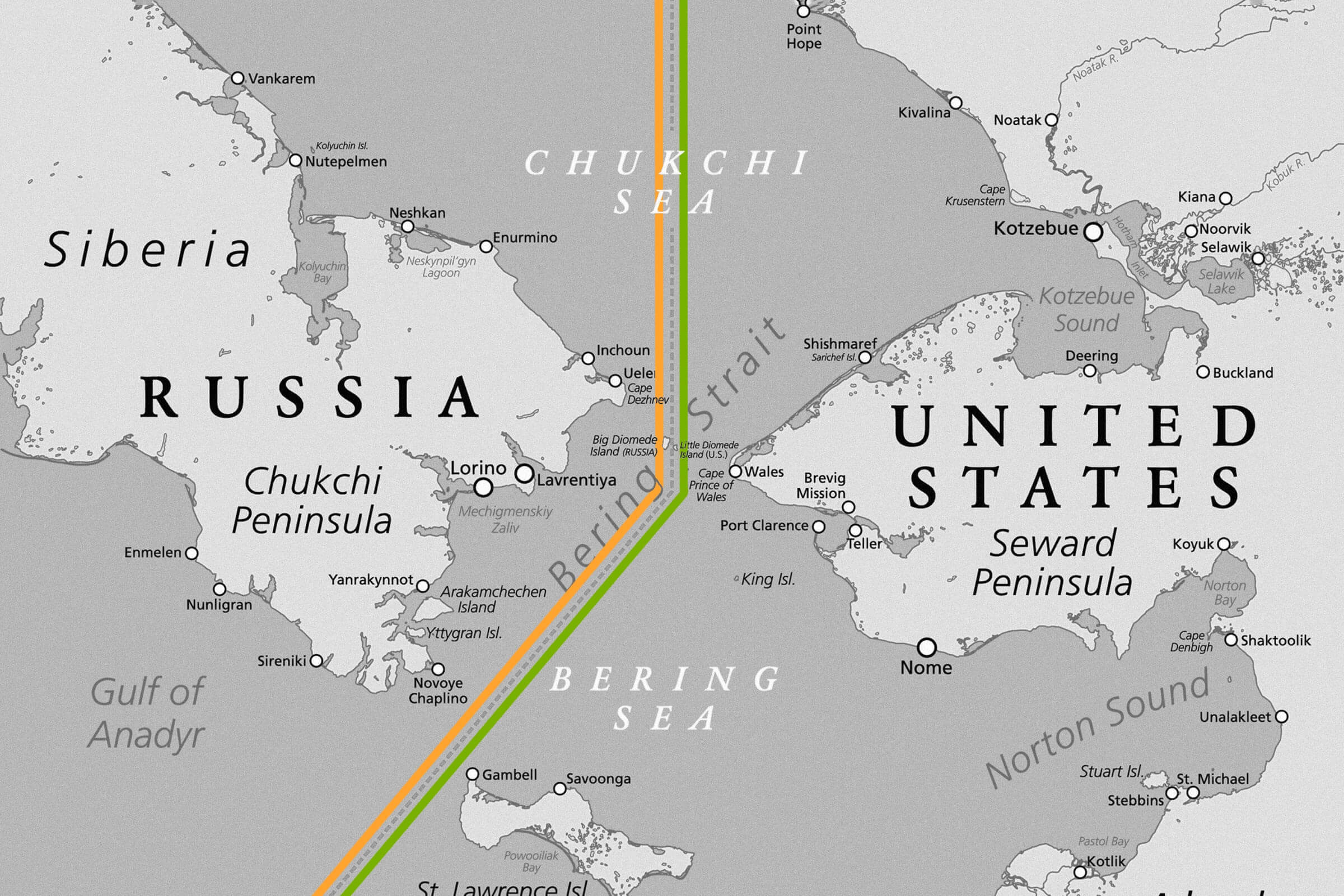
Seeing into the future is supposed to be impossible. But if you travel to the Diomede Islands of the Bering Strait, the impossible becomes reality. The Diomedes consist of two remote islands, Big Diomede (part of Russia) and Little Diomede (part of Alaska). They’re only 2.4 miles apart, but the international date line runs in between them. That means that when you’re in the Alaskan fishing village of Little Diomede and looking at your Russian neighbor, you’re actually gazing into tomorrow. It’s no wonder these landmasses have been nicknamed the Yesterday and Tomorrow islands

For a few hours every day, three different days occur on Earth at the same time.

Ready to reveal?

Oops, incorrect!

It's a fact

Thanks to the quirks of the international date line and time zones, there are two hours a day when three days are happening at once. Because the date line curves to encompass Kiribati, part of the island nation has begun Wednesday while other spots in the world haven’t ended Monday.

Today, Big Diomede has no permanent population (except a few observation posts), whereas Little Diomede has a population of around 100 people, mostly Native Alaskans. Native people long passed freely between these two islands, even after the U.S. bought Alaska from Russia in 1867, but things changed with the Cold War. That’s when the “Ice Curtain” (a reference, of course, to the “Iron Curtain” of the Soviet era) came down between the two islands. Since then, travel between Big and Little Diomede has been strictly forbidden, even though ice in the winter forms a land bridge between them, making it theoretically possible to walk into the next day.

Numbers Don't Lie

Numbers Don't Lie

Years ago the Bering Land Bridge became submerged
12,000
Distance (in miles) of the U.S.-Canadian border, the longest border in the world
5,525
Amount (in USD) Russia sold Alaska for in 1867 (about $148 million today)
$7.2 million
Number of federally recognized tribes living in Alaska
229

When Secretary of State William Seward bought Alaska from Russia, the press called it “______.”

Ready to reveal?

Confirm your email to play the next question?

When Secretary of State William Seward bought Alaska from Russia, the press called it “Seward’s Folly.”

Placeholder Image

The U.S. has one ongoing territorial border dispute with Canada.

No matter how much you like your neighbor, you might have a few disagreements if your backyards share the largest land border in the world. Since April 11, 1908, the border between the U.S. and Canada has been a mostly settled issue, but one spot is still up for debate (on land, that is; other maritime disputes exist). Machias Seal Island, along northern Maine’s coast (or possibly New Brunswick’s coast), got stuck in a geographic “gray zone” when two separate documents essentially granted each country claim to the island. Although the place has an old Canadian lighthouse (Canada even makes sure to staff the lighthouse 24/7 for “sovereignty purposes”), the U.S. doesn’t recognize the land as Canadian. Luckily, this hasn’t escalated into too big of a deal, as it mostly only inconveniences lobster fishermen and tourists bird-watching puffins.

Darren Orf
Writer

Darren Orf lives in Portland, has a cat, and writes about all things science and climate. You can find his previous work at Popular Mechanics, Inverse, Gizmodo, and Paste, among others.

Original photo by Just dance/ Shutterstock

“I feel like someone is watching me” is a classic horror film trope, but the idea also taps into a biological fact: Humans are good at sensing when someone is looking at them. While some label this gut feeling a kind of sixth sense, it’s really a biological phenomenon known as gaze detection, caused by a complex neural network in our brain. This detection system rests largely in our peripheral vision; the sense dissipates quickly when someone turns only a few degrees away from us. Because some 10 regions of the brain are involved with human vision, and little is known about gaze detection generally, scientists haven’t pinpointed what’s controlling this seemingly uncanny ability — although researchers have detected a dedicated group of gaze-detecting neurons in macaque monkeys.

Carrots are good for your eyes.

Ready to reveal?

Oops, incorrect!

It's a fact

You may have heard that carrots are good for your eyes. While this root vegetable won’t let you toss your prescription glasses, there is some truth to the idea. Carrots contain beta carotene and lutein, antioxidants known to prevent ocular damage by free radicals.

Gaze detection is particularly interesting in humans because our eyes are unlike any other in the animal kingdom. The area around the pupil, known as the sclera, is very prominent and white, which makes it easier to discern in what direction someone is looking. The overall theory as to why humans are so good at gaze detection boils down to the evolutionary advantage of cooperation. Simply put, humans are social creatures, and the detection of subtle eye movements helps us work with others while also helping us avoid potential threats. But because of the evolutionary importance of knowing when someone is looking at you, our brains tend to oversignal that someone is staring at us, when they’re really not. So if you’re ever feeling a bit paranoid, blame your brain.

Numbers Don't Lie

Numbers Don't Lie

Running time (in minutes) of 1896’s “Le Manoir du Diable,” the world’s first horror film
3
Release year of Rockwell’s hit single “Somebody’s Watching Me”
1984
Distance (in light-years) the James Webb Space Telescope can see
13.5 billion
Distance (in miles) that an eagle can see prey with 20/5 vision
2

Most people blink at least ______ times per minute.

Ready to reveal?

Confirm your email to play the next question?

Most people blink at least 15 times per minute.

Placeholder Image

Humans have a “sixth sense” called proprioception.

We’re all familiar with the supposed five senses — smell, taste, touch, sight, and hearing — but humans have far more senses than that. One of them is called proprioception, a sense that helps our brain interpret where we are in space. This sense is derived from small receptors (called “piezo2” receptors) located in our skeletal muscles and tendons, which act as a kind of gateway through which mechanical motion enters the nervous system and gives our brains a sense of spatial awareness. Proprioception is what allows you to meander through a pitch-dark room and still have a sense of yourself occupying a particular space; if asked, you could touch your nose, hop on one foot, or do other tasks even though you can’t see. This sense isn’t as easily understandable as the basic five, but it’s a big deal if you’re missing these crucial receptors. In 2019, Vox spoke with someone missing this sixth sense, and she said that when the lights go out, it’s as if “you had a blindfold and somebody turned you several times, and then you’re asked to go in a direction.” So while the human body does an incredible job mapping the world with its five senses, there’s a lot more going on than you may realize.

Darren Orf
Writer

Darren Orf lives in Portland, has a cat, and writes about all things science and climate. You can find his previous work at Popular Mechanics, Inverse, Gizmodo, and Paste, among others.

Original photo by avtk/ Shutterstock

While the teddy bear has been cherished by generations of children since the early 20th century, its designation as Mississippi's state toy has more to do with the stuffed animal's origins than any particularly special affection lingering in the hearts of Magnolia State residents. 

In November 1902, President Theodore Roosevelt went on a bear hunting trip near Onward, Mississippi, but had very little luck bagging a big game trophy. Nevertheless, the Rough Rider wasn't one to take the easy way out, and his refusal to shoot a captured black bear became national news by way of a Clifford Berryman cartoon in The Washington Post. From there, a Brooklyn candy shop owner began mass marketing "Teddy's Bear." Stuffed bears designed by the German doll company Steiff also helped make the plush toy a hot item in the United States. 

Every U.S. state has at least one official song.

Ready to reveal?

Oops, incorrect!

It's a fib

New Jersey is the lone state without a song. Although Jersey-born songwriter Red Mascara’s ditty "I'm From New Jersey" was approved for the purpose by the state Legislature in 1972, Governor William Cahill pronounced his dislike for the song and vetoed the bill.

Fast-forward a century later, when longtime Mississippi teacher and librarian Sarah Doxey-Tate set about drumming up formal recognition of the teddy bear as the state toy to celebrate the centennial of President Roosevelt's hunting trip and his conservationist principles. The cause was taken up by legions of letter-writing schoolchildren and Representative Steve Holland, who introduced a bill in January 2002 in the Mississippi Legislature to honor the teddy. The bill passed the House in unanimous fashion, and while two state senators were grumpy enough to give a thumbs-down, there was no slowing the momentum that propelled the snuggly stuffed bear to the status of official state toy that March.

Numbers Don't Lie

Numbers Don't Lie

Estimated number of bears in Mississippi
150
Rough length (in feet) of the world’s largest teddy bear
63
National parks created during Theodore Roosevelt’s presidency
5
Bills drafted in the Mississippi Legislature in 2019
2,876

A person who loves teddy bears is known as an ______.

Ready to reveal?

Confirm your email to play the next question?

A person who loves teddy bears is known as an arctophile.

Placeholder Image

Maryland's official state sport is jousting.

Officials tend to go with a choice reflective of the region when it comes to declaring a state food, flower, or animal — so how did Maryland wind up with the medieval pastime of jousting as its state sport? Jousting apparently made the transatlantic leap soon after the colony of Maryland began in 1634, but its staying power is in large part due to the tournaments that served as fundraisers in farming communities after the Civil War. Established as the state sport in 1962, jousting remains the focus of regional clubs and exhibitions, although competitions now take the form of using a lance to snare dangling rings instead of goring opponents. Meanwhile, residents who aren’t inclined to climb on a horse can exhibit their state pride by partaking in other activities: Lacrosse was named the official team sport in 2004, reflecting the success of Maryland schools like Johns Hopkins University, while walking became the state’s official exercise in 2008.

Tim Ott
Writer

Tim Ott has written for sites including Biography.com, History.com, and MLB.com, and is known to delude himself into thinking he can craft a marketable screenplay.

Original photo by Resource Database/ Unsplash+

Cabbage. Scratch. Dough. Americans have used many creative nicknames for dollar bills over the past two centuries, though one of the more technical terms — “paper money” — could be considered just as misleading. Turns out, U.S. dollars are made not from paper, but instead from a fiber blend of 75% cotton and 25% linen. This water-resistant, durable material can hold up to far more wear and tear than actual wood-pulp paper could. While a dollar can be torn with intentional force, it would take an estimated 4,000 repetitive folds in the same spot to cause a tear. American dollars also include red and blue synthetic fibers, which are woven into the material and included to make counterfeiting more difficult.

U.S. dollar bills have always been green.

Ready to reveal?

Oops, incorrect!

It's a fib

Green ink on U.S. bills emerged during the Civil War, a move that made it more difficult for counterfeiters to reproduce bogus bucks through (black and white) photography.

Despite its strength, no dollar bill lasts forever. The Federal Reserve generally allows cash to continue circulating regardless of age, so long as it’s in great shape — free from tears, holes, and writing, and still legible. However, all bills have an expected lifespan based on denomination. Smaller bills typically see more frequent use and wear out faster, with $5 bills having the shortest life at just 4.7 years and $1 notes lasting around 6.6 years. After being removed from circulation, threadbare bills are shredded and move on to a new purpose: 90% of destroyed dollars are used to make potting soil, compost, and construction materials like cement.

Numbers Don't Lie

Numbers Don't Lie

Denominations available in U.S. paper currency
7
U.S. states in the “Cotton Belt,” stretching from coast to coast
17
Number of $100 bills that can be made from one bale of cotton
313,600
Estimated number of $2 bills still in circulation
1.4 billion

Early U.S. pennies used the motto “Mind Your Business,” a phrase popularized by ______.

Ready to reveal?

Confirm your email to play the next question?

Early U.S. pennies used the motto “Mind Your Business,” a phrase popularized by Benjamin Franklin.

Placeholder Image

No living person can have their picture printed on U.S. currency.

The portraits on U.S. currency have traditionally depicted the country’s presidents and founding leaders, though at one time an employee of the federal government put his own face on a paper bill. Spencer Clark served as the superintendent of the National Currency Bureau during the 1860s, a time when the U.S. Treasury temporarily printed paper bills for small denominations under $1 during a coin shortage. Historians are unsure exactly how Clark’s face wound up on the 5-cent note, though one possible explanation is that the bill was supposed to feature William Clark, half of the famous Lewis and Clark exploring duo. However, an alleged miscommunication led Spencer Clark to instead authorize his own image to be printed. Congress was outraged — especially considering Clark’s poor reputation, stemming from prior accusations of fraud and unprofessional conduct — and moved to ensure no other person could commit a similar act. In 1866, Congress passed a law that allows only deceased people to appear on the country’s currency.

Nicole Garner Meeker
Writer

Nicole Garner Meeker is a writer and editor based in St. Louis. Her history, nature, and food stories have also appeared at Mental Floss and Better Report.

Original photo by halbergman/ iStock

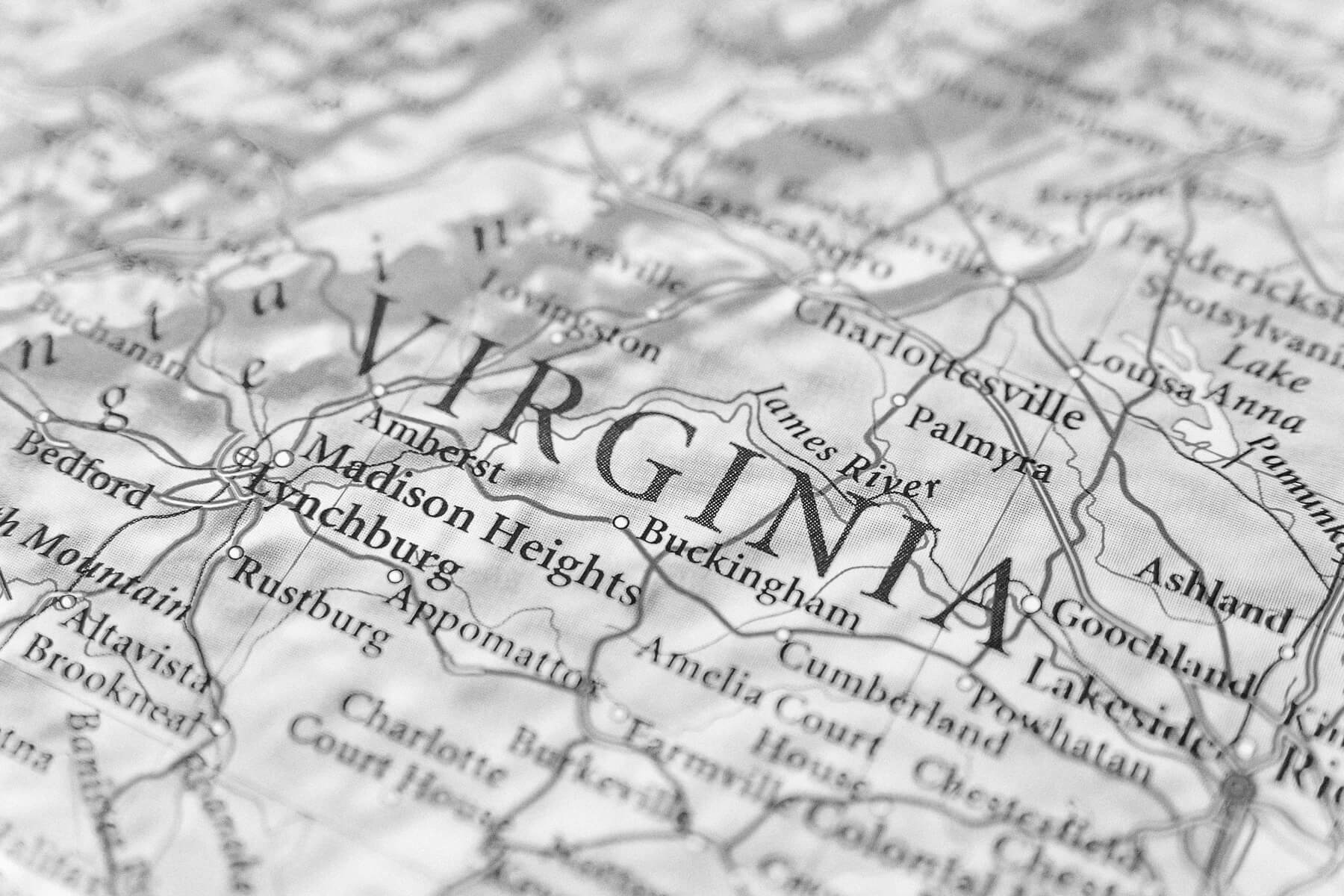
Anyone familiar with the Great Lakes can tell you there are five of them: Superior, Michigan, Huron, Erie, and Ontario. But actually, there aren’t, quite. Lakes Michigan and Huron are technically one body of water, as the Straits of Mackinac connect them to form a single hydrologic system. At 3.5 miles wide and just 295 feet deep at its deepest point, the waterway is easy to miss on a map when studying the whole system of Great Lakes. The lakes span a total of 94,250 square miles across eight U.S. states (Illinois, Indiana, Michigan, Minnesota, New York, Ohio, Pennsylvania, and Wisconsin), plus Ontario, Canada.

Only one Great Lake lies entirely within the U.S.

Ready to reveal?

Oops, incorrect!

It's a fact

Lake Michigan is the only Great Lake that doesn’t reach into Canada. Despite its name, parts of it also border Wisconsin, Illinois, and Indiana.

When taken together, Lake Michigan-Huron is the world’s largest freshwater lake by area. Even the smallest Great Lake, Ontario, is still the 13th-largest lake in the world. More than 90% of America’s surface fresh water is found in the Great Lakes, which are the primary water source for some 40 million people as well as the largest freshwater system in the world.

Numbers Don't Lie

Numbers Don't Lie

Jobs created by the Great Lakes
1.5 million
U.S. states in the Great Lakes region
8
Estimated age (in years) of Lake Erie
10,000
Percentage of the world’s fresh water in the Great Lakes
20%

The largest of the Great Lakes is ______.

Ready to reveal?

Confirm your email to play the next question?

The largest of the Great Lakes is Lake Superior.

Placeholder Image

Lake Michigan has its own Bermuda Triangle.

Tales of the Bermuda Triangle have unsettled and mystified travelers for decades, but less well known is the Lake Michigan Triangle, whose three points touch two cities in Michigan (Ludington and Benton Harbor) and one in Wisconsin (Manitowoc). It was first mentioned in the 1977 book The Great Lakes Triangle, which claims the Great Lakes “account for more unexplained disappearances per unit area than the Bermuda Triangle.” This includes a number of disappearances, shipwrecks, and plane crashes that have occurred in the Great Lakes, with Northwest Airlines Flight 2501 being among the most notable (and inexplicable). Everything from the Great Lakes’ strange size to electromagnetic oddities have been cited as theories for these strange phenomena, whose true nature will likely be debated for some time to come.

Michael Nordine
Staff Writer

Michael Nordine is a writer and editor living in Denver. A native Angeleno, he has two cats and wishes he had more.

Original photo by Apple_Martini/ Shutterstock

In 1964, New Hampshire unveiled a statewide lottery, which remains the oldest legal lottery in the U.S. While 44 additional states have since debuted lottos of their own, there are still five states where playing the lottery is illegal: Alabama, Alaska, Hawaii, Nevada, and Utah.

For Alabama and Utah, the anti-lottery stance has religious roots, as some influential church leaders believe gambling to be sinful behavior. Back in 1998, incoming Alabama Governor Don Siegelman voiced his support for a statewide lotto to help raise funds for education — but that idea was struck down by voters in a 1999 referendum, an outcome that is largely attributed to vocal opposition from church groups. In Utah, an estimated 42% of the population is Mormon, a religious ideology opposed to gambling. Due to these demographics, the pro-lottery movement in Utah has made little progress.

The world’s first modern state-run lottery was in Belgium.

Ready to reveal?

Oops, incorrect!

It's a fact

While there are traces of lotteries in ancient history, the first documented national lottery with characteristics similar to present-day lottos was in Bruges, Belgium, in 1441. The oldest continuously operating state lottery is in the Netherlands, where the Staatsloterij has run since 1726.

According to an article from Alaska’s News Source, Alaskan lawmakers worry instituting a lottery would “have some negative impact on current state-regulated charitable gaming activities,” which help support many local nonprofits. As for Hawaii, there are concerns that the lottery may disproportionately affect poor communities and encourage addiction, which is why it’s still illegal despite widespread public support. Then there’s Nevada, which instituted a ban on selling lottery tickets when its state constitution was written back in 1864. That provision is still in place today and is likely to stay due to the Silver State’s powerful casino lobby, which considers the state lottery competition and opposes any efforts to make it legal.

Numbers Don't Lie

Numbers Don't Lie

Largest national jackpot ever won
$2.05 billion
Odds of winning the Powerball jackpot
1:292,200,000
Year Shirley Jackson’s “The Lottery” was published
1948
States where lottery jackpot winners can remain anonymous
16

The first English monarch to hold a state lottery was ______.

Ready to reveal?

Confirm your email to play the next question?

The first English monarch to hold a state lottery was Elizabeth I.

Placeholder Image

A Romanian economist won the lottery 14 times.

Stefan Mandel is a statistical genius who won the lottery an astonishing 14 times, all due to his clever strategy: printing tickets at home and then buying them in bulk. Mandel figured out that in order to win, you had to calculate every possible number combination and then raise enough cash to buy millions of tickets with those numbers. Once he’d secured the money, Mandel printed the tickets and delivered them to authorized lottery vendors for purchase, after which he waited until his winning number was inevitably called.

After winning multiple jackpots in Romania and Australia, Mandel set his sights on the Virginia state lottery in 1992. He established the International Lotto Fund and gathered money from 2,560 investors, then hired 16 employees to print millions of tickets. In the end, Mandel found himself in possession of a winning ticket worth $27,036,142 (around $60 million today). While he was later subject to several investigations, he was found to have committed no legal wrongdoing and was ultimately awarded the money he won.

Bennett Kleinman
Staff Writer

Bennett Kleinman is a New York City-based staff writer for Inbox Studio, and previously contributed to television programs such as "Late Show With David Letterman" and "Impractical Jokers." Bennett is also a devoted New York Yankees and New Jersey Devils fan, and thinks plain seltzer is the best drink ever invented.

Original photo by Cavan Images/ Alamy Stock Photo

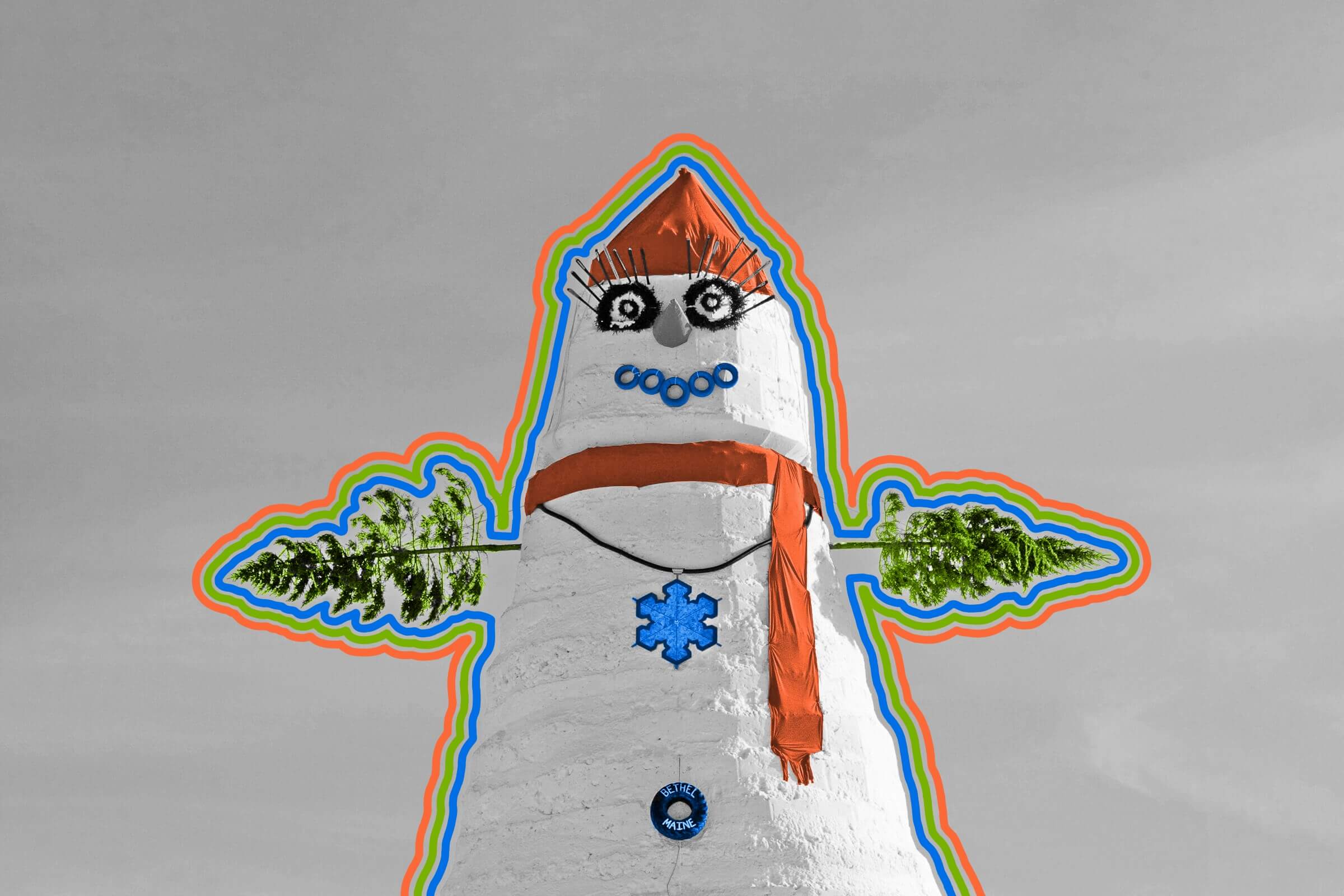
To be a snowman is to live a life of extreme impermanence. During the coldest parts of the season, these snowy beings take shape on lawns across the world, but by the spring, they’re all but forgotten. However, one snowperson avoided this date with oblivion by entering the history books as the tallest snowman, or rather snowwoman, ever made. Built with 13 million pounds of snow in 2008 in Bethel, Maine, the 122-foot-tall snowwoman was named Olympia in honor of the state’s U.S. Senator Olympia Snowe. “I have to say I’ve joked that it’s just my luck I’d have a world record-breaking monument named after me and it will be gone by summer,” Snowe said at the time.

The first evidence of snowmen dates to the 19th century.

Ready to reveal?

Oops, incorrect!

It's a fib

The earliest evidence of snowmen comes from the Middle Ages. A sketch of a snowman from 1380 was found in the Book of Hours, a Christian prayer book, in the Koninklijke Bibliotheek in The Hague, Netherlands.

Bethel residents needed to greatly exaggerate a snowperson’s usually quaint features to complete their creation. In this case, Olympia’s smile was made from car tires, each of her arms was a 25-foot-long spruce tree, and her red stocking cap was 20 feet in diameter and hand-knit by middle school students. Oh, and those lovely eyelashes? Alpine skis. 

Bethel previously earned the title of world’s tallest snowman when the town constructed the 113-foot-tall Angus (named after then-governor of Maine Angus King) in 1999. But Olympia surpassed her forebear, and still holds the Guinness record for the world’s tallest snowperson at the time of writing. However, the record may not hold for long. In 2020, a snowman in Austria surpassed Olympia’s height — though its extremely tall stovepipe hat did a lot of the work, and the structure has yet to be officially recognized on the Guinness website. Future challengers to Olympia’s crown may one day require the town of Bethel to again gather and build a snowperson to remember.

Numbers Don't Lie

Numbers Don't Lie

First year of Japan’s Sapporo Snow Festival, one of the largest winter festivals in the world
1950
Number of participants in the world’s largest snowball fight (Saskatchewan, Canada, in 2016)
7,681
Size (in millimeters) of the world’s smallest snowman, created in Ontario, Canada
0.003
Running time (in minutes) of the 1969 “Frosty the Snowman” television special
25

“Frosty the Snowman” was first recorded in 1950 by country singer ______.

Ready to reveal?

Confirm your email to play the next question?

“Frosty the Snowman” was first recorded in 1950 by country singer Gene Autry.

Placeholder Image

A suburb of Quebec City is home to the only ice hotel in North America.

The Hôtel de Glace, or Ice Hotel, first built in 2001, lasts for only three months out of the year (January through March) when the temperatures in Quebec, Canada, are at their coldest. Every year, a team of about 50 people — both workers and sculptors — labors for six weeks to (re)build the snowy abode in a suburb of Quebec City called Saint-Gabriel-de-Valcartier. The Ice Hotel isn’t just some roadside igloo — the structure takes 500 tons of ice and 30,000 tons of snow to complete its usual 44 rooms (though during the COVID-19 pandemic the hotel was much smaller). The hotel costs hundreds of dollars per person per night, and it’s not exactly comfortable. Because the structure is made entirely of snow and ice, the interior is kept at a frigid 25 degrees Fahrenheit (the bathrooms, however, are heated). Luckily, you don’t necessarily have to shell out that much cash just to experience the hotel, as guided tours are also available.

Darren Orf
Writer

Darren Orf lives in Portland, has a cat, and writes about all things science and climate. You can find his previous work at Popular Mechanics, Inverse, Gizmodo, and Paste, among others.

Original photo by Thorsten Schmitt/ Shutterstock

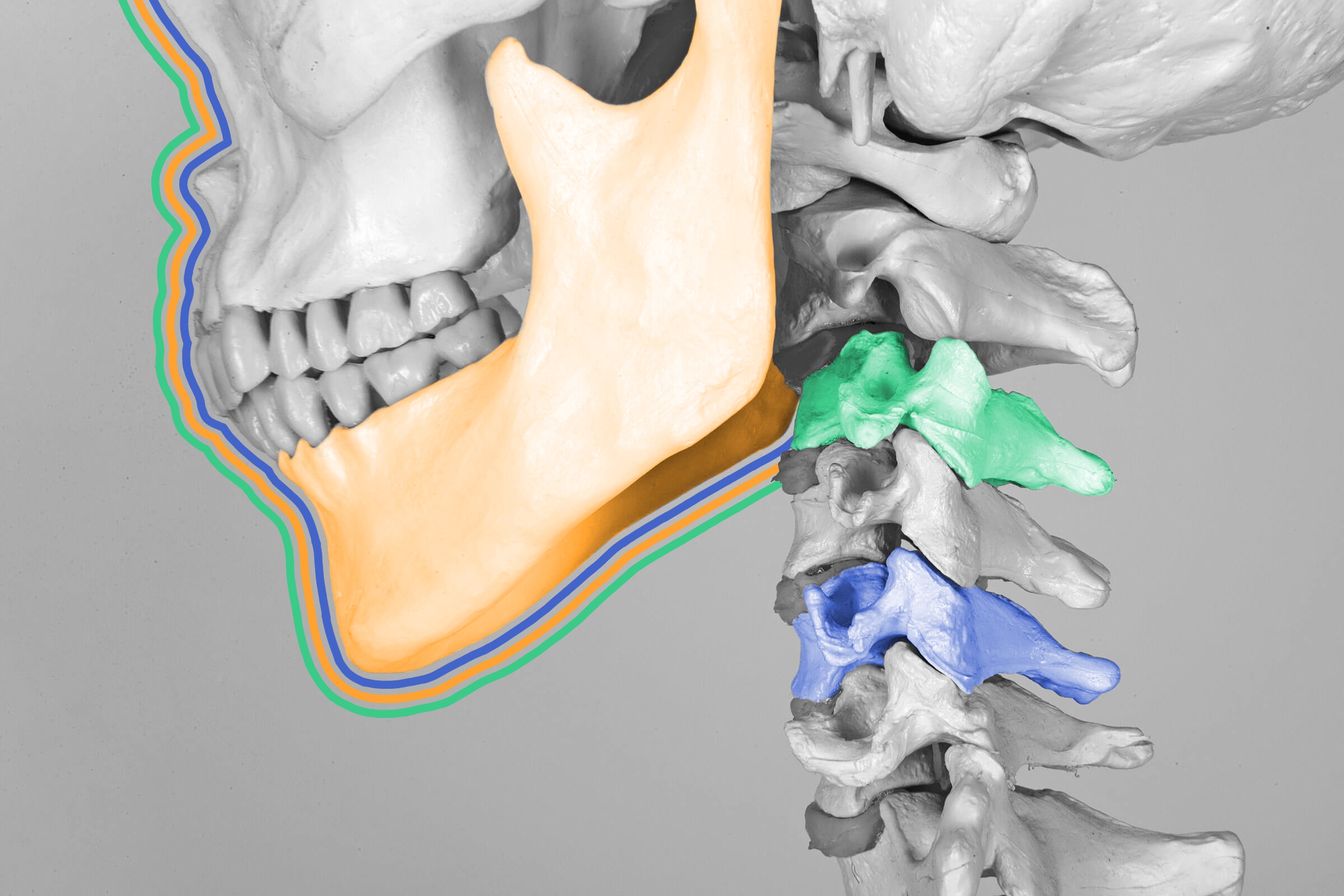
Humans have a few biological advantages compared to other species. The most obvious is our big brains, which have empowered us to become the dominant species on Earth. But another feature that is often overlooked is our chins — yes, we’re the only animals on Earth with true chins. You might be thinking, “Wait a minute, I give my cat chin scratches all the time,” or “Surely chimpanzees, our closest animal cousin, sport some kind of chimp chin,” and the answer is nope and nope (respectively). When you’re scratching the “chin” of your feline companion, what you’re really doing is scratching the mandible, i.e., the lower part of the jaw — not the chin, which is the bony part that juts out at the bottom of your face. Elephants and manatees also have chinlike protrusions in their lower jaws, but they don’t quite qualify as true chins.

William Shakespeare originated the phrase “take it on the chin.”

Ready to reveal?

Oops, incorrect!

It's a fib

William Shakespeare is the progenitor of some 1,700 words, but the phrase “take it on the chin” originates from the world of boxing, a sport where the phrase essentially describes the entire profession.

The mystery of why no other animal has a real chin gets even more interesting because past human species, such as Homo erectus and Homo neanderthalensis, didn’t have chins either — instead, their faces simply ended in a flat plane. So why did evolution find the need for human chins? Scientists aren’t exactly sure. The most prominent theory is that chins help humans chew, but scientists from Duke University and the University of Florida found that chins aren’t actually much help there; they technically make chewing more difficult, as they reinforce the wrong part of the face for aiding mastication. Chins also don’t help much with human speech, which is another theory that’s been suggested, and researchers say it’s unlikely they’re a mere product of sexual selection or a protection against violence, such as punching. Some scientists think the chin might be a spandrel, a byproduct of other evolutionary changes that on its own serves no real purpose — basically, a happy accident. We may never truly know exactly why humans have these extra bony bits on the ends of our faces, but keep your chin up. After all, you’re the only species that can.

Numbers Don't Lie

Numbers Don't Lie

Average strength (in pounds per square inch) of the human bite
162
Duration (in seconds) of the world’s longest chin stand (1:44:25)
6,265
Years ago the human chin began to form in our ancestors
80,000
Chromosome number containing genetic marker rs11684042, which may indicate the presence of a cleft chin
2

The scientific name for the chin is the ______.

Ready to reveal?

Confirm your email to play the next question?

The scientific name for the chin is the mentum osseum.

Placeholder Image

Scientists aren’t exactly sure about the biological reason for beards.

If you’re a practicing pogonophile (aka a lover of beards), you may not be too concerned about the reasons behind the time-honored art of beard-growing. However, scientists like to get at the why of things. While hair on our head protects us from the sun, body hair aids in thermoregulation, and hair below the belt protects against bacteria, beards have no known specific biological function. Some scientists have argued that facial hair could aid in protecting the body against ingesting harmful bacteria, but then it’d be likely that women would have evolved to have beards as well. Instead, some evolutionary biologists theorize that beards act as a tool for intersexual attraction regarding women and intrasexual competition with men. In other words, beards subconsciously message virility to women and formidability to men. But as fashion goes, beard popularity trends come and go, and studies show that attraction is often influenced by “negative frequency depen­dence,” meaning if everyone has a beard, preference for clean-shaven faces increases (the opposite is also true). So, just as the beautiful plumage of a male bird is merely a color display to impress a feathered female while intimidating the competition, beards (or a lack thereof) may be a man’s own form of peacock posturing.

Darren Orf
Writer

Darren Orf lives in Portland, has a cat, and writes about all things science and climate. You can find his previous work at Popular Mechanics, Inverse, Gizmodo, and Paste, among others.