
Original photo by Brent Hofacker/ Shutterstock
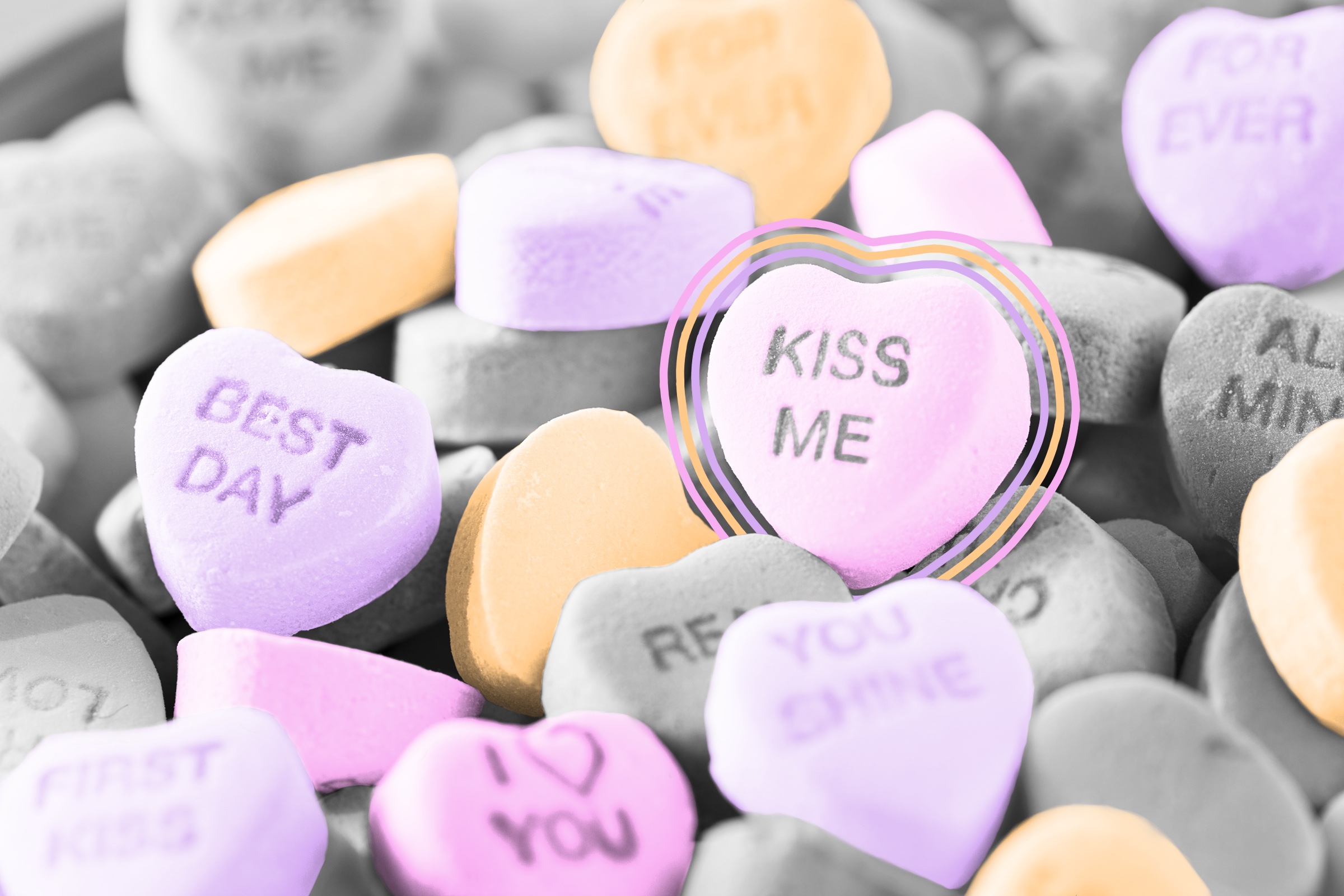
Conversation hearts — also known as Necco hearts, candy hearts, or Sweethearts — are considered Valentine’s Day iconography, but their origins are far from romantic. In fact, they were originally created by a pharmacist who got his start making medical lozenges.

In 1847, pharmacist Oliver Chase was working on building his lozenge business after making his way from England to Boston. The production process was slow: Chase hand-rolled ropes of dough made from peppermint, brown sugar, and gum arabic and cut them into individual tablets; he then sold them to apothecaries where customers sought them out for sore throats, coughs, and other minor ailments. To speed things up, the enterprising Chase invented a machine that cut the lozenges mechanically. Recognizing the potential, he shifted focus from medicine to confections, founding what became the New England Confectionery Company, or Necco, and introducing its namesake candy, the Necco Wafer.

Lindt invented Valentine's chocolates as we know them.

Ready to reveal?

Oops, incorrect!

It's a fib

That distinction belongs to Cadbury. In 1868, British chocolate maker Richard Cadbury designed and started selling boxes of chocolates in heart-shaped boxes (the first of their kind).

It was still a while before the colorful, chalky candy became heart-shaped and adorned with their trademark messages, though. In 1866, Oliver's brother Daniel Chase devised a way to press words onto the round candy wafers using a felt roller pad and red vegetable dye. The conversation candies — or motto lozenges, as they were known — were shaped into baseballs, horseshoes, and kites, and featured much more elaborate messages than those we see today, including “Married in white, you have chosen right,” and “How long shall I have to wait? Please be considerate.” In 1902, the candies took on their now-famous heart shape, and the phrases evolved into classics such as “Be Mine” and “Kiss Me.” Each year, about 80 different sayings circulate, including around 20 that are new for that holiday season.

Numbers Don't Lie

Numbers Don't Lie

Pounds of conversation hearts sold during the Valentine’s Day season
13 million+
Approximate sales of Valentine’s candy and chocolate in the U.S. in 2023
$4 billion
Length (in hours) of the world’s longest kiss
58.5+
Maximum letters that can fit on a Necco conversation heart
9

In 2024, America’s most popular candy was ______.

Ready to reveal?

Confirm your email to play the next question?

In 2024, America’s most popular candy was Snickers.

Placeholder Image

Many popular sodas started as medicine.

In the 19th century, carbonated water was considered a medicinal aid. Pharmacists began mixing it with various herbs, extracts, and syrups to create drinks marketed as remedies for a range of ailments. One of the most famous examples is Coca-Cola, invented in 1886 by Atlanta pharmacist John Pemberton. The now-ubiquitous soft drink was originally marketed as a cure for headaches, fatigue, and other common ailments. It contained small amounts of cocaine, extracted from coca leaves, which was legal at the time and common in medicine. (It was later removed from the beverage around the turn of the 20th century.)

Pepsi, Dr. Pepper, and 7Up also started out as medicinal drinks, the latter of which was formulated to treat depression. The Pure Food and Drug Act of 1906 placed more regulations on ingredients used at soda fountains, and by the 1950s, soft drinks were no longer marketed as “miracle elixirs,” but remained popular as bottled and canned treats.

Interesting Facts
Editorial

Interesting Facts writers have been seen in Popular Mechanics, Mental Floss, A+E Networks, and more. They’re fascinated by history, science, food, culture, and the world around them.

Original photo by Josh Chiodo/ Unsplash

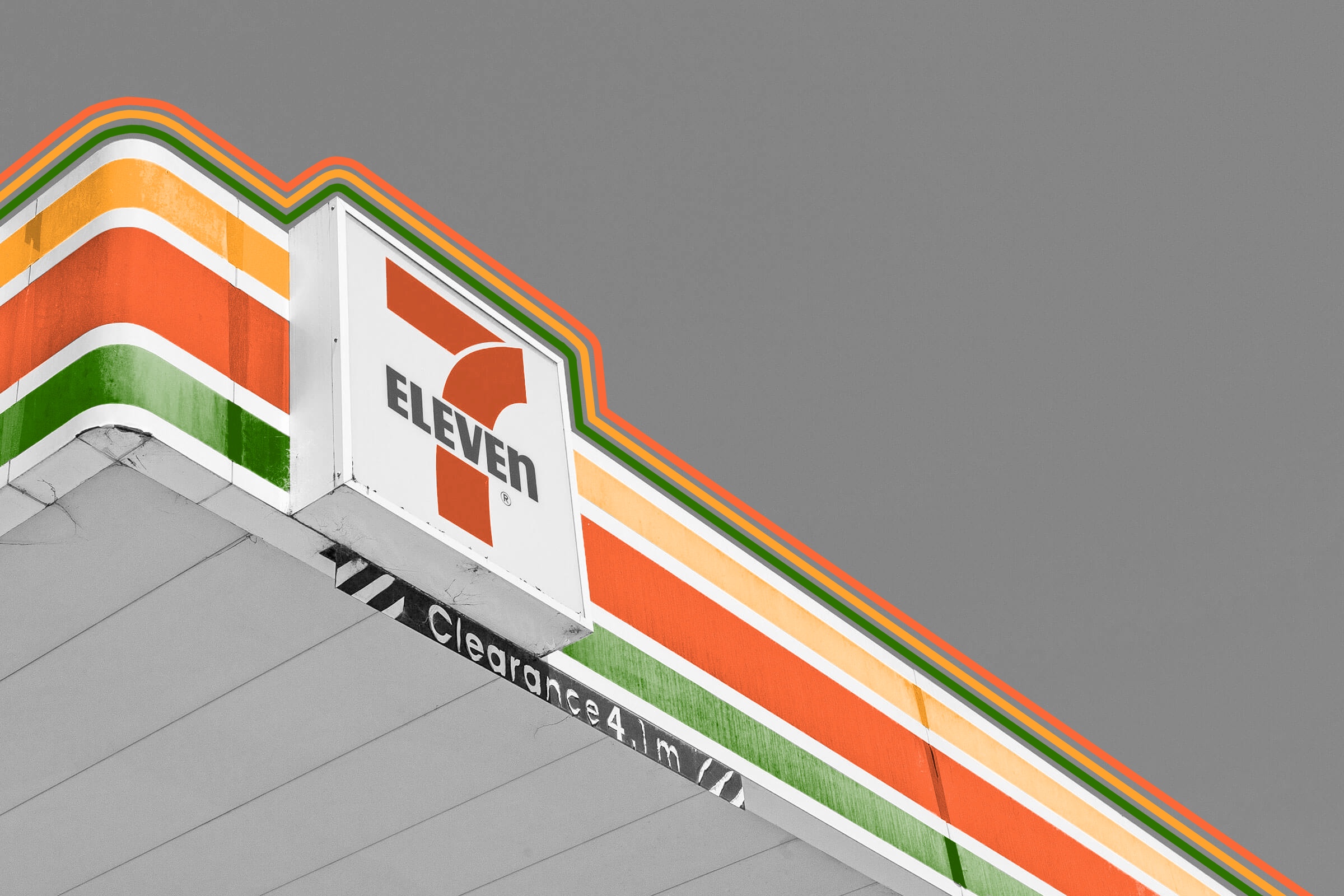
The company now known as 7-Eleven has a history of being ahead of the curve. Back in 1927, when its founders were running the Southland Ice Company in Texas, an executive recognized the potential of selling basic provisions like milk and bread alongside the ice blocks that were so essential to households in the days before refrigerators were common. With a little company restructuring, the first convenience store chain was up and running. (The name was changed to 7-Eleven, a reference to the hours of operation, in 1946.)

7-Eleven invented the Slurpee.

Ready to reveal?

Oops, incorrect!

It's a fib

Although "Slurpee" is a 7-Eleven brand name, the famed slushy soft drink is identical to the ICEE created by Dairy Queen franchisee Omar Knedlik in the late 1950s.

In 1963, 7-Eleven opened its 1,000th store, but a more significant milestone in the convenience store realm was also about to happen. Around this time, according to Oh Thank Heaven!: The Story of the Southland Corporation, one store located near the University of Texas campus in Austin found itself unusually busy in the hours after a school football game, to the point where employees never had the chance to shut the doors for the night. When this situation unfolded again following the next football game, the company's brain trust sniffed a potentially transformative moment for the business, and established 24-hour shops near Texas Christian University in Fort Worth and Southern Methodist University in Dallas.

Meanwhile, another 24-hour experiment was unfurling at a 7-Eleven near the Strip in Las Vegas, a move that yielded an increase in profits and the surprise side effect of deterring burglaries. Eventually, both 7-Eleven and their competitors realized that it wasn't just the amped-up college students and gamblers who sometimes needed a 24-hour pit stop, paving the way for the proliferation of these ever-open outposts to provide soda, chips, and a range of other goodies to help folks everywhere make their way through the night.

Numbers Don't Lie

Numbers Don't Lie

Annual sales (in dollars) generated by U.S. convenience stores
906 billion
Global locations of 7-Eleven stores
84,061
Year 7-Eleven opened its first international store in Canada
1969
Calories in a 32-ounce 7UP Big Gulp
430

The largest convenience store chain in Mexico is ______.

Ready to reveal?

Confirm your email to play the next question?

The largest convenience store chain in Mexico is Oxxo.

Placeholder Image

A Swedish entrepreneur fueled the rising trend of unmanned convenience stores.

In 2016, IT specialist Robert Ilijason rolled the dice on a new business model by opening a nonstaffed, 24-hour convenience store in the small town of Viken, Sweden. Registered customers used their smartphones to enter the store and scan items, for which they received a bill at the end of the month, while a half-dozen security cameras served to dissuade shoplifters from snatching freebies. At the time, Ilijason was hopeful his idea would spread to other villages, but the appeal turned out to be far broader than he thought. After selling his business in 2017 to a Swedish startup, which promptly opened an unmanned store in Shanghai, China, Ilijason founded his own startup to send a wave of these phone-operated shops snowballing through his home country. But the biggest sign that his idea was here to stay? When the big dog of the industry, 7-Eleven, decided to make another corporate leap with the opening of its first unmanned branch in Seoul, South Korea, in 2017.

Tim Ott
Writer

Tim Ott has written for sites including Biography.com, History.com, and MLB.com, and is known to delude himself into thinking he can craft a marketable screenplay.

Original photo by kbuconi/ Shutterstock

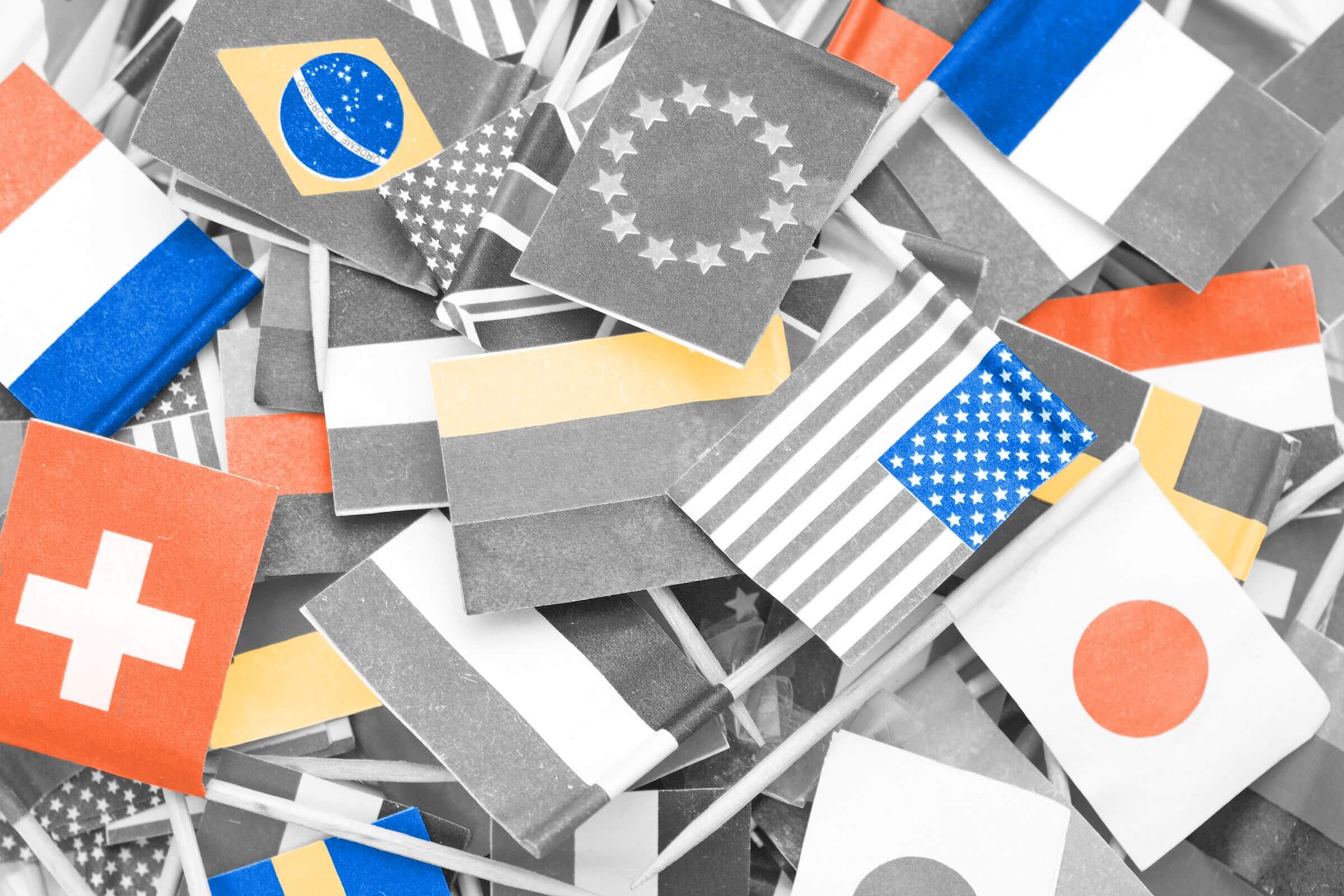
If you want your flag to fit in, go with red, white, and blue, the three most popular colors found on the world’s flags. If you want to go a more distinctive route, add a dash of purple, because only one national flag in the world sports this hue. That flag belongs to the Caribbean island nation of Dominica, and features the country’s national bird, the purple-plumed sisserou parrot (Amazona imperialis). This endangered bird is one of the oldest Amazon parrot species in the world, and can be found only in the remote mountain forests of Dominica. 

The word “purple” is Greek for “midnight.”

Ready to reveal?

Oops, incorrect!

It's a fib

The word “purple” originates from the Greek “porphura,” a reference to the purpura mollusk. These sea snails were the key ingredient in the Tyrian purple dye created by ancient Phoenicians. Because the dye was so costly, purple became closely associated with royalty.

Eagle-eyed flag experts might note that the flags of both Nicaragua and El Salvador feature volcano-traversing rainbows, which (theoretically) contain the full spectrum of visible color. However, Dominica still wins out on a technicality. These two countries officially label the last shade of the rainbow on their flags as “violet” and “blue,” respectively, and the color purple is a nonspectral color, meaning it isn’t represented by a specific wavelength of light (and therefore not part of a rainbow). Instead, the color purple is a construction of our brain and the limitations of the cones in our eyes. So unless some country opts for a purple-centric redesign, the chromatic glory of the sisserou parrot will remain a flag favorite. 

Numbers Don't Lie

Numbers Don't Lie

Year Dominica gained its independence from Great Britain
1978
Percentage of national flags that contain red, the most popular color
74
Number of rivers in Dominica, an island less than 300 square miles
365
Wingspan (in inches) of the endangered sisserou parrot
30

The study of flags is known as ______.

Ready to reveal?

Confirm your email to play the next question?

The study of flags is known as vexillology.

Placeholder Image

Only one national flag in the world isn’t a rectangle.

Flags come in many different colors and a variety of designs, but most of them are rectangular. The flag of Nepal is a truly incredible departure, however. The double pennon-shaped flag, which looks like two differently sized triangles stacked on top of one another, represents both the Himalayan mountains as well as the country’s two major religions: Hinduism and Buddhism. (The exact mathematical proportions of the triangles are actually enshrined in the country’s constitution.) Just like the vast landscapes that fill the country, the Nepalese flag is certainly one of a kind.

Darren Orf
Writer

Darren Orf lives in Portland, has a cat, and writes about all things science and climate. You can find his previous work at Popular Mechanics, Inverse, Gizmodo, and Paste, among others.

Original photo by New Africa/ Shutterstock

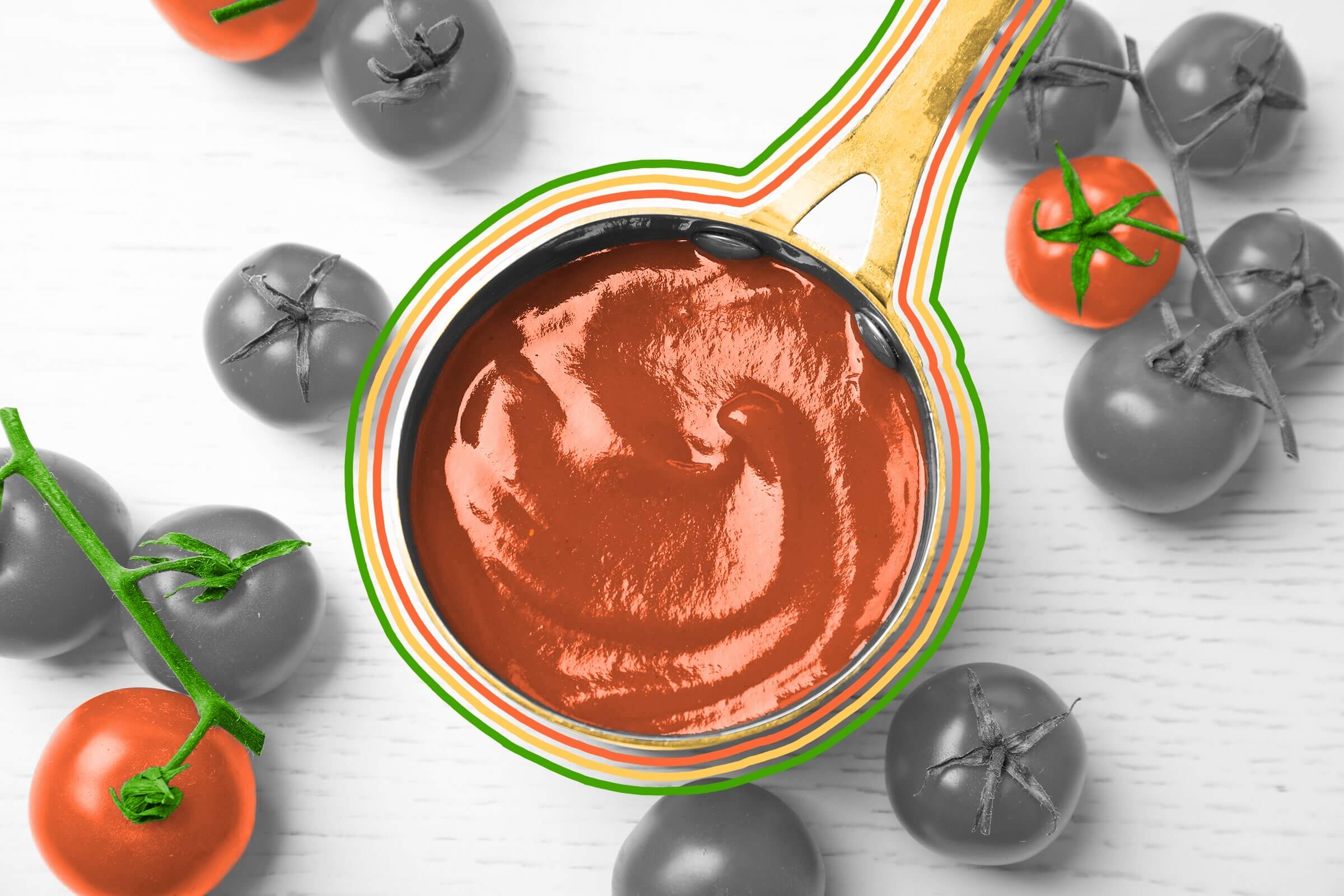
The ketchup we slather onto hot dogs, burgers, and fries today once had a different purpose: Doctors believed it was best consumed as a health tonic. Ketchup has come a long way from its roots in China as far back as the third century BCE, when cooks fermented seafood to create a salty, amber-colored sauce that resembles modern fish sauce (an anchovy-based condiment that adds umami flavor to many Asian dishes). By around the 16th century, British sailors had taken word of ketchup back to their home country, and British cooks tried to replicate it with their own versions made from walnuts and mushrooms. It’s not clear exactly when tomatoes came on the scene, though the first known tomato ketchup recipe appeared around 1812, published by Philadelphia horticulturist James Mease.

Catsup and ketchup are different condiments.

Ready to reveal?

Oops, incorrect!

It's a fib

The labels may have different spellings, but catsup and ketchup are the same food. “Catsup” was once more commonly used in North America, but Heinz went on to popularize “ketchup,” intentionally using the spelling in the 1880s to stand apart from competitors.

It wasn’t until the 1830s that some doctors began rebranding tomatoes as a 19th-century superfood. One physician, Dr. John Cook Bennett, especially promoted tomatoes as cures for indigestion and other stomach ailments, encouraging a craze for the fruit that eventually saw the introduction of ketchup pills and extracts. (One memorable jingle went, “tomato pills will cure all your ills.”) The fad lasted through around the 1850s, but soon enough home cooks focused on creating their own ketchups instead of taking the vitamin equivalents. The sauce then became an easily obtainable American dinner table staple in large part thanks to the H. J. Heinz Company, which released its first tomato ketchup in 1876.

Numbers Don't Lie

Numbers Don't Lie

Number of individual ketchup packets made by Heinz each year (as of 2020)
12 billion
Approximate number of known tomato species
10,000
Year the ketchup packet was patented
1955
Weight (in tons) of tomatoes processed into ketchup each year by Heinz
2 million

Tomatoes were once called “______” because they were believed to be aphrodisiacs.

Ready to reveal?

Confirm your email to play the next question?

Tomatoes were once called “love apples” because they were believed to be aphrodisiacs.

Placeholder Image

The world’s largest ketchup bottle was originally a water tower.

Collinsville, Illinois — located 15 miles east of St. Louis — is home to the world’s largest ketchup bottle, which was originally filled with water. Throughout the 1930s and ’40s, the G. S. Suppiger Company in Collinsville produced ketchup along with chili beans, soups, and sauces. With business booming, the company needed more water and opted to construct a water tower — and what better advertisement than making it in the shape of a ketchup bottle? Finished in 1949, the world’s largest ketchup bottle was 70 feet tall, with an additional 100 feet added to its height thanks to its legs, and could hold 100,000 gallons of water (equivalent to 640,000 bottles of ketchup). By the 1990s, the bottle had become defunct and slated for demolition, though a group of volunteers raised $80,000 toward its restoration. Since 2002, the colossal container has been listed on the National Register of Historic Places, attracting thousands of visitors each year.

Nicole Garner Meeker
Writer

Nicole Garner Meeker is a writer and editor based in St. Louis. Her history, nature, and food stories have also appeared at Mental Floss and Better Report.

Original photo by patty_c/istock

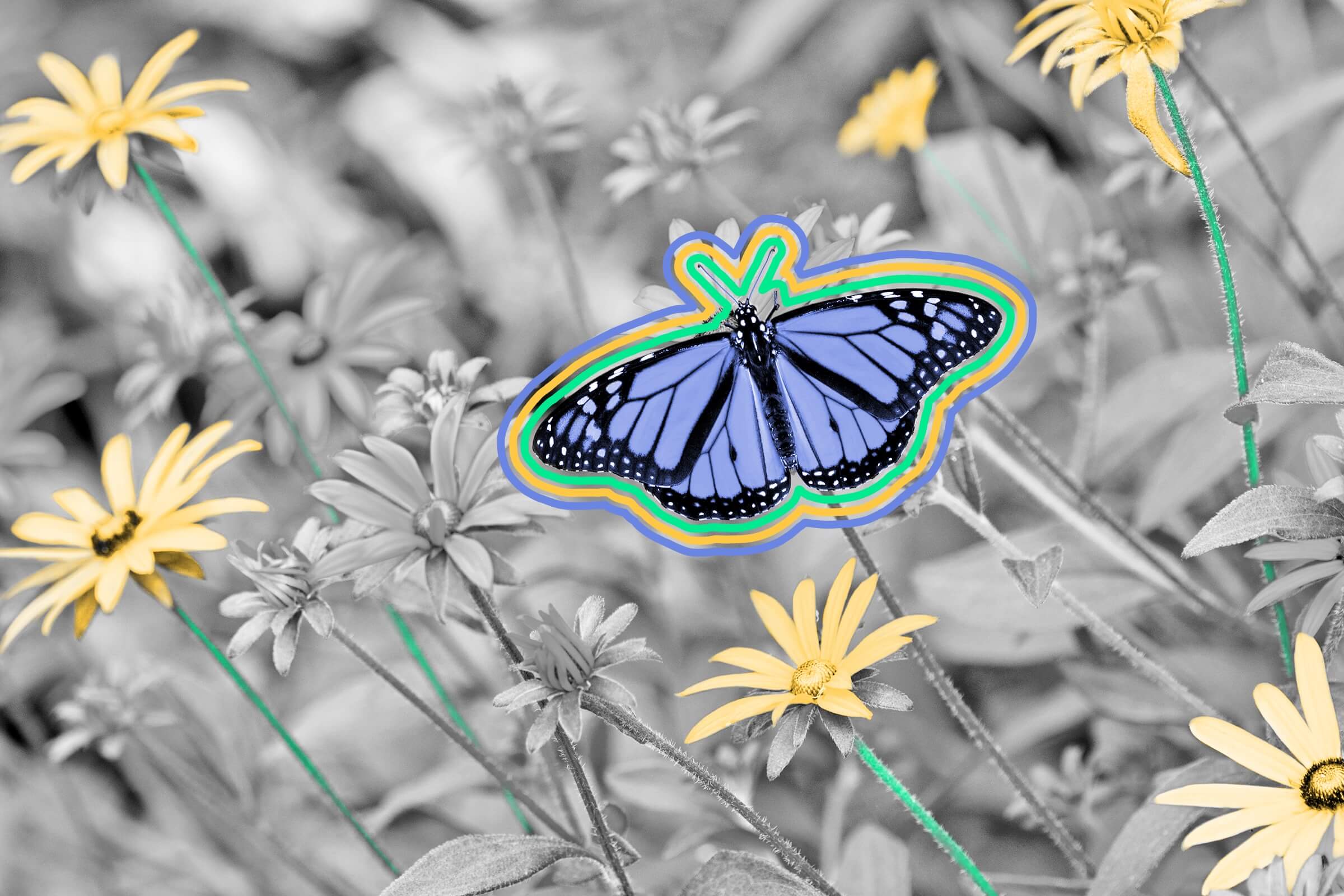
The animal kingdom is a wide and varied world, and Mother Nature has come up with some surprising ways to accomplish a variety of feats. Bats “see” with their ears, snakes “smell” with their tongue, and perhaps most strangely of all, butterflies “taste” with their feet. Although some of a butterfly’s taste receptors are located on its tube-shaped mouthparts and antennae, most are found on its tarsus, or the bottom segment of its legs. The location of these receptors may seem odd, but they’re vital to a butterfly’s survival. 

Butterflies were once called flutterbys.

Ready to reveal?

Oops, incorrect!

It's a fib

A popular myth is that the word “butterfly” is actually a rearrangement of the insect’s original name, “flutterby.” However, historical evidence suggests that the insect has been associated with butter in various legends and languages for at least 1,000 years.

Before a butterfly transforms into an adult, it spends its early days as a caterpillar gorging on surrounding plant material and growing, in some cases, around 1,000 times its birth weight. Some caterpillars can munch on a family of plants; the black swallowtail (Papilio polyxenes), for example, is also known as the “parsley worm” because it will eat several plants related to parsley, such as carrots, celery, and parsnips. However, the caterpillar of an endangered monarch butterfly (Danaus plexippus) only eats milkweed. Whether a “generalist” or a “specialist” eater, a butterfly uses its feet to analyze a leaf’s chemicals, a process called “contact chemoreception.” The chemoreceptors are especially important in allowing female butterflies to “taste” if a plant is safe for her larvae, who will start eating it shortly after hatching. The process isn’t perfect, however. In the monarch butterfly’s case, it can sometimes be tricked into laying its eggs on an invasive plant species, such as black swallow-wort, causing the larvae to die within a few days. That’s why ongoing conservation efforts focus on both planting native milkweed and eliminating any invasive competitors, to make the world safer for monarchs — and their feet.

Numbers Don't Lie

Numbers Don't Lie

Butterfly species found in the United States
750
Average number of taste buds on the human tongue
8,000
Segments of a typical butterfly leg
5
Bones in a human foot
26

Butterflies use a tubelike mouthpart called a ______ for feeding.

Ready to reveal?

Confirm your email to play the next question?

Butterflies use a tubelike mouthpart called a proboscis for feeding.

Placeholder Image

Human feet produce half a pint of perspiration a day on average.

With some 250,000 sweat glands between the two of them (more than any other part of the body), human feet are sweat-producing machines that pump out upwards of a half-pint of sweat a day. If you happen to be one of the unlucky few afflicted with excessively sweaty feet via plantar hyperhidrosis, that number is even higher. Don’t get too grossed out, though — most of that sweat is lost to evaporation (or soaked into your socks). To a certain degree, sweaty feet are normal. Sweat protects skin from germs, provides an avenue for the body to release water and salt, and most importantly, keeps us cool. Some scientists think sweat on the soles of our feet may also have helped early ancestors increase their foot grip when running. Along with all those sweat glands, the human foot is loaded with 7,000 nerve endings. So besides being somewhat sweaty, feet are also devilishly ticklish.

Darren Orf
Writer

Darren Orf lives in Portland, has a cat, and writes about all things science and climate. You can find his previous work at Popular Mechanics, Inverse, Gizmodo, and Paste, among others.

Original photo by MAXPPP/ Alamy Stock Photo

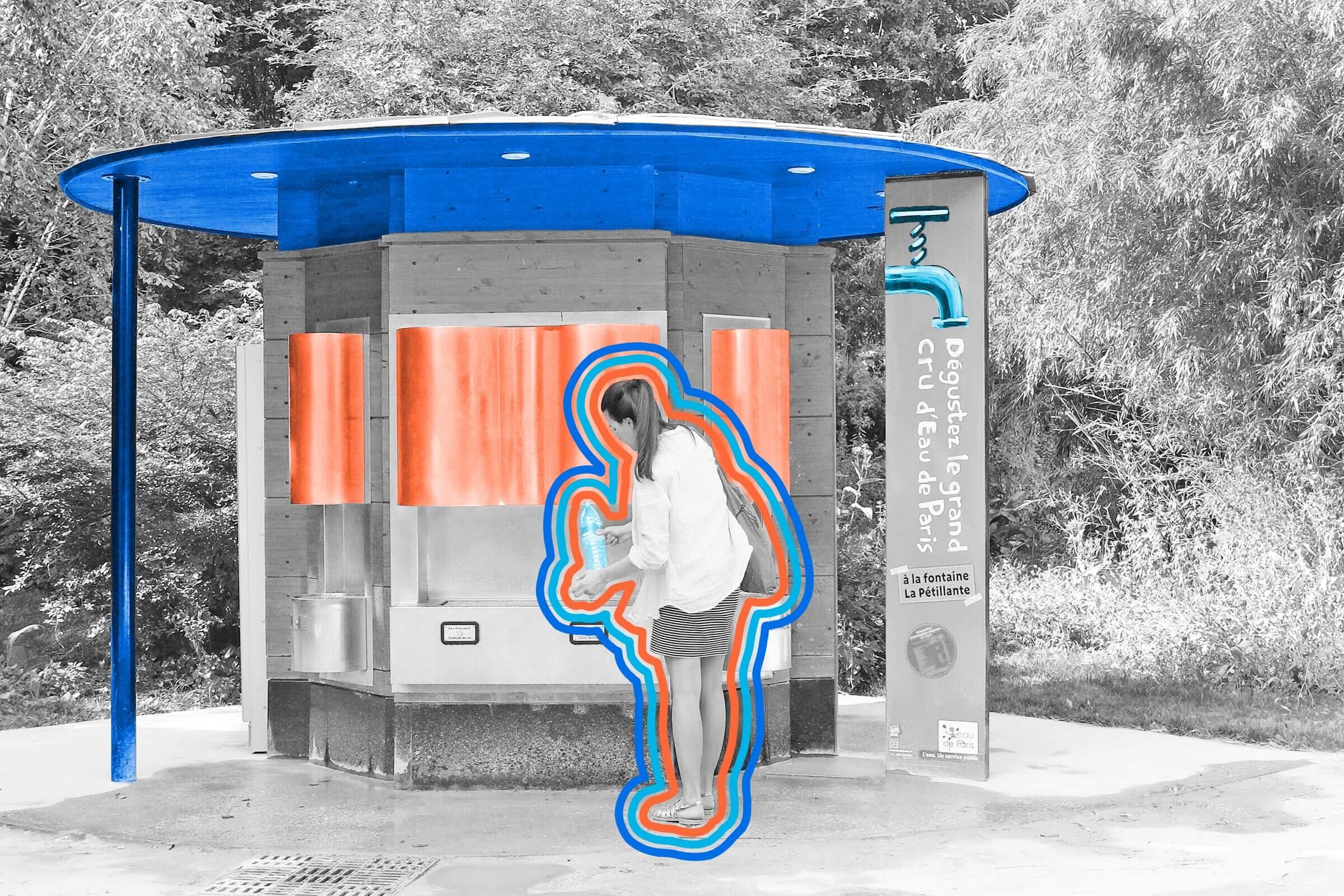
The arrival of autumn 2010 in the City of Light brought with it a bold public experiment in the form of a new drinking fountain in the Jardin de Reuilly. As with other public drinking stations in Paris, this one connected to a well-maintained system of water sourced from underground wells and the Seine and Marne rivers. But it had a twist: With the press of a button, visitors were treated to a stream of chilled H2O infused with carbon dioxide, providing a steady supply of sparkling water.

A Frenchman invented sparkling water.

Ready to reveal?

Oops, incorrect!

It's a fib

Eighteenth-century English theologian and chemist Joseph Priestley may be most celebrated for his discovery of oxygen, but his work with gases also fueled the development of carbon dioxide-enhanced drinking water.

The concept of what locals call la fontaine pétillante didn't originate in this corner of Europe; sparkling water fountains first surfaced in Italy around 2009. Yet the idea certainly seems tailor-made for France, the country of origin for popular mineral water brands such as Evian and Perrier. Paris is also home to famed water-spouting structures such as Fontaine Saint-Michel and Fontaine des Mers. Several sparkling water fountains can now be found throughout Paris, and the city has the ultimate goal of installing at least one in each of the city's 20 arrondissements.

From an aesthetic standpoint, the sparkling water fountains are hardly on par with the ornate older fountains; one reviewer recalled a graffiti-tagged fountain as seemingly "designed to troll visiting fantasists with its simple look and battered condition." Yet this same reviewer described the fountain’s cool, bubbly water as "utterly delicious." Considering that the water is free, and that an estimated 12 pounds of plastic waste per year is saved when a family of four ditches plastic bottles for tap water, this citywide initiative should do its part to help keep Paris relatively clean and affordable.

Numbers Don't Lie

Numbers Don't Lie

Cost (in euros) to build the first Parisian sparkling water fountain
75,000
Temperature (in degrees Fahrenheit) of water chilled for these fountains
44
Global sales (in billions of U.S. dollars) of sparkling water in 2022
34.33
Approximate number of public drinking fountains in Paris
1,200

The American locale known as the "City of Fountains" is ______.

Ready to reveal?

Confirm your email to play the next question?

The American locale known as the "City of Fountains" is Kansas City, Missouri.

Placeholder Image

Some European spots have free wine fountains.

While Paris has provided a public service by bringing sparkling water to the masses, it lags behind other European locales when it comes to free-flowing servings of another beverage festive travelers crave. Wine fountains have unsurprisingly proved popular at various spots, most notably in Villa Caldari, Italy, and Ayegui, Spain. In both cases, the fountains are operated by wineries stationed near traditional Christian pilgrimage routes — Italy’s Cammino di San Tommaso and Spain’s Camino de Santiago. Similarly, both places encourage participants to enjoy the free wine responsibly, as more can easily be purchased if desired. While there will always be freeloaders who scoff at the honor system, those who intend to continue the walking path are advised to practice moderation, as even the most devoted pilgrims can lose their way with too many drinks under their belt.

Tim Ott
Writer

Tim Ott has written for sites including Biography.com, History.com, and MLB.com, and is known to delude himself into thinking he can craft a marketable screenplay.

Original photo by PA Images/ Alamy Stock Photo

Of all the world records to hold, “most world records” might be the most impressive. That title belongs to American Ashrita Furman, who has set more than 600 world records and currently holds more than 200. He first became smitten with Guinness’ famous book as a child in the 1960s and made it his lifelong mission to set as many records as he could. Among his many feats are the longest continuous distance somersaulting (12 miles and 390 yards), most hopscotch games completed in 24 hours (434), world's largest popcorn sculpture (20 feet, 10 inches), most apples cut midair with a samurai sword in one minute (29), and translating and reciting a poem in the most languages (203).

Furman has set a world record on every continent.

Ready to reveal?

Oops, incorrect!

It's a fact

His pursuits have indeed taken him to every continent — including Antarctica, where he set both speed and distance records for pogo stick jumping.

His first attempt in 1978 ended in disappointment when he failed to break the record for most consecutive jumping jacks, but he persevered and broke it the following year by completing a whopping 27,000 in 6 hours and 45 minutes. He has since gone on to break hundreds more records and regularly works to reclaim titles that have been taken from him by other record-breakers.

Numbers Don't Lie

Numbers Don't Lie

Miles Furman unicycled underwater to set a world record
1.3
20-ounce glasses Furman balanced on his chin
81
Grapes Furman caught in his mouth in 1 minute
86
World record applicants received by Guinness in 2023
57,400+

Furman holds the record for most ______ caught with chopsticks in one minute.

Ready to reveal?

Confirm your email to play the next question?

Furman holds the record for most Ping-Pong balls caught with chopsticks in one minute.

Placeholder Image

Guinness has more world records than it can print.

The company tracks a total of around 65,000 records, which is far more than can fit into the annual book. It makes a number of editorial decisions to whittle that number down to about 4,000, and the rest are featured online. Some record-holders have been unhappy with the promotion (or lack thereof) their feats have achieved, which led one of them, Dean Gould, to launch his own registry of world records, Record Holders Republic, in response. Other Guinness critics include former adjudicators such as Anna Nicholas, who told USA Today the company’s current output is “a far cry from the book [she] worked on” in the late 1980s, and that the current version places too much emphasis on sensationalism. Guinness nonetheless remains synonymous with world records, an association that’s unlikely to be broken anytime soon.

Michael Nordine
Staff Writer

Michael Nordine is a writer and editor living in Denver. A native Angeleno, he has two cats and wishes he had more.

Original photo by REUTERS/ Alamy Stock Photo

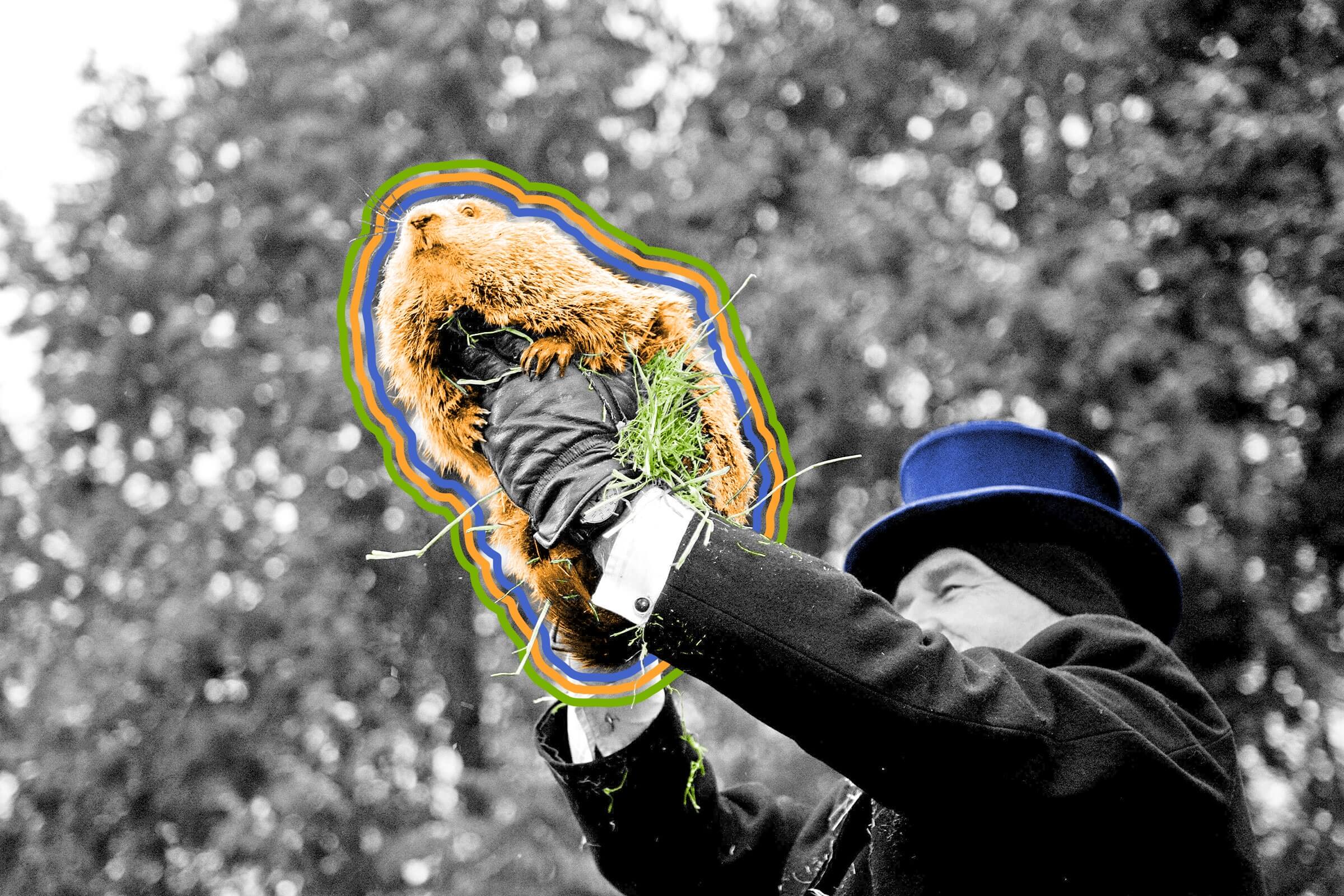
Punxsutawney Phil — the star of Groundhog Day — has a big job. Every February 2, the furry critter is responsible for encouraging (or dashing) our dreams of an early end to winter. However, it seems that basing our meteorological forecasts on a den-dwelling mammal’s shadow may not be the wisest bet. By some estimates, Phil’s forecasts have had a mere 39% accuracy rate since they began in 1887 (although data from some early years is missing). In recent years, the groundhog’s predictions have been about as accurate as a coin toss; according to the National Oceanic and Atmospheric Administration, Phil was spot-on 50% of the time between 2011 and 2020

Groundhogs are actually squirrels.

Ready to reveal?

Oops, incorrect!

It's a fact

Groundhogs are among the largest members of the Sciuridae family, which includes squirrels, chipmunks, marmots, prairie dogs, and more. All of these rodents are known for digging abilities, and groundhogs are no exception, often creating complex burrows with multiple rooms and paths.

The Punxsutawney Groundhog Club — the group responsible for Phil’s care and the official Groundhog Day ceremony — has said in the past that Phil is always correct, and that Phil’s handlers are to blame for any inaccuracies, suggesting that in those instances they likely misinterpreted the “groundhogese” he speaks and inaccurately relayed his message.

The tradition of watching groundhogs search for their shadow as a means of winter forecasting came to the U.S. from German immigrants, who brought with them celebrations of Candlemas Day. Observed on February 2, the holiday commemorates when the Virgin Mary went to Jerusalem’s holy temple to be purified 40 days after Jesus’ birth. Celebrants of old noted that a sunny holiday likely indicated snow to come in late spring. The original Germanic tradition required observing a badger or hedgehog, but immigrants found that groundhogs (native to North America) were a good enough substitute, saddling the rotund rodents with the job of predicting spring’s arrival — a tradition that’s drawn thousands of onlookers to Punxsutawney each February for more than 130 years.

Numbers Don't Lie

Numbers Don't Lie

Average weight (in pounds) of a wild groundhog
13
Months groundhogs hibernate
3
Weeks of winter Phil threatened during Prohibition (unless he was given a drink)
60
Year Punxsutawney Phil’s prediction was first livestreamed online
1998

Punxsutawney Phil’s groundhog companion is named ______.

Ready to reveal?

Confirm your email to play the next question?

Punxsutawney Phil’s groundhog companion is named Phyllis.

Placeholder Image

Bill Murray’s character in "Groundhog Day" relives the same day for three decades.

The 1993 film Groundhog Day centers on a surly newscaster (played by comedian Bill Murray), forced to repeat February 2 over and over until he learns a lesson in humility. While the screenplay never confirms how long it takes for Murray’s character to break the cycle, some reviewers estimate the loop occurs 12,395 times — the equivalent of 33 years and 350 days. (Internet lore suggests filmmakers had originally planned for the cycle to last 10,000 years, though that claim is disputed by screenwriter Danny Rubin.) On set, Murray may have had his own bit of déjá vu, reportedly being bitten by his groundhog co-star (named Scooter) two times despite wearing protective gloves.

Nicole Garner Meeker
Writer

Nicole Garner Meeker is a writer and editor based in St. Louis. Her history, nature, and food stories have also appeared at Mental Floss and Better Report.

Original photo by Viiviien/ Shutterstock

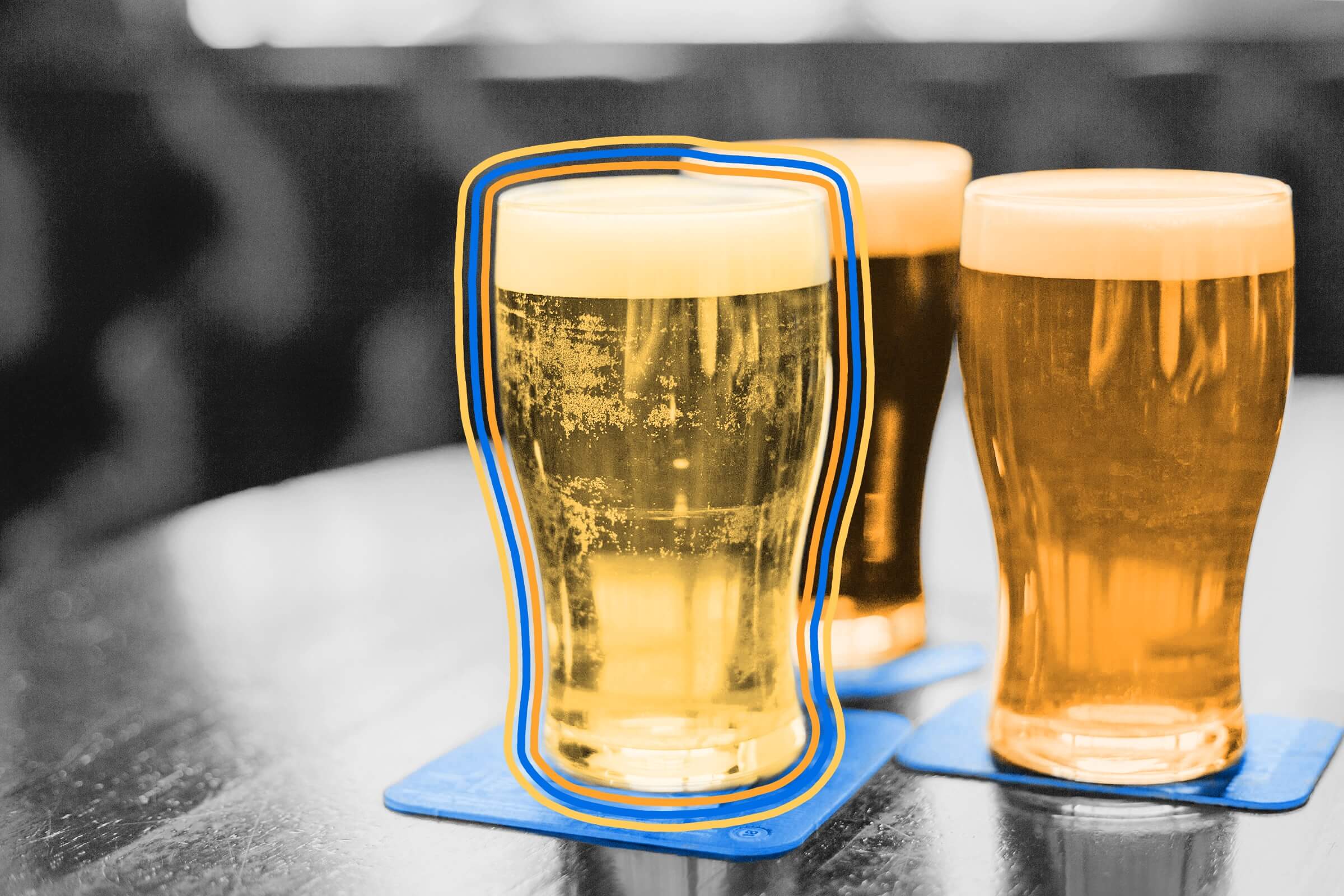
Beer is as old as history — and by some counts, even older. Many experts assert that the emergence of Sumerian cuneiform in the fourth millennium BCE marks the beginning of recorded history. Similarly, the first hard evidence of beer brewing also comes from the Sumerians of Mesopotamia, in a town called Godin Tepe (now part of Iran). In 1992, archaeologists there discovered traces of beer in jar fragments dated around 3500 BCE. However, some scholars suggest that beer is as old as grain agriculture itself — which would put the boozy beverage’s invention at around 10,000 BCE, somewhere in the Fertile Crescent. 

The minimum drinking age in the U.S. has always been 21 years old.

Ready to reveal?

Oops, incorrect!

It's a fib

Between 1970 and 1975, 29 U.S. states lowered the legal drinking age in reaction to the new voting age of 18 after ratification of the 26th Amendment in 1971. But in 1984, the U.S. government set the national age limit to 21 with the Federal Uniform Drinking Age Act.

Strangely (or not), thousands of Sumerian tablets make mention of beer. In fact, it even makes an appearance in the Epic of Gilgamesh, often regarded as the oldest surviving piece of literature. But among all these references, no recipes for this ancient brew were ever recorded. The closest thing to step-by-step instructions is a text known as the Hymn to Ninkasi (aka the goddess of beer). Written around 1800 BCE, this hymn describes the malts, cooked mash, and vats used in the beer-making process. It seems that Sumerian beer had mostly two ingredients: malted barley and beer bread, or bappir, which introduced yeast for fermentation. The beer was then drunk from communal jars, and its sediments were largely filtered out by drinking the concoction from reed straws. In 1989, the Anchor Brewing Company of San Francisco worked with anthropologists to recreate this Sumerian concoction; they deemed their results “drinkable.” Thankfully, beer has undergone significant innovations since its invention thousands of years ago.

Numbers Don't Lie

Numbers Don't Lie

Number of tablets that make up the (incomplete) “Epic of Gilgamesh”
12
Estimated gallons of beer humans consume worldwide each year
50 billion
Number of breweries in California, by far the most in any state
1,524
Year the Brauerei Weihenstephan, possibly the world’s oldest brewery, was founded
1040

______ makes the most beer of any country in the world — 9.5 billion gallons of the stuff in 2021.

Ready to reveal?

Confirm your email to play the next question?

China makes the most beer of any country in the world — 9.5 billion gallons of the stuff in 2021.

Placeholder Image

The “beer before liquor” rule has no scientific basis.

“Beer before liquor, never been sicker; liquor before beer, you’re in the clear” is an adage of unknown origin claiming that low alcohol-by-volume (ABV) beers are best imbibed at the end of a night of drinking rather than early on. However, no scientific studies support this myth. Once in your stomach, alcohol is absorbed immediately into the bloodstream, so the order in which you drink that alcohol won’t positively or negatively affect your hangover future. The only kernel of truth is in how these drinks affect your decision-making abilities. If you switch to higher ABV beverages (like liquor) late into the evening, your impaired judgment might miscalculate how many drinks you’re actually having. In the end, it doesn’t matter what order you knock ’em back, but other factors can impact your morning hangover — such as smoking history, genetics, and food intake (contrary to popular belief, drinking water won’t save you). At the end of the day, the best advice is to just drink less; experts recommend never drinking more than four drinks in an evening.

Darren Orf
Writer

Darren Orf lives in Portland, has a cat, and writes about all things science and climate. You can find his previous work at Popular Mechanics, Inverse, Gizmodo, and Paste, among others.

Original photo by Grethe Ulgjell/ Alamy Stock Photo

The reedy hum of bagpipes calls to mind tartan attire and the loch-filled lands of Scotland, which is why it might be surprising to learn that the wind-powered instruments weren’t created there. Music historians believe bagpipes likely originated in the Middle East, where they were first played by pipers thousands of years ago. The earliest bagpipe-like instruments have been linked to the Egyptians around 400 BCE, though a sculpture from the ancient Hittites — a former empire set in present-day Turkey — from around 1000 BCE may also resemble bagpipes.

Bagpipes have been played in space.

Ready to reveal?

Oops, incorrect!

It's a fact

American astronaut Kjell Lindgren made history in 2015 when he became the first person to play bagpipes in space. Lindgren chose “Amazing Grace” as his musical selection, performed as a memorial to Victor Hurst, a research scientist who helped train NASA astronauts.

Bagpipes slowly made their way throughout Europe, occasionally played by notable names in history like Roman Emperor Nero, and becoming widespread enough to be depicted in medieval art and literature. By the 15th century they had made their way to Scotland, where Highland musicians added their own influence. By some accounts, they modified the pipes to their modern appearance, by adding more drones, which emit harmonized sounds. Highland musicians also began the practice of hereditary pipers, aka passing the knowledge and skill of bagpiping through families, along with the duty of playing for Scottish clan leaders. All pipers of the time learned music by ear and memorization, a necessity considering the first written music for the pipes may not have appeared until the 18th century. One family — the MacCrimmons of the Scottish island of Skye — was particularly known for its influence in bagpiping, with six generations continuing the art, composing music, and teaching through their own piping college in the 17th and 18th centuries.

Numbers Don't Lie

Numbers Don't Lie

Types of bagpipes found around the world
130+
Number of notes playable on bagpipes
9
Year Queen Victoria hired the first piper to the sovereign, a traditional role that remains today
1843
Record (in hours) for the longest bagpipe-playing marathon, achieved in the U.K. in 2015
26

More bagpipes are manufactured in ______ than in any other country.

Ready to reveal?

Confirm your email to play the next question?

More bagpipes are manufactured in Pakistan than in any other country.

Placeholder Image

Contrary to popular belief, bagpipes were never banned in Scotland.

Not many instruments have been likened to weapons, but bagpipes have, and it’s a common misconception that they were even once banned in Scotland. The myth comes from the mid-18th century, when thousands of Scottish Highlanders rebelled against the British crown in an attempt to install their own monarch. Following their defeat at the Battle of Culloden in 1745, the British government imposed severe restrictions, banning kilts and traditional Scottish clothing alongside firearms. After one piper was convicted by the British for his association with Scottish troops during the incident, many Scots interpreted the law as also banning the musical instrument, though historians point out that the pipes were never illegal. The law against traditional dress was lifted in 1782, and bagpipes, which many believed were taboo, eventually became synonymous with the British army, allowing the military musical tradition of marching pipes into battle to carry on in and out of Scotland.

Nicole Garner Meeker
Writer

Nicole Garner Meeker is a writer and editor based in St. Louis. Her history, nature, and food stories have also appeared at Mental Floss and Better Report.