
Icy glaciers probably don’t spring to mind when you think about the tropics. But whether it’s Indonesia, Colombia, Kenya, or elsewhere, glaciers do exist in these warm climates. Of course, these huge chunks of ice aren’t sipping mai tais beachside, but are instead perched high up in mountain ranges. These frigid formations are the result of snow that’s been compressed into massive, slow-moving bodies of ice over the course of centuries.
Although icebergs may have once been part of a glacier, they are not glaciers themselves. Many floating icebergs form by separating, or calving, from large ice formations, but glaciers are much more massive than their long-lost offspring.
But although these glaciers have taken ages to form, their disappearing act will be much more swift. In all, 50% of mountain glaciers (both tropical and nontropical) will disappear by the end of this century due to climate change. Glaciers can serve as vital water reserves during drought, so their disappearance can have dire consequences in hot regions. In Indonesia, the Eternity Glaciers currently rest in the Jayawijaya mountains, but continuous dry seasons mean they’ll likely disappear forever in 2026. The Conejeras glacier in the Colombian Andes will perform the same vanishing act on a similar timeline. Mount Kenya and Mount Kilimanjaro in Africa also sport glaciers on their peaks, though both mountains are steadily losing ice mass due to changes in ocean patterns caused by our warming world. Sadly, this is just the latest glacial batch facing evaporation. In 2009, the Chacaltaya glacier in Bolivia disappeared completely, and the country has lost around half of its glaciers in the past 50 years. Glaciers will continue to exist in the colder reaches of the world for centuries, but the age of tropical glaciers is quickly coming to an end.
The largest tropical glacier is found in the South American country of Peru.
Advertisement
Two glacial ice sheets contain 68% of the fresh water on Earth.
Sometimes, when land-based glaciers get massive (specifically 19,300 square miles), they become what’s known as an ice sheet. During the last ice age, the Laurentide Ice Sheet stretched 5 million square miles, was 2 miles thick, and covered most of Canada and the northern U.S., stretching as far south as the 37th parallel — in fact, a small part of it still exists in Hudson Bay. Today, however, the big ice sheets are in the Antarctic and Greenland. Although climate change has caused these sheets to lose ice mass, they still contain 99% of the world’s freshwater ice and 68% of its total fresh water. Currently, the Antarctic Ice Sheet is about as big as the Laurentide was at its height, at roughly 5.4 million square miles.

Darren Orf
Writer
Darren Orf lives in Portland, has a cat, and writes about all things science and climate. You can find his previous work at Popular Mechanics, Inverse, Gizmodo, and Paste, among others.
Advertisement
top picks from the Inbox Studio network
Interesting Facts is part of Inbox Studio, an email-first media company. *Indicates a third-party property.
It takes a little sleuthing to deduce that the iconic phrase “elementary, my dear Watson” never actually appears in any of the original Sherlock Holmes books. This oft-repeated misquote is generally believed to be what Holmes said to his trusted assistant, Dr. John Watson, when explaining how he’d solved a crime. But Sir Arthur Conan Doyle — who created the character of Sherlock Holmes and penned all the original stories — never wrote those four words in that exact order. The closest instance can be found in the 1893 short story “The Adventure of the Crooked Man,” where the phrases “my dear Watson” and “elementary” appear 52 words apart. The line “exactly, my dear Watson” is used in 1904’s “The Adventure of the Missing Three-Quarter,” but that too falls short of the famous quote.
One of the most common movie misquotes comes from the 1980 “Star Wars” film "The Empire Strikes Back." During a climactic confrontation between Luke Skywalker and Darth Vader, Vader says the line, “No, I am your father,” but does not address Luke by name.
The reason “elementary, my dear Watson” came to be associated with Holmes likely has to do with the phrase popping up in various newspapers, novels, and films in the early 20th century when referencing Doyle’s character, who had already become a fixture of pop culture by that point. An exact match for the line, and perhaps the earliest example, appears in a 1908 edition of The Globe and Traveller in an article about a sleuthing legal counsel. The phrase was later penned in a 1915 book by P.G. Wodehouse titled Psmith, Journalist, as well as in Agatha Christie’s 1922 novel The Secret Adversary. And the 1929 film The Return of Sherlock Holmes ends with the line, “Elementary, my dear Watson, elementary.” All these instances, and many more, have made it impossible to separate the quote from the character, despite it never appearing in Doyle’s original oeuvre.
Sherlock Holmes’ archnemesis was named James Moriarty.
Advertisement
Sherlock Holmes was based on a real-life surgeon.
Though the name “Sherlock Holmes” is entirely fictional, the character’s mannerisms were partially modeled after a real surgeon named Joseph Bell. While attending medical school at the University of Edinburgh, Arthur Conan Doyle took classes under Bell, who was said to possess an inherent ability to diagnose various diseases. He was also known for studying a patient’s appearance and making educated assumptions about their personal lives, such as their occupation.
Doyle drew inspiration from these traits as he conceived of Sherlock Holmes — a character renowned for deducing answers to complex mysteries through simple observation. In 1892, five years after the first Sherlock Holmes story was published, Doyle wrote a letter to Bell saying, “It is most certainly to you that I owe Sherlock Holmes.”
Bennett Kleinman
Staff Writer
Bennett Kleinman is a New York City-based staff writer for Inbox Studio, and previously contributed to television programs such as "Late Show With David Letterman" and "Impractical Jokers." Bennett is also a devoted New York Yankees and New Jersey Devils fan, and thinks plain seltzer is the best drink ever invented.
Advertisement
top picks from the Inbox Studio network
Interesting Facts is part of Inbox Studio, an email-first media company. *Indicates a third-party property.
There’s a reason orcas are better known as killer whales. They’re fierce predators, and they don’t always keep to the water in search of prey — in fact, they’ve even been known to hunt moose. This happens when a member of the largest deer species (yes, moose are deer) wades into the water, either in search of food or to elude land-based predators, and finds itself in the unfortunate position of being near an orca, which will eat pretty much anything. Such occurrences have been known to happen in the Pacific Northwest and Alaska, with one recorded incident resulting in the deaths of two moose.
They are the largest member of the dolphin family. They're still whales, however, as all dolphins are whales.
Orcas are thought to have received their nickname centuries ago, perhaps from a mistranslation. The theory posits that Basque fisherman observed them killing other whales and referred to them as “whale killers,” which became “killer whales” when translated to English. Their diet depends largely on where they live, but different ecotypes feed on everything from fish and seals to sharks and squid, with the occasional moose thrown in.
If you’ve read about killer whales in the last few years, it’s probably because they keep sinking yachts. There have been incidents in Cape Finisterre as well as the Strait of Gibraltar, with at least 500 orcas encountering boats since 2020. (Most of these go no further than the whales merely approaching the vessels, perhaps out of curiosity, but a number of them have resulted in sunken boats.)
Scientists remain unsure about the whales’ motivations. Some think they’re merely having fun or even participating in a fad, which is apparently something killer whales do — for instance, one pod spent the summer of 1987 wearing dead salmon on their heads. Others believe it’s because they’ve had negative experiences with boats in the past, including losing members of their species to the vessels. Whatever the case, the creatures don’t seem to have personal beef with the humans onboard; there have been zero recorded cases of an orca killing a human in the wild.
Michael Nordine
Staff Writer
Michael Nordine is a writer and editor living in Denver. A native Angeleno, he has two cats and wishes he had more.
Advertisement
top picks from the Inbox Studio network
Interesting Facts is part of Inbox Studio, an email-first media company. *Indicates a third-party property.
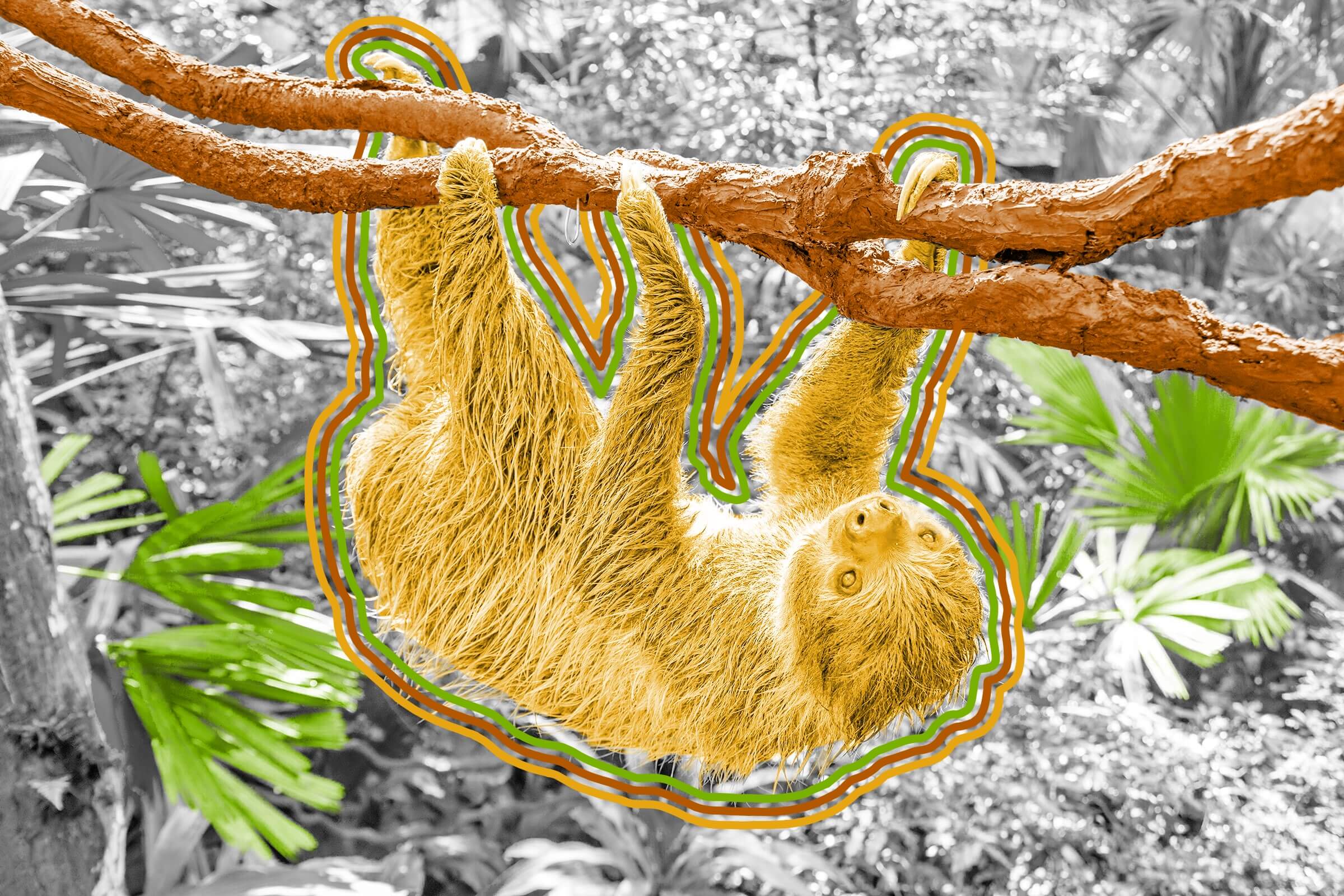
Sloths are masters of living life in the slow lane. These tree-hugging mammals, split into two-toed and three-toed varieties, travel only about 125 feet a day — so slowly that moss and algae grow on their fur. This lethargic lifestyle is actually a survival strategy suitable for their slow metabolisms and low-calorie diets, which are mostly based on tree leaves. In fact, three-toed sloths have the slowest metabolism of any mammal (followed closely by pandas and two-toed sloths).
Humans can’t hold their breath longer than a few minutes.
The world record for the longest breath-hold clocks in at 24 minutes and 37 seconds (aided by pre-breathing pure oxygen). The human body accomplishes this process with the mammalian dive reflex, which activates physiological changes in an effort to preserve your life.
Their sluggish metabolism, as well as their ability to slow their heart to one-third its normal rate, give sloths an unexpected superpower — they can hold their breath for an impressively long time. With estimates suggesting that some two-toed sloths can hold their breath for upwards of 40 minutes, this makes sloths better at conserving oxygen than even some marine mammals such as dolphins, who can only hold their breath for 15 minutes, max. The sloth breathing technique, aided by the design of their lungs, helps make sloths excellent swimmers. So while their leisurely lifestyle may seem a bit lazy to the untrained eye, don’t blame the sloths — they’re just built that way.
The first known animal to breathe on land may have been an arthropod called Parioscorpio venator.
Advertisement
Some sloths used to be the size of elephants.
Megatherium americanum, which in Latin means “great beast of America,” is a fearsome name for a fearsome animal — a giant ground sloth that weighed around 8,000 pounds. This gargantuan creature appears in the fossil record in the Middle Pleistocene around 400,000 years ago, and for hundreds of thousands of years, roamed the lightly wooded areas of South America. The beast fueled its massive bulk mostly by scavenging for meat left behind by top predators, but eventually died out at the beginning of the Holocene Epoch, around the same time as the arrival of Homo sapiens on the continent. Because it could stand and walk on its hind legs (though it was usually a quadruped), this ground sloth is considered the largest bipedal mammal that’s ever existed on Earth.
Darren Orf
Writer
Darren Orf lives in Portland, has a cat, and writes about all things science and climate. You can find his previous work at Popular Mechanics, Inverse, Gizmodo, and Paste, among others.
Advertisement
top picks from the Inbox Studio network
Interesting Facts is part of Inbox Studio, an email-first media company. *Indicates a third-party property.

Mashed, boiled, fried: Most of the interactions we have with potatoes revolve entirely around preparing them for our plates. However, there are occasions when the starchy spuds have more scientific uses — such as helping researchers test and tweak Wi-Fi signals. On these occasions, potatoes act as stand-ins for human bodies, mimicking our forms thanks to their similarly high water content. While our bodies are made up of about 60% water, potatoes are loaded with about 80%. All of that water impacts just how well we can connect to the internet — Wi-Fi signals are transmitted through radio waves, which are easily absorbed by water. Even the water inside a potato (or the human body) can reflect the signal back and weaken its strength.
The word “Wi-Fi” doesn’t actually stand for anything.
While long believed to be an abbreviation for “Wireless Fidelity,” the word “Wi-Fi” doesn’t actually have a meaning. The trademarked term, owned by the nonprofit Wi-Fi Alliance, was created by a marketing company in 1999 as an easy, nontechnical term for wireless communications.
While any container of water can actually do this trick, scientists have turned to sacks of potatoes for more accurate testing of Wi-Fi signals in tricky places such as airplanes. In 2012, Boeing heaped about 20,000 pounds of tubers into humanlike shapes in a grounded airplane to observe how well Wi-Fi flowed through a packed cabin. Gathering the data took several days, and using nonmoving potato test subjects in place of human participants made it possible for researchers to do their work. With this system, Boeing engineers were able to fine-tune Wi-Fi signals to transmit uniformly through a plane cabin and account for wiggling passengers and passing drink carts — ensuring the best possible internet connection at 35,000 feet.
Potatoes are the official state vegetable of New Hampshire, as well as spud-growing Idaho and Oregon.
Advertisement
There are thousands of miles of internet cables under the ocean.
Water has a way of disrupting Wi-Fi connections, so it may come as a surprise that there are hundreds of thousands of miles of internet cables along the ocean’s floor. In fact, our ability to communicate globally is thanks to nearly 750,000 miles of fiber optic cables that crisscross underwater. While it’s commonly believed that our phones and computers connect us through satellites, about 95% of all voice and data transmissions are routed through these cables. The first such cable connected the United States, U.K., and France in 1988, but the concept dates back more than 150 years — the first transatlantic communications cable was a simple copper wire used to transmit telegraphs between the U.S. and Great Britain. First used in 1858 following two years of planning and line laying, the cable worked for just a few weeks — but would inspire a world of communication for years to come.
Nicole Garner Meeker
Writer
Nicole Garner Meeker is a writer and editor based in St. Louis. Her history, nature, and food stories have also appeared at Mental Floss and Better Report.
Advertisement
top picks from the Inbox Studio network
Interesting Facts is part of Inbox Studio, an email-first media company. *Indicates a third-party property.

The earliest known writing system, called cuneiform, was initially used by bookkeepers to track beer and food rations in ancient Mesopotamian cities. Eventually, the tablets became home to more interesting reading material — like professions of love and passion. Historians now believe the world’s oldest romantic poem was written in cuneiform 4,000 years ago, sometime around 2000 BCE. Called “The Love Song for Shu-Sin,” the poem expresses affection between Inanna, the Sumerian goddess of love, and Shu-Sin, the king of Ur (a Mesopotamian city that once stood in present-day southern Iraq).
Historians believe poems and music have long been interwoven art forms, with the earliest poems shared through song. Many of the oldest surviving poems from ancient Greece and China were performed orally, and today, ballads remain a commonly used form for both poetry and music.
Despite being uncovered at an archaeological dig site in the late 19th century, the clay tablet featuring “The Love Song for Shu-Sin” sat untranslated for decades following its discovery. Tucked into storage at the Istanbul Museum in Turkey, the ancient notepad went unnoticed until 1951, when scholar Samuel Noah Kramer deciphered its inscription and interpreted its meaning. He surmised that the poem wasn’t just a statement of love, but part of a larger religious ceremony. Each year, the Sumerian king was responsible for symbolically marrying the goddess Inanna to ensure prosperity and bountiful harvests in the year ahead. While Shu-Sin — who ruled from 1973 to 1964 BCE — was featured in a series of other poems, researchers aren’t sure about details of the ritual. But even without us knowing more, the poem remains historically significant, shaping our understanding of early writing and world history — and perhaps even inspiring a little romance.
“Sonnet 18,” the romantic poem that compares its subject to a “summer’s day,” was penned by Shakespeare.
Advertisement
The world’s longest poem took more than 500 years to write.
One of history’s oldest poems holds the record for being the world’s longest. The “Mahabharata” is a roughly 2,500-year-old poem written in Sanskrit, an ancient language once used in parts of India and Southeast Asia. With a title that translates to “Great Epic of the Bharata Dynasty,” the poem recounts the tale of two cousins who become bitter enemies in the struggle for political control over India’s Bharata kingdom. Drafted by multiple writers over half a millennium, the “Mahabharata” includes 200,000 verses and a staggering 1.8 million words, making it seven times longer than Homer’s “The Iliad” and “The Odyssey.” Scholars consider the “Mahabharata” an important source for understanding how Hinduism developed between 400 BCE and 200 CE, though it’s not just enjoyed by academics — many of the poem’s stories have been reworked for stage and screen for modern audiences.
Nicole Garner Meeker
Writer
Nicole Garner Meeker is a writer and editor based in St. Louis. Her history, nature, and food stories have also appeared at Mental Floss and Better Report.
Advertisement
top picks from the Inbox Studio network
Interesting Facts is part of Inbox Studio, an email-first media company. *Indicates a third-party property.

It began as a bit of creative problem-solving. Some trees in Melbourne, Australia, had dangerous branches that needed to be trimmed and other issues, prompting city officials in 2013 to give 70,000 of them ID numbers and email addresses where people could report problems. As an “unintended but positive consequence” of the program, according to Councilor Arron Wood of Melbourne's Environment Portfolio, people began writing their favorite trees whimsical letters. “I have exams coming up and I should be busy studying,” one reads. “You do not have exams because you are a tree. I don’t think that there is much more to talk about as we don't have a lot in common, you being a tree and such. But I’m glad we’re in this together.”
The inside of a palm tree isn’t full of wood. Instead, palms have thousands of fibrous strands, which allows them to bend in tropical storms without breaking. By some accounts, palms are more “tree-like” than actual trees.
That one, addressed to Green Leaf Elm, Tree ID 1022165, even received a response: “I hope you do well in your exams. Research has shown that nature can influence the way people learn in a positive way, so I hope I inspire your learning.” The initiative’s website (the program is still going strong) features a map of every tree as well as links to their email addresses, should you feel like writing a love letter of your own. The responses are actually crafted by employees at the City of Melbourne — and as of 2018, the trees had received more than 4,000 emails from all over the world.
The U.S. has more trees now than it did 100 years ago.
When it comes to trees, the more the merrier. So while it may come as a surprise to learn that there are more trees in the U.S. today than there were a century ago, at least it’s a pleasant one. Forest growth has exceeded harvest since the 1940s, according to the Food and Agriculture Organization, and by 1997, growth exceeded harvest by a full 42%. Quantity isn’t always the same as quality, as old-growth forests contain the most biodiversity and are generally the best for the environment, but conservation efforts (including good old fashioned tree-planting) have been remarkably successful.
Michael Nordine
Staff Writer
Michael Nordine is a writer and editor living in Denver. A native Angeleno, he has two cats and wishes he had more.
Advertisement
top picks from the Inbox Studio network
Interesting Facts is part of Inbox Studio, an email-first media company. *Indicates a third-party property.

Julia Roberts, the actress best known for her roles in Pretty Woman, Erin Brockovich, and Steel Magnolias, was born in Smyrna, Georgia, in 1967. But when it came time for her parents, Betty and Walter Roberts, to take home their new bundle of joy, there was one hiccup: They couldn’t afford the hospital bill. That’s when Martin Luther King Jr. and Coretta Scott King — friends of the Roberts’ — stepped in to help, covering the cost of the future actress’s birth.
Martin Luther King Jr. was once the youngest Nobel Peace Prize winner.
Dr. King was awarded the Nobel Peace Prize in 1964 for his civil rights activism, becoming the then-youngest Peace Prize winner at age 35. However, today’s record-holder — education activist Malala Yousafzai — was far younger, accepting the honor in 2014 at the age of 17.
The arts drew the King and Roberts families together. Before marrying her activist husband, Coretta Scott King had earned a bachelor’s in music education from the New England Conservatory, one of the country’s most selective music schools. By the 1960s, married actors Betty and Walter Roberts had launched the Actors and Writers Workshop, a theater school in Atlanta near the Kings’ home. With four young children and a passion for the arts, Coretta had been searching for a youth theater program, but struggled to find one that would accept Black students. She reached out to Betty to inquire about the Robertses’ school, which stood out as the only integrated children’s acting program in the area.
While the Actors and Writers Workshop was successful and molded several actors who pursued the craft into adulthood, it wasn’t free from monetary issues. By the time Julia (the youngest of three children) was born, the Roberts family was struggling financially. However, the Kings and Robertses had developed a friendship that helped the family through a rough patch; Martin and Coretta graciously covered the expense, forever linking the two families.
As a college student, Coretta Scott King was a babysitter for six-time Emmy winner John Lithgow.
Advertisement
The Coretta Scott King Book Awards were created by two school librarians.
Today, children’s literature is more reflective of its readers than ever before — a 2022 study by the University of Wisconsin found that 40% of books published that year were written, illustrated, or compiled by people of color. However, creators from diverse communities haven’t always had their work published or recognized, which is one reason why the Coretta Scott King Book Awards were created. In 1969, two school librarians — Mabel McKissick from Connecticut and Glyndon Greer of New Jersey — met at the American Library Association Conference in Atlantic City. After attending a banquet for the Caldecott and Newbery book awards, the librarians discussed a lack of acknowledgment for Black writers, and used their remaining time at the conference to develop the Coretta Scott King Awards. The designation, named for the civil rights activist and her work toward peace and equality, continues to recognize Black writers and illustrators and literature that represents African American culture and human rights.
Nicole Garner Meeker
Writer
Nicole Garner Meeker is a writer and editor based in St. Louis. Her history, nature, and food stories have also appeared at Mental Floss and Better Report.
Advertisement
top picks from the Inbox Studio network
Interesting Facts is part of Inbox Studio, an email-first media company. *Indicates a third-party property.

We tend not to think of America as a very “old” country, at least in comparison to many others. The United States as a society is still fairly new, but of course, its natural surroundings are comparable in age to those of any other place on the planet — and in some cases, they’re even older.
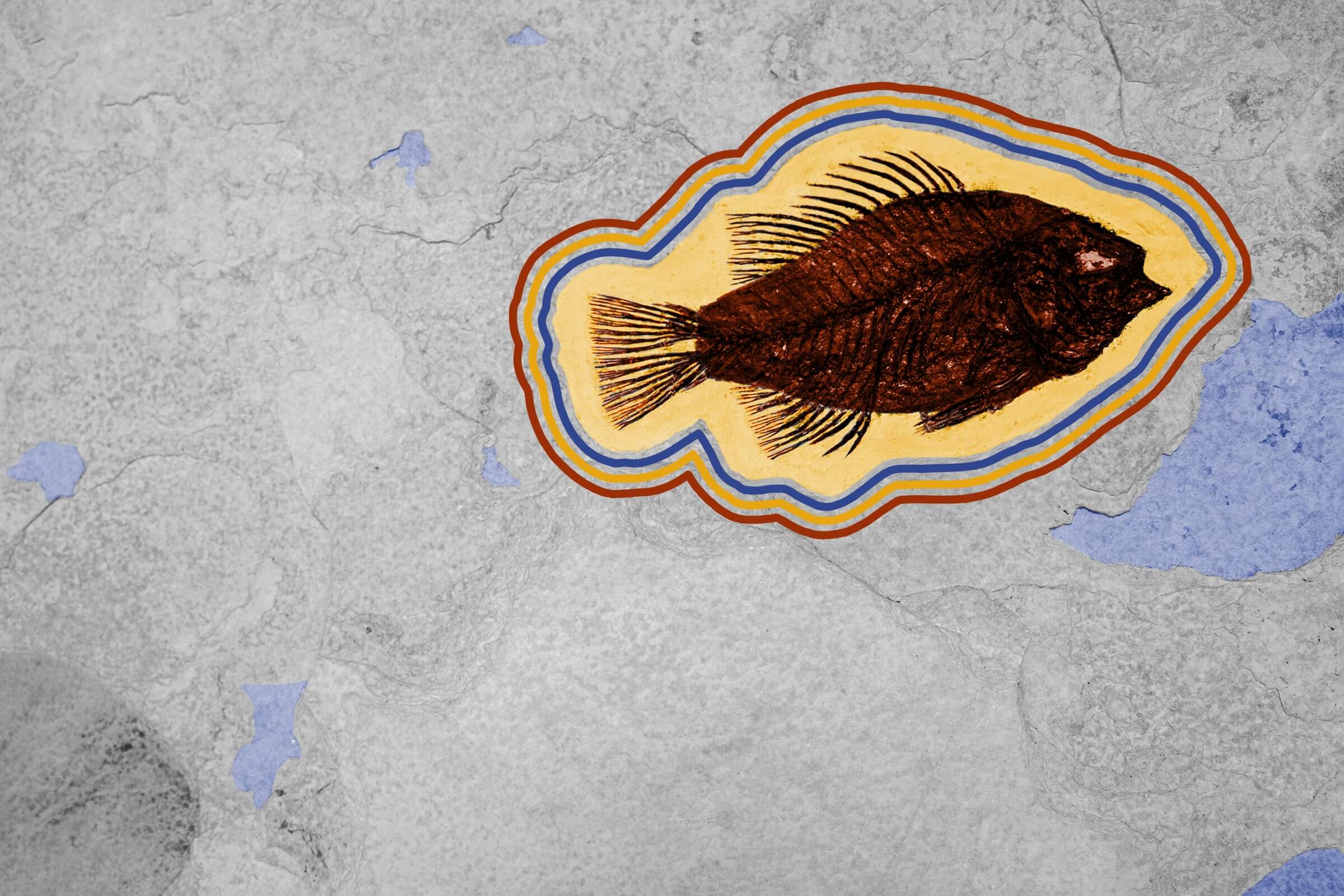
Case in point: The oldest known forest in the world is in Cairo, New York, roughly 125 miles north of New York City. At 385 million years old, the Cairo fossil forest was discovered near an abandoned quarry in 2009. The actual trees are no more (hence its name), and it’s believed that a massive flood led to their demise — the site even contains fish fossils. “You are walking through the roots of ancient trees,” paleobotanist Chris Berry told Science when discussing the discovery. “Standing on the quarry surface we can reconstruct the living forest around us in our imagination.”
The world’s largest forest is in just one country.
At some 2.3 million square miles, the Amazon rainforest is the largest forest in the world. More than half of it is in Brazil, but it also extends across Bolivia, Colombia, Ecuador, French Guiana, Guyana, Peru, Suriname, and Venezuela.
The fossilized roots there are thought to belong to Archaeopteris, an extinct genus of tree characterized by woody roots and branches with fernlike, fan-shaped leaves. Prior to the site’s discovery, the oldest Archaeopteris fossils were a mere 365 million years old. Forests such as this one were hugely consequential, as they pulled CO₂ from the atmosphere, raised oxygen levels, and led to the evolution of huge insects that resided within them.
More than half of the world’s forests are in five countries.
With 815 million hectares of forested land, Russia accounts for a full 20% of all the forests in the world. Four other countries account for another 34%, meaning the five of them contain 54% of all forests across the globe. Those other countries are Brazil (497 million hectares), Canada (347 million), the United States (310 million), and China (220 million). It’s probably not a coincidence that those are also the world’s fivebiggest countries by area (though not in the same order). On the other end of the spectrum are countries such as Monaco, Oman, Egypt, and Mauritania, which have no forest coverage at all.
Interesting Facts
Editorial
Interesting Facts writers have been seen in Popular Mechanics, Mental Floss, A+E Networks, and more. They’re fascinated by history, science, food, culture, and the world around them.
Advertisement
top picks from the Inbox Studio network
Interesting Facts is part of Inbox Studio, an email-first media company. *Indicates a third-party property.

Long before they became fashionable accessories for sunny days, some of the earliest sunglasses served a far different purpose: In Chinese courtrooms, judges used dark-lensed glasses to hide their facial expressions. Eyeglasses became popular in Chinese society during the late 13th century and early 14th century, and around the same period, rudimentary sunglasses featuring dark lenses made from smoky quartz were invented. While they protected against glare, they were also intended to provide judges with an air of impartiality during trials by obscuring their eyes — and thus their emotional responses.
Only one person served as both U.S. president and Supreme Court judge.
William Howard Taft is the only individual to serve as U.S. president and a member of the U.S. Supreme Court. His presidency lasted one term (1909-1913). Eight years later, he was appointed chief justice by then-President Warren G. Harding.
It wasn’t until the 18th century that an early precursor to modern sunglasses, explicitly designed for dealing with sun and glare, became popular in Europe. “Goldoni’s eyeglasses” were developed circa 1700 in Venice, Italy, and were nicknamed for playwright Carlo Goldoni, who fashionably wore a pair. These green-tinted spectacles were primarily worn by Venetian gondoliers as well as high-society women and children in an effort to shield their eyes from the glare that bounced off the canal water. In 1752, British optician James Ayscough unveiled a new invention to serve a similar purpose: blue-tinted glasses that he believed protected eyes against harmful light better than white glass.
A pair of sunglasses belonging to Elvis Presley once sold for $159,900 at auction.
Advertisement
Wooden “sunglasses” date back to the first century CE.
While traditional sunglasses featuring glass lenses and metal frames are a more modern invention, the world’s first known sunglasses were made of wood. Around 2,000 years ago, ancient Siberians and Inuits in the North American Arctic region donned these wooden goggles to protect from snow blindness — a painful condition caused by UV rays reflecting off the snow.
These simple shades featured a piece of wood carved to fit around the eyes and tied around the head using twine. Thin slits were carved directly above each eye, allowing the wearer to maintain their vision while limiting sun exposure. In addition to wood, these devices were also made from bone or walrus ivory. Archaeological digs have uncovered pristine examples of these early sunglasses from regions throughout Alaska, Canada, Greenland, and Russia.
Bennett Kleinman
Staff Writer
Bennett Kleinman is a New York City-based staff writer for Inbox Studio, and previously contributed to television programs such as "Late Show With David Letterman" and "Impractical Jokers." Bennett is also a devoted New York Yankees and New Jersey Devils fan, and thinks plain seltzer is the best drink ever invented.
Advertisement
top picks from the Inbox Studio network
Interesting Facts is part of Inbox Studio, an email-first media company. *Indicates a third-party property.